Mango varieties (Mangifera indica)
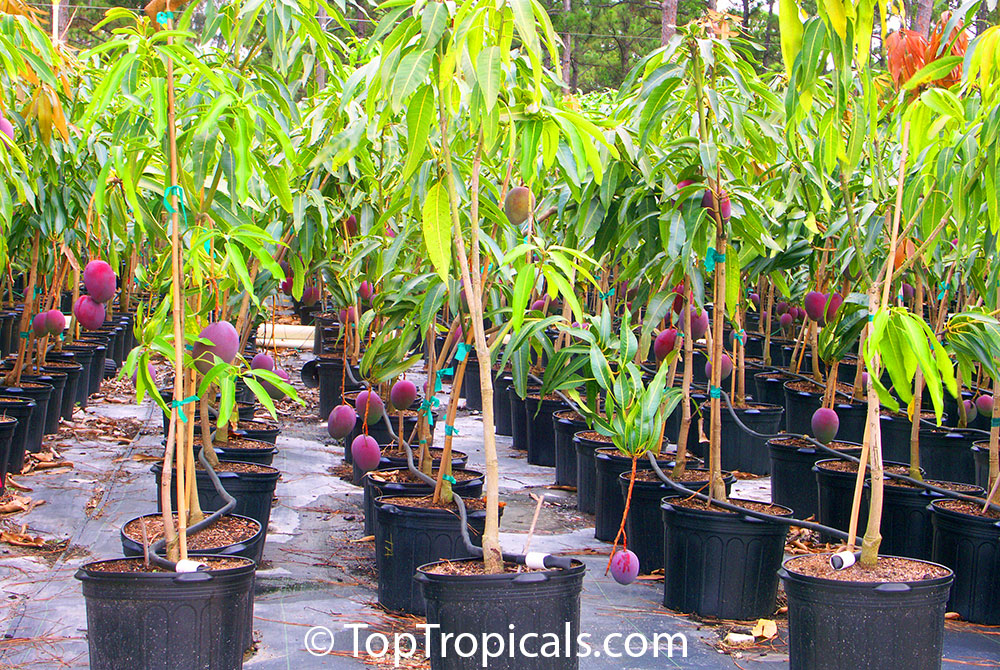
How many mango varieties are in the world?
Before we moved to Florida, we thought there was only one variety of mango - from the grocery store. It was nice to discover that there are over a 1,000 of them! After we had a chance to participate in a tasting of different varieties, we realized that we have to have them all... and started collecting them!
The diversity of mango is so huge, and yet each one has individual tastes and features. Sometimes it's hard to make a choice of which variety to chose for planting, so if you have enough yard space - do not hesitate to plant as many as you can. You will never regret it.
However, even if your yard is a postage-stamp size or you live in an apartment complex, it is still possible for you to grow a dwarf or semi-dwarf mango that won't take much space and may be grown in a container, rewarding you with delicious fruit.
The appreciation of the mango began over 4,000 years ago in India and throughout Southeast Asia. It was there that the first selections of improved cultivars were cloned from vast orchards and untamed jungles. The ensuing millennia brought great recognition to the delectable fruit, and now it is known by more people worldwide than the peach.
Commercial production of the fruit now spans six continents, including here in Florida where most of the world’s commercial varieties were developed. The Tommy Atkin, Haden, Keitt, and Van Dyke remain the most popular commercial varieties, and they were all selected in Florida less than 100 years ago. Although Florida did enjoy a brief stint as a commercial mango producer, the fresh fruit market is now dominated by Mexico, Brazil, and Columbia. Ironically, the mango has never been more popular domestically, but the product has changed dramatically.
Growers in warmer states are finding enormous satisfaction growing and harvesting one of the world’s finest fruits right in their own backyard. However, the needs of the dooryard grower are very different than those of a commercial producer. Dooryard growers generally prefer small trees that require minimal care and bear only the highest quality fruit. The criteria for commercial selections emphasize production, handling characteristics, and a red color.
The mango varieties that we grow represent the finest selections from around the world including those selected here in Florida.
What are the Condo Mangos?
Small to medium size trees, good for container culture.
Key idea: all mango trees are naturally vigorous. "Condo mango" = varieties that stay compact in containers with light pruning. In the ground, even dwarfs can grow 15–20+ ft. In pots, size is controlled by root space + pruning.
Tree stage / Pot size:
Starter 3–7 gal Temporary - 3–6 months
Young tree 7–15 gal Good for first 1–2 years
Long-term container 15–25 gal Ideal balance of size + control
Large container 25–40 gal Faster growth, more fruit, harder to manage
Most popular Condo Mango varieties - best mango types for containers
If variety is temporary sold out, just add it to your wishlist and get notified first hand when we have it back in stock! They sell fast!
True Dwarf (easiest):
Compact, slower growth, best for long-term pots. Best choice if you want: minimal pruning, smaller patio tree, reliable container fruiting
Semi-Dwarf (more vigorous, but still workable in containers):
Best choice if you want: more variety options, larger harvest potential, willing to prune regularly.
Simple rules that actually matter:
Keep tree 6–8 ft tall with tipping/pruning
Use fast-draining soil (critical)
Full sun = better fruiting
Fertilize lightly but regularly
Repot or root-prune every few years
Yes - you can grow mango in a pot
Best size: 15–25 gallon
Start with dwarf varieties for easiest success
Control size with pruning, not just pot
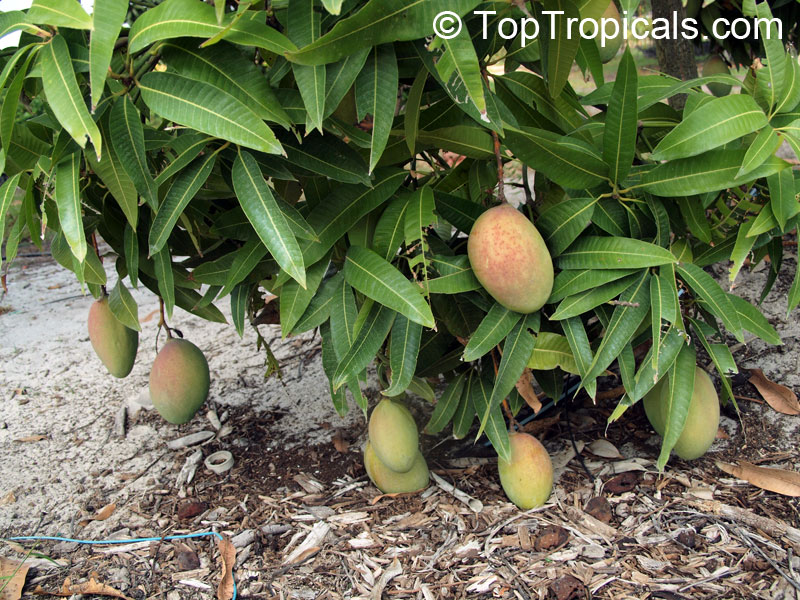
Dwarf Mango Pickering
Mango FAQ
Q: Why should I plant mango trees?
A: The real question is why shouldn’t you plant a mango tree? Mangos are delicious and while you can get some pretty tasty mangos at the grocery store, there is nothing quite like a tree ripened mango. Mangos are fragile and do not travel well. The mangos you get at the store are varieties that hold up a little better than others, but also lack some of the magnificent flavors available in other mango varieties.
Q: What is the best mango tree to buy?
A: There are so many varieties; it is hard to choose just one or two. It really comes down to your own personal taste preferences and the amount of room you have. The best advice is to find some mango tasting events and try some. Write down the ones you like and choose from that list. Some that always seem to make the list of favorites are Malika, Coconut Cream, Orange Sherbet, Alampur Baneshan, Carrie, Pickering, and Glenn. The list could go on forever.
Q: I don’t have much room for a large tree. Are there any dwarf mango trees?
A: Yes, you are in luck. There are several varieties that grow slower and stay shorter. Others are considered semi-dwarf and can be kept to less than 15’ with pruning. Here are some of them: Malika, Nam Doc Mai, Pickering, Rosigold, Alampur Baneshan, Carrie, Baptiste, Cogshall, Julie, Fairchild, Juliette and Glenn.
Q: Do you sell grafted mango trees?
A: Yes, all of our trees have been grafted. Grafting known varieties onto healthy rootstock ensures that you will get the mango you want and you will get it much sooner that growing a tree from seed. Mangos can be grown from seed, but you never know what you are going to get. You may get a tree like the parent tree or you may get something else that just does not taste good to you. You will also wait a lot longer if you try to grow a mango tree from a seed. It can take 8 years or more before it will produce fruit. Grafted varieties can start producing small crops in just one year depending on the type.
Q: Do you ship mango trees?
A: Yes, you can order your mango trees online and we will ship them nationwide. Be aware that mango trees are a tropical fruit and cannot take sustained temperatures below 40°. They will take a light frost with minimal damage once they are established, but a hard freeze can take a toll and will kill small trees if not protected.
Q: Do you deliver mango trees?
A: If you are in the local area of our garden center in Fort Myers or Farm in Sebring, FL, we can arrange delivery and even planting of your mango tree. Please see one of our customer service representatives for more information and pricing.
What are the most popular Mango Varieties?
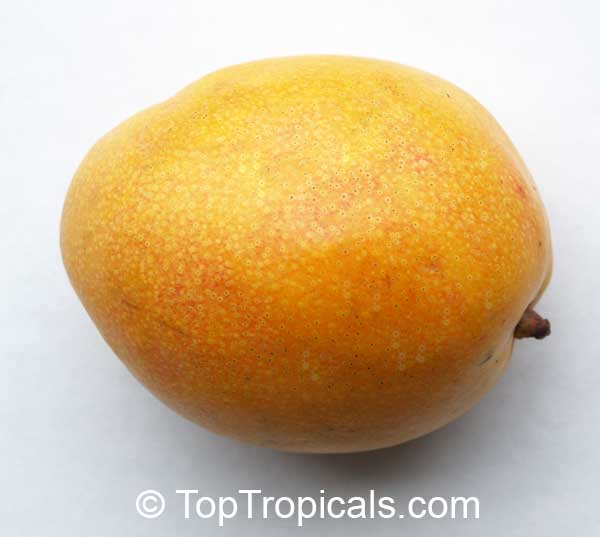
Variety: Alphonso
Origin: Goa, India
Season: June-July
Tree size: Large vigorous grower
Condo Mango: No
Fruit shape/size/color: Oval/small to medium 10 oz./Green to golden yellow
Texture: Fiberless
Flavor: Intensely warm-sweet, pleasantly tart, rich and full, with multiple aromatic overtones and a hint of citrus
Anthracnose Resistance: Very Good
Seed Type: Monoembryonic
Comments: 'Alphonse', often termed 'Alphonso', is among the finest of Indian dessert mangos. They often have a pink blush on the sun-exposed shoulder. The ripening fruit are the perfect accent for the kitchen, perfuming the air with a wonderful sweet and fruity aroma. There is no fiber in the orange, melting flesh. 'Alphonse' is best eaten out-of-hand, and is exported from India to specialty markets in Europe, where it is sold for a good price. The fruit are harvested firm, at the mature green stage, and are not refrigerated prior to ripening. Mature-green fruit are ripened at 70F to develop optimal flesh texture, flavor and aroma.
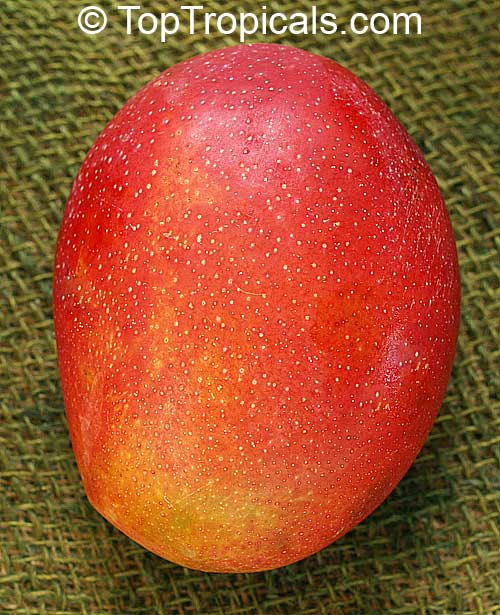
Variety: Baileys Marvel
Origin: Southwest Florida
Season: June-August
Tree size: Large vigorous grower with rounded symmetrical canopy and dense foliage
Condo Mango: No
Fruit shape/size/color: Oval to round/1-2 lbs./Peach blush over freckled yellow base
Texture: Fiberless
Flavor: Superb, juicy, tangy yet sweet, aromatic. Similar flavor to a Haden mango
Anthracnose Resistance: Fair
Seed Type: Monoembryonic
Comments: This mango is very similar to the Haden, only better! It has the same flavor as the Haden, with less fiber. The fruit are also bigger and less prone to fungus problems. Pick when you see the base of the fruit turning yellow. Eat before fruit gets too ripe. Best cold tolerance.
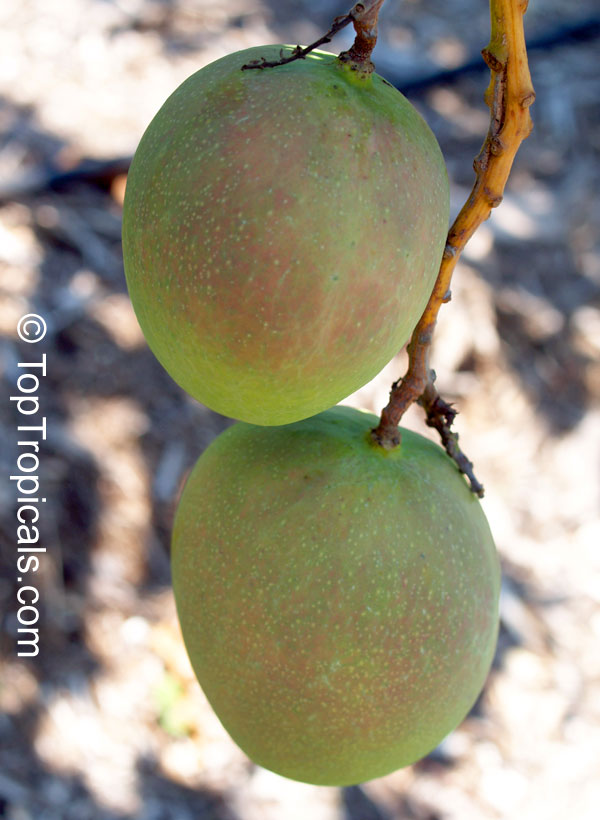
Variety: Beverly
Origin: South Florida
Season: June-August
Tree size: Low spreading habit
Condo Mango: No
Fruit shape/size/color: Oval to round/Large, up to 3 lbs./Dull green with red blush
Texture: Fiberless
Flavor: Yellow flesh is juicy, virtually fiberless, excellent!
Anthracnose Resistance: Very Good
Seed Type: Monoembryonic
Comments: Excellent late season mango. A delicious mango with abundant flesh available when most cultivars are through for the year. The only downfalls are its lackluster dull green color and the tree's low spreading habit.
Variety: Cac
Origin: Vietnam
Season: Late June-July
Tree size: Large, vigorous with open leggy habit
Condo Mango: No
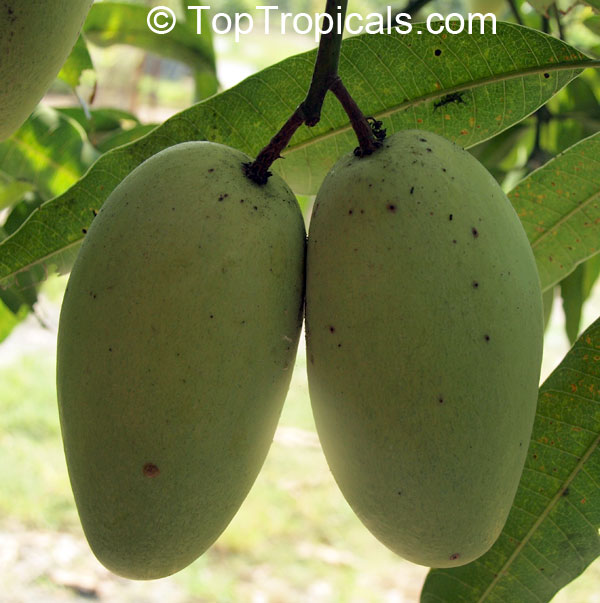
Fruit shape/size/color: Heart shaped/Medium 18 oz./Green to yellow
Texture: Fiberless
Flavor: Elements of citrus and peach, sweet
Anthracnose Resistance: Good
Seed Type: Polyembryonic
Comments: Cac is a selection from Vietnam, where it was singled out for consistent yields, a beautiful appearance and superb eating quality. The fruit are ovate and are 18 oz with an uncommonly smooth skin. The fruit are greenish-yellow with a lemon yellow flesh with no fiber. The flavor is uncomplicated, blending the elements of citrus and peach with a gentle floral bouquet. The tree is vigorous, with an open and leggy growth habit that requires close attention to branch tipping and shaping.
Variety: Carrie
Origin: South Florida
Season: June-July
Tree size: Compact yet vigorous
Condo Mango: Yes
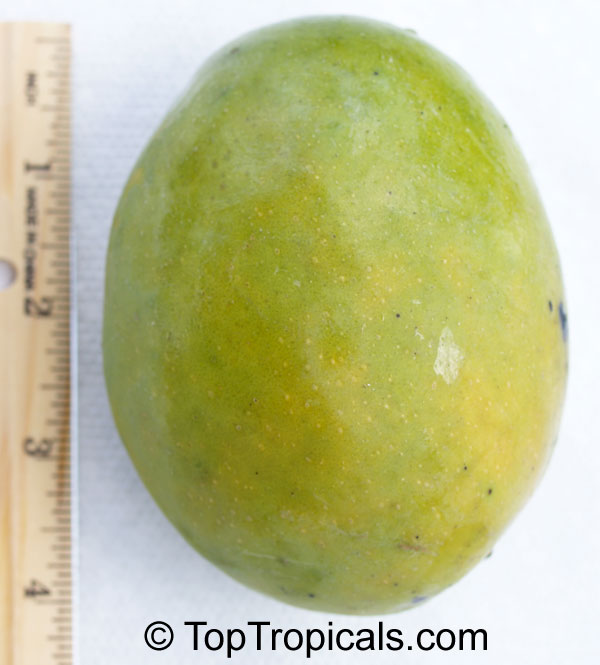
Fruit shape/size/color: Oval/10-16 oz./Green to yellow
Texture: Fiberless
Flavor: Excellent, sweet and tangy, highly aromatic, orange flesh
Anthracnose Resistance: Excellent
Seed Type: Monoembryonic
Comments: The flavor is by far the most outstanding feature of this variety. It has absolutely no fiber; Is extremely rich in flavor, sweet, aromatic and a pure pleasure to eat. You will savor every mouthful! Its compact size makes it an excellent dooryard tree that requires minimal care. Both fruit and tree have little to no problem with fungus or disease. Lack of color and firmness are the only shortcomings of this superb variety. To determine where to pick, look for a subtle yellow color at its base. Do not let the fruit drop from a tree, or it will bruise since it's completely fiberless. Many people agree that this is the best tasting mango in existence!

Variety: Choc Anon (Miracle)
Origin: Thailand
Season: November - January and sometimes July as well
Tree size: Medium size, vigorous grower, dense canopy with upright habit
Condo Mango: No
Fruit shape/size/color: Heart shaped/12-16 oz./Golden yellow
Texture: Fiberless
Flavor: Excellent, sweet and firm, has a very distinctive coconut flavor
Anthracnose Resistance: Very Good
Seed Type: Polyembryonic
Comments: Also known as the Miracle Mango. Fruit come in bunches. It is a Thai mango that fruits in the winter and often fruits in the summer of the same year producing two crops annually. This variety is an excellent choice for winter residents, and growers that want to extend their mango season beyond the traditional summer months.
Variety: Coconut Cream
Origin: Florida
Season: June-July
Tree size: Medium size, moderate growth rate
Condo Mango: No
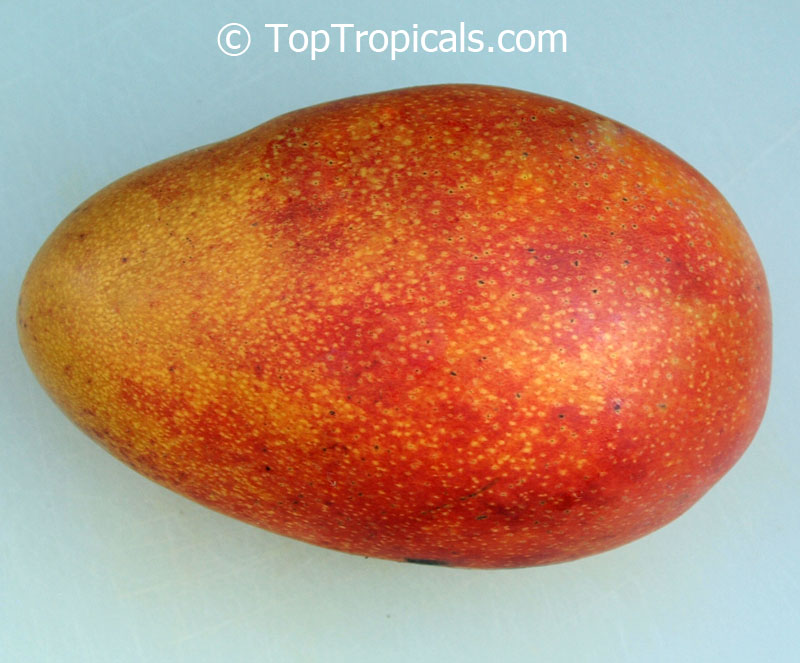
Fruit shape/size/color: Oval to pear/10-16 oz./Bright red, orange, yellow
Texture: Fiberless
Flavor: Exceptional with a creamy coconut hint
Anthracnose Resistance: Good
Seed Type: Polyembryonic
Comments: This variety is so exceptional, it is patented. Very large juicy fruit, and probably the most colorful! Brgiht red-orange-yellow. Pulp is bright orange. Should be pruned to shape.
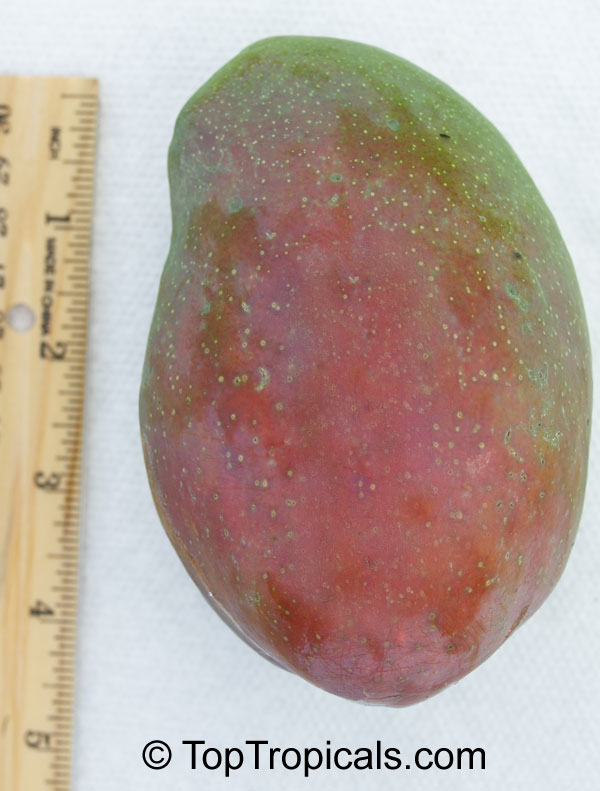
Variety: Cogshall
Origin: Florida
Season: June-July
Tree size: Semi-dwarf, compact slow growing. Can be maintained to 8'
Condo Mango: Yes
Fruit shape/size/color: Oval/10-16 oz./Yellow to red
Texture: Fiberless
Flavor: Soft and juicy, with a sweet flavor
Anthracnose Resistance: Very Good
Seed Type: Monoembryonic
Comments: The green fruit have a nice characteristic of turning yellow on the bottom to show they should be picked soon. Trees grow moderately low and spreading. Should be pruned to shape.
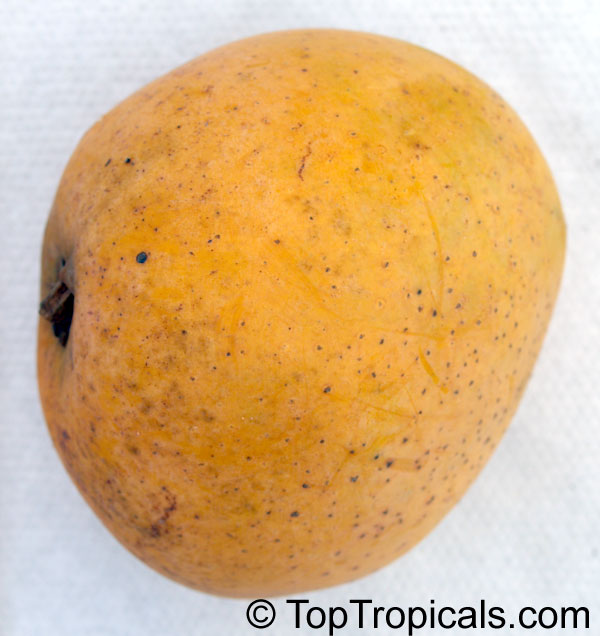
Variety: Cotton Candy
Origin: Florida
Season: August
Tree size: Can be maintained to 10'
Condo Mango: Yes
Fruit shape/size/color: Oval/16 oz./Yellow to orange
Texture: Fiberless
Flavor: Sweet like cotton candy
Anthracnose Resistance: Good
Seed Type: Polyembryonic
Comments: A new Zill release, this mango is turning out to be a champion. The original tree is a Keitt crossed with Gary. It is a late season mango, weighing around a pound with good disease resistance. The real advantage to this golden fruit is its incredible sweet taste. This variety will thrill adults and children alike.
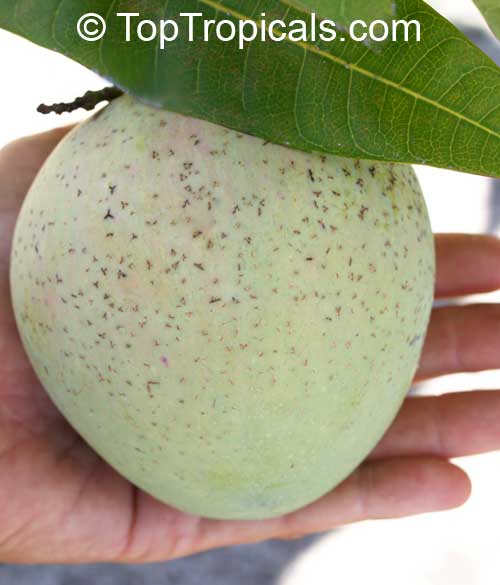
Variety: Cushman
Origin: South Florida
Season: July-August
Tree size: Medium with spreading habit
Condo Mango: No
Fruit shape/size/color: Round/Up to 2 lbs./Yellow-green
Texture: Fiberless
Flavor: Creamy, aromatic and sweet
Anthracnose Resistance: Fair
Seed Type: Monoembryonic
Comments: 'Cushman' is an excellent mid to late season mango that resembles a grapefruit in size, shape, and color. The flesh is smooth, creamy, and completely fiberless. Although the tree is not the most aesthetically pleasing due to poor disease resistance, one bite will make you drop the axe. One of the best tasting fruit!
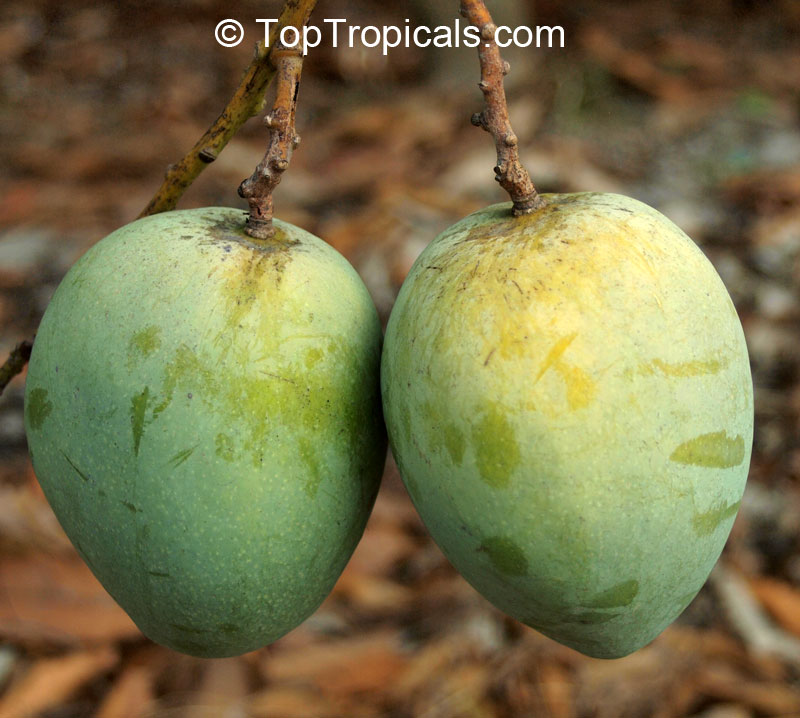
Variety: Diamond
Origin: Panama
Season: July-August
Tree size: Semi-dwarf
Condo Mango: Yes
Fruit shape/size/color: Oval to heart shaped/16 oz./Green to yellow
Texture: Some fiber
Flavor: Said to have the taste of a vegetable
Comments: A mango developed by Fairchild, its unique consistency makes it a collector must have. It has a great taste not found in the dessert type mangoes. Holds up well to storage due to its solid interior.
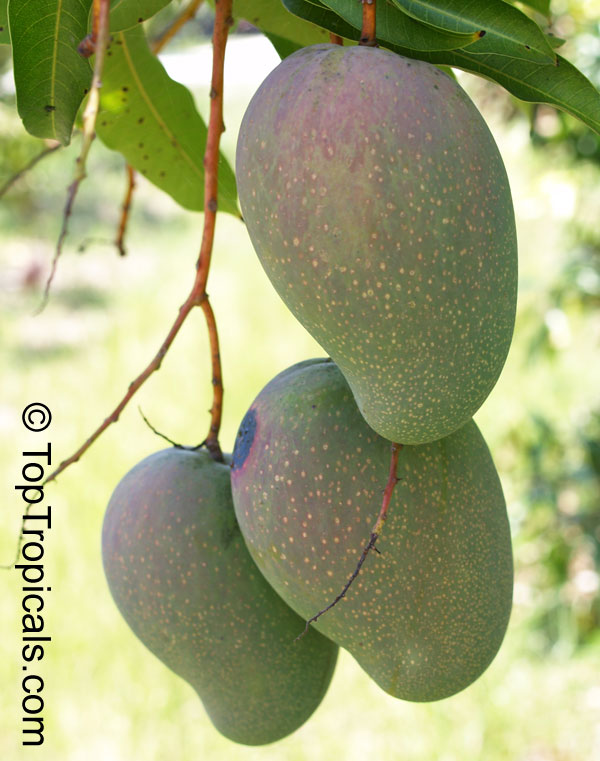
Variety: East Indian
Origin: Jamaica
Season: July
Tree size: 20 - 40' Moderately vigorous
Condo Mango: No
Fruit shape/size/color: Oblong/12-20 oz./Green to light yellow, red blush on shoulders
Texture: Some fiber
Flavor: Rich, aromatic, spicy, with distinctive tropical and coconut flavor notes
Anthracnose Resistance: Fair
Comments: A traditional juice mango selected in Jamaica but not well known away from the Island. Common in markets in Jamaica and other parts of Caribbean. The fruit is overlaid with large white dots and a heavy wax coating. Very good for fresh juices.
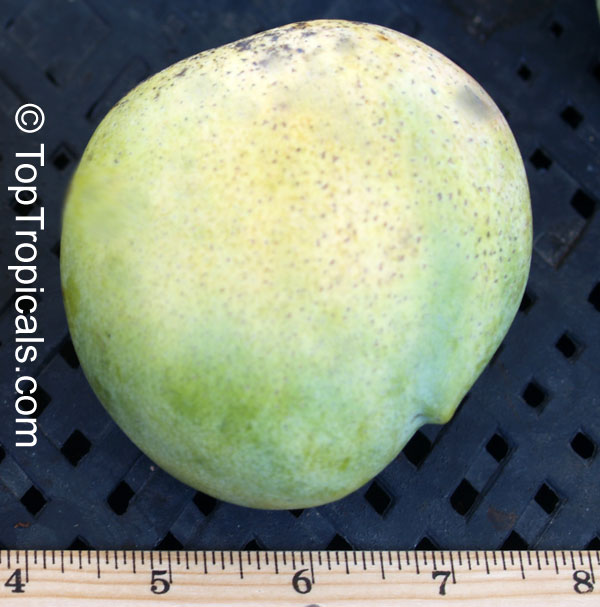
Variety: Edward
Origin: Indo-Chinese / Indian
Season: Late May-July
Tree size: Large and vigorous
Condo Mango: No
Fruit shape/size/color: Oval to heart shaped/12-22 oz./Yellow with red blush
Texture: Fiberless
Flavor: Sweet, aromatic
Anthracnose Resistance: Very Good
Seed Type: Monoembryonic
Comments: The most outstanding feature of this variety is the perfect blend of sweetness and tartness thanks to its Indo-Chinese / Indian background. It is also firm, yet has no fiber. Another good trait is a long-lasting season. After many of the early varieties are gone, you will still be savoring the sweet tartness of this exceptional variety. It is easy to determine when to pick because the fruit will turn yellow at its base.
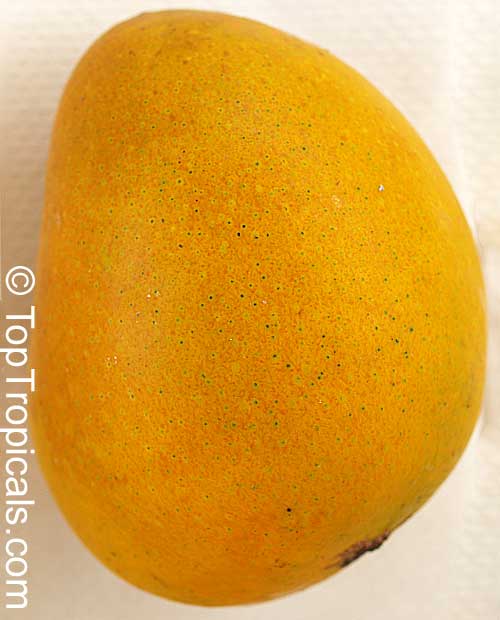
Variety: Fairchild
Origin: Panama
Season: June-July
Tree size: Can be maintained to 8'
Condo Mango: Yes
Fruit shape/size/color: Ovoid/12-20 oz./Yellow
Texture: Fiberless
Flavor: Rich and aromatic flavor
Anthracnose Resistance: Very Good
Seed Type: Monoembryonic
Comments: It was selected in the early 1900s in the Panama Canal Zone. It was a favorite of David Fairchild and his family due to its distinctive flavor and heavy production under humid conditions. . The tree and fruit are highly tolerant of disease and fruit well under humid conditions, making it a natural for South Florida. The tree is among the most ornamental of mangos, with its compact shape and deep green color. It can be maintained at a height and spread of eight feet or less, perfect for those with a modest-sized home garden.
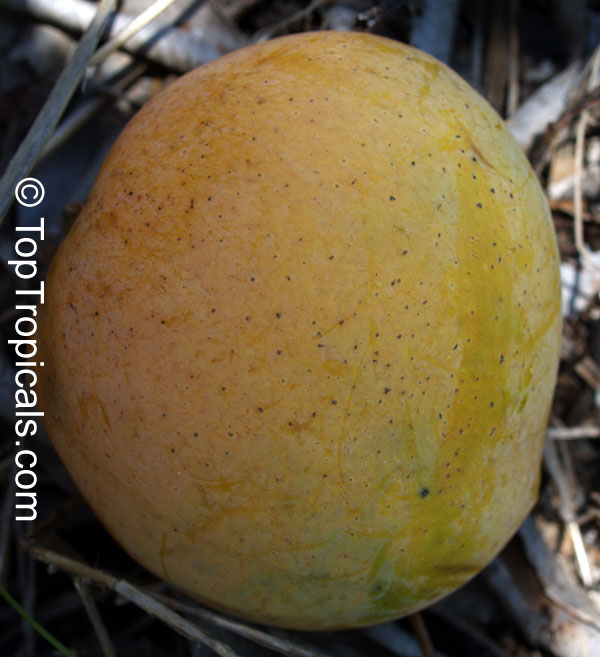
Variety: Florigon
Origin: South Florida
Season: Late May-July
Tree size: Medium vigorous grower
Condo Mango: No
Fruit shape/size/color: Round/Less than 16 oz./Yellow
Texture: Fiberless
Flavor: Sweet and mild
Anthracnose Resistance: Excellent
Seed Type: Polyembryonic
Comments: A a pure yellow, early season cultivar with an excellent flavor and good disease tolerance. Extremely popular with dooryard growers for its quality, consistency, and precocity. The flesh is firm with a deep yellow color and mild flavor.
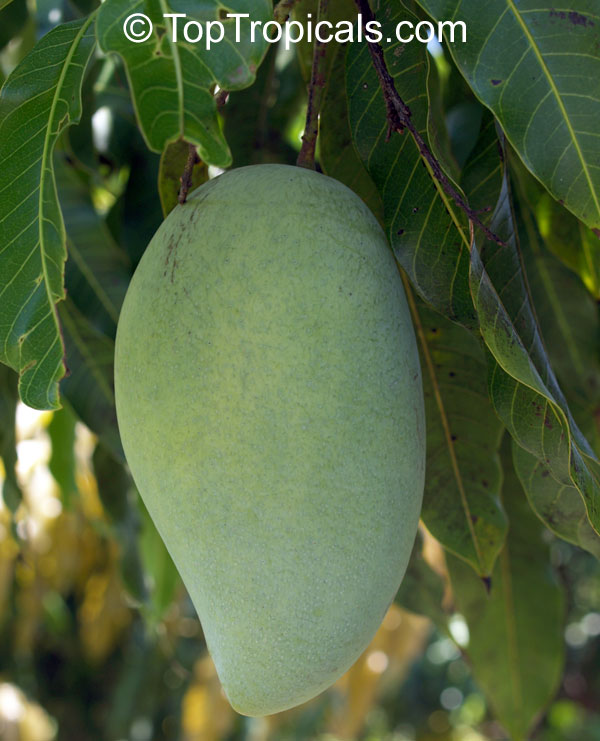
Variety: Fralan
Origin: Thailand
Season: Summer
Tree size: Small to medium slow grower
Condo Mango: No
Fruit shape/color: Oblong/Green
Texture: Fiberless
Flavor: Picked and eaten green. Crisp and sweet with good flavor
Anthracnose Resistance: Excellent
Seed Type: Polyembryonic
Comments: Rare variety from Thailand, with green skin. Fralan means "Thunder" - as the fruit cracks when peeled. No turpentine aftertaste, very good flavor.
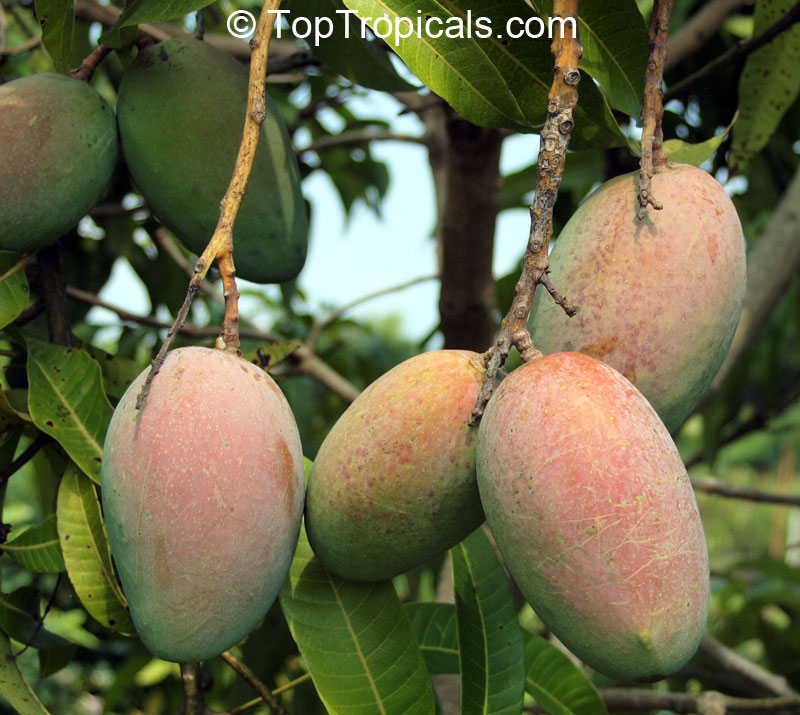
Variety: Fruit cocktail
Origin: South Florida
Season: June-July
Tree size: Medium
Condo Mango: No
Fruit shape/size/color: Ovoid/16 oz./Yellow
Texture: Fiberless
Flavor: Citrus, pineapple and guava notes
Seed Type: Polyembryonic
Comments: New introduction, Fruit Cocktail is a flavorful and sweet variety with a fiberless pulp. Flavor is an amazing palette of different fruit, with citrus, pineapple, and guava notes.
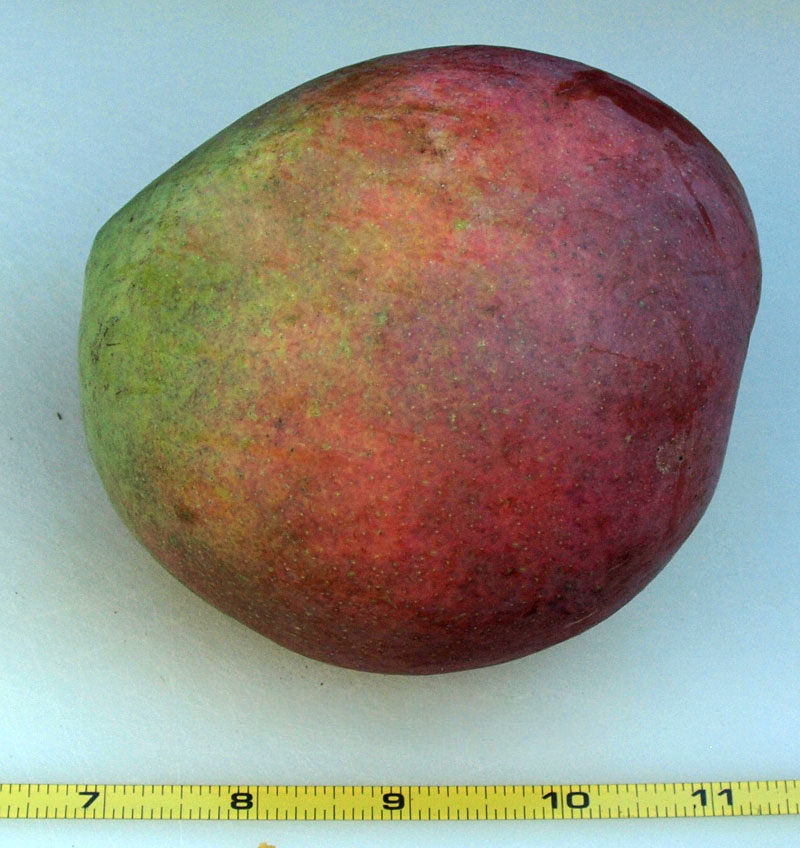
Variety: Fruit Punch
Origin: South Florida
Season: June-July
Tree size: Medium
Condo Mango: No
Fruit shape/size/color: Ovoid/12-16 oz./Orange to red
Texture: Fiberless
Flavor: Juicy, firm with many fruit flavors
Seed Type: Polyembryonic
Comments: New introduction, Fruit Cocktail is a flavorful and sweet variety with a fiberless pulp. Flavor is an amazing palette of different fruit, with citrus, pineapple, and guava notes.
Variety: Gary
Origin: South Florida
Season: July
Tree size: Medium to large, but can be kept to 12'
Condo Mango: No
Fruit shape/size/color: Ovoid/Small 6-12 oz./Green to yellow/green
Texture: Fiberless
Flavor: Sweet, rich with a coconut flavor
Anthracnose Resistance: Good
Seed Type: Monoembryonic
Comments: Productive with excellent flavor. Can be hard to judge when to pick. Disease resistant, but bruises easily so you want to pick before they fall from the tree.
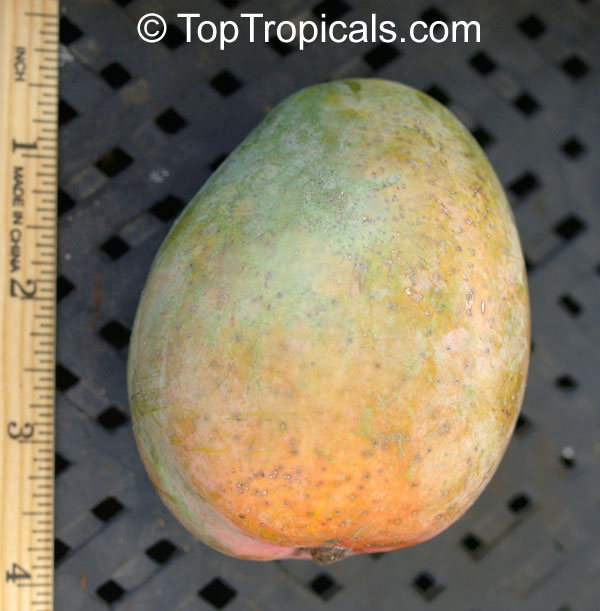
Variety: Glenn
Origin: Florida
Season: June-July
Tree size: Medium, but can be kept to 12'
Condo Mango: Yes
Fruit shape/size/color: Ovoid/16-20 oz./Yellow with red blush where sun hits
Texture: Fiberless
Flavor: Sweet, silky, rich, tangy, mild peachy flavor
Anthracnose Resistance: Very Good
Seed Type: Monoembryonic
Comments: This Indian / Indo-Chinese hybrid fruits consistently every year. It is a Haden seedling, and much like the Haden it is a Florida favorite. It has a very attractive appearance and excellent eating quality, consistent production, and is effortless to grow. It is easy to determine when to pick because the fruit will turn yellow at its base.
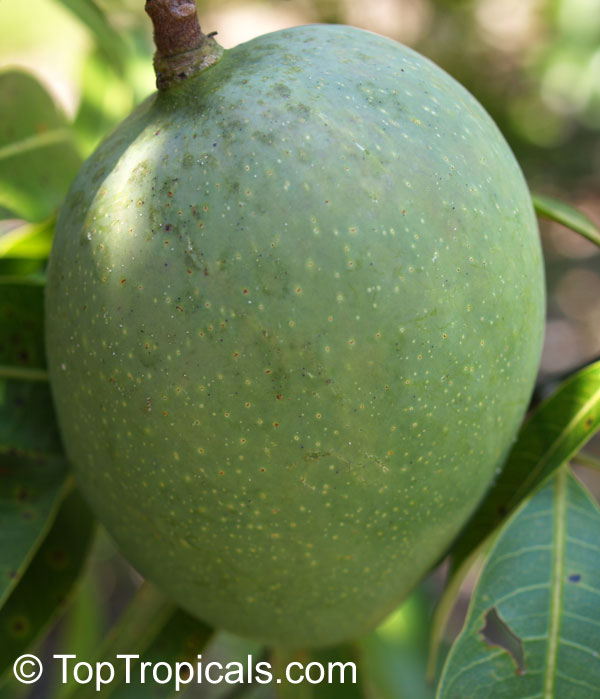
Variety: Gold Nugget
Origin: Florida
Season: July-August
Tree size: Slow grower with spreading habit
Condo Mango: No
Fruit shape/size/color: Oval/16 oz./Yellow-orange with some pink blush
Texture: Fiberless
Flavor: Mild and sweet
Anthracnose Resistance: Good
Seed Type: Monoembryonic
Comments: Gold Nugget (or Golden Nugget) mango is new cultivar originated in Florida in 1990s. The tree is a heavy producer.
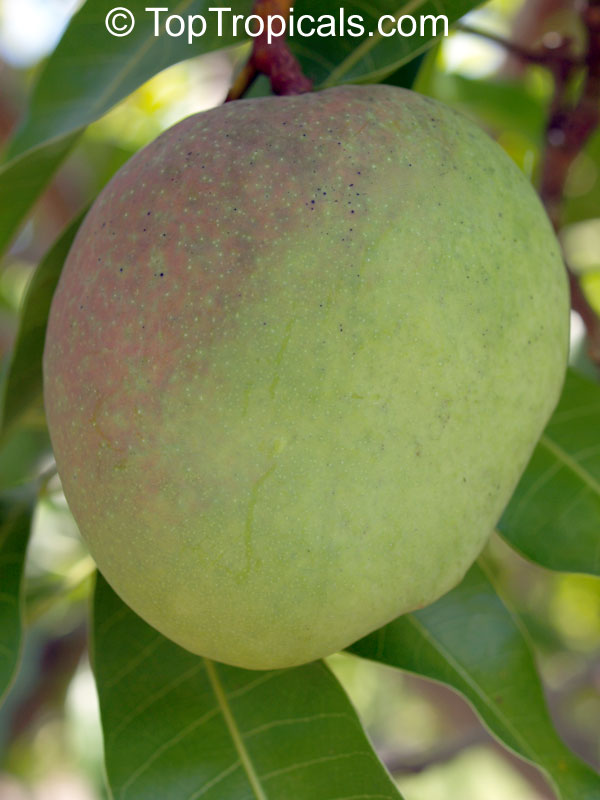
Variety: Graham
Origin: Trinidad
Season: Late June-August
Tree size: Can be maintained to 10'
Condo Mango: Yes
Fruit shape/size/color: Oval with a flat base/16-29 oz./Yellow along coast, green inland
Texture: Fiberless
Flavor: Deep orange flesh, soft and juicy with a sweet, rich and aromatic flavor
Anthracnose Resistance: Excellent
Seed Type: Monoembryonic
Comments: Graham is a descendant of Julie selected in Trinidad. he tree is naturally compact, and with annual pruning perfect for the space-limited backyard or container culture. The stem is petite and set in a shallow depression, reminiscent of Julie. The skin is thick and tough and tolerant of rough handling. During the late summer, a finer-flavored mango would be hard to locate. Graham is similar to Julie, both in its growth habit, and fruit shape. The tree, however, grows better in moist, humid conditions, typical in South Florida. The tree is perfect for the space-limited homeowner. The fruit are larger than Julie and fruiting is more dependable. There will be less headaches in growing a Graham and more time eating this fruit.
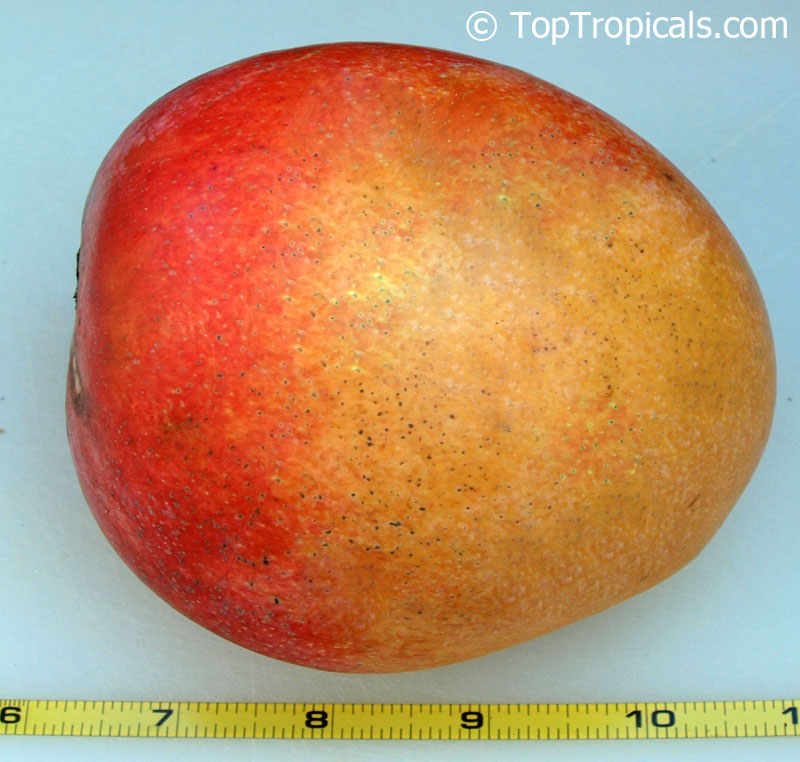
Variety: Harvest Moon
Origin: South Florida
Season: Juy-August
Tree size: Large vigorous with upright growth habit
Condo Mango: No
Fruit shape/size/color: Ovoid/Large, up to 3 lbs./Light orange with red blush
Texture: Fiberless
Flavor: Sweet with notes of plum
Anthracnose Resistance: Very Good
Comments: This mango is very delicious; sweet with a fantastic creamy consistency. It looks good also (for those who care about looks in addition to taste). It is a very sweet, tropical citrusy taste with well balanced acidity. Texture is juicy and creamy.
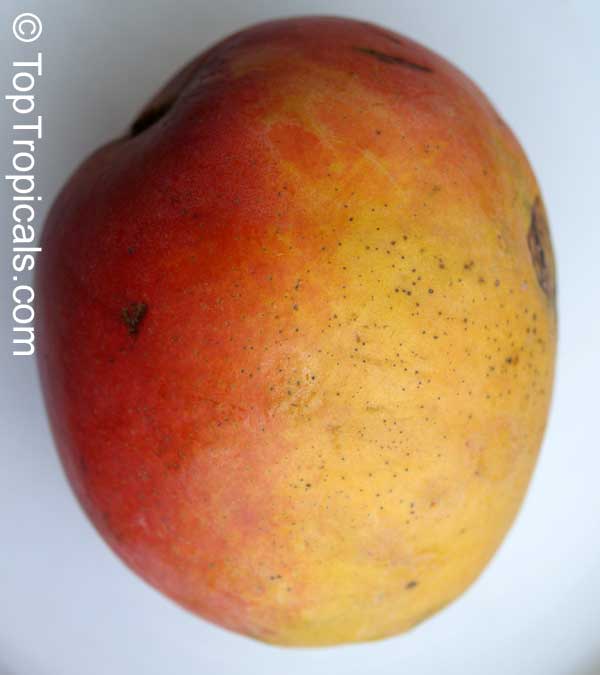
Variety: Haden
Origin: Florida
Season: May-July
Tree size: Medium to large vigorous grower
Condo Mango: No
Fruit shape/size/color: Round/medium/Yellow with red blush
Texture: Moderate fiber
Flavor: The flesh has a full sweet flavor with a hint of peach, and it is of good eating quality
Anthracnose Resistance: Good
Seed Type: Monoembryonic
Comments: This variety is well-known because it originated in Florida and has been grown here since 1910. It has a good flavor, however, it is slightly fibrous and is succeptable to fungus. If you insist on "old haden" variety, this is it. The fruit is eye catching having a deep yellow base with a crimson blush. The tree is a vigorous large grower with an open rounded canopy. Relatively cold hardy variety.
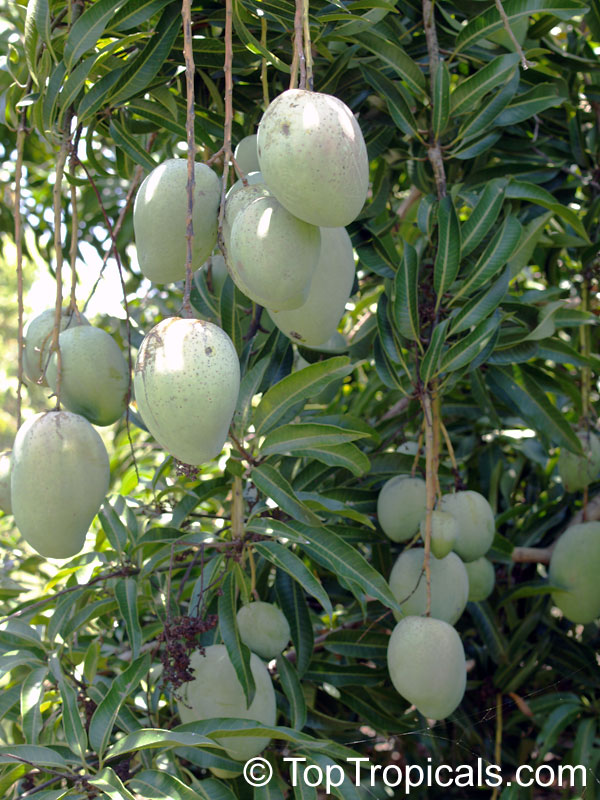
Variety: Ice Cream
Origin: Trinidad and Tobago
Season: June-July
Tree size: Can be maintained to 6'
Condo Mango: Yes
Fruit shape/size/color: Heart shaped/Small 8 oz./Green
Texture: Fiberless
Flavor: Sweet, melting and juicy, reminiscent of mango sorbet
Anthracnose Resistance: Fair
Comments: 'Ice Cream' is far and away the most popular of the "condo mangos." Although the fruit is not exactly dessert to the eyes the flavor is sweet, rich, and reminiscent of mango sorbet. The skin is thick; yet, tender and easily separating from the fiberless, soft, melting and juicy, yellow flesh. It is the flavor that distinguishes this fruit, with a sweet richness reminiscent of mango sorbet. The tree is tolerant of disease, allowing for large harvests with no pesticides.
Variety: Juicy Peach
Origin: South Florida
Season: July
Tree size: Very vigorous spreading grower
Condo Mango: No
Fruit shape/size/color: Heart shaped/Medium/Yellow with pink blush
Texture: Fiberless
Flavor: Citrus and peach flavors
Anthracnose Resistance: Fair
Comments: Bears heavily and consistently. Fruit is very soft and does not keep well, but has very good flavor.
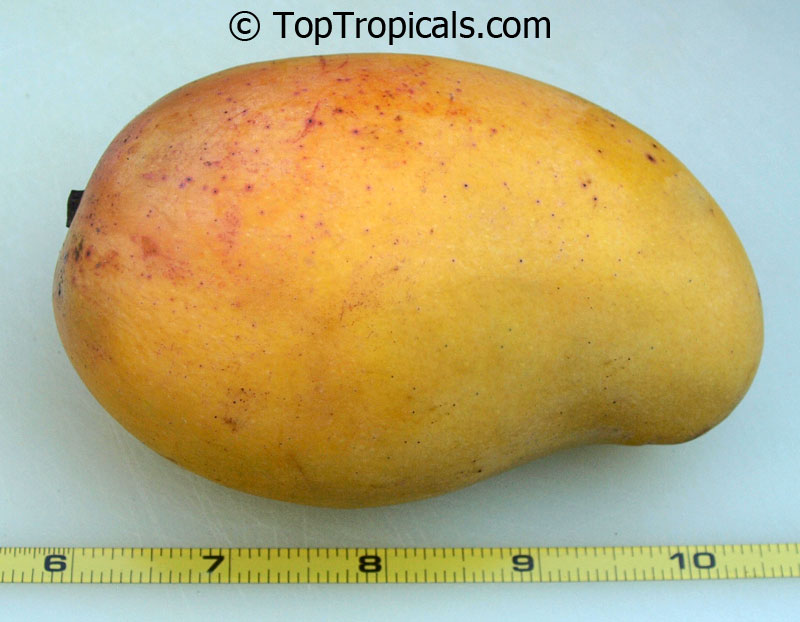
Variety: Kathy (K3)
Origin: South Florida
Season: June-September
Tree size: Medium
Condo Mango: No
Fruit shape/size/color: Oval/Medium to large/Yellow, amber
Texture: Fiberless
Flavor: Complex sweetness with hints of vanilla and just enough tartness to form a well balanced delight
Anthracnose Resistance: Good
Seed Type: Monoembryonic
Comments: This new Zill release is a sister of the Sweet Tart variety, and it lives up to the family name. A nice tree with good disease resistance that produces an exceptional tasting fiberless mangos. It has an extended season. Its consistent growth makes the tree almost as valuable as the fruit.
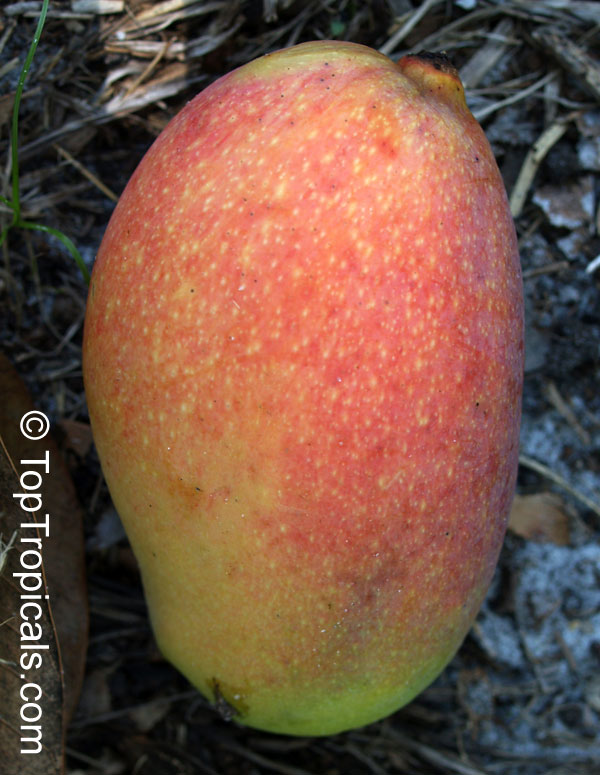
Variety: Keitt
Origin: Mexico
Season: August-October
Tree size: Medium, vigorous growers with spreading habit
Condo Mango: No
Fruit shape/size/color: Large oval/20 0z.-5 lbs./Green with red blush
Texture: Minimal fiber
Flavor: Tangy, sweet, firm flesh
Anthracnose Resistance: Excellent
Seed Type: Monoembryonic
Comments: By far, this is the best all-around late mango. It is very productive, good-flavored, excellent for shipping, and disease resistant. It also has a very long and late season. The largest fruit mature in late July, and the smallest fruit can be left on the tree as late as November. Fruit ripen more evenly when picked green, starting with the largest fruit. Good variety for eating while green and to use for making Indian green mango pickle (achar). The variety has become one of the world's most outstanding mangos. Excellent productivity, and ripening time are some of the features of this four to five pound goliath.
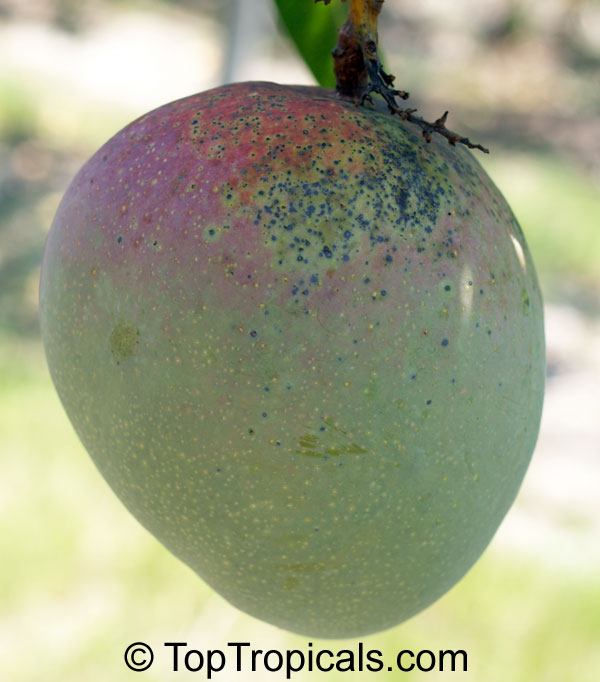
Variety: Kent
Origin: Coconut Grove, Florda
Season: July-August
Tree size: Large and vigorous
Condo Mango: No
Fruit shape/size/color: Oval to round/20-26 0z./Greenish yellow with red blush
Texture: fiberless
Flavor: Sweet, aromatic, juicy, tender
Anthracnose Resistance: Very Good
Seed Type: Monoembryonic
Comments: This variety originated in Coconut Grove, Florida in 1945 from a Haden seed. It has an excellent flavor, large size, and very little fiber. Considered by many to be one of the best tasting Florida mangoes. Eat before fruit gets too ripe. The most rewarding attribute is a bountiful late season crop. Late season mango with good color and exceptional flavor, great for drying.
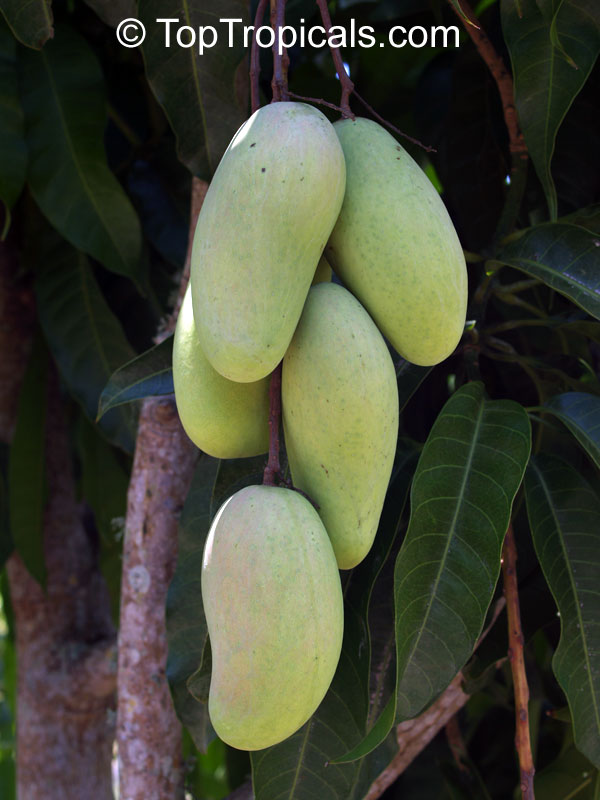
Variety: Keo Sevoy
Origin: Thailand
Season: July-August
Tree size: Large and upright 50'
Condo Mango: No
Fruit shape/size/color: Long and slender, with a blunt apex/14-21 0z./Dark green
Texture: Little fiber
Flavor: Firm yellow flesh with lemony flavor
Anthracnose Resistance: Very Good
Seed Type: Polyembryonic
Comments: Exotic mango from Thailand, oval, eaten green - sweet and crunchy.
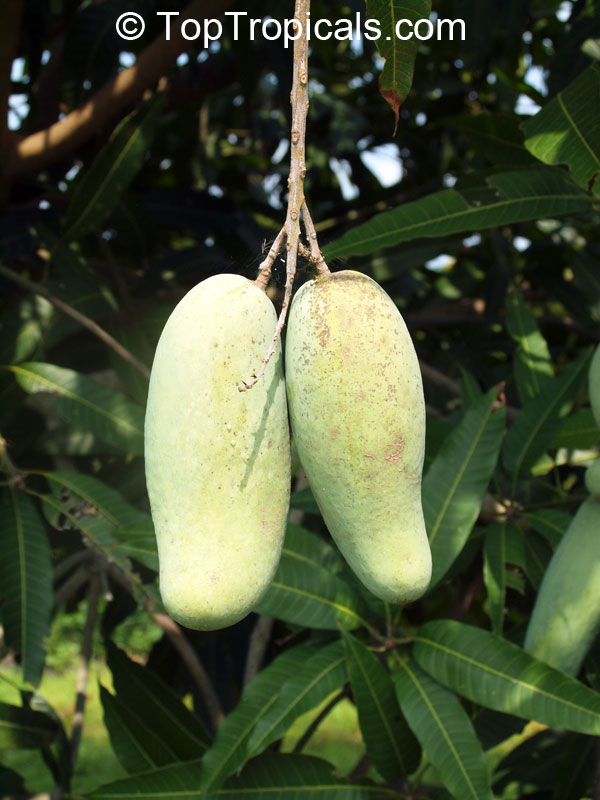
Variety: Kiew Yai
Origin: Thailand
Season: August-September
Tree size: Somewhat vigorous with very dense canopy
Condo Mango: No
Fruit shape/size/color: Oblong with pointed tip/Small to medium/Dull green
Texture: Little fiber
Flavor: Extremely crunchy, nutty crisp green apple flavor with floral notes
Anthracnose Resistance: Very Good
Seed Type: Polyembryonic
Comments: This is a smaller Thai mango used for eating green. It is also great for pickling.
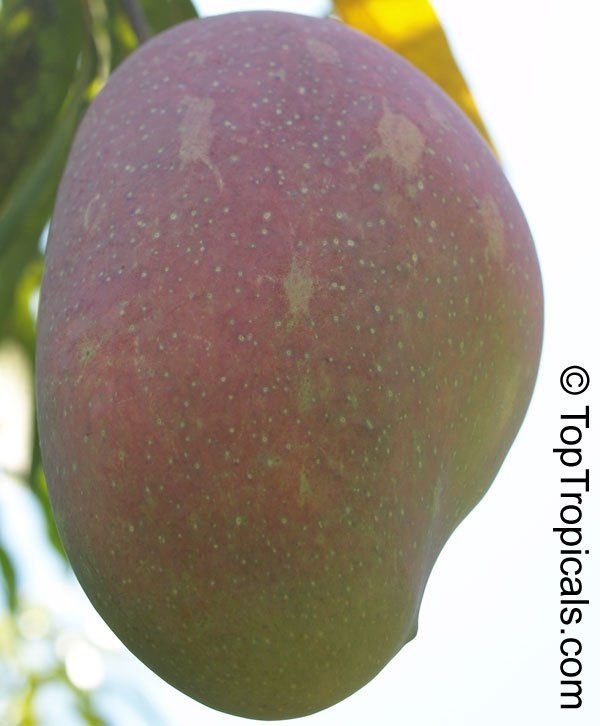
Variety: Lancetilla
Origin: Honduras
Season: Mid August-September
Tree size: Can be maintained to 10'
Condo Mango: Yes
Fruit shape/size/color: Heart shaped/2-5 lbs./Red
Texture: fiberless
Flavor: Firm juicy and intensly sweet
Anthracnose Resistance: Excellent
Seed Type: Monoembryonic
Comments: This impressive mango comes from the north coast of Honduras. The thick skin is tolerant of rough handling and is easily separated from the firm, juicy lemon-yellow flesh. The fruit ripen at almost the end of the mango season in South Florida. With branch tipping and selective pruning, it can be formed into a small, productive ten-foot tree.It is the perfect late season mango, offering beauty, compact size and flavor.
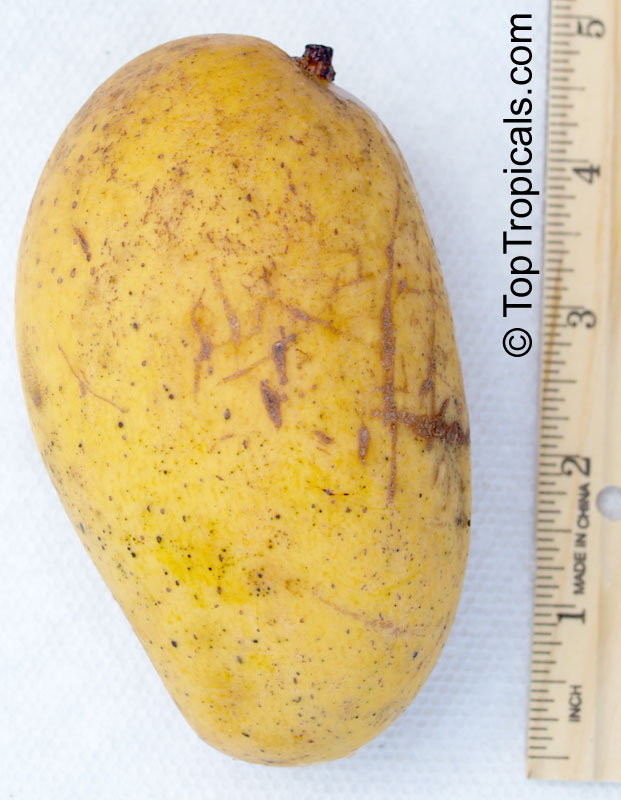
Variety: Lemon Meringue
Origin: Burma
Season: June-July
Tree size: Medium
Condo Mango: No
Fruit shape/size/color: Oblong/8-12 oz./Yellow with orange blush
Texture: fiberless
Flavor: Sweet citrus flavor
Anthracnose Resistance: Excellent
Seed Type: Polyembryonic
Comments: This unique variety has a tart, yet sweet flavor with a wonderful "lemony" aroma - hence the name. Everyone who tastes this fruit loves it! It is originally from Burma, where it is known as Pu Pyi Klai. The fruit is extremely fungus resistant.
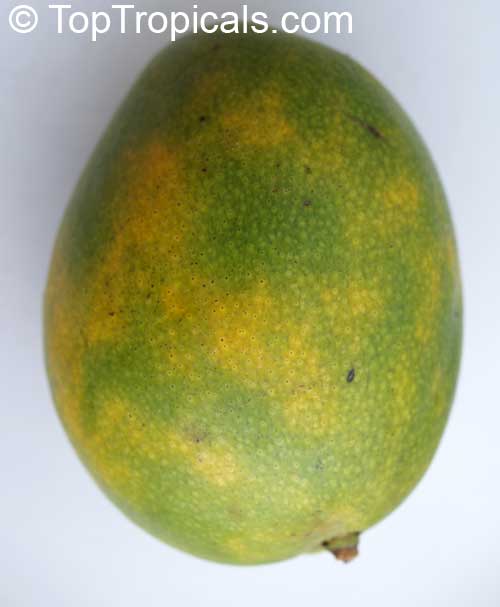
Variety: Lemon Zest
Origin: South Florida
Season: June-July
Tree size: Medium
Condo Mango: No
Fruit shape/size/color: Oblong/8-12 oz./Yellow-green with orange blush
Texture: fiberless
Flavor: Sweet citrus flavor
Anthracnose Resistance: Excellent
Seed Type: Polyembryonic
Comments: This unique variety has a tart, yet sweet flavor with a wonderful "lemony" aroma - hence the name. Everyone who tastes this fruit loves it! It is originally from Burma, where it is known as Pu Pyi Klai. The fruit is extremely fungus resistant.
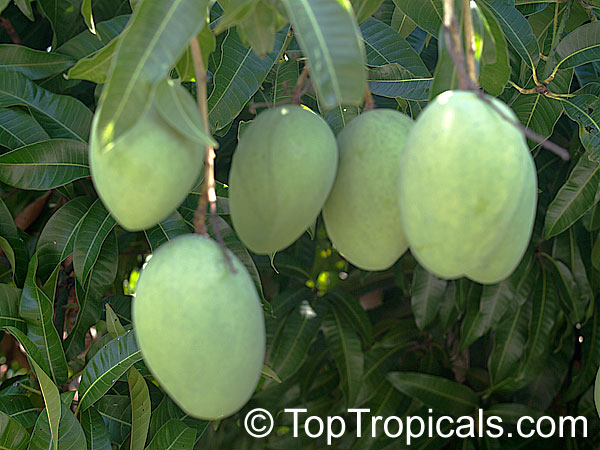
Variety: M4 (Candy Sweet)
Origin: South Florida
Season: July-August
Condo Mango: No
Fruit shape/size/color: Ovoid/Small/Green
Texture: fiberless
Flavor: Its coconut flavor blows Coconut Cream away, and is way more complex with a slight balancing sub-acidity component.
Comments: M4 is referred to as "sweet like candy and tasted coconutty". M4 is not a colorful/pretty mango on the outside but the taste more than makes up for it. It is a Kent cross and has just recently been released from the same breeding project that produced Coconut Cream, Pineapple Pleasure and others. This superior variety was released due to high connoisseur and staff insistence, because of supreme deliciousness, to pretty much everyone who tried them, and clean appearance, though not at all colorful. Considered by some connoisseurs to join the ranks of a rarified top 10 mango. The fruit size is small, but the number of fruits produced is high. The original tree has been an alternate bearer so this variety possibly can skip years because it may hold fruit too late, however it is not considered a super late variety. It fruits Mid-to-Late Season.
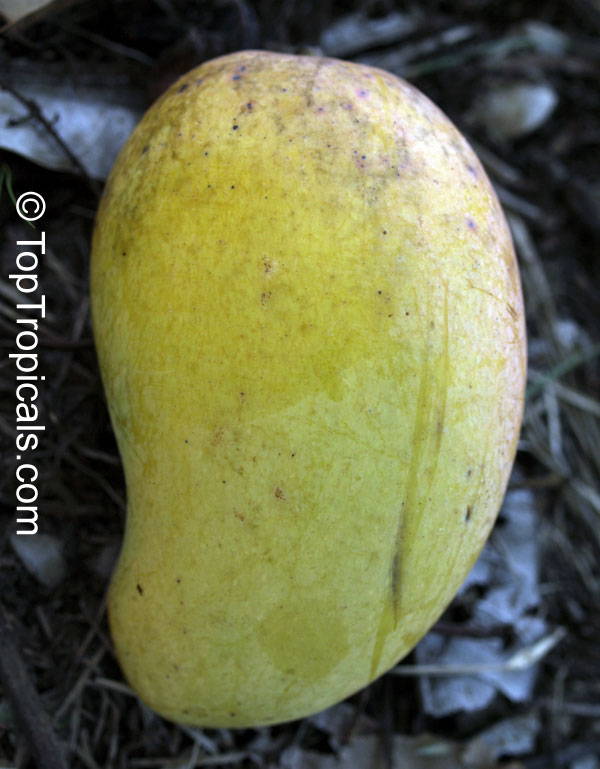
Variety: Madame Francis
Origin: Haiti
Season: June-July
Tree size: Medium to large, vigorous grower
Condo Mango: No
Fruit shape/size/color: Kidney shaped/16-24 oz./Light green with slight yellow
Texture: low fiber
Flavor: Soft and juicy with a rich, spicy and sweet flavor
Anthracnose Resistance: Fair
Seed Type: Polyembryonic
Comments: A traditional dessert mango from Haiti, with an undulating and naturally waxed skin. The dark orange somewhat fibrous flesh is soft and juicy with a rich, spicy and sweet flavor that speaks of the Caribbean. 'Madame Francis' is one of the few specialty mangos available in the United States for a number of years. The tree is open growing with large, light green leaves. It is generally one of the first mangos to ripen during the season and often produces multiple crops here in Florida and throughout the tropics.
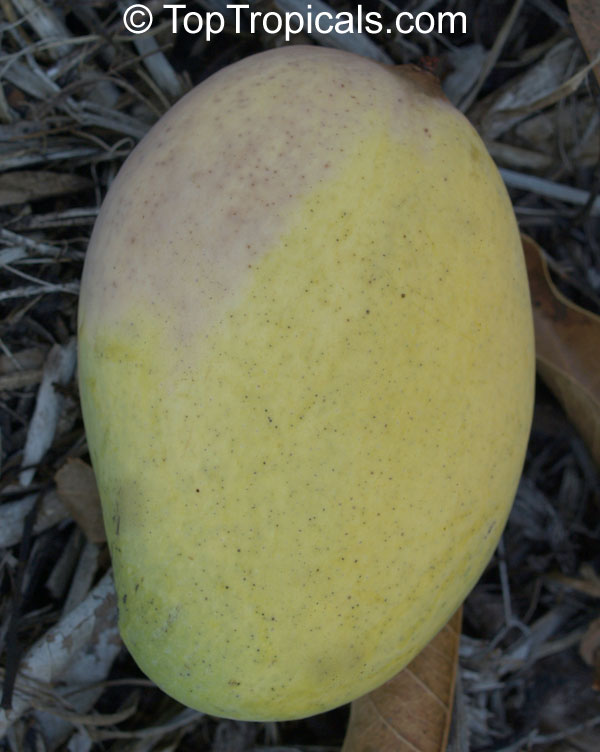
Variety: Mallika
Origin: India
Season: June-July
Tree size: Small and productive
Condo Mango: Yes
Fruit shape/size/color: Oblong/10-16 oz./Canary yellow to pink
Texture: fiberless
Flavor: Sweet, honey-like flavor with hints of citrus and melon, highly aromatic and excellent eating quality.
Anthracnose Resistance: Excellent
Seed Type: Monoembryonic
Comments: 'Mallika' is a condo mango native to India. It has become a favorite due to its superb flavor, unparalleled disease resistance, and small but extremely productive habit. But there is a catch. The fruit must be picked mature green and ripened in camel dung or a cardboard box (whichever is handy). This typically takes ten to fourteen days.
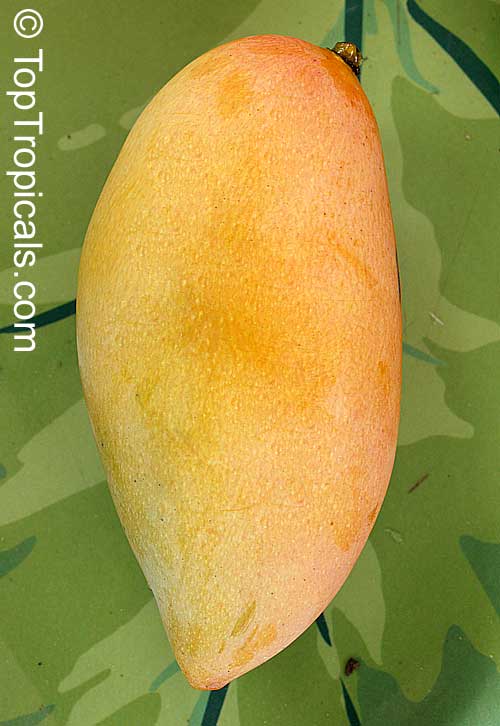
Variety: Nam Doc Mai
Origin: Thailand
Season: June-July
Tree size: Medium/Semi-Dwarf 15'-18'
Condo Mango: Yes
Fruit shape/size/color: Long slender, sigmoid/12-20 oz./Green-gold to bright yellow
Texture: fiberless
Flavor: Firm, very sweet, aromatic and juicy
Anthracnose Resistance: Very good
Seed Type: Polyembryonic
Comments: 'Nam Doc Mai' is a premium cultivar introduced to Florida from Thailand in 1973 where it is one of the most popular varieties. Multiple crops possible. Eaten green or ripe, a Thailand favorite. It is hands down the most sought after of the Asian mangos and for good reason. A great feature of this variety is that the branches bloom occasionally at different times, giving you an extended ripening season during the summer. ‘Nam Doc Mai’ is among the best known dessert mangos of Thailand, with an exceptional appearance and eating quality. It can sometimes be found in specialty markets in Japan, Europe, and rarely the United States. The fruit are most often eaten when ripe. In Thailand and throughout much of Asia, this cultivar encompasses what is most desired in terms of a quality ripe dessert fruit, with a smooth, silky texture and extreme sweetness and bouquet. The fruit are also used while mature green for dipping in sauces and for the making of sweet preserves and pickles. It has found a home in the Caribbean, where it grows and fruits well.
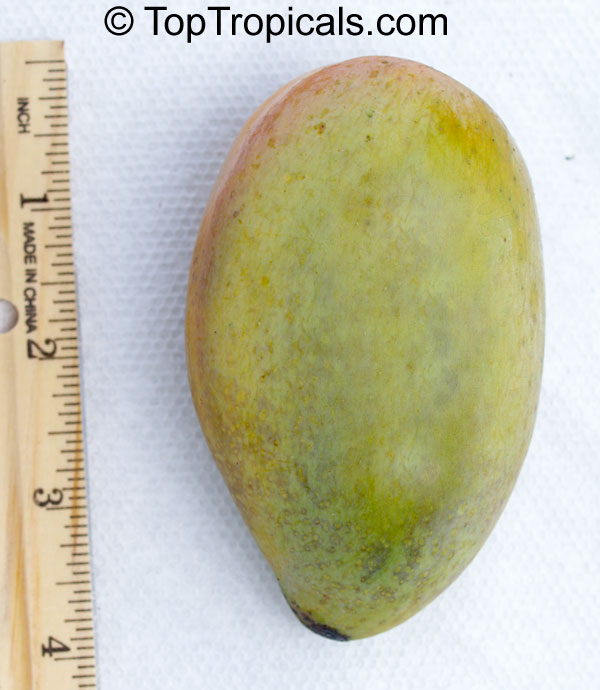
Variety: Okrung
Origin: Thailand
Season: June-July
Tree size: Medium/Semi-Dwarf 15'-18'
Condo Mango: Yes
Fruit shape/size/color: Ovoid/8 oz./Green-yellow
Texture: somewhat fibrous
Flavor: Soft, juicy, very sweet with low acid
Anthracnose Resistance: Good
Seed Type: Monoembryonic
Comments: Excellent Thai cultivar introduced to Florida in 1973. Eaten while green. The fruit is traditionally served in Thailand in combination with sticky rice. One of the most popular varieties in Thailand. The fruit is very sweet, with the highest sugar content of any mango tested in Florida. It has a strong Indo-Chinese flavor and is somewhat fibrous. The fruit are small, hand in clusters and drop off the tree when ripe.
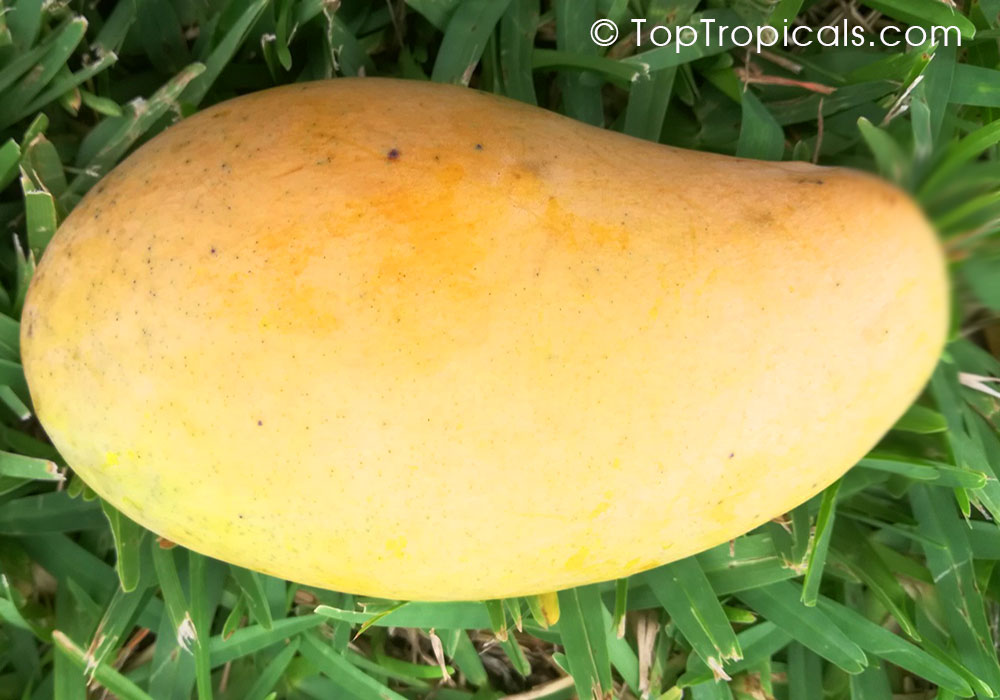
Variety: Orange Sherbet
Origin: South Florida
Season: June-July
Tree size: Medium and very vigorous
Condo Mango: No
Fruit shape/size/color: Ovoid/12-16 oz./Yellow
Texture: fiberless
Flavor: Sweet citrus-orange and less lemony than Lemon Meringue mango
Anthracnose Resistance: Very Good
Seed Type: Polyembryonic
Comments: The trees are moderately vigorous growers and good producers. Seems to have better resistance to bacterial black spot than Lemon Meringue and Lemon Zest.
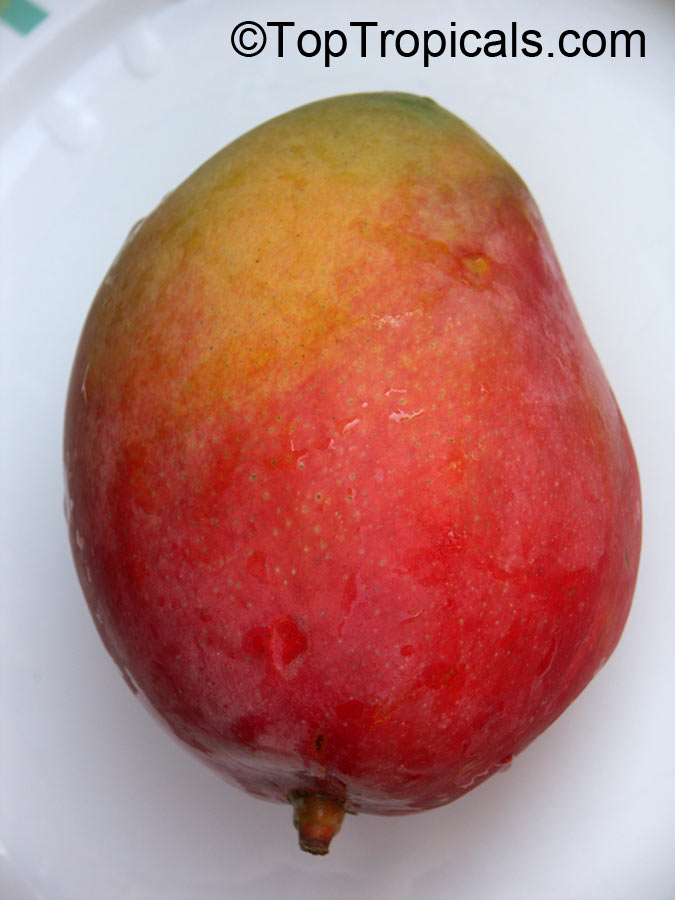
Variety: P22
Origin: South Florida
Season: June-July
Tree size: Large
Condo Mango: No
Fruit shape/size/color: Ovoid/Large/Green-yellow
Texture: fiberless
Flavor: reamy, smooth with spicy,parsnip undertones
Seed Type: Monoembryonic
Comments: New variety, very smooth and soft texture. Melts in your mouth like butter cream.
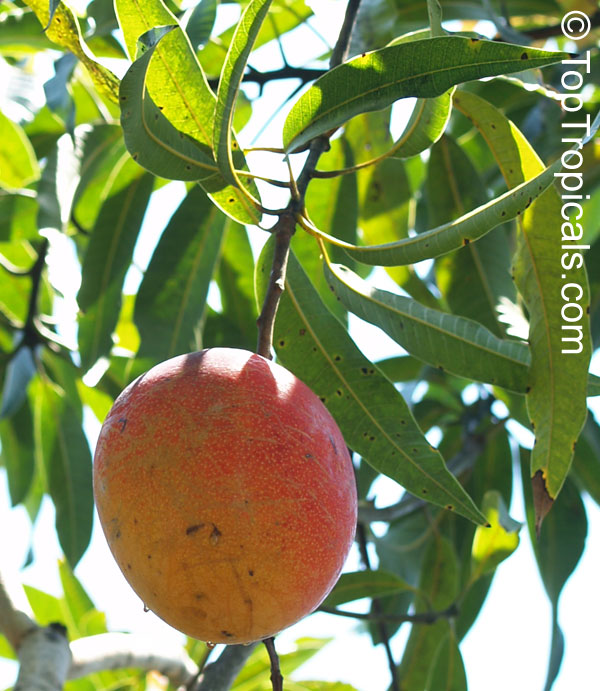
Variety: Peach Cobbler
Origin: South Florida
Season: July-August
Tree size: Vigorous with large spreading canopy
Condo Mango: No
Fruit shape/size/color: Round/Small/Green
Texture: fiberless
Flavor: Peaches and cinnamon
Seed Type: Monoembryonic
Comments: New introduction variety! This Kent and Gary crossbreed produces a nearly fiberless fruit with green skin and bright orange flesh that tastes like peaches and cinnamon! It is a large tree with a very productive fruiting season from June to August. Better suited for mid Florida and California.
Variety: Phillipine
Origin: Phillipines
Season: June-July
Tree size: Large, vigorous grower
Condo Mango: No
Fruit shape/size/color: Long, slender, sigmoid/8-12 oz./Yellow
Texture: fiberless
Flavor: Soft, creamy and tart
Anthracnose Resistance: Excellent
Seed Type: Polyembryonic
Comments: This variety originated from the Philippines and was introduced to Florida from Cuba. In Mexico, it is known as Manila, in Philippines - as Carabo. The flesh is soft, melting, and has a sweet rich flavor, with an aroma typical of the Indo-Chinese types, it is very different from the Indian types. The fruit hang in clusters on the stem. The tree is well adapted to South Florida.
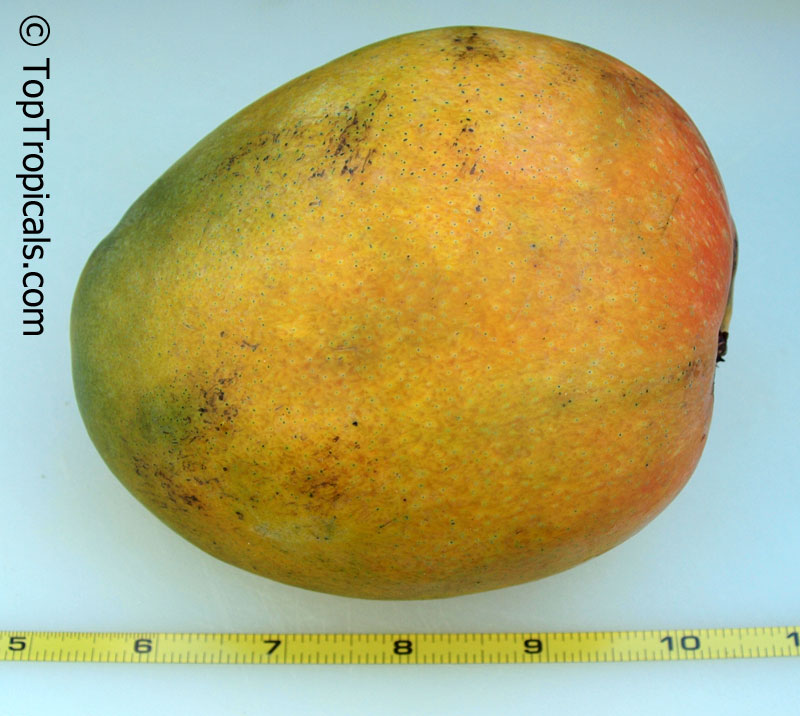
Variety: Phoenix
Origin: South Florida
Season: July
Tree size: Very vigorous grower
Condo Mango: No
Fruit shape/size/color: Ovoid/Small/Yellow with orange/red blush
Texture: fiberless
Flavor: Somewhere between classic and Indian flavor, with a strong subacid component to balance out its rich sweetness
Anthracnose Resistance: Good
Comments: Exceptional Zill release with a full, sweet well rounded flavor. It is not as productive as other varieties but the flavor more than makes up for it.
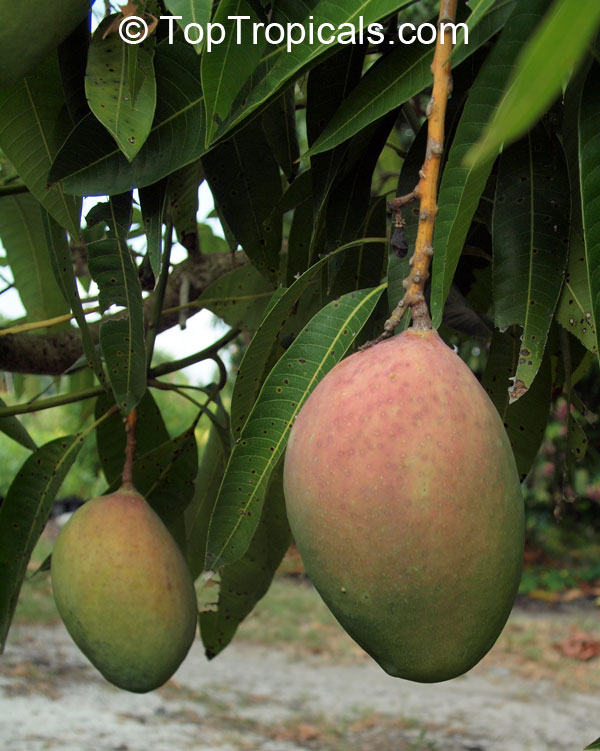
Variety: Pickering
Origin: South Florida
Season: June-July
Tree size: Can be maintained to 6'
Condo Mango: Yes
Fruit shape/size/color: Ovoid/12-24 oz./Yellow with pink blush
Texture: minimal fiber
Flavor: Coconut, mango flavor
Anthracnose Resistance: Excellent
Seed Type: Monoembryonic
Comments: Often it is cut too early resulting in only mild classic flavor; Pickering requires patience for reaching its peak flavor. Fruit tastes like Pina Colada! Pickering is a condo mango that has everything for those with limited space. It has a bushy, compact growth habit, and can be maintained in a container at just six feet. The fruit has a firm flesh and no objectionable fiber.
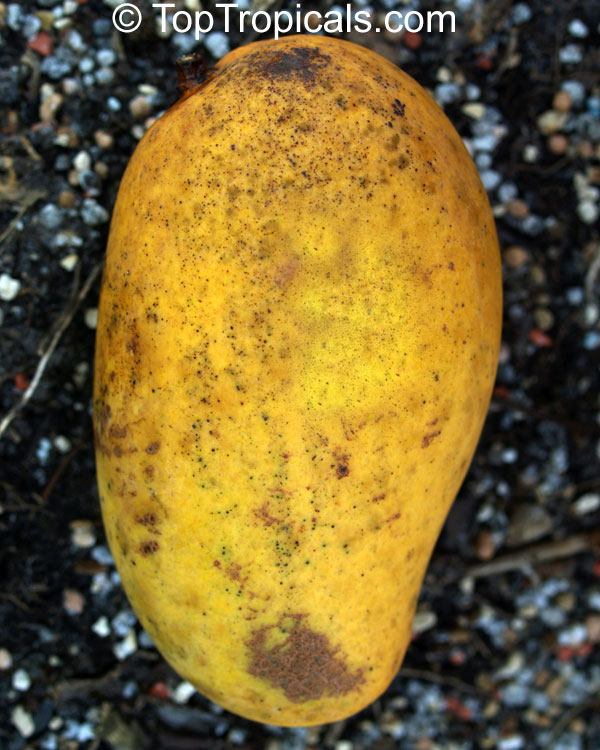
Variety: Triple Sec (Seacrest, 40-36)
Origin: South Florida
Season: July
Tree size: Vigorous grower
Condo Mango: No
Fruit shape/size/color: Ovoid/Medium/Yellow
Texture: fiberless
Flavor: Rich and sweet flavor with some citrus and spice
Anthracnose Resistance: Excellent
Comments: Triple Sec Mango is a new name for a superior variety, Seacrest. The aroma of this fruit resembles Triple Sec - an orange liqueur.
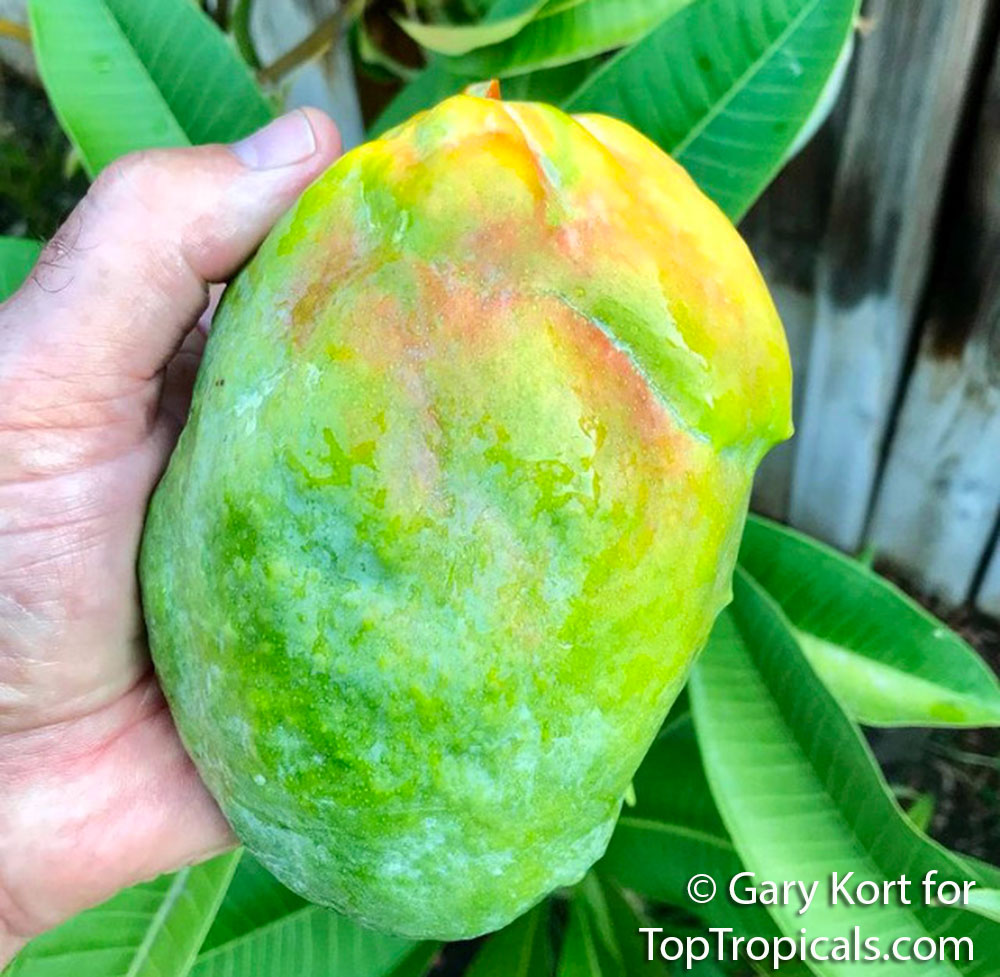
Variety: Ugly Betty
Origin: South Florida
Season: June-July
Tree size: Vertical growth habit. Slow grower
Condo Mango: No
Fruit shape/size/color: Ovoid/16-24 oz./Yellow
Texture: fiberless
Flavor: Sweet with some spice flavor
Anthracnose Resistance: Excellent
Seed Type: Monoembryonic
Comments: It is a mid-season variety. Started as a Carrie seedling.As the skin turns a brilliant yellow hue, the sweet flesh is complemented with citrusy tones throughout. Production is on the low side. NEW release! Awesome mango, great sweet flavor, and fruit is real ugly! Delicious, with rich aroma of the basic essence of mango. The color is yellow, pink and red. Slightly mis-shaped at the top - hence the name.
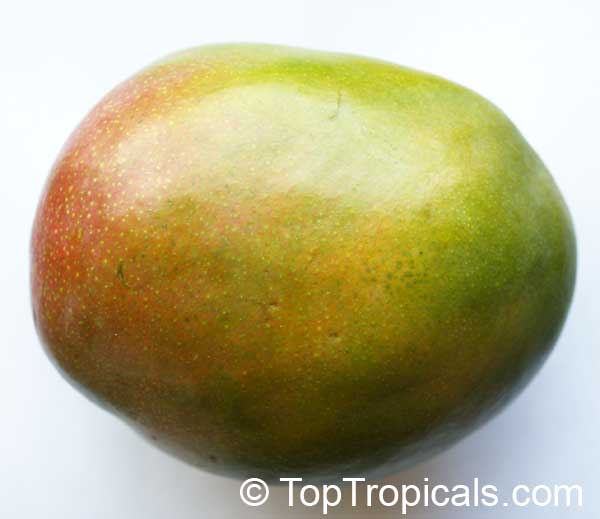
Variety: Val Carrie
Origin: South Florida
Season: June-July
Tree size: Upright but slow grower, easy to control
Condo Mango: Yes
Fruit shape/size/color: Long S shape/Large/Yellow with light orange blush
Texture: fiberless
Flavor: Very rich sweet, yet spicy and resinous
Anthracnose Resistance: Very Good
Seed Type: Monoembryonic
Comments: The trees have a distinctive dwarf growth habit and are very easy to control. They are precocious fruiters.
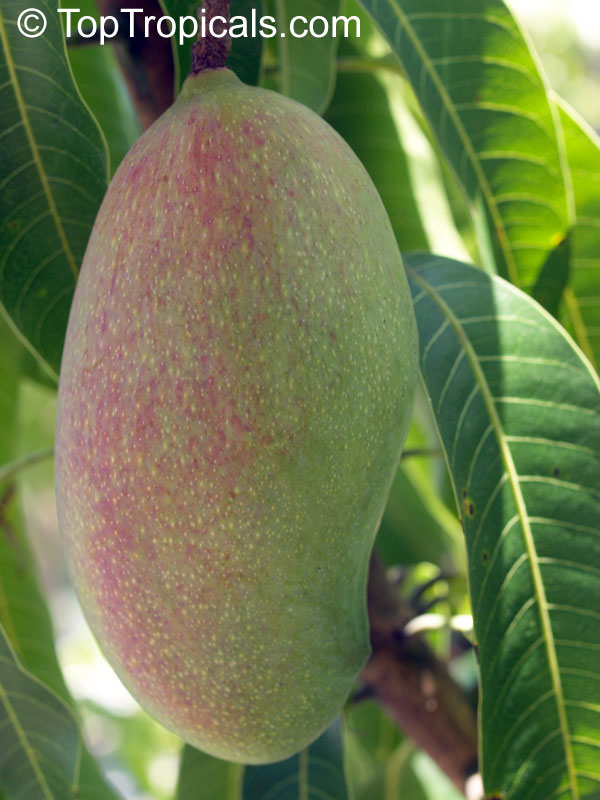
Variety: Valencia Pride
Origin: South Florida
Season: July-August
Tree size: Large and vigorous
Condo Mango: No
Fruit shape/size/color: Long S shape/Large 21-32 oz./Yellow with a vivid crimson to dark red blush
Texture: minimal fiber
Flavor: Excellent, sweet, aromatic, firm, juicy, tangy
Anthracnose Resistance: Excellent
Seed Type: Monoembryonic
Comments: 'Valencia Pride' is yet another Haden seedling selected and named in Florida in 1941. The tree is a vigorous large grower making it an excellent shade tree complemented by an exceptionally attractive fruit. The tree is forming a large, spreading, open canopy of 50 ft. This variety is recommended for dooryard planting because of its good eating quality and consistent production.
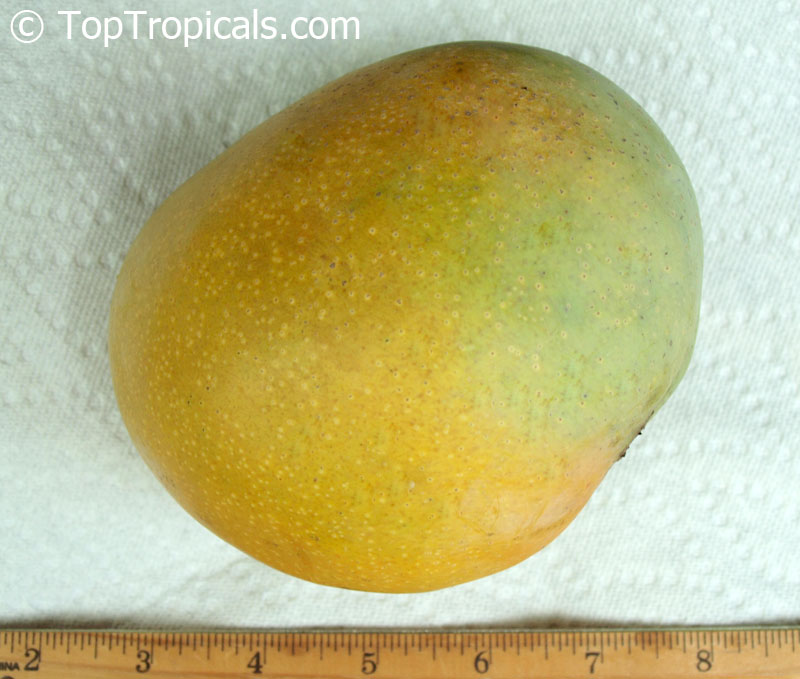
Variety: Venus
Origin: South Florida
Season: July-August
Tree size: Large but slow growing - very manageable
Condo Mango: No
Fruit shape/size/color: Round/Medium./Yellow with a light red blush
Texture: fiberless
Flavor: Nice mix of sweet and sour
Anthracnose Resistance: Excellent
Seed Type: Monoembryonic
Comments: Venus is a great option for those looking to extend into a later season fruit. A top taste that is rich and sweet. The tree is a Zill Indochinese (Zinc) seedling, 33-10, with good disease resistance and ornamental, large leaves. The tree itself has a nice branching habit.
Variety: White Pirie
Origin: Hawaii
Season: July
Tree size: Dense, low growing with a spreading habit
Condo Mango: No
Fruit shape/size/color: Round/Medium./Yellow with a light red blush
Texture: fiberless
Flavor: Rich, sweet
Anthracnose Resistance: Poor
Seed Type: Monoembryonic
Comments: White Pirie (or Pairi, or Paheri) was derived from Piri in Hawaii. It has medium size yellow-red fiberless fruit with a honey richness. It is said to be "the sweetest fruit imaginable"! The fruit has a pastel coloring and "creamy" pulp. The White Pirie and the Pirie are hardly distinguishable. These two are some of Hawaiis finest selections. The downside is that they have very little anthracnose resistance and do best on the dry areas of Hawaii.
See mango variety photo galleries: 1 2 3