Asphodelaceae - Plant Encyclopedia Results
| Number of plants found: 22 | Next | 
|
Go to page: | 1 | 2 | 3 | 4 | 5 |
Botanical name: Aloe africana
Common name: African Aloe
Family: Asphodelaceae (Formerly:Xanthorrhoeaceae)
Subfamily: Asphodeloideae
Origin: South Africa


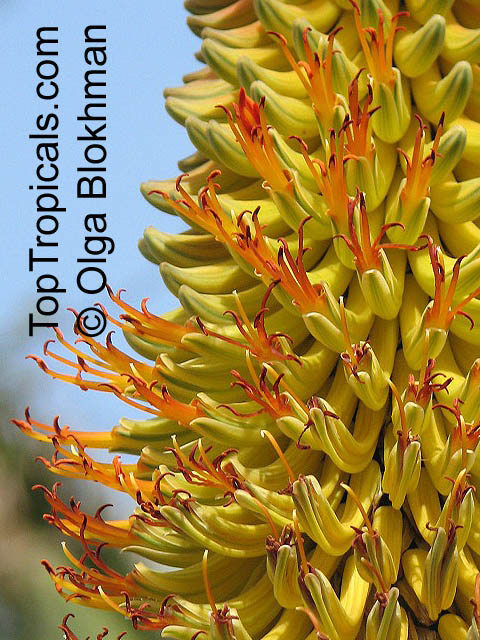
Native to South Africa, it is a small, slow-growing tree of about 10-20 feet in height and width with an attractive trunk with lighter-colored markings and bark. It is an evergreen or semi-evergreen plant with narrow, gray-green leaves that feature white tubercles on their surfaces.
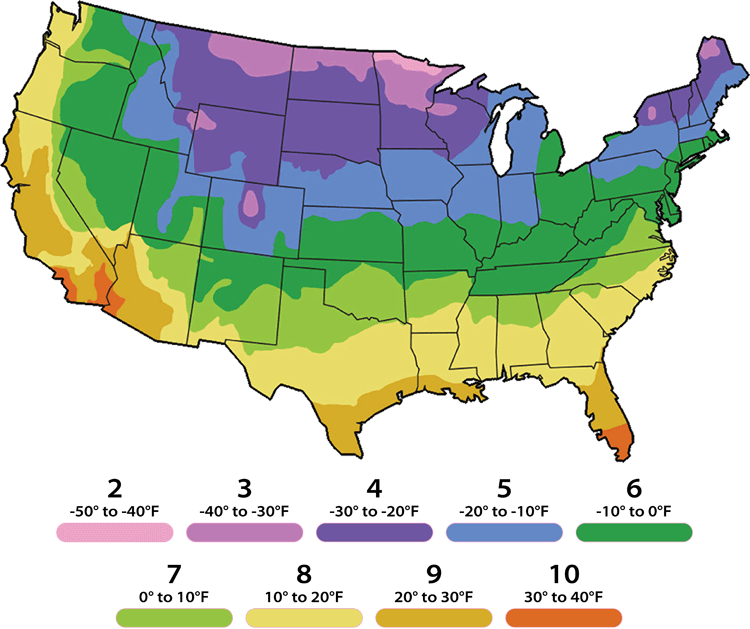
When planted outdoors in the ground, Aloe africana prefers full sun and moderate water during the summers and should be kept dry during the winter months. When grown in a pot, it can be kept outdoors in USDA zones 9-11, or brought indoors and kept in a bright location during the winter months.
The African Aloe blooms an abundance of yellow and orange tubular-shaped flowers during the winter months, making it a very attractive addition to any garden. The blooms attract both butterflies and hummingbirds, and the plant itself is known in ethnomedicine as an essential remedy.
Although Aloe africana is a beautiful plant, it is also somewhat spiny or thorny, and should be handled with caution. When grown in cold regions, the plant should be placed in a pot to protect it from cold temperatures which can cause tissue damage. Make sure to use a well-draining potting soil and containers with drainage holes and avoid overwatering. Place the pot in a sunny location and be sure to fertilize them regularly, and you can enjoy the beauty of African Aloe in your garden!
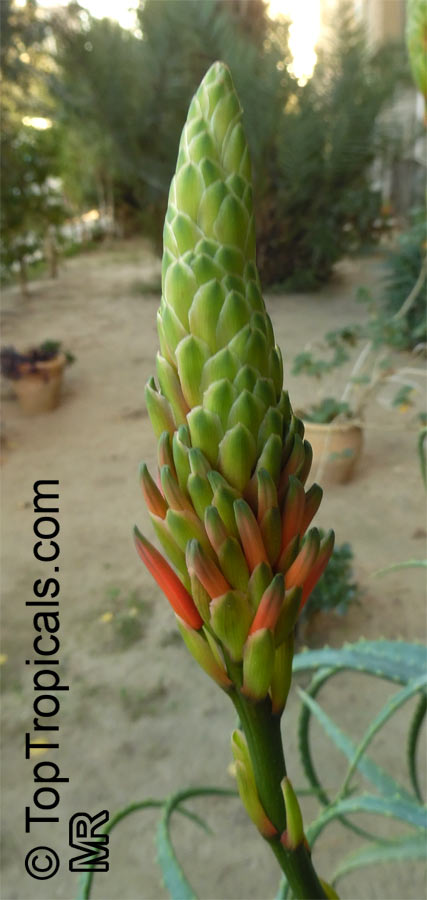
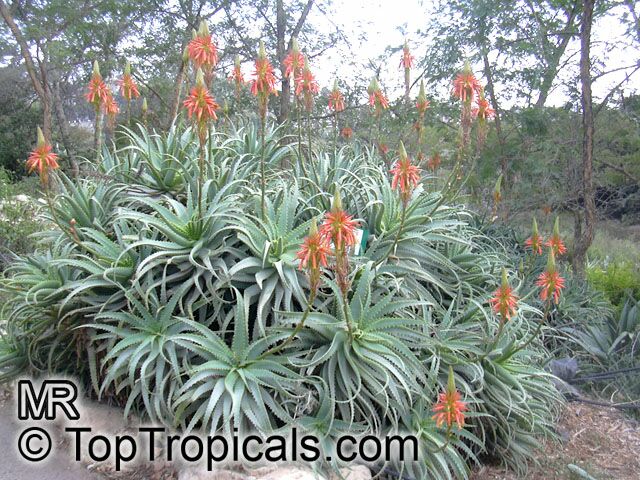
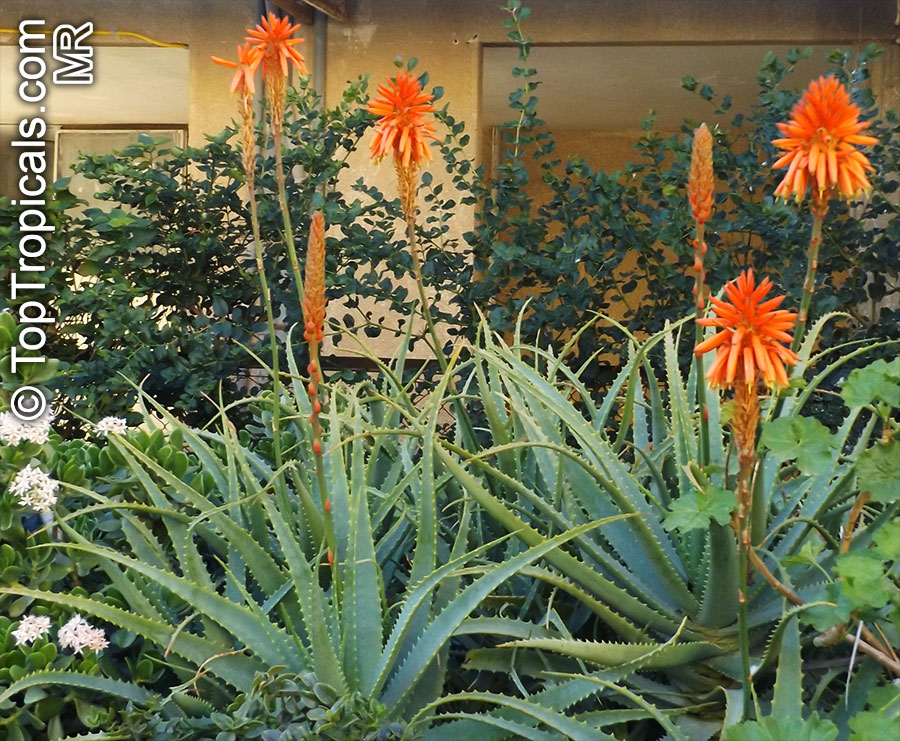
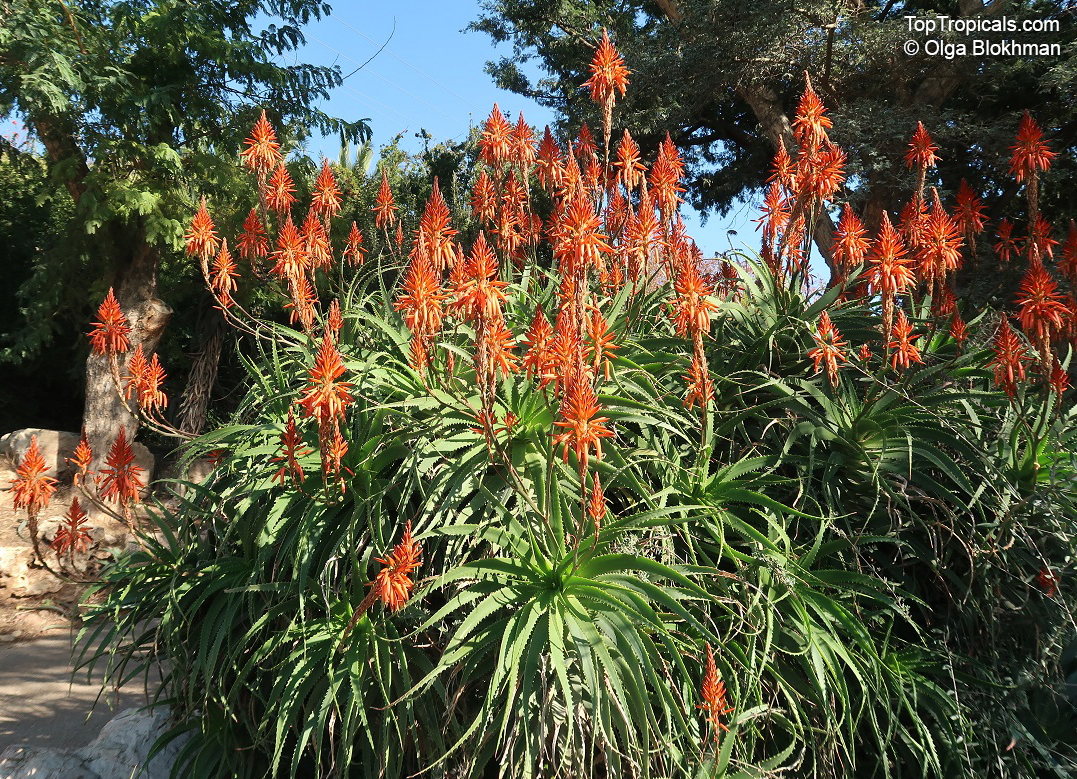
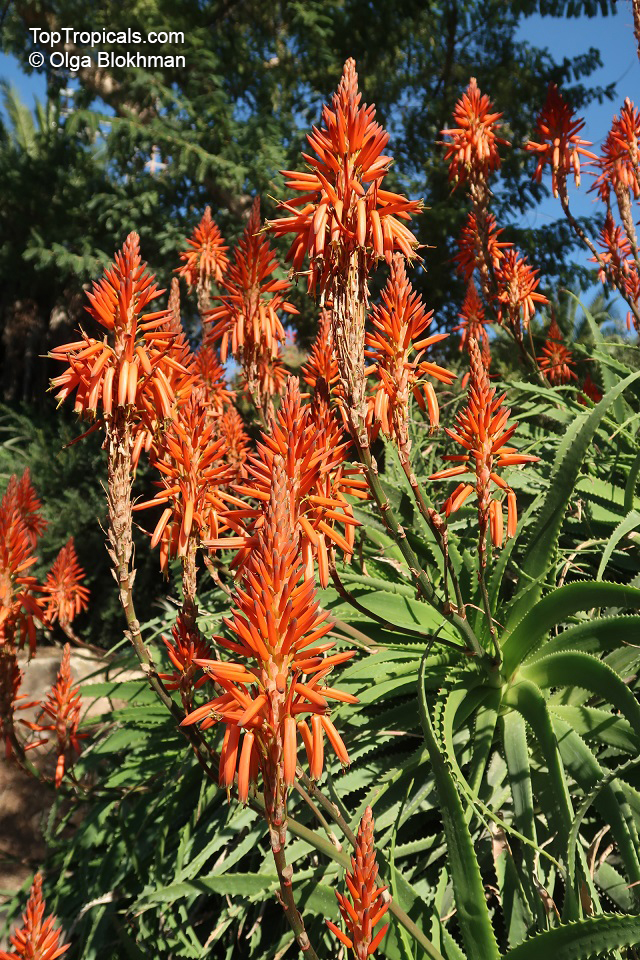
Botanical name: Aloe arborescens
Common names: Tree Aloe, Krantz Aloe, Torch Aloe
Family: Asphodelaceae (Formerly:Xanthorrhoeaceae)
Subfamily: Asphodeloideae
Origin: South Africa


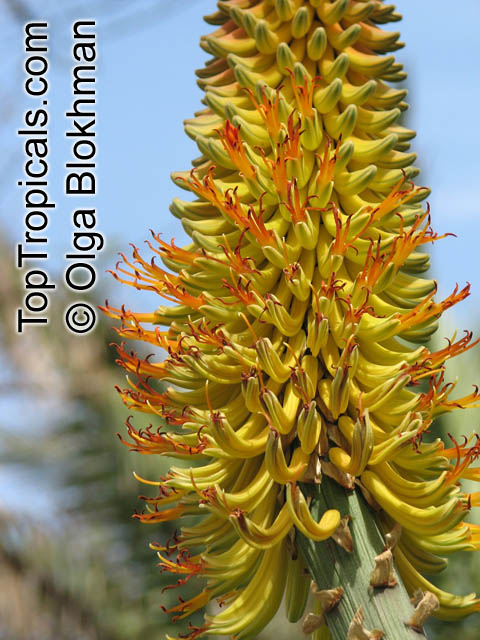
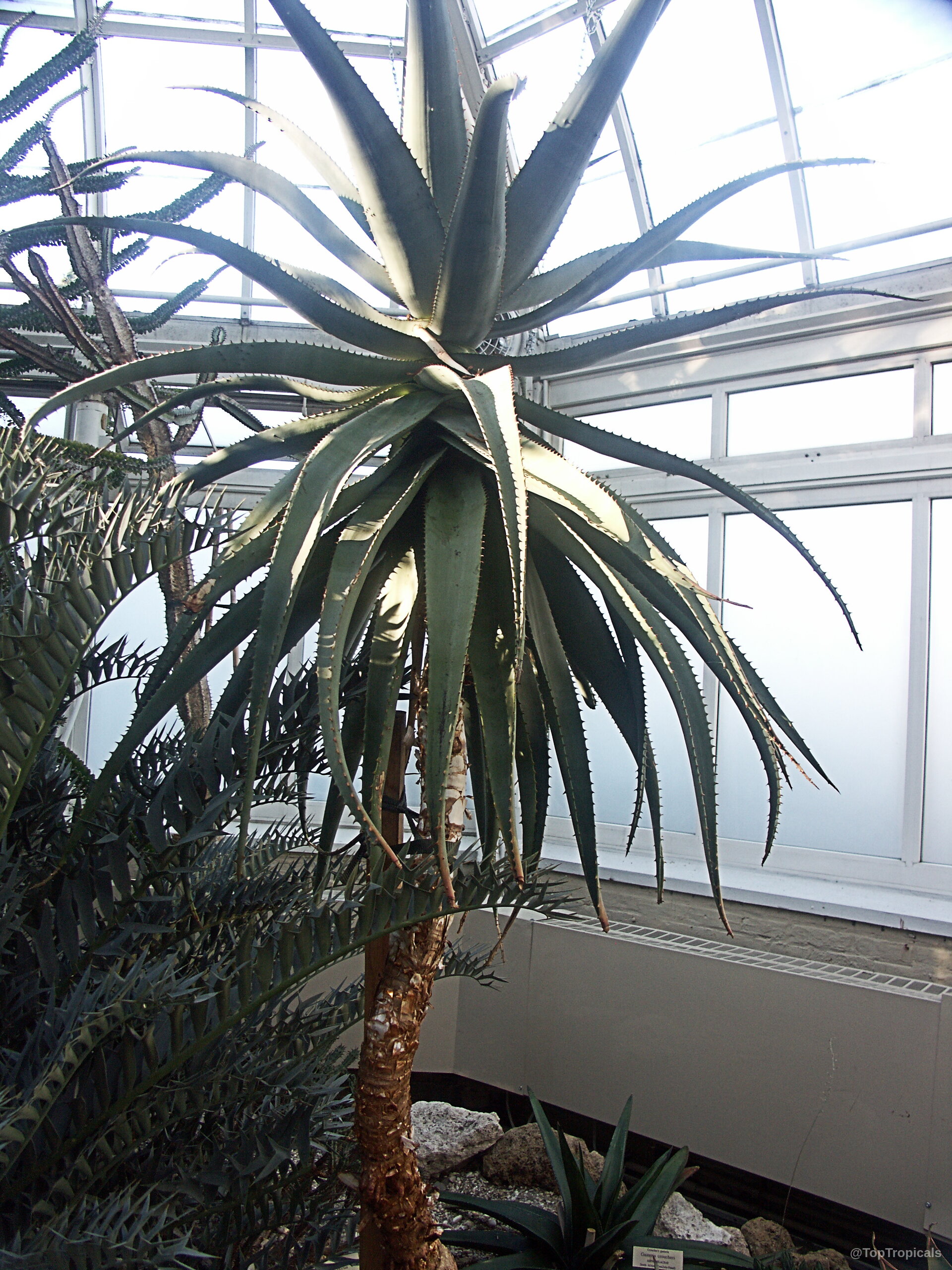
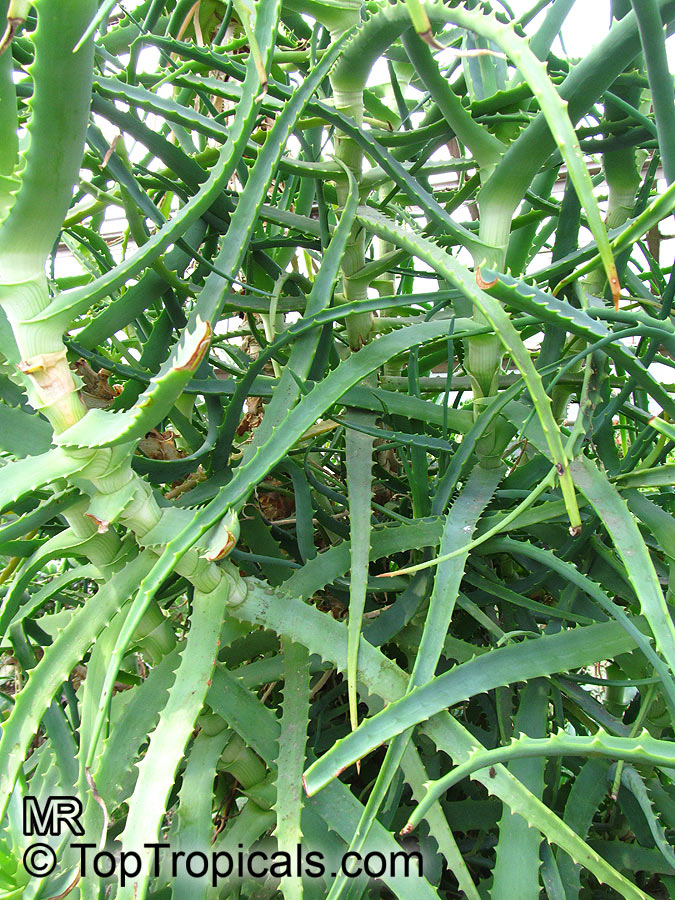
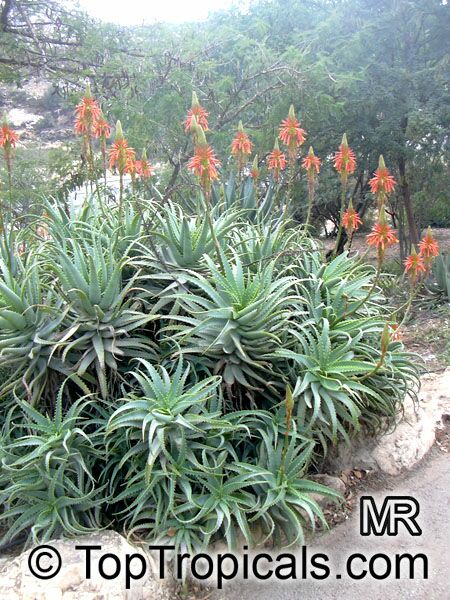
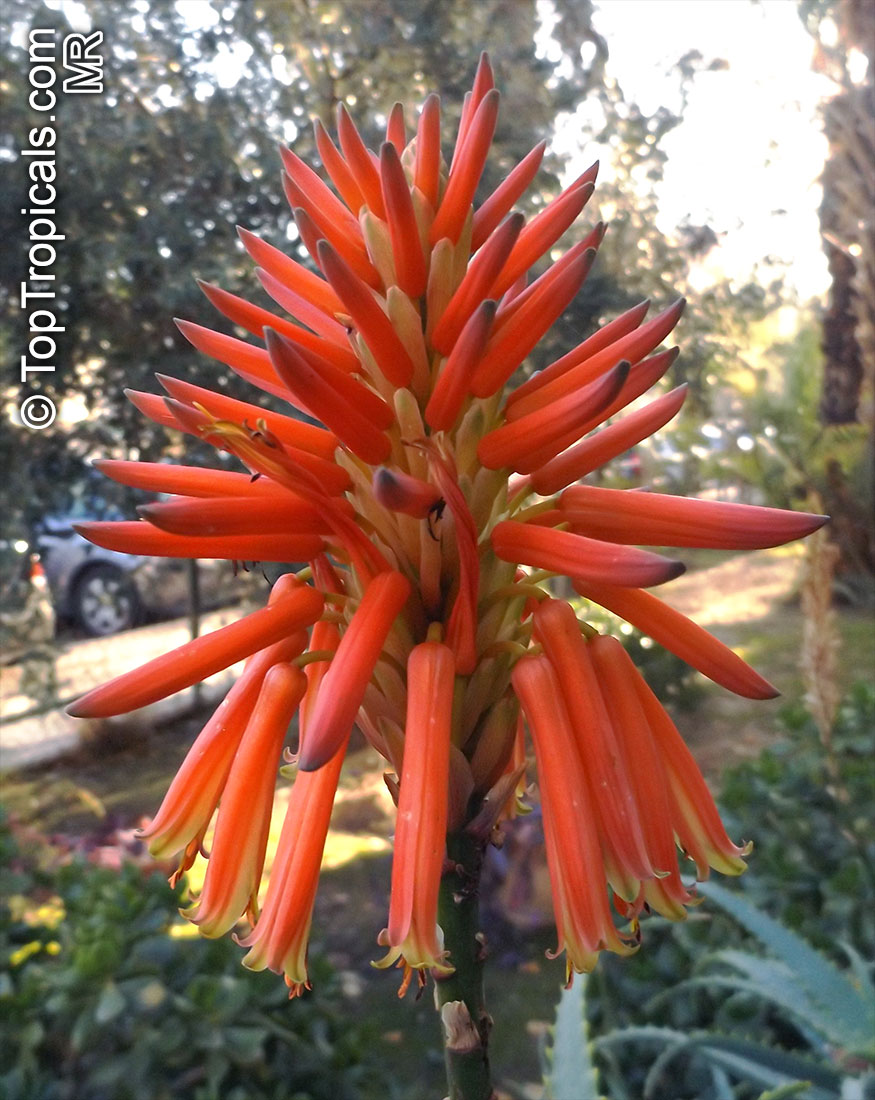
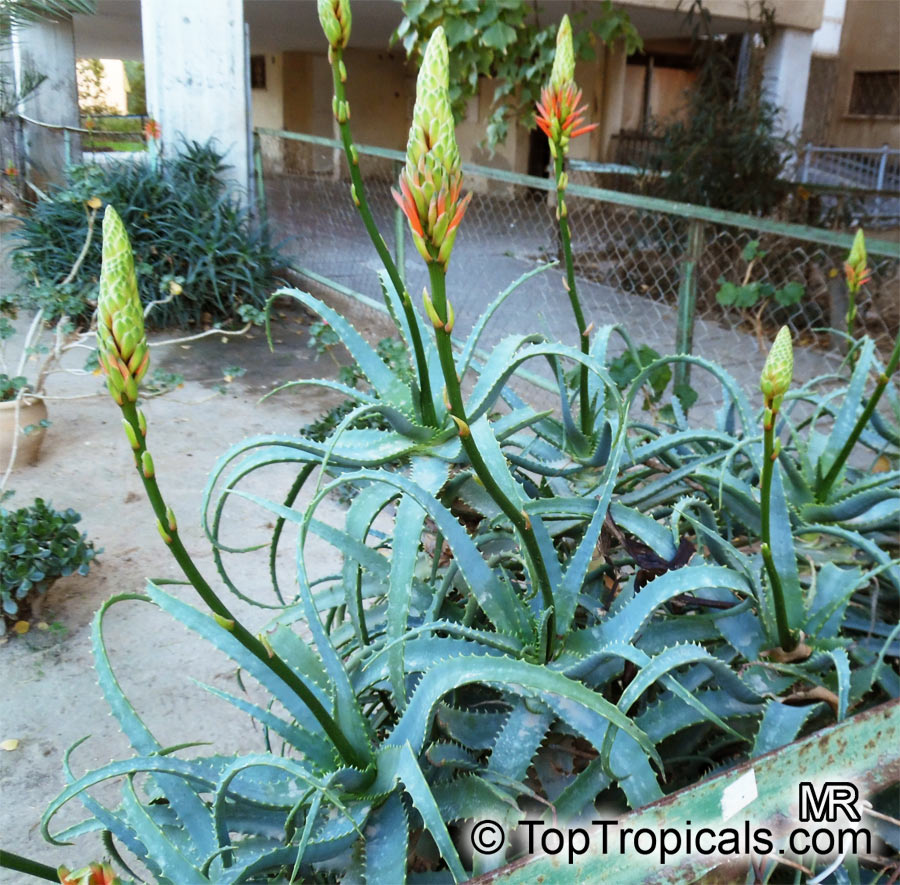
Tree Aloe is grown mainly as an ornamental or as an accent plant, but is also an excellent and impenetrable hedge plant. Established plants will survive a drought quite well, but for the benefit of the plant, water should be provided.
Botanical name: Aloe aristata
Common names: Torch Plant, Lace Aloe
Family: Asphodelaceae (Formerly:Xanthorrhoeaceae)
Subfamily: Asphodeloideae
Origin: South Africa


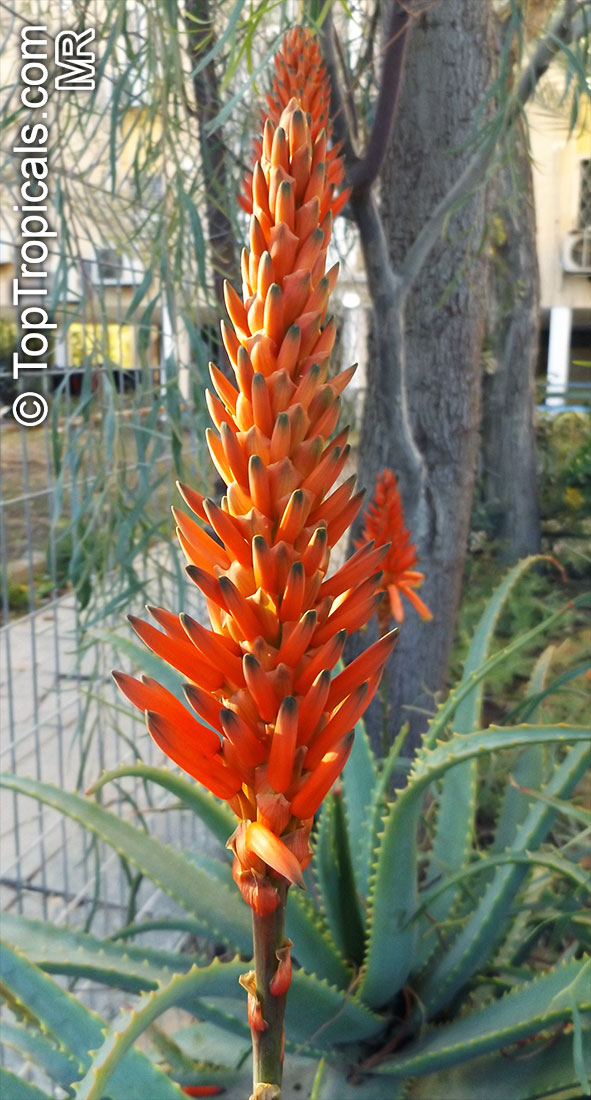
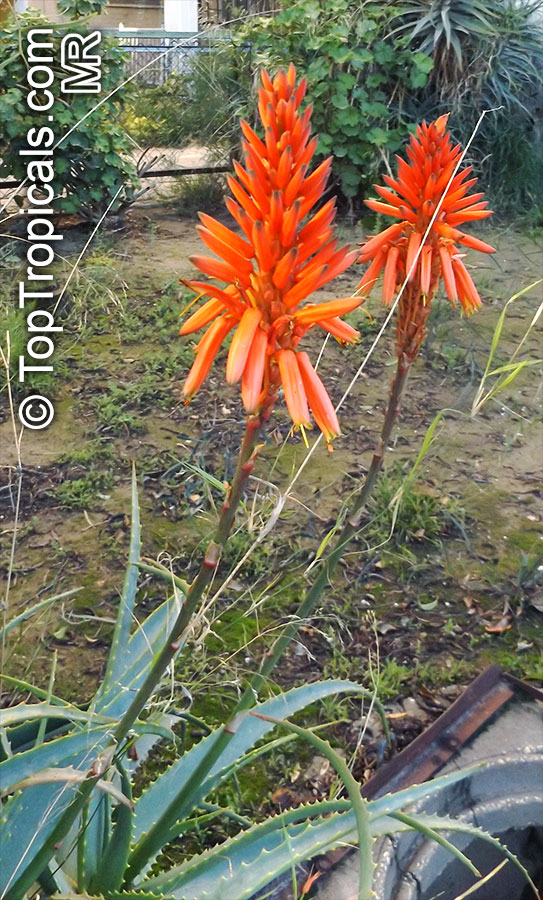
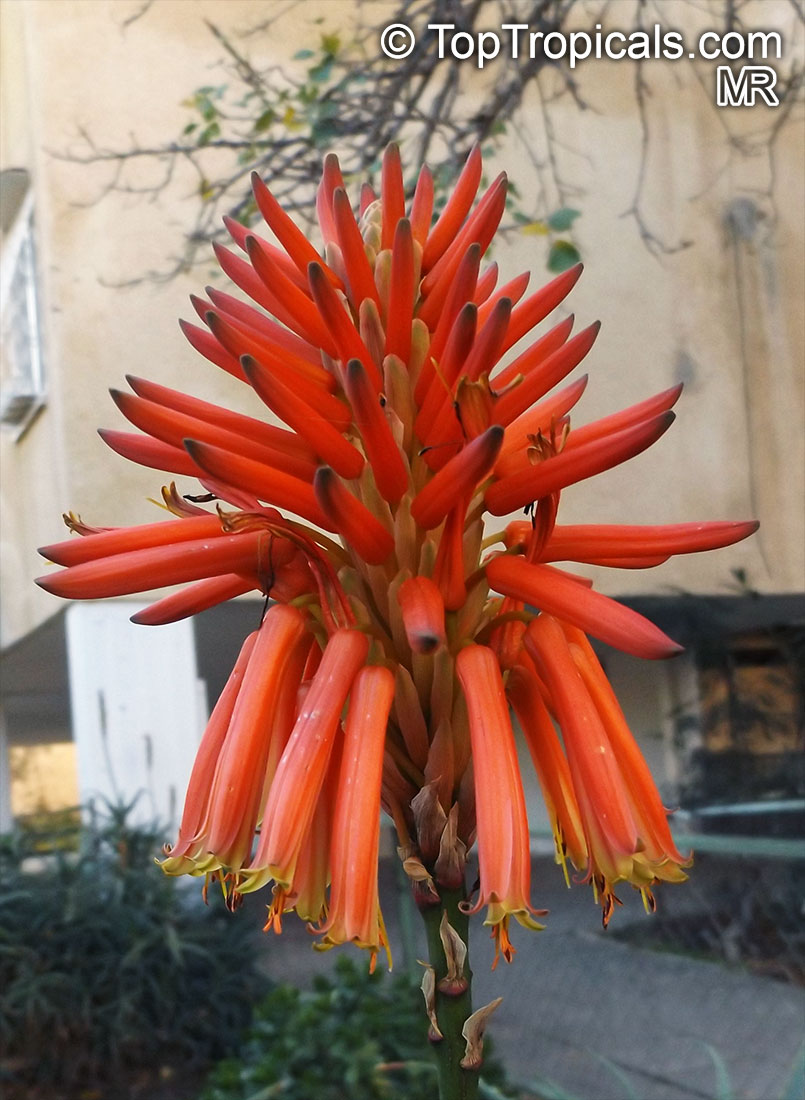
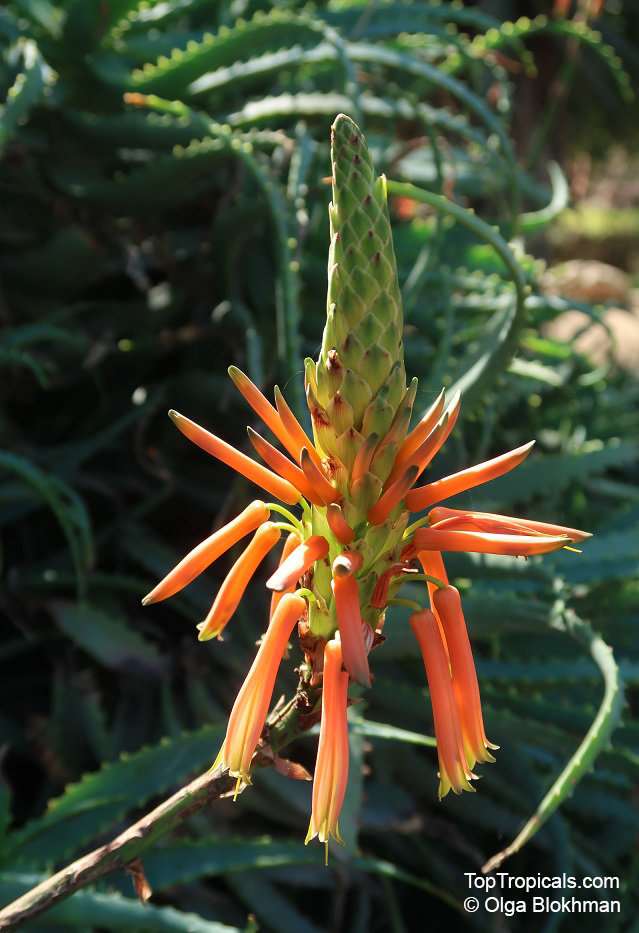
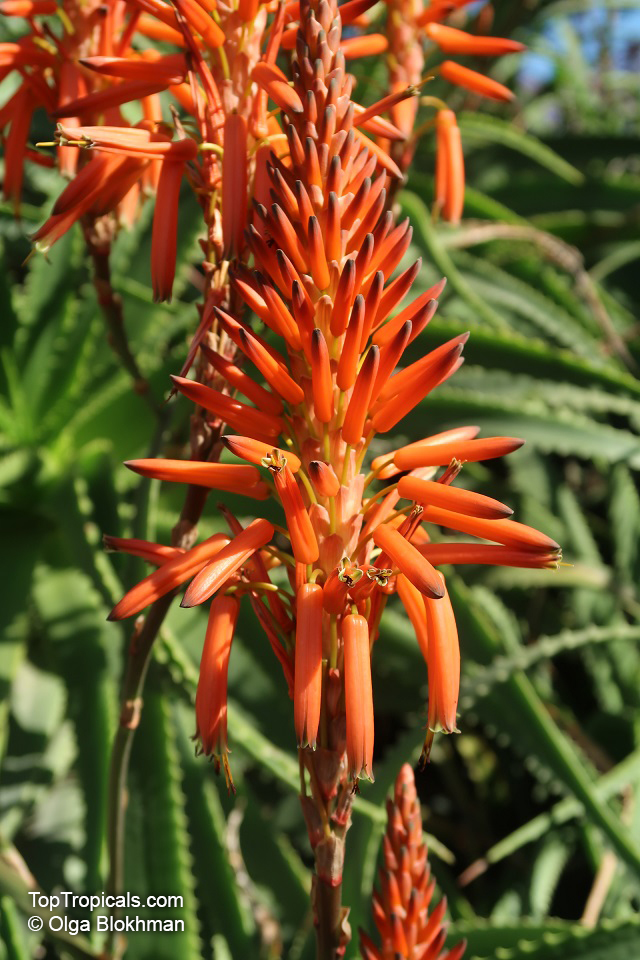
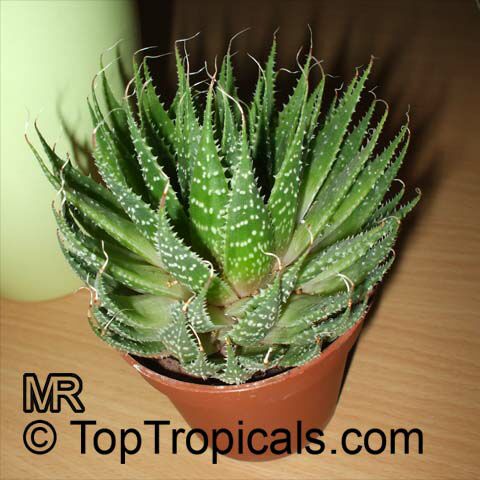
It is a slow-growing succulent that reaches 2 to 5 feet tall with a spread of up to 2-3 feet wide. Aloe aristata (Torch Plant) has beautiful rosettes of fleshy leaves with white spots and fine spines along the margins. This plant is native to South Africa and prefers full sun and moderate water. It is grown for its ornamental foliage, which is quite spiny or thorny.
Aloe aristata is a hardy succulent that is best suited for USDA Zone 8-10. When grown in its optimal climate, it will require minimal care and will be quite drought tolerant. When grown in a pot, it should be watered every 7-10 days during the summer and every 3 weeks during winter months. In cold regions, the plant should be brought indoors to prevent freezing temperatures that can damage its foliage. During the summer, it can be placed outside in a sunny spot.
To keep Aloe aristata healthy and growing well, it should be planted in a well-draining potting soil or cactus mix. The soil should be allowed to dry out completely before being re-watered. The plant can also benefit from periodic fertilization with a balanced fertilizer, applied in early spring. Pruning and trimming of old foliage is also recommended for aesthetic purposes.
For an extra bit of protection from the sun, Aloe aristata can be lightly shaded with a mesh cloth or light fabric during the hottest parts of the day. This will help to prevent the plants from getting sunburned and keep their leaves soft and green. As with all succulents, Aloe aristata should be grown in a bright spot, with full sun exposure and moderate water. With plenty of care and attention, this small plant can become a great addition to any garden.
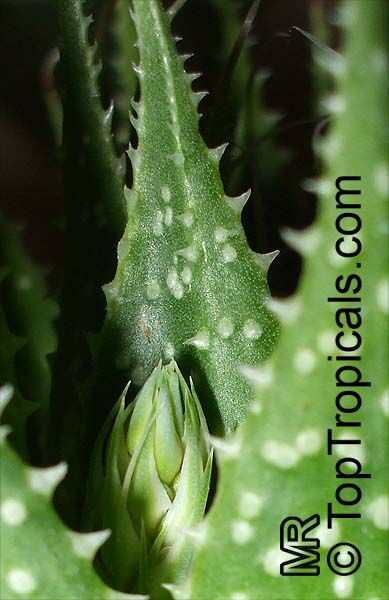
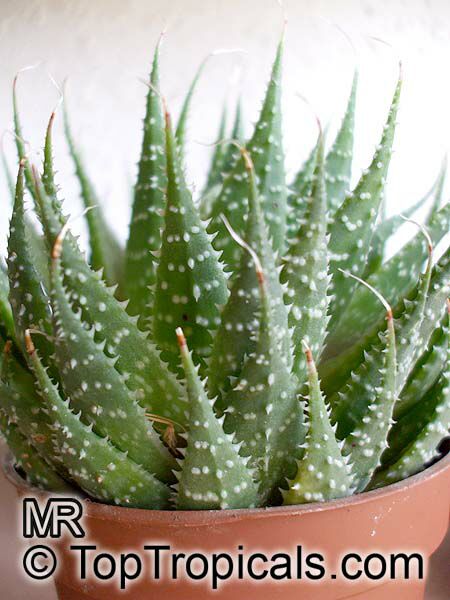
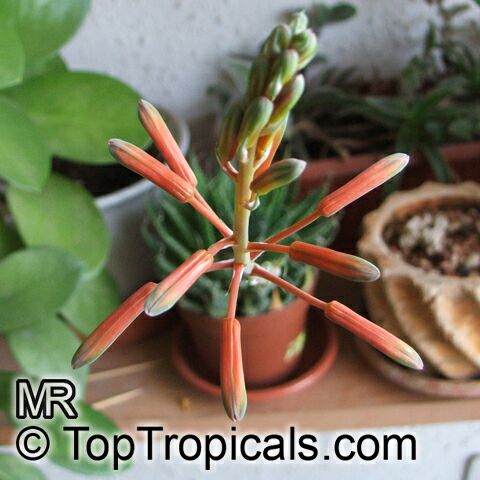
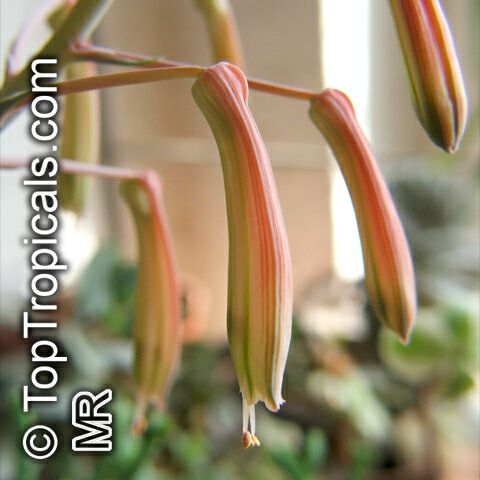
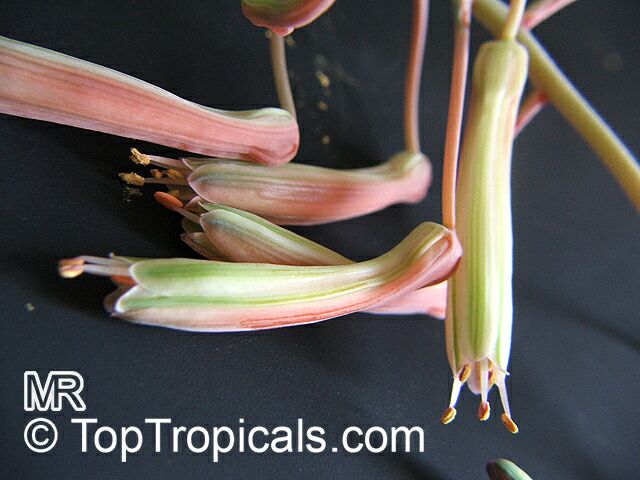
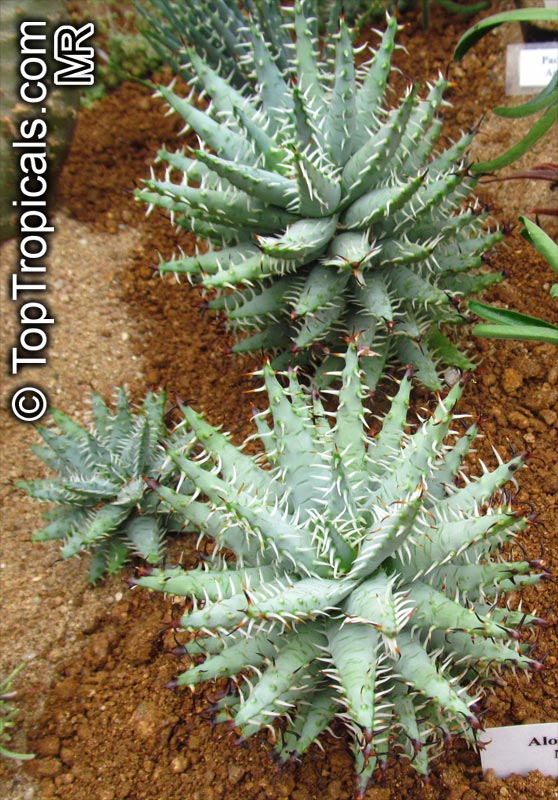
Botanical names: Aloe erinacea, Aloe melanacantha var. erinacea
Common name: Goree
Family: Asphodelaceae (Formerly:Xanthorrhoeaceae)
Subfamily: Asphodeloideae
Origin: Namibia
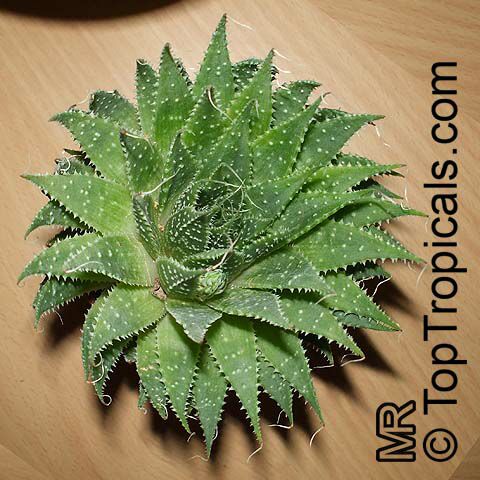
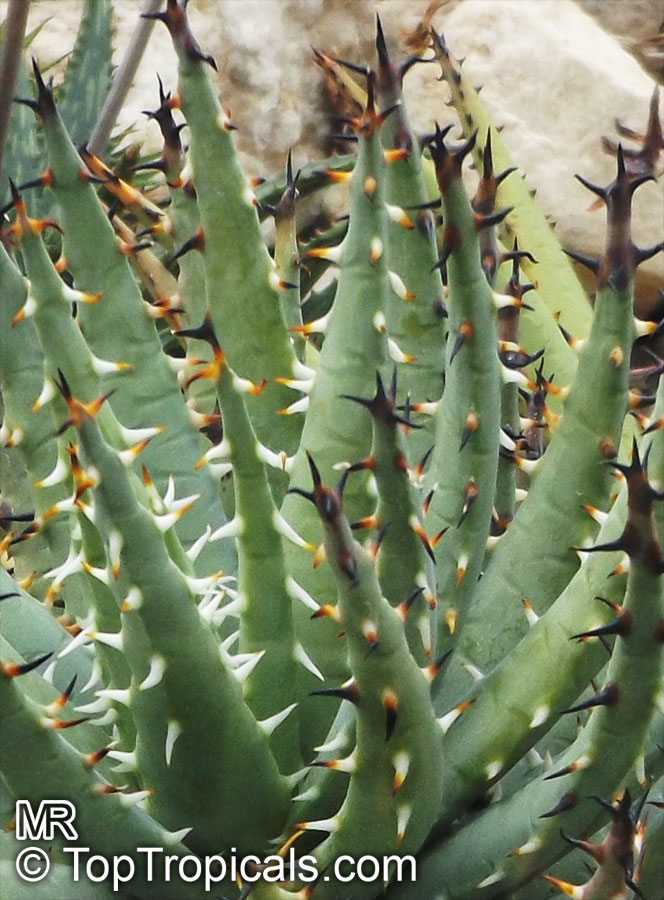
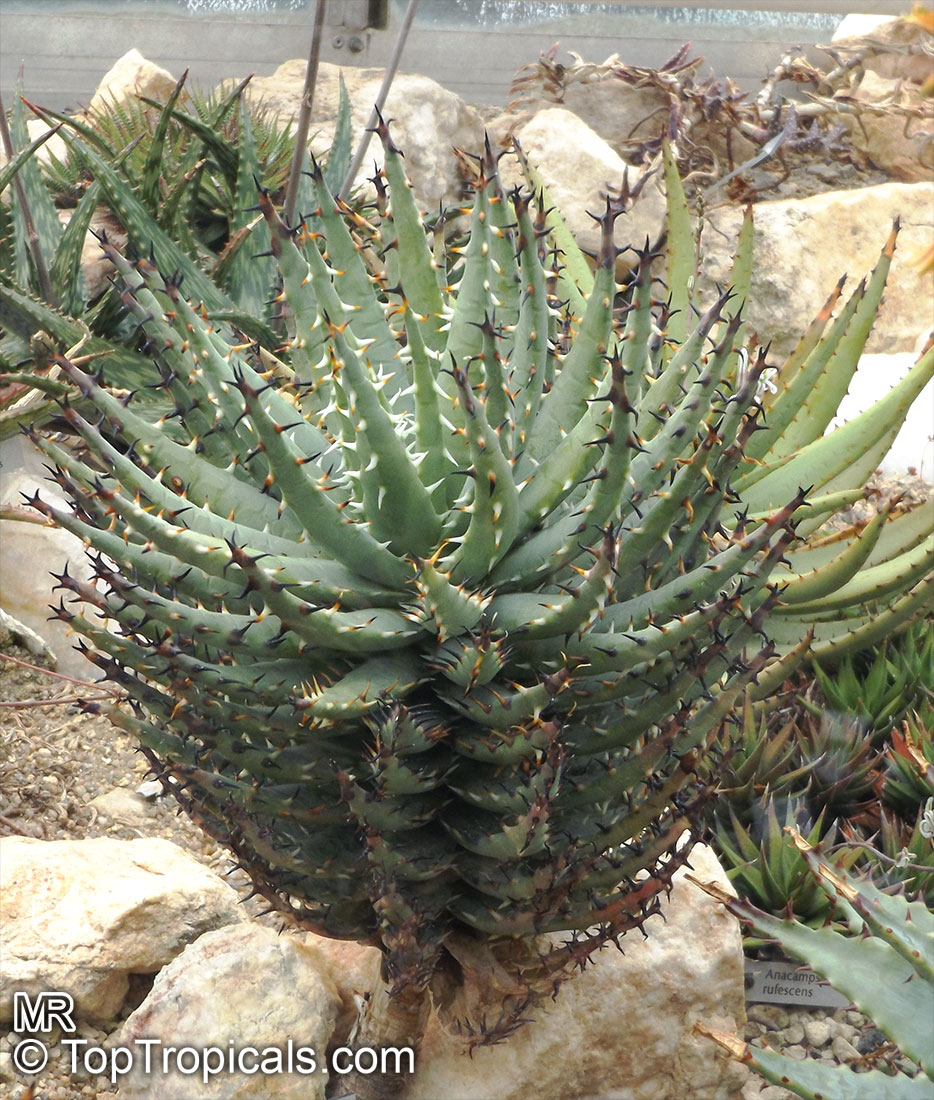
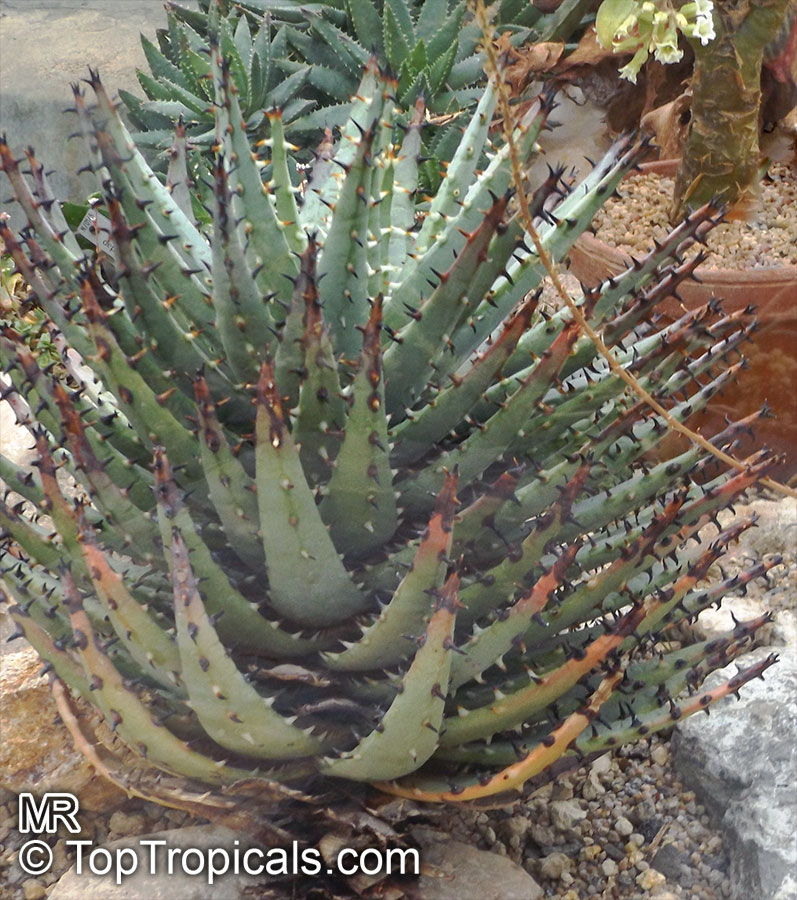
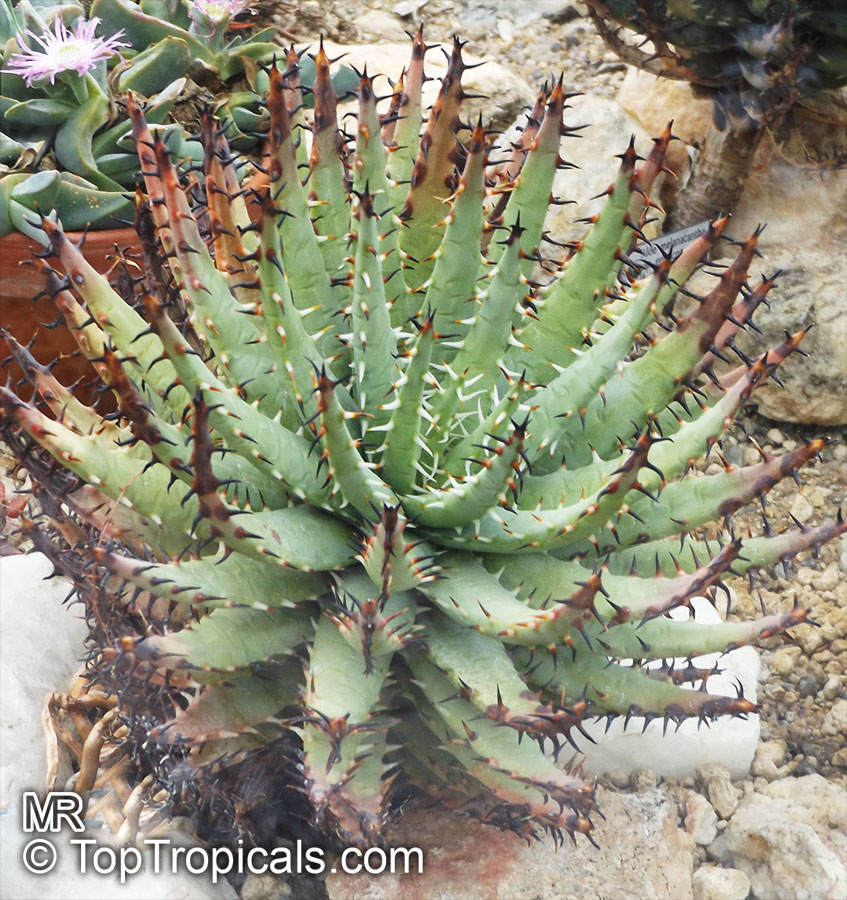
Aloe erinacea, or Goree, is a small plant native to Namibia, that typically ranges between 2 to 5 feet in height. It is a low-growing succulent, with a rosette of fleshy leaves that display a variegated pattern across a blue-green backdrop. The leaves are full of thorns or spines, which gives the plant its unique look and makes it easily distinguishable from other succulents.
This drought-tolerant succulent requires full sun and prefers well-drained, dry soil. It can withstand hot temperature and grows best in USDA Zones 9-11. It requires moderate watering and only needs occasional watering during summer months when the soil is dry. During the winter months, it is recommended to not water at all.
Aloe erinacea is well suited to be grown in containers, with more frequent watering needs. If you are trying to grow this plant in cold regions, you may need to bring the pot indoors in the winter. Keep in mind that Goree prefers to be on the drier side, so don't overwater it. When potting, use a well-drained, arid soil.
The rewards of growing Aloe erinacea are well worth it. Not only does this succulent look beautiful and unique, it is also low maintenance and resistant to pests and diseases. Aloe erinacea can be used to create an eye-catching centerpiece to your succulent garden, or as a focal point in a larger container or planter. With its easy-care nature and colorful foliage, you'll be sure to enjoy this Namibian beauty for years to come.
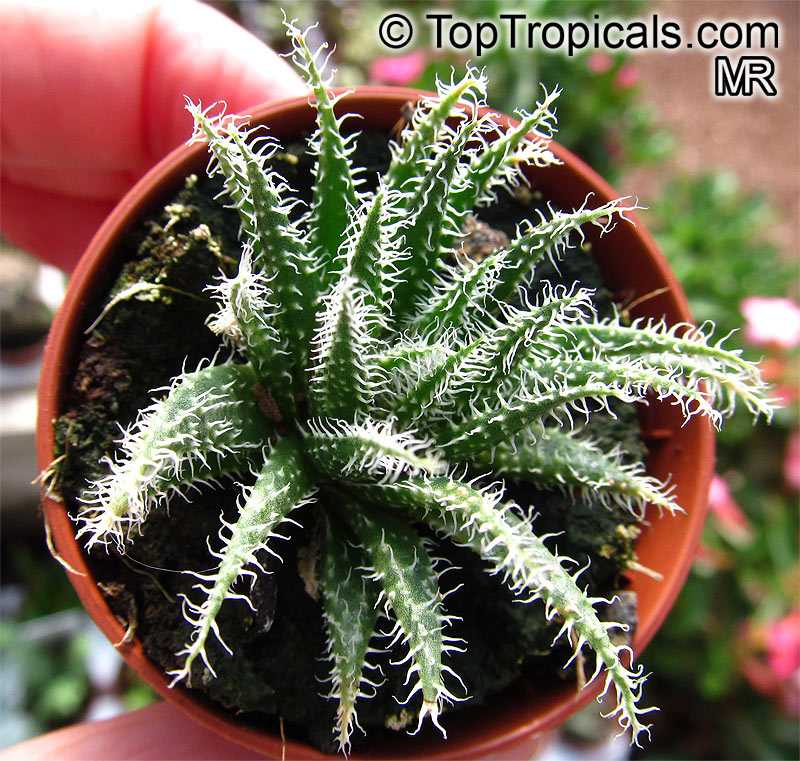
Botanical name: Aloe haworthioides
Common name: Haworthia-leaved Aloe
Family: Asphodelaceae (Formerly:Xanthorrhoeaceae)
Subfamily: Asphodeloideae
| Next | |
Use link to repeat this search:
https://toptropicals.com/cgi-bin/garden_catalog/cat.cgi?find=Asphodelaceae&search_op=and&keyword_op=and&language=e&number=5
&no_change_lang=1&user=tt&sale=1&first=0