Moringaceae - Botanical Family
| Number of plants found: 7 |
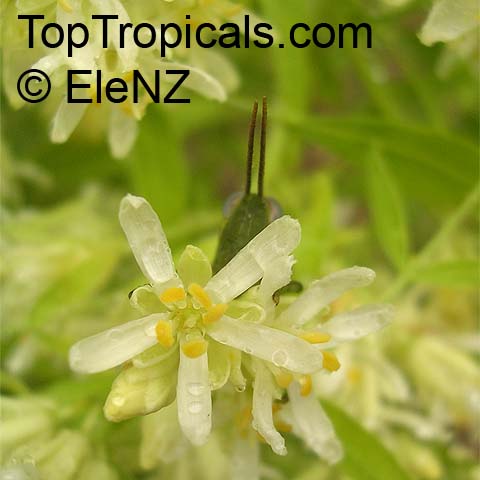
Botanical name: Moringa drouhardii
Common name: Malagasy Moringa
Family: Moringaceae
Origin: Madagascar


Moringa drouhardii is a large tree and can grow taller than 20 feet with a distinctive swollen trunk. It is native to Madagascar and grows in scattered stands in the southern Malagasy dry forest on limestone. It is a fast-growing tree, often surpassing three meters in its first year. The leaves are alternate, typically pinnate, and finely toothed. The flowers are yellow to orange and fragrant, often forming in clusters in the leaf axils. Moringa drouhardii has the potential to attract butterflies and hummingbirds when blooming.
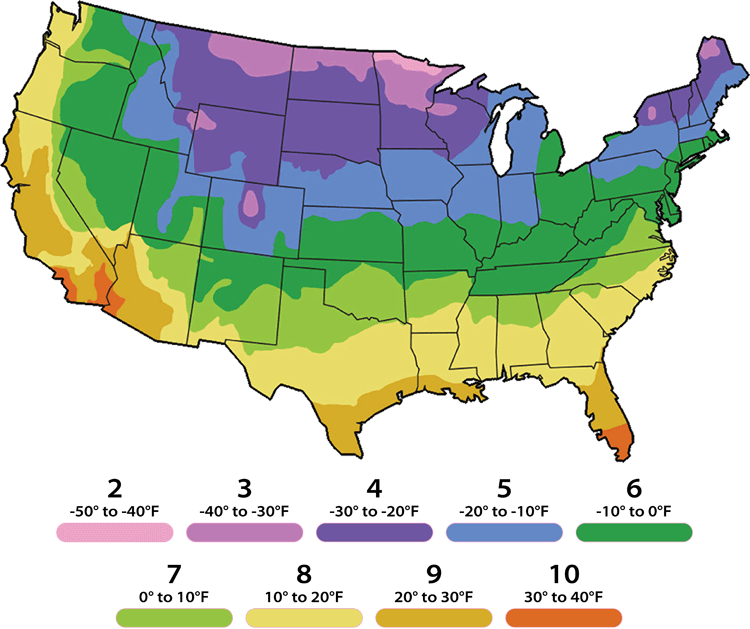
In USDA Zone 9-11, Moringa drouhardii can be grown in full sun in moderately moist soil. It will benefit from a deep, occasional watering. A layer of mulch is beneficial and can help maintain soil moisture. When grown in a pot, Moringa drouhardii will do best in warm regions and should be brought inside during the colder months. If growing in cold regions, the pot should be insulated and stored in a warm and frost-free location.
Moringa drouhardii has been used for thousands of years for its ethnomedical properties. It is still used medicinally and the leaves, bark, and seed pods are the most frequently used parts of the tree. The leaves are very nutritious and contain a numerous of vitamins, minerals, and antioxidants.

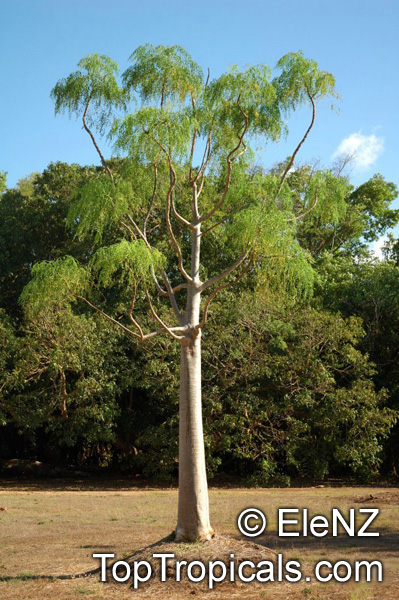
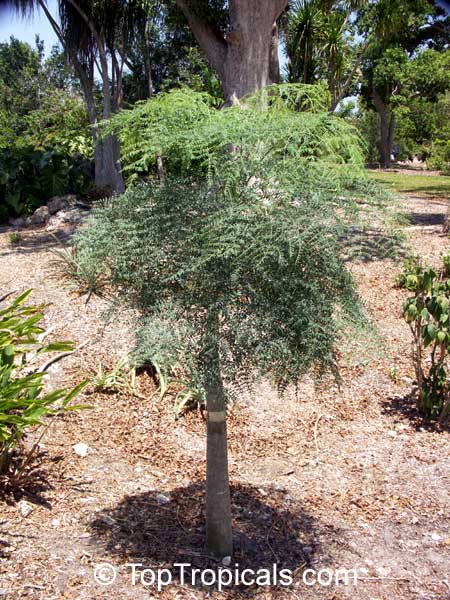
Botanical name: Moringa hildebrandtii
Common name: Moringa
Family: Moringaceae
Origin: Madagascar


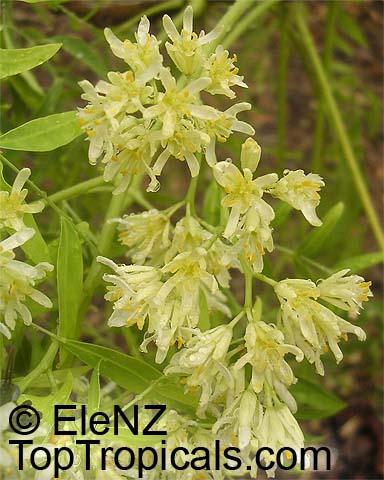
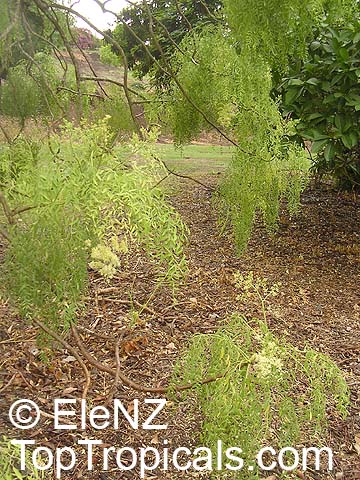
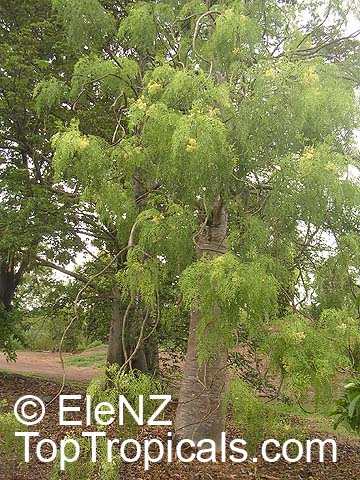
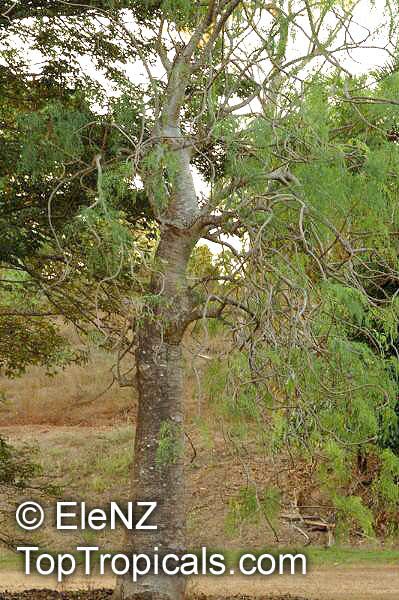
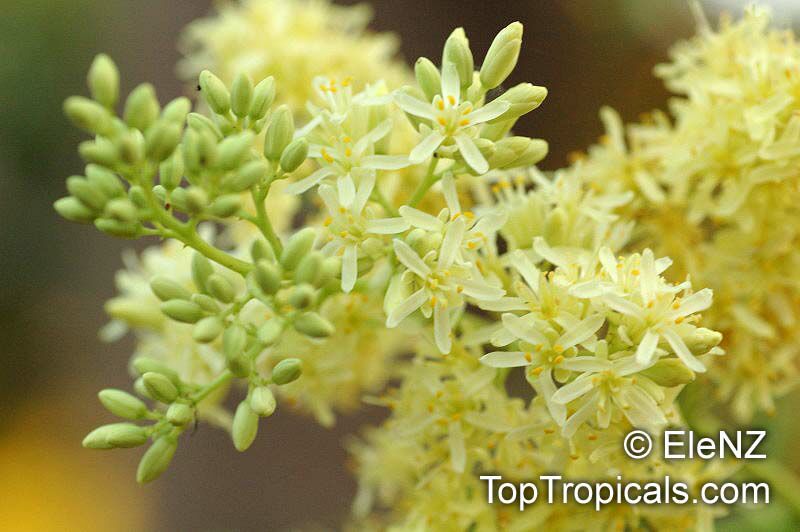
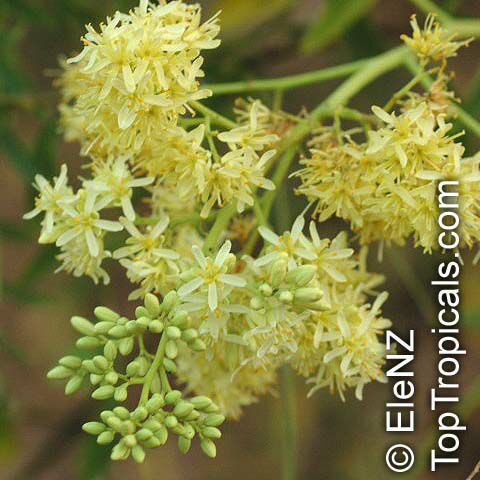
Moringa hildebrandtii (Moringa) is a beautiful and unusual tree that is native to Madagascar and can be used as a bonsai. It has a massive, water-storing trunk that can grow up to 20 feet in height and its pinnately compound leaves are up to a meter long. Its leaf rachis and stem tip are often a distinctive deep red and its small whitish flowers are borne in large sprays.
Moringa is generally a hardy plant, able to tolerate most soil types and conditions and prefers full sun, though some shade is beneficial. It needs regular watering, with more water during the growing season and reduced watering during the dormant season. It can withstand moderate drought, but it may suffer from high winds and cold frost, so it should be grown in a sheltered spot. In cooler climates, it can be grown in warmed greenhouses.
Propagating Moringa can be done from seed or cuttings. For those living in cooler climates, the tree can be successfully grown in pot to protect it from the cold temperatures. It is best grown in USDA Zones 9-11. Provide the tree with plenty of sunlight and a well-draining soil. Water regularly to keep the soil moist and monitor the soil moisture level to ensure it doesn't dry out.
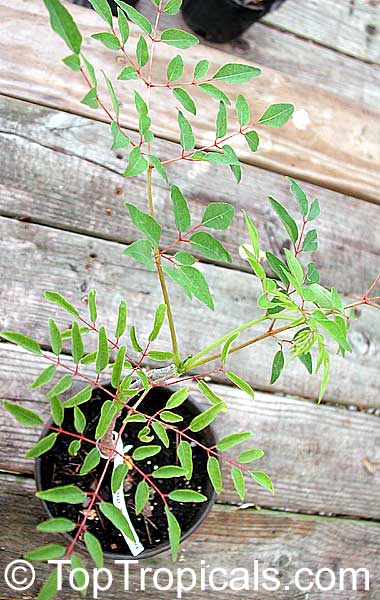
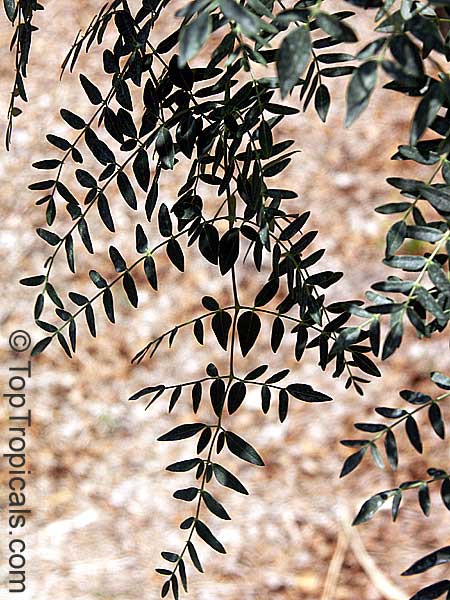
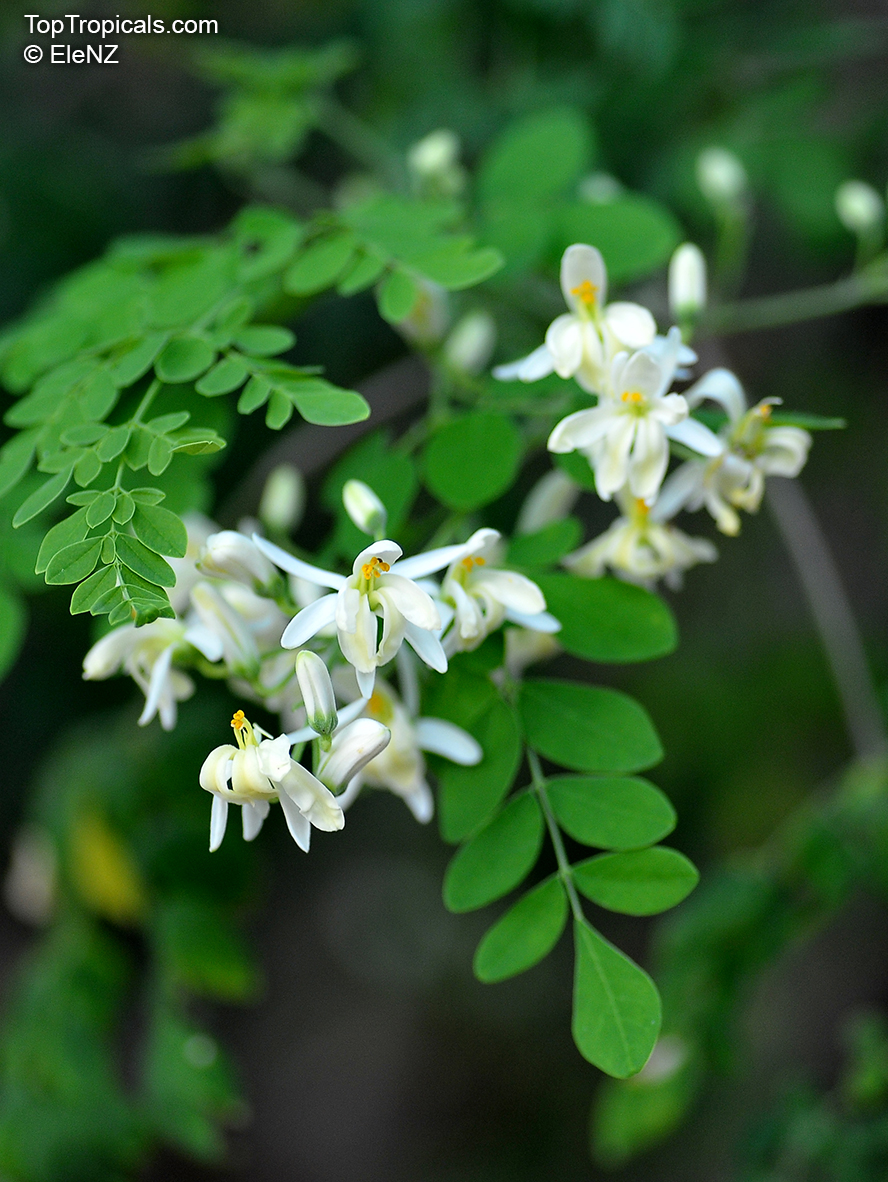
Botanical names: Moringa oleifera, Moringa pterygosperma
Common names: Horseradish tree, Ben Oil Tree, Coatli, Drumstick tree, Bridal veil, Miracle Tree
Family: Moringaceae
Origin: Eastern India


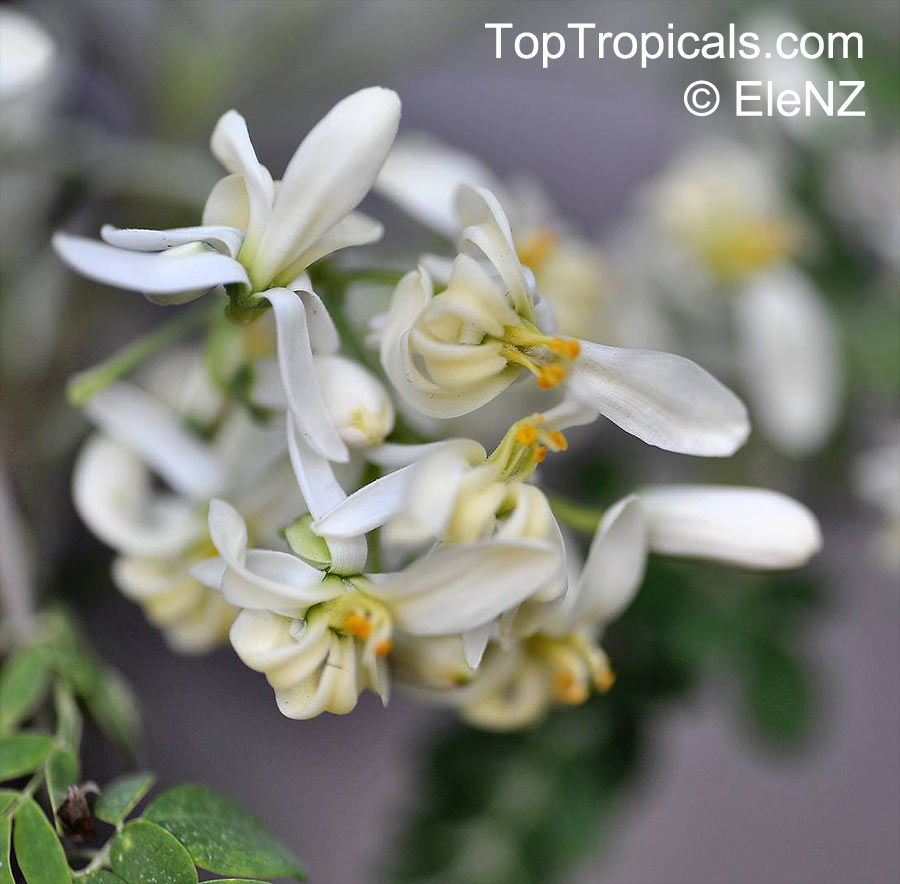
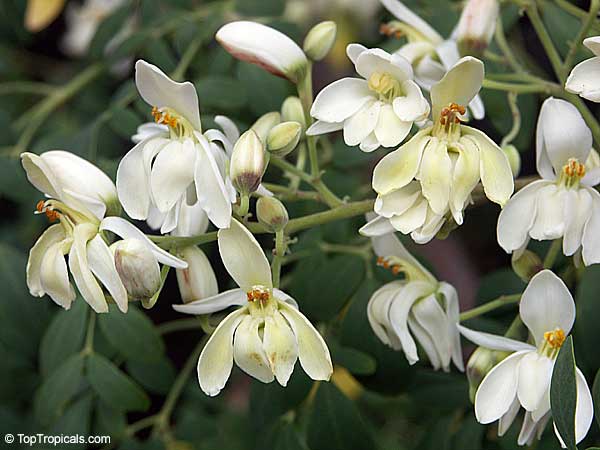
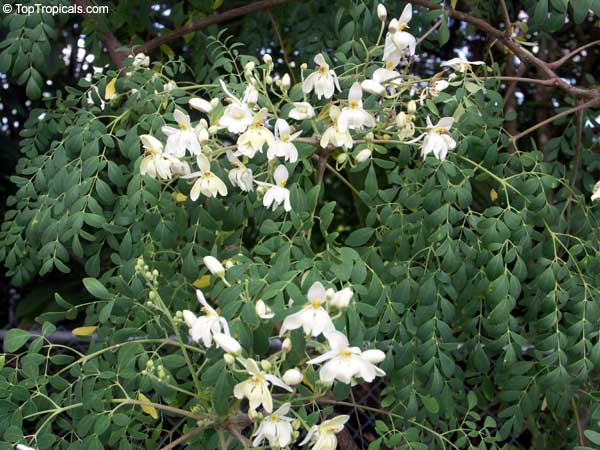
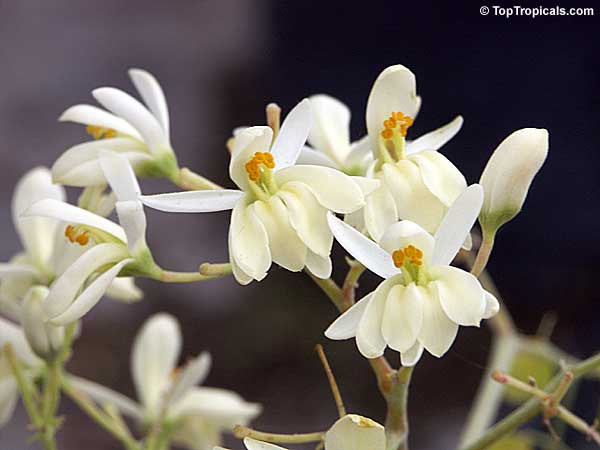
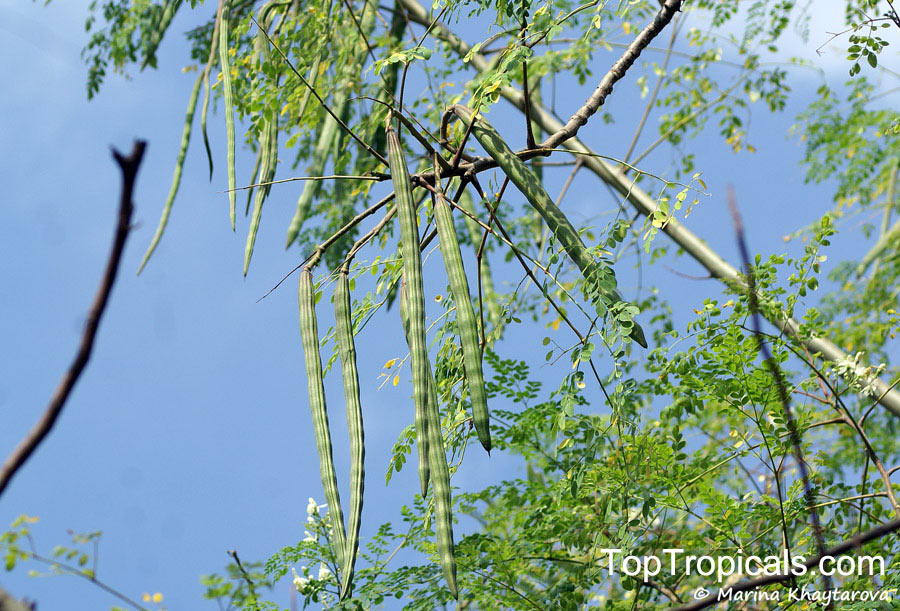
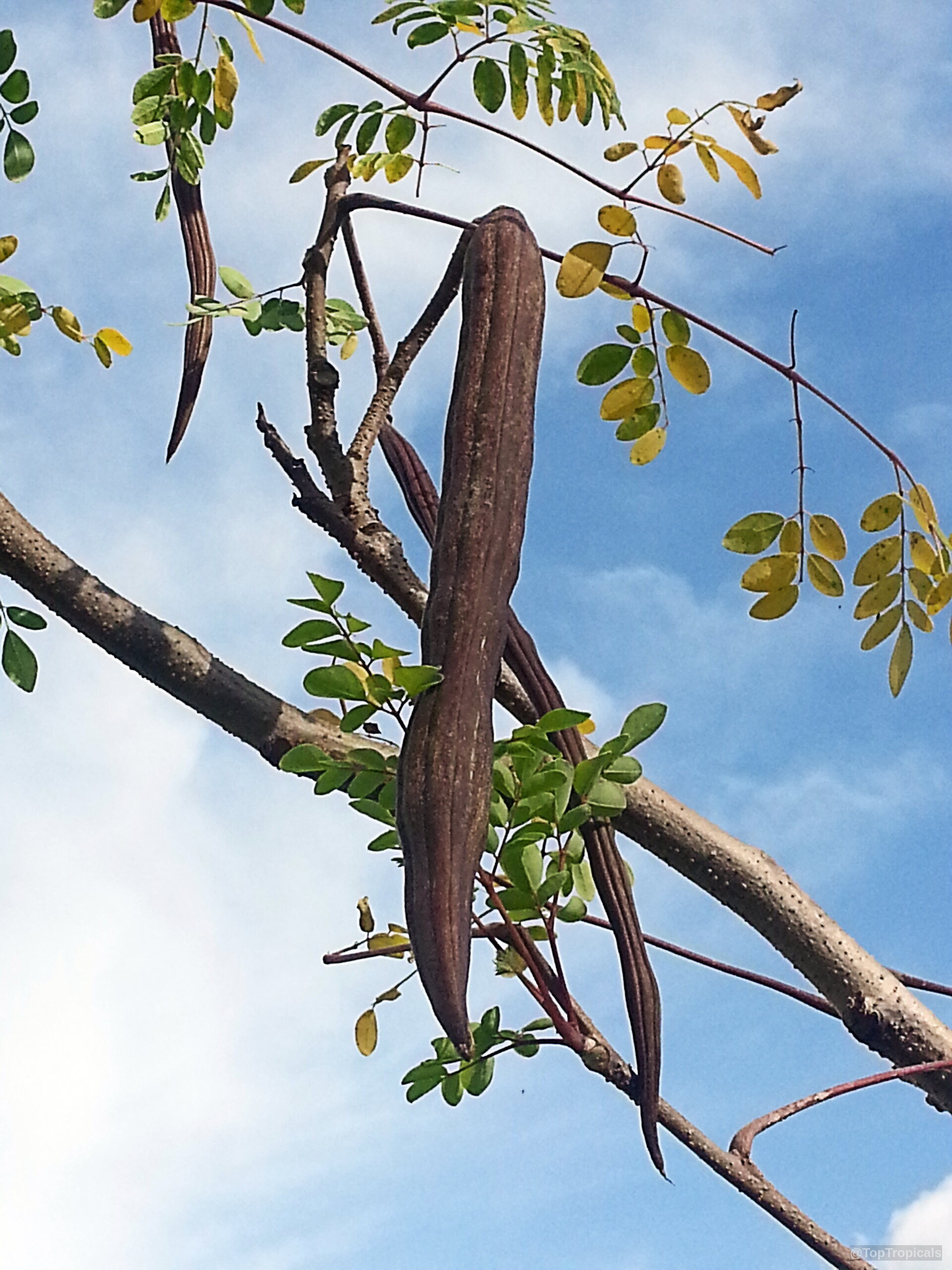
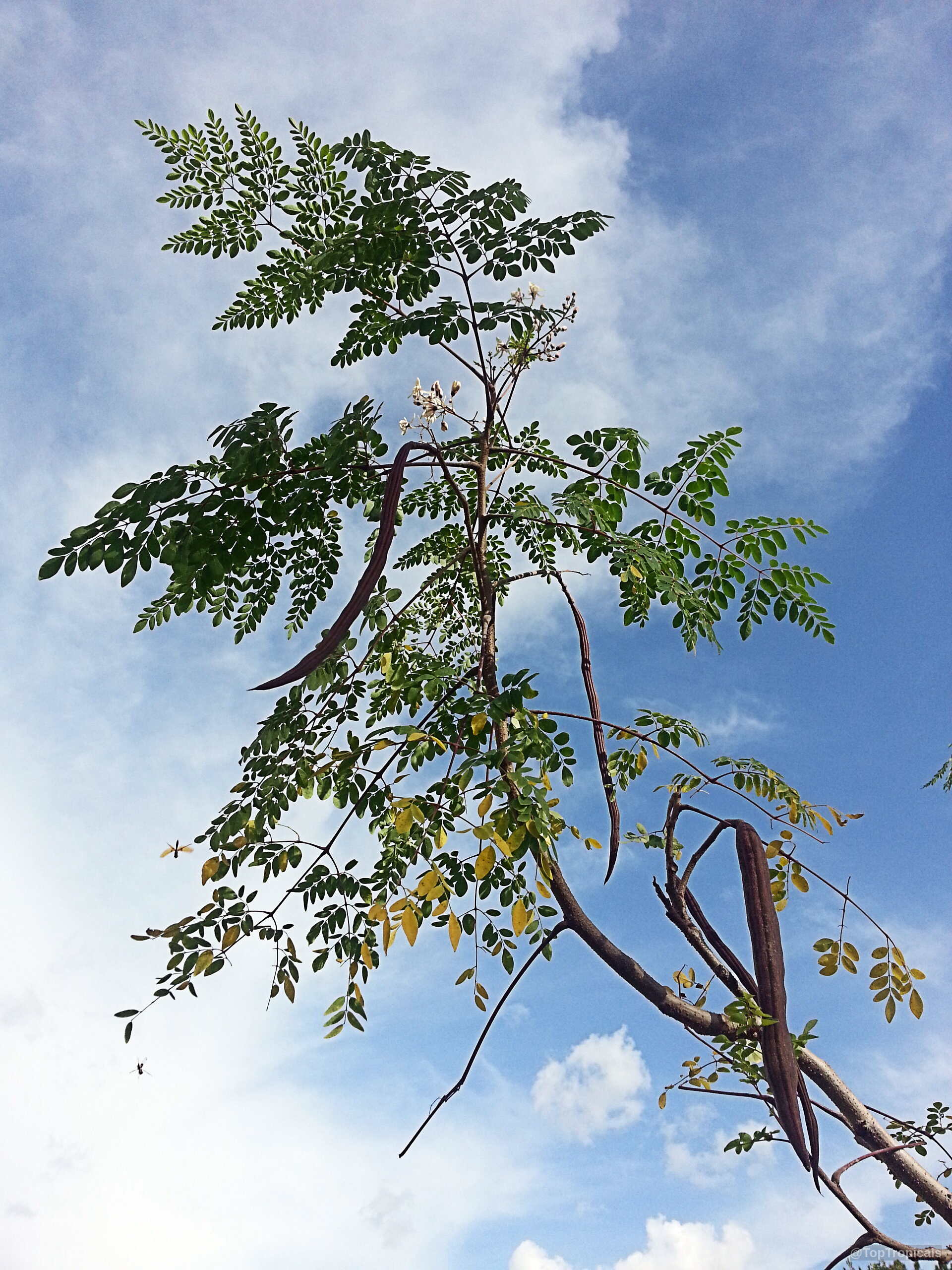
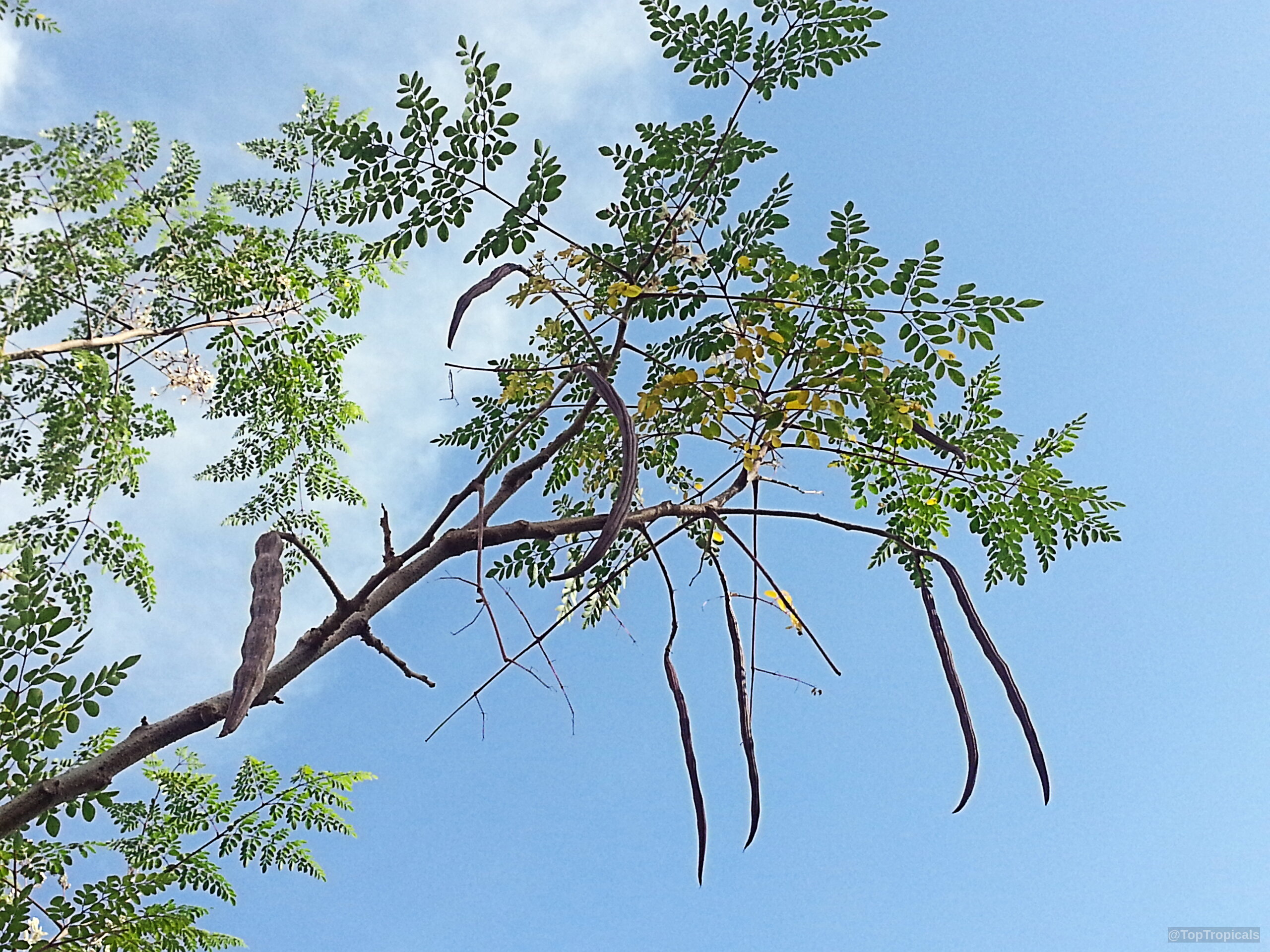
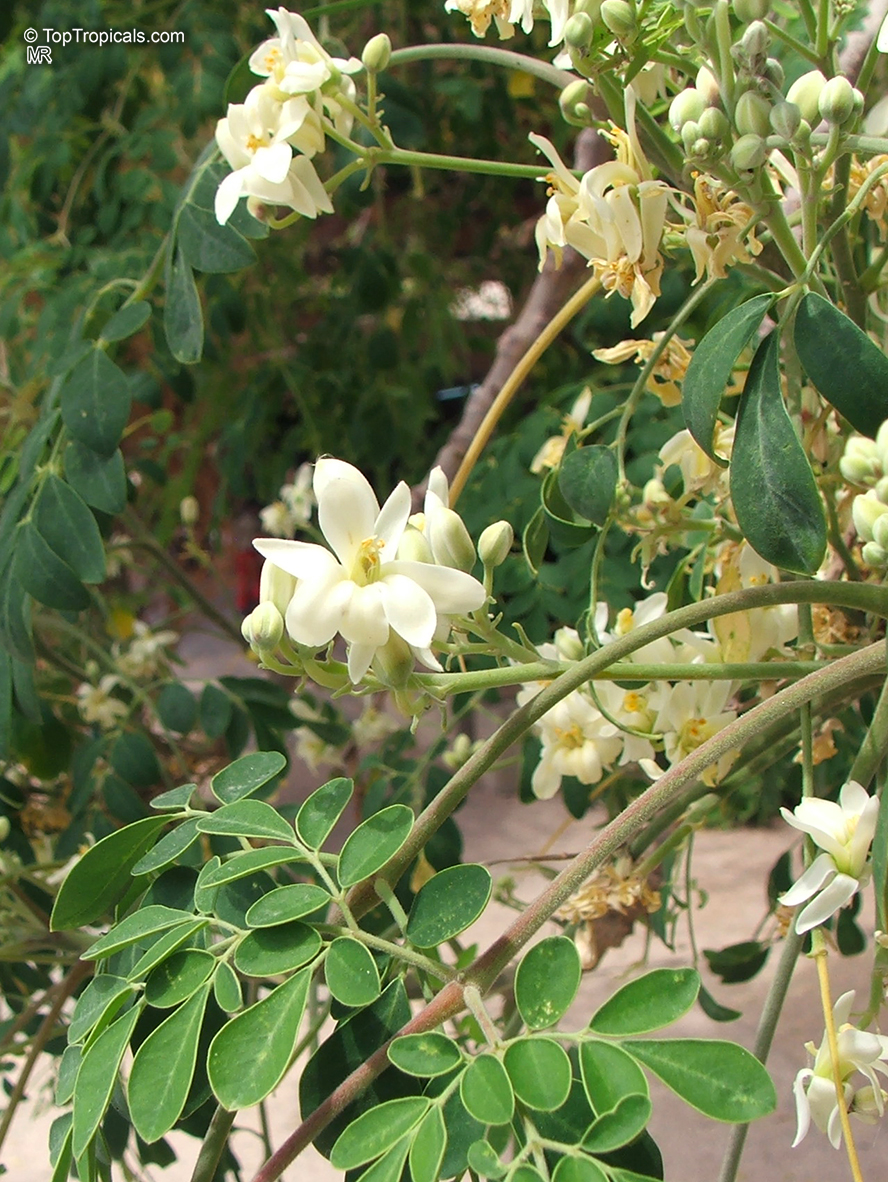
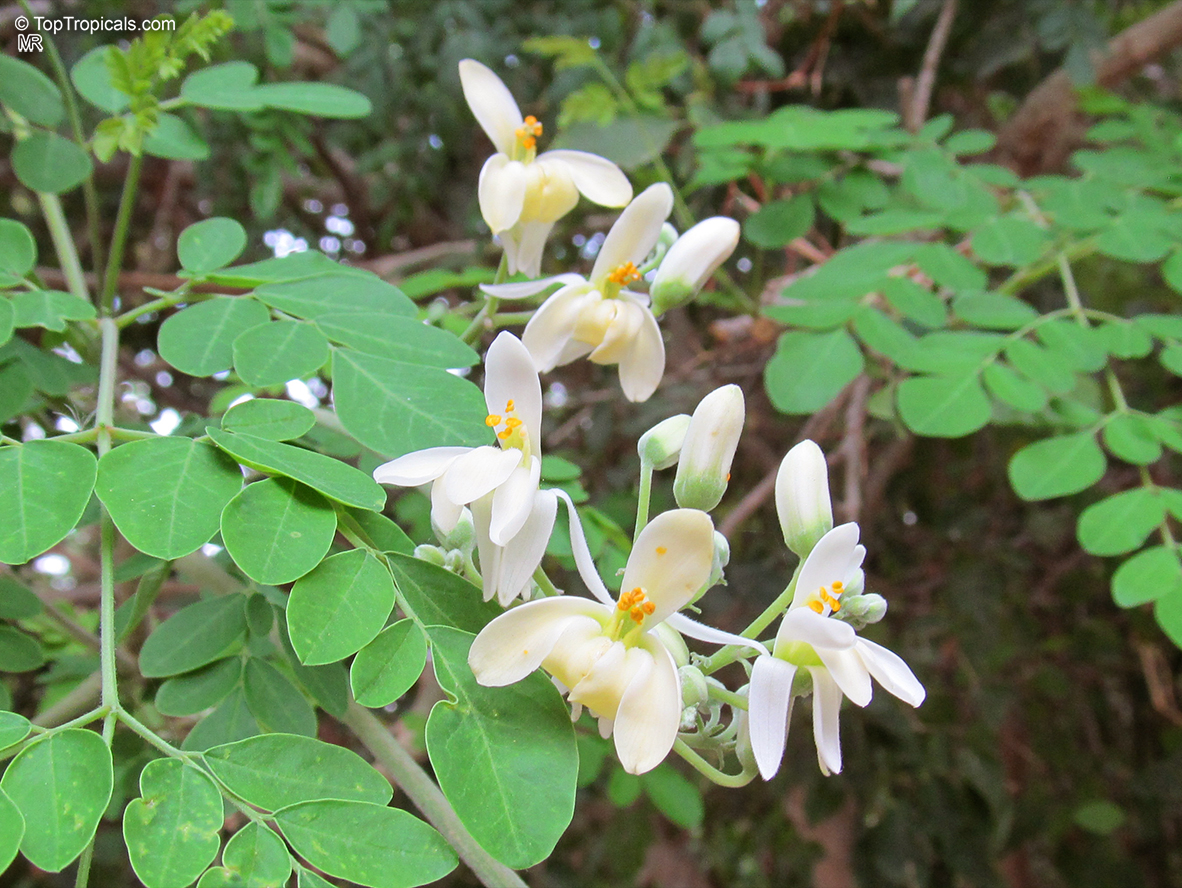
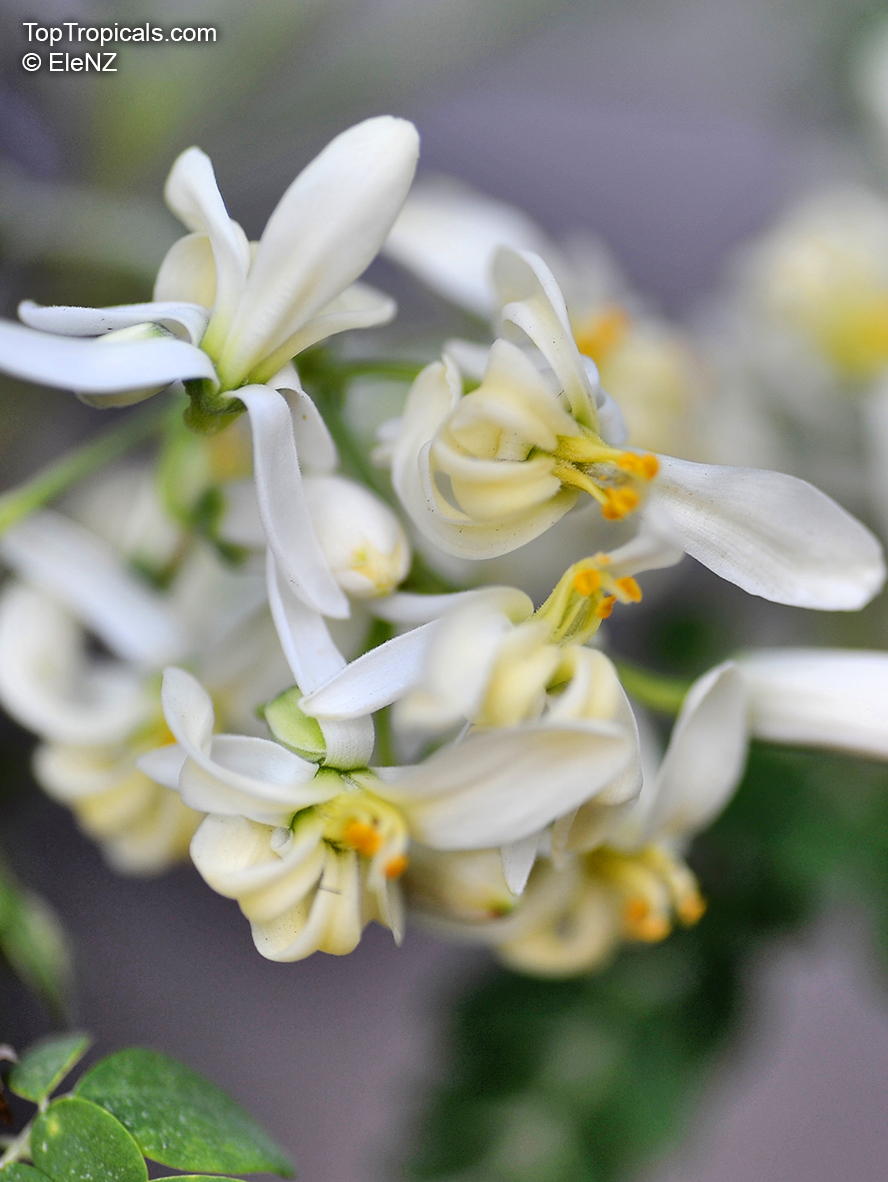
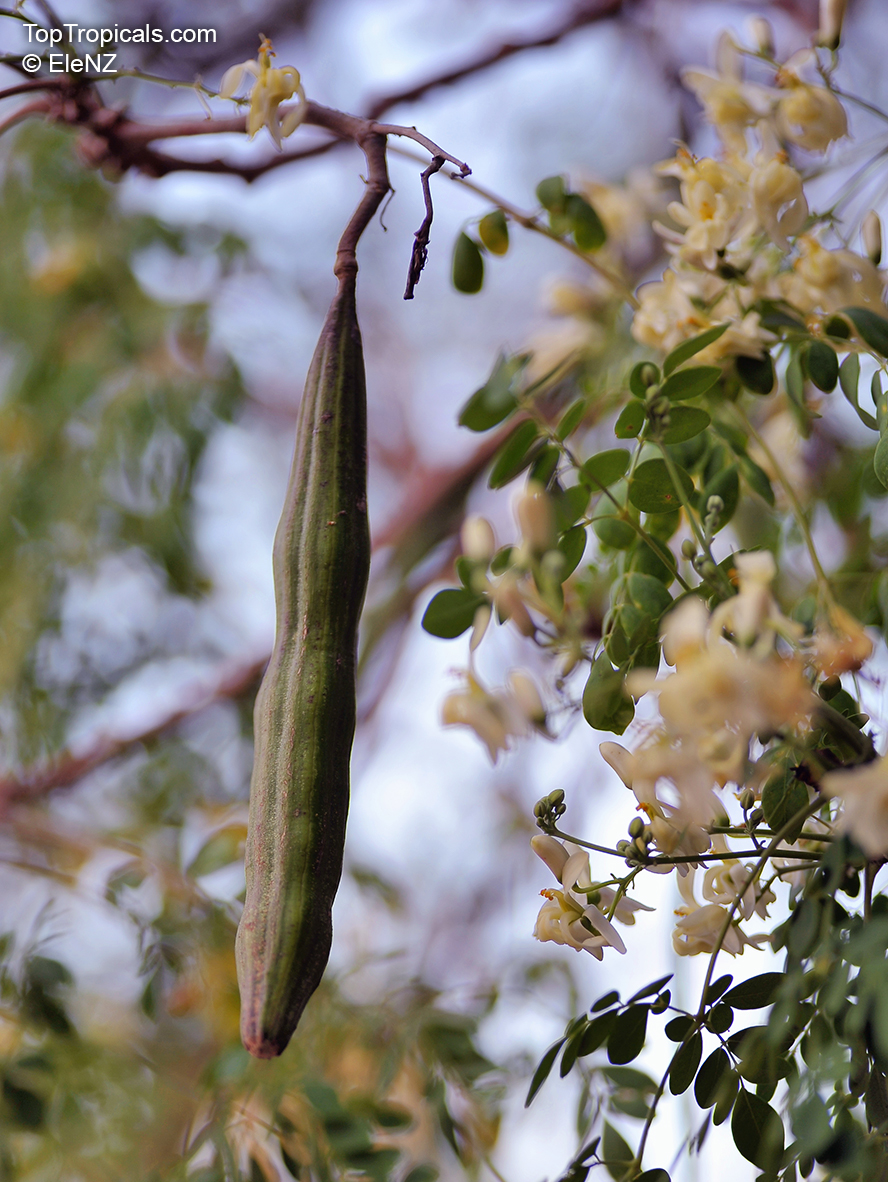
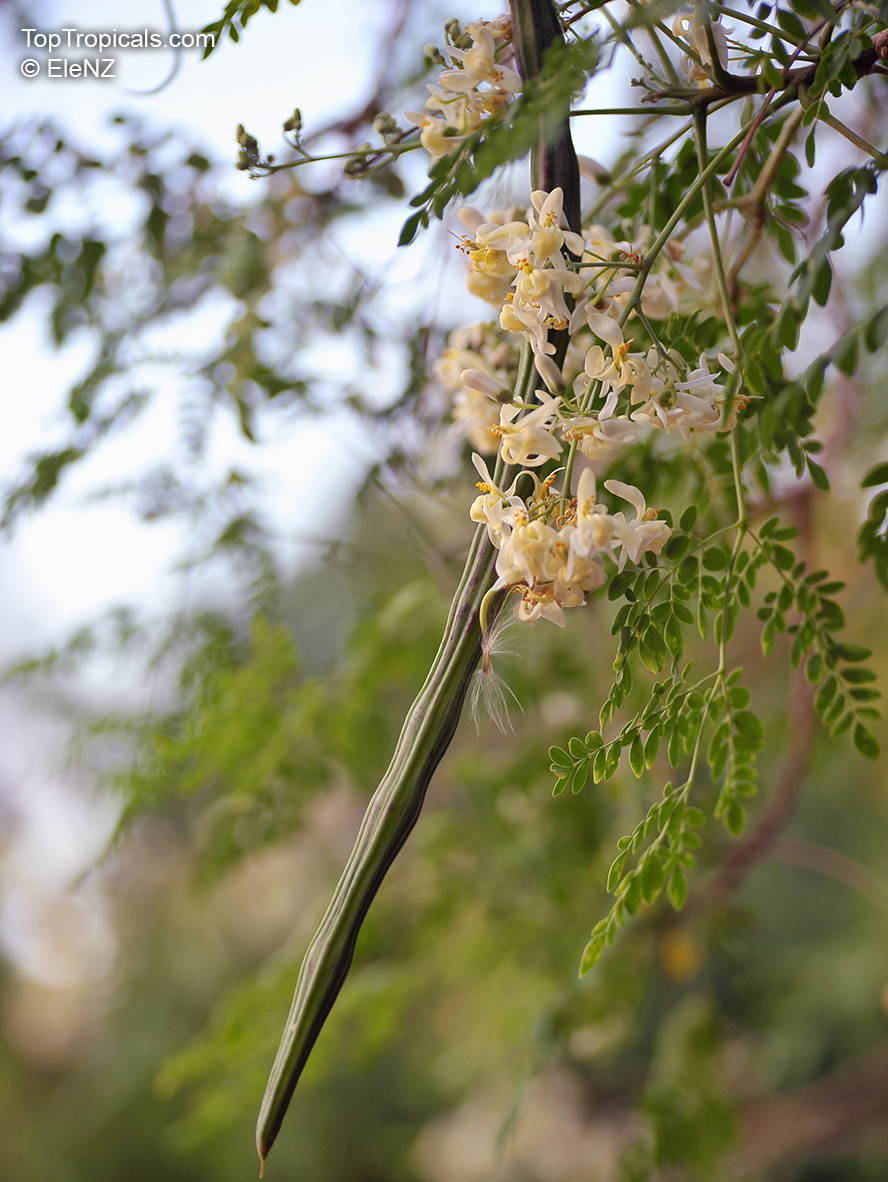
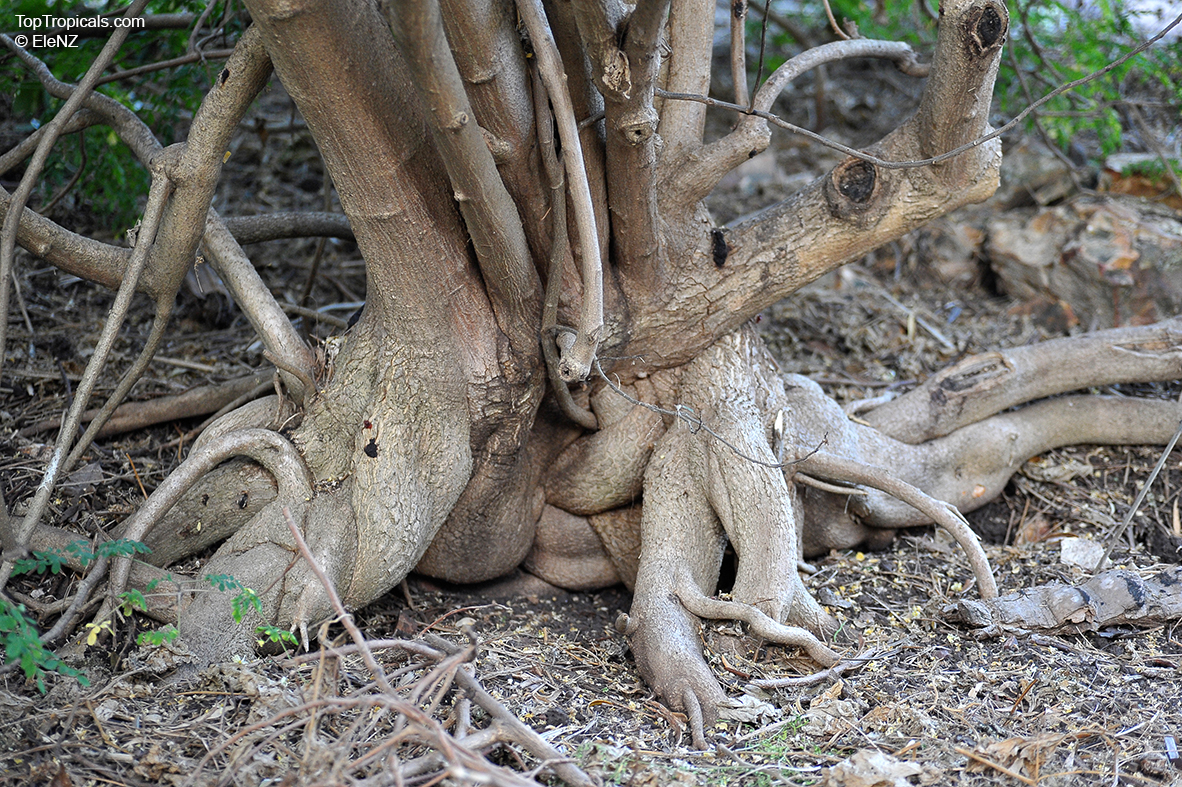
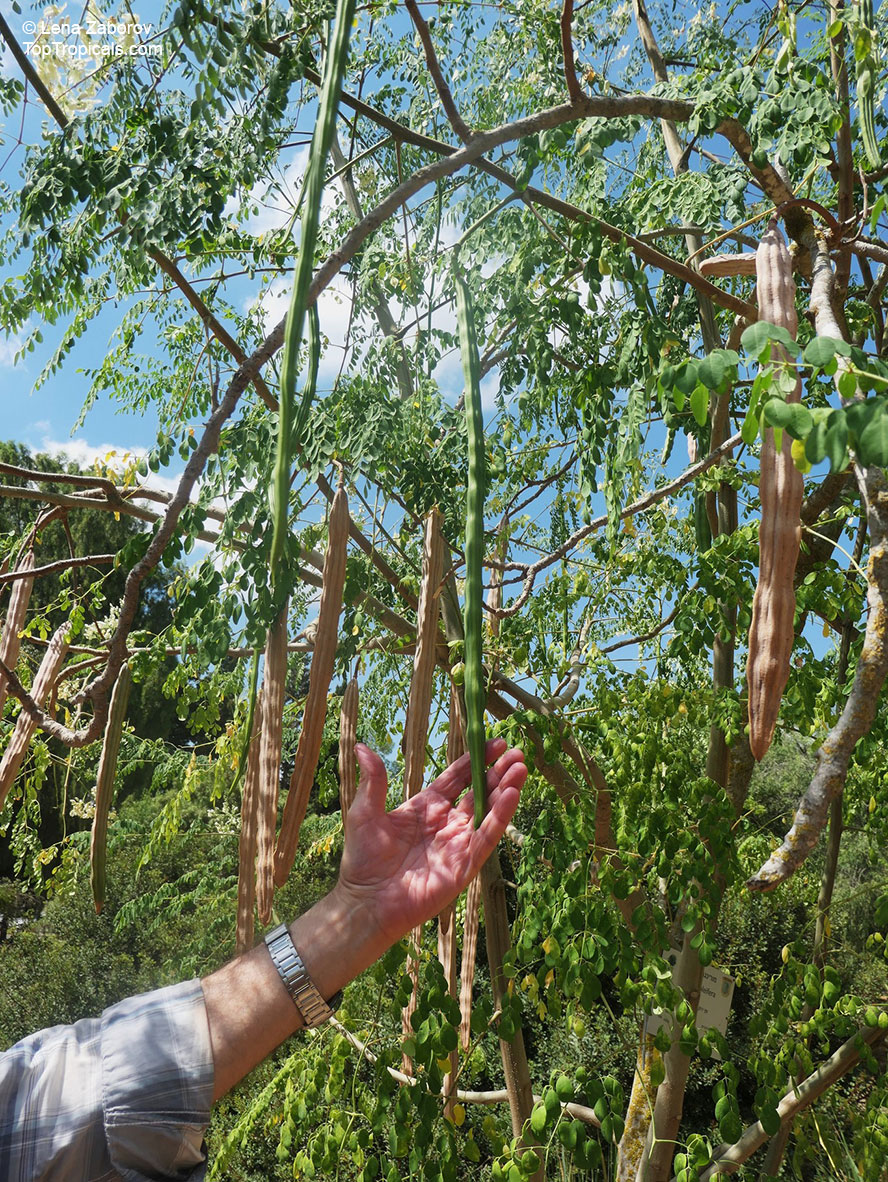
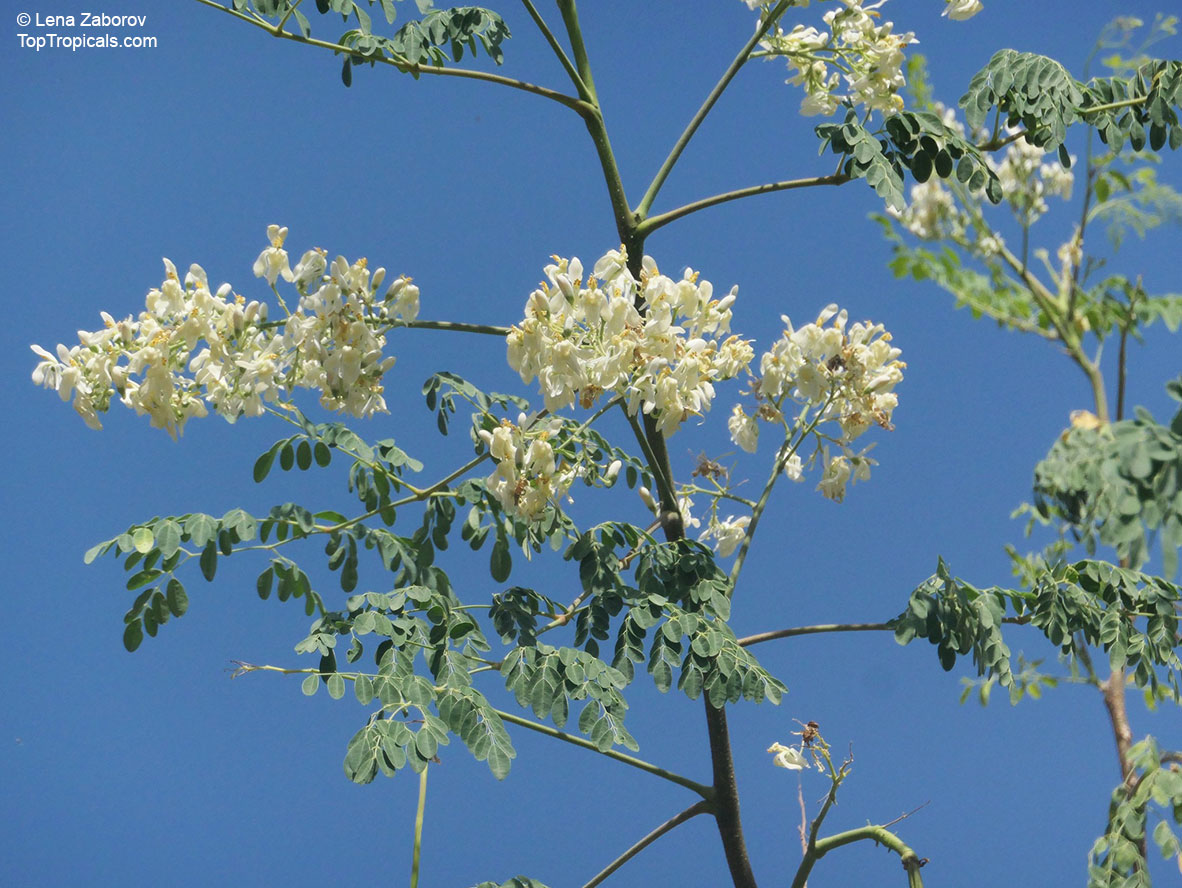
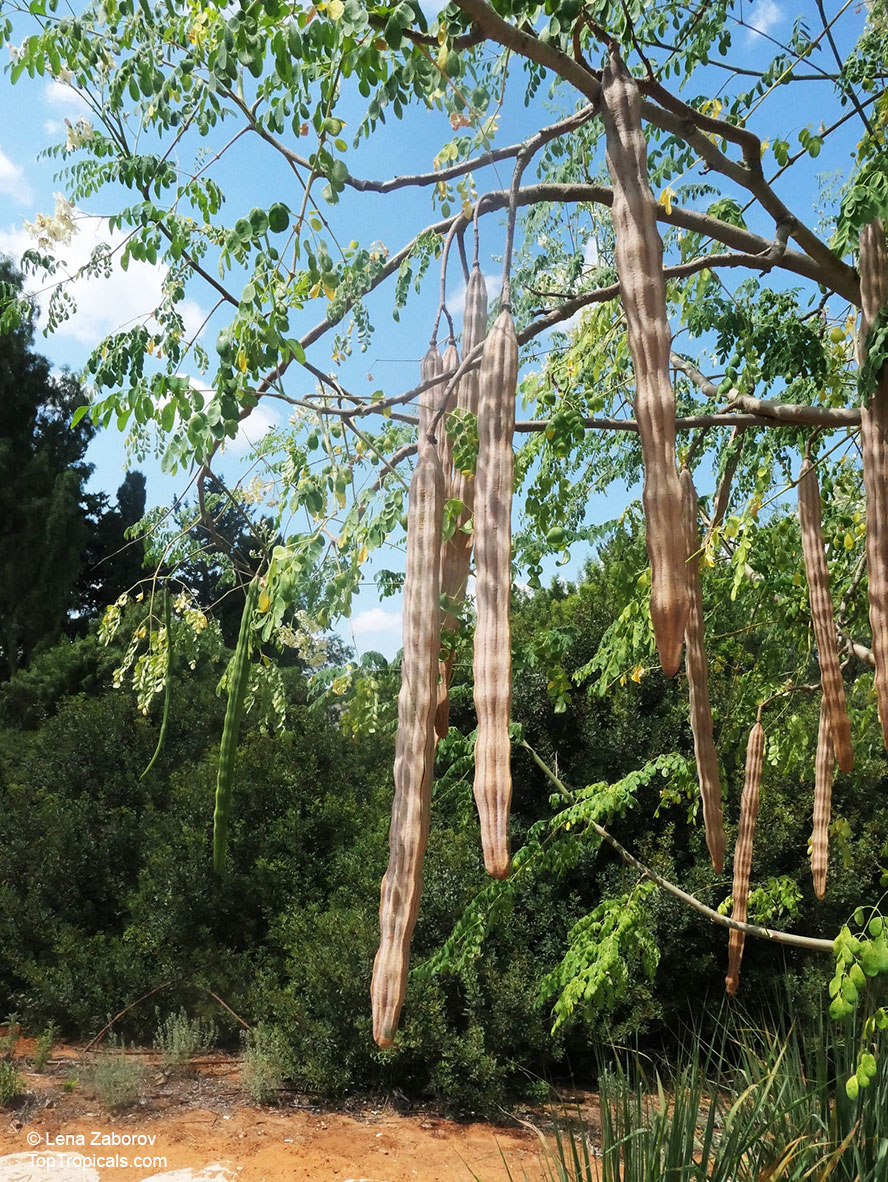
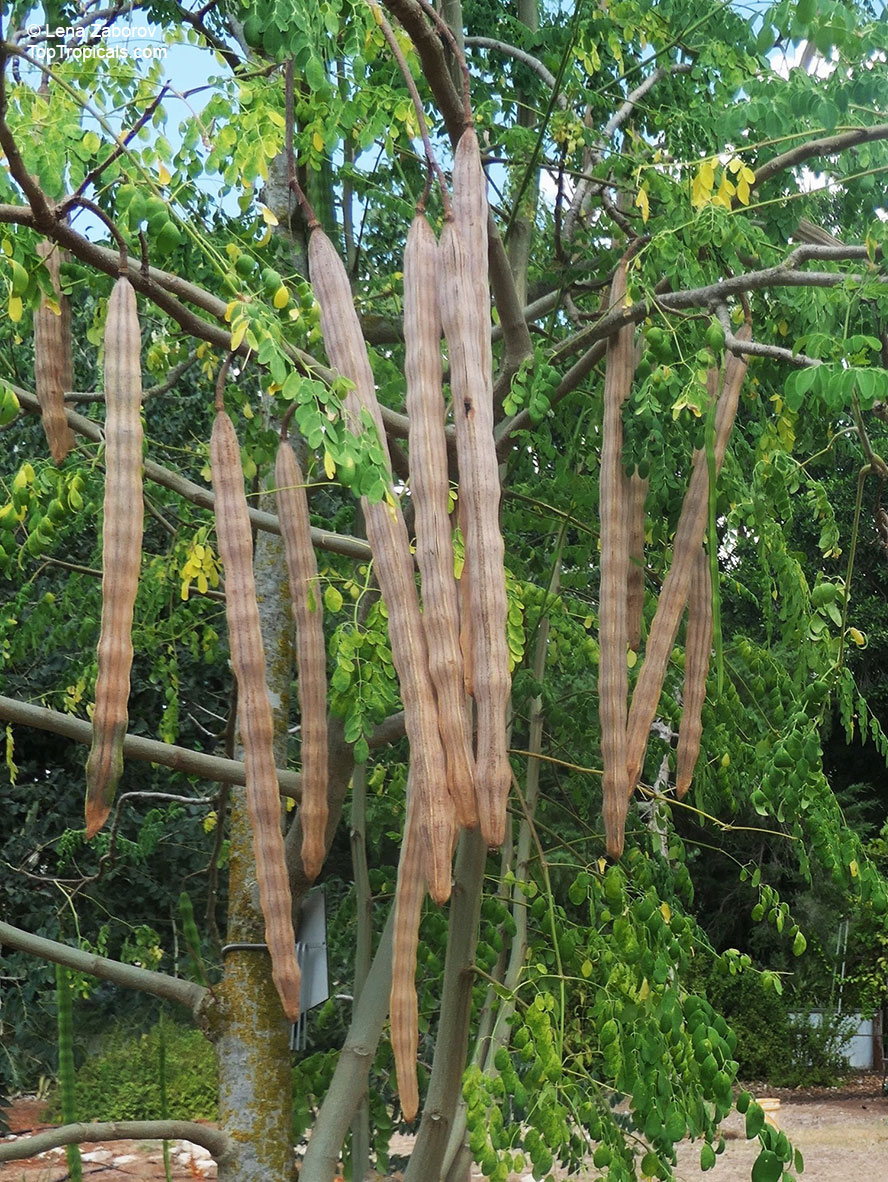
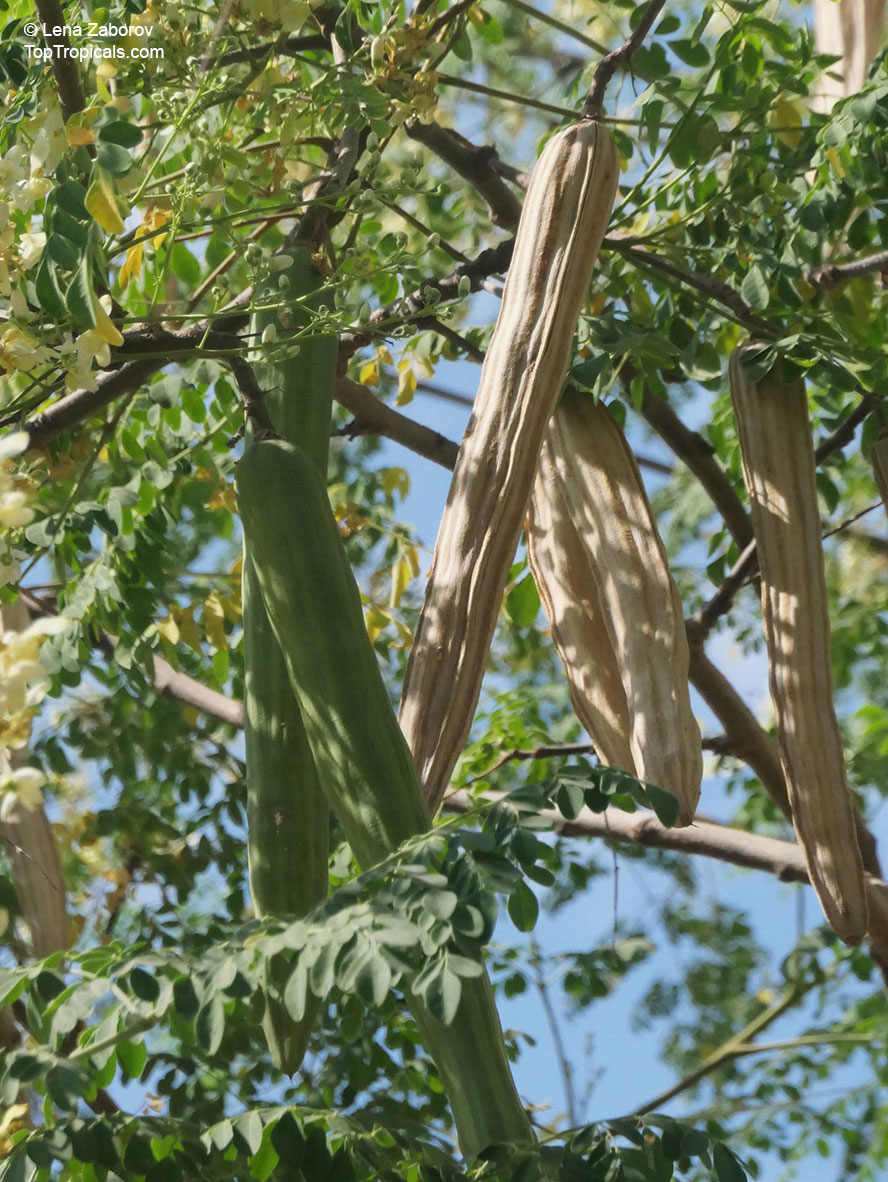
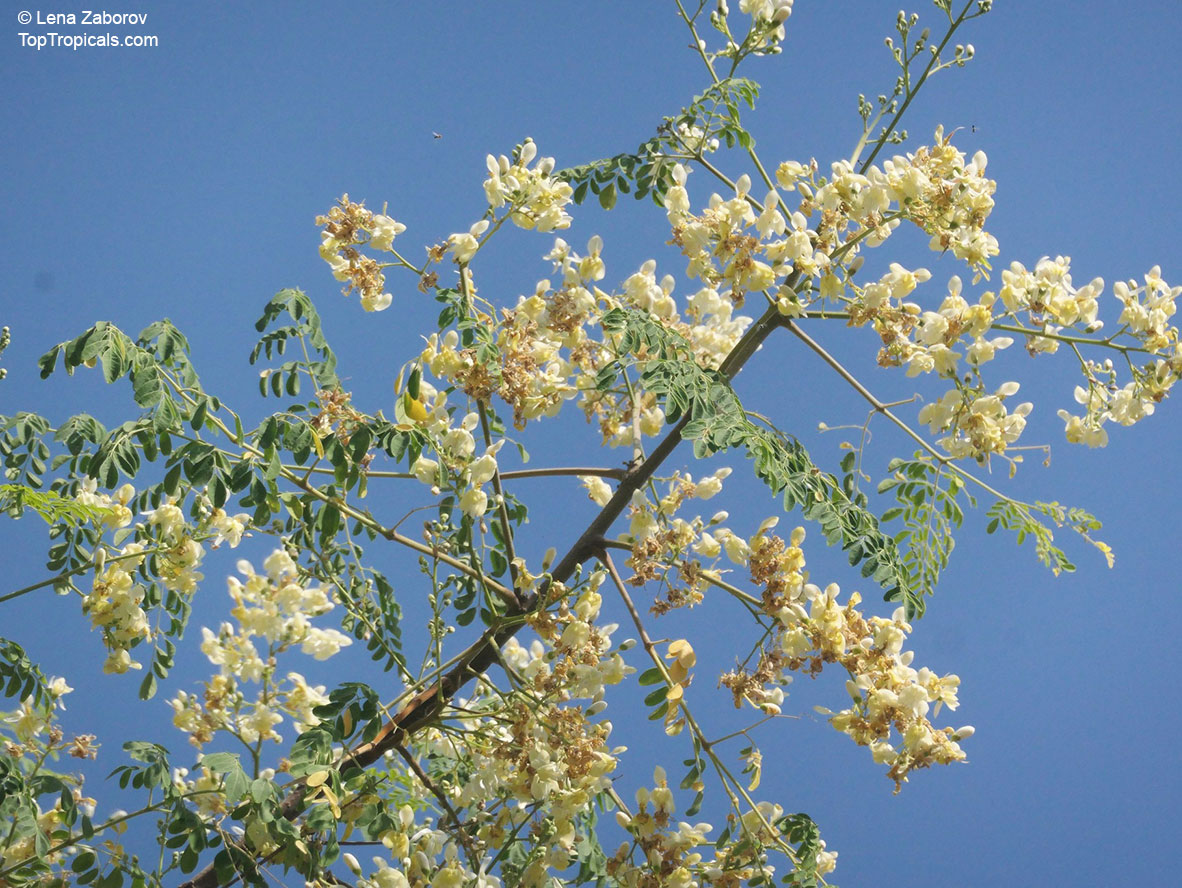
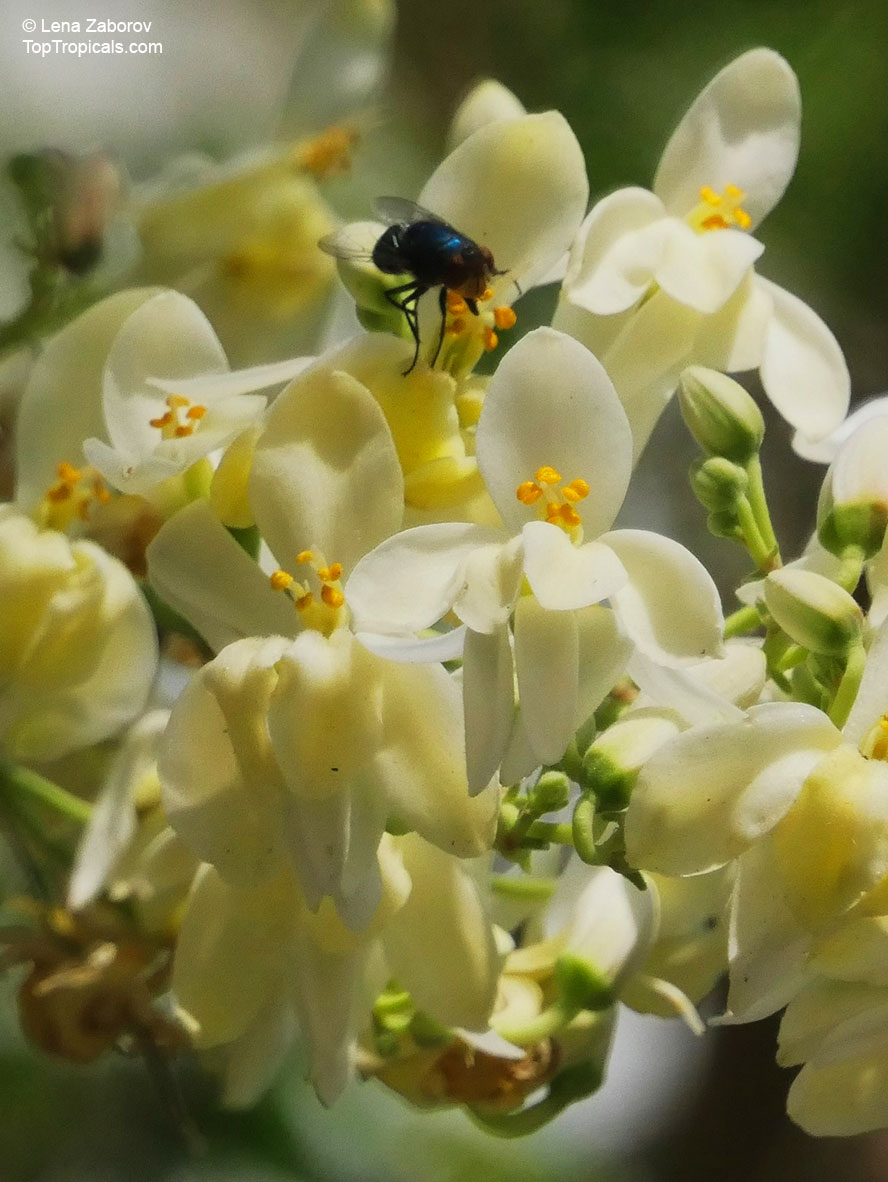
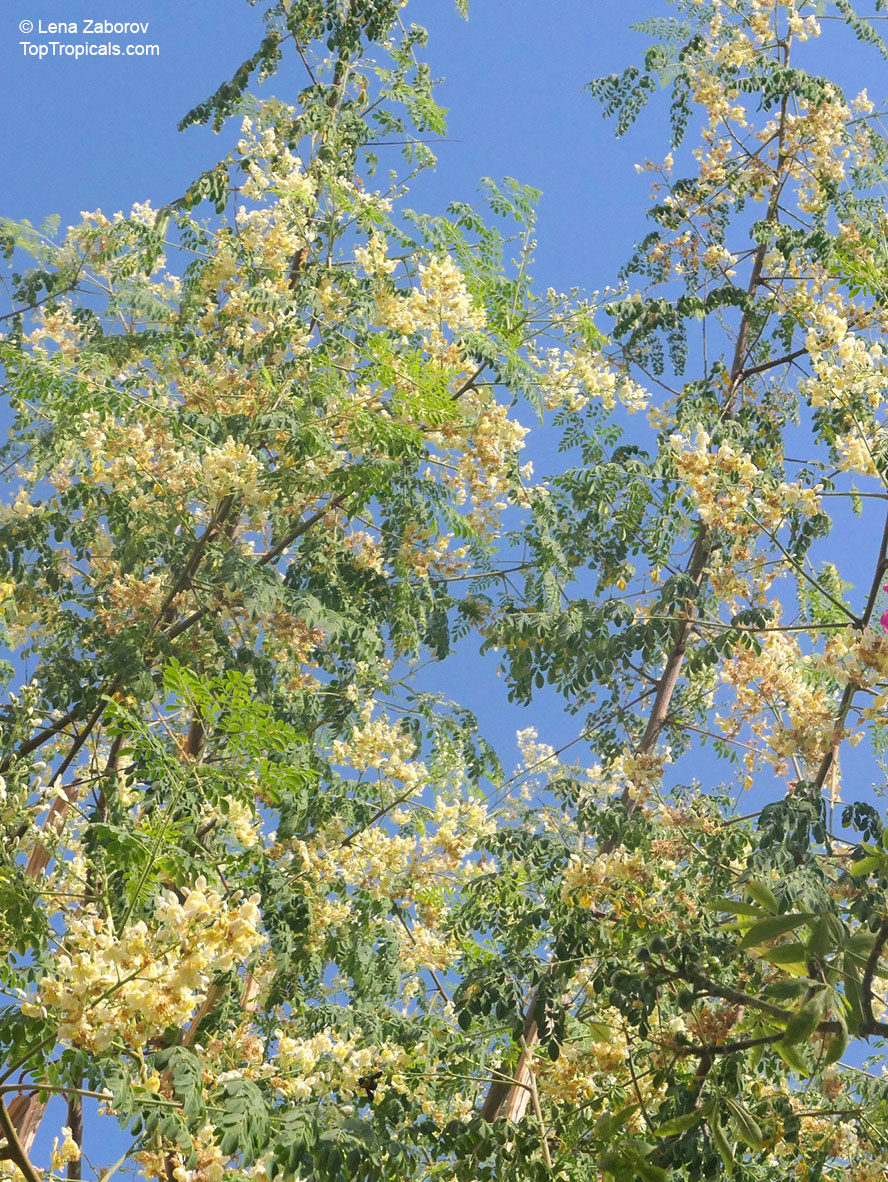
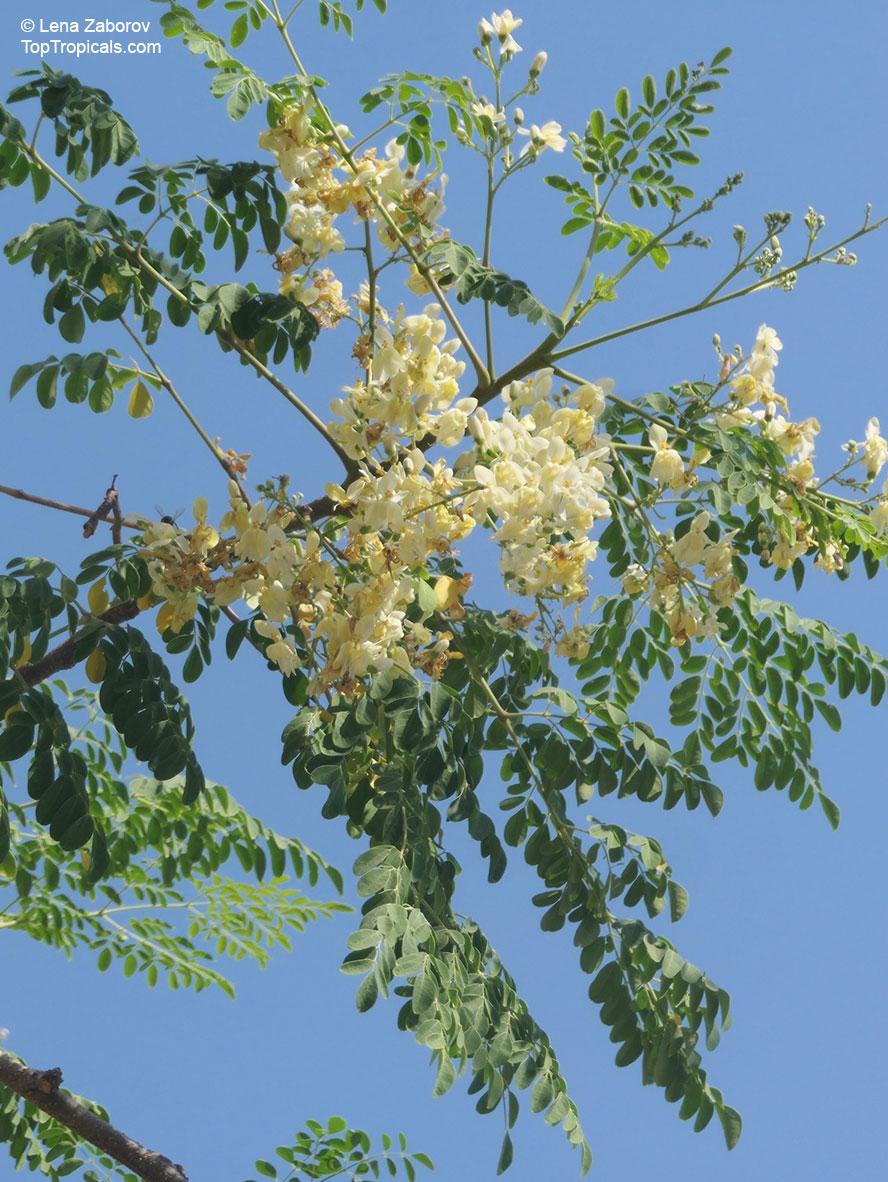
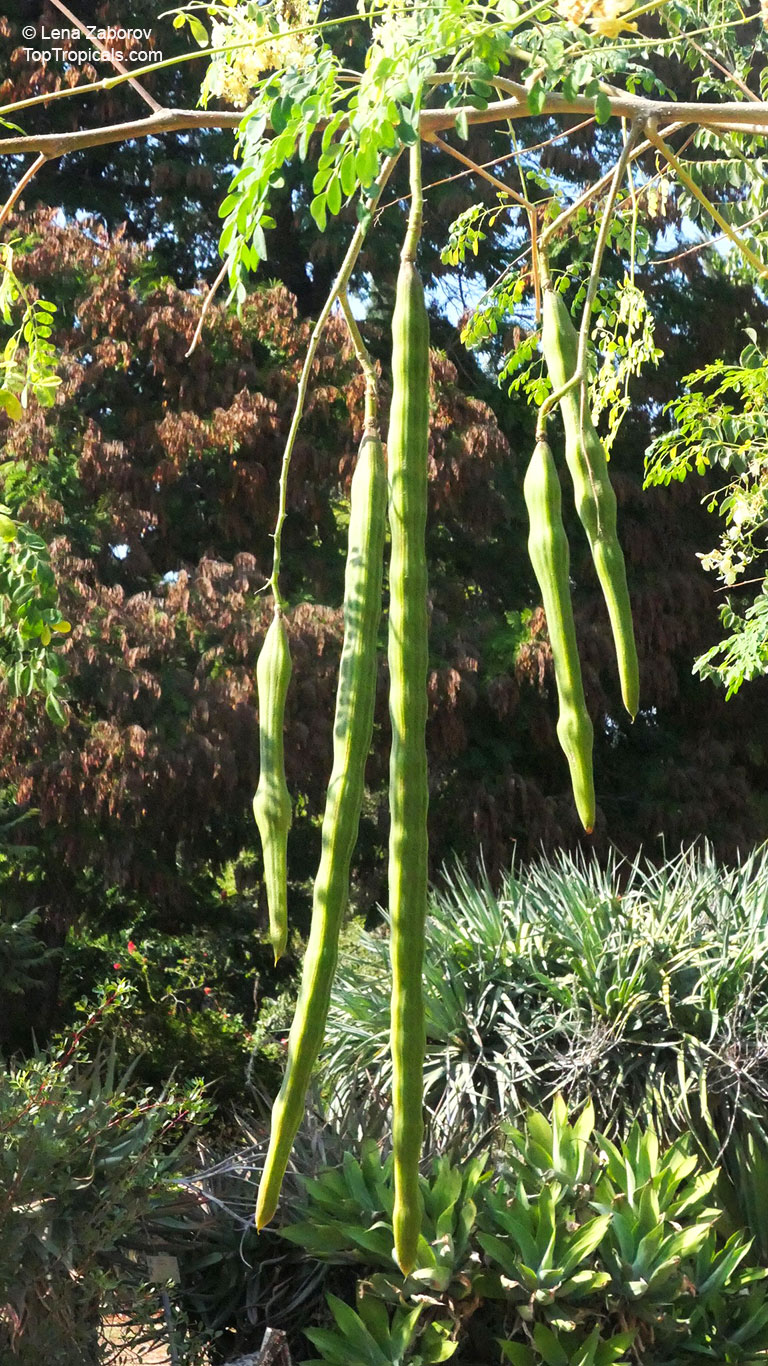
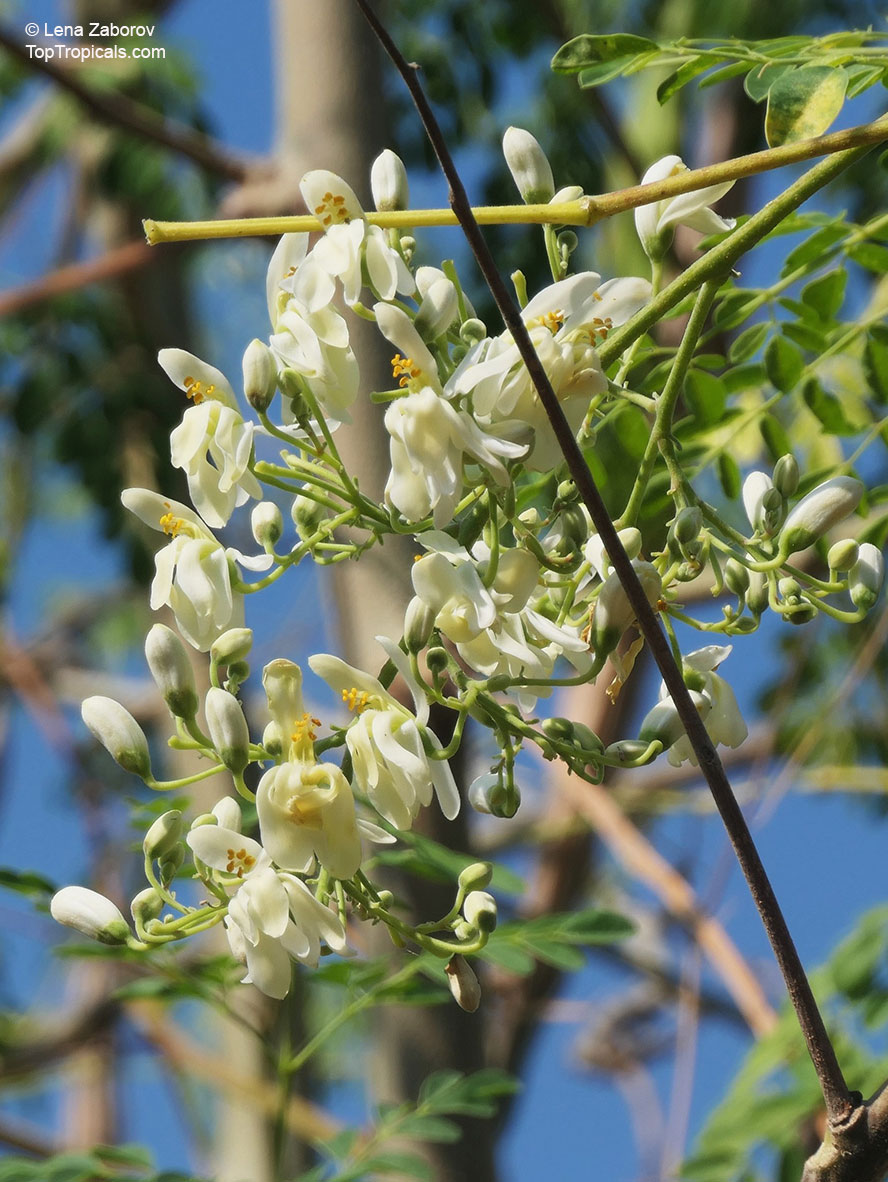
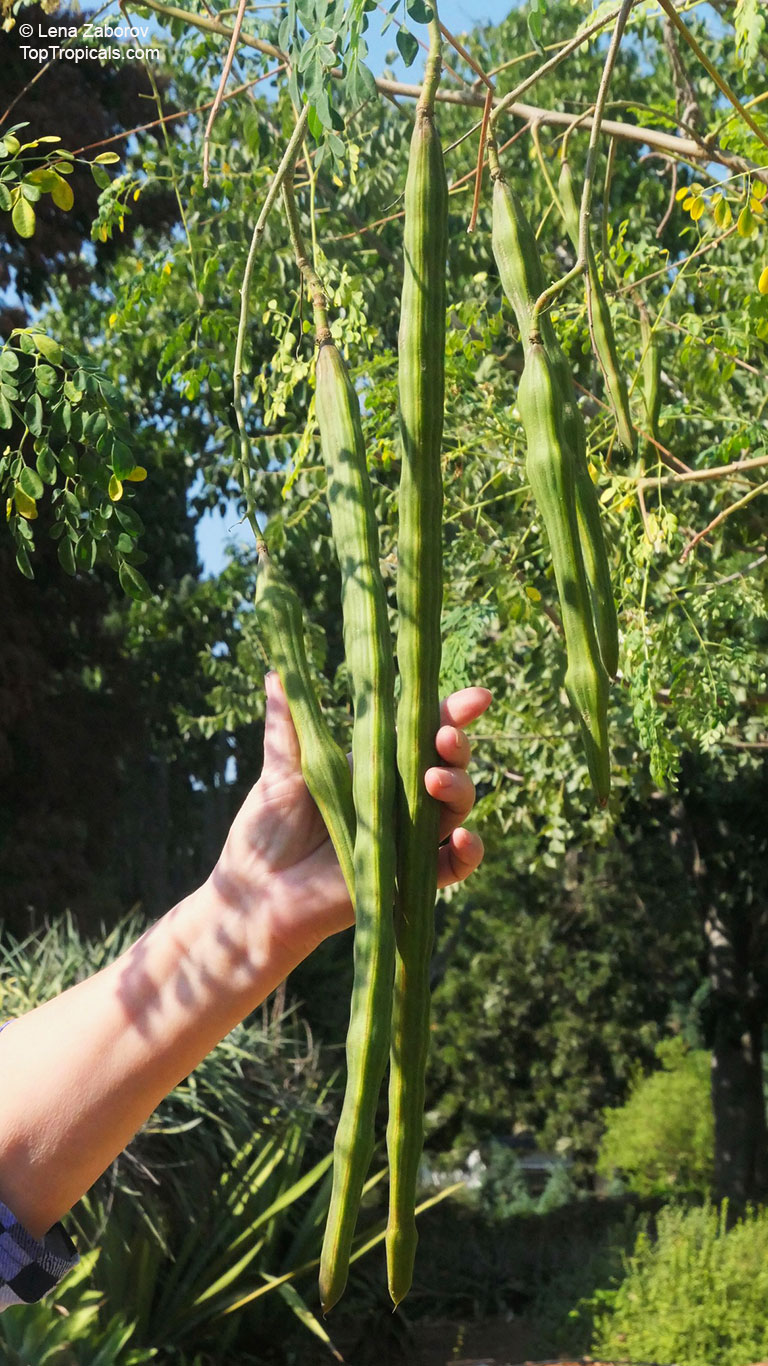
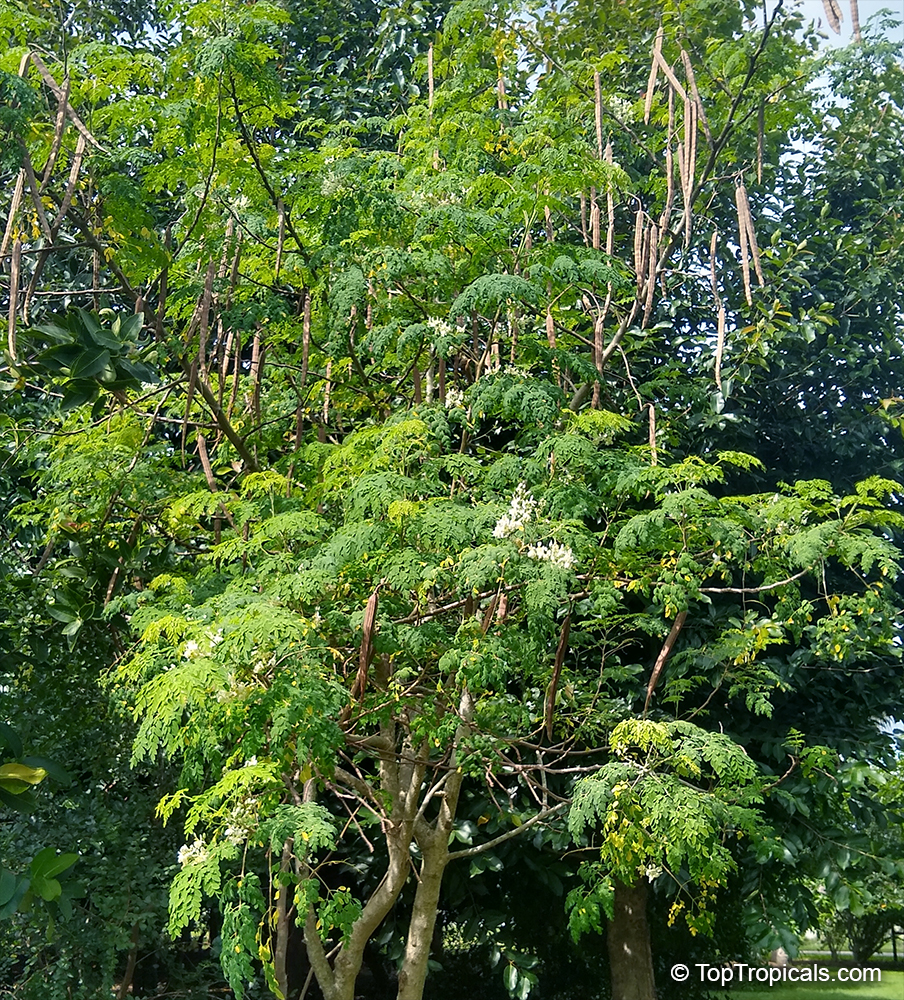
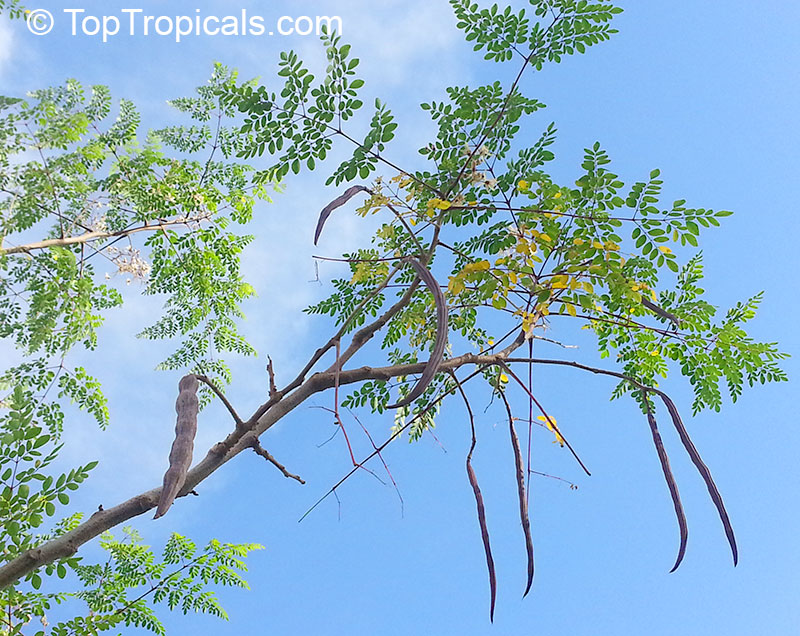
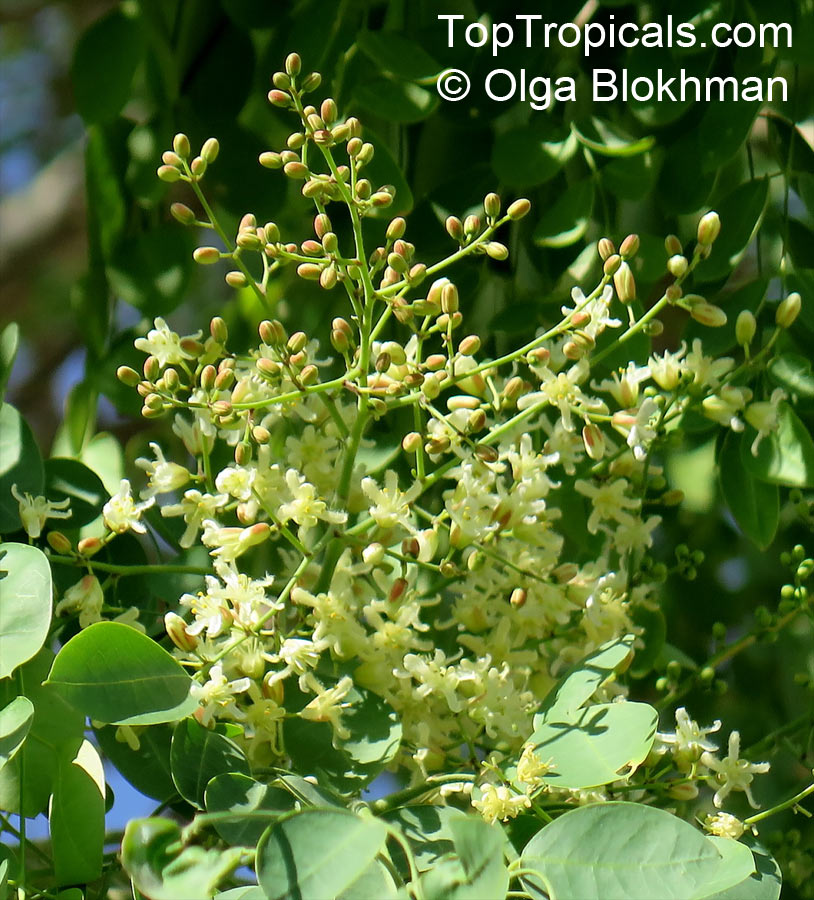
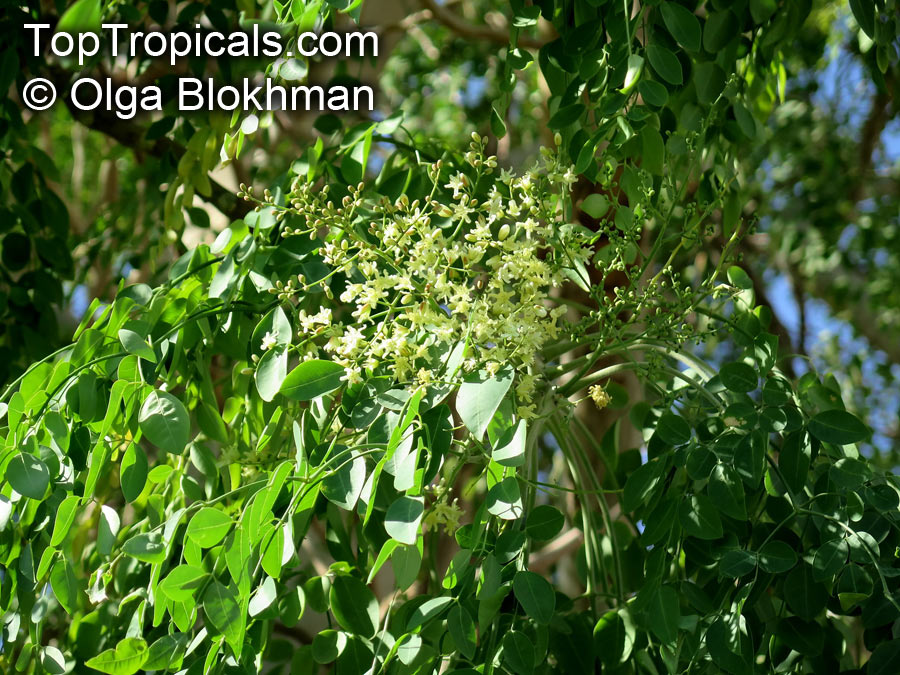
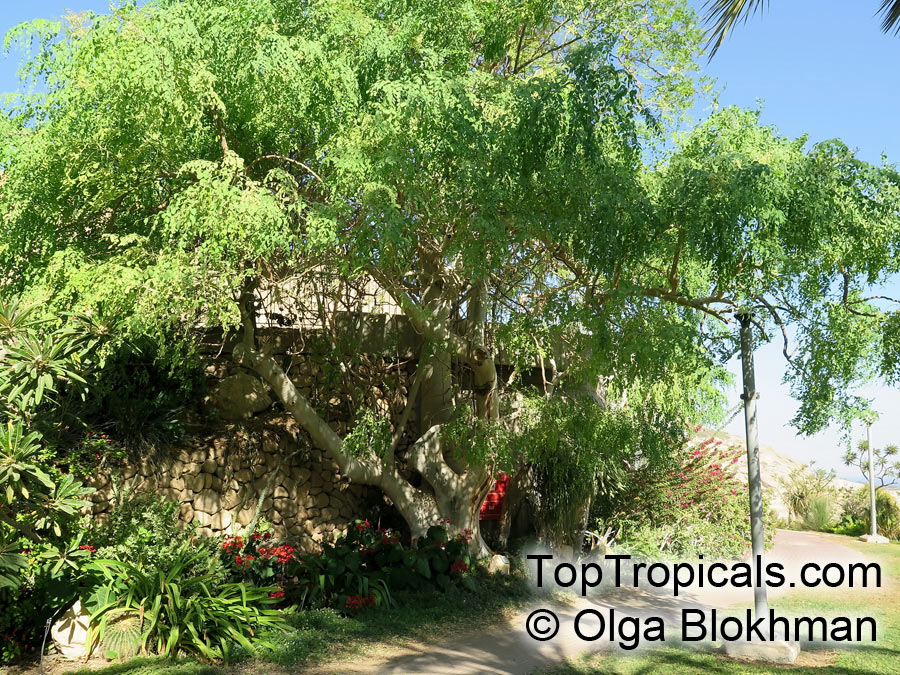
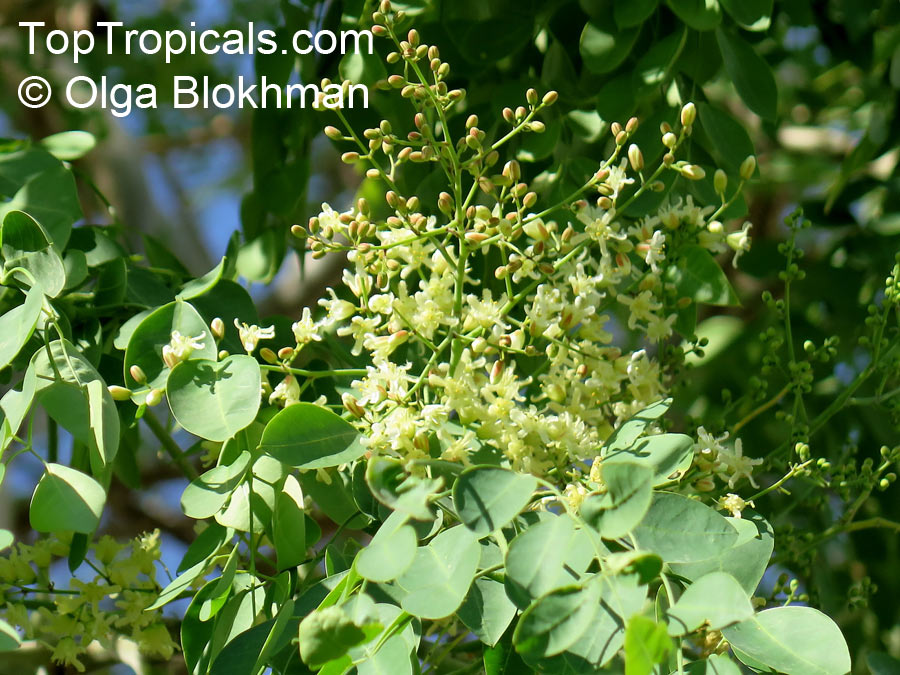
This 25 foot tall tree is sometimes mistaken for a legume. It has delicate foliage and attractive pale white-yellow fragrant flowers that are borne in loose clusters in the leaf axils. Flowering and fruiting freely and continuously. Grows best on a dry sandy soil. Makes an ideal shade tree with high drought resistance. Possibly one of the most useful trees in the world, it produces long green pods that have been compared to a cross between peanuts and asparagus. The roots are used as a substitute for horseradish and the edible leaves make a highly nutritious vegetable. The roots have also been documented as useful in many folk remedies. The flowers, shoots, and foliage are edible as greens. The name derives from the roots, which taste like horseradish and are used as a substitute. Cattle are particularly fond of them. Young pods are cooked in curries. Seeds, which taste like peanuts when fried, are eaten, but they contain an alkaloid, which limits their use. The unripe pods, known as `susumber' or `drumsticks', are cut up and boiled like beans. The outsides of the pods are extremely hard and woody and impossible to eat; one has to pick them up and eat the sticky pulp inside and `pips' which are lightly hot and delicious. Upon pressing, the seeds yield an oil called ben oil. This nondrying oil is used for oiling machinery, in salad oil, and in soaps. The corky bark yields a gum used in India to print calico (cotton cloth with figured patterns).
Learn more about Moringa tree: How to grow a happy Moringa Tree
Recommended Fertilizer: SUNSHINE Robusta - Rapid Growth Booster
Recommended Fertilizer: SUNSHINE Robusta - Rapid Growth Booster
Ordering seeds info
RECOMMENDED SUPPLIES:
Seed Germination Mix #3, professional grade
SUNSHINE-Epi - Seeds and cuttings booster
SUNSHINE Bombino - Young Plant Booster
Ordering seeds info
RECOMMENDED SUPPLIES:
Seed Germination Mix #3, professional grade
SUNSHINE-Epi - Seeds and cuttings booster
SUNSHINE Bombino - Young Plant Booster
Botanical name: Moringa ovalifolia
Common name: Phantom Tree
Family: Moringaceae
Origin: Southern Africa
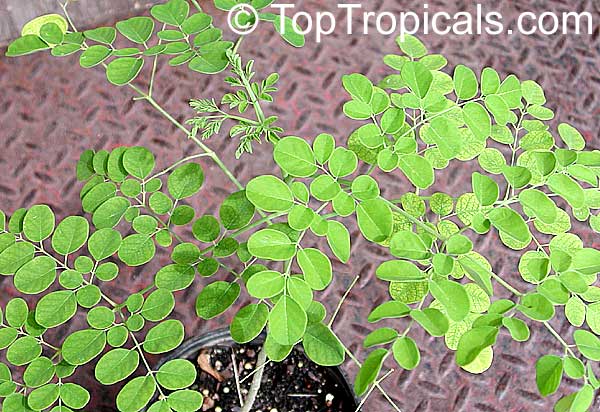
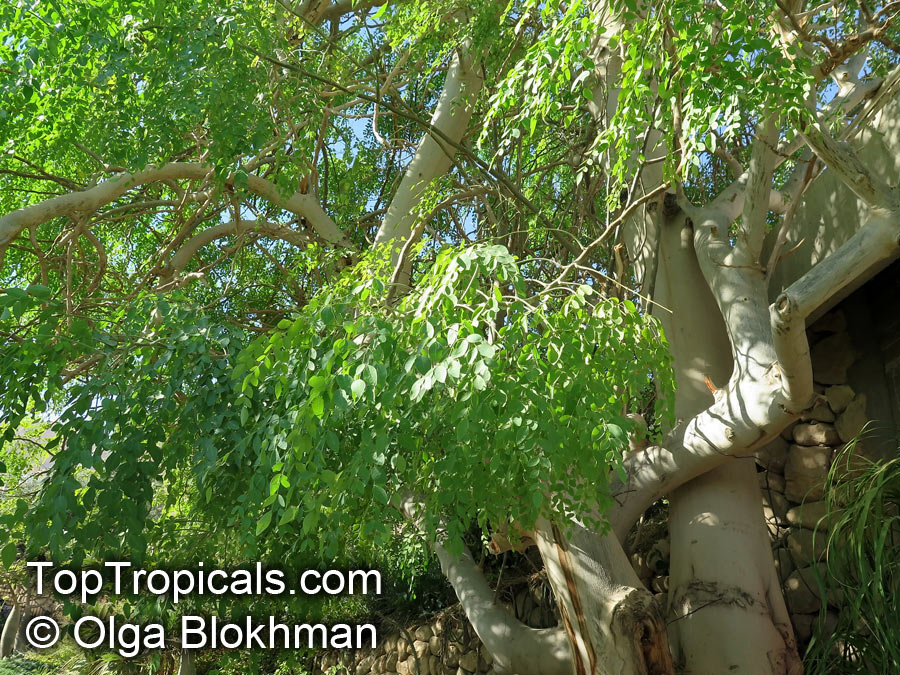
Smooth barked, caudiciform tree, up to 30 feet tall (9 m).The species is found from central Namibia to southwestern Angola, usually on very rocky ground.
Moringa tolerate most soil types and grow well in full sun. Water regularly and protect from wind and frost; in cooler climates, they can be grown in warmed greenhouses. Propagate from seed or cuttings.
Botanical name: Moringa peregrina
Common name: Drumstick tree
Family: Moringaceae
Origin: Arabia, Red Sea coasts

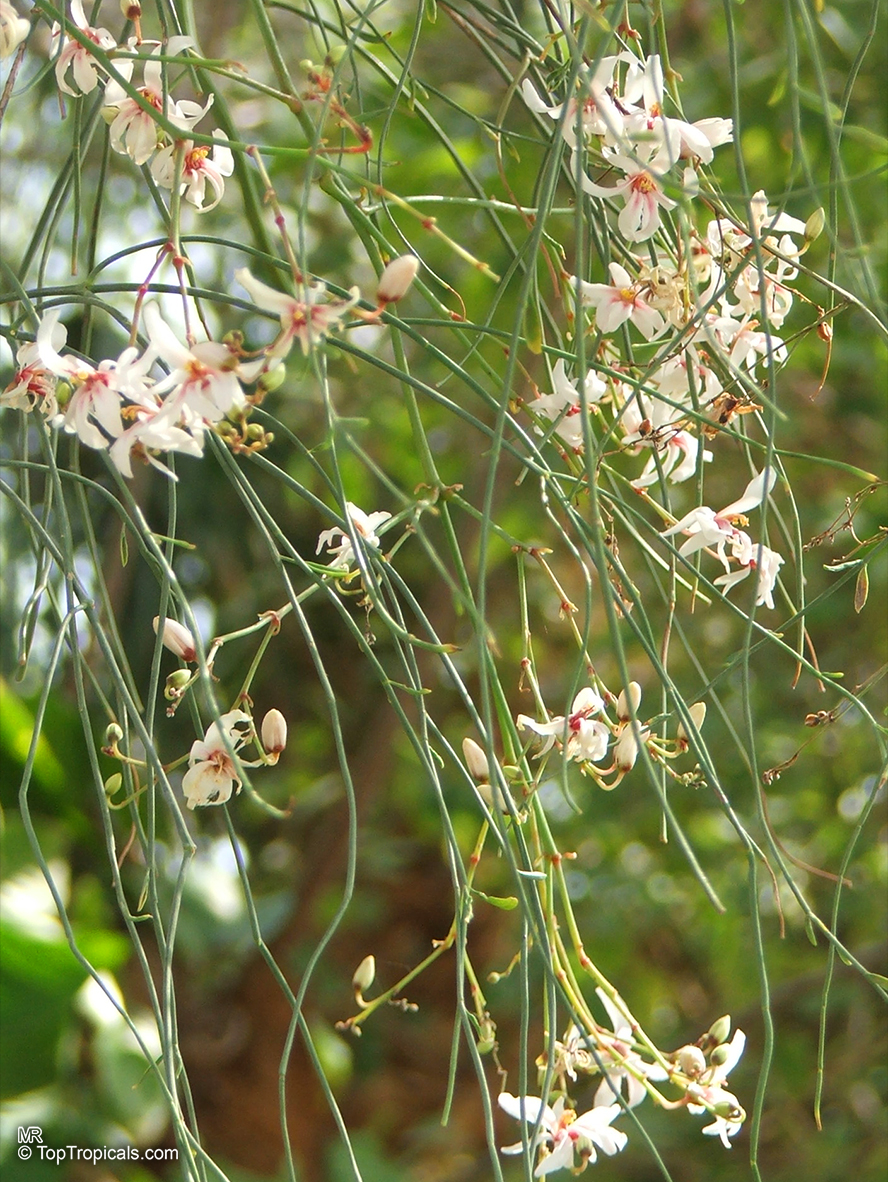
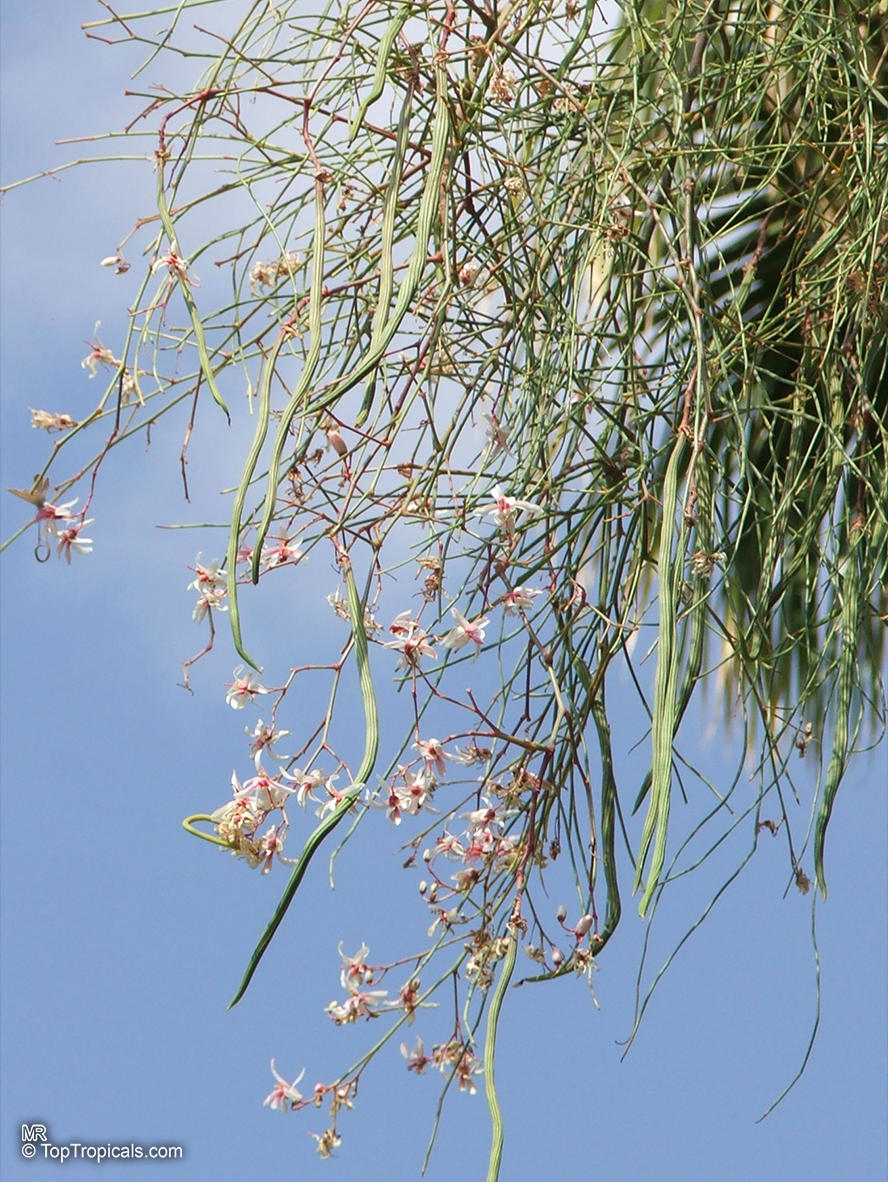
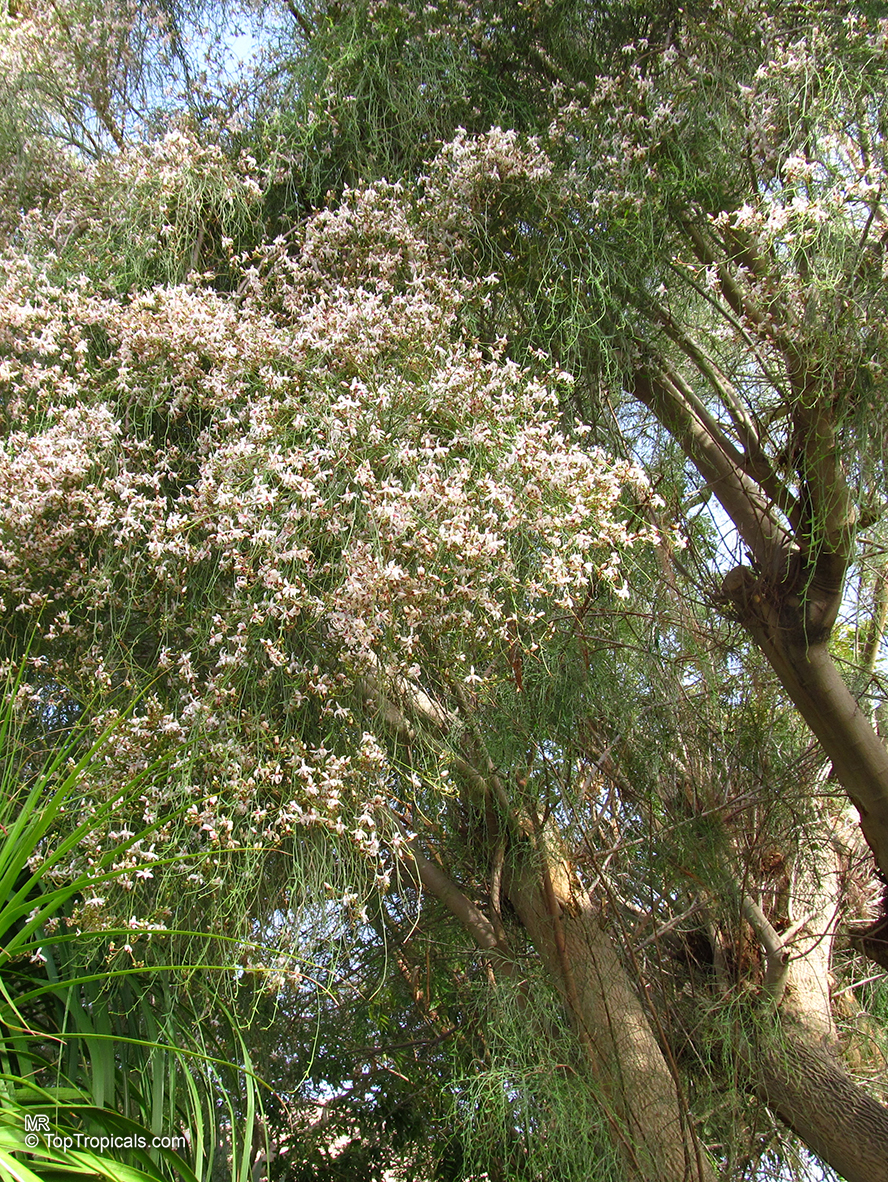
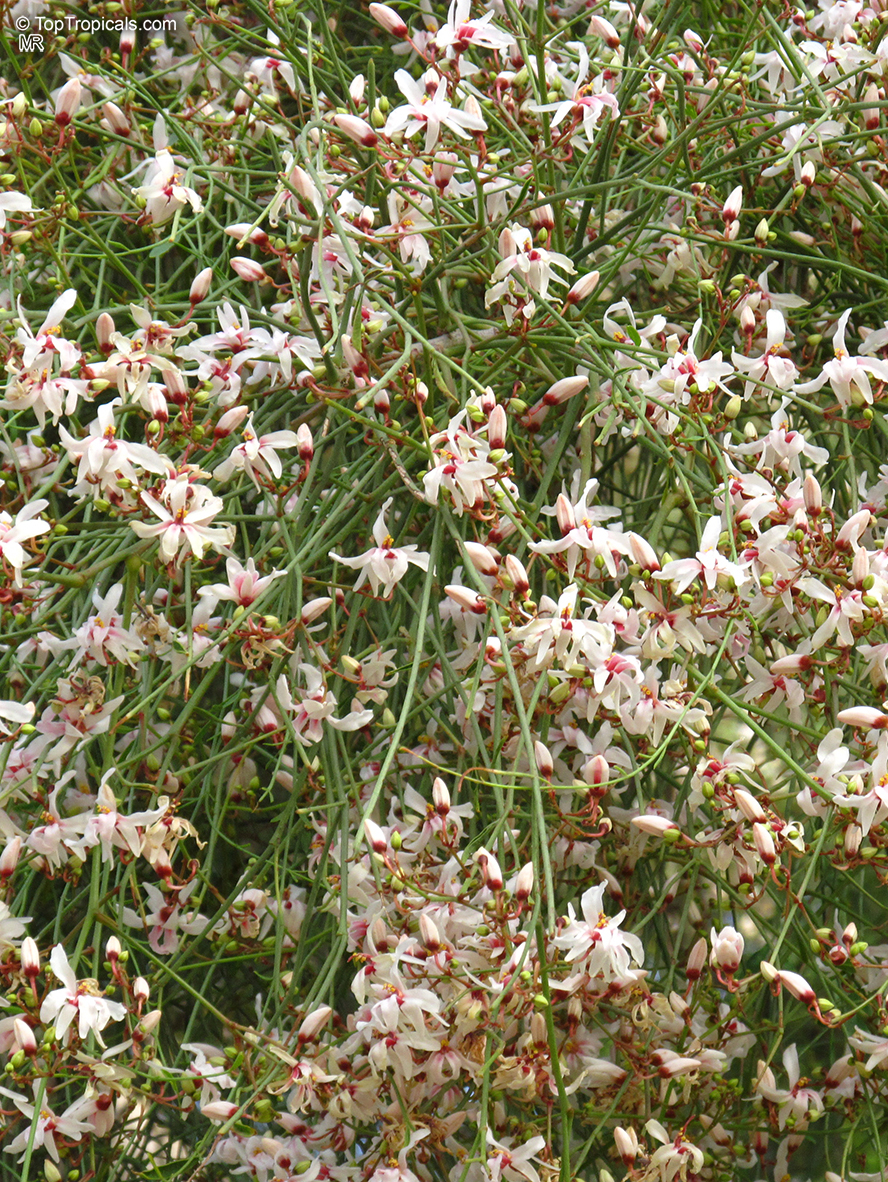
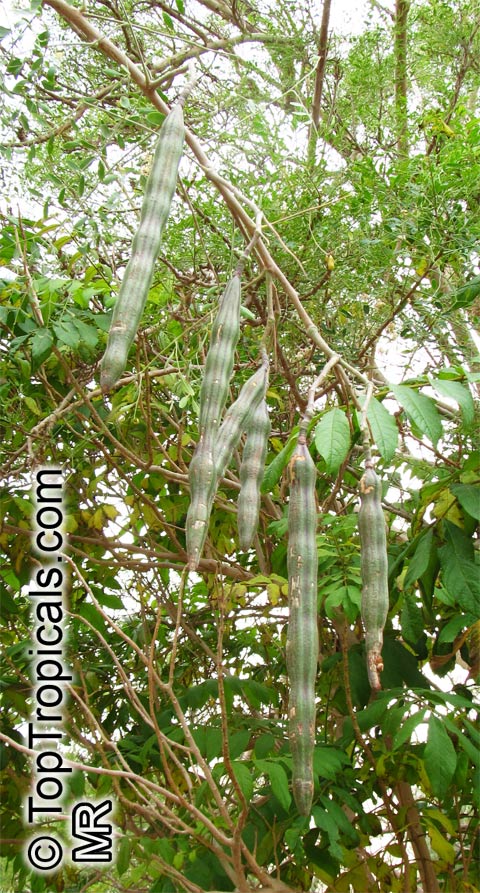
Moringa peregrina (Drumstick tree), native to the Red Sea region, is a unique and strange member of its group. It's an evergreen tree that grows to a height of over 20 feet with a spread almost as wide, requiring full sun and moderate water during the growing season. It's an ethnomedical plant, with edible young fruit and various parts that possess medicinal properties, including its oil. The tree produces three different types of fragrant blooms: pink, white, and off-white, which are followed by edible fruits rich in nutrients such as calcium, iron, vitamins A and C, and potassium. In a single growing season, Moringa peregrina can produce many of these nutritious fruits, known for their health benefits.
In colder climates, Moringa peregrina can be grown in a pot and must be brought indoors during winter for protection. It needs well-drained soil, regular watering, and fertilizer to thrive, but the watering should be reduced in the autumn, and no fertilizer should be added. A layer of mulch added to the soil will help preserve moisture and protect the roots from extreme temperature changes.
The plant starts as a seedling with broad leaflets and a large tuber, but through multiple dry seasons, the shoot dies back below ground to the tuber. As it matures, the leaves become longer and the leaflets become smaller and more widely spaced, eventually giving the tree a wispy appearance similar to Tamarix . The naked leaf axis remains, creating a distinct look. T
Botanical name: Moringa sp.
Common name: Moringa
Family: Moringaceae
Origin: western Asia, southern Africa


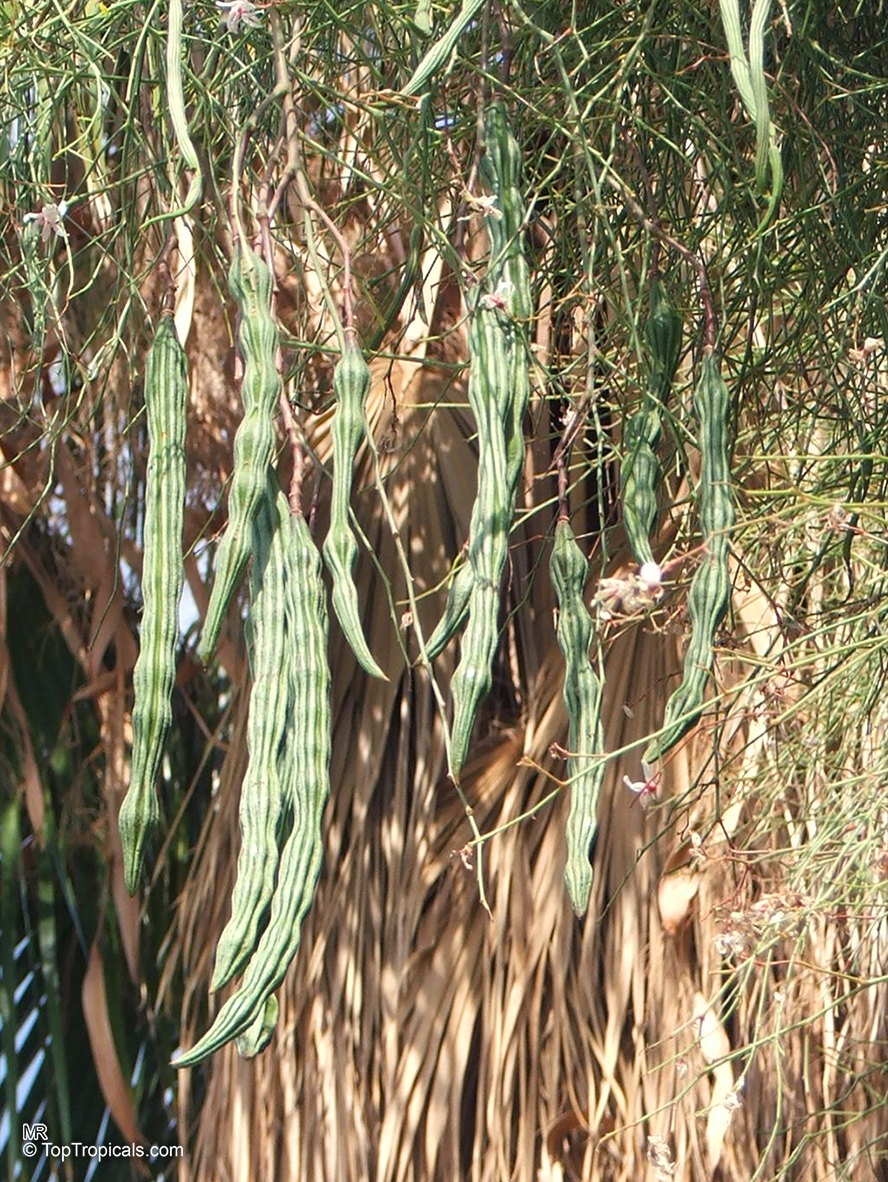
Moringa is the only genus in the family Moringaceae. This genus comprises 13 species, all of which are trees that grow in tropical and sub-tropical climates.
Species tolerate most soil types and grow well in full sun.
The most popular variety is Moringa oleifera.
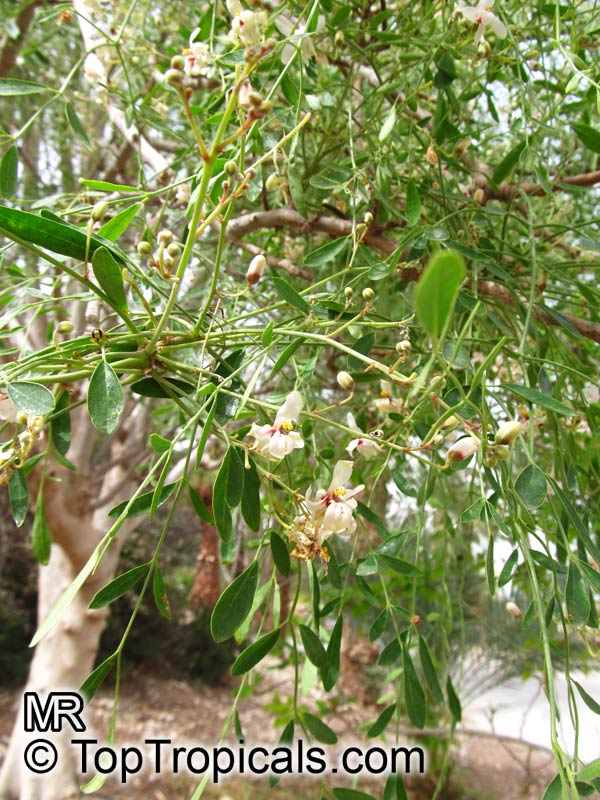
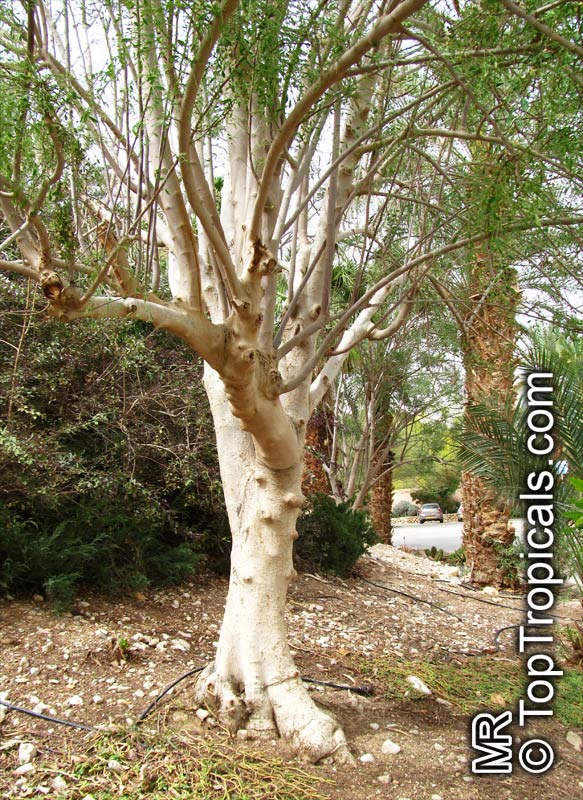
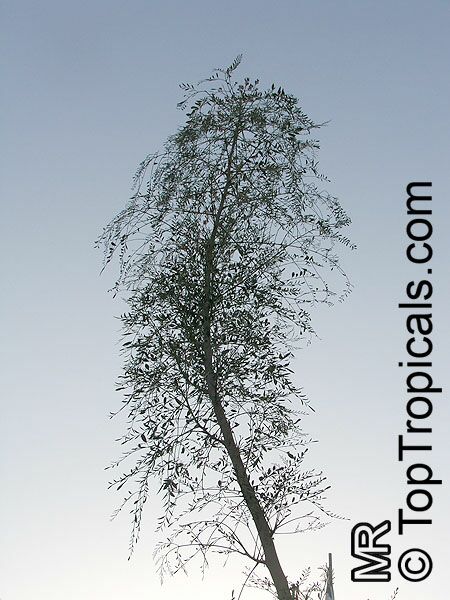
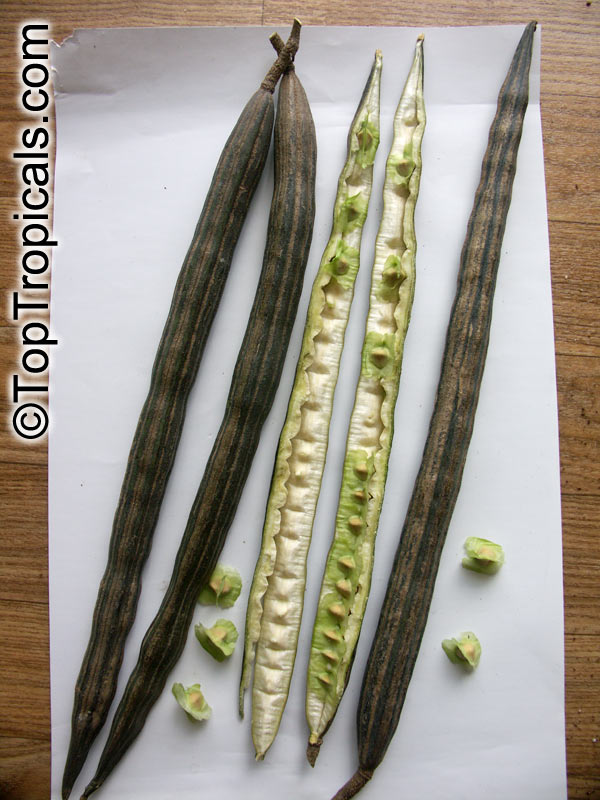
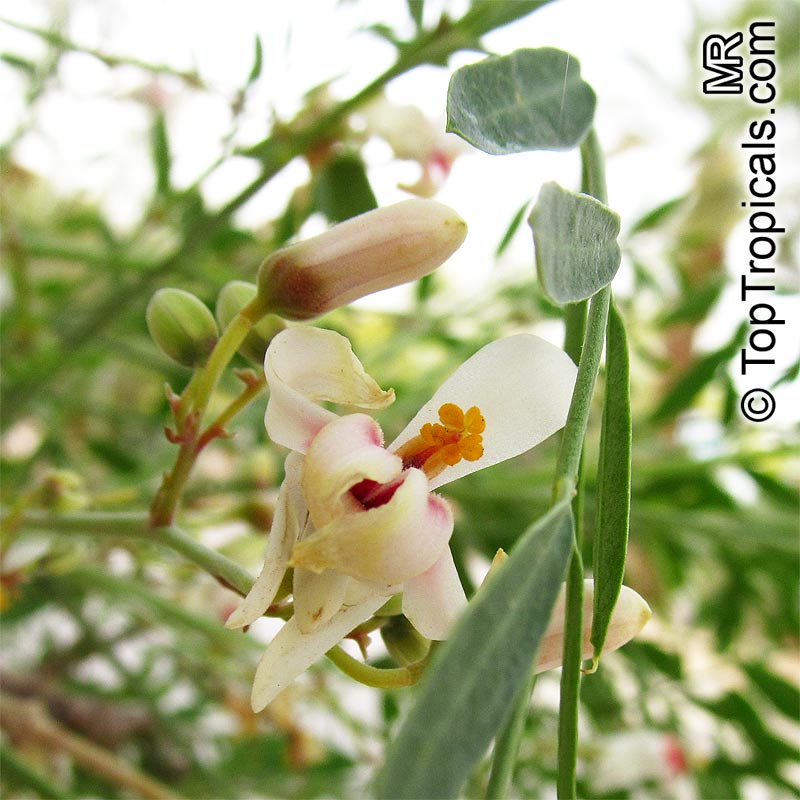
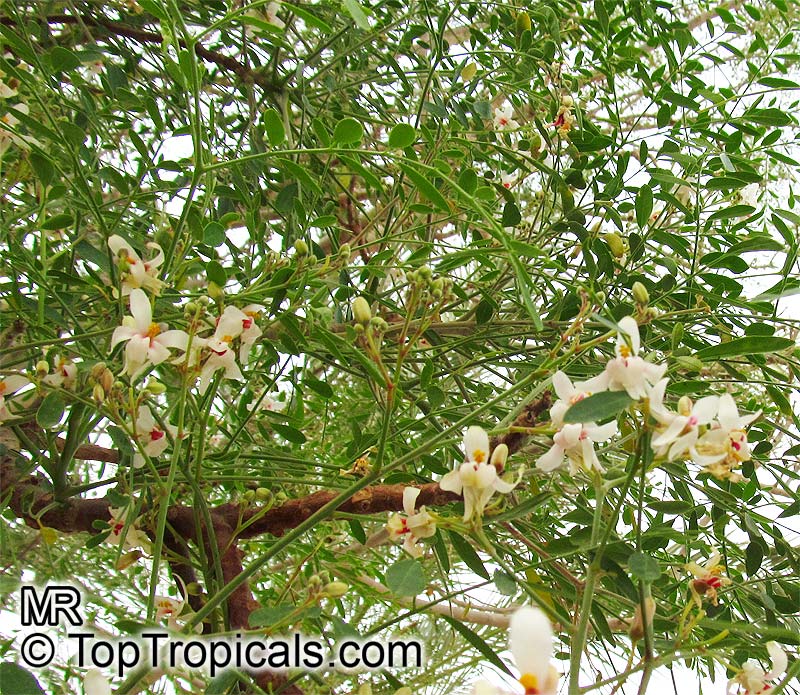
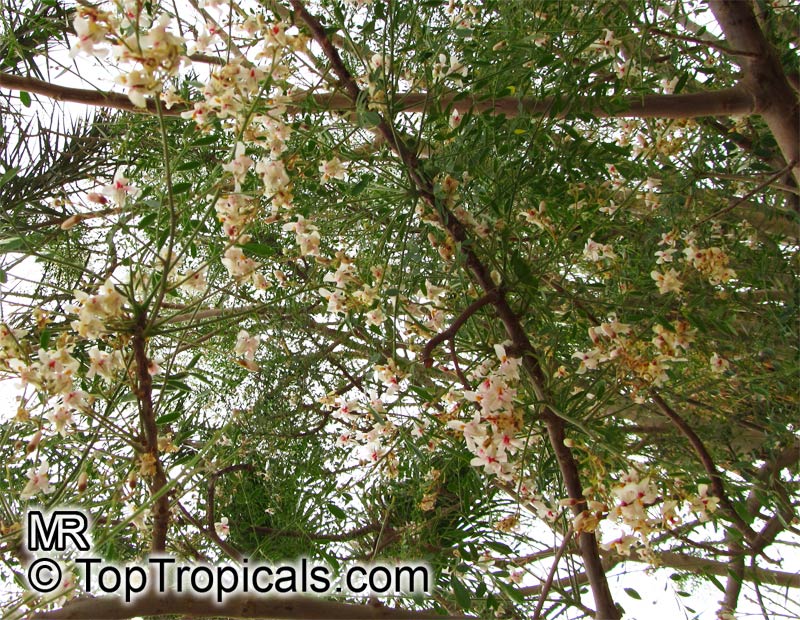
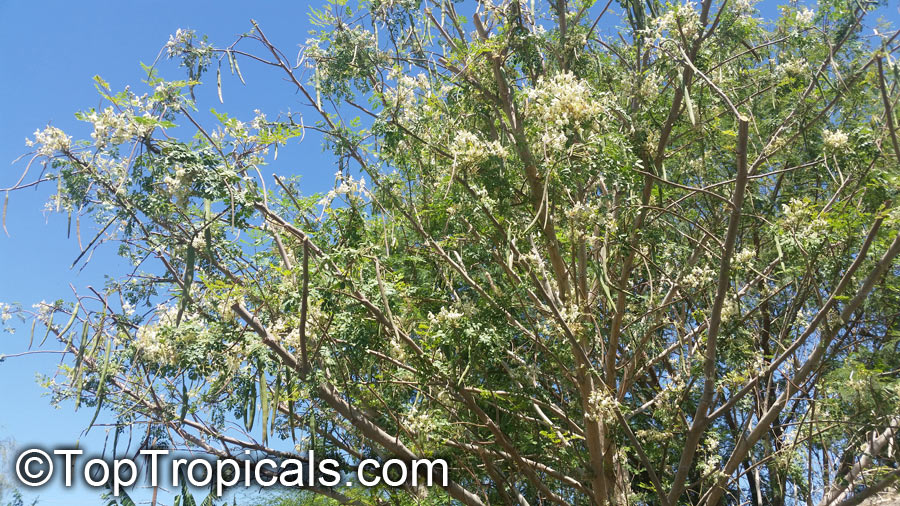
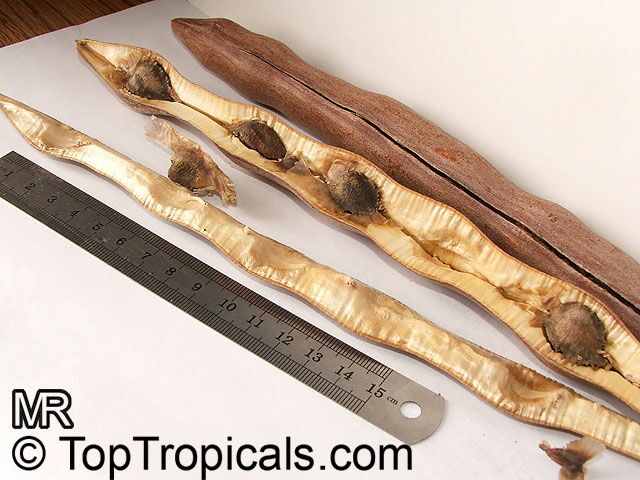
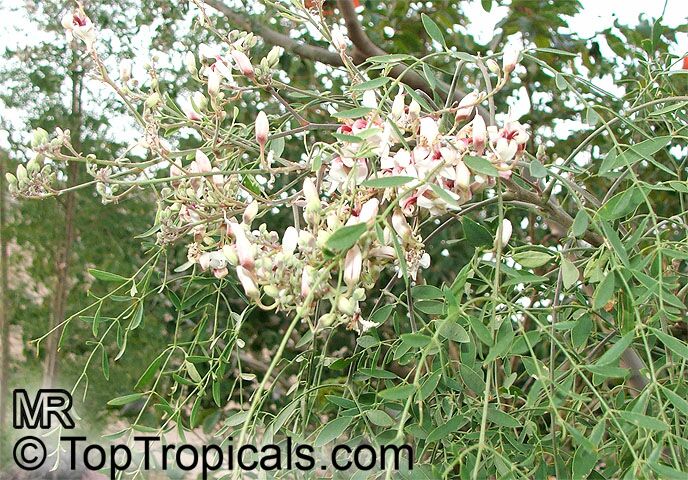
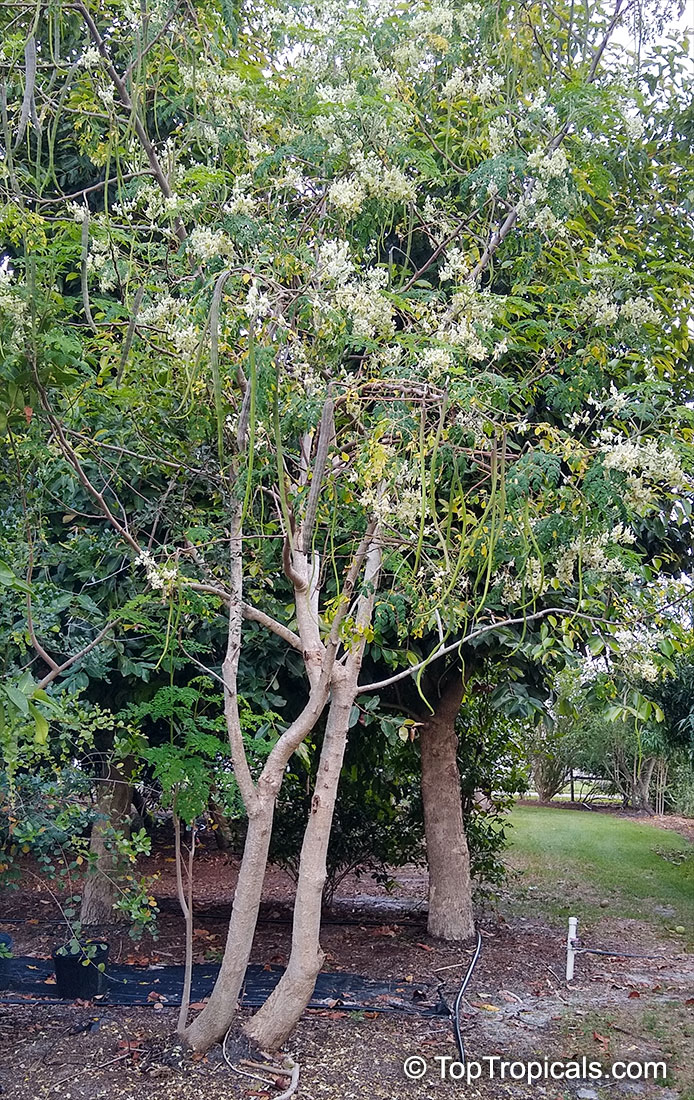
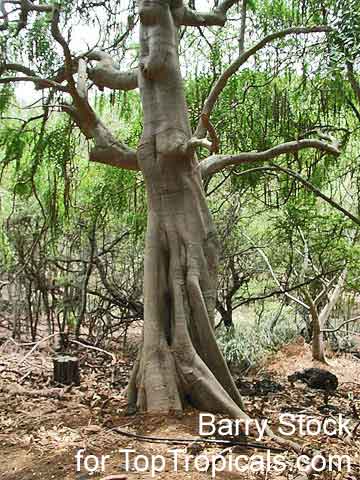
Botanical name: Moringa stenopetala
Common names: Horseradish tree, Haleko
Family: Moringaceae
Origin: Southwest Africa
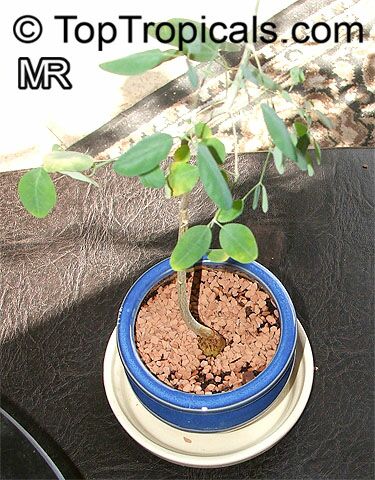
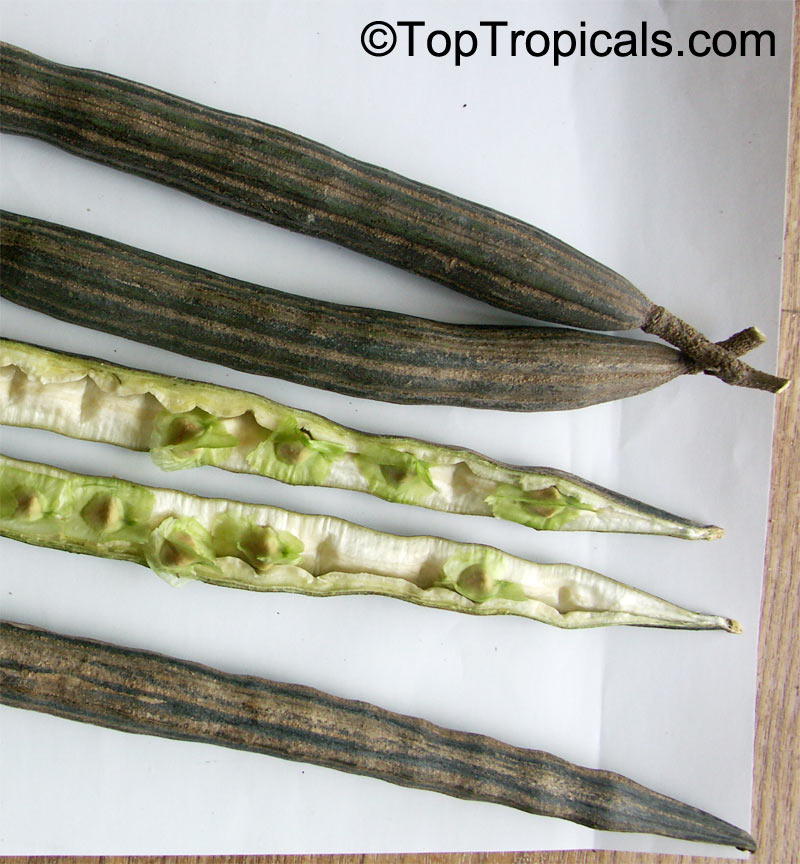
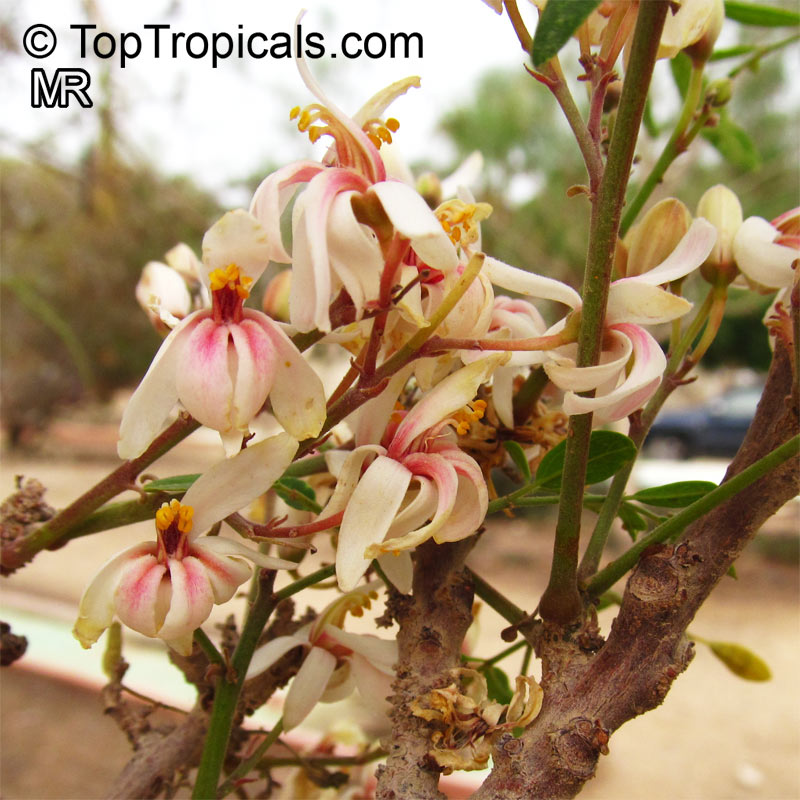
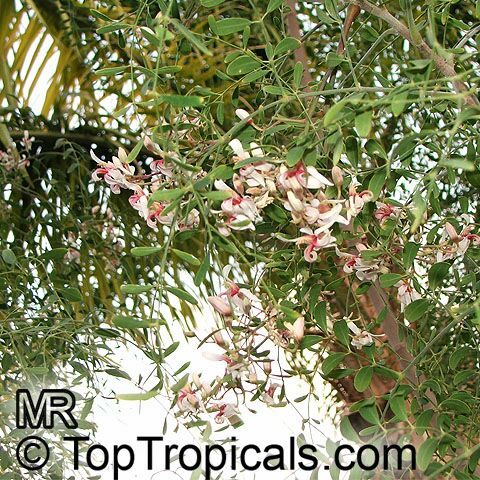
It is an important food plant in southwestern Ethiopia, where it is cultivated as a crop plant. Moringa leaves are eaten almost every day like spinach together with cereal balls. Moringa leaves are outstanding with respect to high contents of essential amino acids, Vitamin A and C. Moringa tolerate most soil types and grow well in full sun. Water regularly and protect from wind and frost; in cooler climates, they can be grown in warmed greenhouses. Propagate from seed or cuttings. Due to its water storage capacity in the bottle shaped stem, M. stenopetala is adapted to semi-arid areas. The tree forms weird shapes of trunk. Can be used for bonsai.
Use link to repeat this search:
https://toptropicals.com/cgi-bin/garden_catalog/cat.cgi?search_op=and&keyword_op=and&language=e&family=Moringaceae&number=10
&no_change_lang=1&user=tt&sale=1&first=0