Moraceae - Botanical Family
| Number of plants found: 80 | Next | 
|
Go to page: | 1 | 2 | 3 | 4 | 5 | Last |
Botanical names: Artocarpus altilis, Artocarpus communis
Common name: Breadfruit
Family: Moraceae
Origin: New Guinea
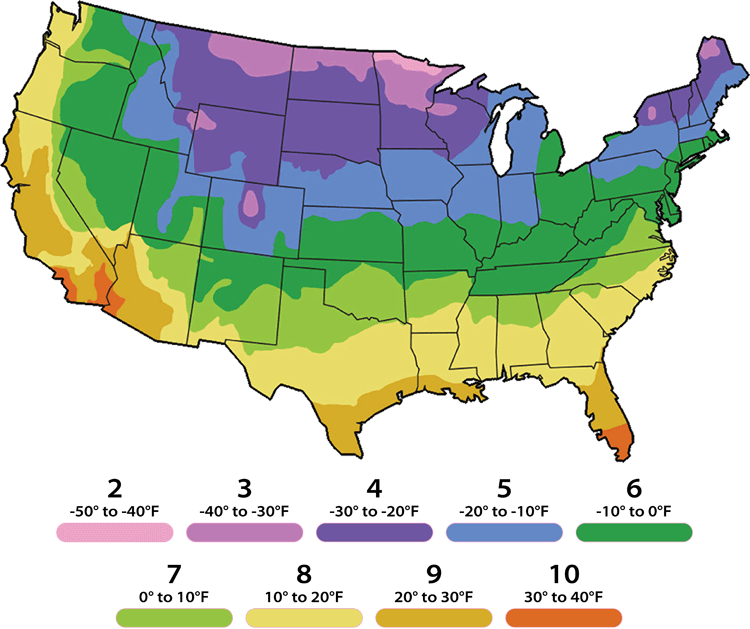


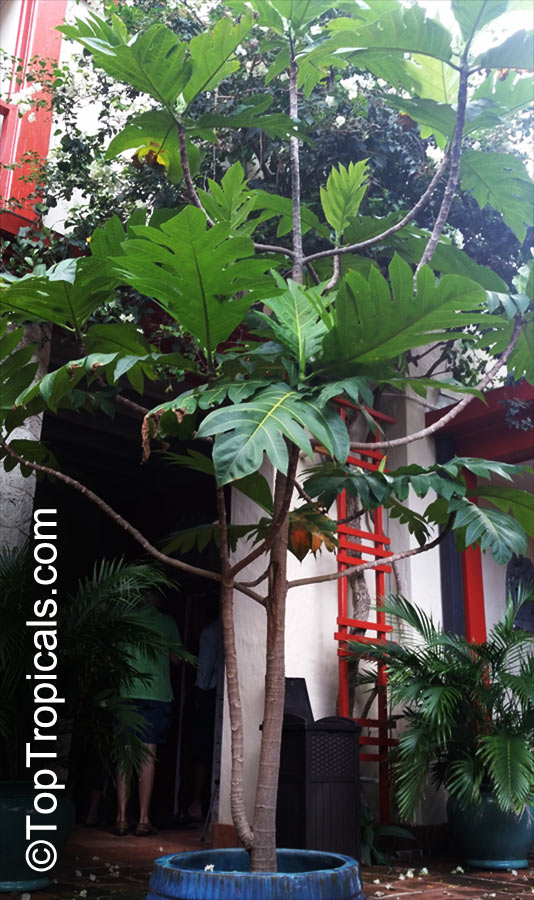
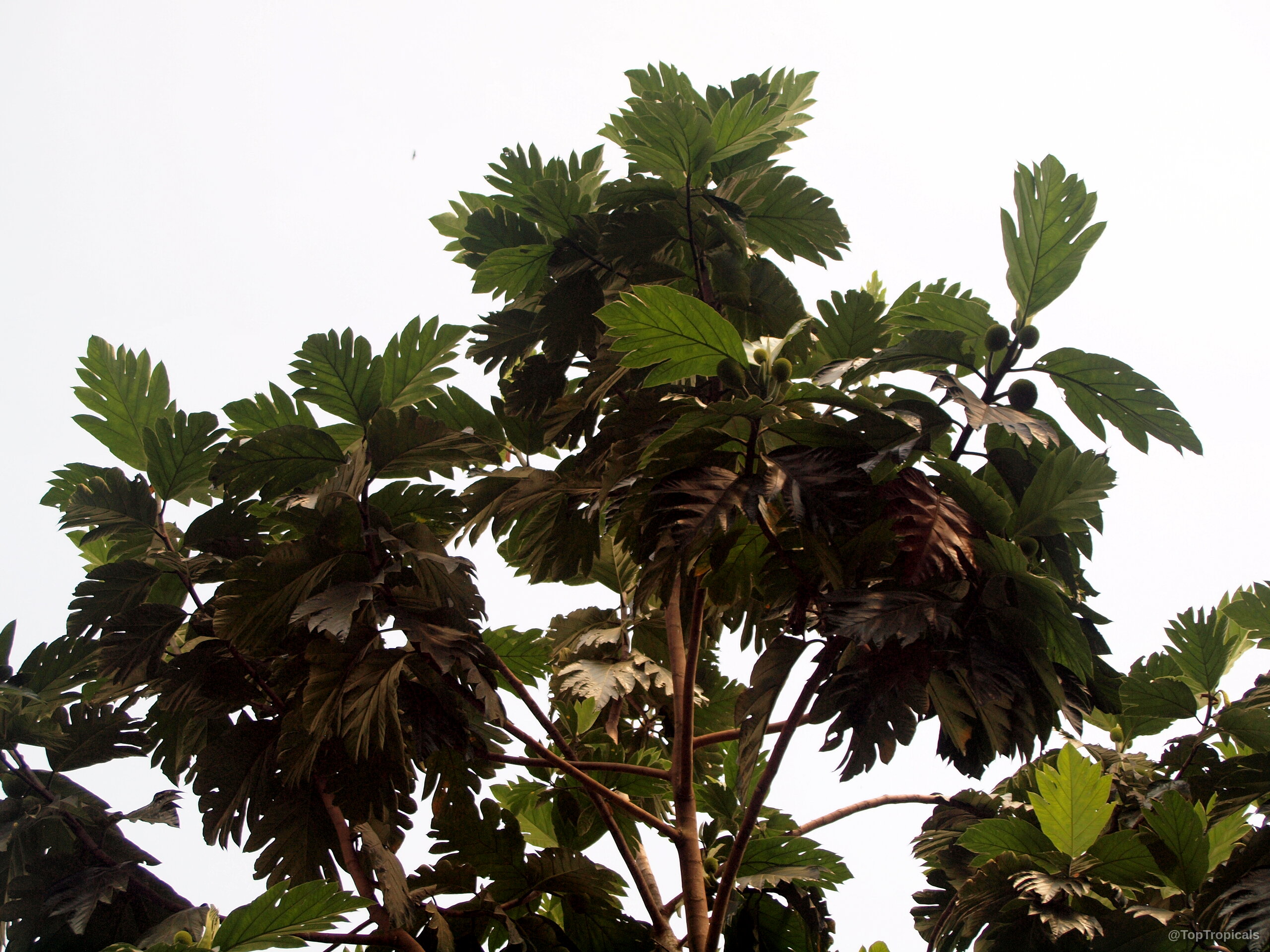
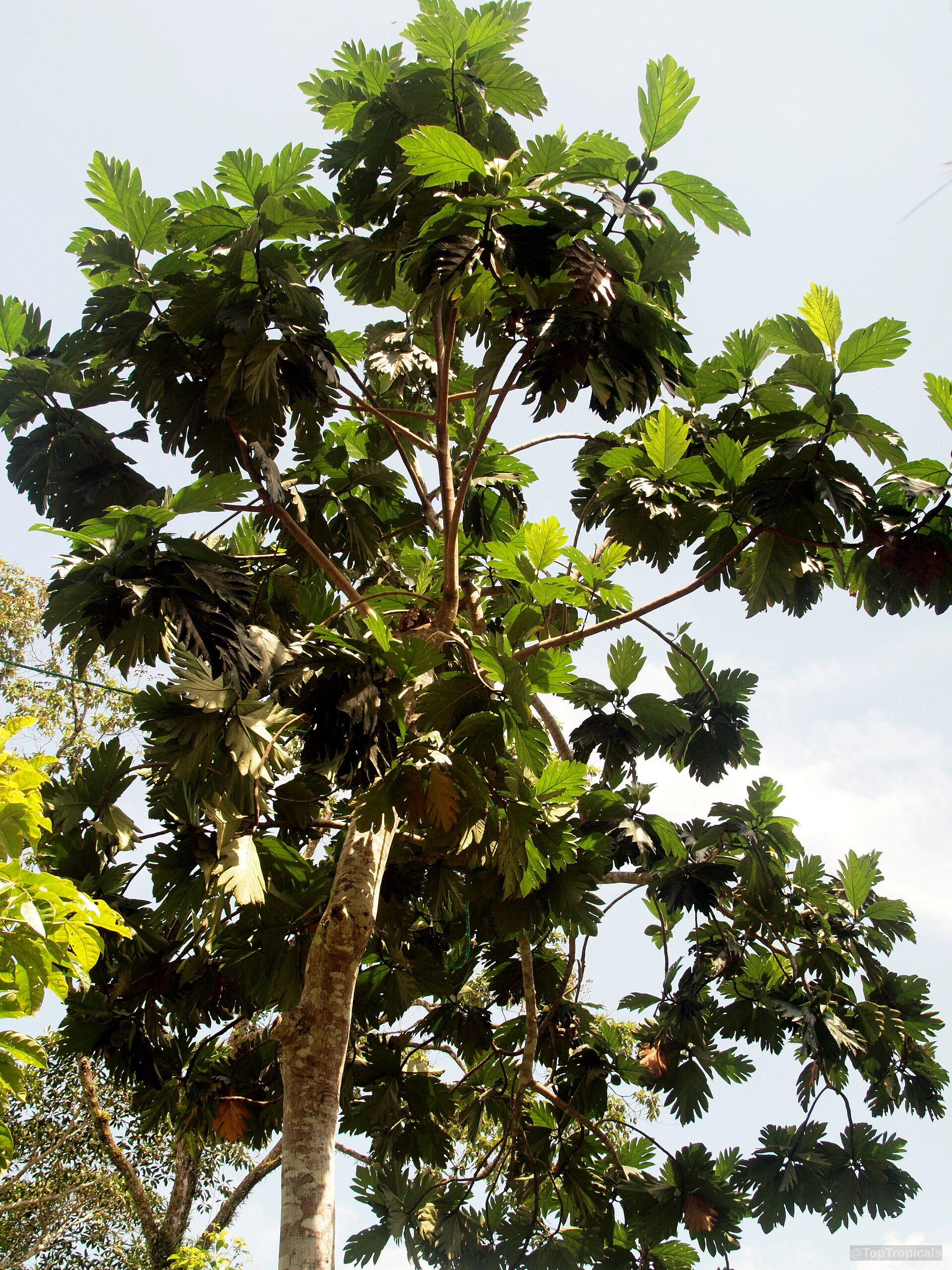
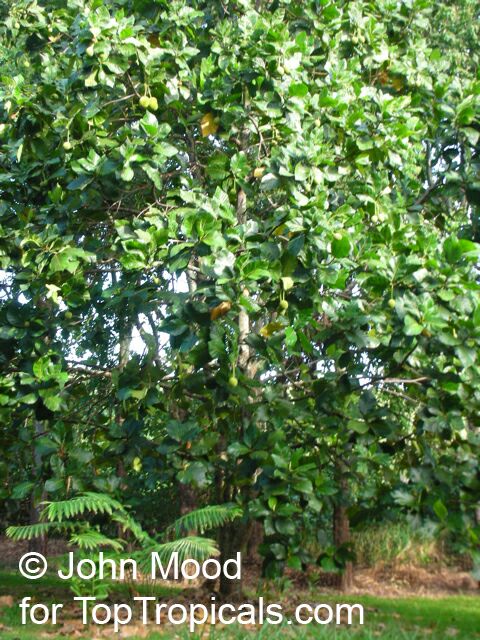
Breadfruit (Artocarpus altilis) is a large tree, typically growing to over 20 ft tall, and requires full sun exposure. It is suitable for growing in USDA hardiness zones 10-11, where temperatures remain above 55F for most of the year. It should be watered regularly and grows best in a loamy soil that drains quickly. In cold regions, it is best to grow this tree in a large pot with well-draining soil to provide enough space for it to grow. If the tree is grown in a pot for an extended period, it is important to repot it periodically to prevent the roots from becoming cramped.
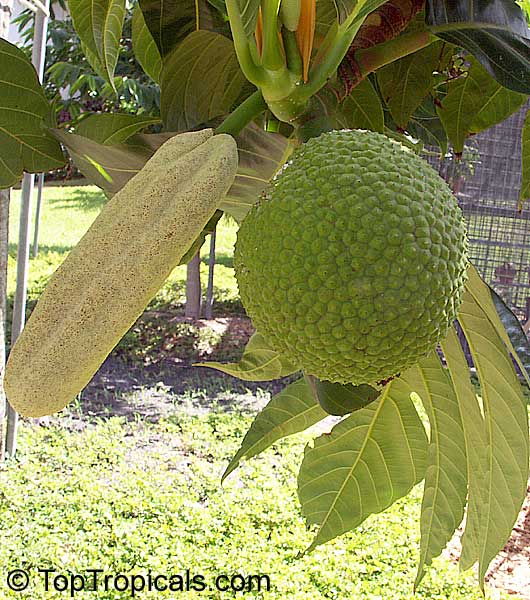
The breadfruit tree produces large fruits that vary in size and shape, ranging from 3 to 18 inches long. The skin of the unripe fruit is green, turning yellow or yellow-brown when ripe. The creamy white to yellow pulp inside is pasty, sweetly fragrant, and has a somewhat soft texture. The fruit can be eaten raw or cooked and is rich in carbohydrates, making it a dietary staple in some parts of the world, particularly Polynesia. In the West Indies, a decoction of the tree's leaves is used to lower elevated blood pressure and relieve asthma. The shoots, bark, and latex also have medicinal uses.
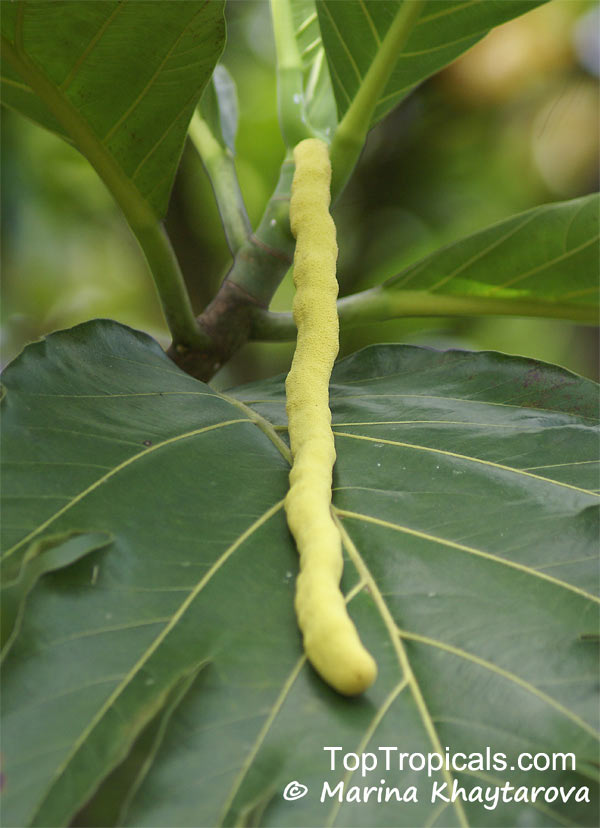
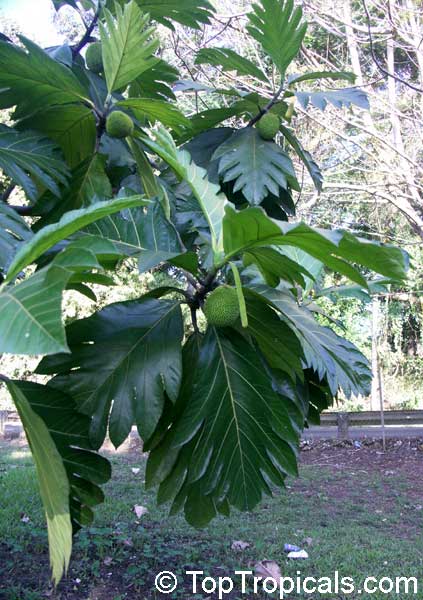
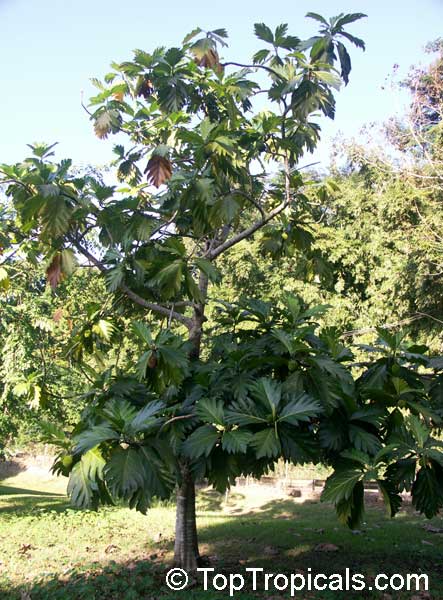
The breadfruit tree is fast growing, reaching up to 80-100 ft in height with a trunk up to 6 ft in diameter. However, some varieties are smaller. The leaves, which can be either evergreen or deciduous depending on the climate, are ovate and up to 3 ft long with deeply cut, pointed lobes. They are bright green and glossy on the upper surface, with conspicuous yellow veins and dull, yellowish, and coated with minute, stiff hairs on the underside. The flowers are tiny and similar to those of the jackfruit tree. Male flowers are densely set on a drooping spike 5 to 12 inches long, initially yellow and becoming brown. Female flowers are massed in a rounded or elliptic, green head about 3 inches long, which develops into the compound fruit. The fruit can be oblong, cylindrical, ovoid, rounded, or pear-shaped and ranges from 3 to 18 inches in length. Generally, the fruit is green at first and turns yellow or yellow-brown when ripe. When fully ripe, the fruit is somewhat soft, and the interior is cream-colored or yellow and pasty, with a sweet fragrance. All parts of the tree, including the unripe fruit, contain milky, gummy latex. There are two main types of breadfruit: the normal, "wild" type (cultivated in some areas) with seeds and little pulp, and the "cultivated" (more widely grown) seedless type. However, occasionally a few fully developed seeds are found in seedless cultivars. The seeds are oval, about 3/4 inch long, dull brown with darker stripes. The moist inner pulp of seedless breadfruit is eaten after cooking and has the taste and texture of potatoes. The seeds of the seeded breadnut form can be cooked by boiling or roasting.
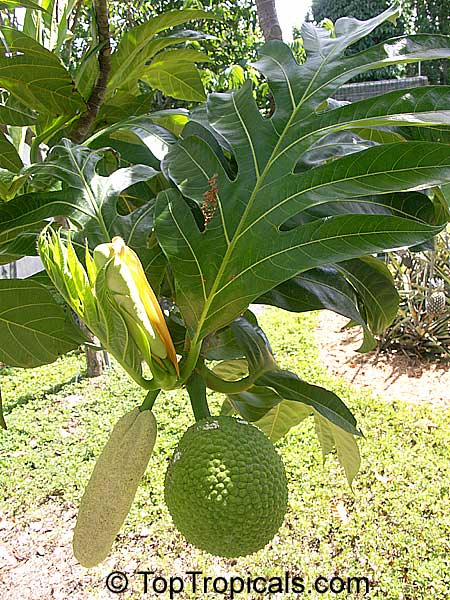
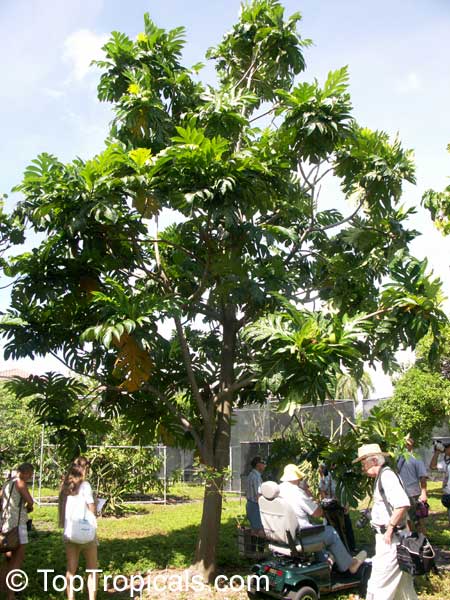
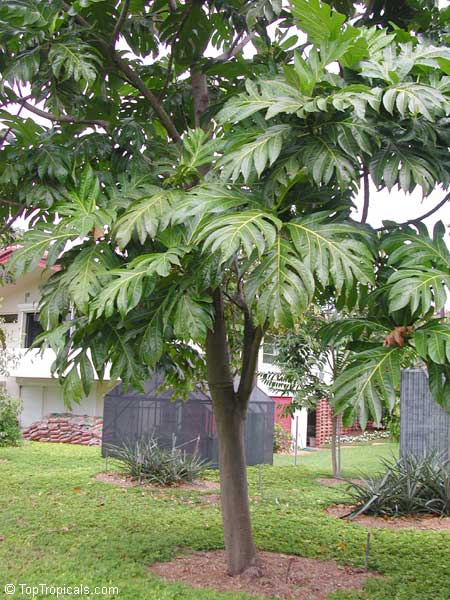
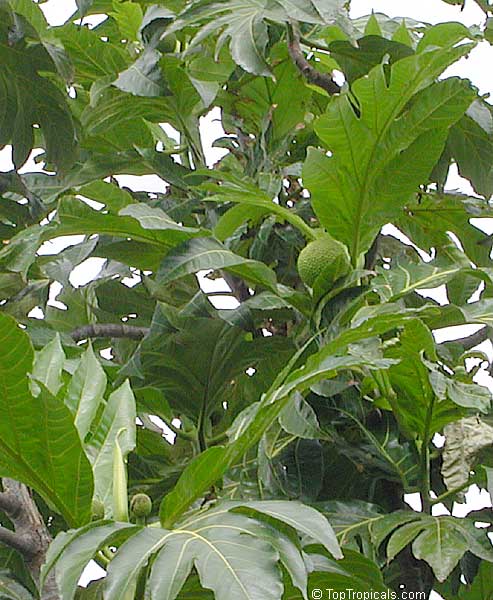
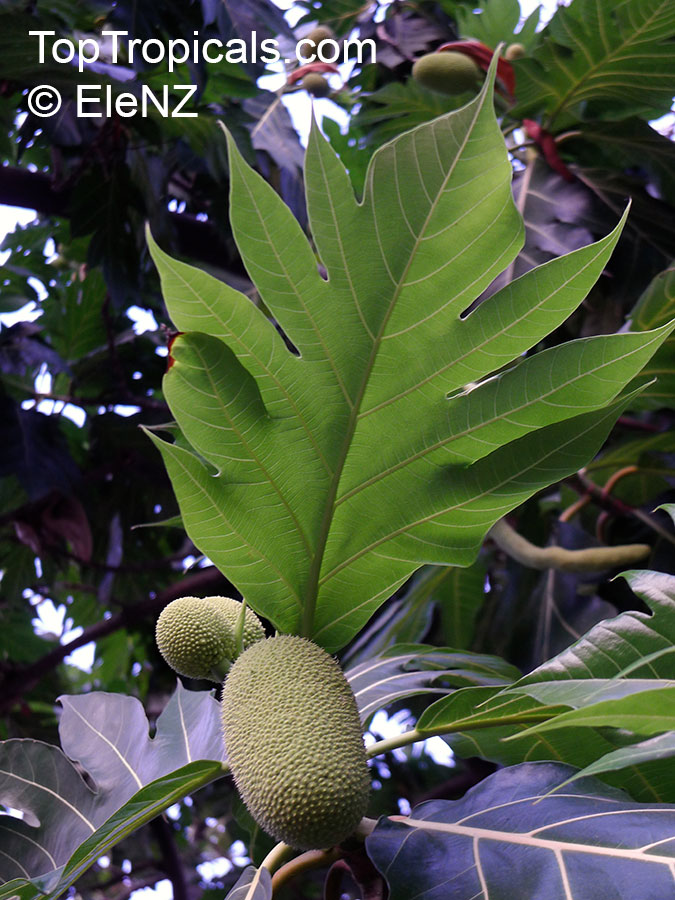
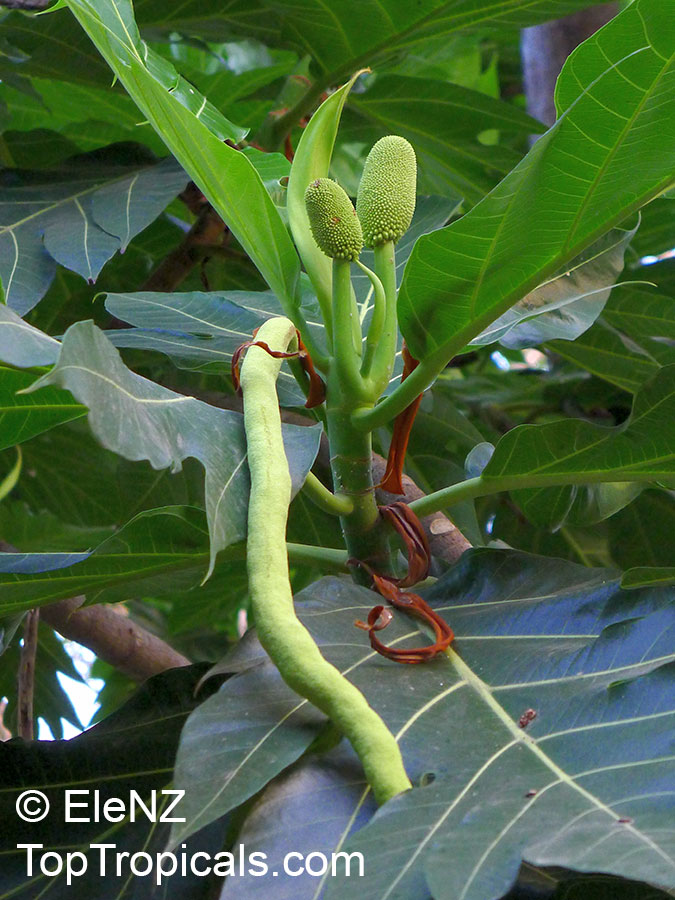
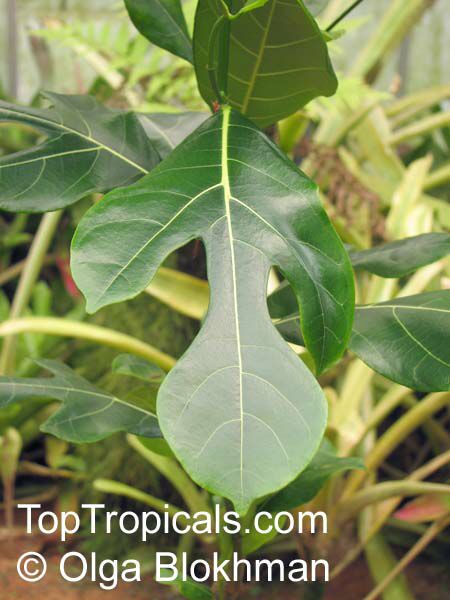
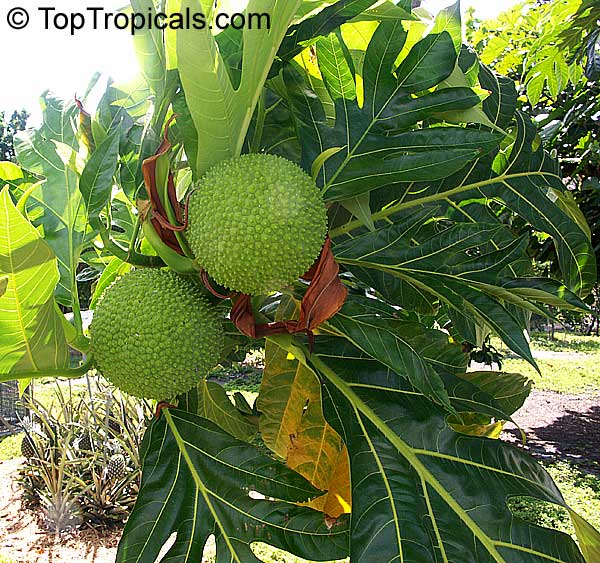
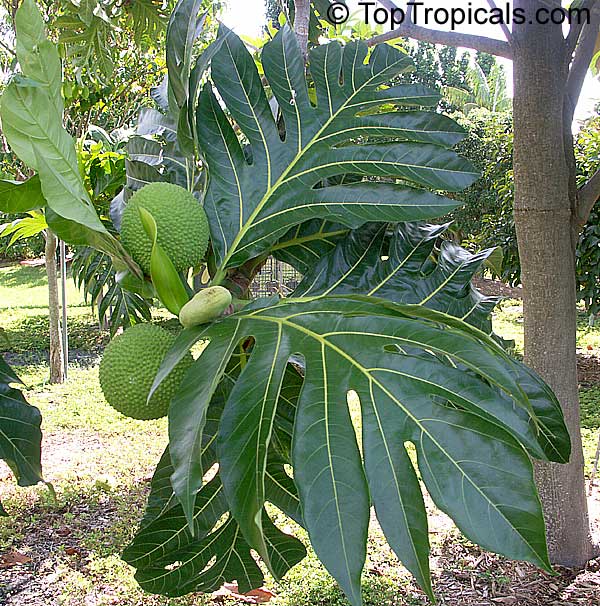
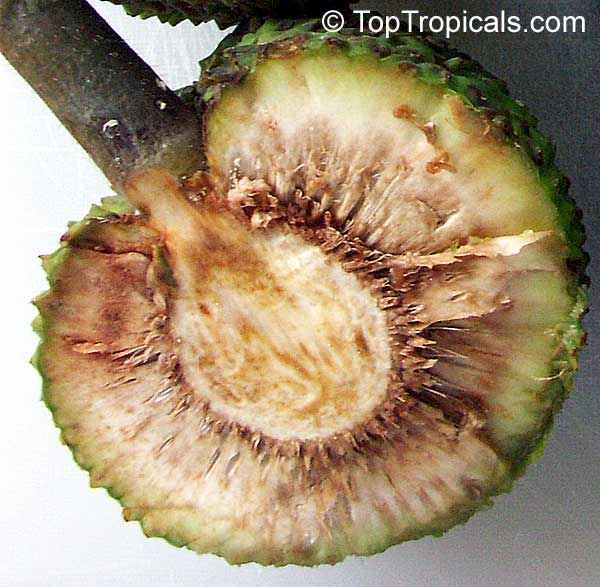
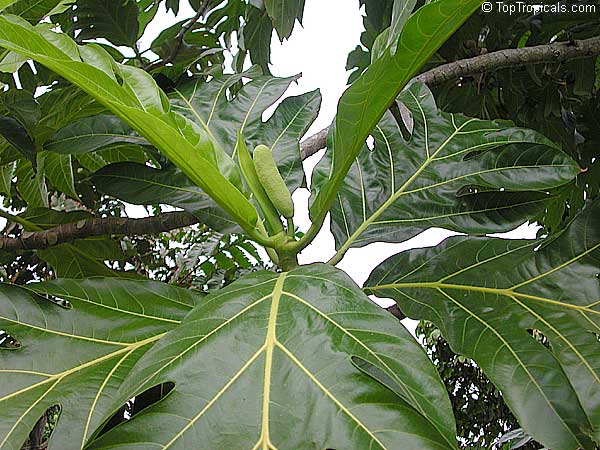
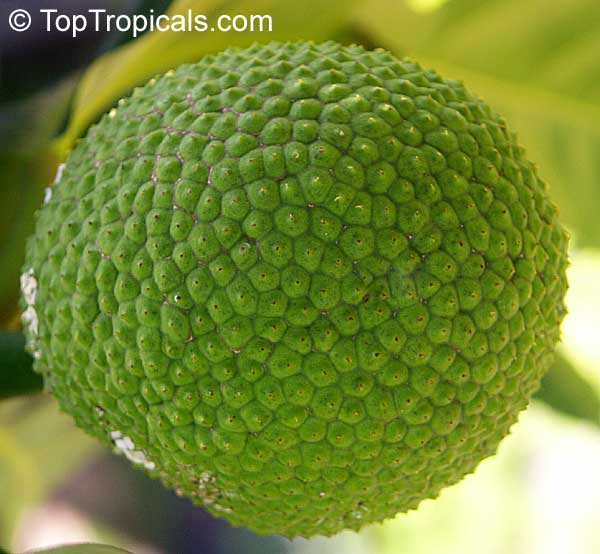
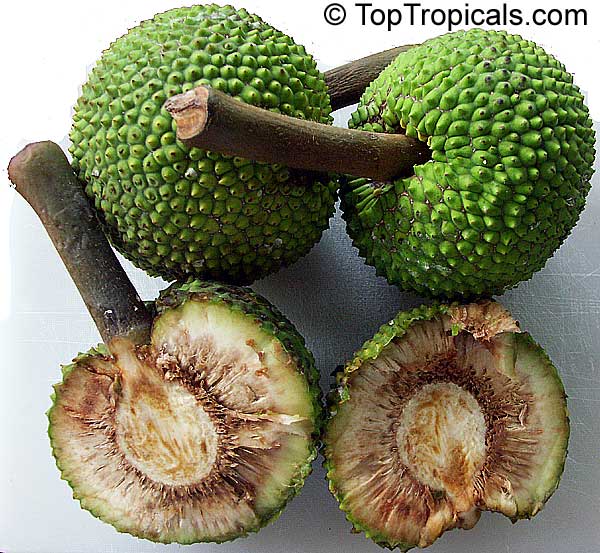
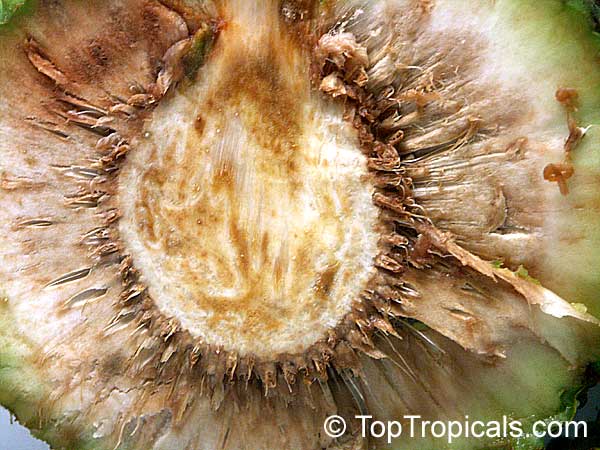
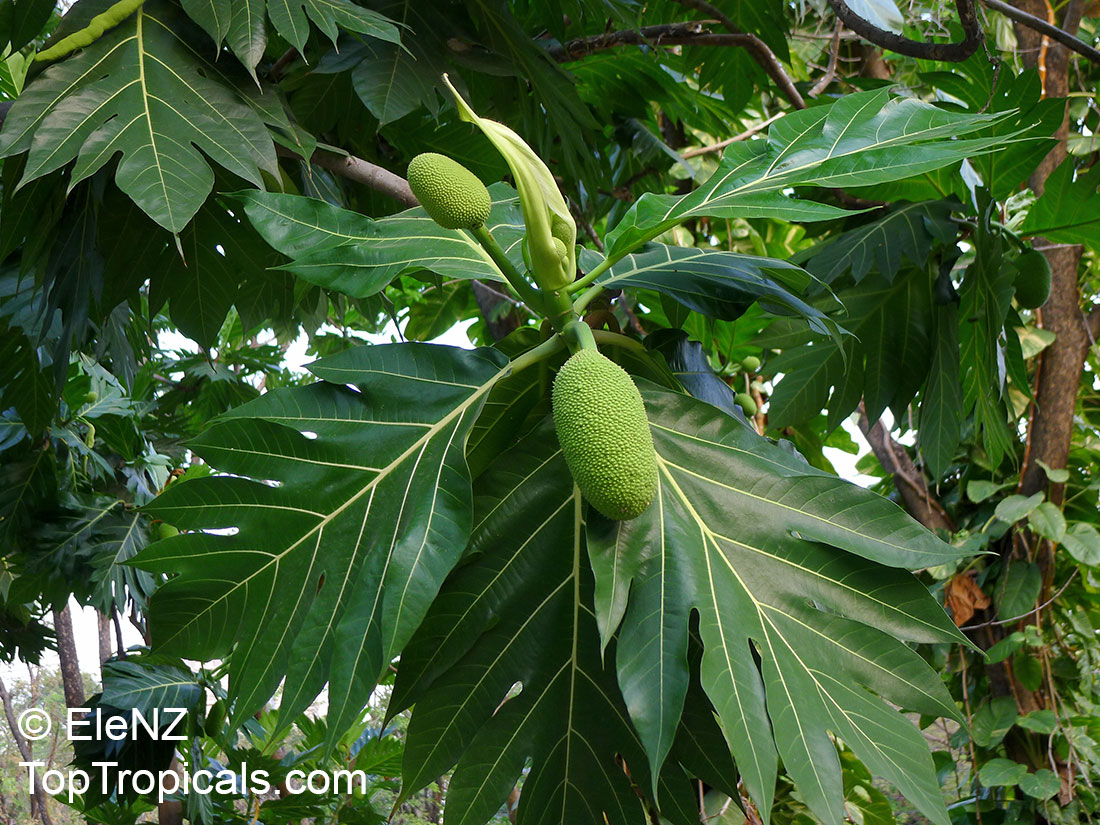
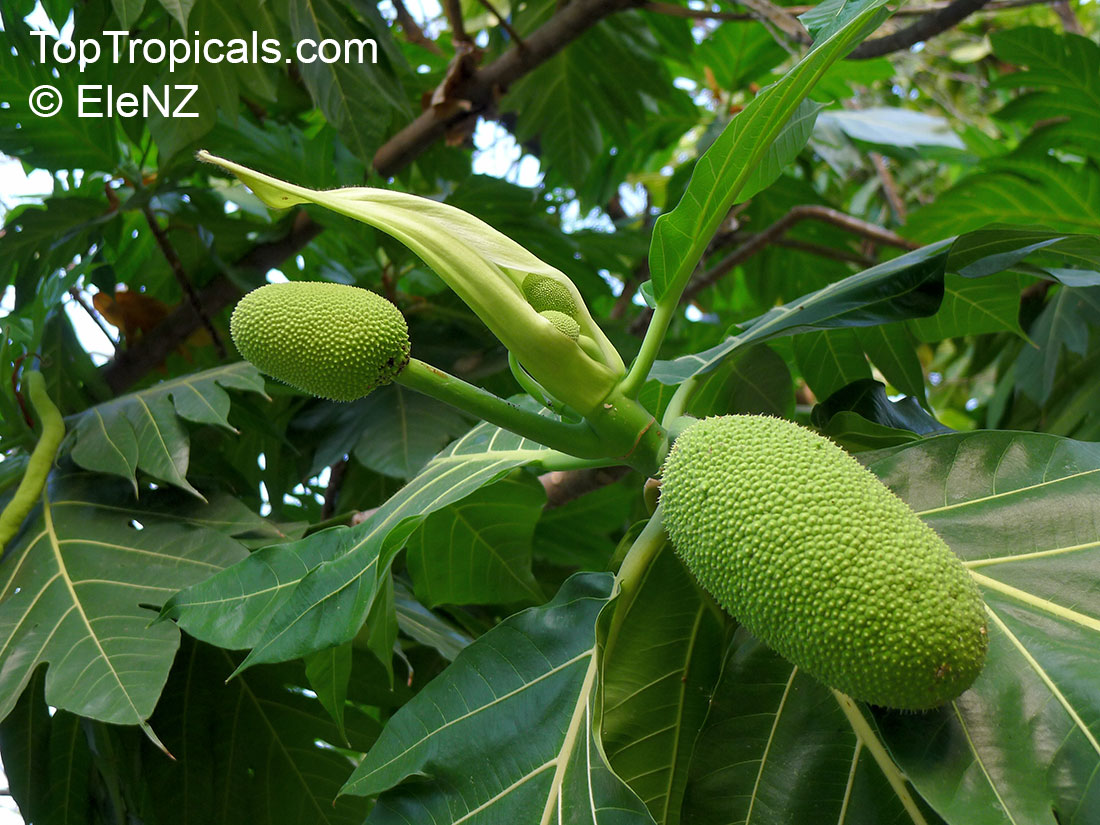
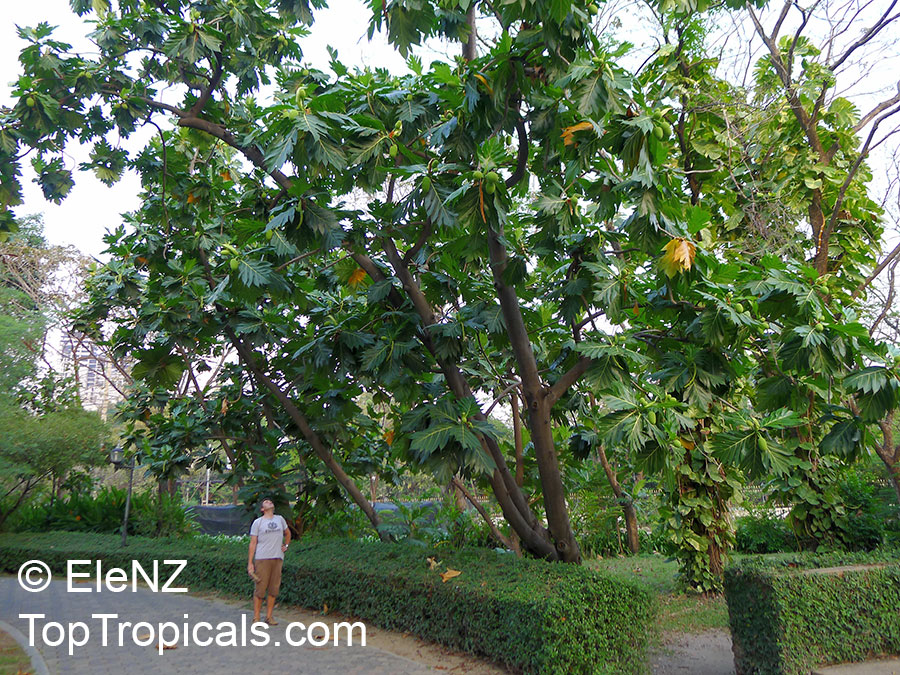
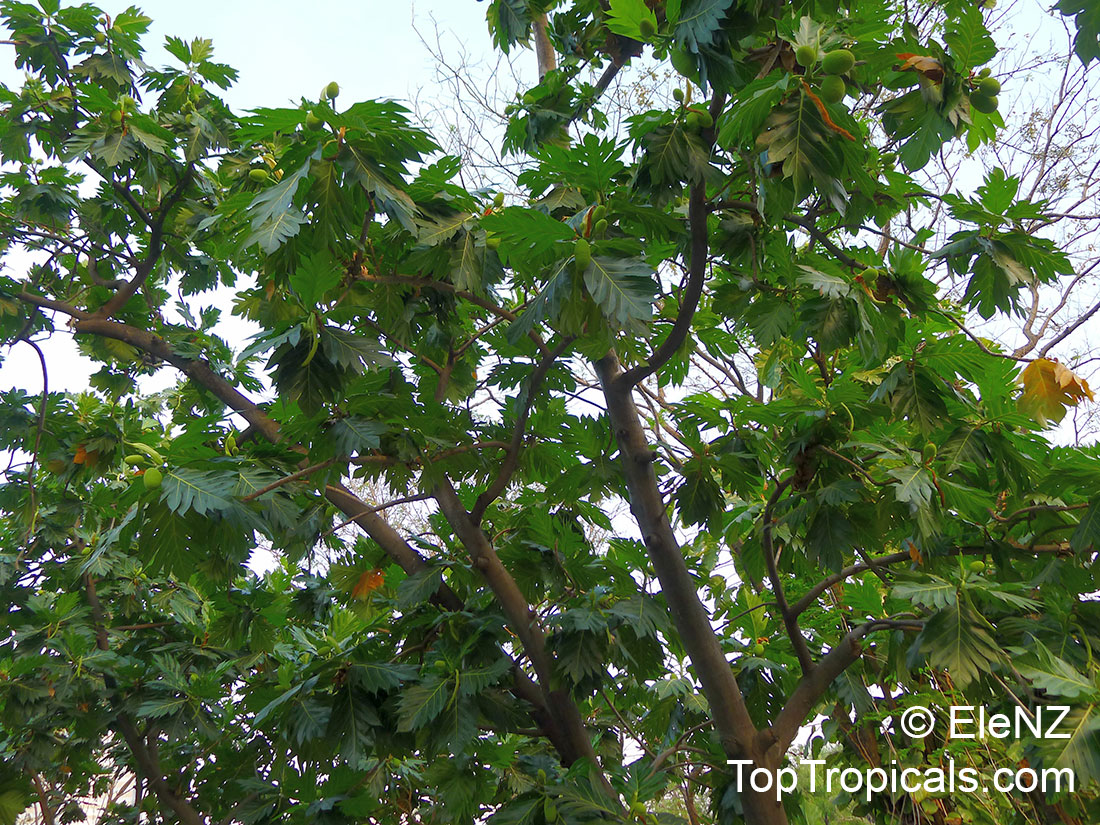
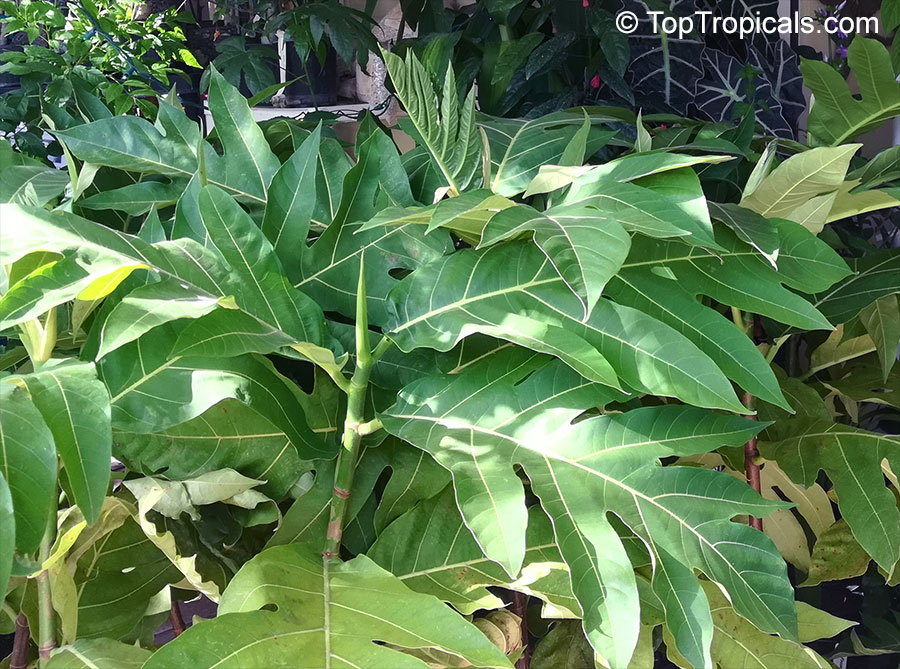
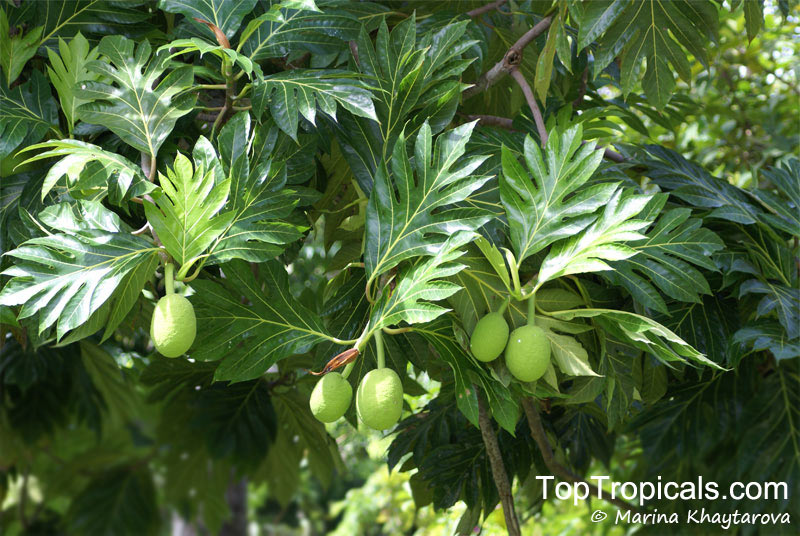
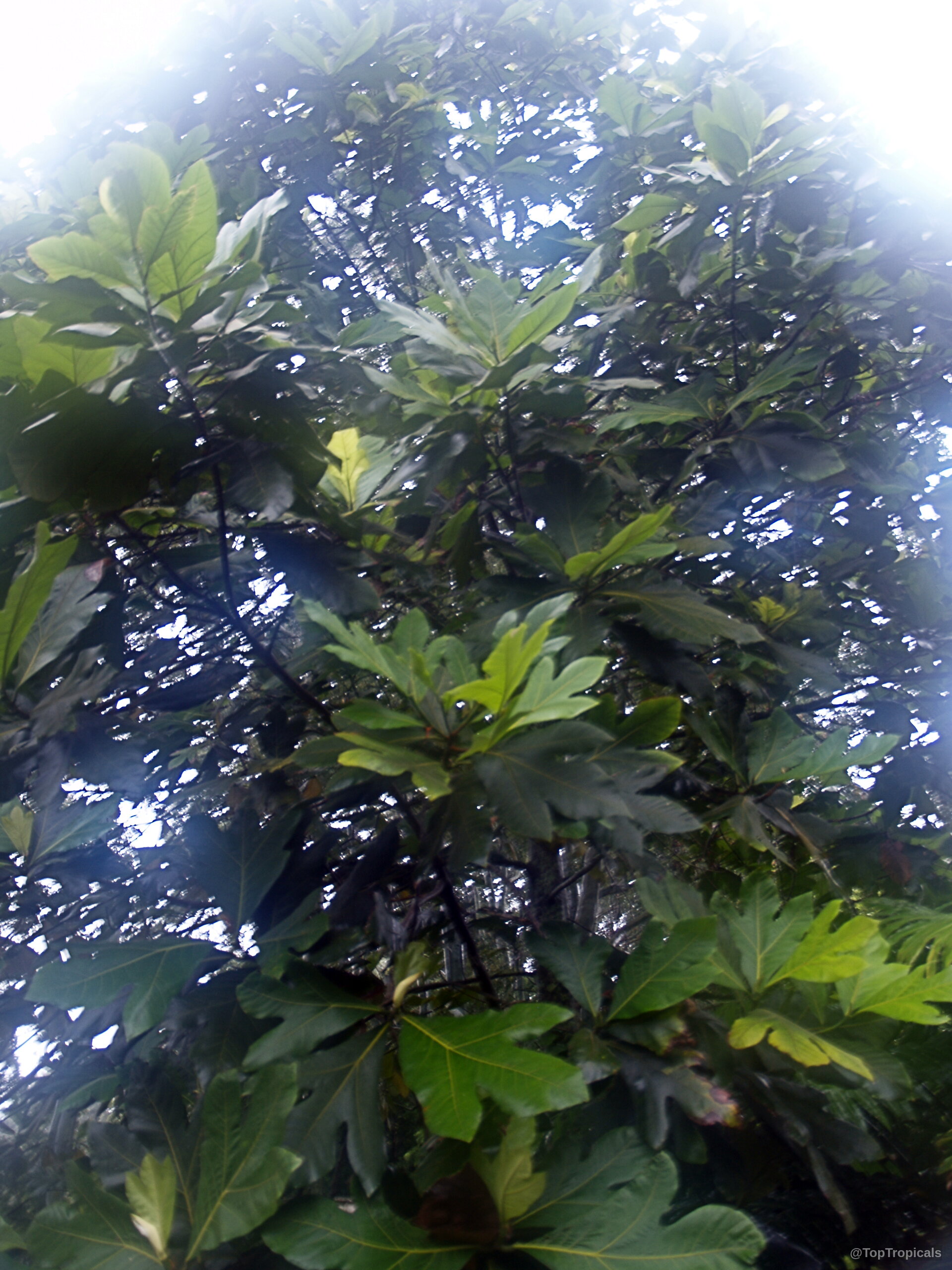
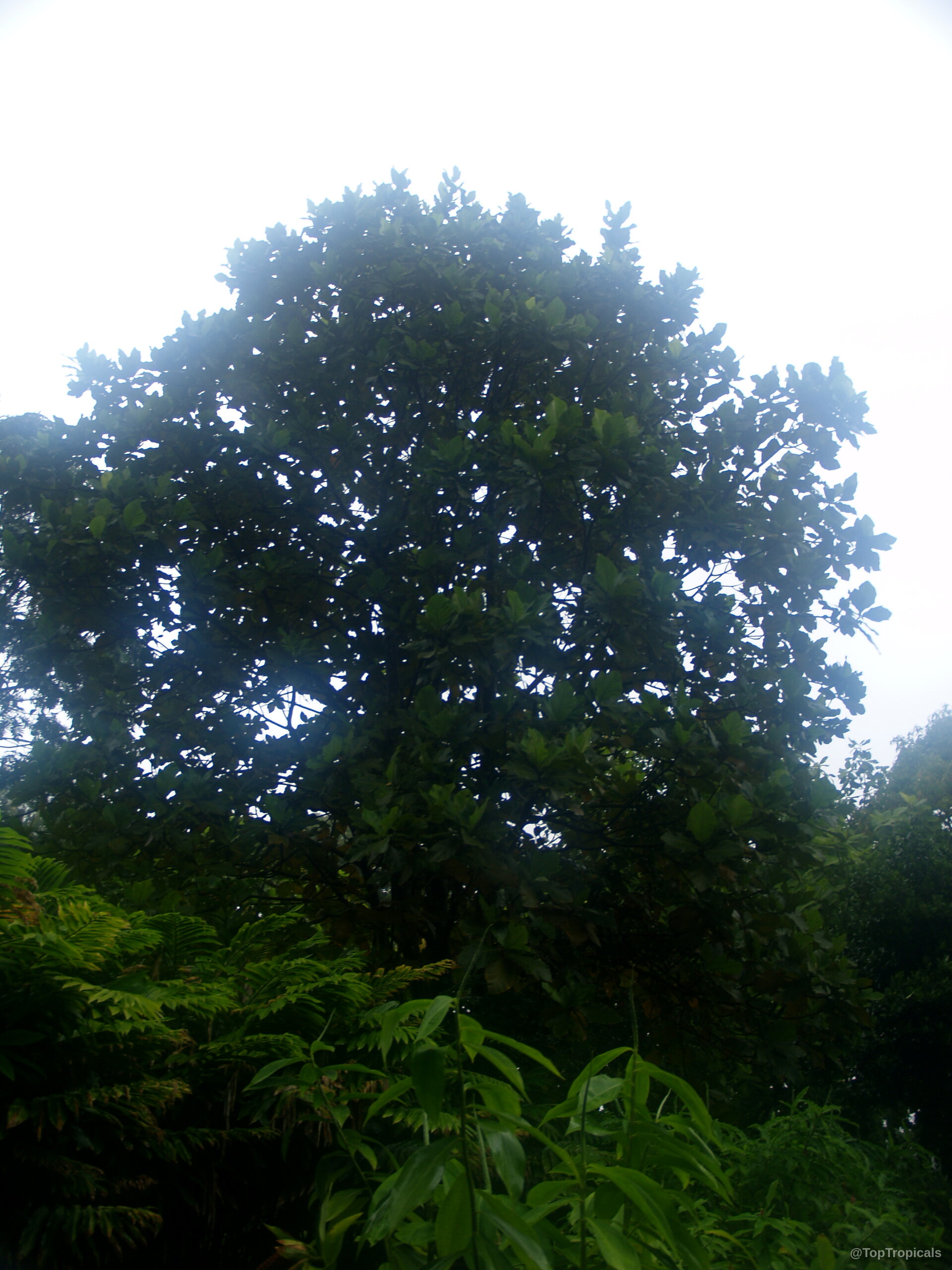
The moist inner pulp of the fruit is eaten after cooking, and has the taste and texture of potatoes.
Recommended Fertilizer: SUNSHINE C-Cibus - Crop Nutrition Booster
SUNSHINE-Honey - sugar booster
Botanical name: Artocarpus camansi
Common names: Seeded breadfruit, Breadnut
Family: Moraceae
Origin: New Guinea, Philippines


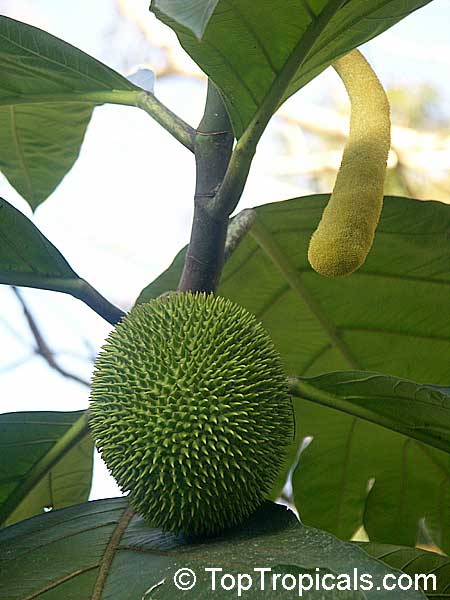
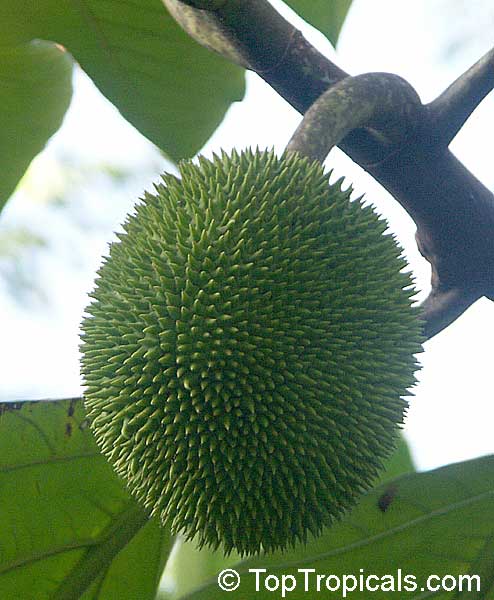
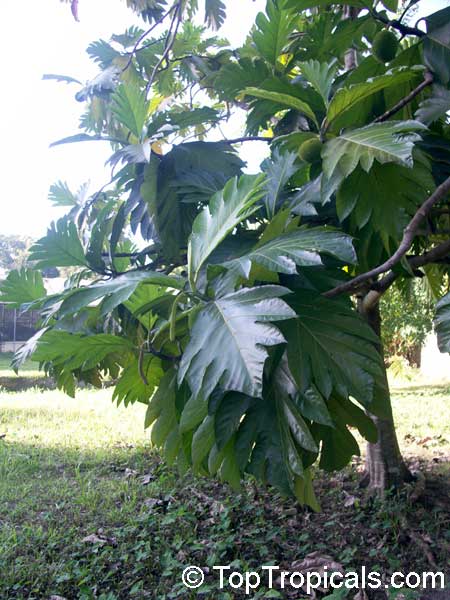
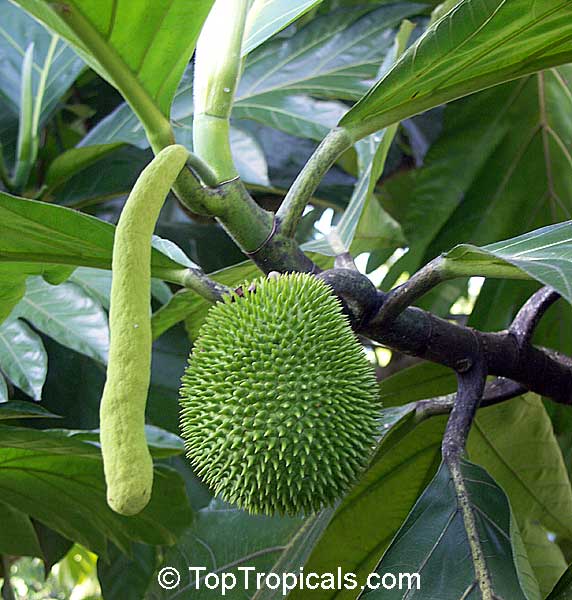
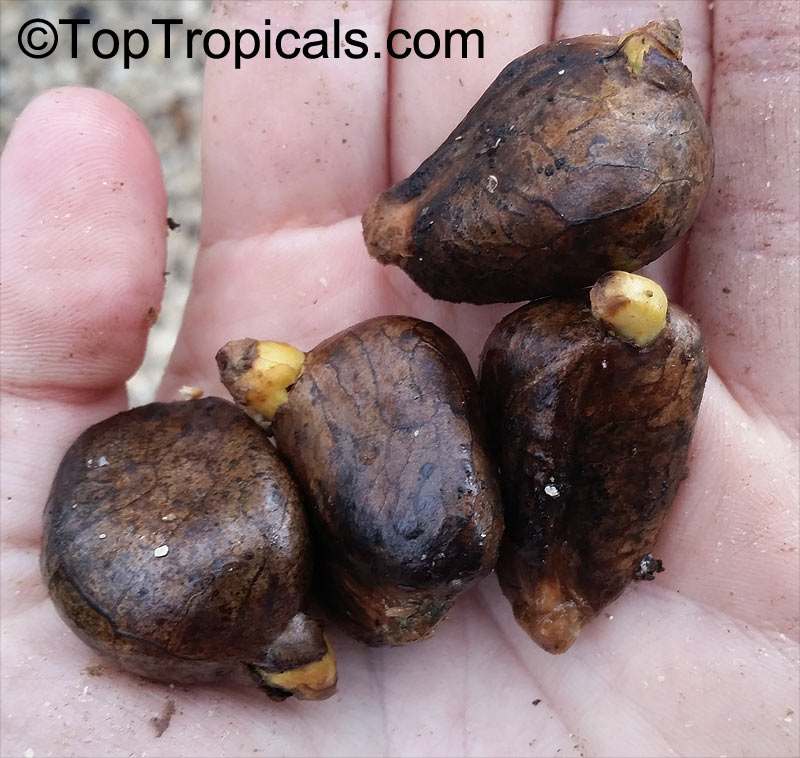
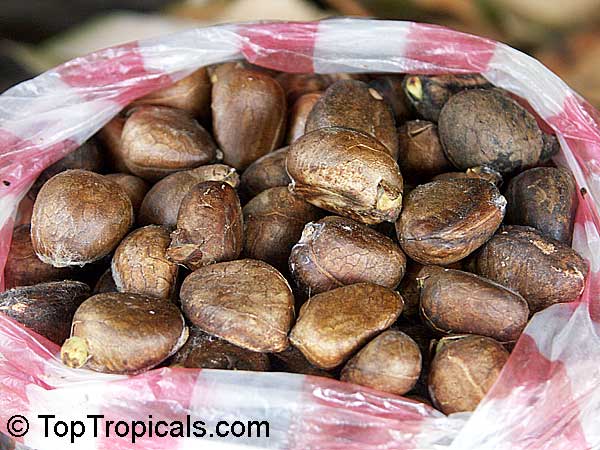
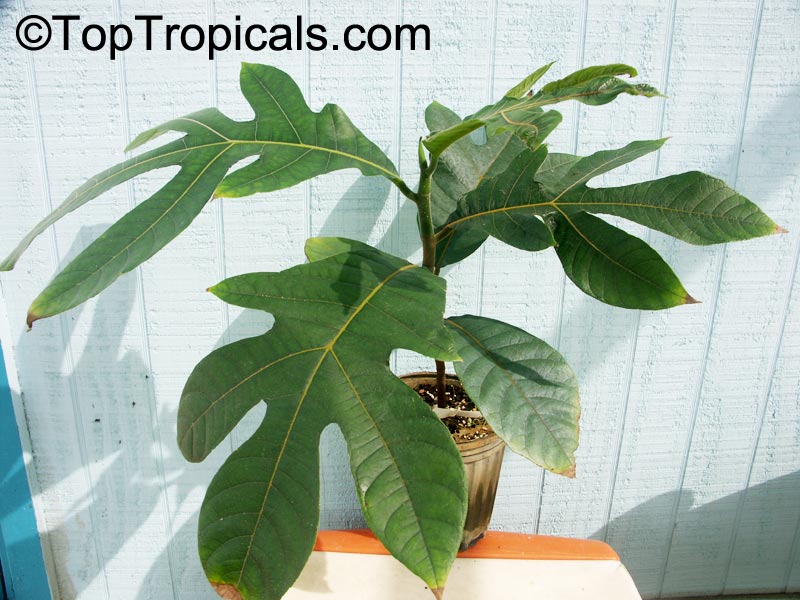
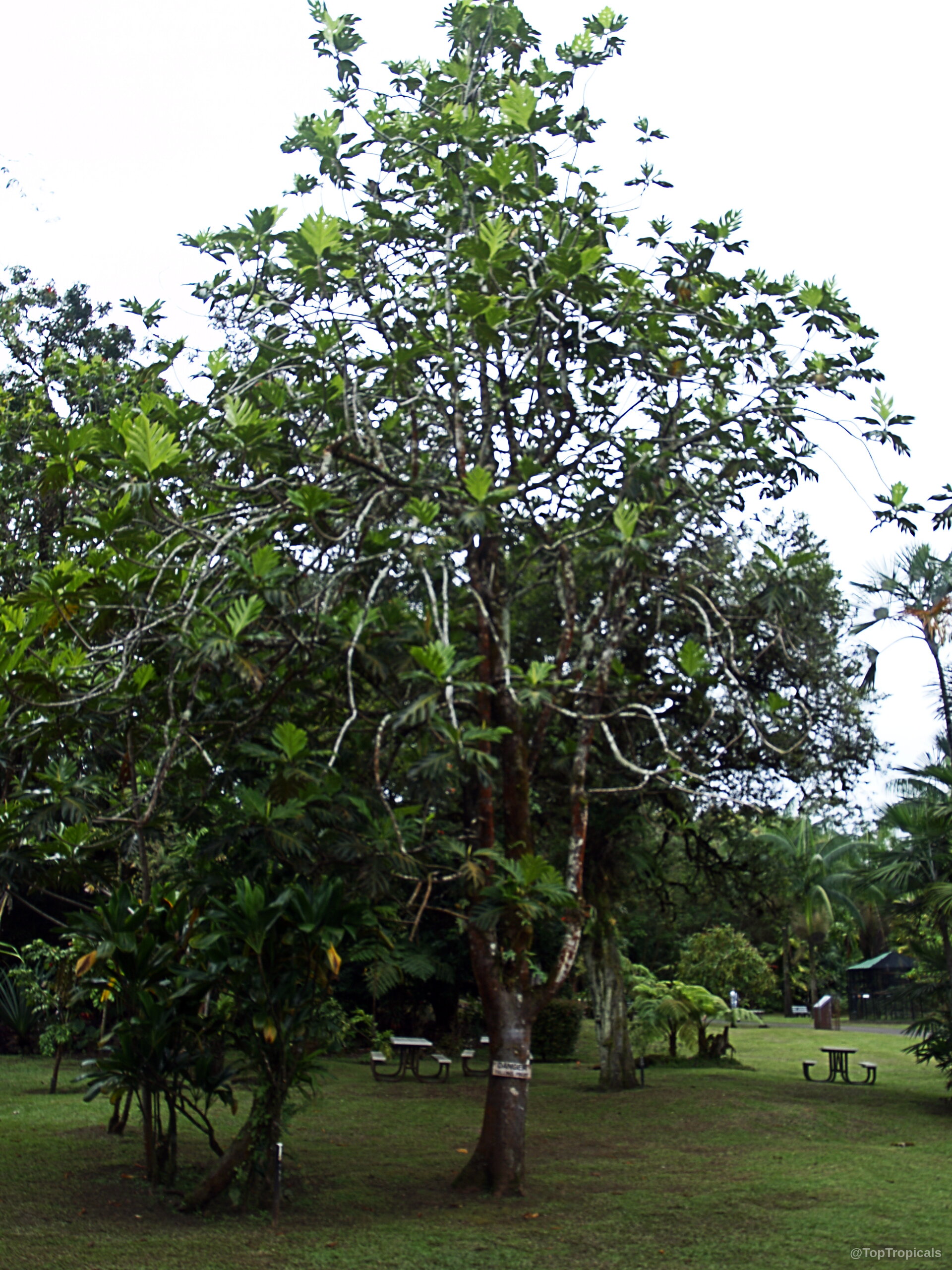
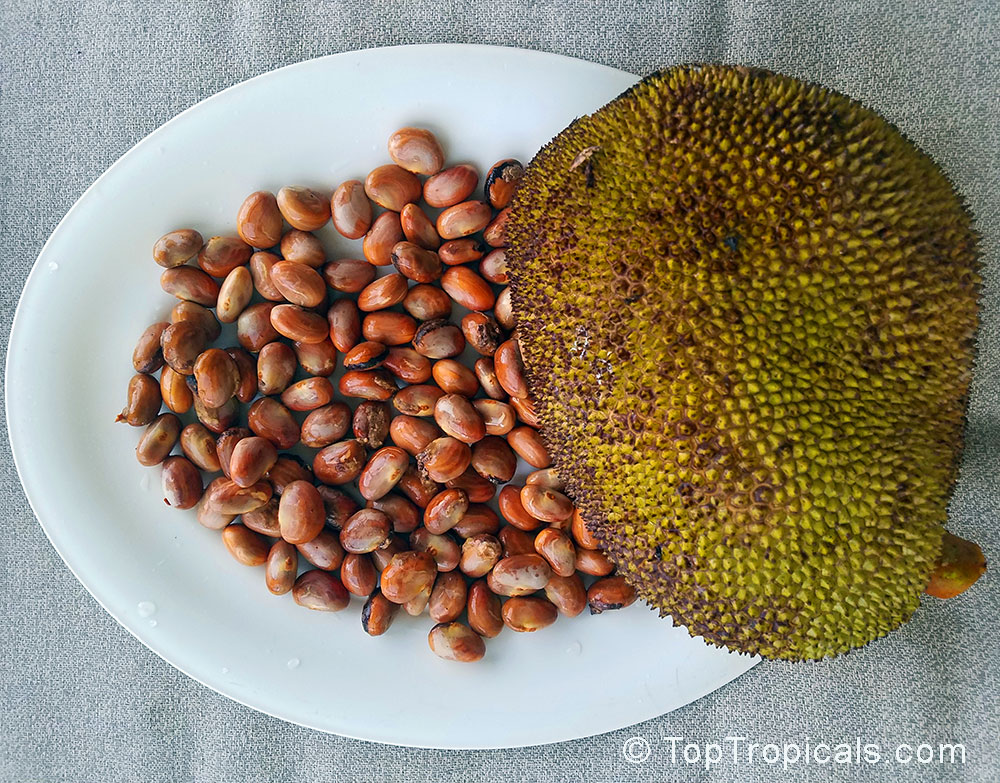
Seeded breadfruit is a large tree, to 100 feet tall, with large, spreading branches and a straight trunk with smooth gray bark. Leaves large, 16-20 inches wide and 24-35 inches long, with shallow lobes. All parts of the tree contain abundant white latex. Monecious, with axillary inflorescences. Male inflorescence elongated, 1-1.5 inches wide and 6-10 inches long, female inflorescence globose, 2-3 inches wide and 3-4 inches long. Fruits large, spheroid, 4-12 inches in diameter, green and covered with soft spines. Fruits contain between 20-60 rounded or flattened seeds, about 1 inch long. Immature fruits are cooked as a vegetable with coconut milk. Seeds are soft, edible and delicious, and may be boiled or roasted.
Botanical name: Artocarpus dadah
Common name: Green Tampang
Family: Moraceae
Origin: Indonesia

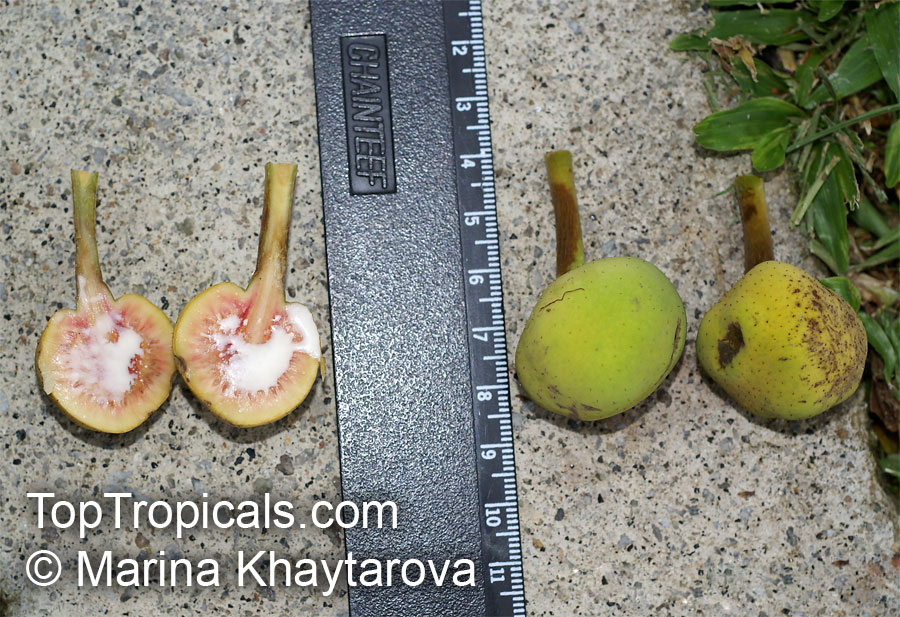
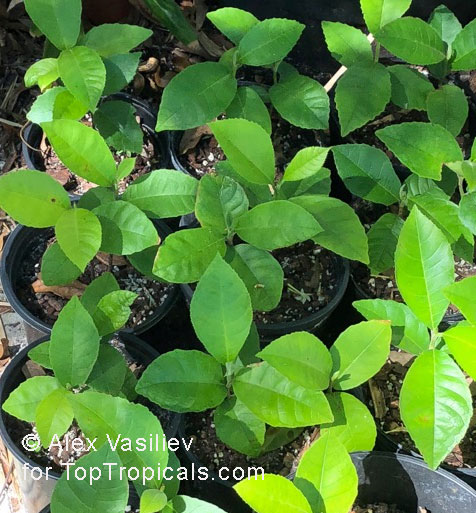
The leaves measures about 15-30 cm, leathery and oblong with asymmetrical leaf base. The twigs, leaf stalks and undersides of leaves are covered by soft hair. The underside of leaves are also somewhat glaucous. Juveniles have deeply lobed leaves while mature trees have entire leaves. The fruits are 5-9 cm, pale green with deep pink flesh, finely velvety and appearing smooth.
Botanical name: Artocarpus elasticus
Common name: Terap
Family: Moraceae
Origin: Southeast Asia
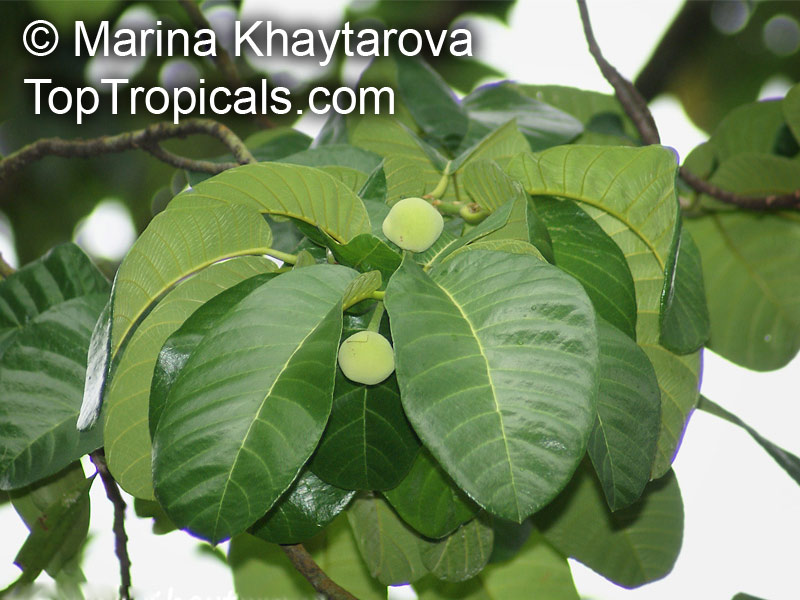
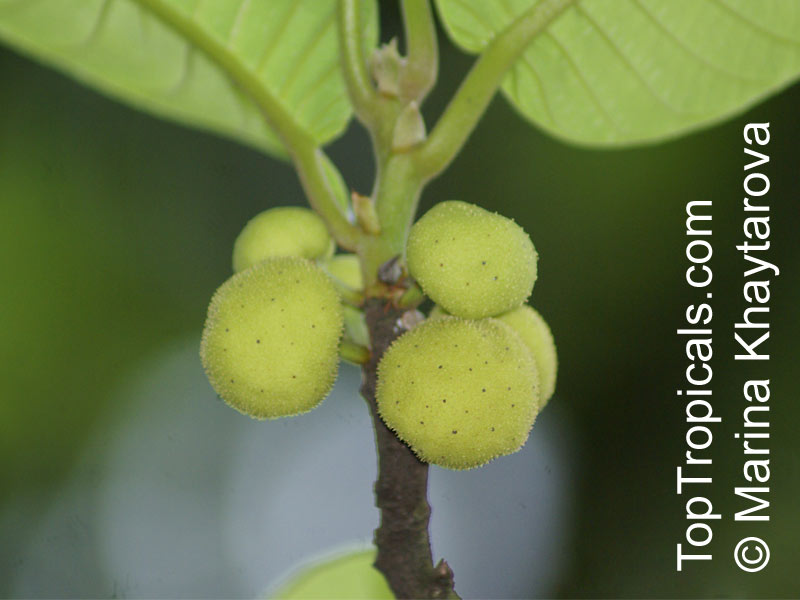
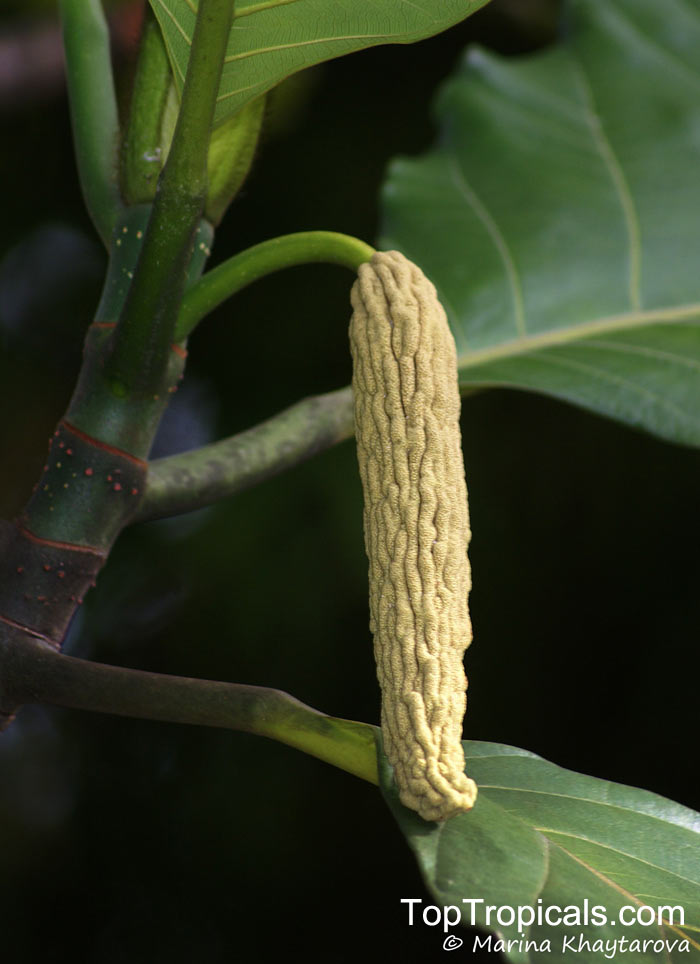
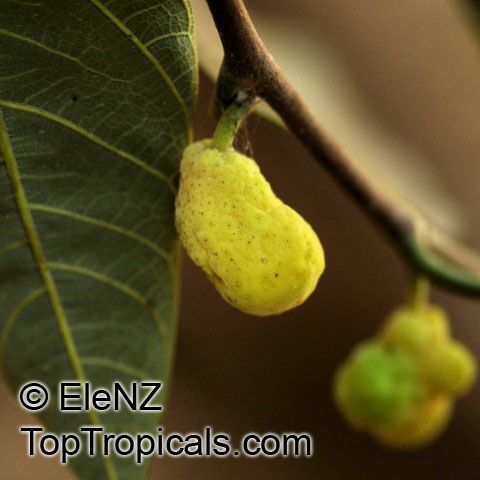
There is another similar species Artocarpus scortechinii with similar character except the leaves are slightly smaller, making it possible to confuse these two species in the field. If fruits are available the distinction is easier, Artocarpus scortechinii does not have the shaggy fruits that Artocarpus elasticus has.
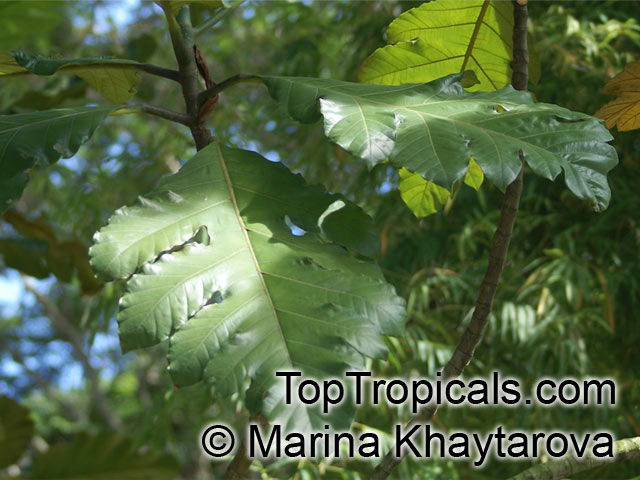
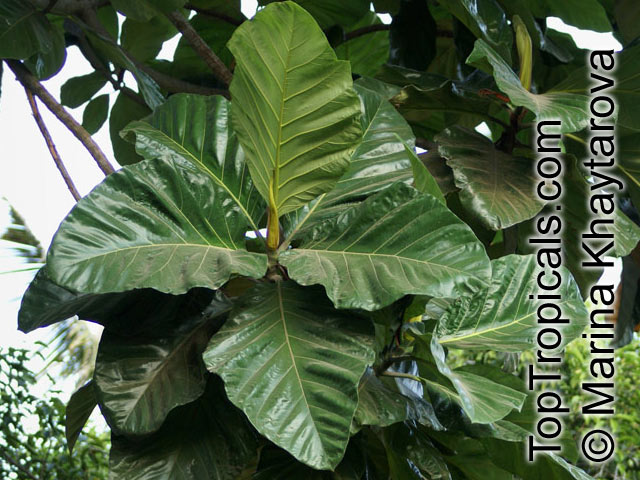
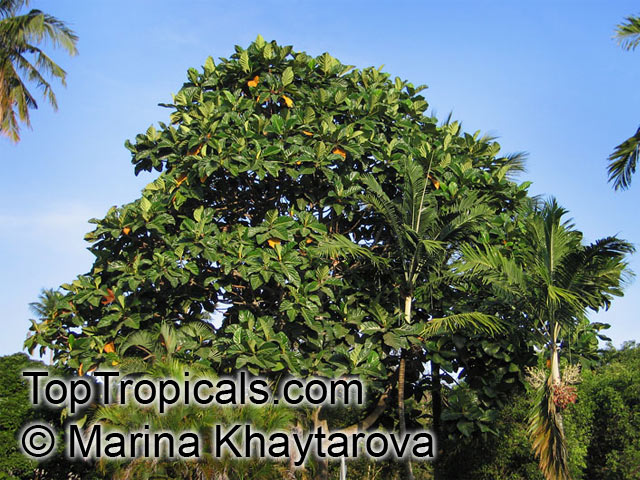
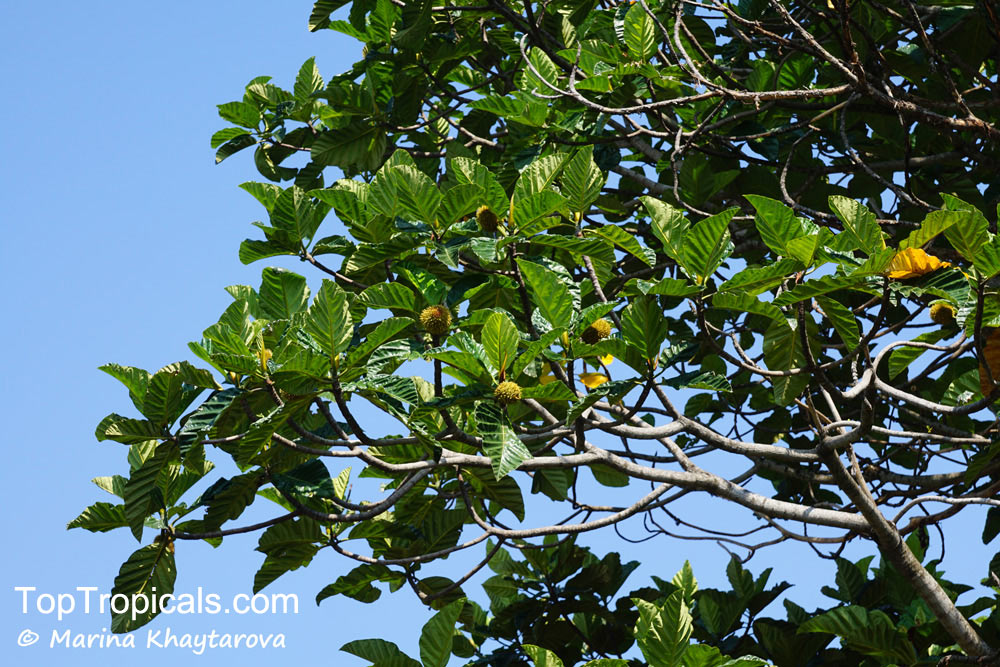
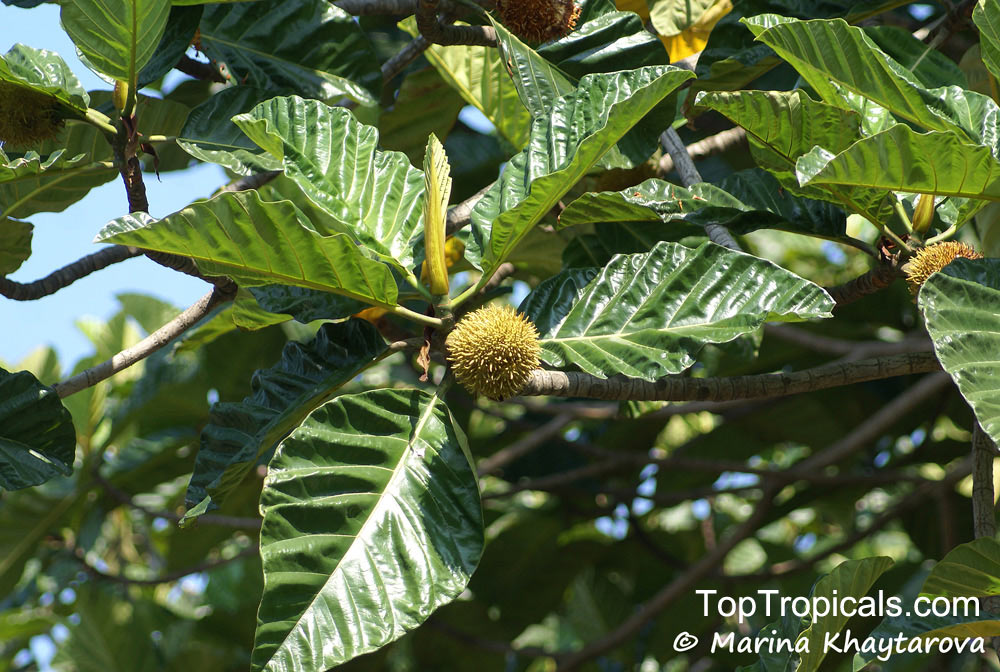
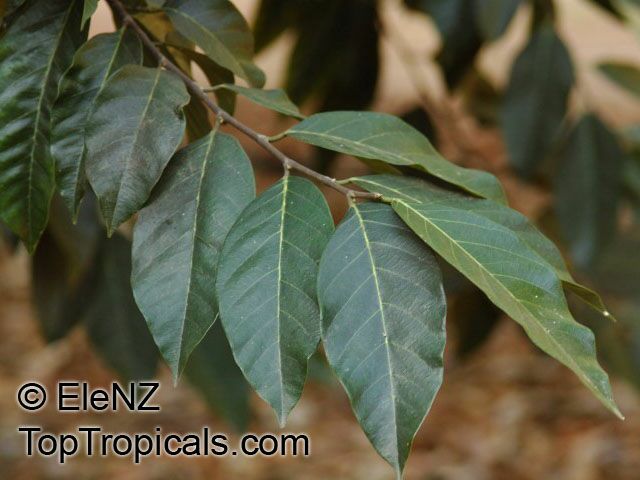
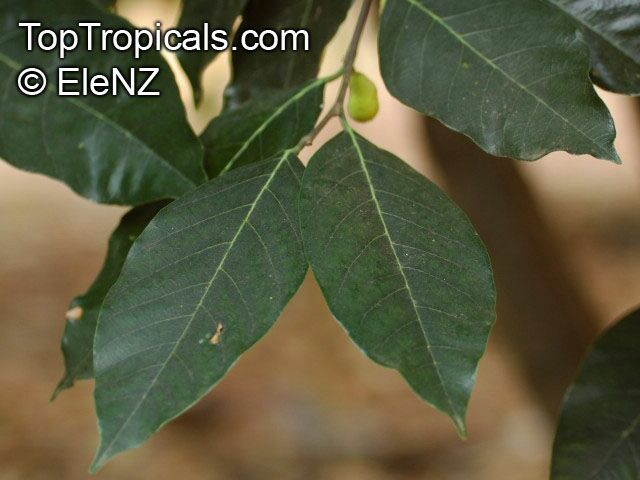
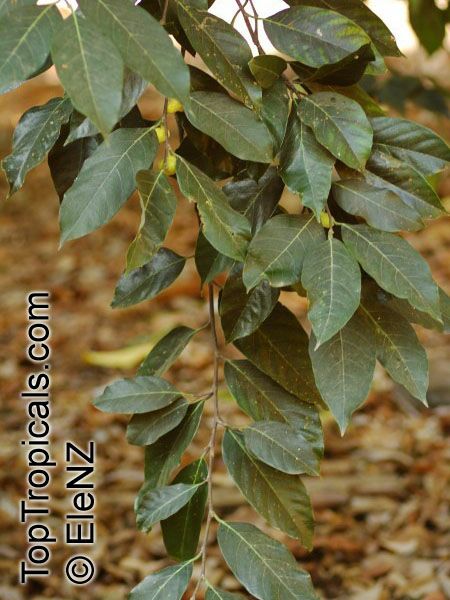
Botanical names: Artocarpus heterophyllus, Artocarpus integrifolius
Common names: Jackfruit, Jakfruit, Langka, Nangka, Jaca
Family: Moraceae
Origin: India or Malaysia

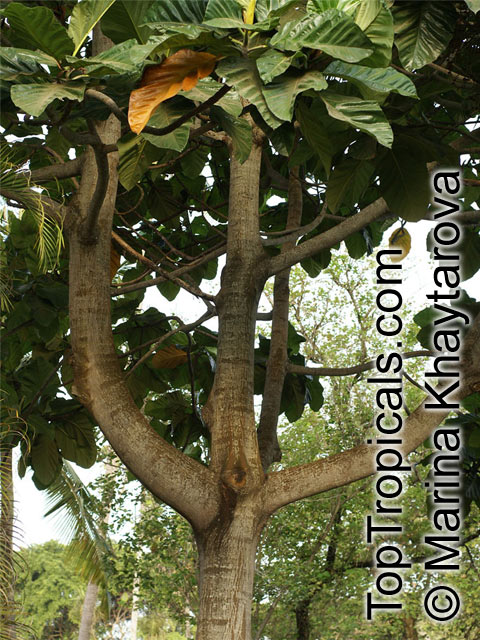
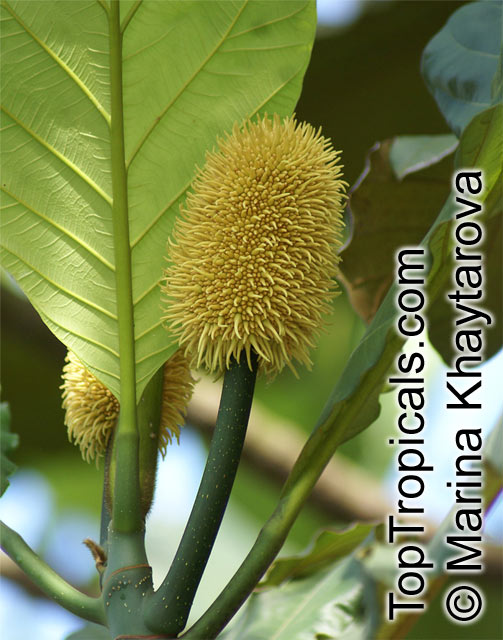
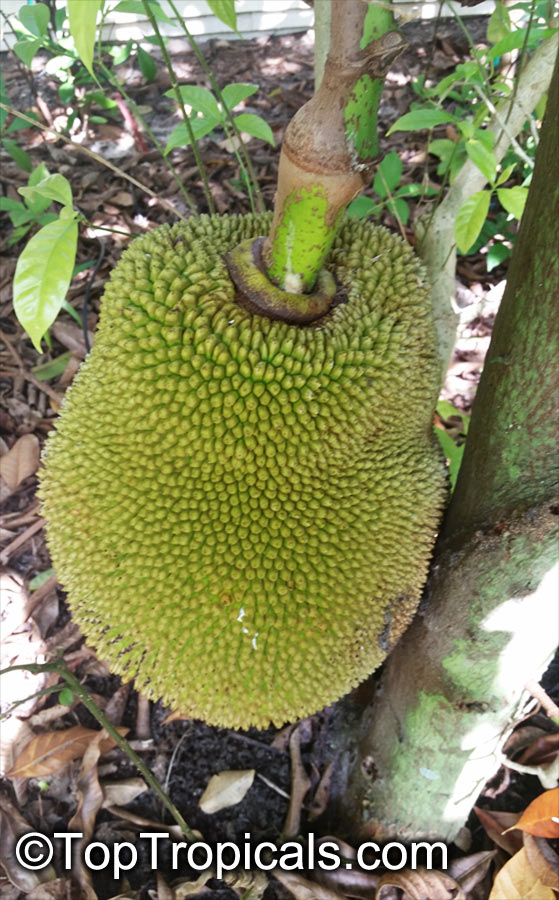
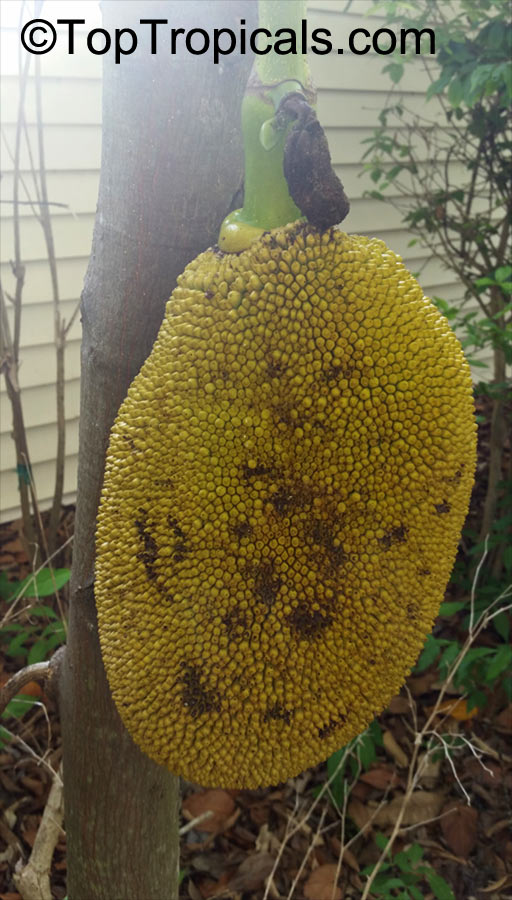
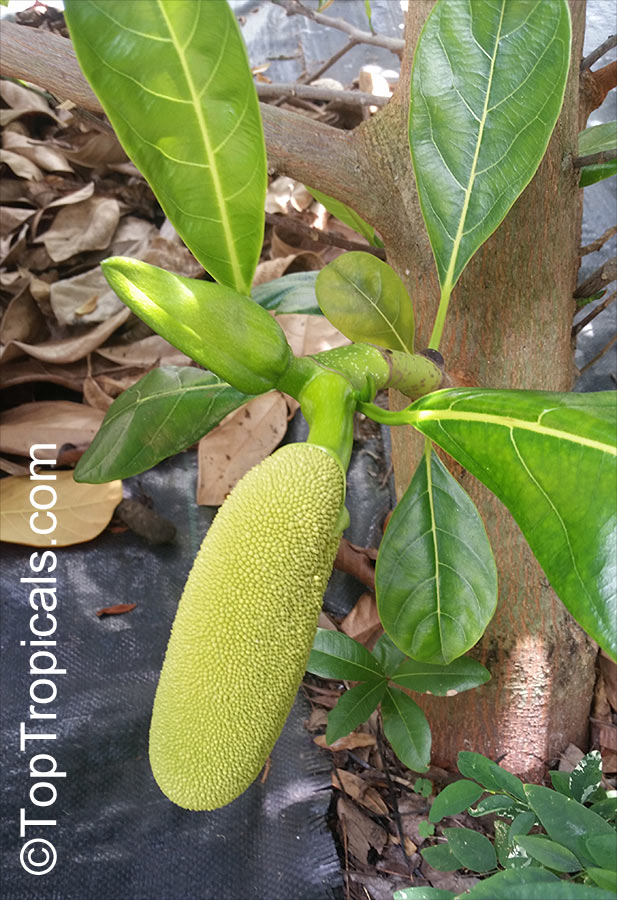
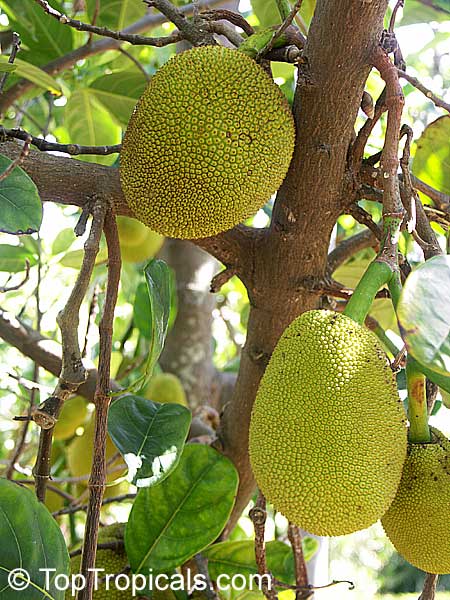
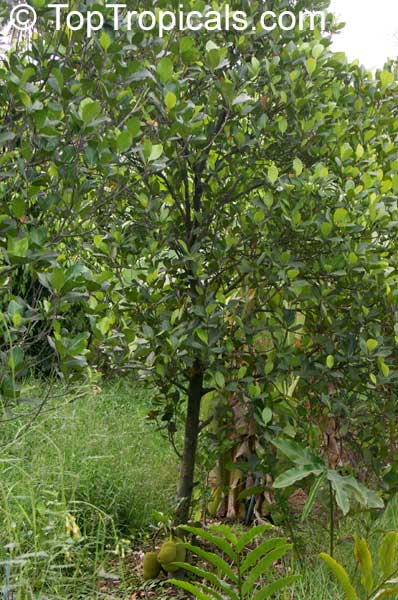
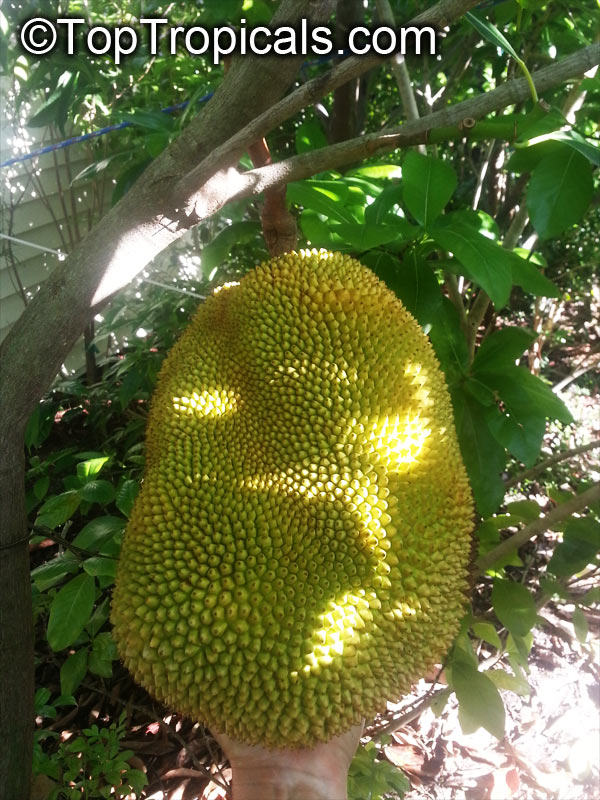
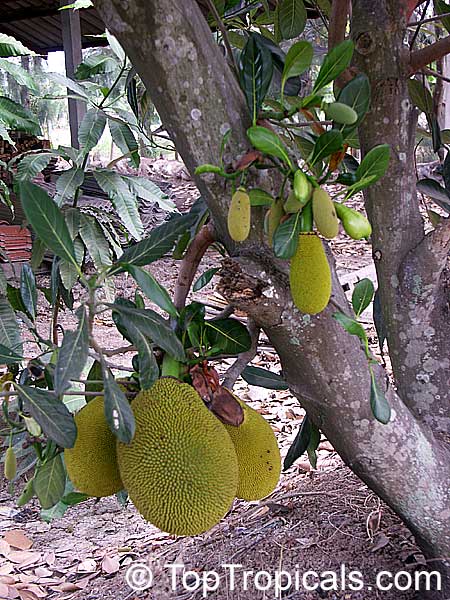
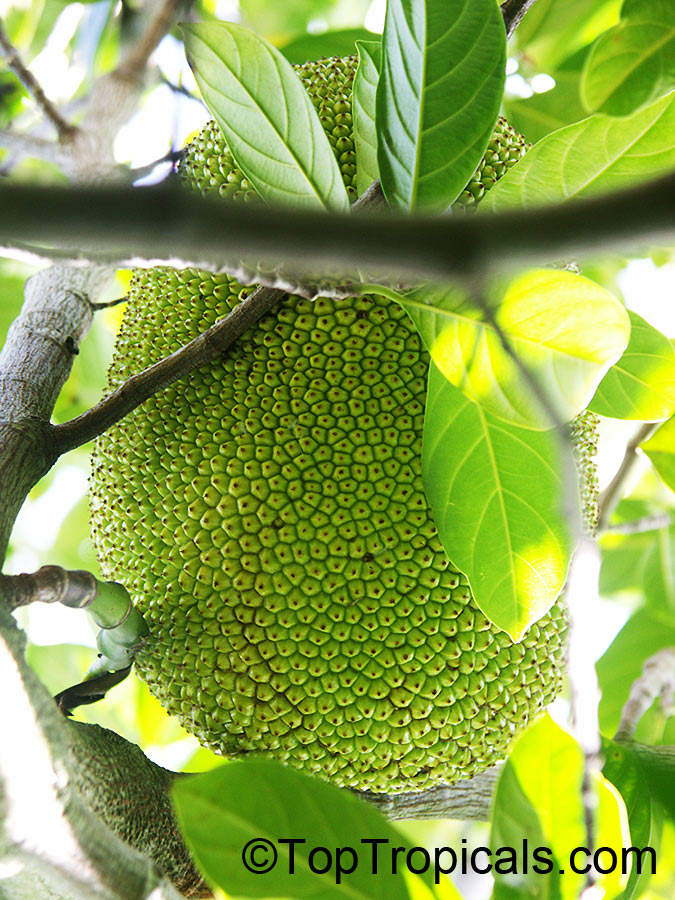
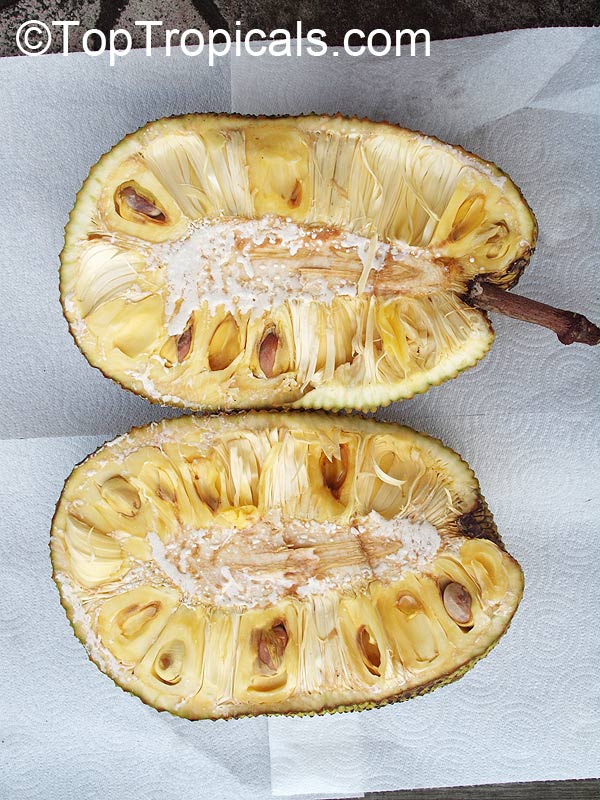
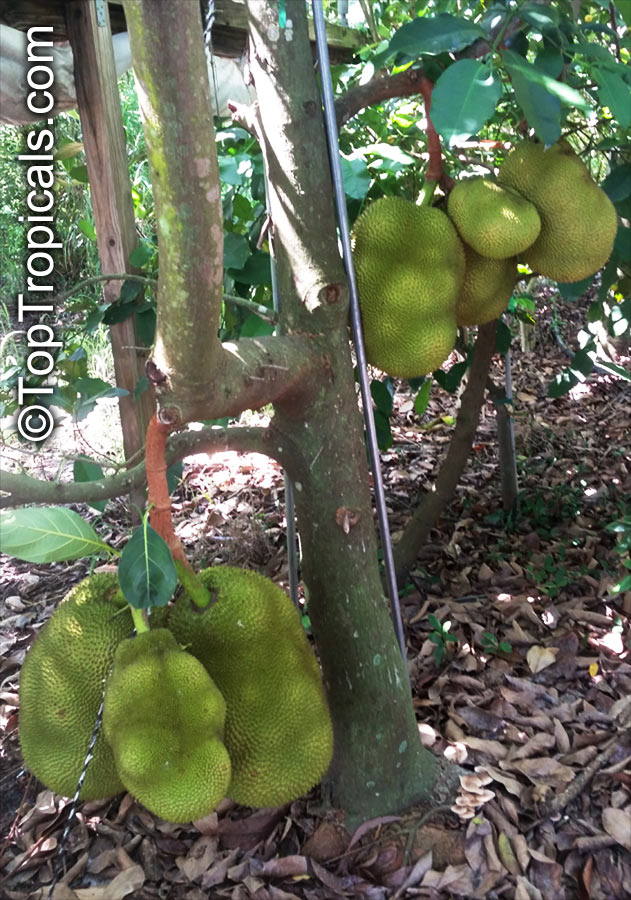
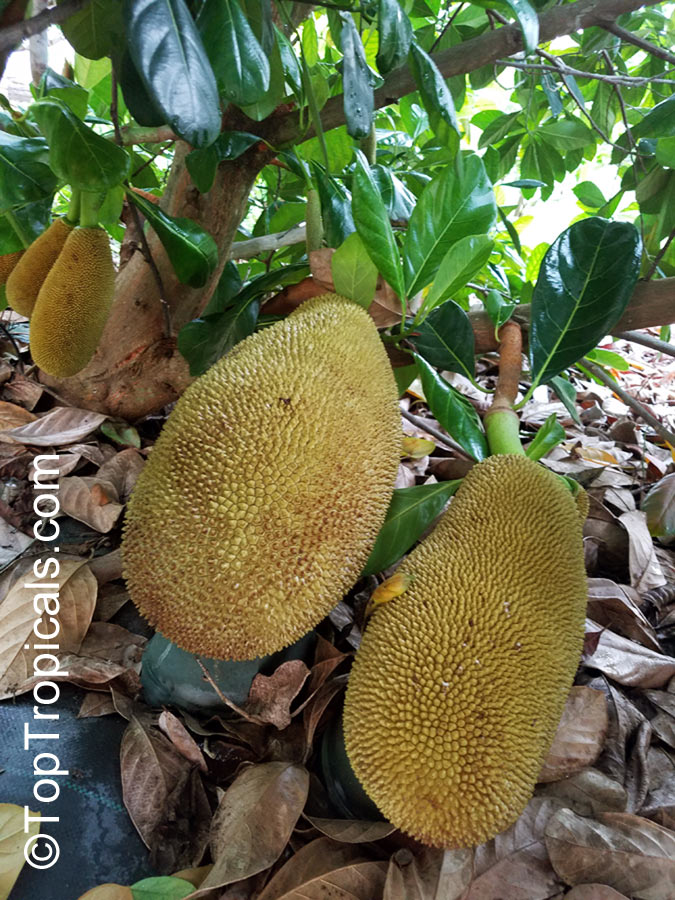
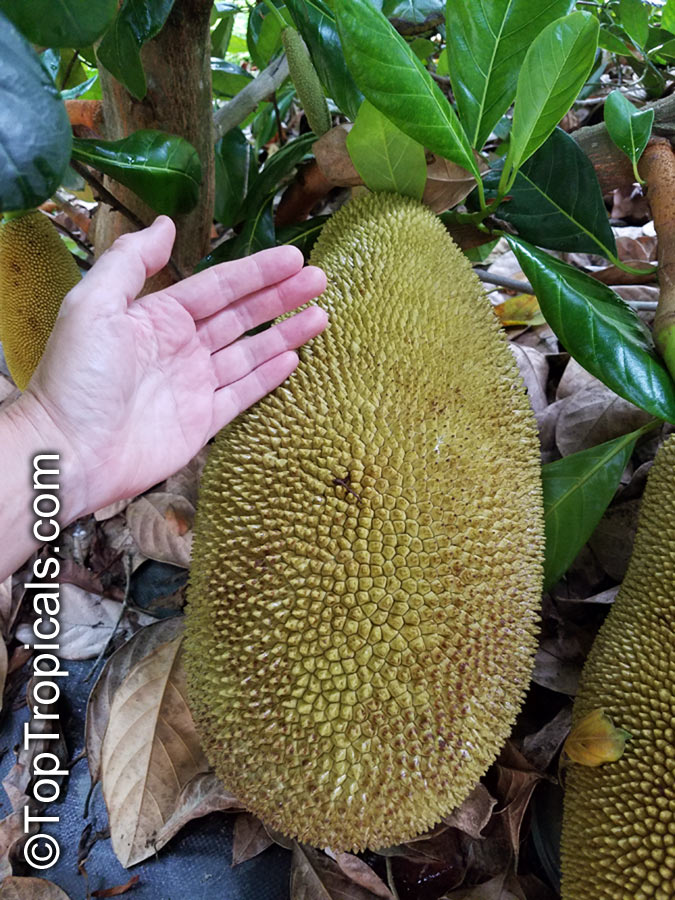
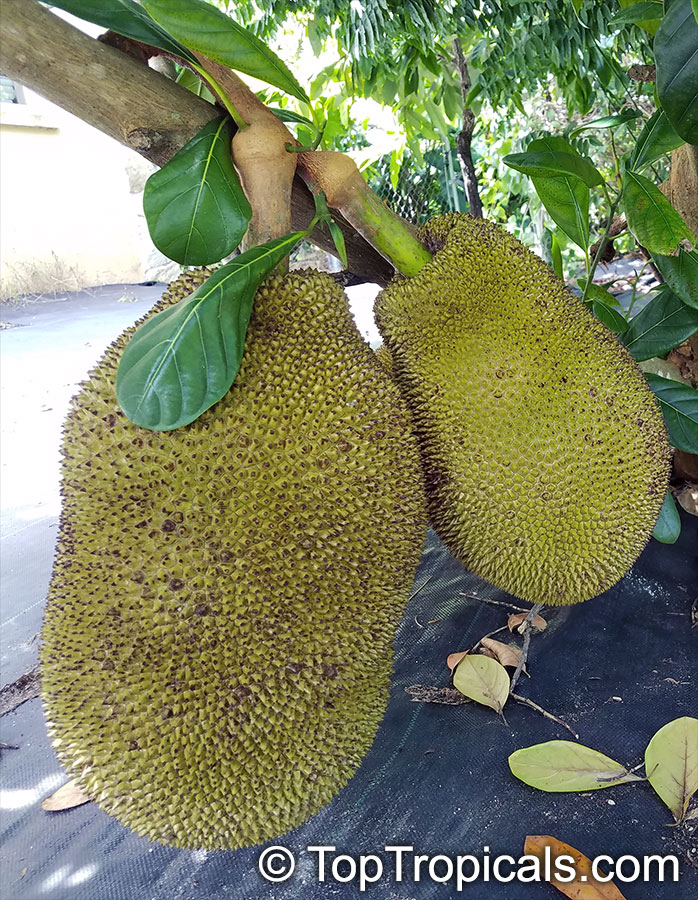
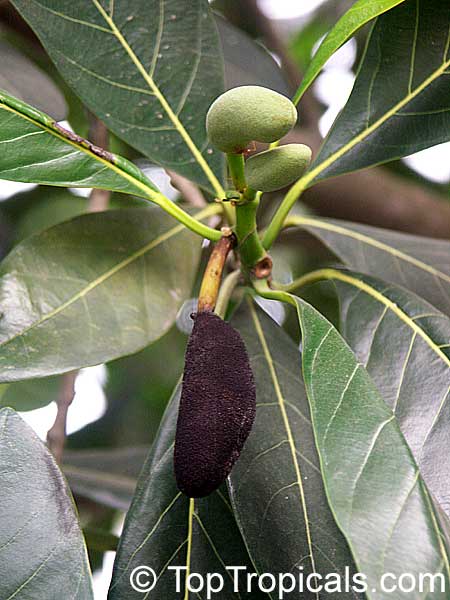
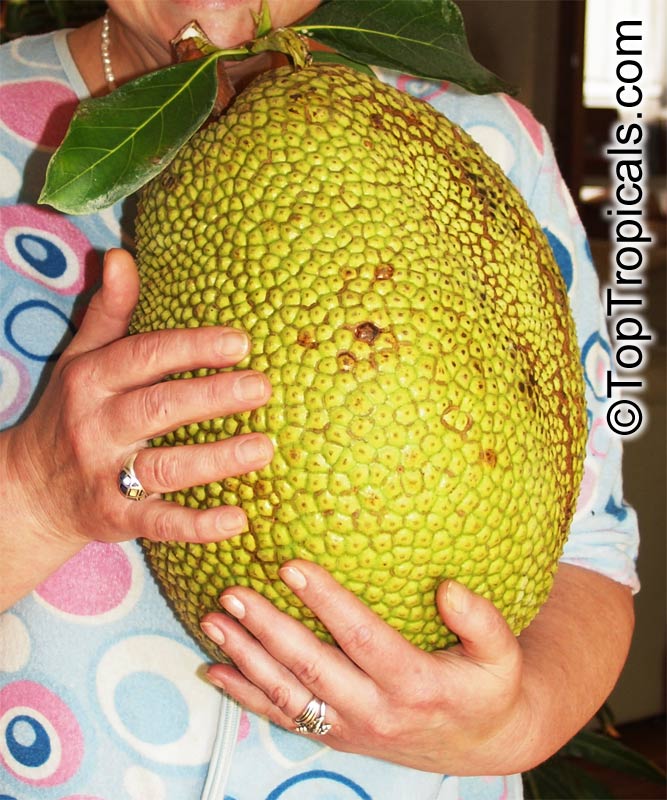
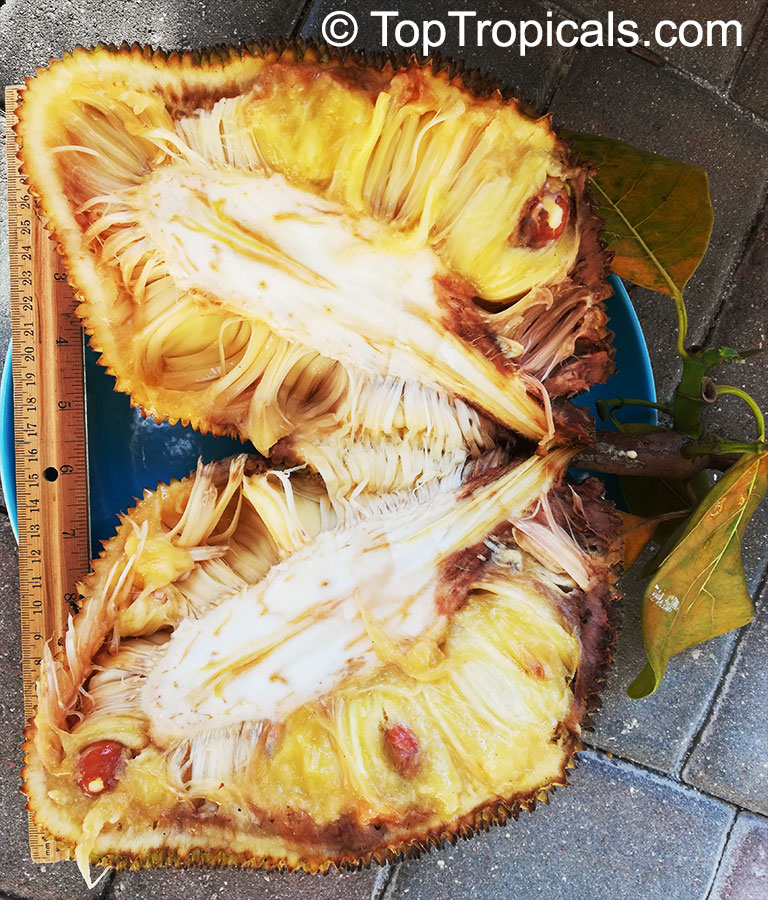
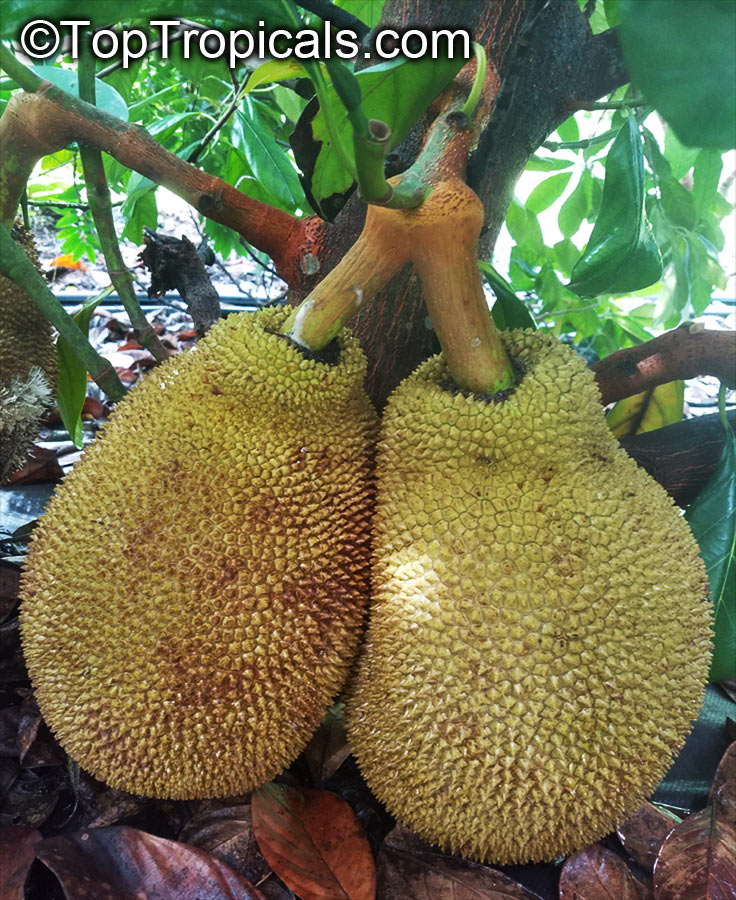
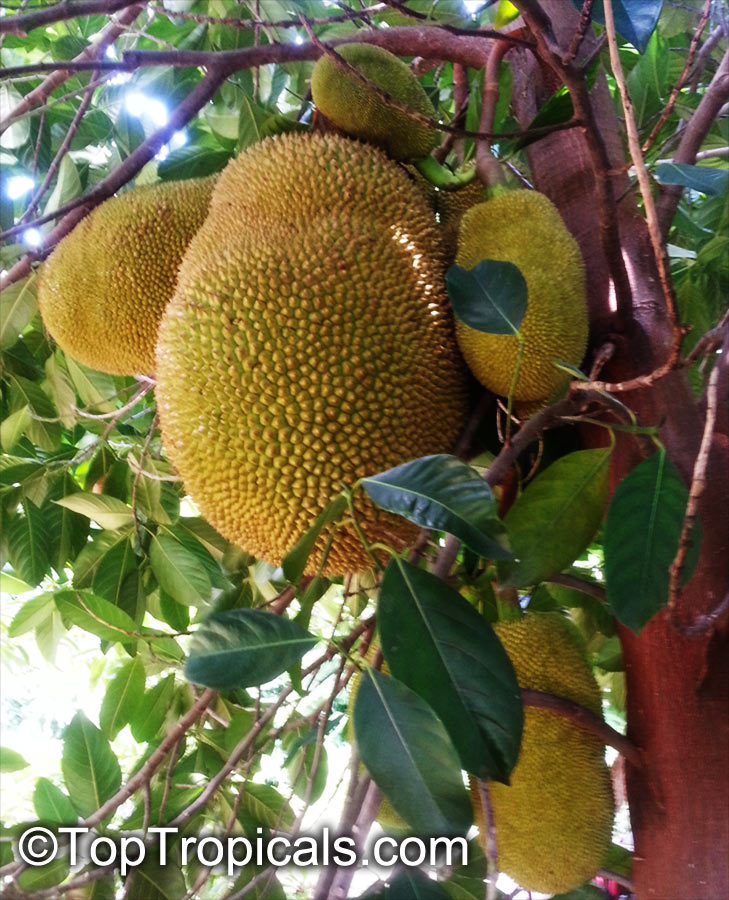
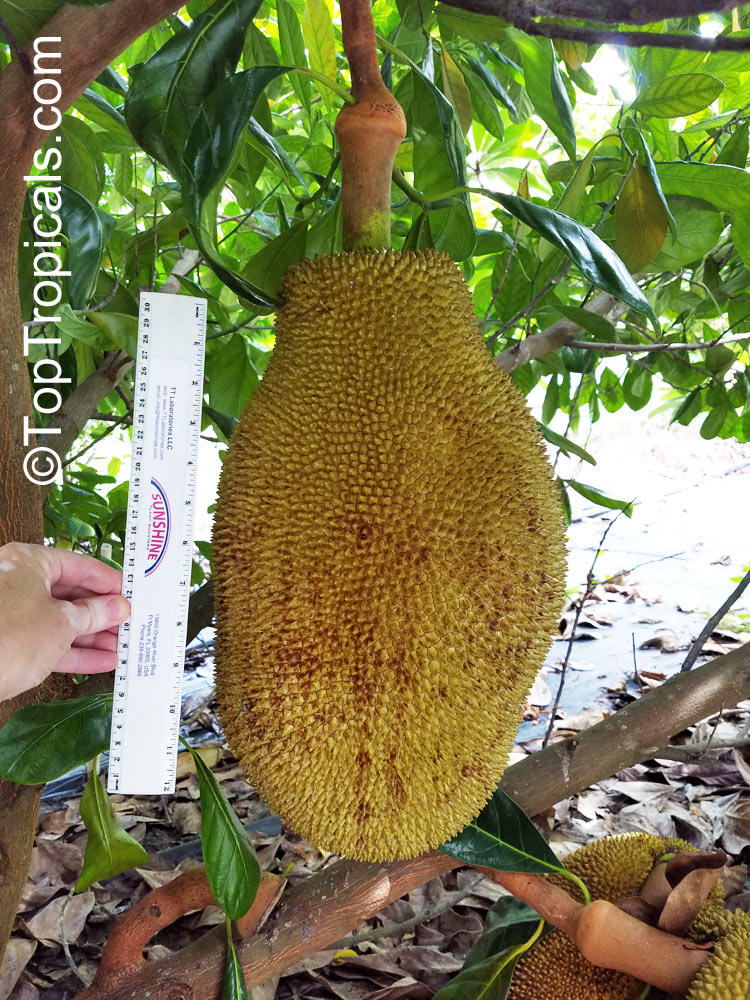
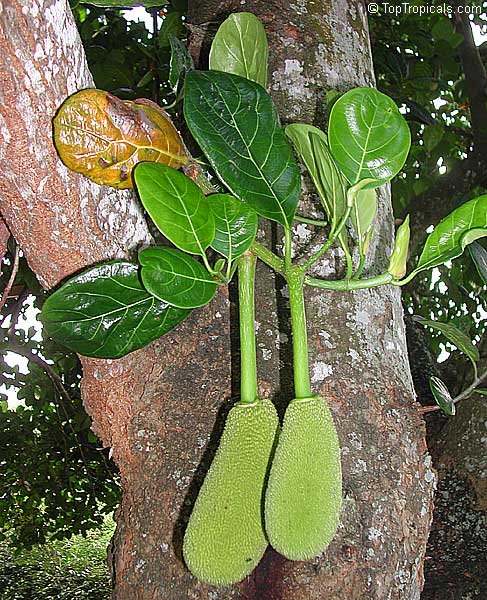
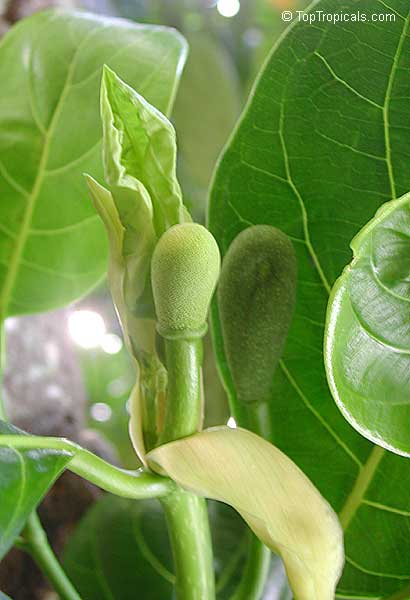
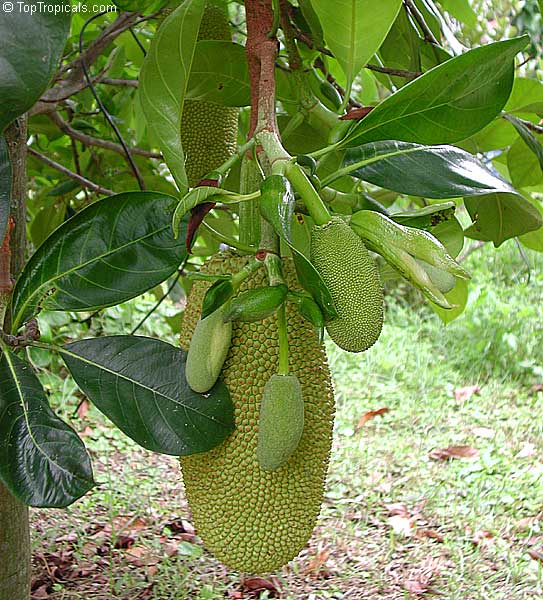
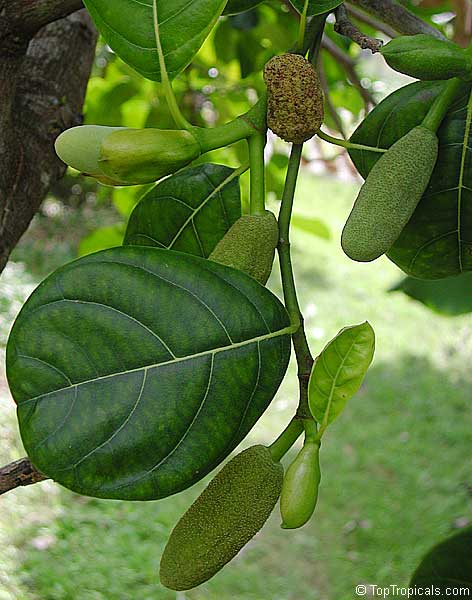
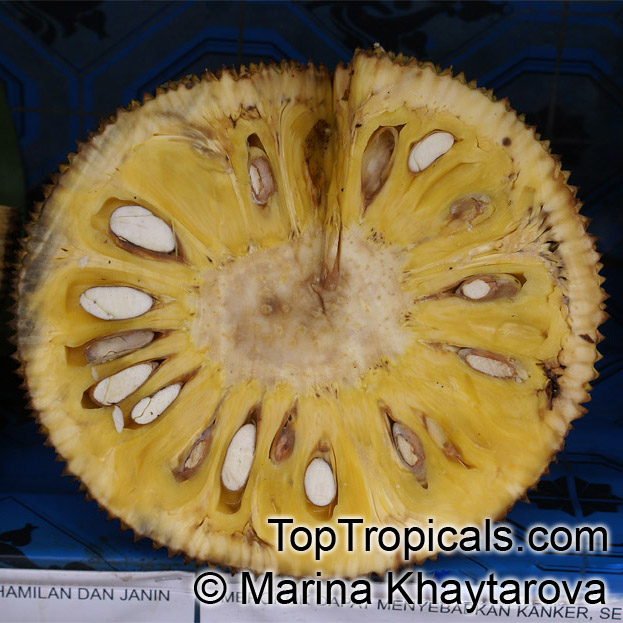
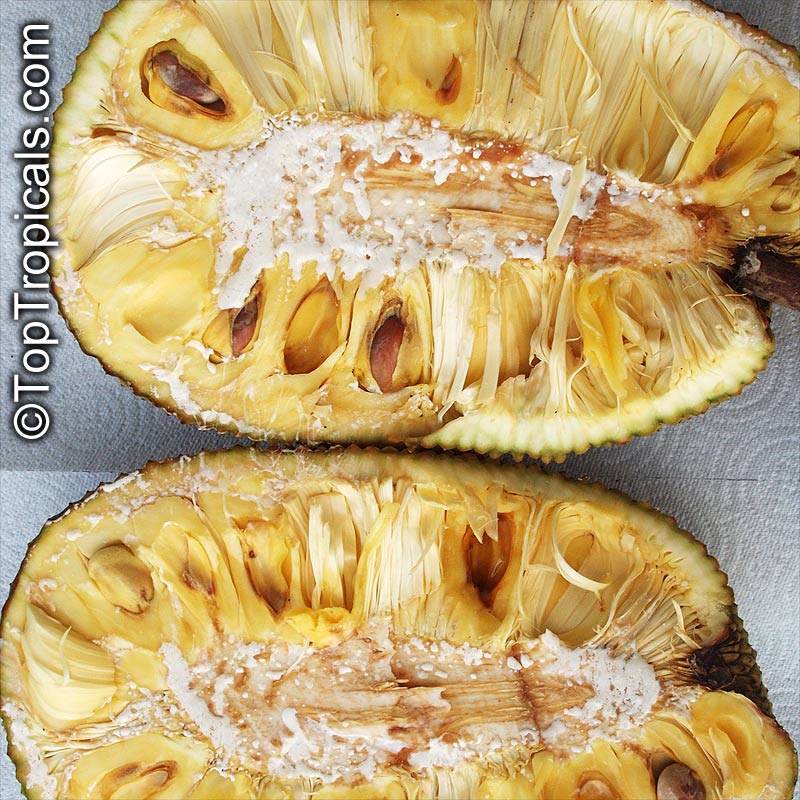
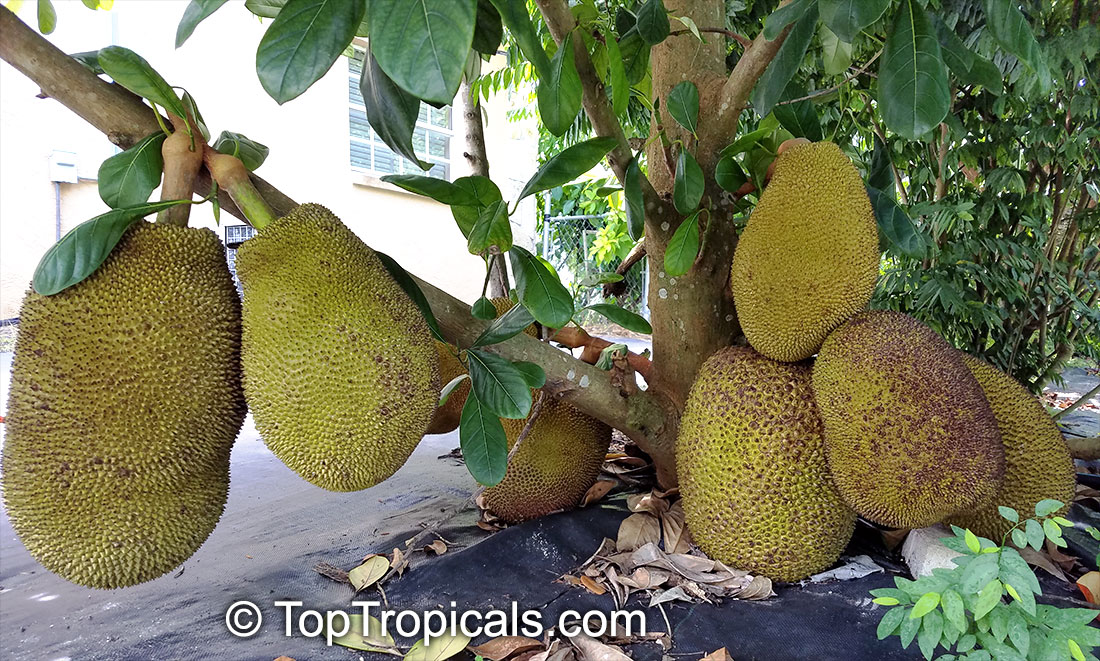
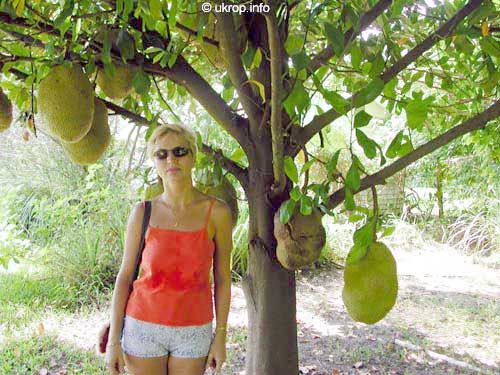
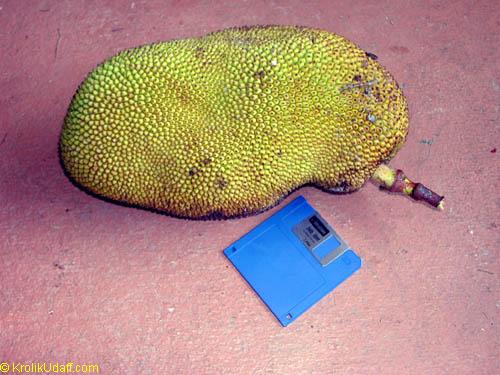
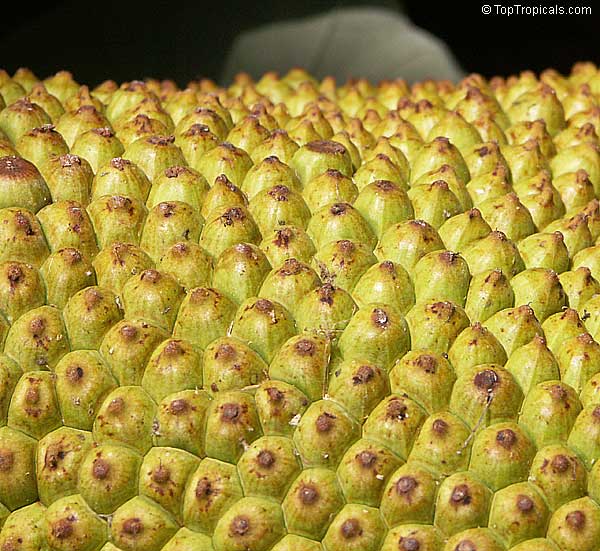
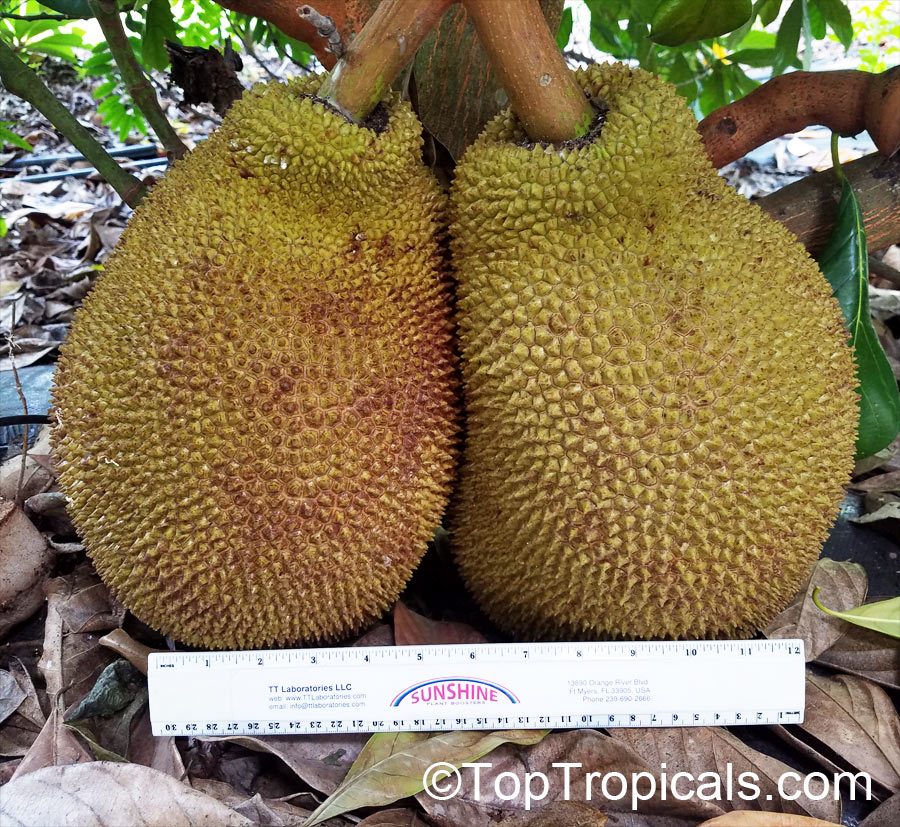
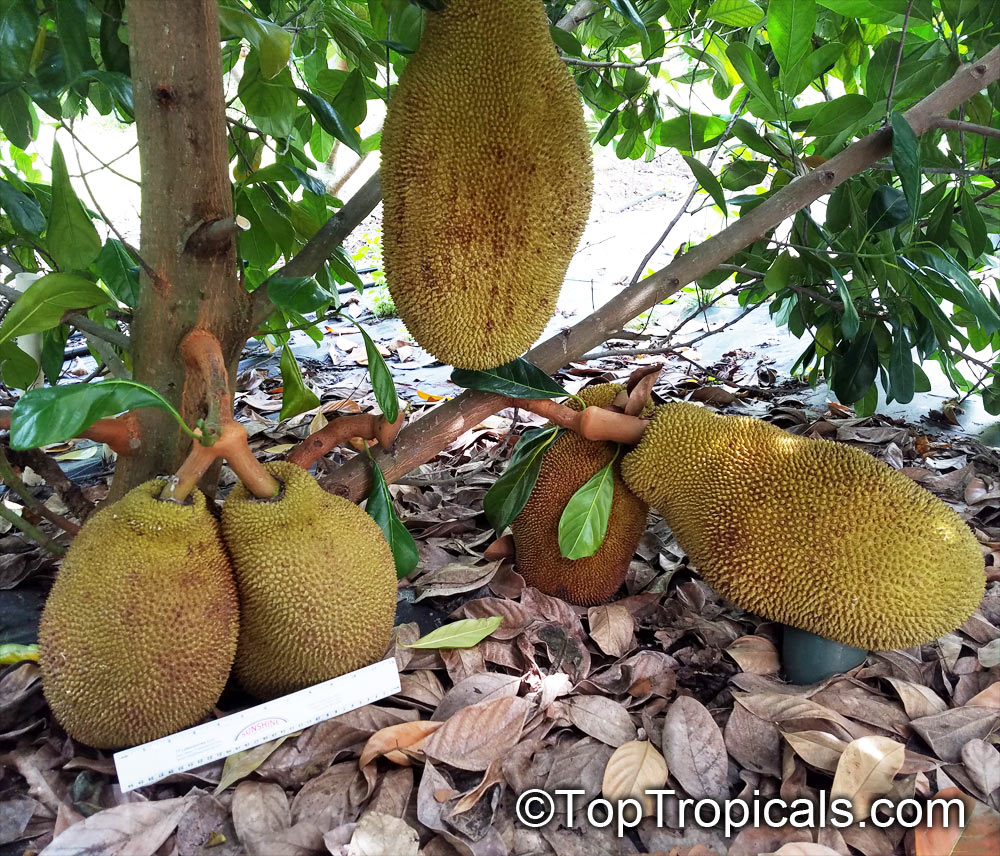
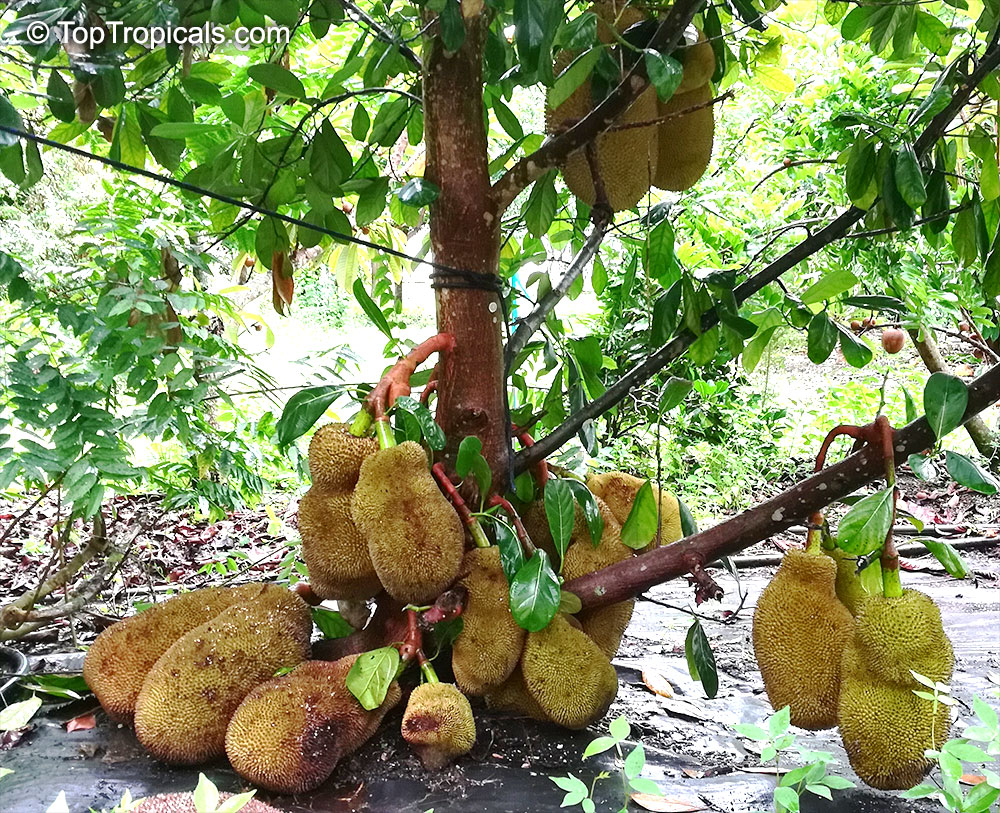
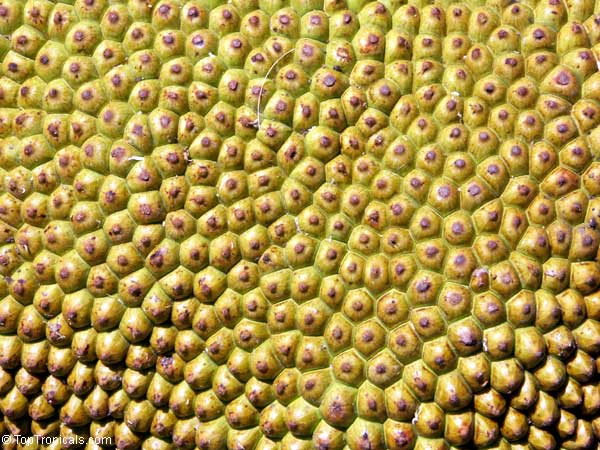
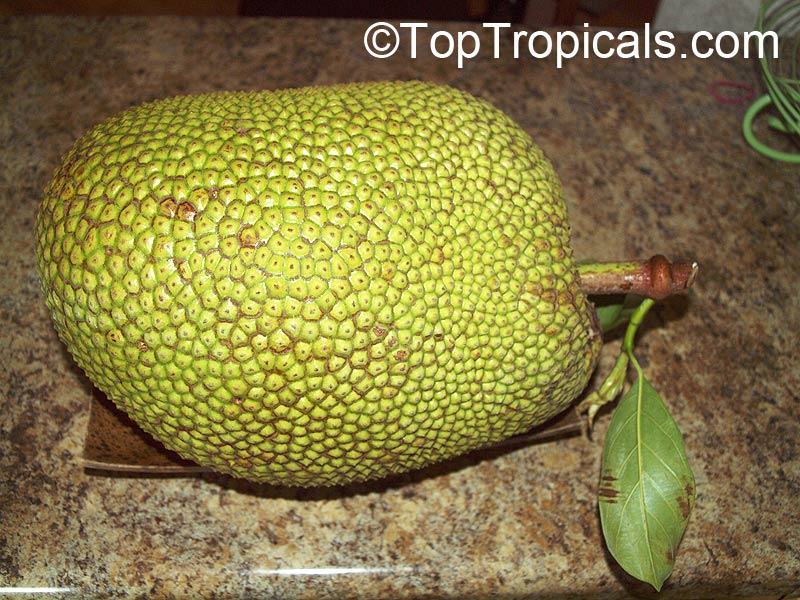
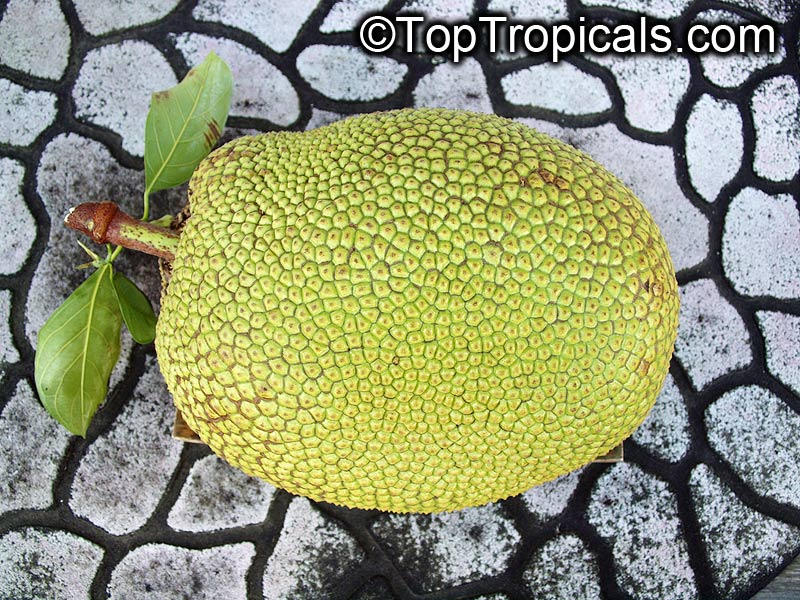
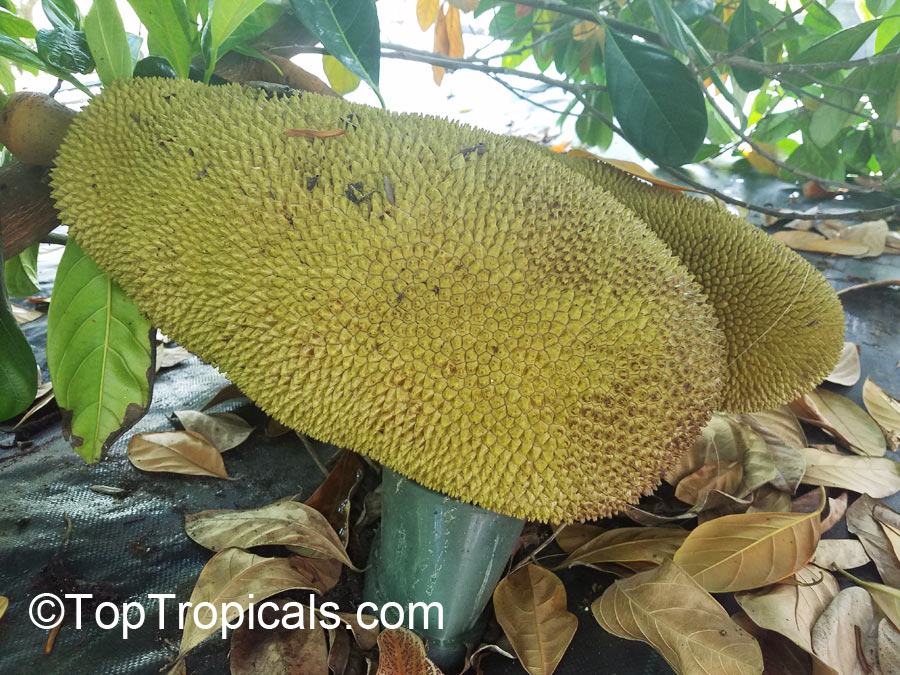
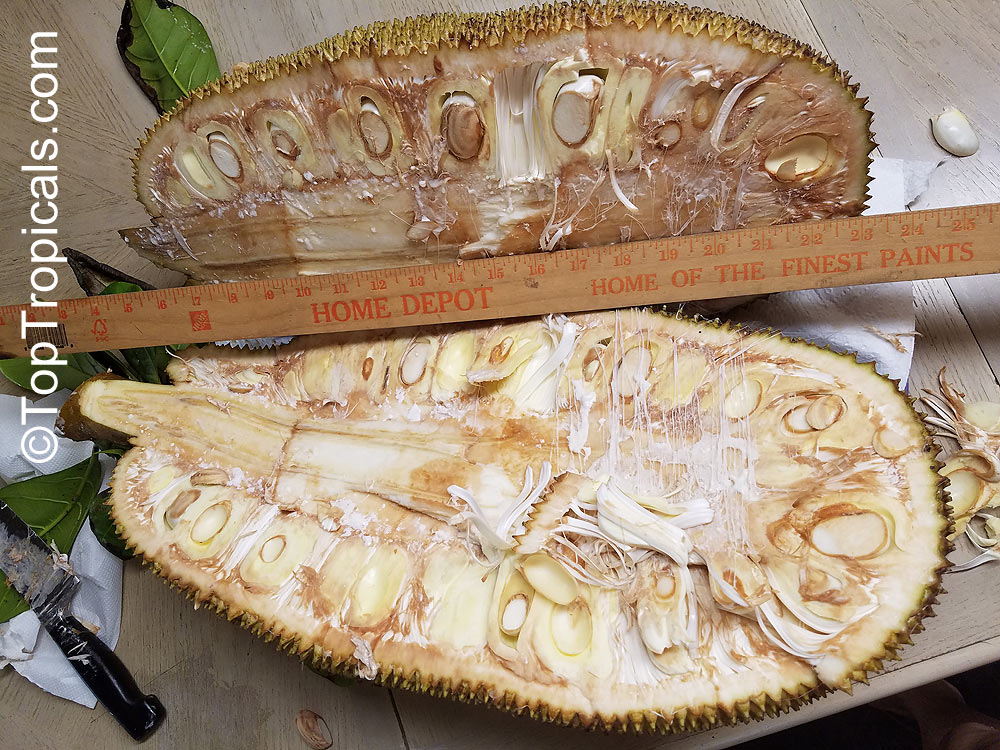
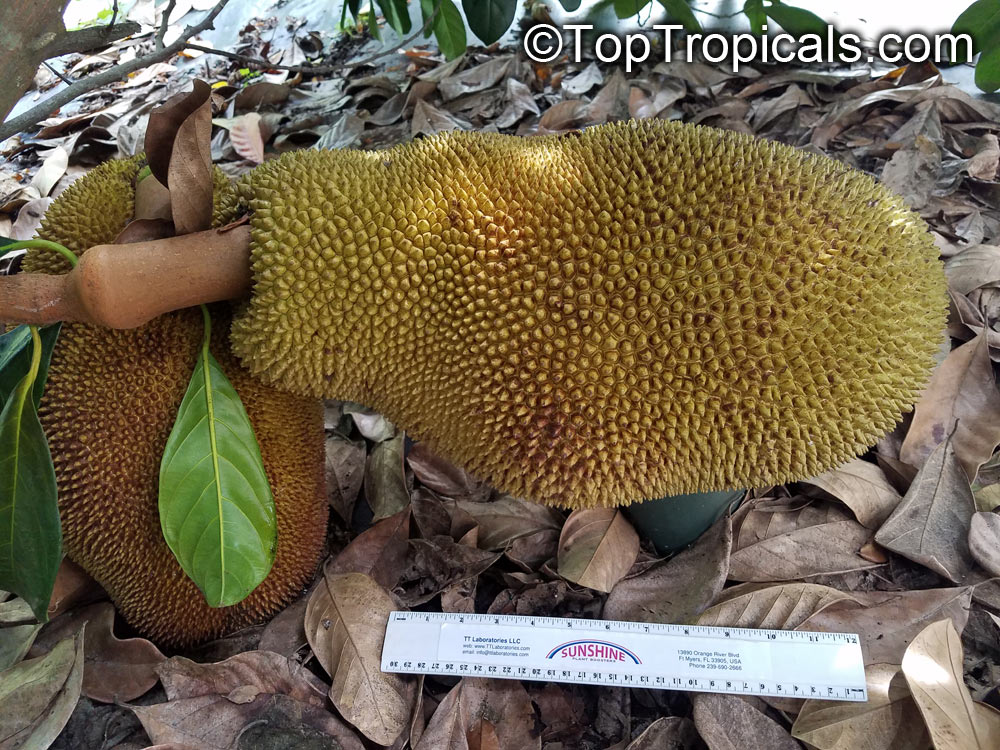
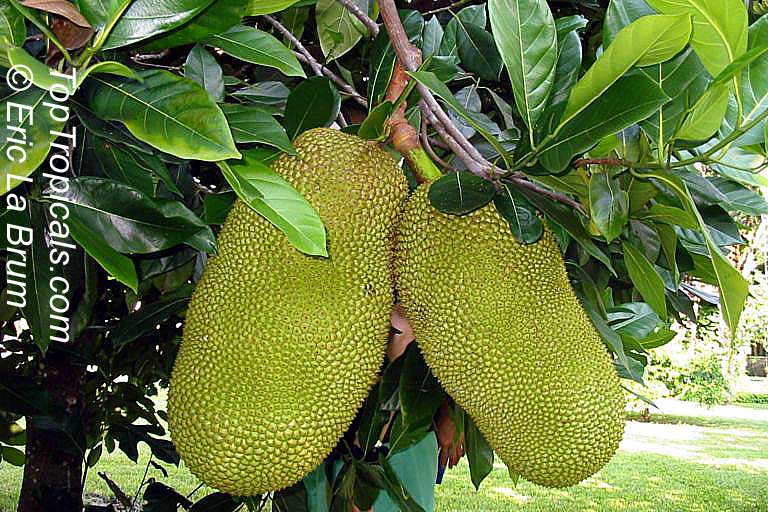
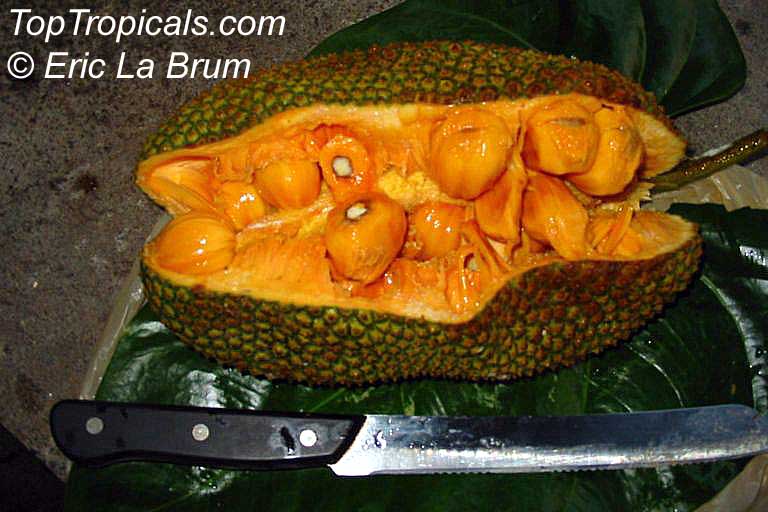
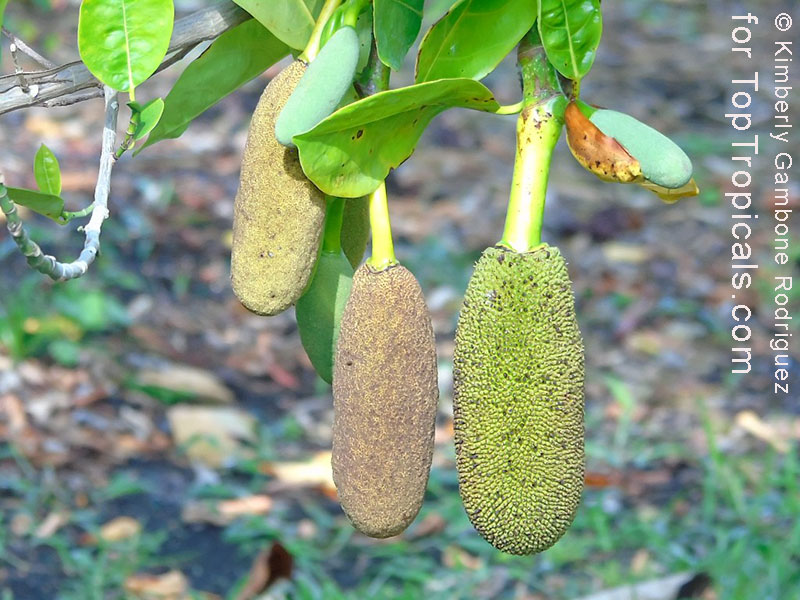
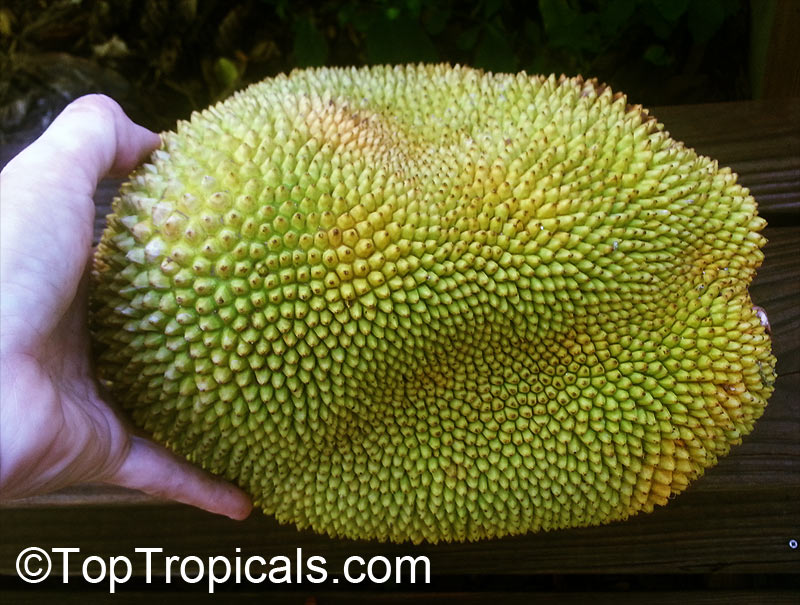
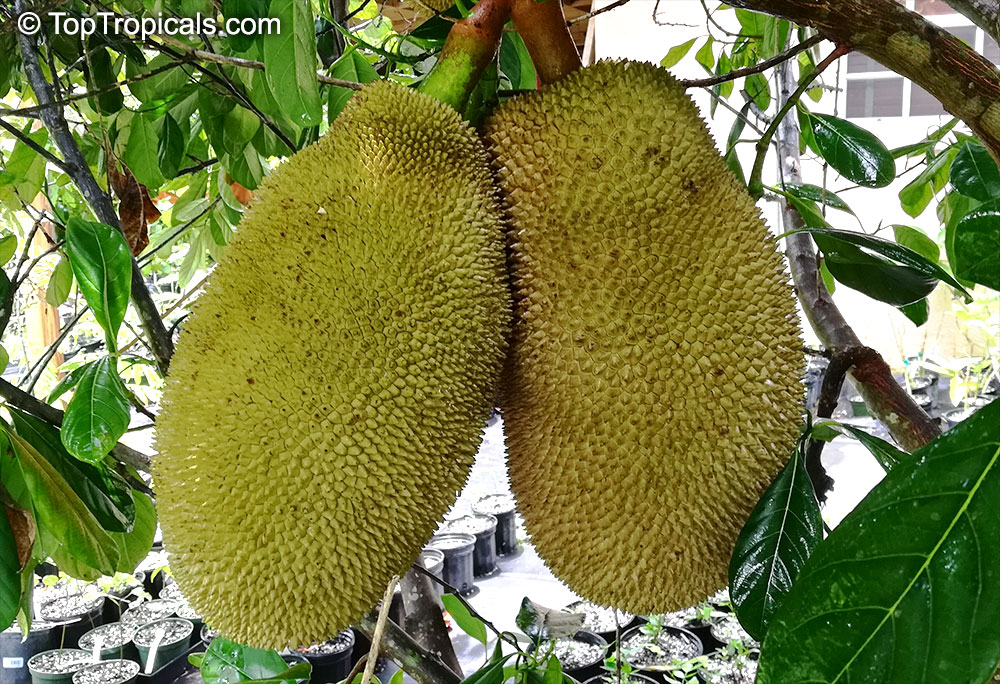
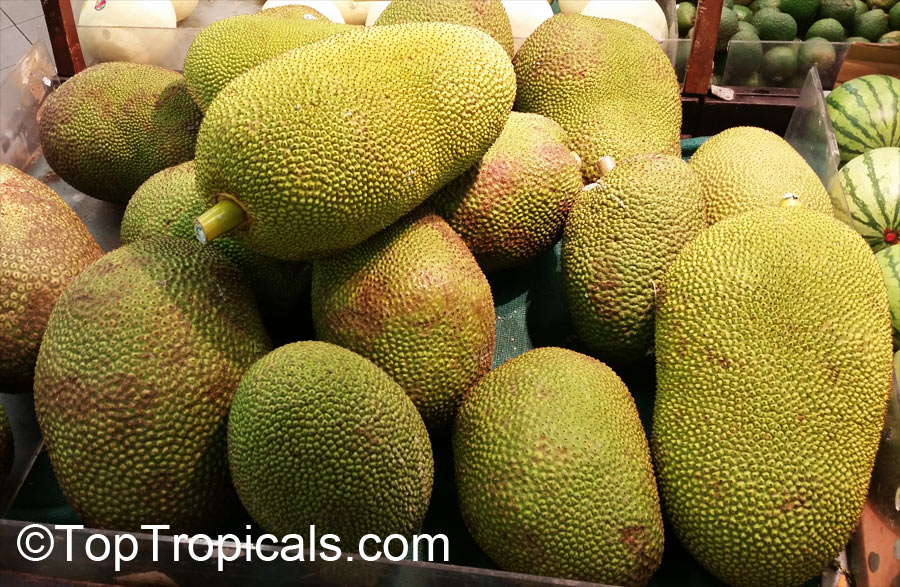
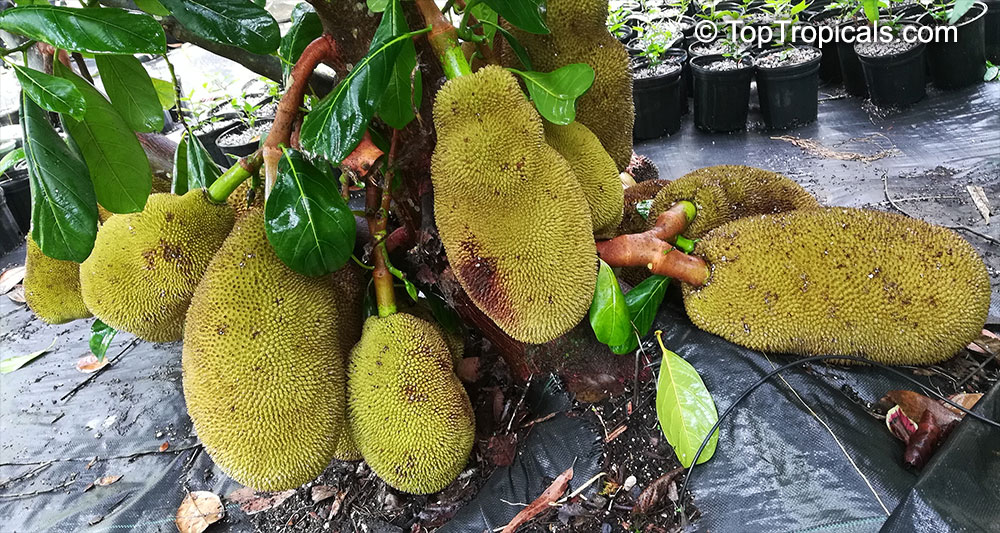
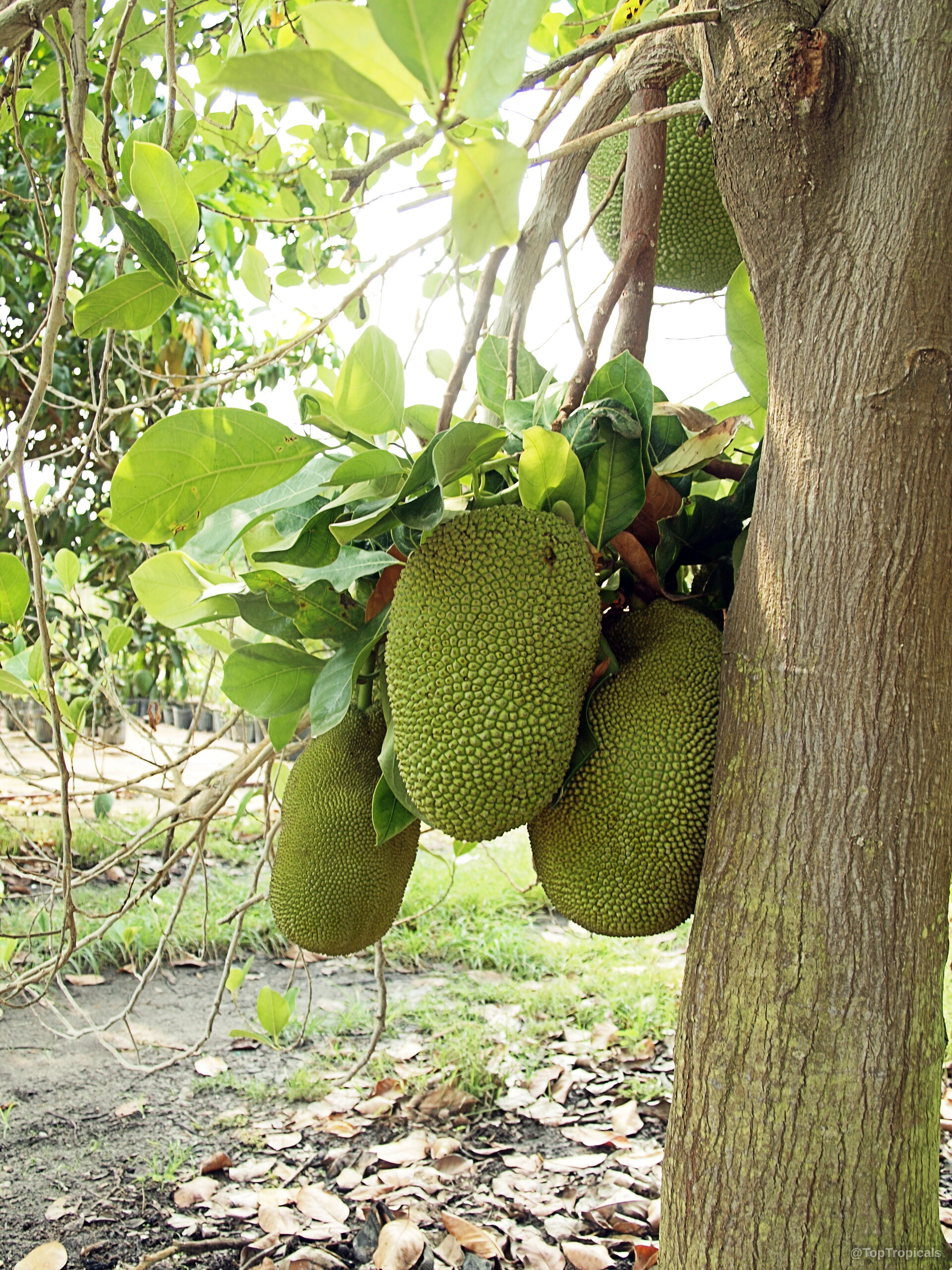
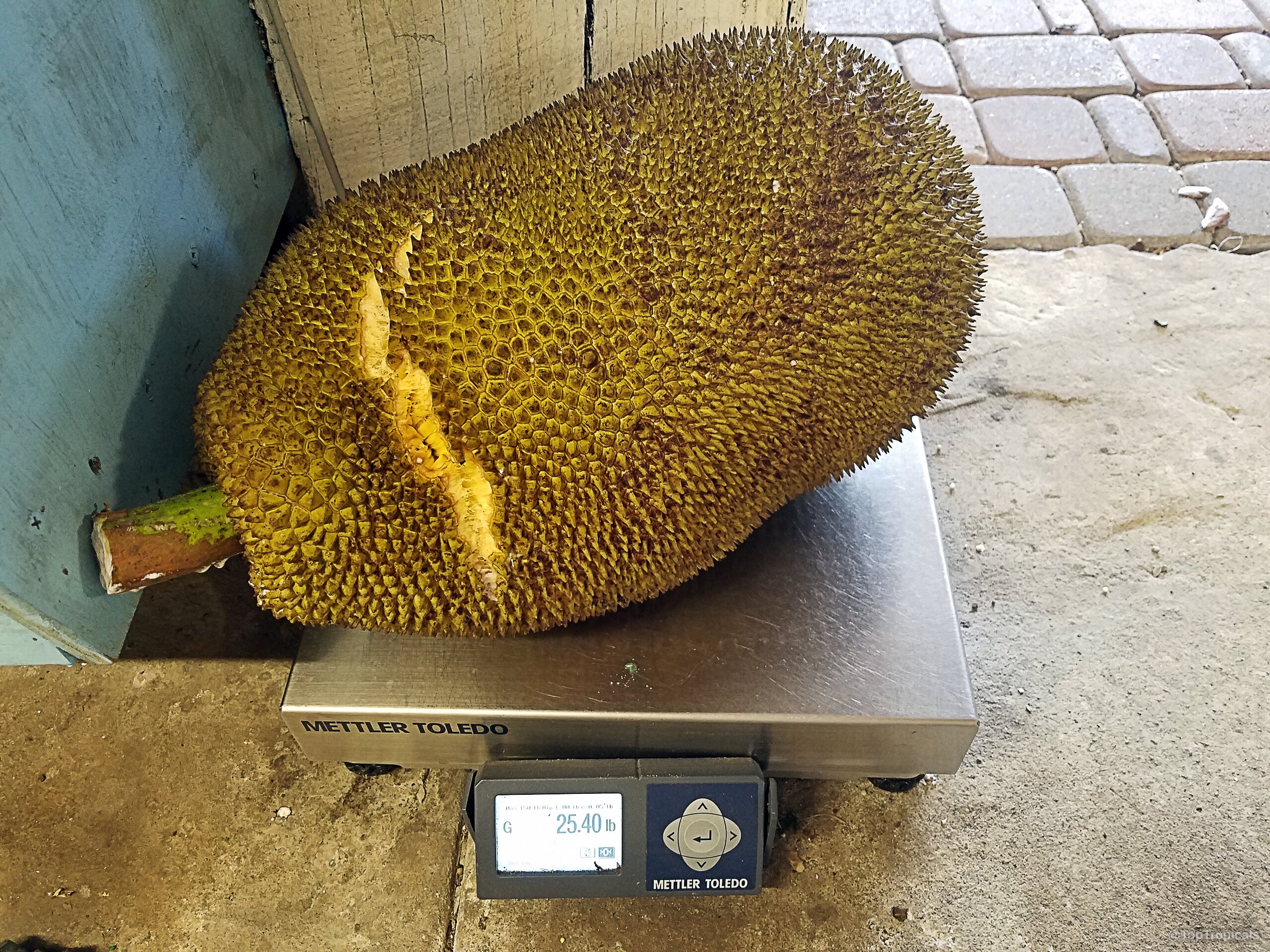
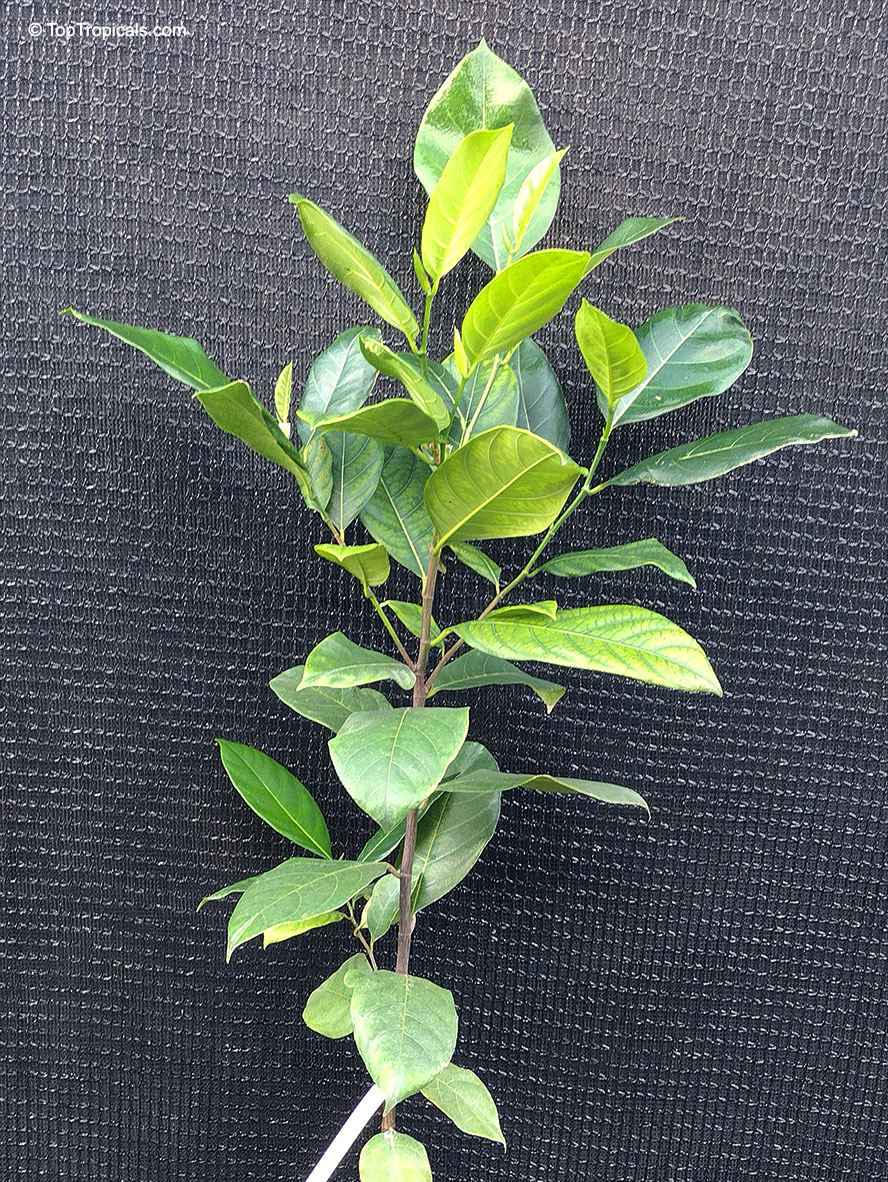
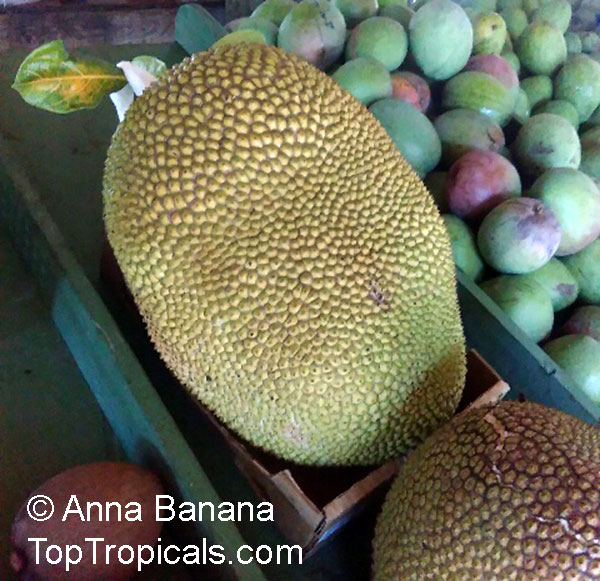
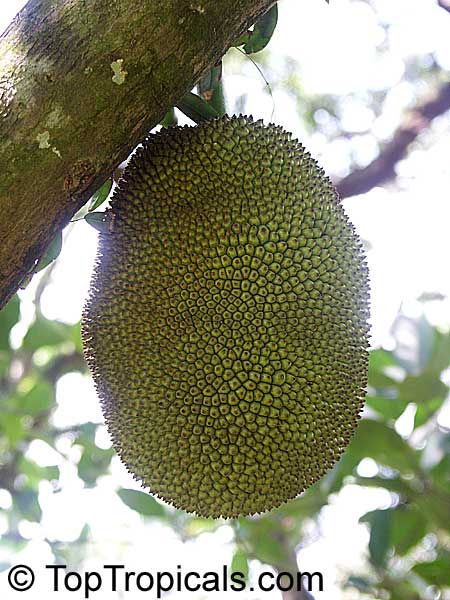
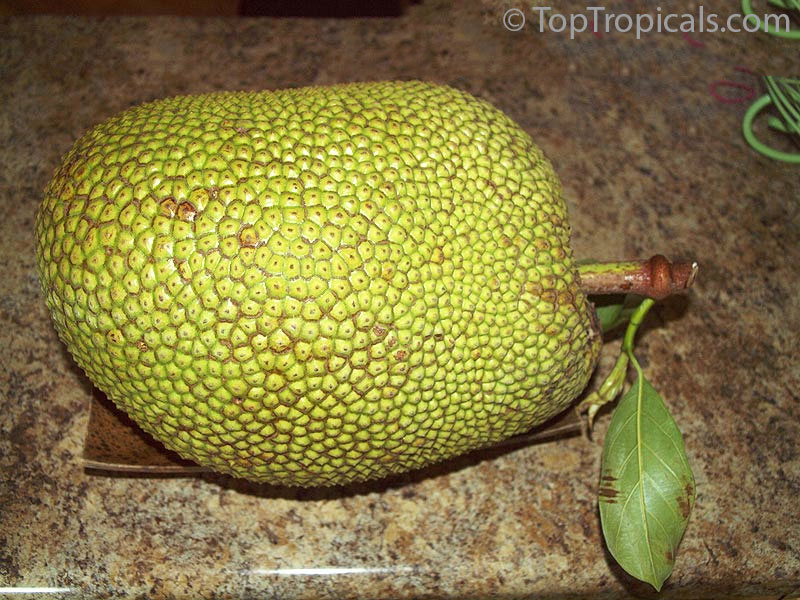
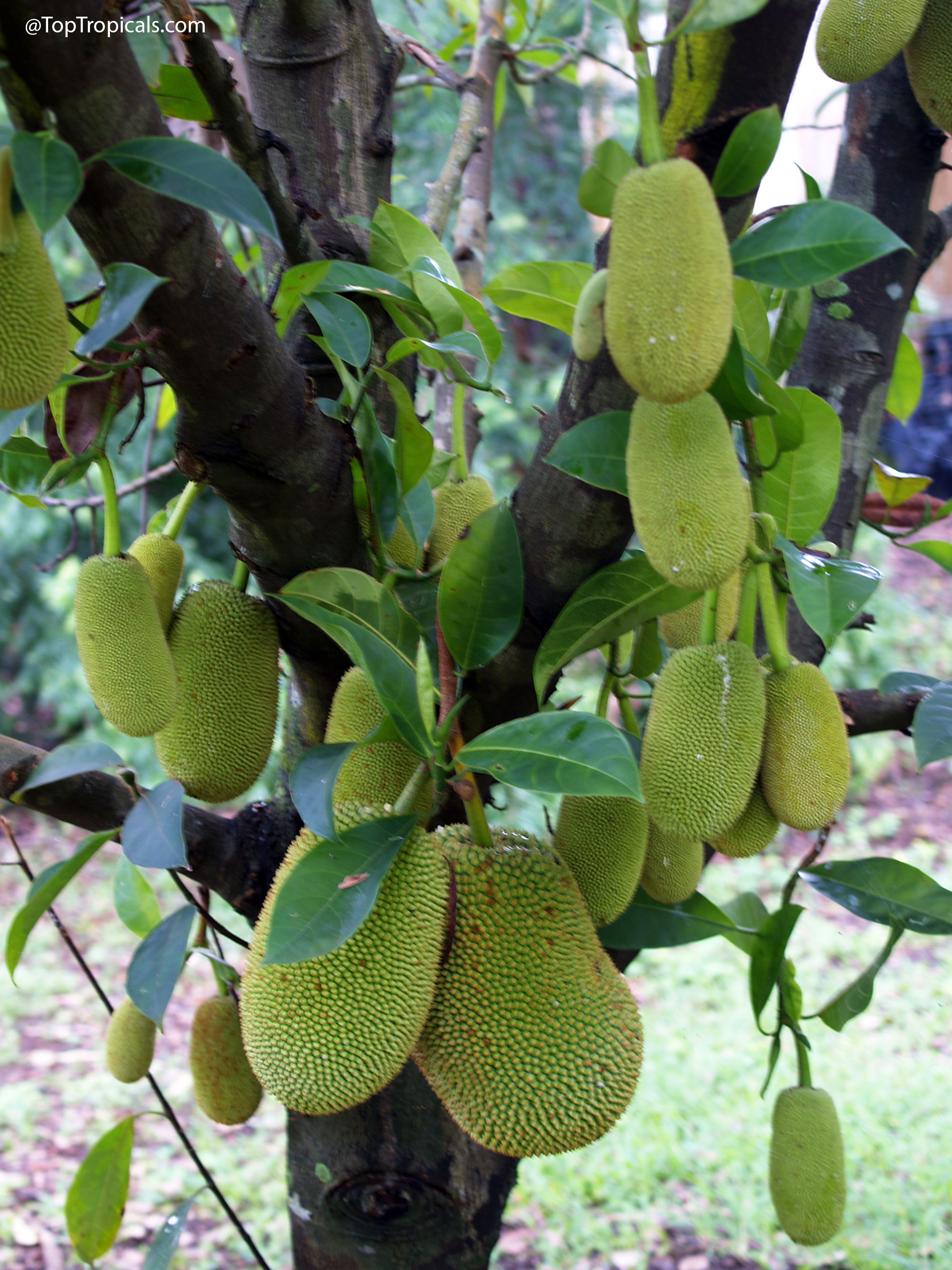
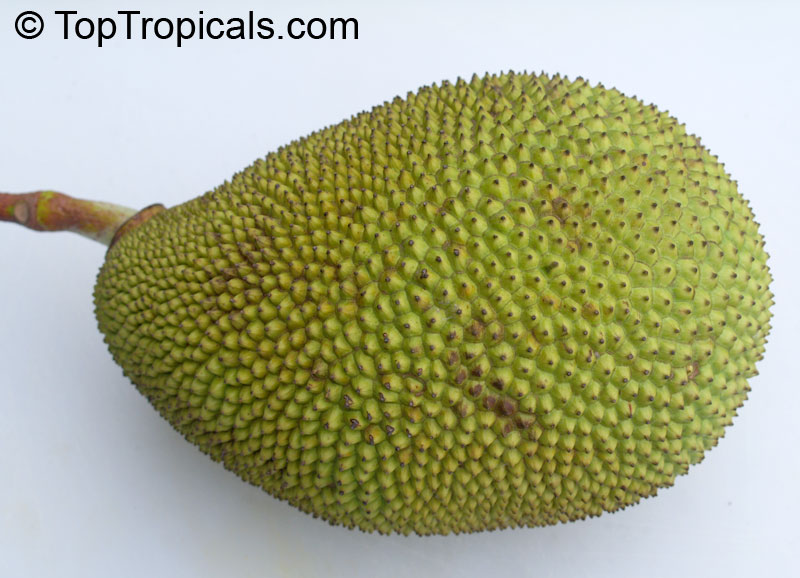
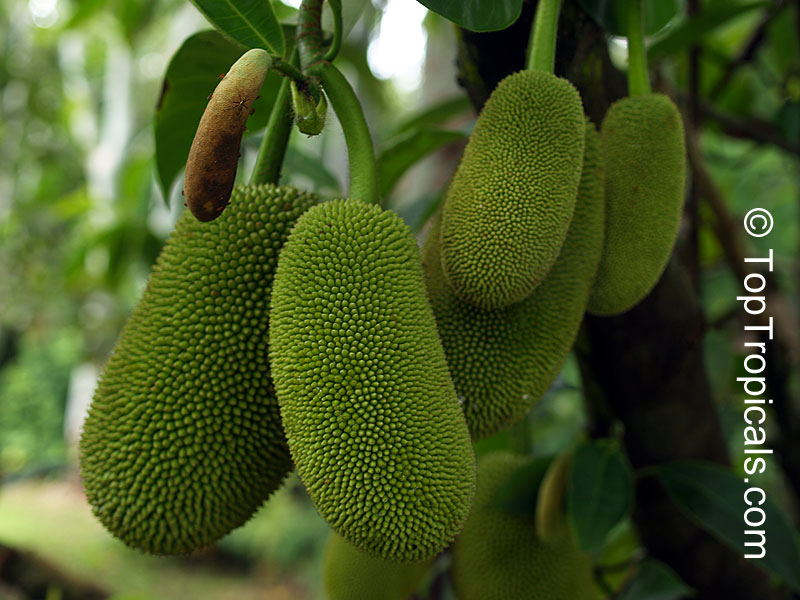
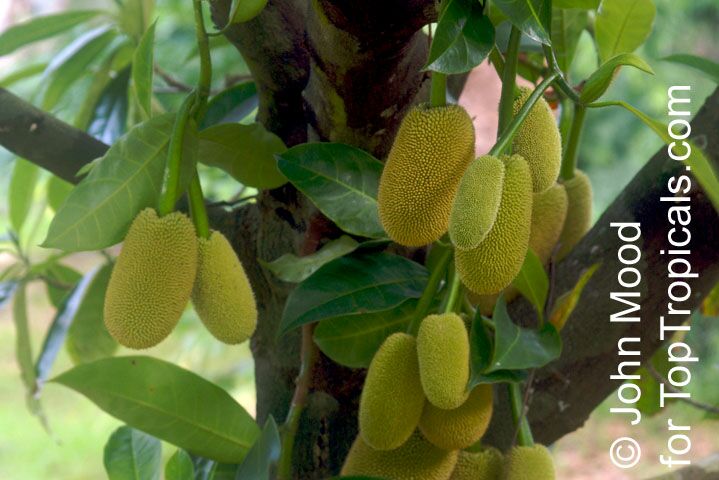
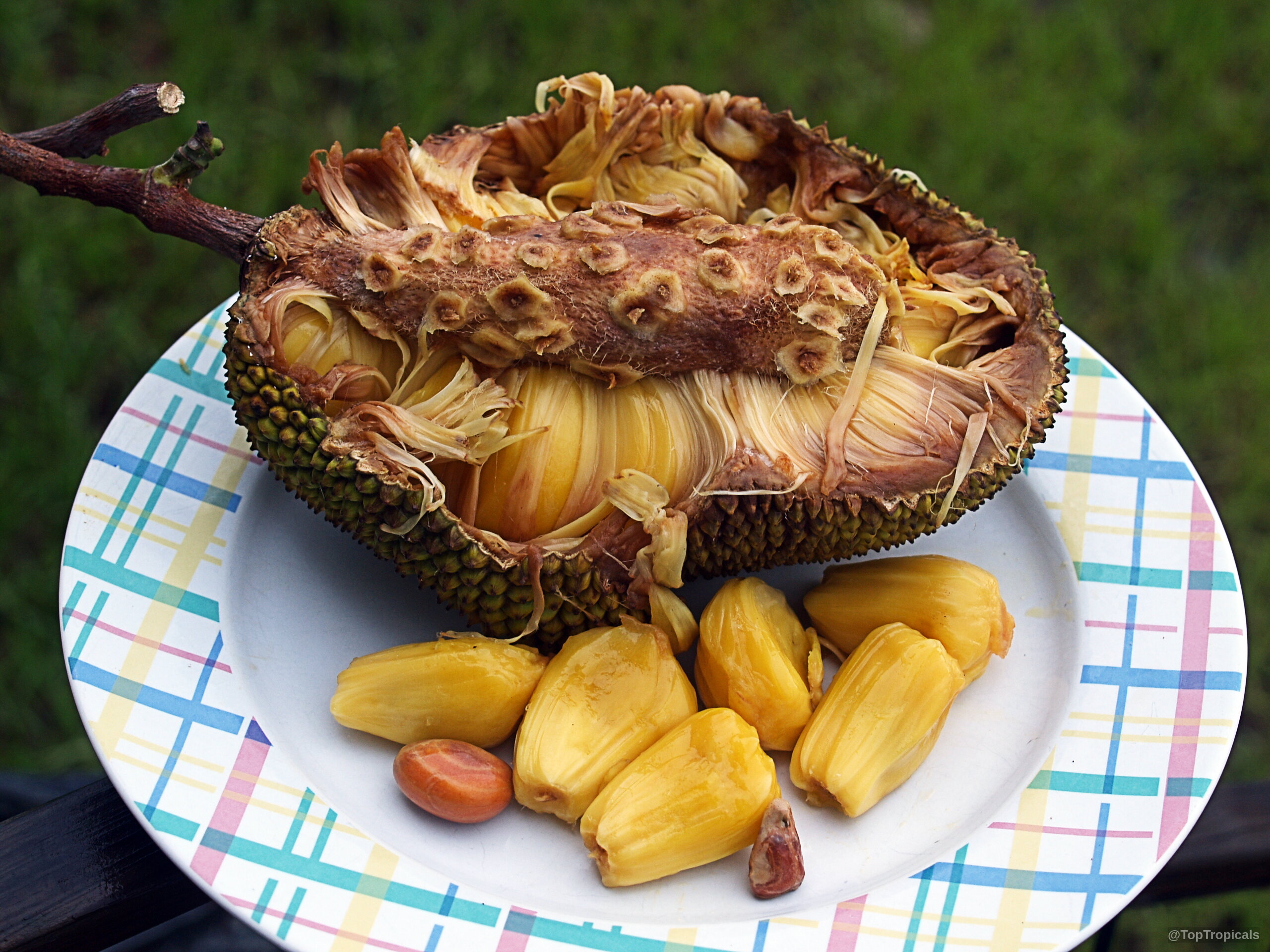
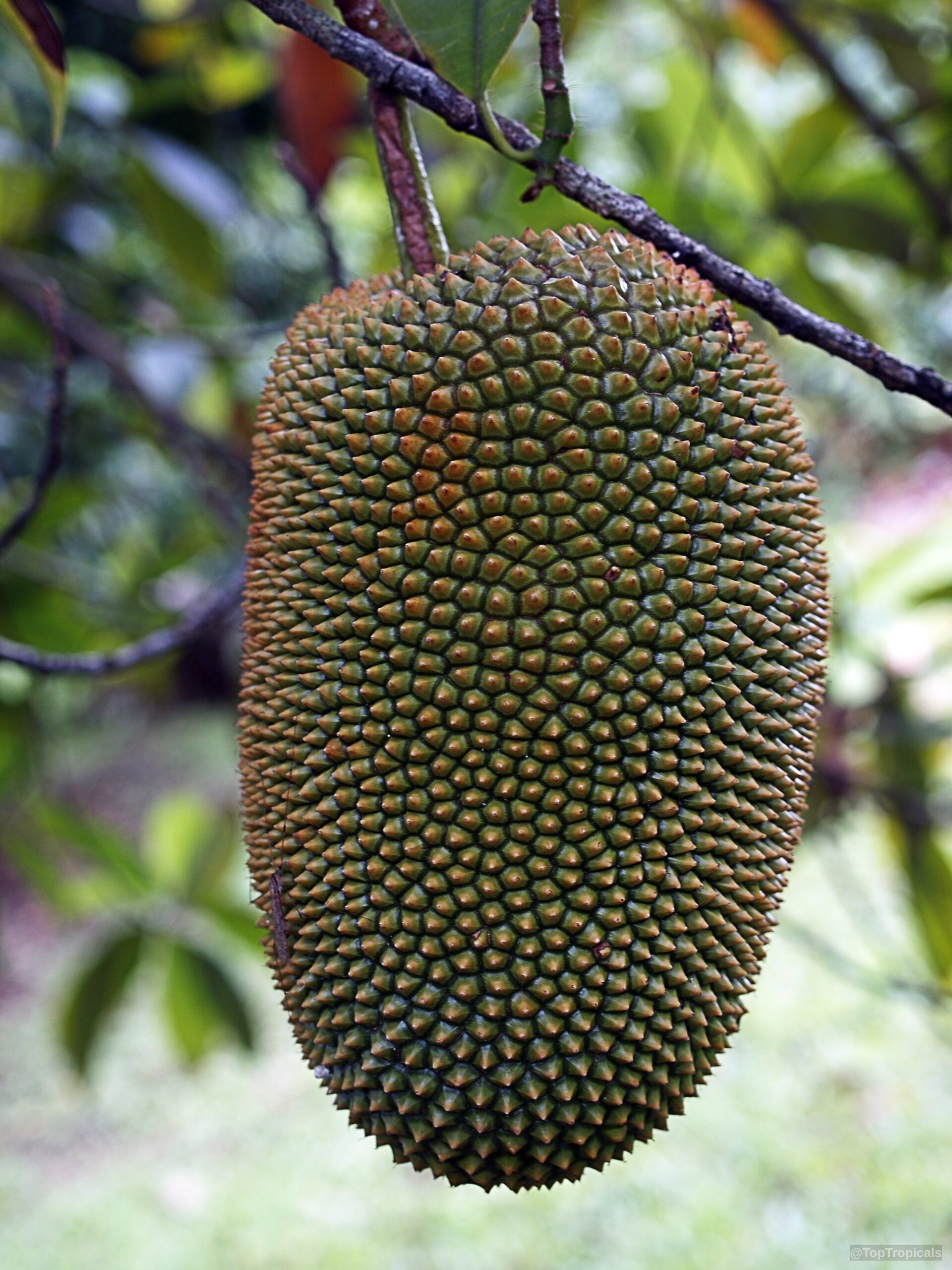
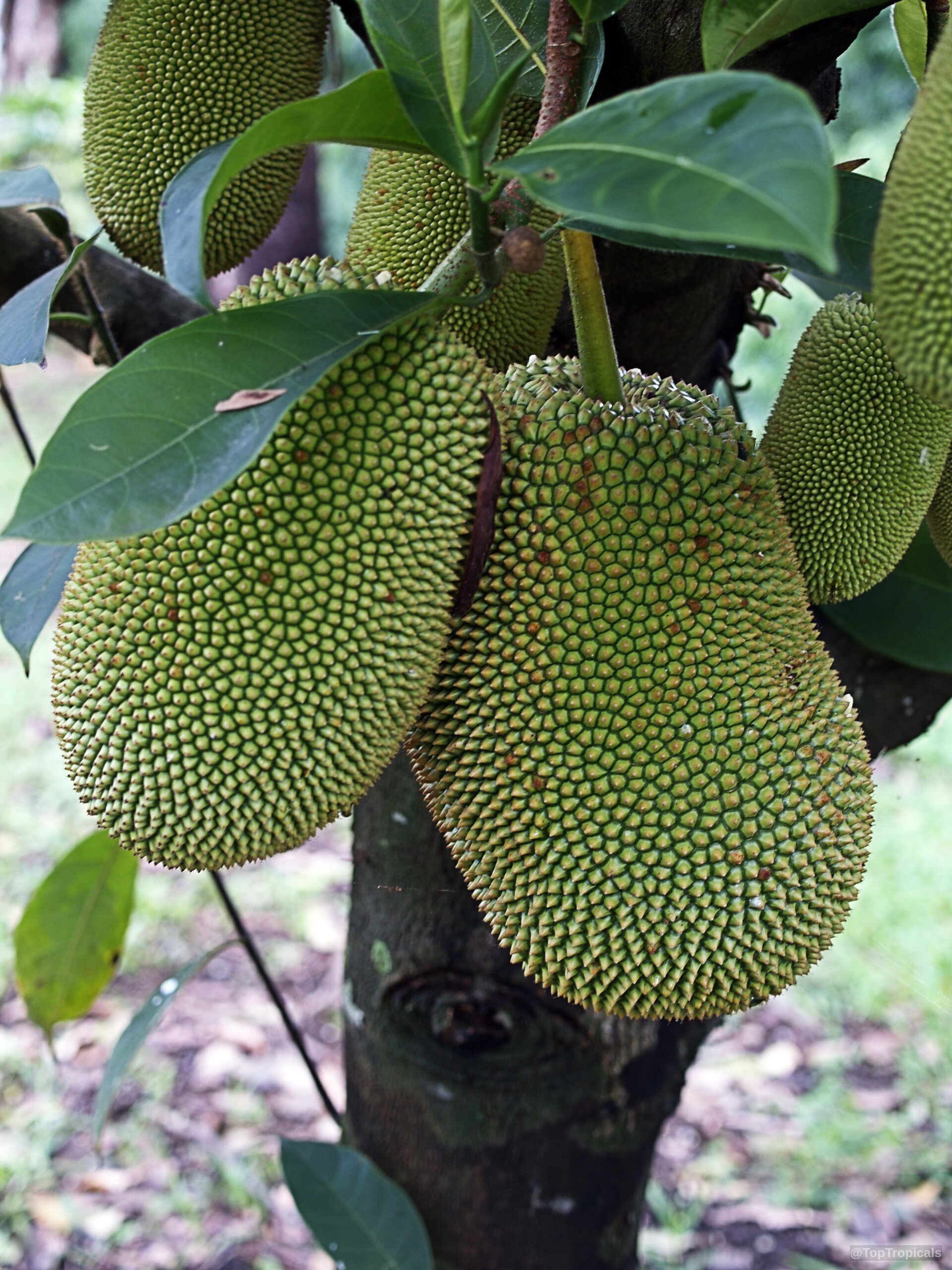
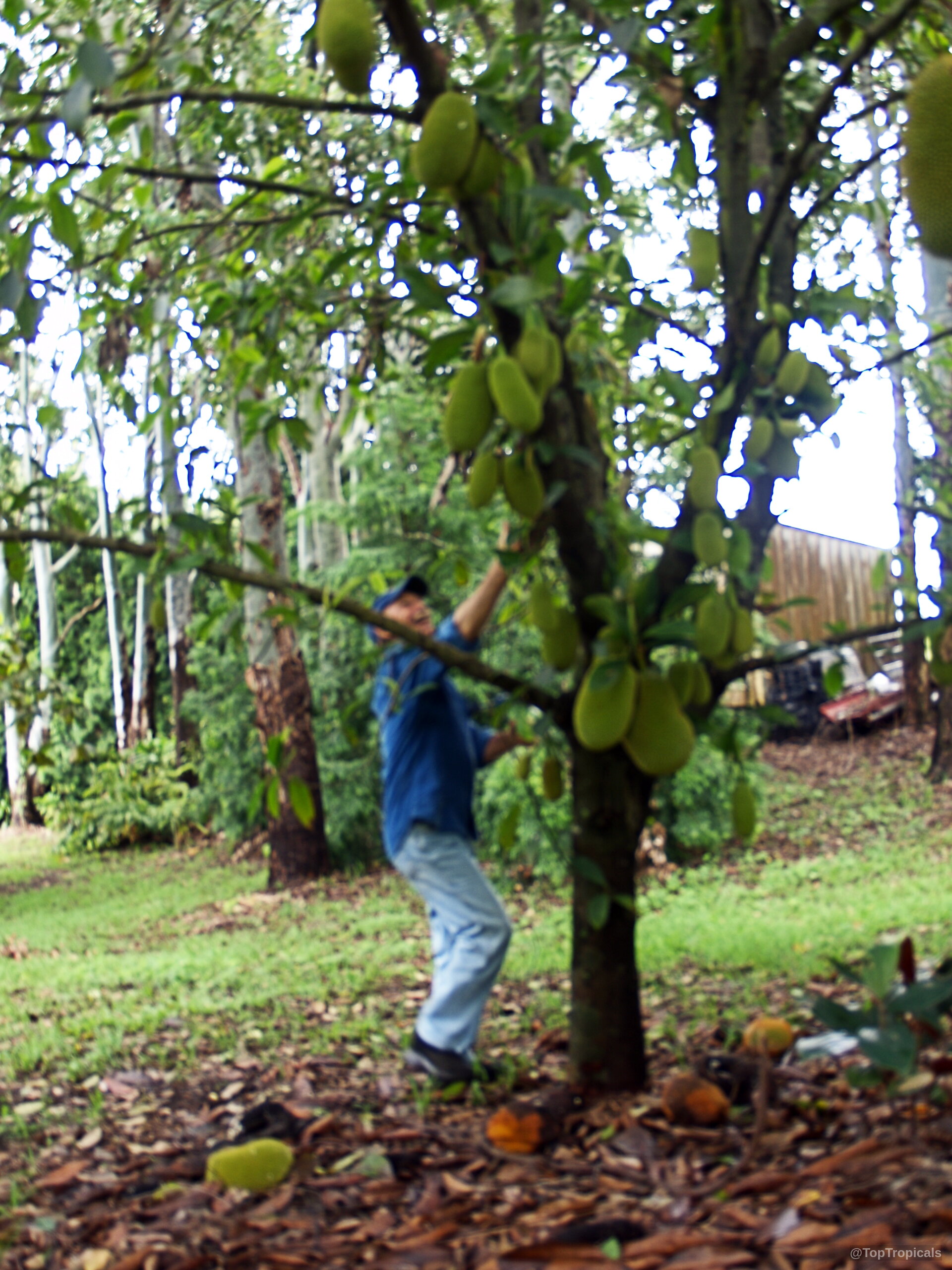
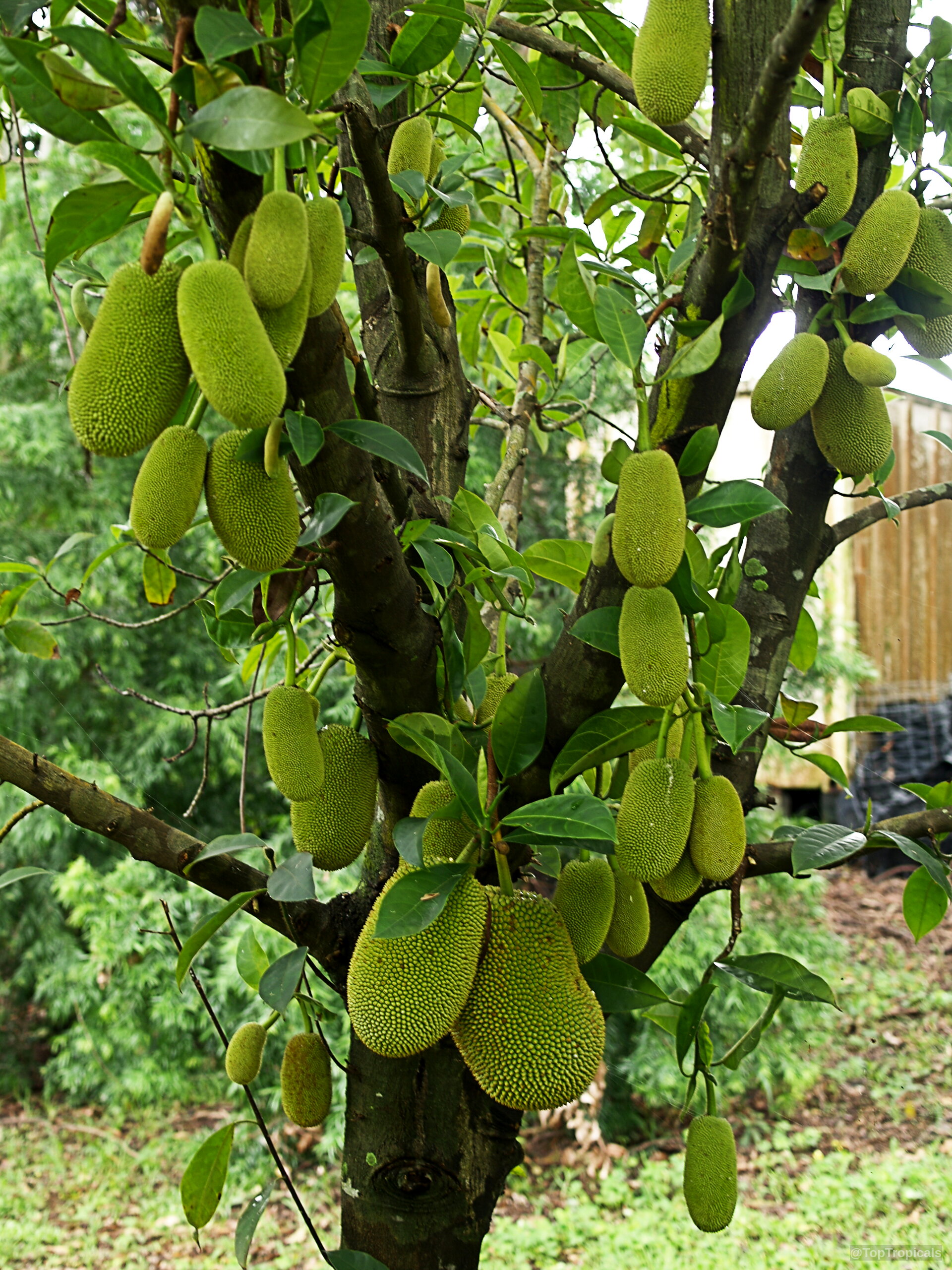
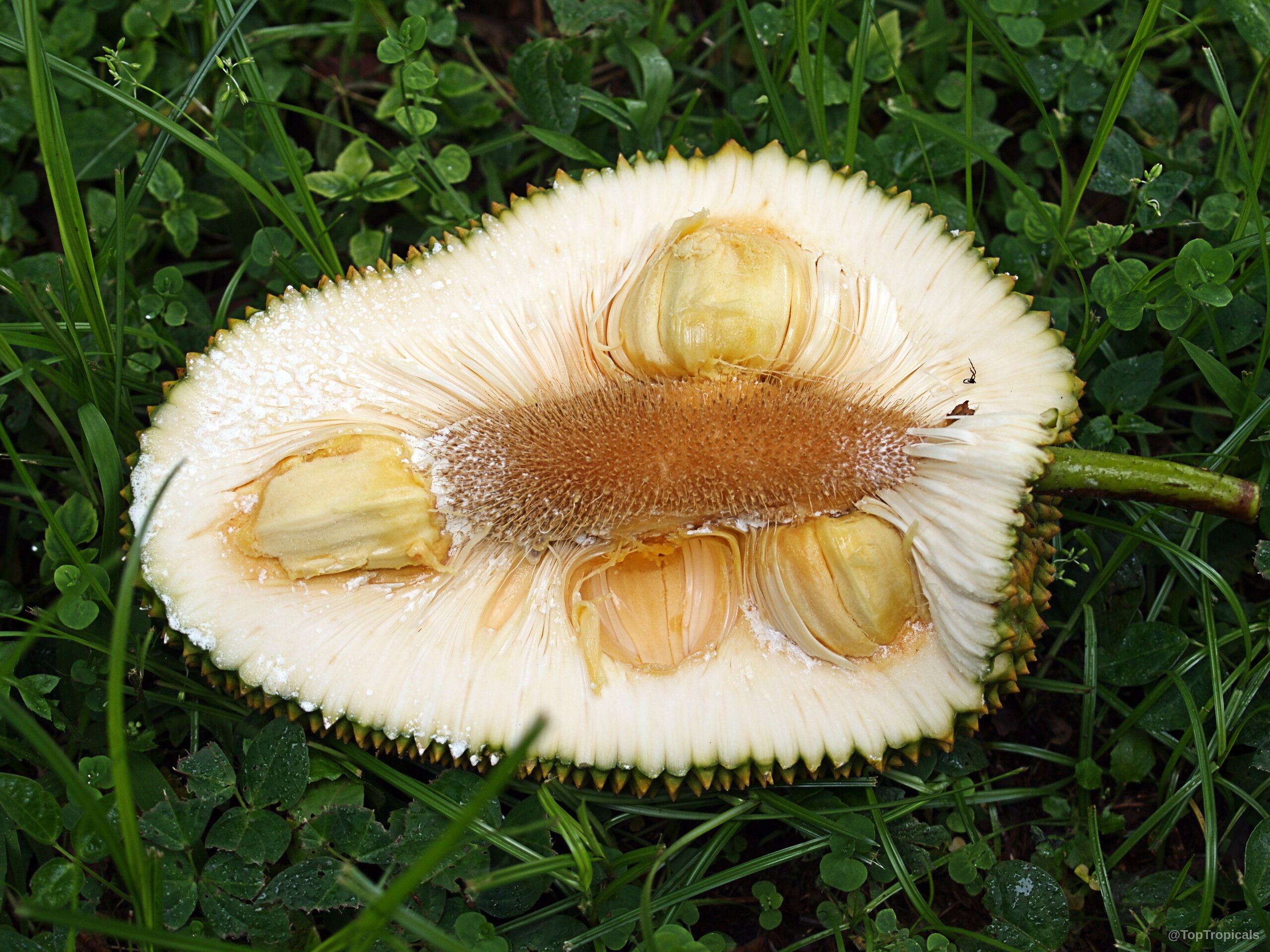
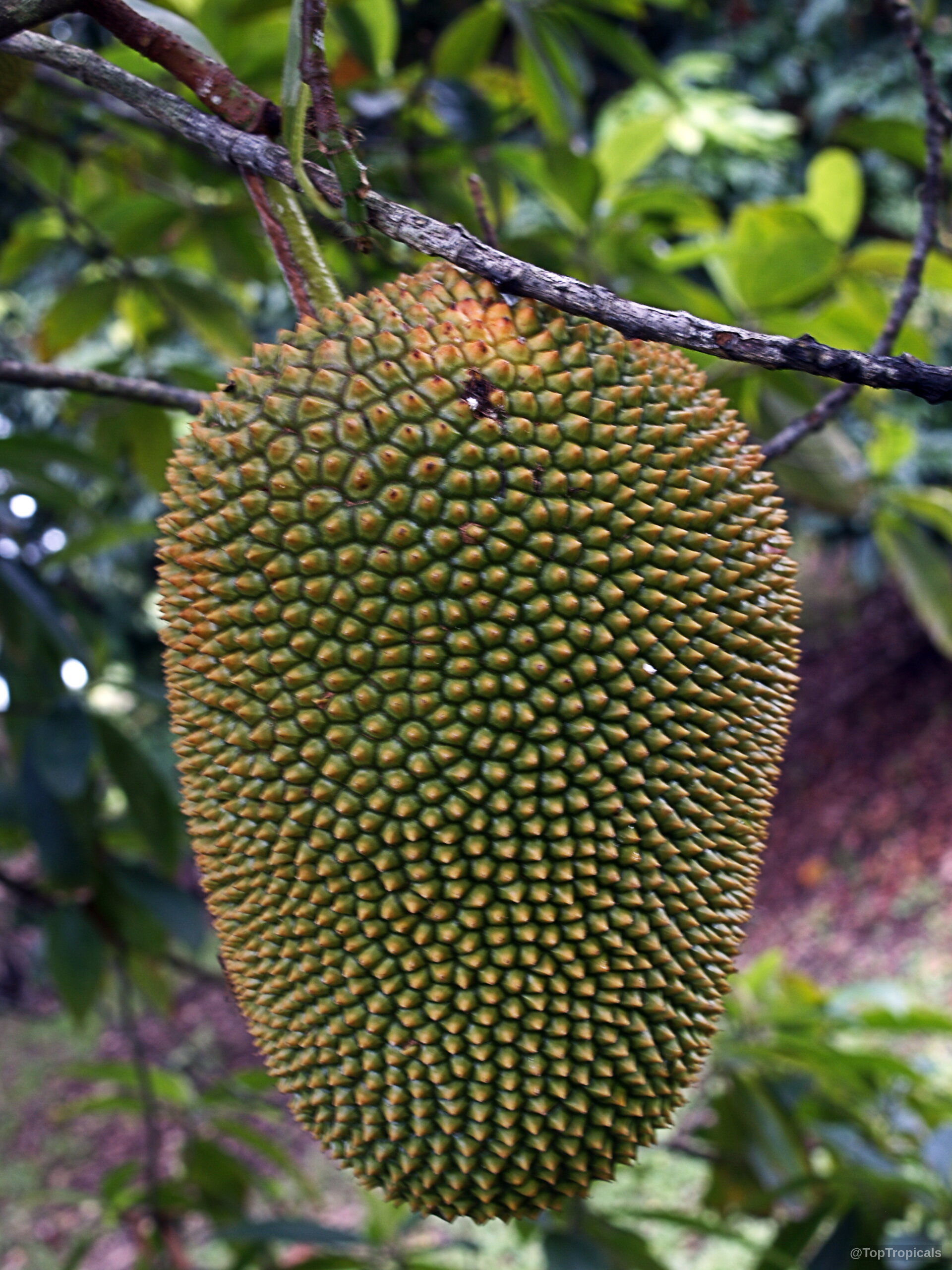
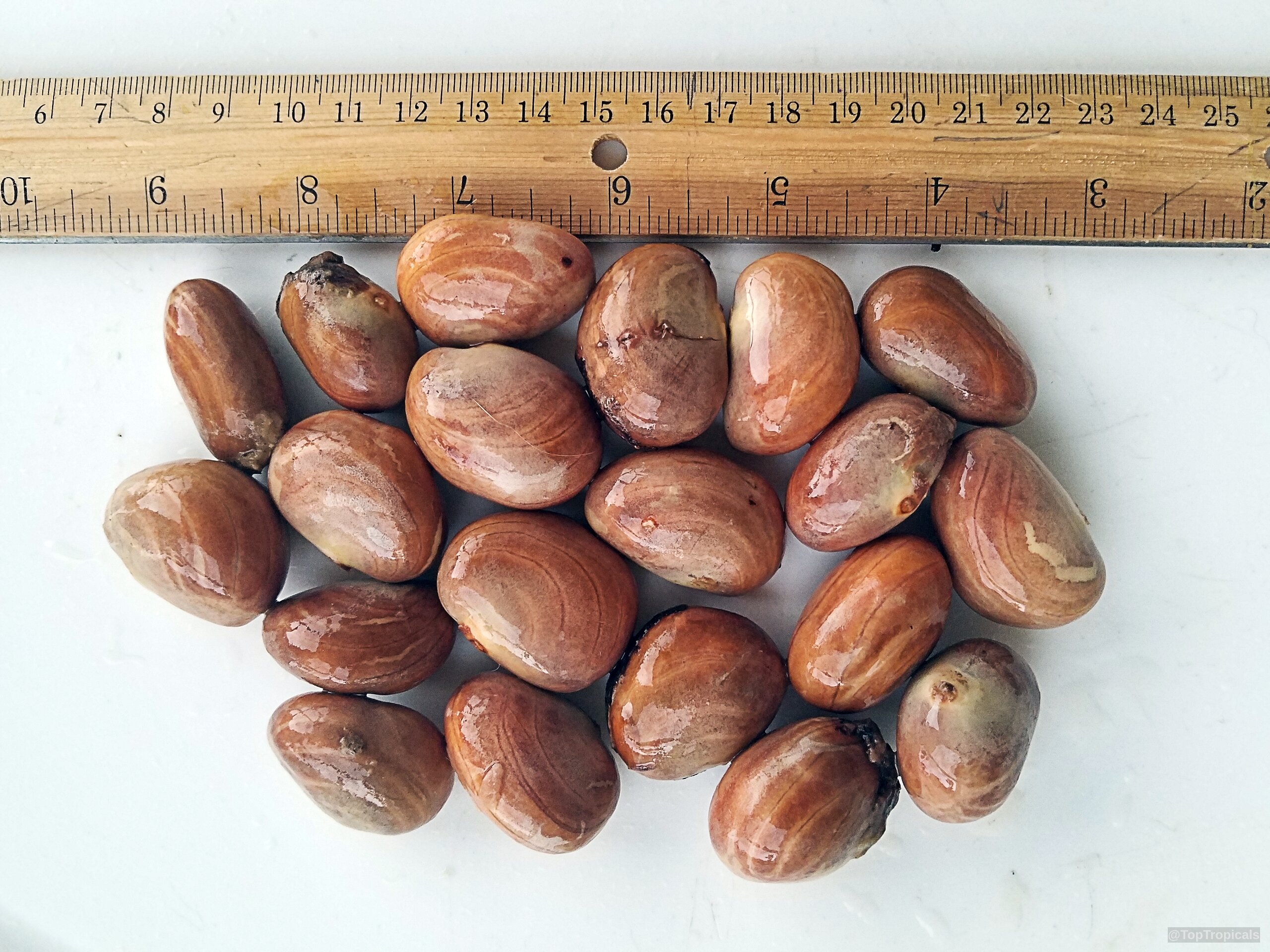
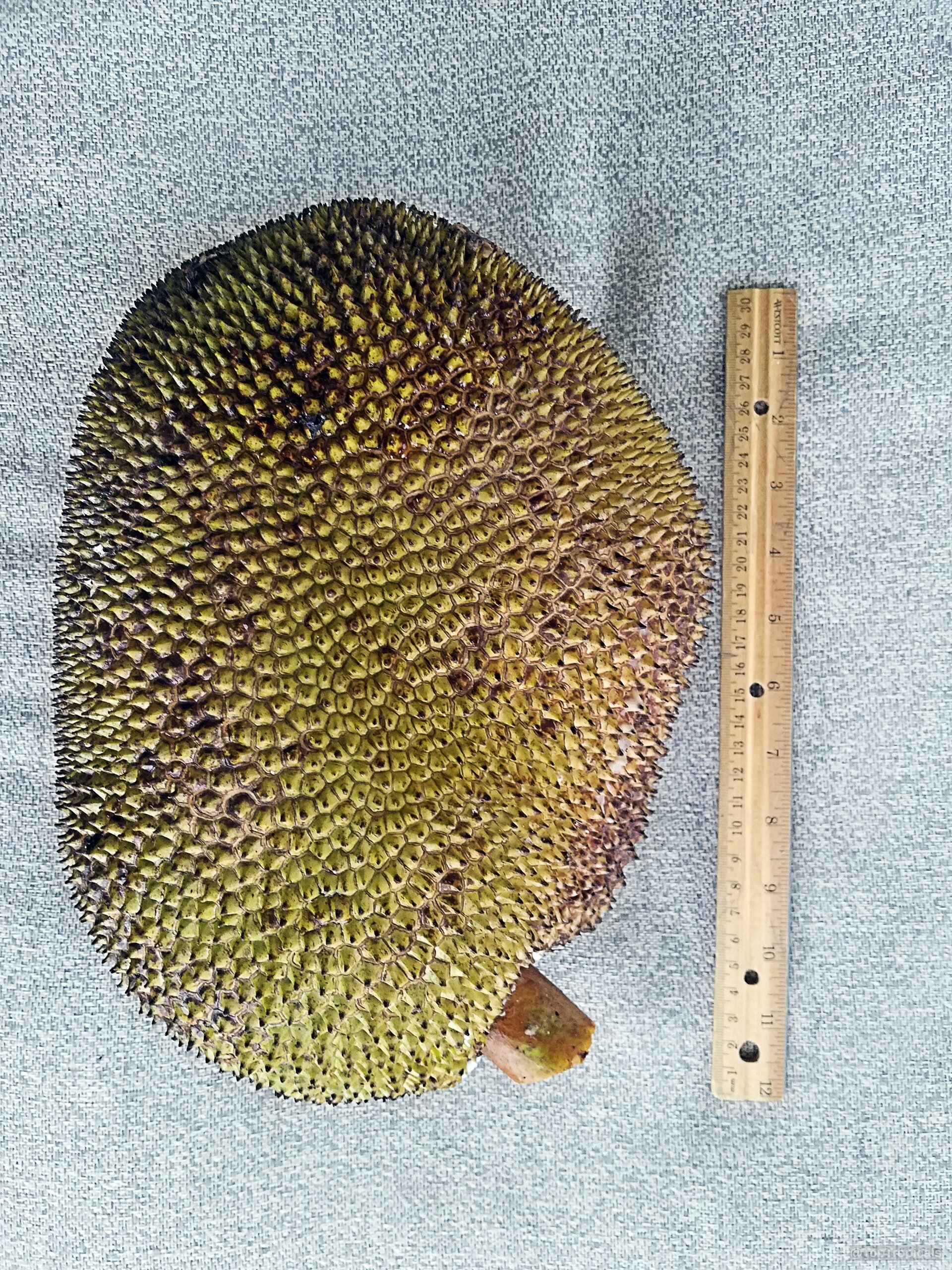
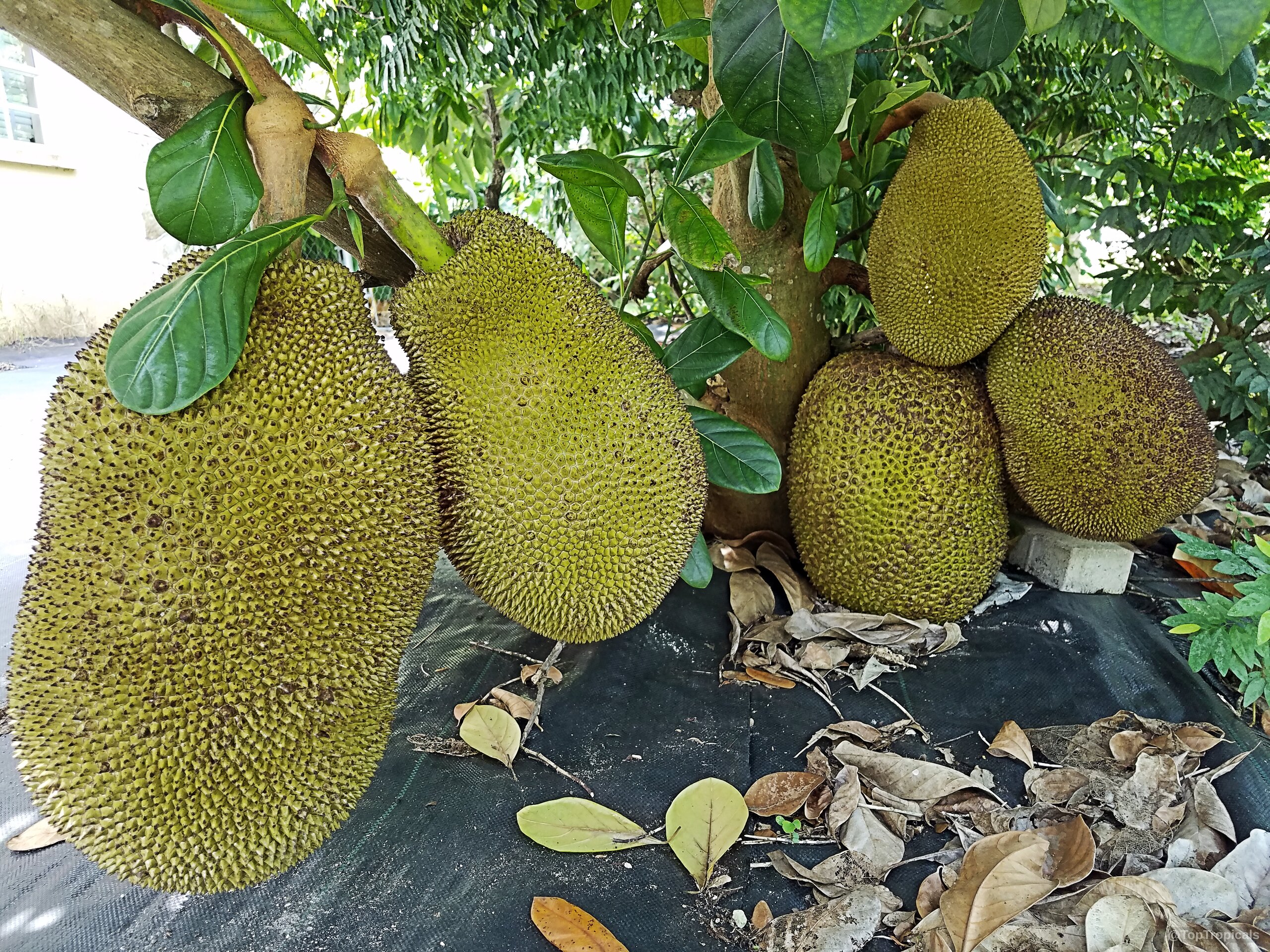
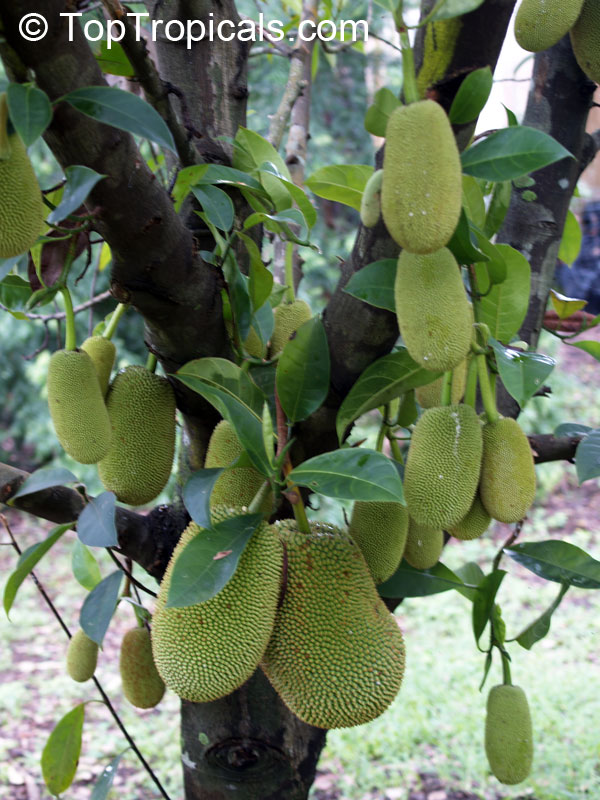
The largest tree-borne fruit in the world, reaching 80 pounds in weight and up to 36 inches long and 20 inches in diameter. The interior of the fruit consists of large edible bulbs of yellow, sweet, banana-flavored aromatic flesh. As the fruit ripen at the bottom of the trunk, this tree can be (and should be) pruned annually to 7-12' producing as much as 200 Lbs of fruit per year. Seedlings start fruiting within 3-4 years. Mature Jackfruit tree produces hundreds of pounds of fruit every year. Fruit ripen pretty quickly, 4-6 months from flower to maturity.
The tree is not as cold sensitive as it is thought to be, according to our experience. Mature trees can take some light freeze, smaller plants must be protected. Of course the compact size of the tree (especially when heavily pruned) makes cold protection much easier. Trees can be covered in case of cold, or even grown in large pots in cooler climates. You can't buy this in grocery store, so growing your own is the only option to try this tropical deliciousness! The plant requires soil rich of organic matter and regular watering. See article about Artocarpus heterophyllus



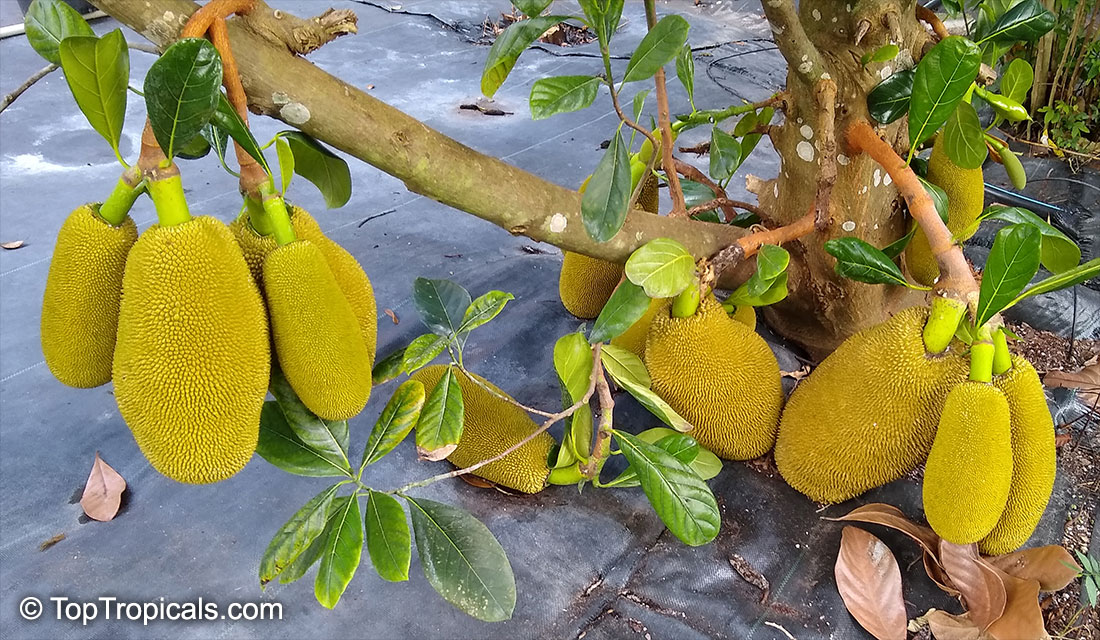
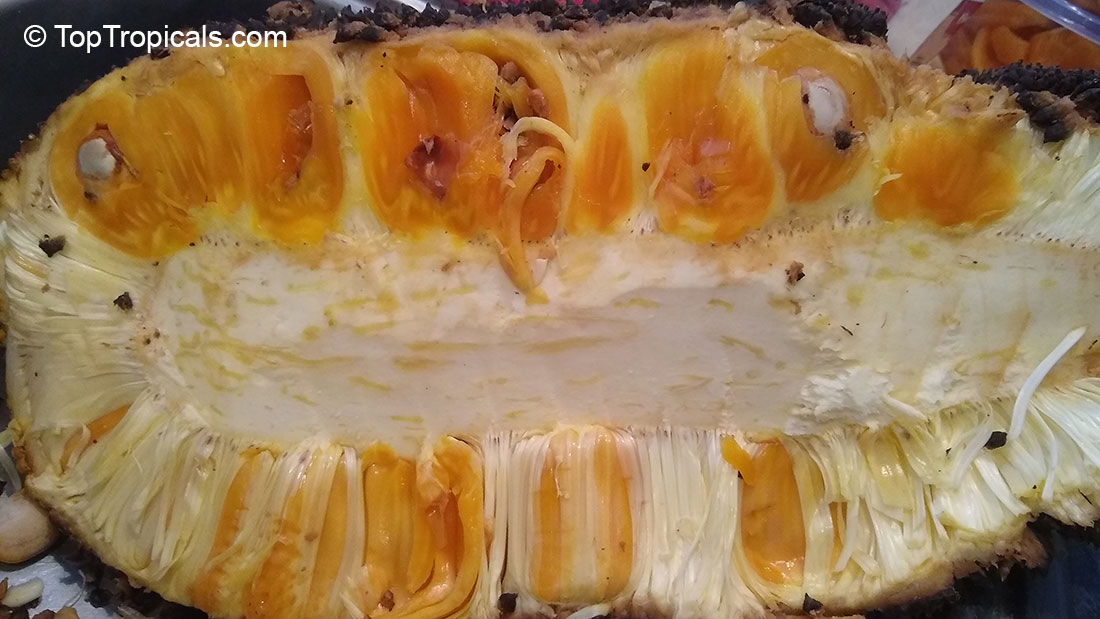
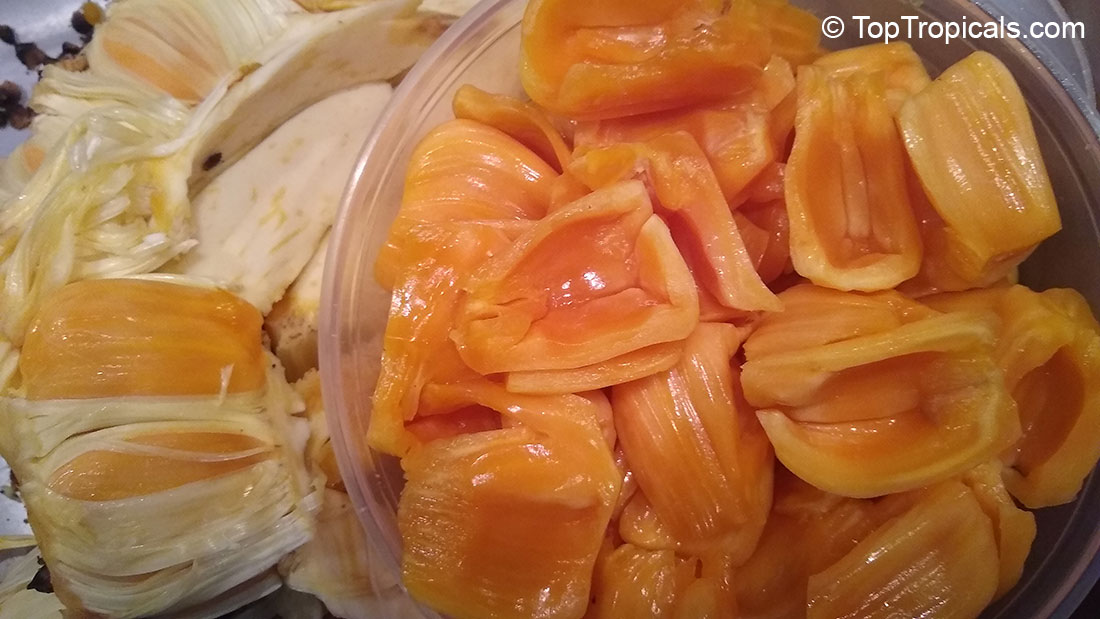
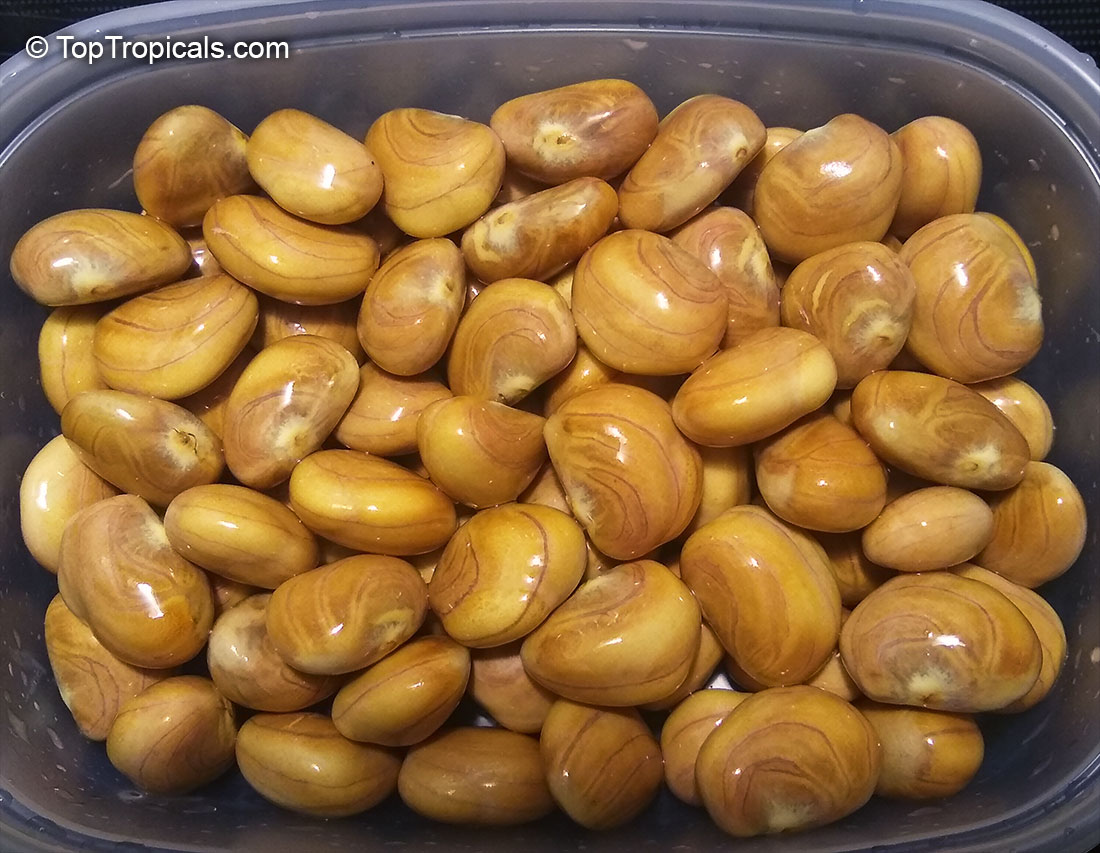

Recommended Fertilizer: SUNSHINE C-Cibus - Crop Nutrition Booster
SUNSHINE-Honey - sugar booster
Recommended Fertilizer: SUNSHINE C-Cibus - Crop Nutrition Booster
SUNSHINE-Honey - sugar booster
Last one
Recommended Fertilizer: SUNSHINE C-Cibus - Crop Nutrition Booster
SUNSHINE-Honey - sugar booster
Recommended Fertilizer: SUNSHINE C-Cibus - Crop Nutrition Booster
SUNSHINE-Honey - sugar booster
Recommended Fertilizer: SUNSHINE C-Cibus - Crop Nutrition Booster
SUNSHINE-Honey - sugar booster
Last one
Recommended Fertilizer: SUNSHINE C-Cibus - Crop Nutrition Booster
SUNSHINE-Honey - sugar booster
Recommended Fertilizer: SUNSHINE C-Cibus - Crop Nutrition Booster
SUNSHINE-Honey - sugar booster
Recommended Fertilizer: SUNSHINE C-Cibus - Crop Nutrition Booster
SUNSHINE-Honey - sugar booster
Recommended Fertilizer: SUNSHINE C-Cibus - Crop Nutrition Booster
SUNSHINE-Honey - sugar booster
Recommended Fertilizer: SUNSHINE C-Cibus - Crop Nutrition Booster
SUNSHINE-Honey - sugar booster
Recommended Fertilizer: SUNSHINE C-Cibus - Crop Nutrition Booster
SUNSHINE-Honey - sugar booster
Local pickup only. This item is not available for shipping. Local delivery may be available in Ft. Myers or Sebring, Florida. Contact us for an estimate. Non-pickup orders are subject to restocking fees.
Recommended Fertilizer: SUNSHINE C-Cibus - Crop Nutrition Booster
SUNSHINE-Honey - sugar booster
7 gal pot. More developed root system, thicker trunk and branches. Plant height depends on growing season and variety. Dwarf varieties are slow growers and may be shorter. Contact us for exact size description if size/height matters to you. 7 gal plants may be shipped separately from other items by Ground service due to large size. See here time in transit (business days, excluding Sat-Sun!)
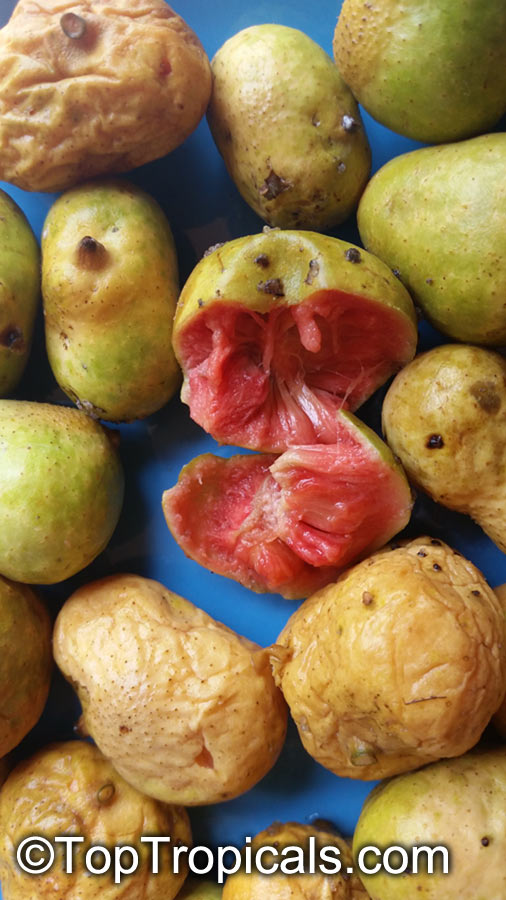
Botanical name: Artocarpus hypargyraeus
Common name: Kwai Muk
Family: Moraceae
Origin: China
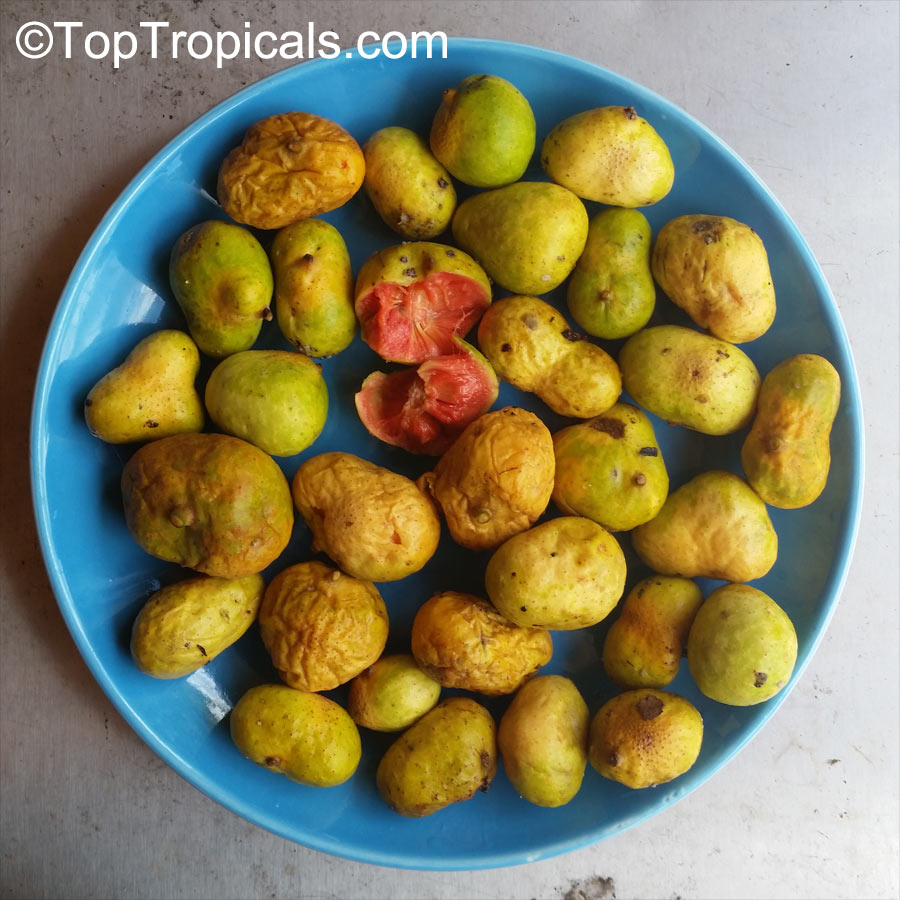
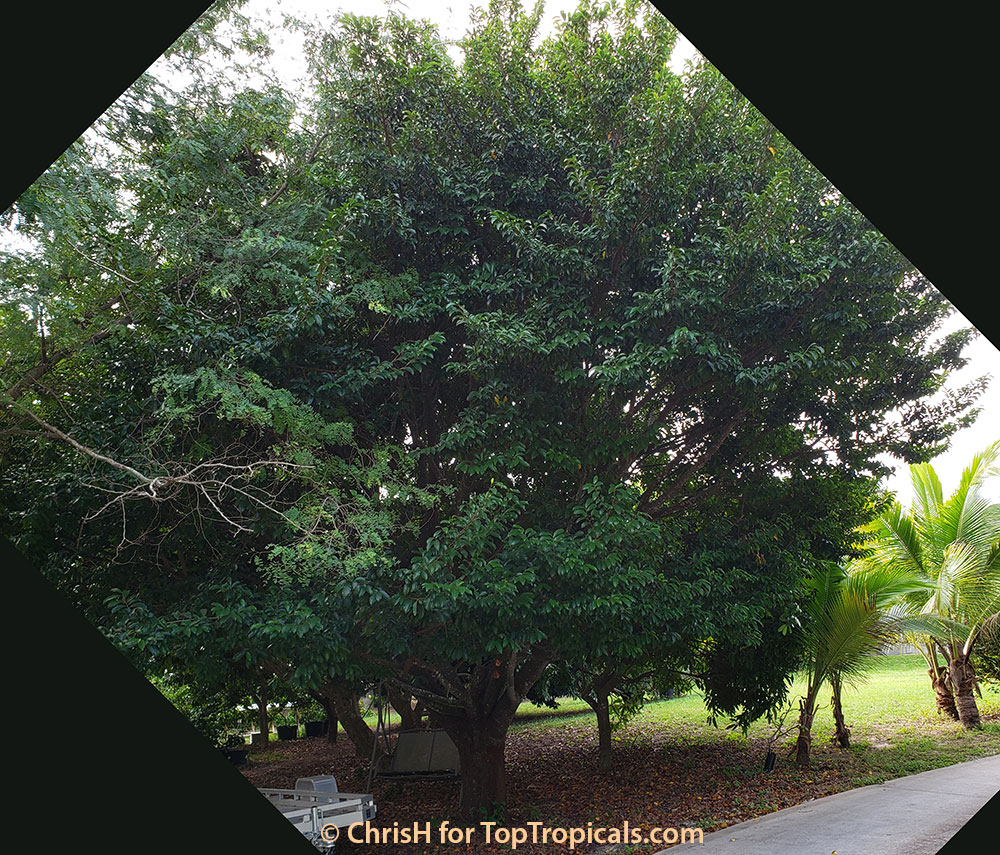
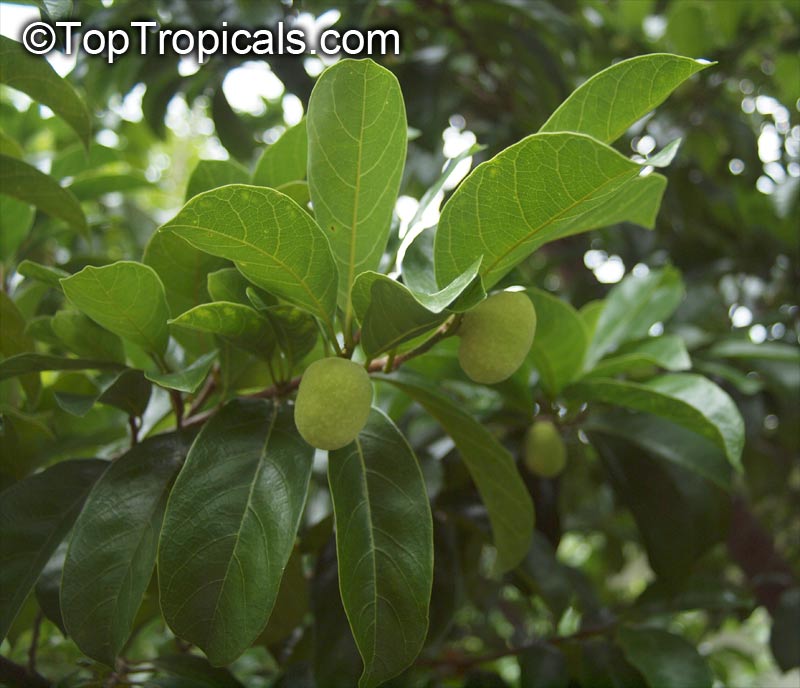
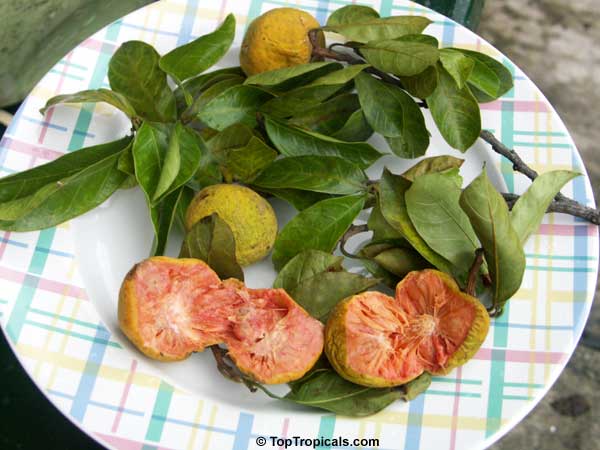
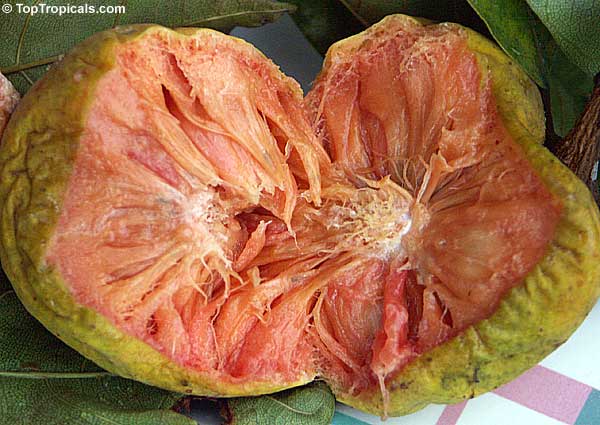
It is a slow-growing, slender tree that can be grown as an ornamental specimen plant due to its erect growing habit and attractive long slender leaves. The round fruits have a velvety, brownish, thin, tender skin. The fruit is best when harvested from the tree completely ripe. When mature the pulp is orange-red to red, soft, acid to subacid and of an excellent flavor. They say it is the ugliest fruit but the best flavor! The fruit can be seedless or may contain 1 to 7 small pale seeds. The pulp is delicious eaten raw or can be preserved or sundried. Self pollinating, ripening from February to April. The trees are not as cold sensitive as jackfruit or breadfruit and tolerate light frost.
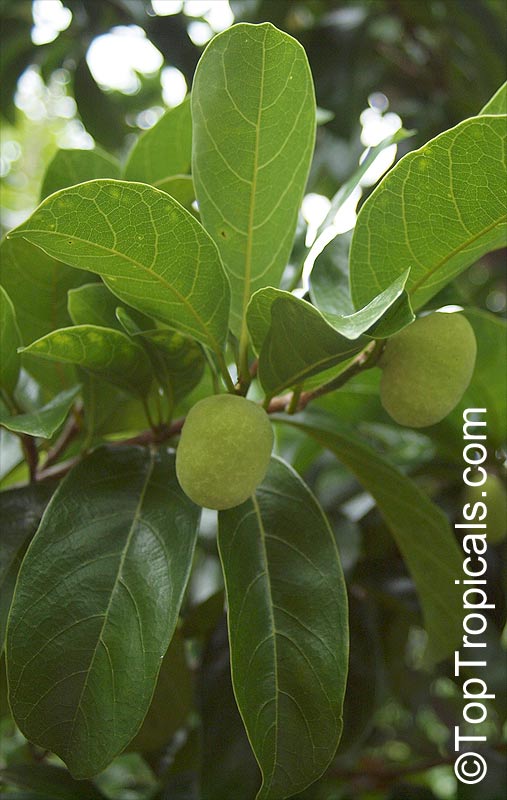
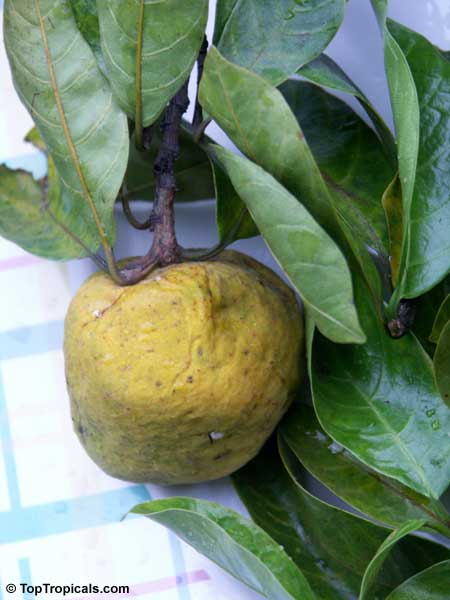
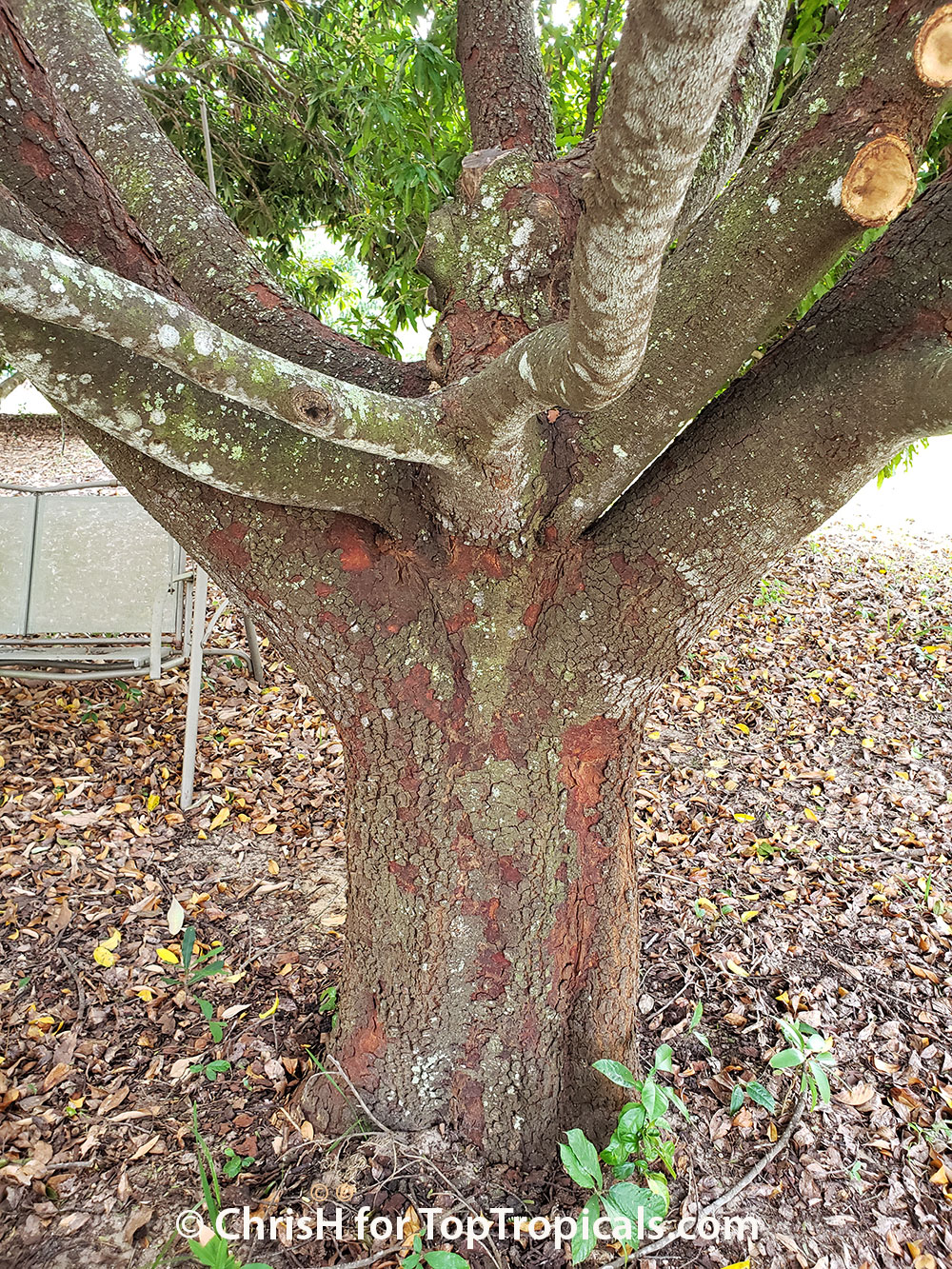
Botanical name: Artocarpus integer
Common names: Chempedak, Jack-edak
Family: Moraceae
Origin: Malaysia, Indonesia
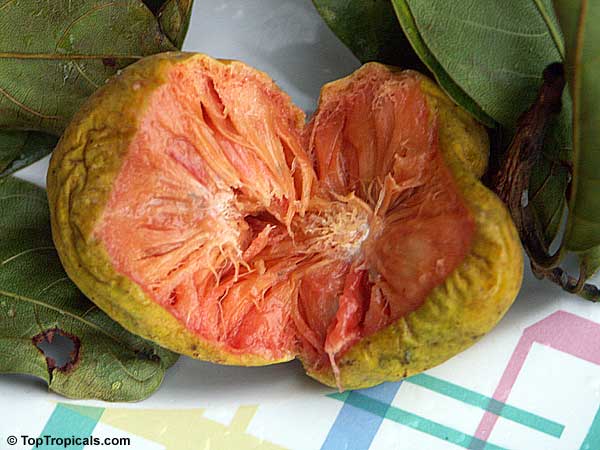
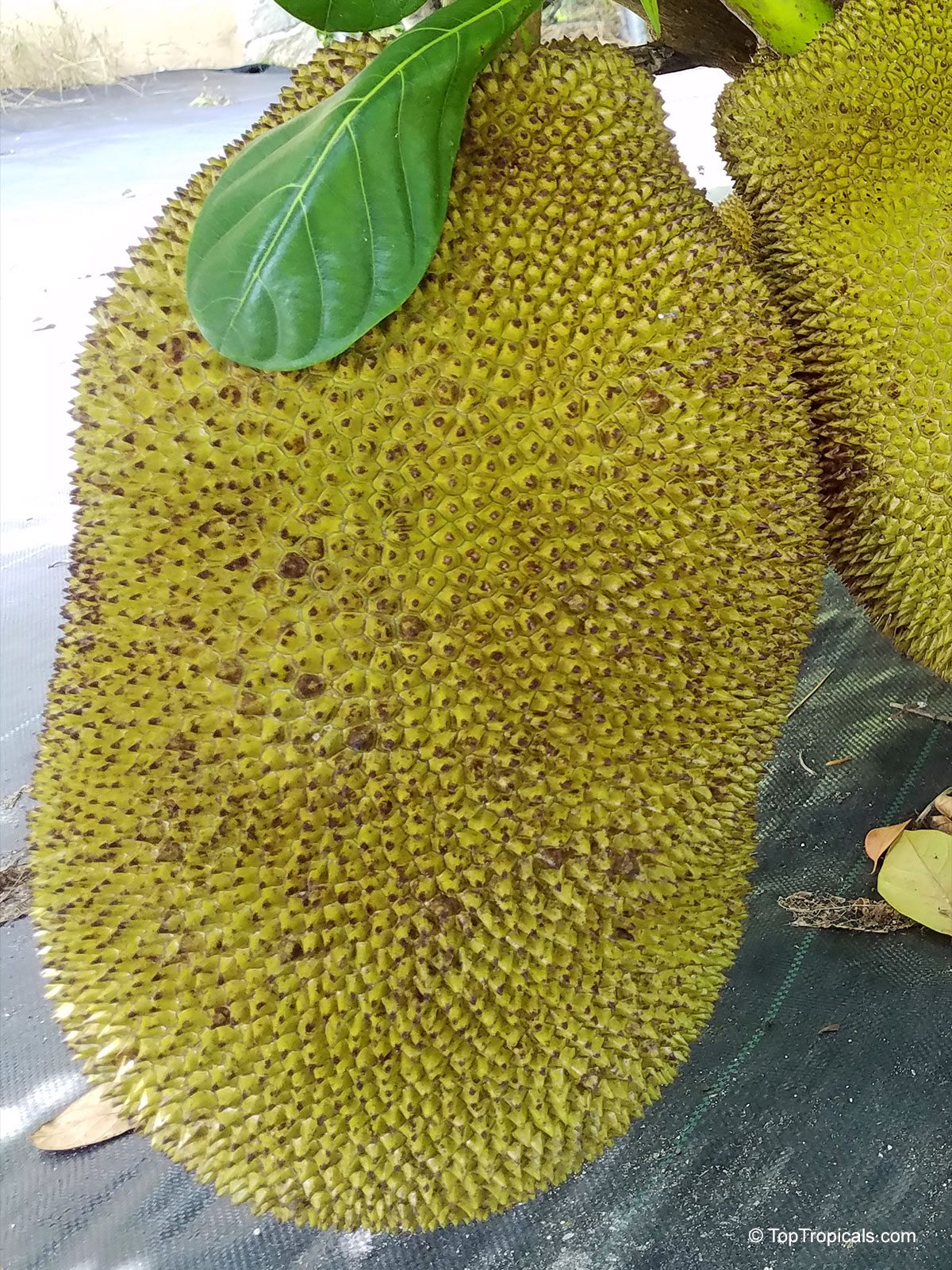
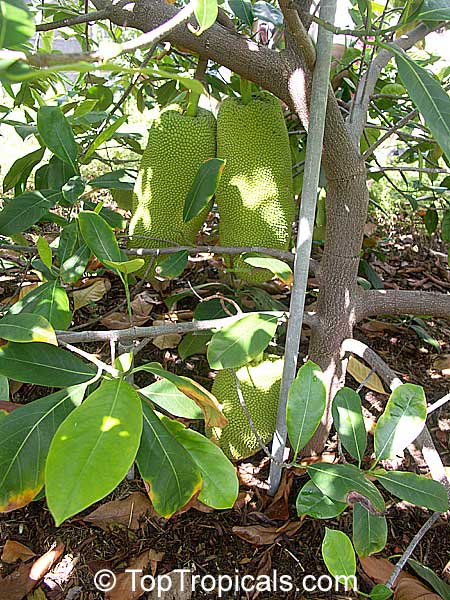
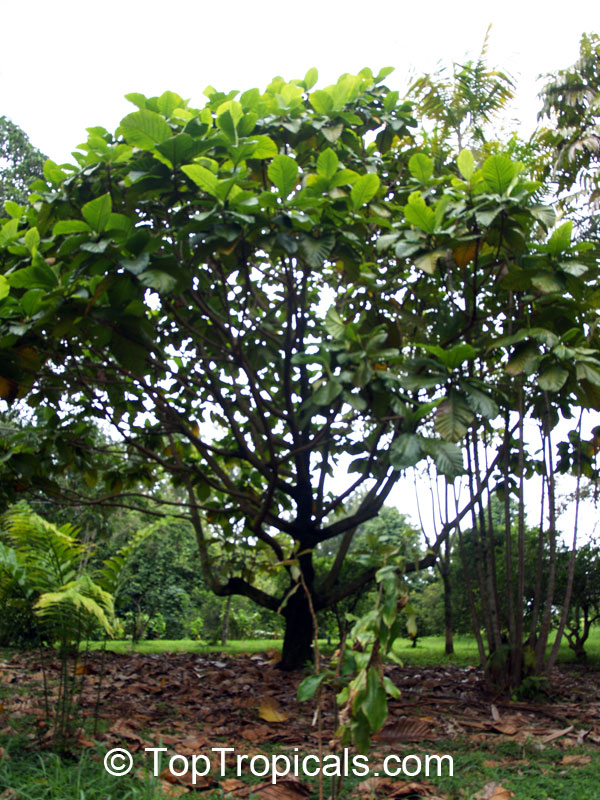
Artocarpus integer, more commonly known as the Chempedak tree, is species of small tree native to Malaysia and Indonesia. It can grow up to 10-20 feet tall and prefers full sun to semi-shade. It requires regular watering but should be kept in a pot in cooler regions for better frost protection.
It is known for its hardiness and its ability to withstand temperatures of at least 30° Fahrenheit for a short time, making it suitable for USDA zones 9 through 11. The mature plant is cold hardy and its leaves are evergreen.
The fruits of the Artocarpus integer are medium sized, growing between 5 and 7 inches long, smooth to the touch, and generally more cylindrical in shape than its cousin, the Jackfruit. Inside, the pulp is sweet and juicy, but also creamy. It is much less fibrous and acidic than the Jackfruit, making it an optimal choice for eating fresh and even making ice cream! The young fruits are also sometimes eaten as vegetables.
The Chempedak tree produces around 100 fruits per year. With such an abundance, this fruit tree can provide plenty of health benefits. Not only is it relatively low in calories, it's packed with vitamins and minera

Recommended Fertilizer: SUNSHINE C-Cibus - Crop Nutrition Booster
SUNSHINE-Honey - sugar booster
Recommended Fertilizer: SUNSHINE C-Cibus - Crop Nutrition Booster
SUNSHINE-Honey - sugar booster
7 gal pot. More developed root system, thicker trunk and branches. Plant height depends on growing season and variety. Dwarf varieties are slow growers and may be shorter. Contact us for exact size description if size/height matters to you. 7 gal plants may be shipped separately from other items by Ground service due to large size. See here time in transit (business days, excluding Sat-Sun!)
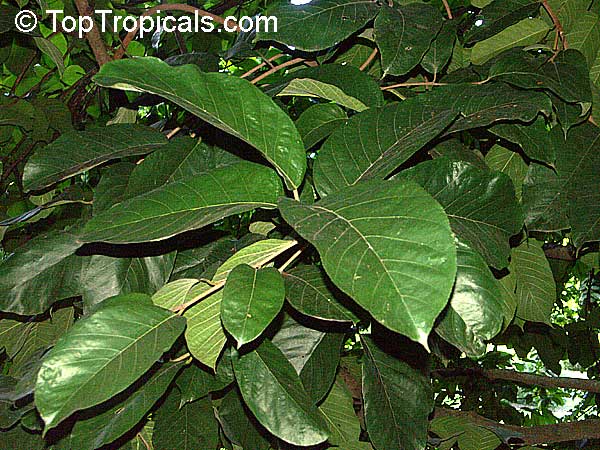
Botanical name: Artocarpus lakoocha
Common name: Lakoocha
Family: Moraceae
Origin: India
Large forest tree. Yellow, 2-4" velvety skinned fruit related to the jackfruit.
Propagation: By seed, whose viability lasts only a week.
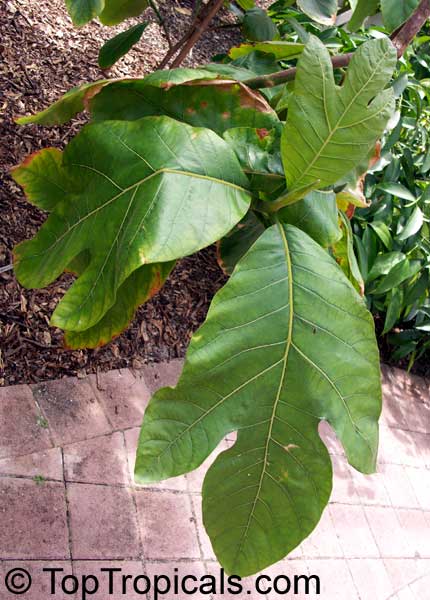
Botanical name: Artocarpus odoratissimus
Common names: Marang, Tarap, Green Terap
Family: Moraceae
Origin: Malesia
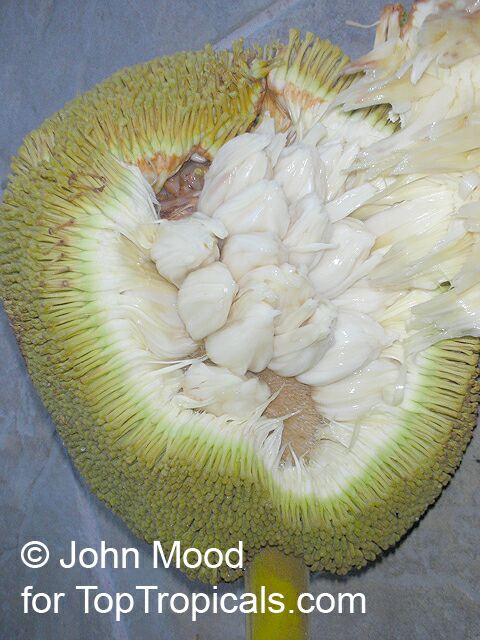
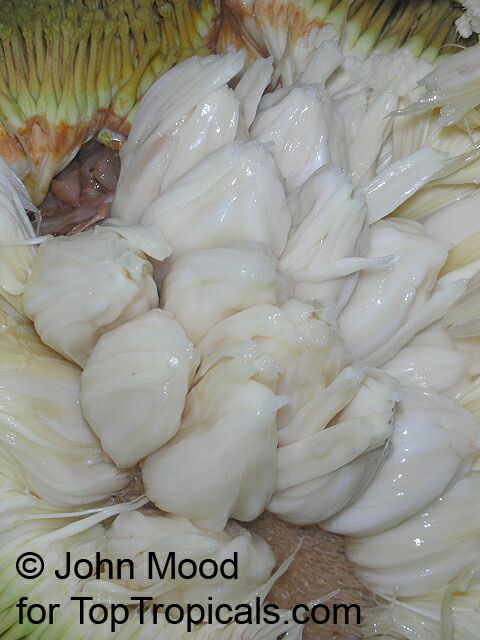
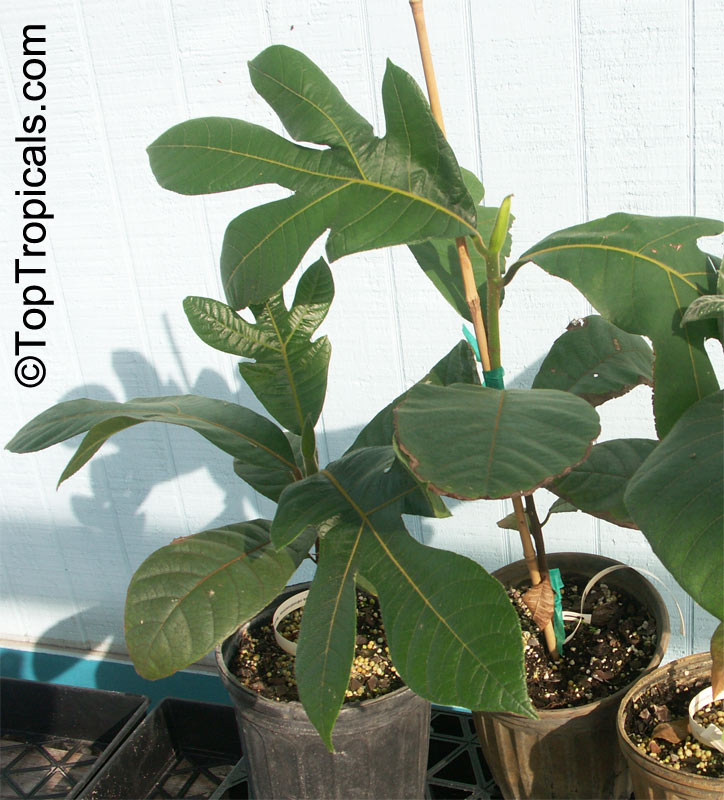
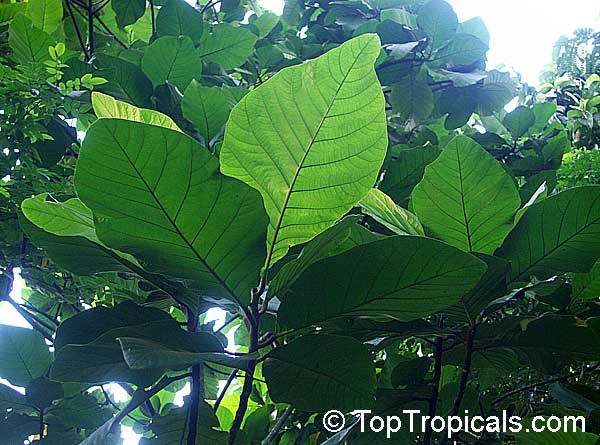
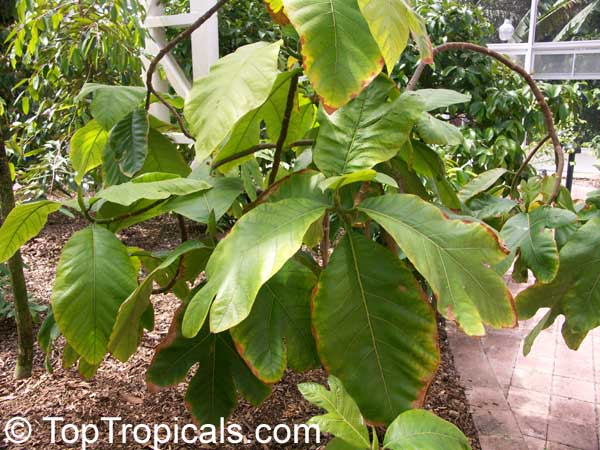
Marang, or Tarap, is one of the most delicious tropical fruit and beautiful exotic tree with large lobed leaves. The fruit is as big as 10-12", soft flavored, can be appreciated from the first bite and considered superior in flavor to both Jackfruit or Chempedak. Being a cold sensitive plant, Marang can be grown in container inside a greenhouse, where it will enjoy high humidity. The seedlings grow rapidly, first fruit can be expected within 3-4 years.


| Next | |
Use link to repeat this search:
https://toptropicals.com/cgi-bin/garden_catalog/cat.cgi?search_op=and&keyword_op=and&language=e&family=Moraceae&number=10
&no_change_lang=1&user=tt&sale=1&first=0