Liliaceae - Botanical Family
| Number of plants found: 81 | Next | 
|
Go to page: | 1 | 2 | 3 | 4 | 5 | Last |
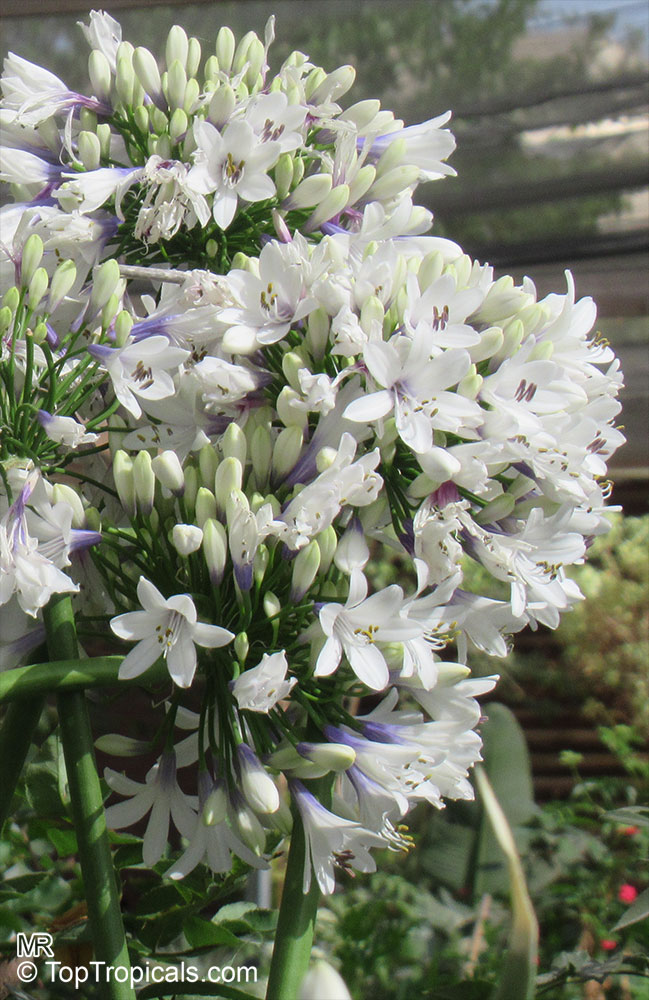
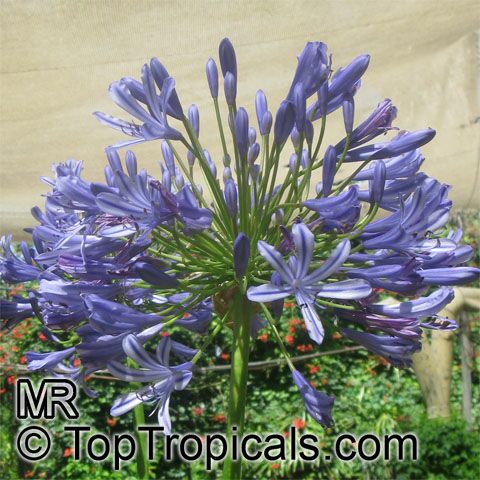
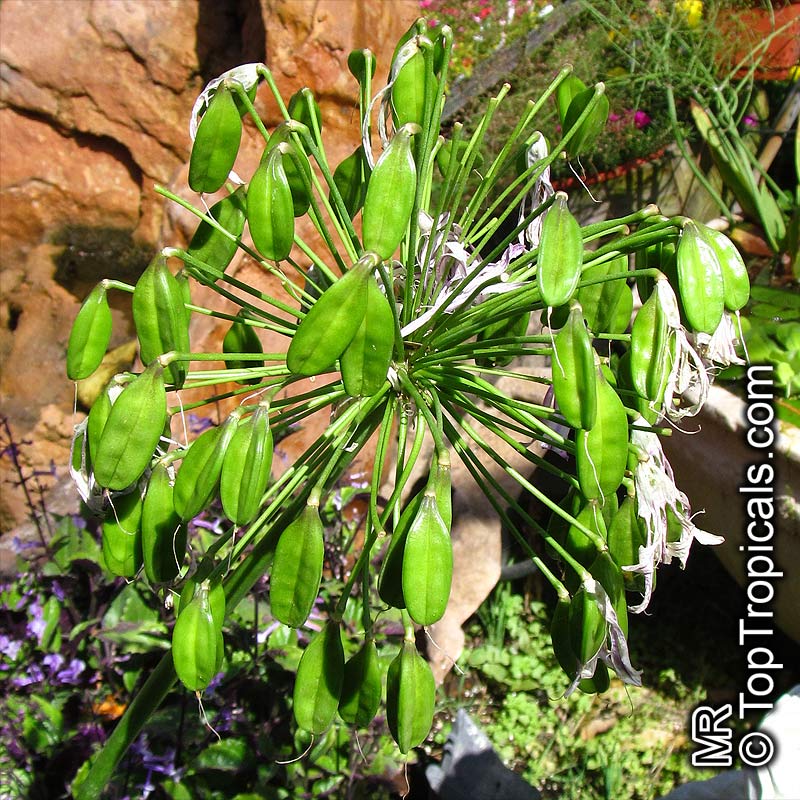
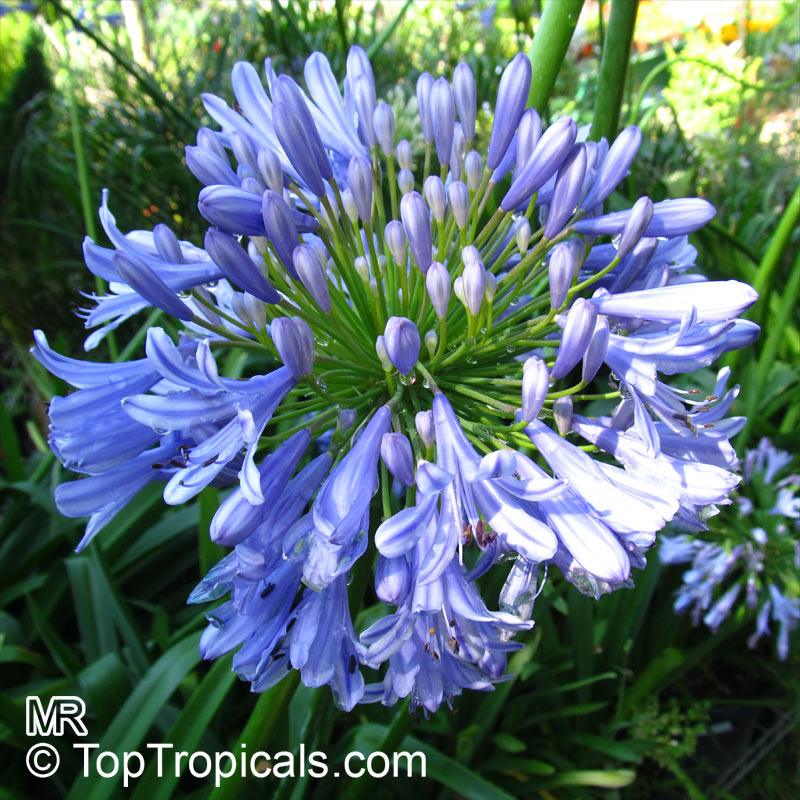
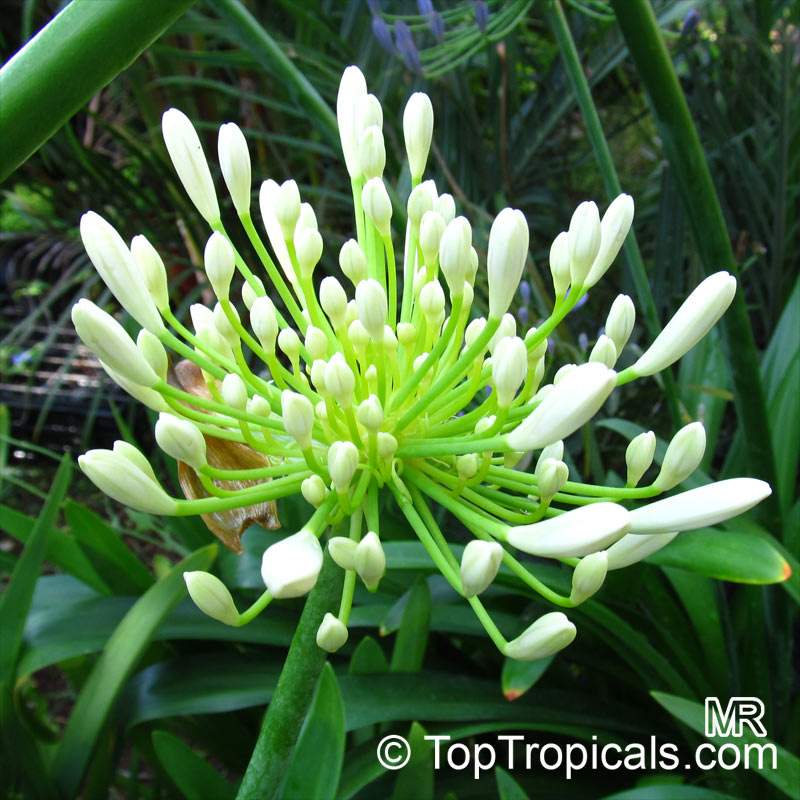
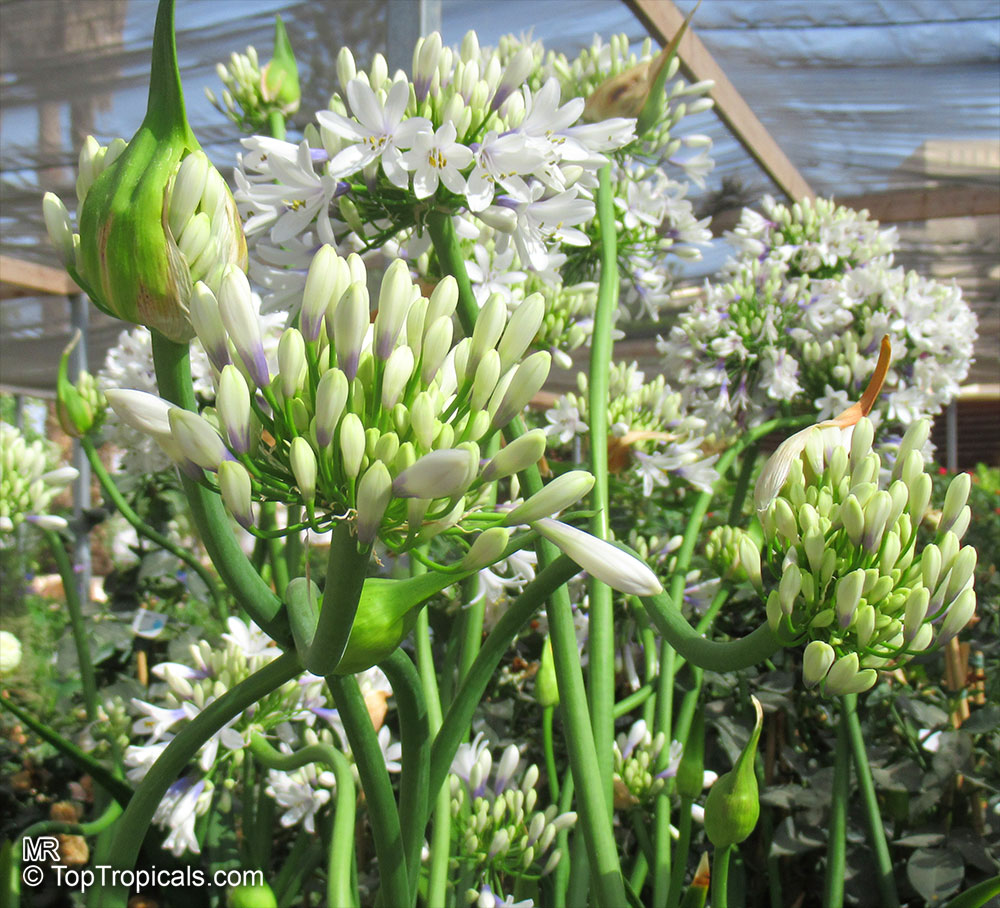
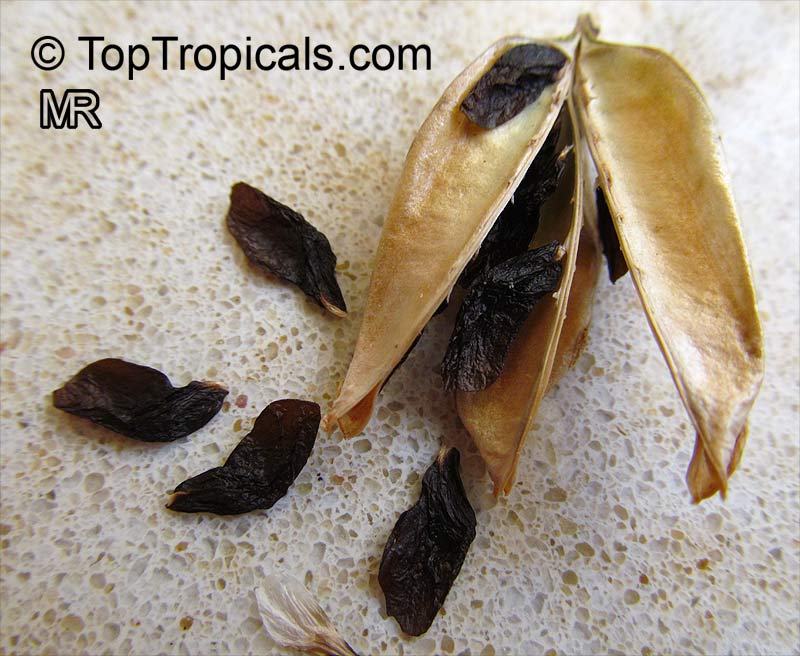
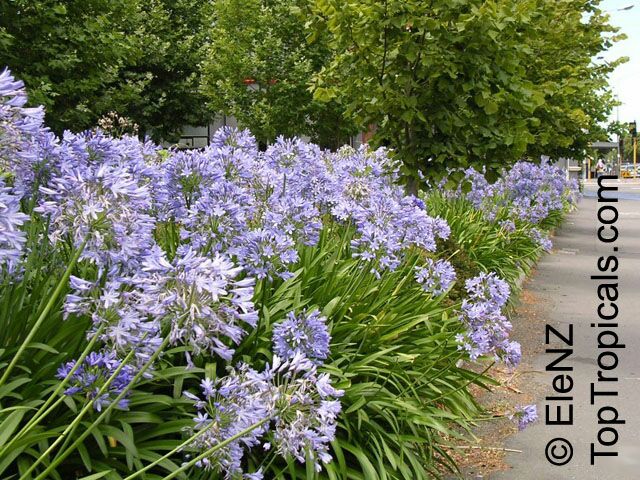
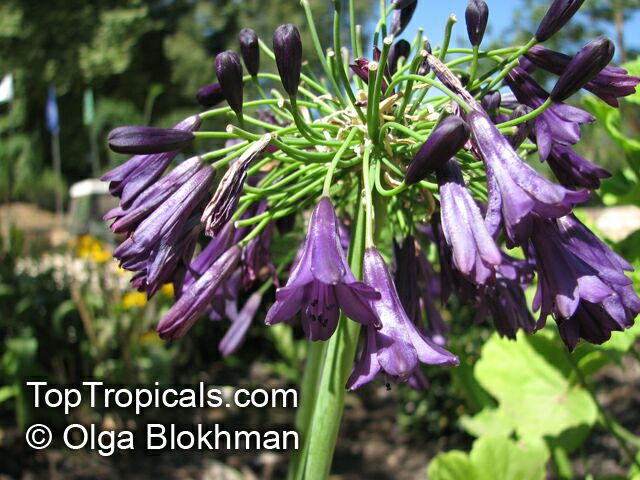
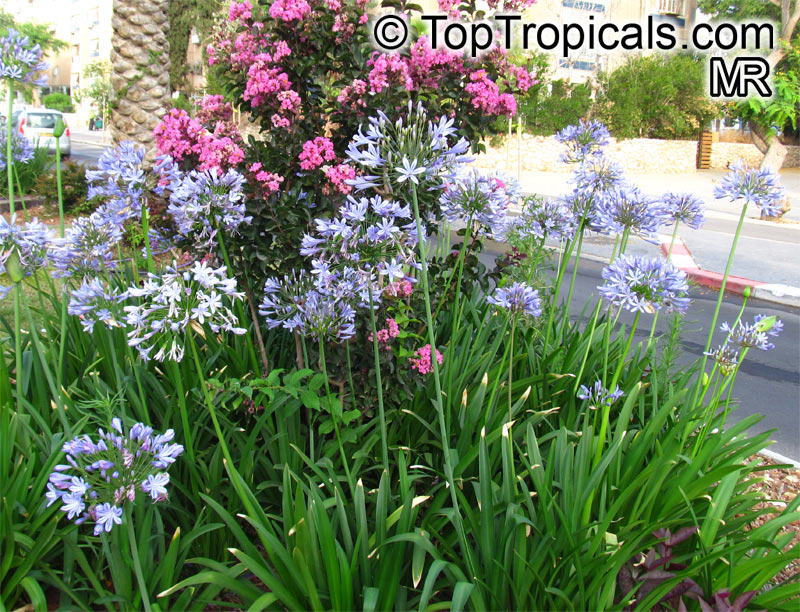
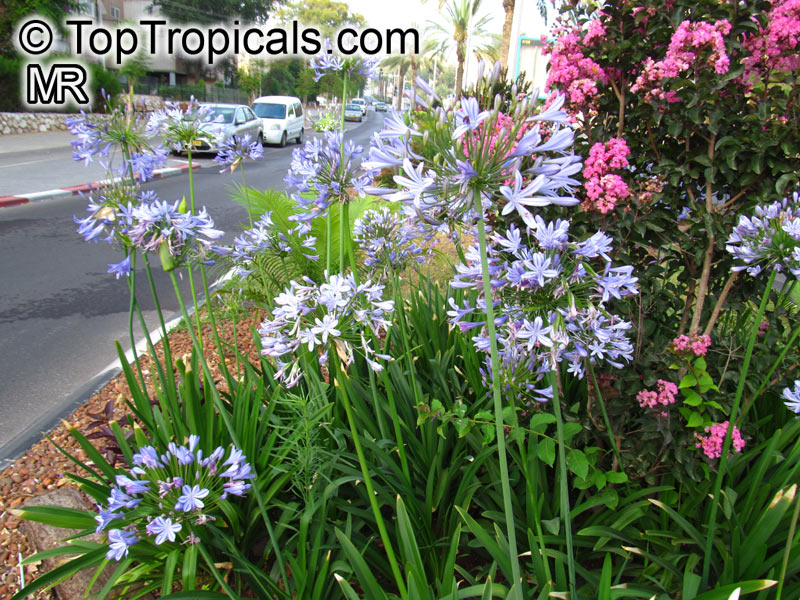
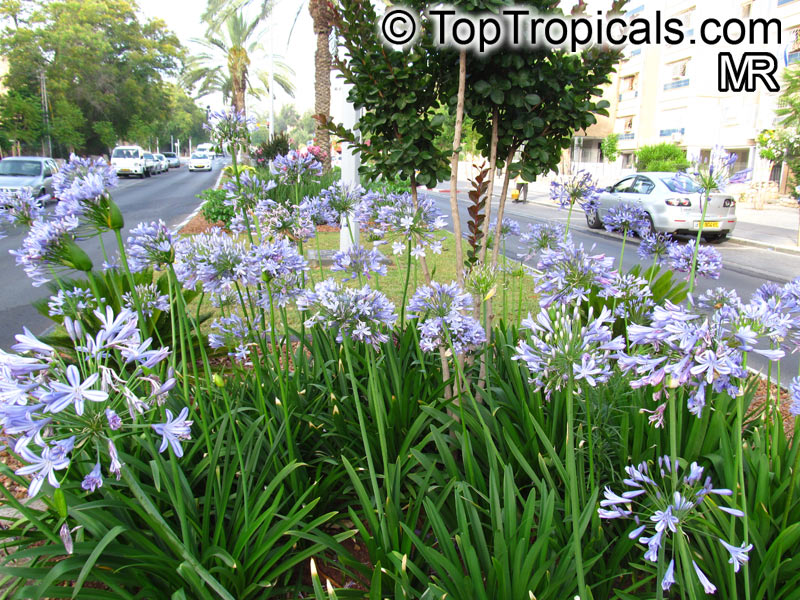
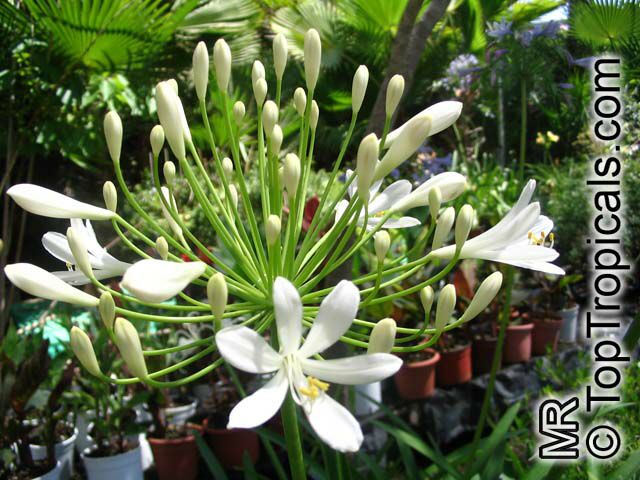
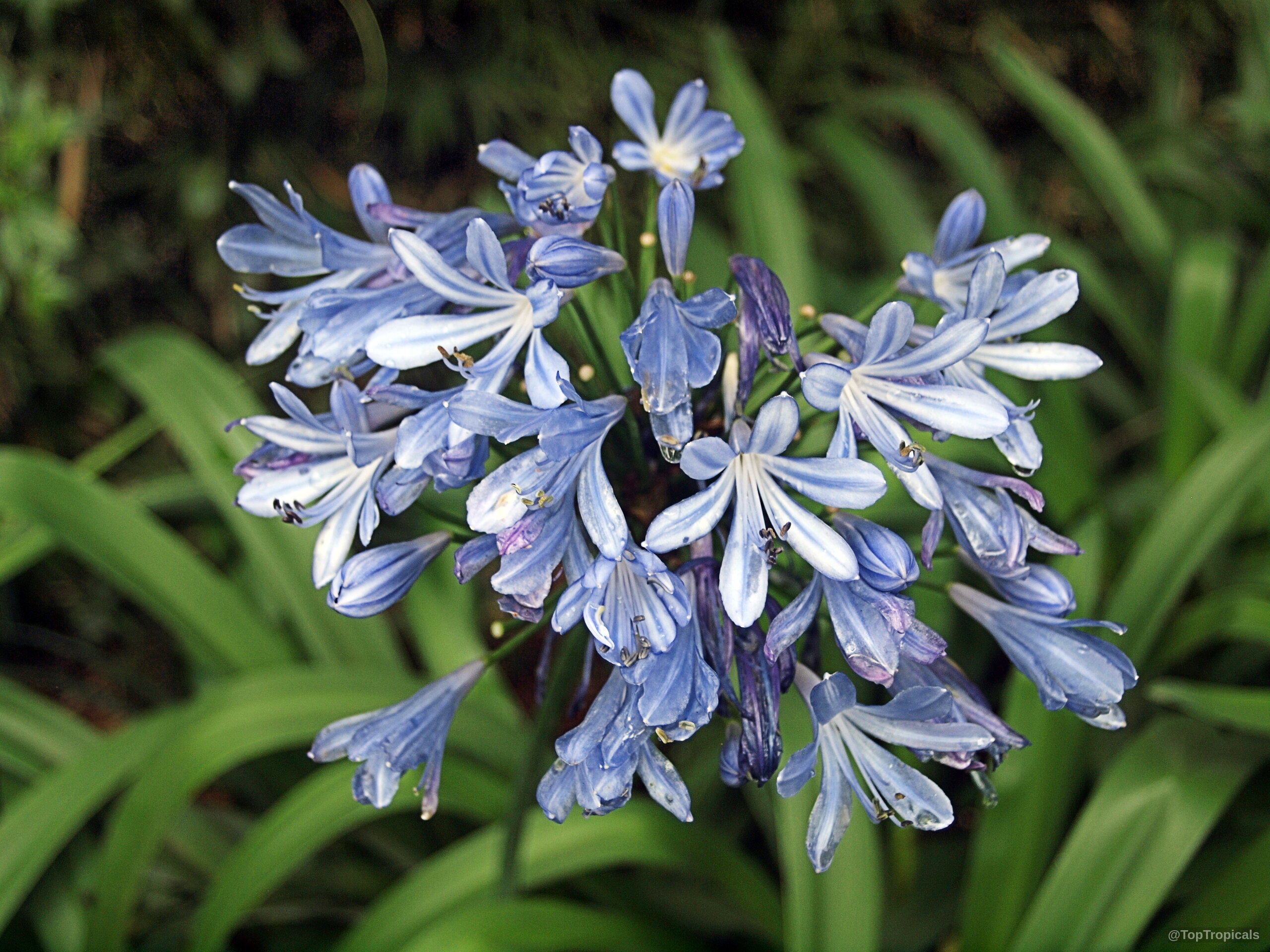
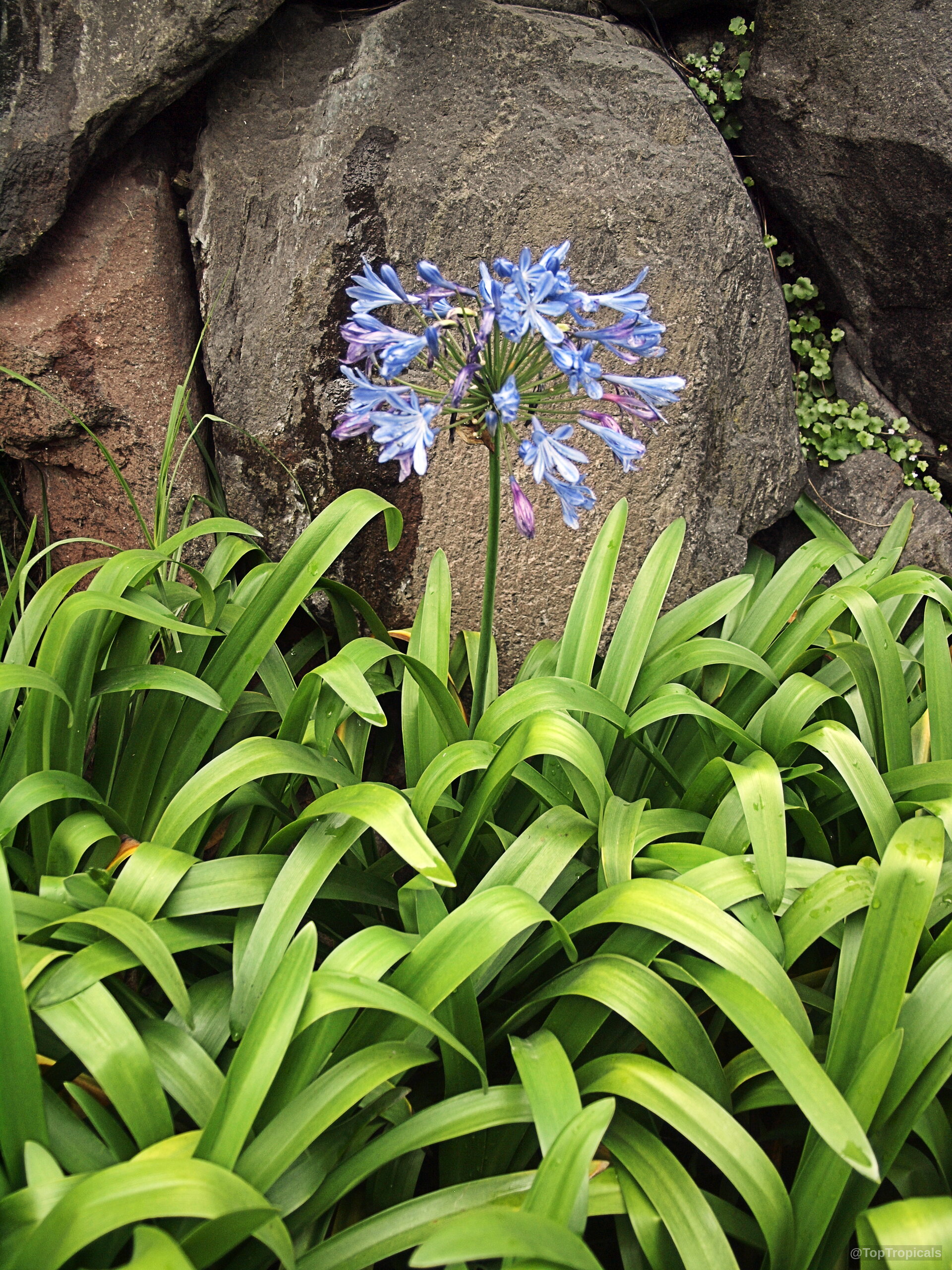
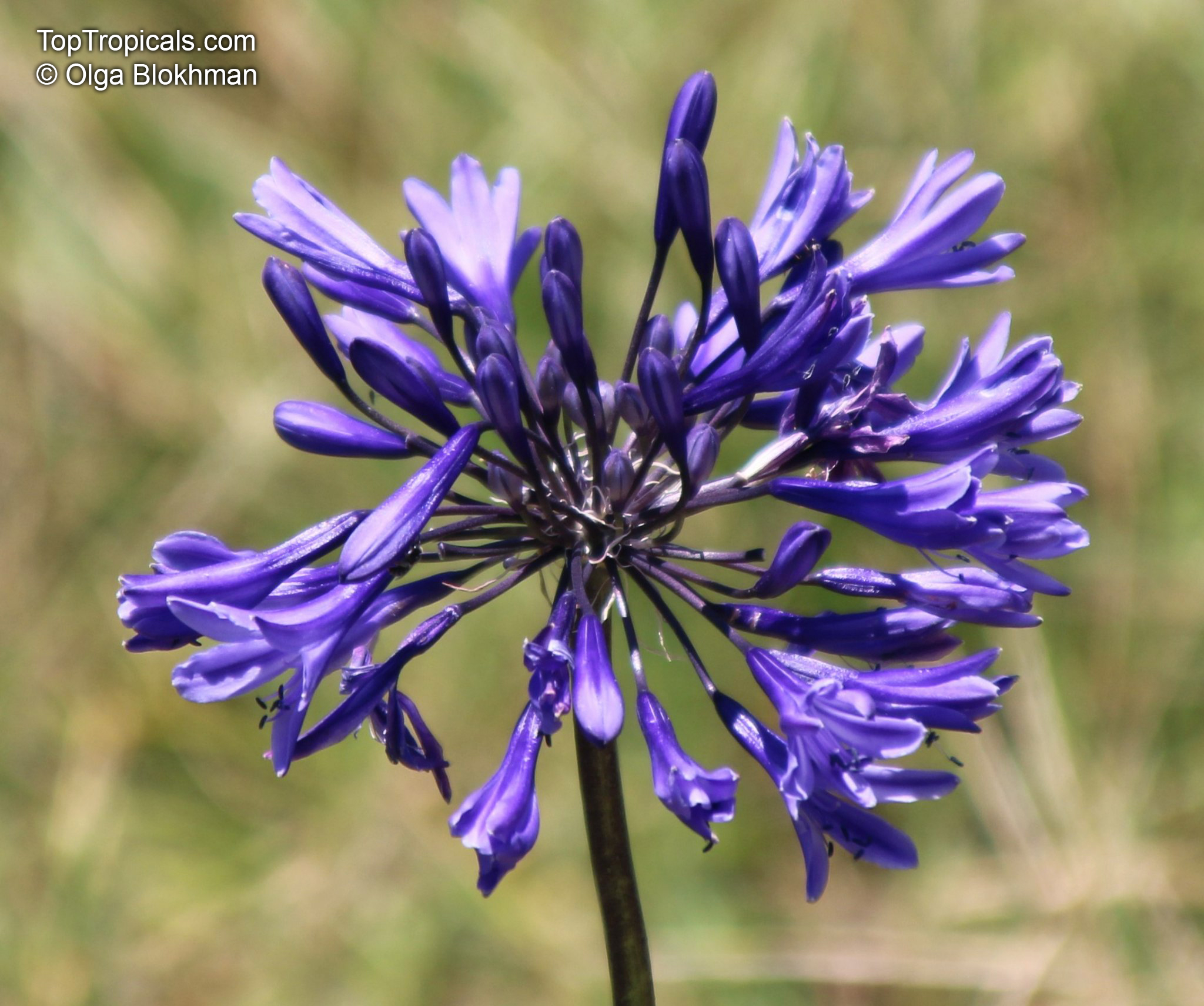
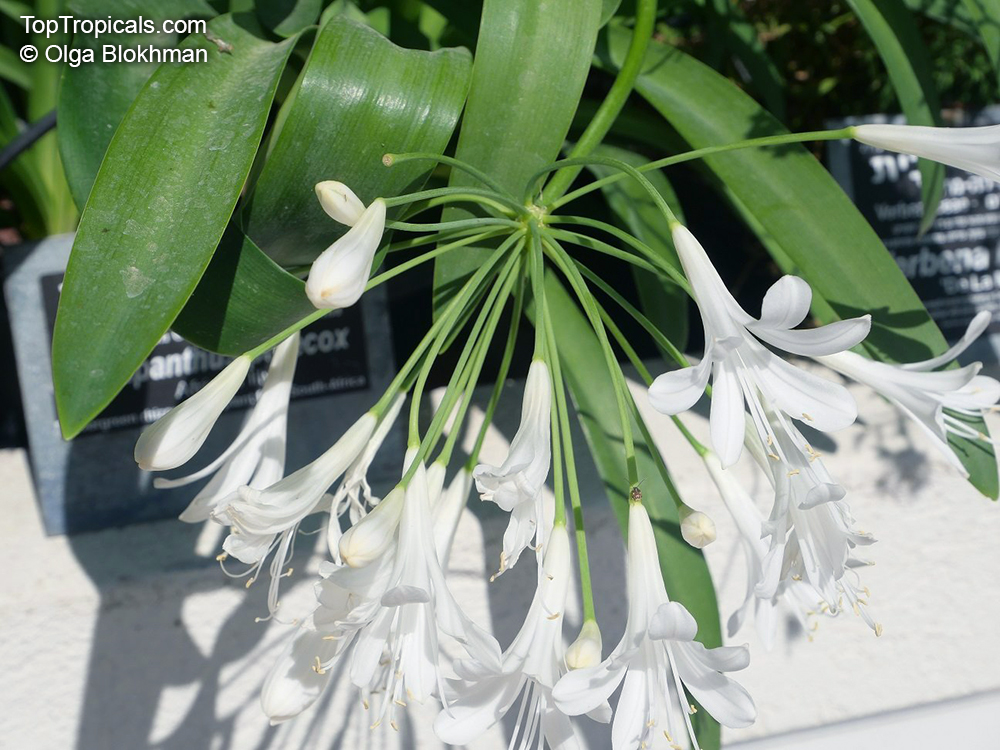
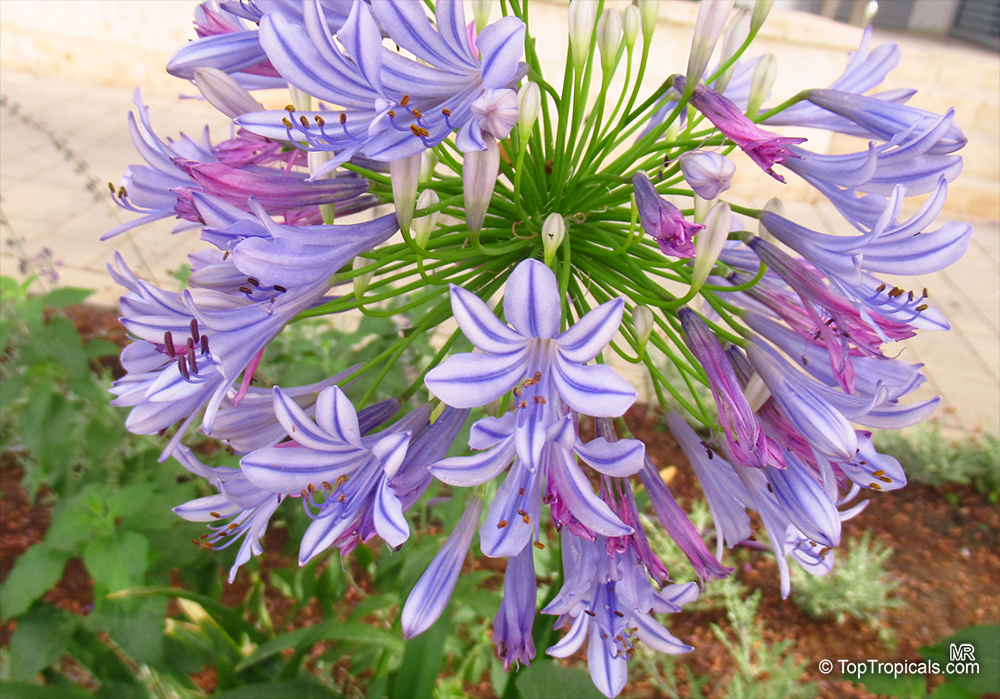
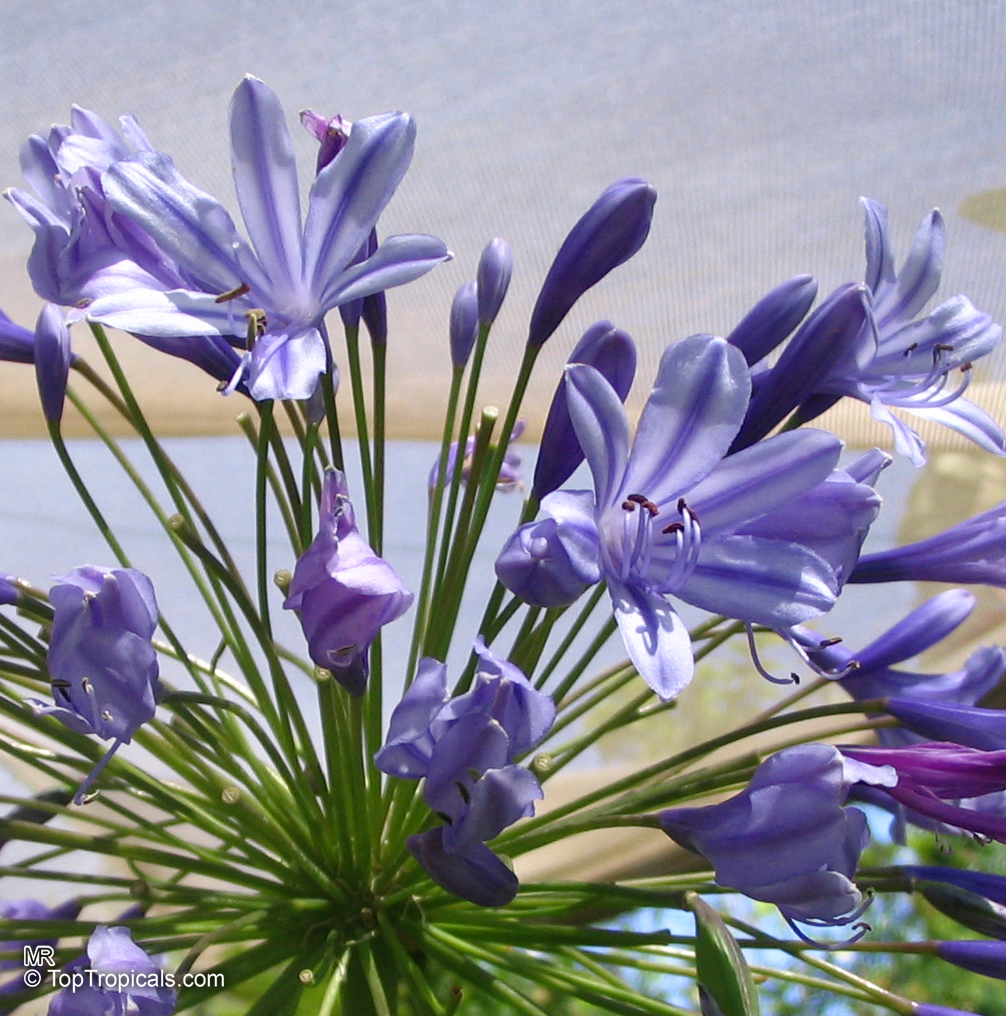
Botanical name: Agapanthus sp.
Common name: African Lily
Family: Amaryllidaceae (Formerly:Alliaceae / Liliaceae /Amaryllidaceae)
Subfamily: Agapanthoideae
Origin: South Africa
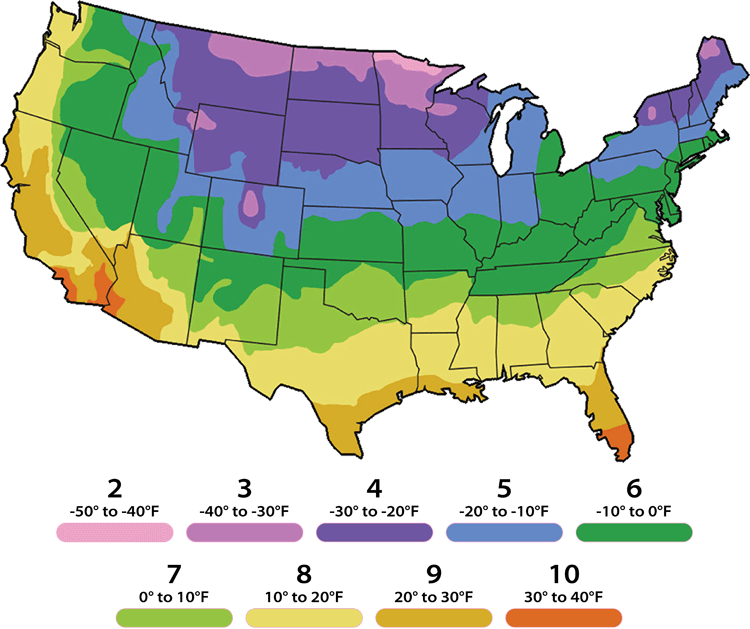
USDA Zone: 8-11


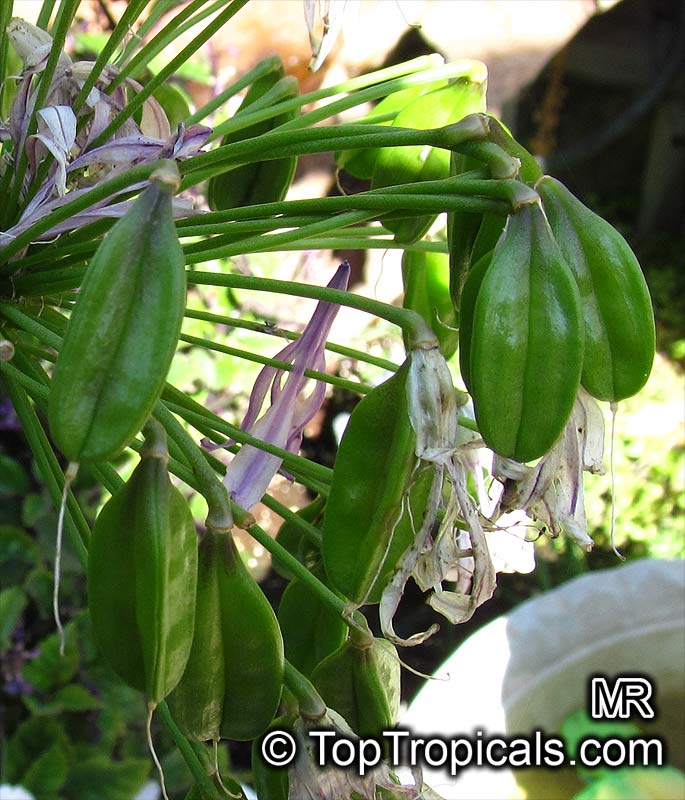
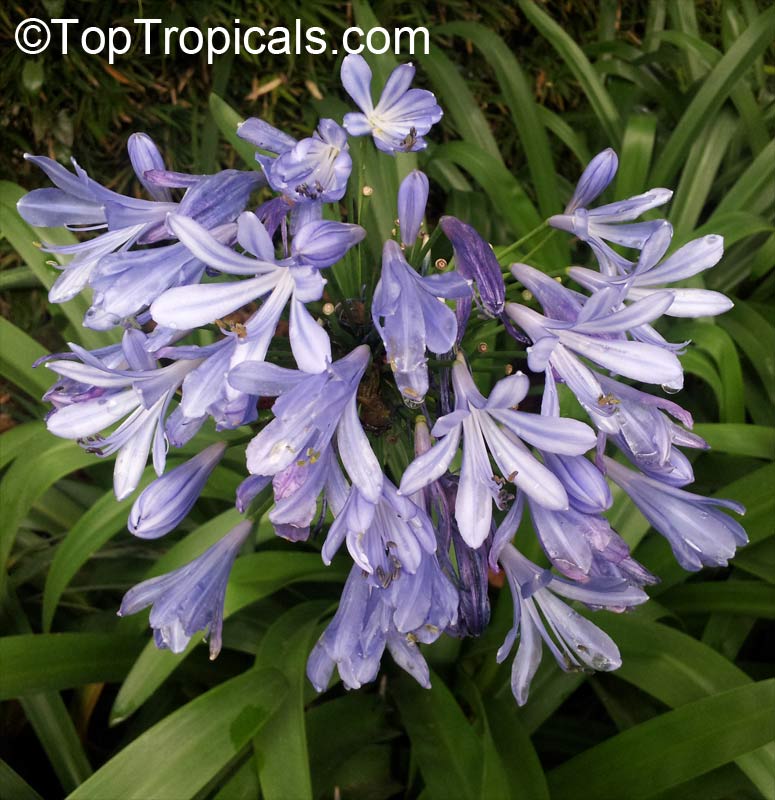
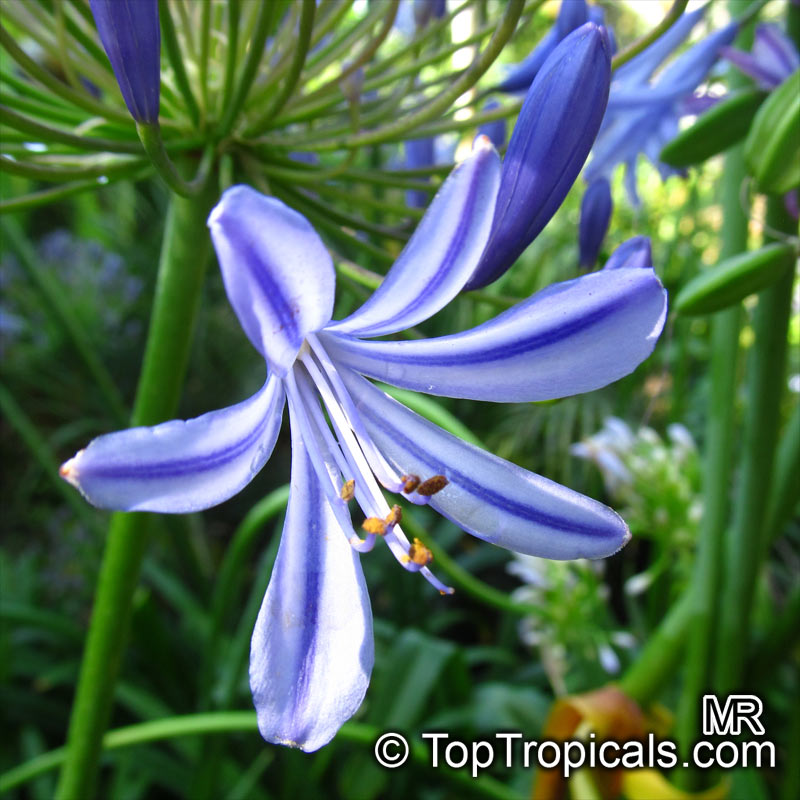
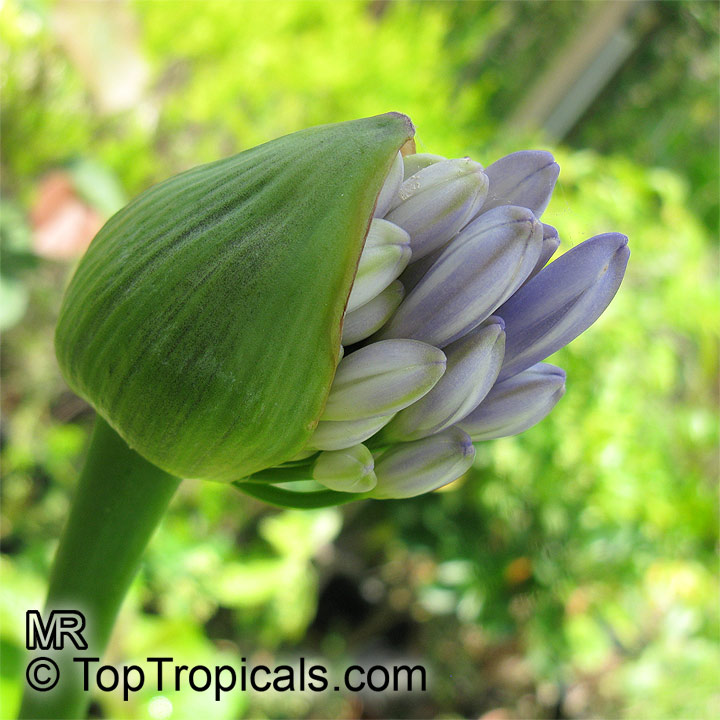
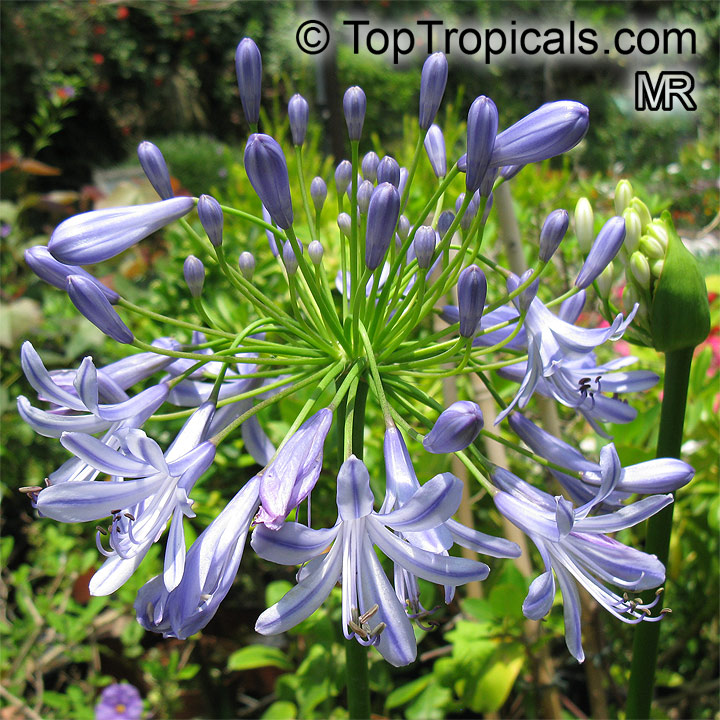
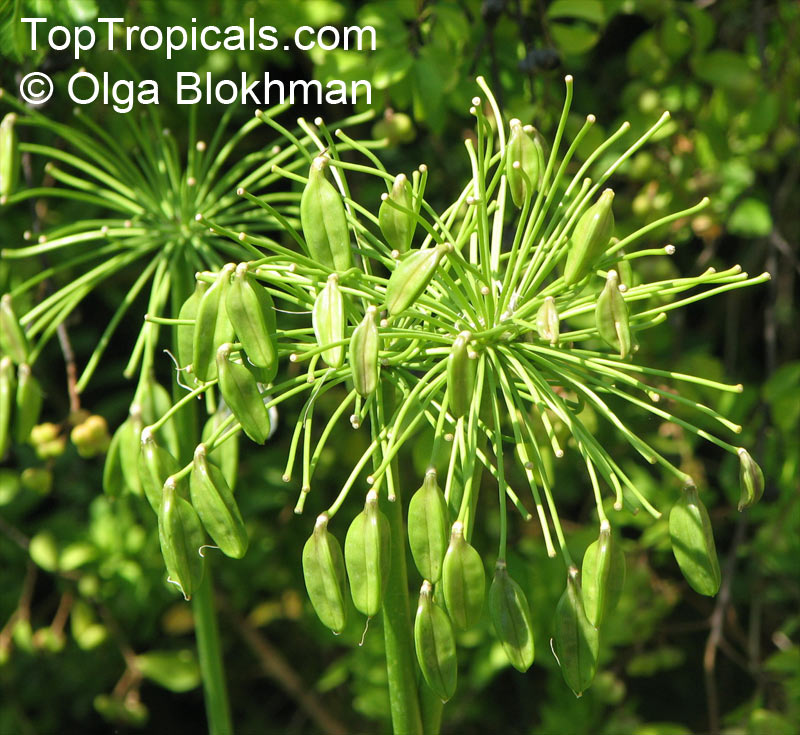
Agapanthus, commonly known as African Lily or Lily of the Nile, is a genus of rhizomatous perennials in the Amaryllidaceae family, native to southern Africa. Plants form dense clumps of strap-shaped green leaves and produce tall, leafless flower stalks topped by rounded umbels of numerous funnel-shaped flowers. Flower colors range from white and pale blue to rich violet-blue and deep purple, with bicolored forms also available. Species may be evergreen or deciduous, and garden plants include numerous cultivars and hybrids selected for flower color, compact growth, large flower heads, or variegated foliage. Popular cultivars include 'Peter Pan', 'Twister','Queen Mum', Black Pantha', and 'Storm Cloud'. Flowering plants are especially effective in borders, mass plantings, and large containers.
Agapanthus grows best in full sun to light shade and fertile, well-drained soil with regular moisture during active growth. Established plants tolerate some drought, while excessive winter moisture can damage dormant rhizomes. Plants flower particularly well in sunny positions and may remain in the same clump for years before division becomes necessary. Propagation is by division or seed, although named cultivars should be propagated vegetatively. Cold tolerance varies considerably among species and cultivars, with deciduous forms generally hardier than evergreen types. Depending on the selection, Agapanthus can be grown outdoors in approximately USDA Zones 8-11.

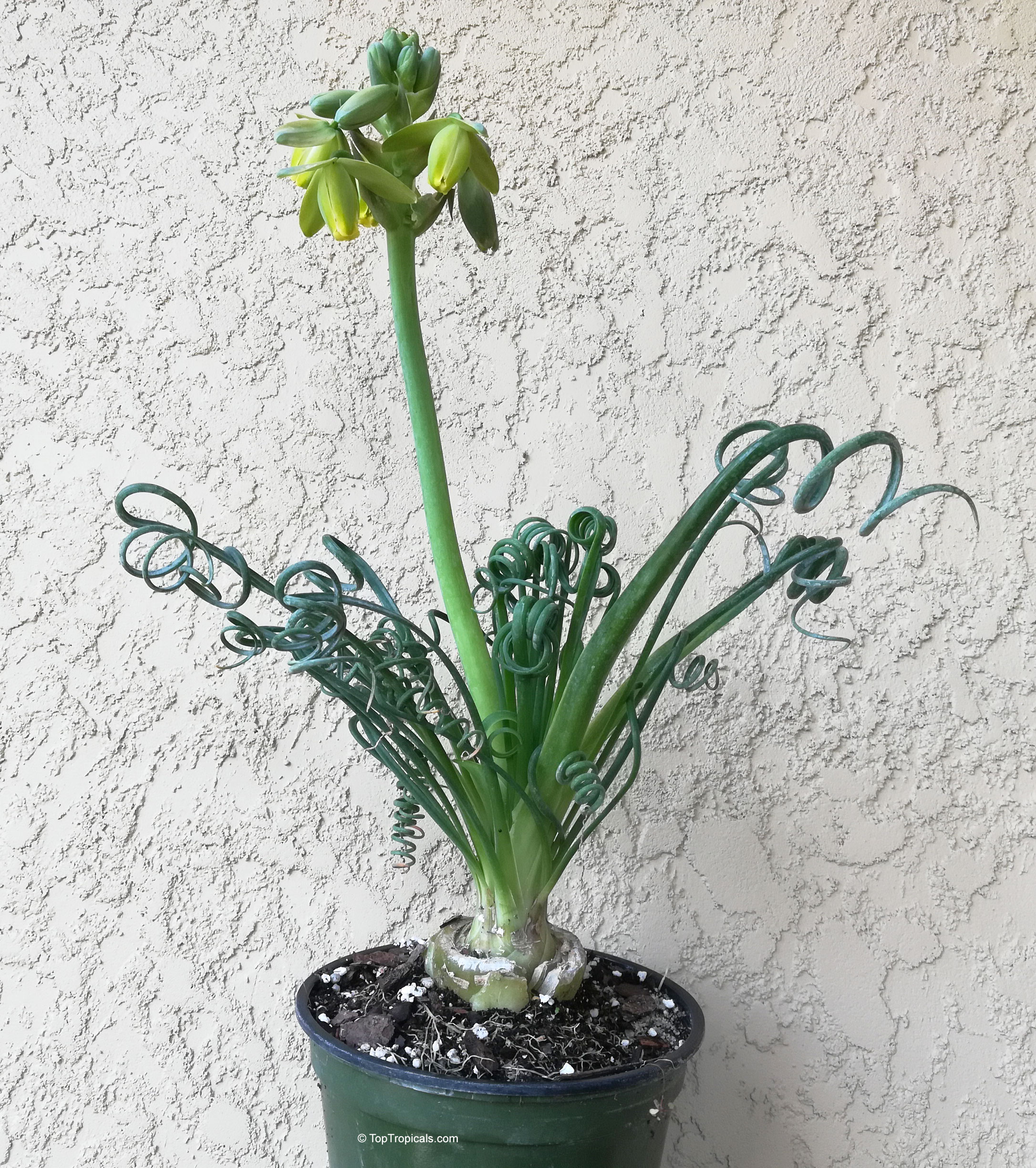
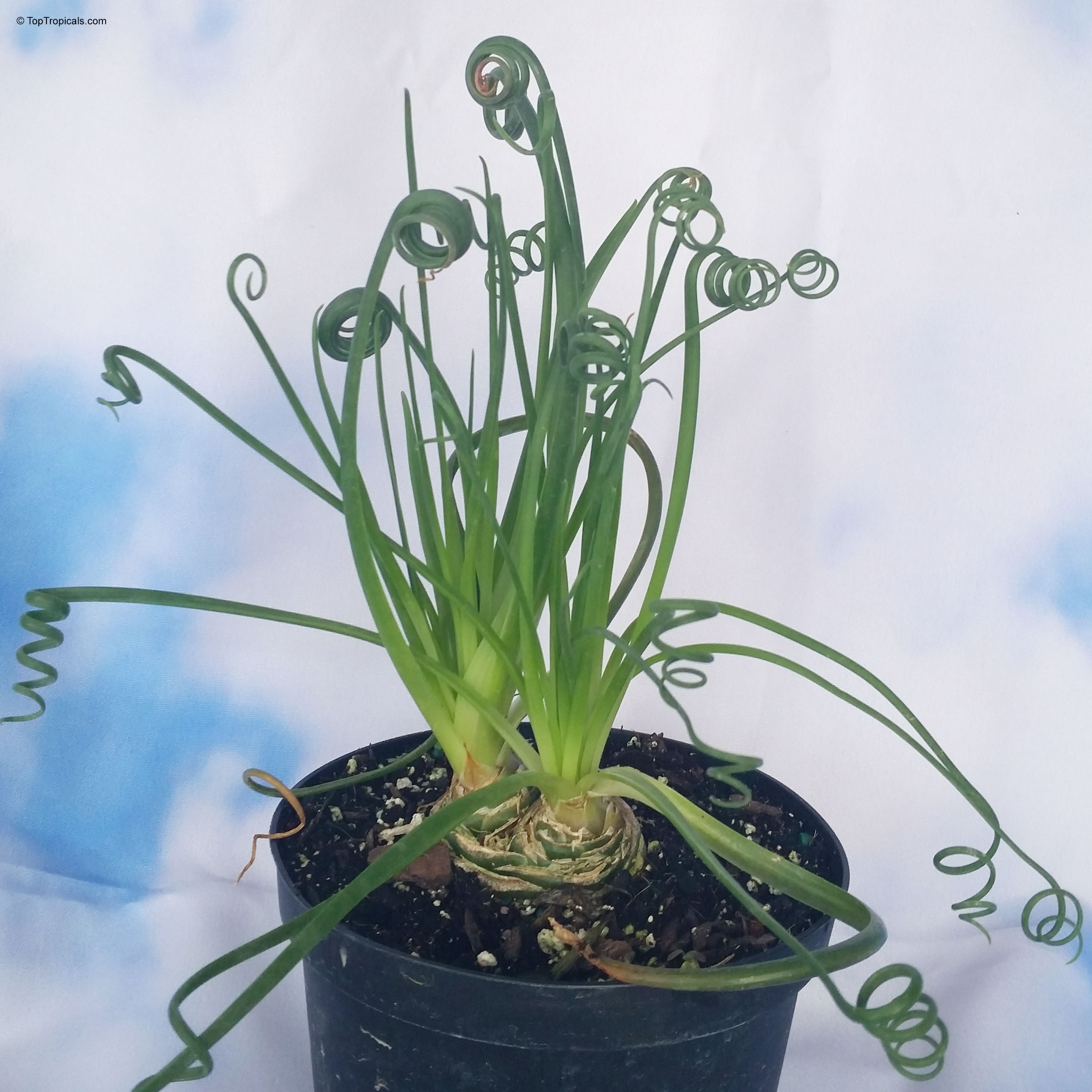
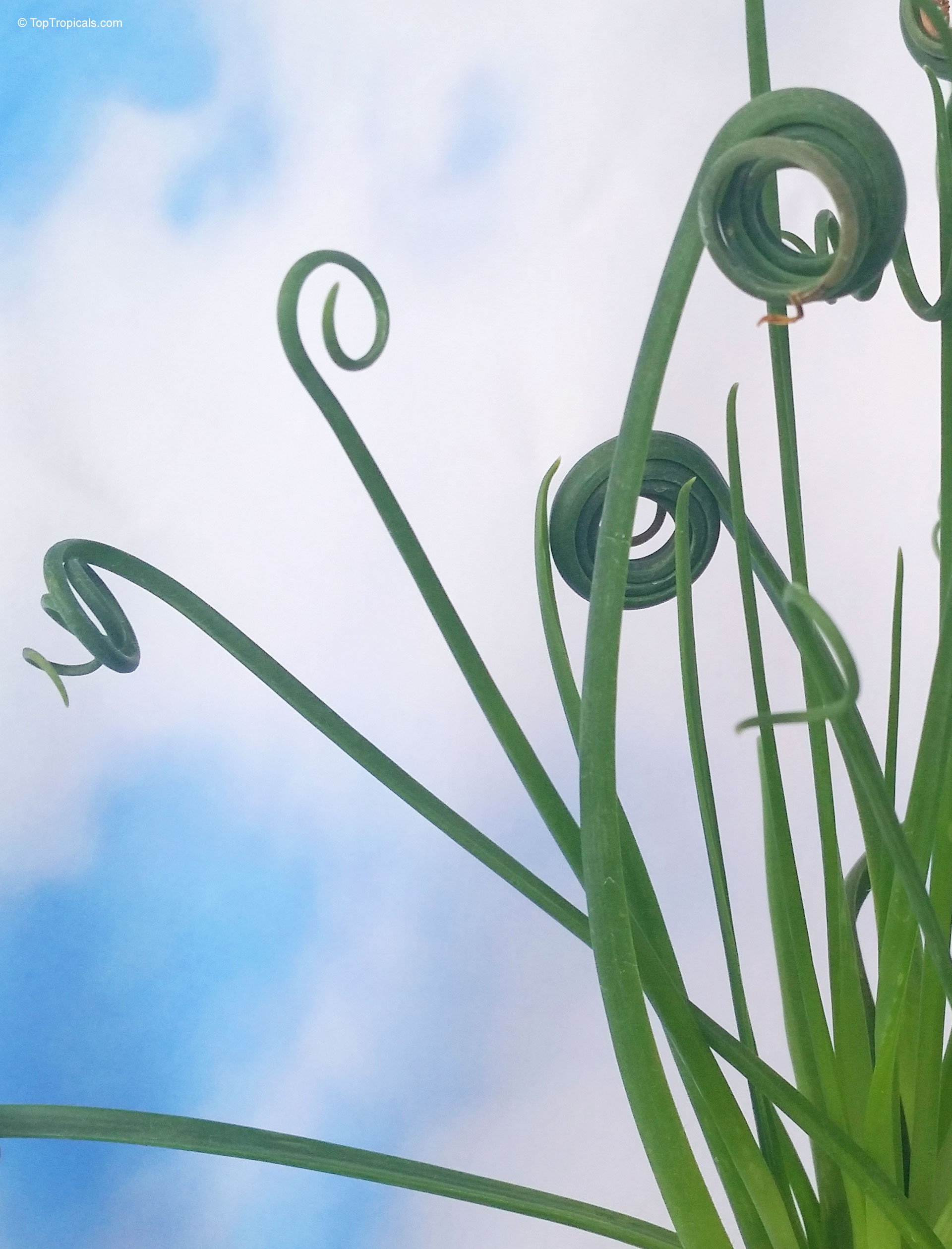
Botanical name: Albuca spiralis
Common names: Frizzle Sizzle, Corkscrew Albuca
Family: Asparagaceae (Formerly:Hyacinthaceae / Liliaceae)
Subfamily: Scilloideae
Origin: South Africa
USDA Zone: 8-10


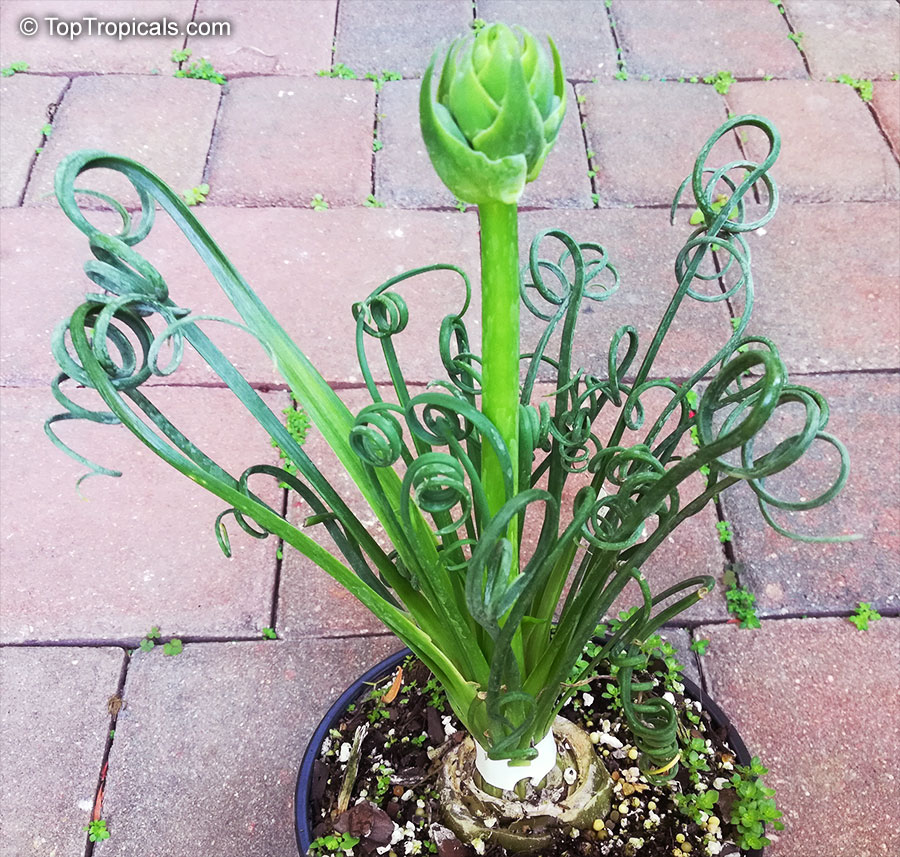
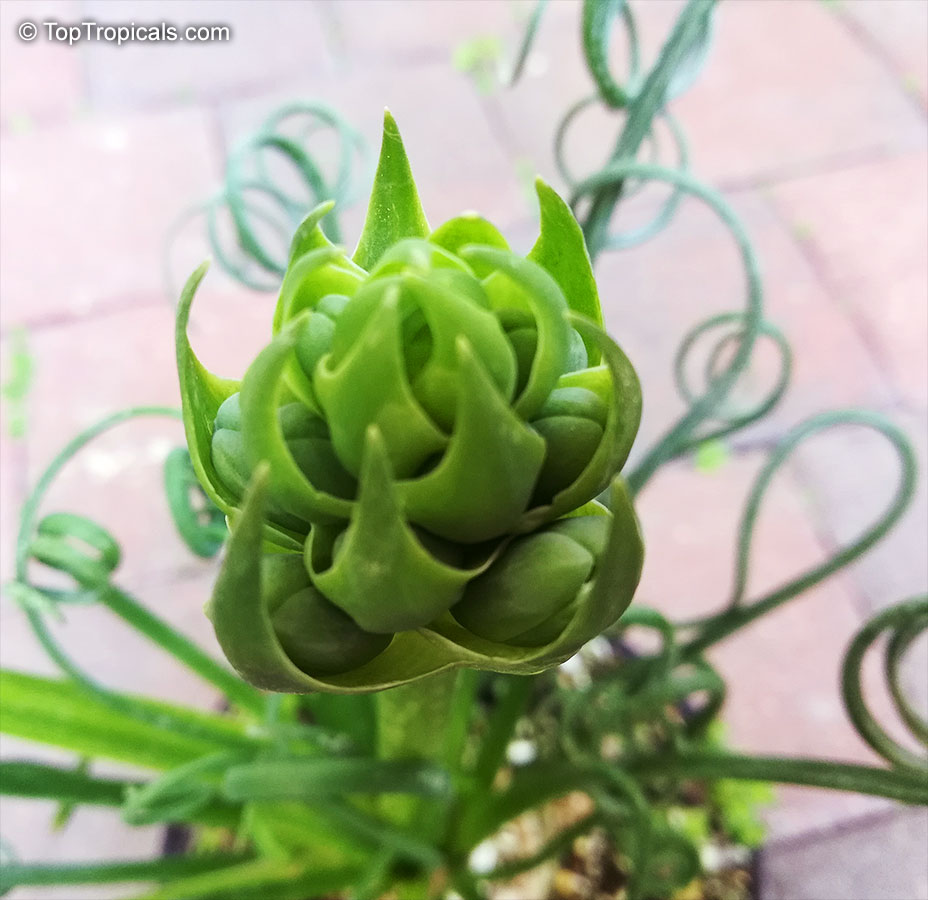
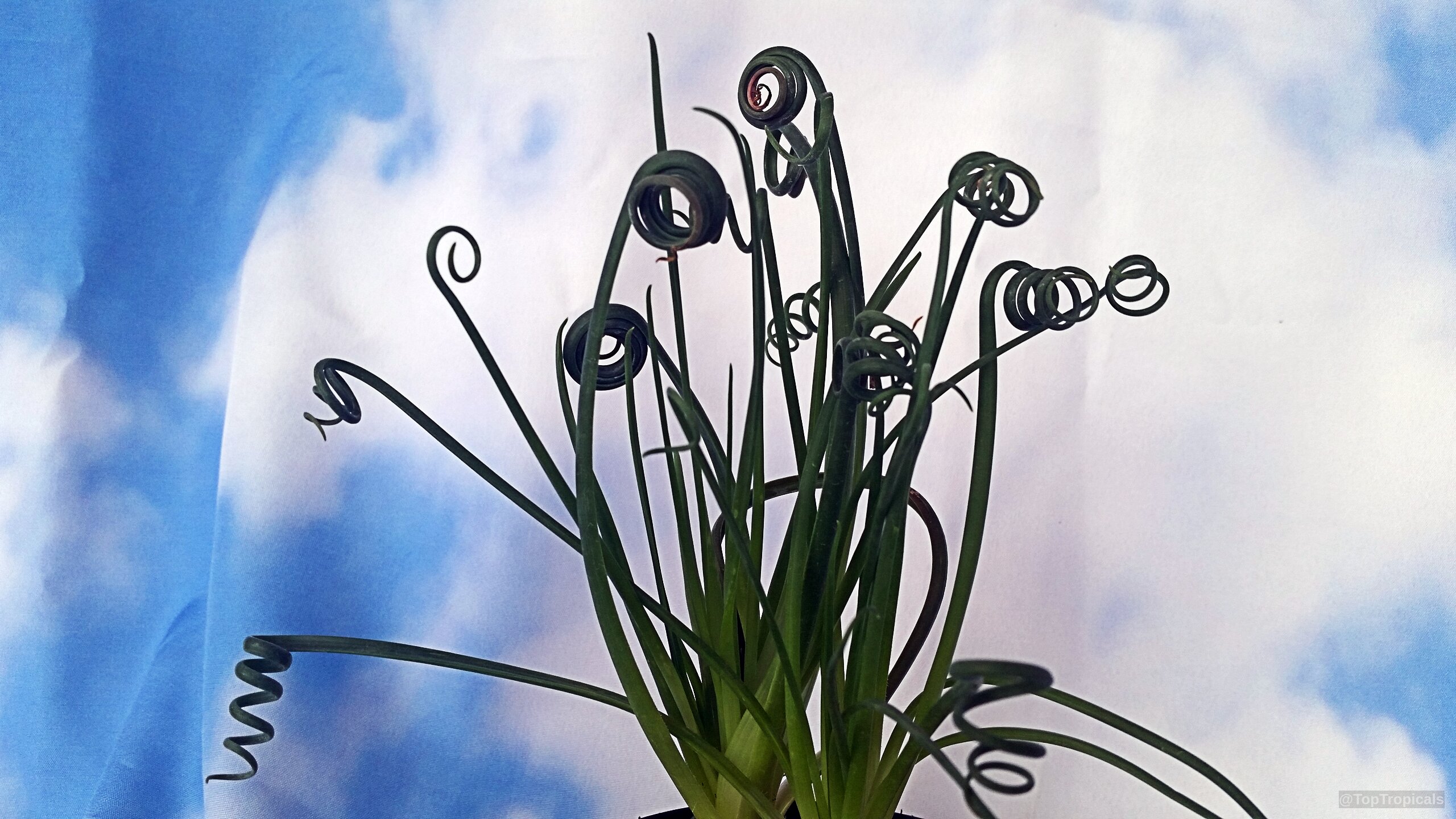
Albuca spiralis or Frizzle Sizzle, also known as the Corkscrew Albuca, is a unique and easy-to-grow plant native to South Africa. With green onion-like leaves that appear curled, each plant has its own distinct personality. It can reach between 2 to 5 feet tall with a spread of 5 to 10 feet, making it suitable for use as a groundcover or low-growing border. It also looks great in rock walls, perennial beds, and cottage gardens and can even be used for bonsai training.
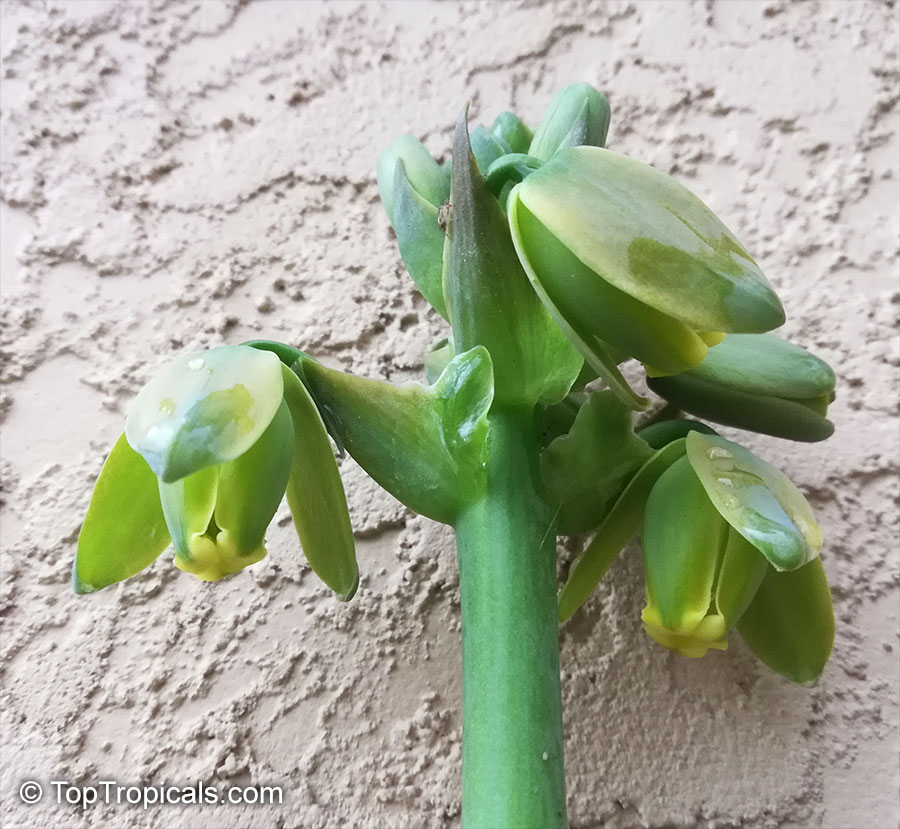
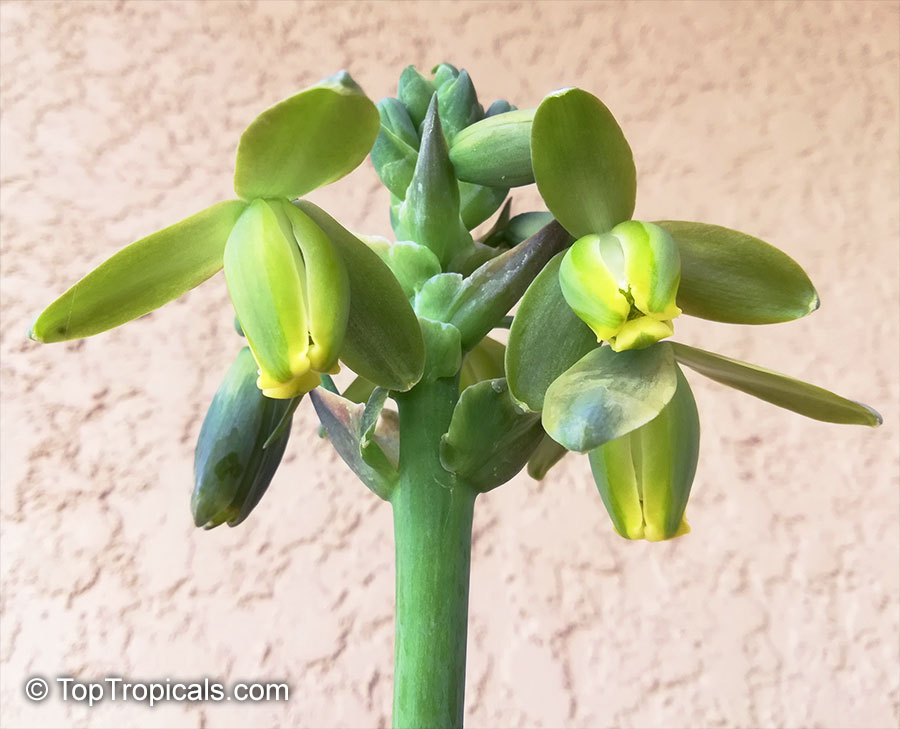
In the spring, the plant produces spikes of orchid-like chartreuse-yellow flowers that have a light vanilla fragrance. It may occasionally rebloom later in the season. Frizzle Sizzle is hardy in USDA Zone 8-10, or it can be grown as a houseplant in colder regions. Just be sure to bring it indoors if the temperature drops below freezing. To care for this plant, give it lots of sun and well-draining soil, and allow the soil to dry out between waterings, similar to how you would care for a succulent.
Frizzle Sizzle is an ideal plant for home gardens as it is low maintenance and has no pest or disease problems. In colder climates, it can be overwintered indoors on a sunny window sill or allowed to go dormant by stopping watering and storing in a cool, dry location. So if you're looking for a fun and eye-catching plant that's easy to grow, consider adding Frizzle Sizzle to your collection.
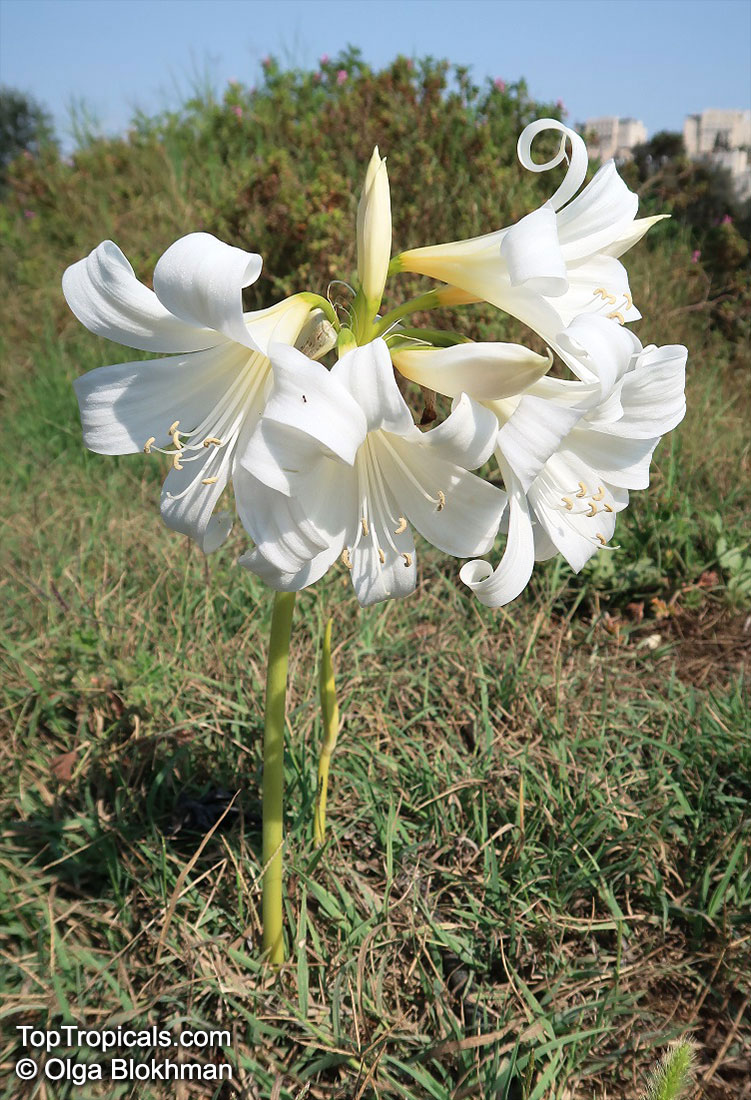
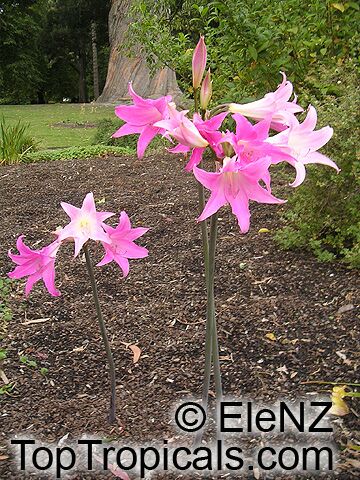
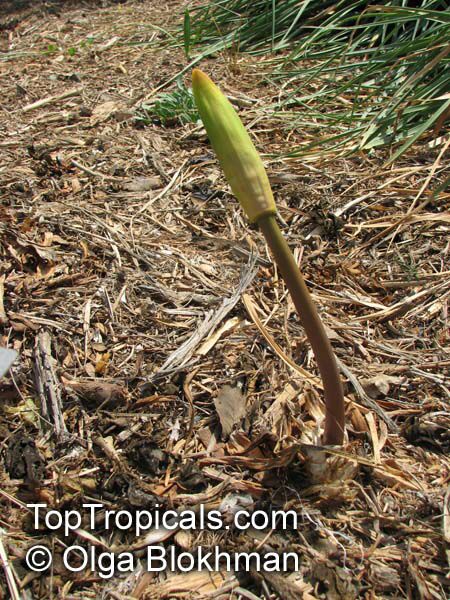
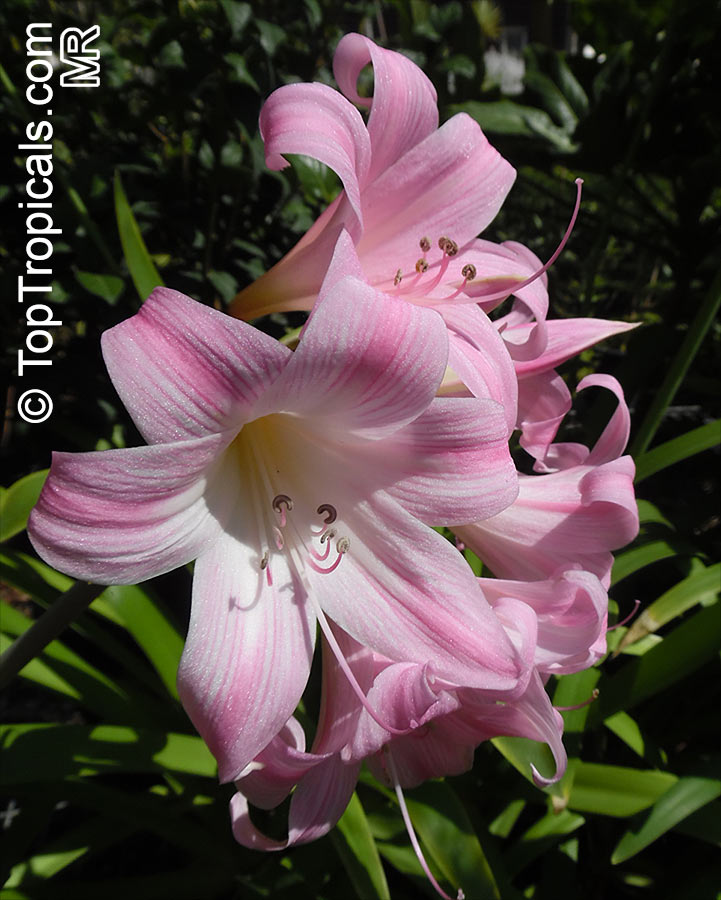
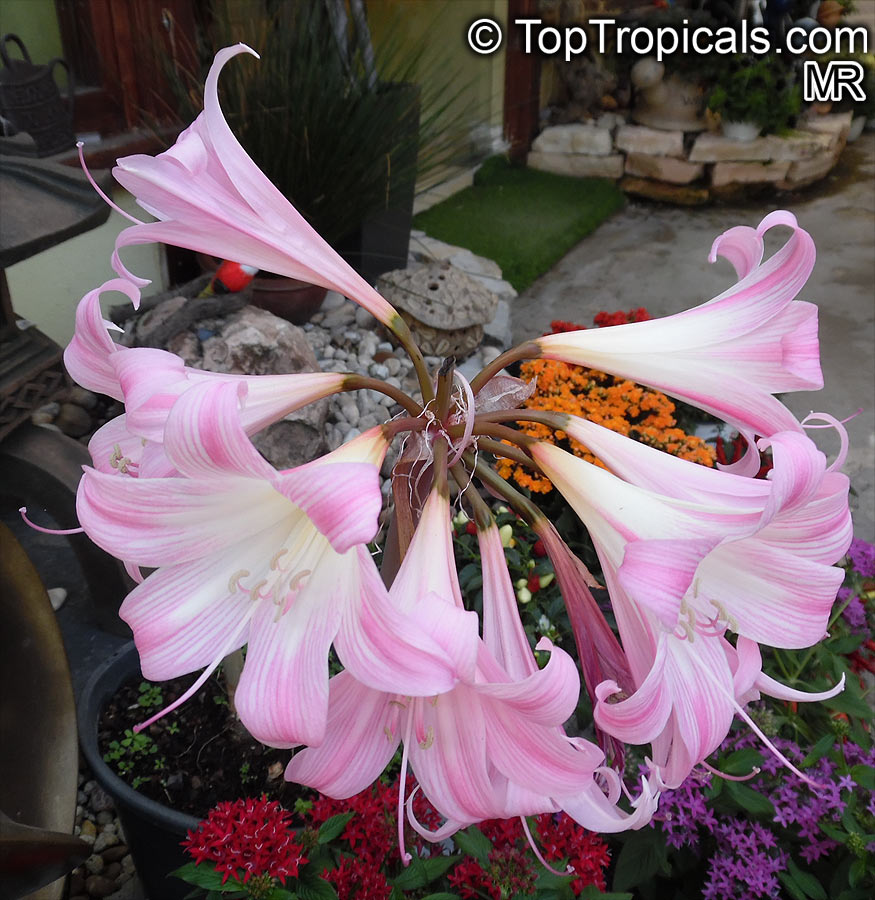
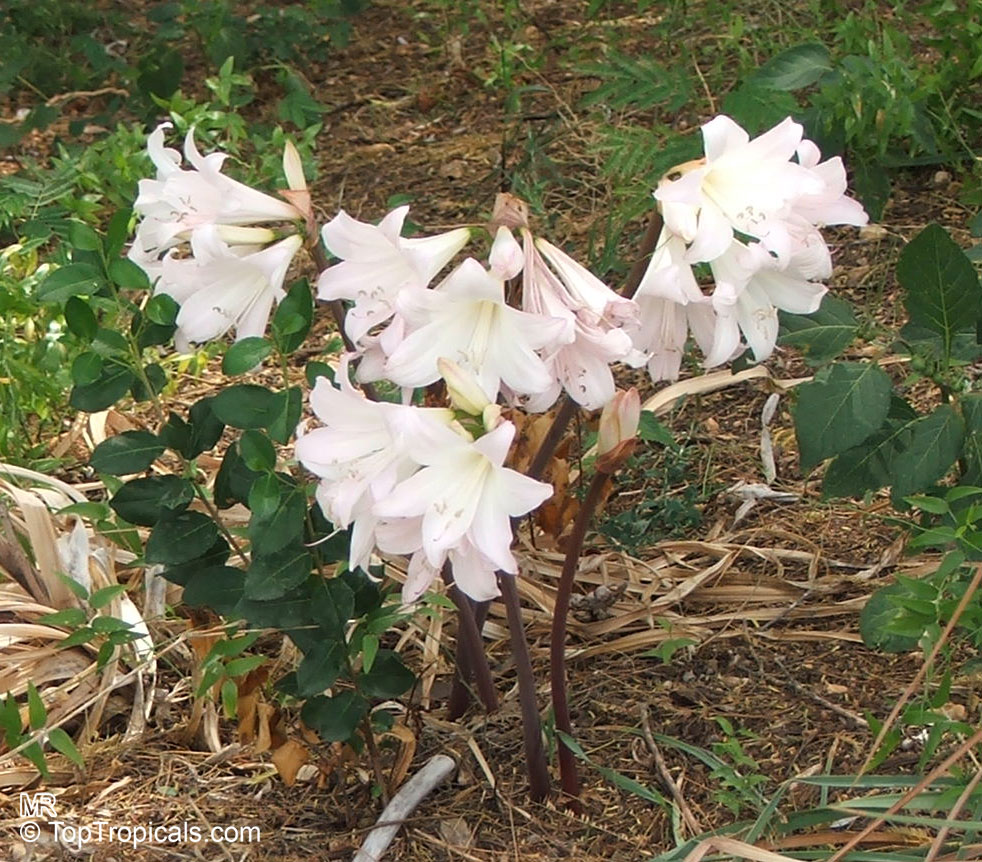
Botanical names: Amaryllis belladonna, Callicore rosea
Common names: Belladonna Lily, March Lily, Naked Lady
Family: Amaryllidaceae (Formerly:Amaryllidaceae / Liliaceae)
Subfamily: Amaryllidoideae
Origin: South Africa
USDA Zone: 9-10


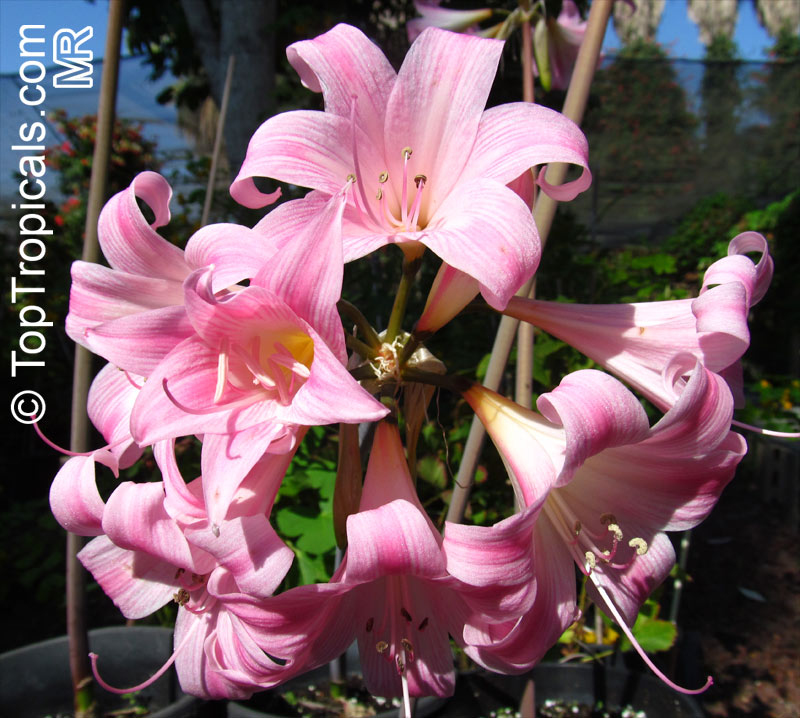
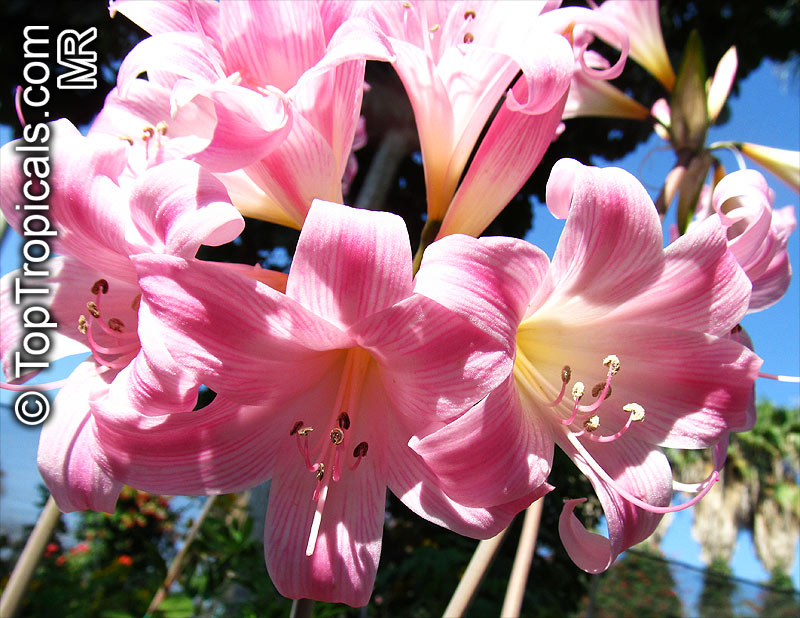
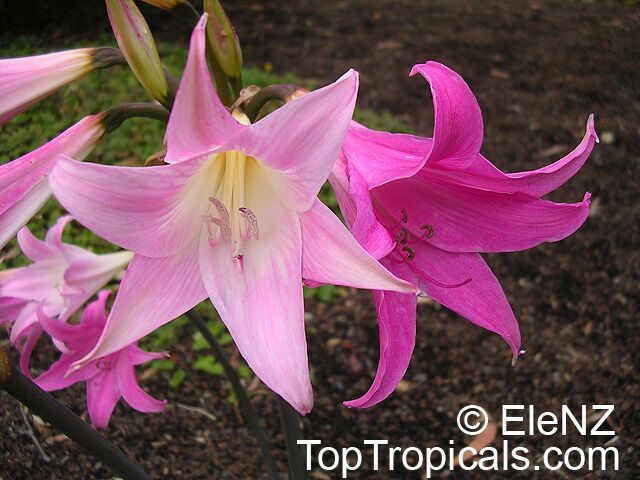
The large clusters of scented, trumpet-shaped pink or white flowers are carried on a long purplish-red and green stem appearing 50cm above the soil. Up to twelve flowers are produced from the flowering stem. These flowers are 10cm long and apically flare open about 8cm. The inflorescence tends to face the direction that receives the most sun.
The strap-like leaves are deciduous and are produced after flowering.


Botanical names: Androcymbium palaestinum, Erythrostictis palaestina
Common name: Desert Bulb
Family: Colchicaceae (Formerly:Colchicaceae / Liliaceae)
Origin: Mediterranean
USDA Zone: 9-10


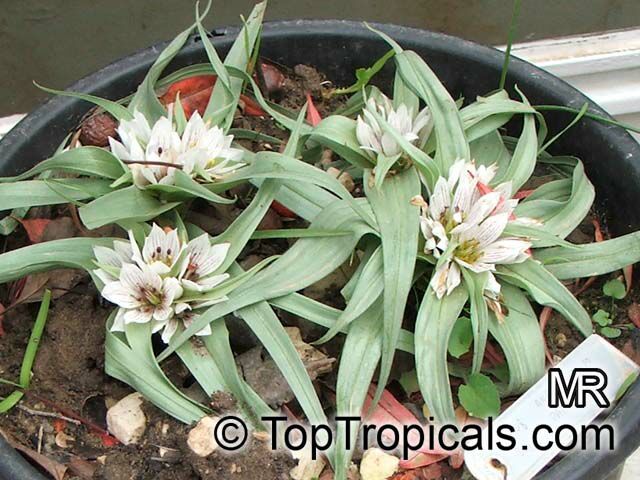
Androcymbium palaestinum is a native small shrub of the Mediterranean that typically grows up to 2-5 ft (up to 6 ft) in height. It is an evergreen, cold-hardy plant with thick, waxy leaves and distinctive off-white or white flowers with purple variegations. Flowers can reach 2-5 cm in diameter, although their size and shape may vary depending on location.
This shrub is a popular choice for xeriscaping or low-water landscaping, as it is drought-tolerant and requires only moderate water to thrive. It must be planted in full sun and well-drained soil with a neutral pH in USDA Zones 9-11. When the plant is established, minimal care and maintenance is required. Light pruning to maintain its shape, and deadheading flowers to encourage a second flush of blooms is recommended.
In cold regions, Androcymbium palaestinum can be grown in pots, as long as a suitable container is selected and the potting mix is free-draining. The pot must be planted in a sheltered area and kept dry during winter. Regular watering with plenty of sunshine is necessary for container-grown plants, and mulch should be applied for moisture retention. An occasional lift of the pot is important for aeration until the plant is established. Fertilizing with a diluted organic fertilizer every 2-4 weeks, and supplementing feedings with a slow-release fertilizer if necessary, can also prevent malnutrition.
It is important to note that this plant is toxic and care should be taken to keep it away from pets and children. With moderate care and regular maintenance, Androcymbium palaestinum is a worthy addition to any garden. It will bring a show of impressive color to your garden.
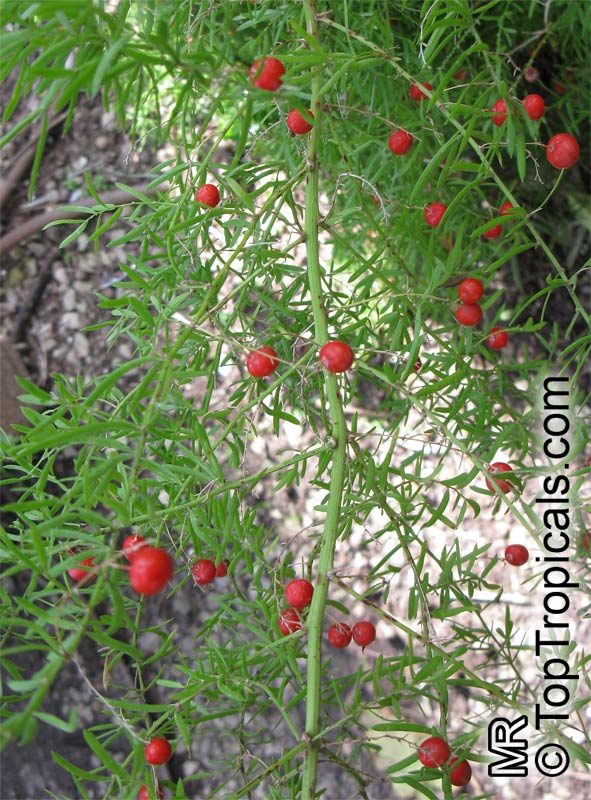
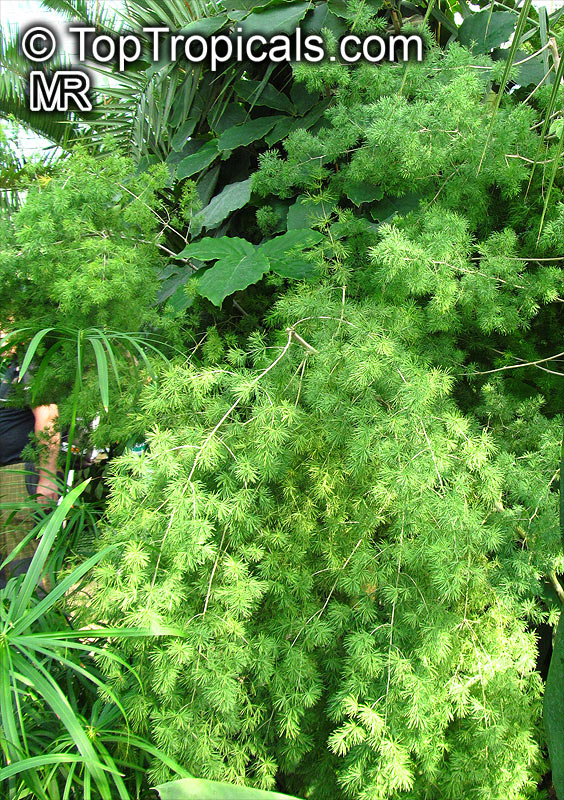
Botanical name: Asparagus aethiopicus
Common names: Asparagus Fern, Foxtail Fern, Sprenger's Asparagus
Family: Asparagaceae (Formerly:Asparagaceae / Hyacinthaceae / Liliaceae)
Subfamily: Asparagoideae
Origin: South Africa
USDA Zone: 9-11


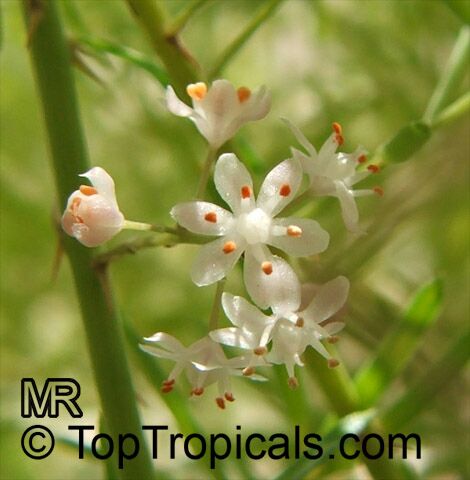
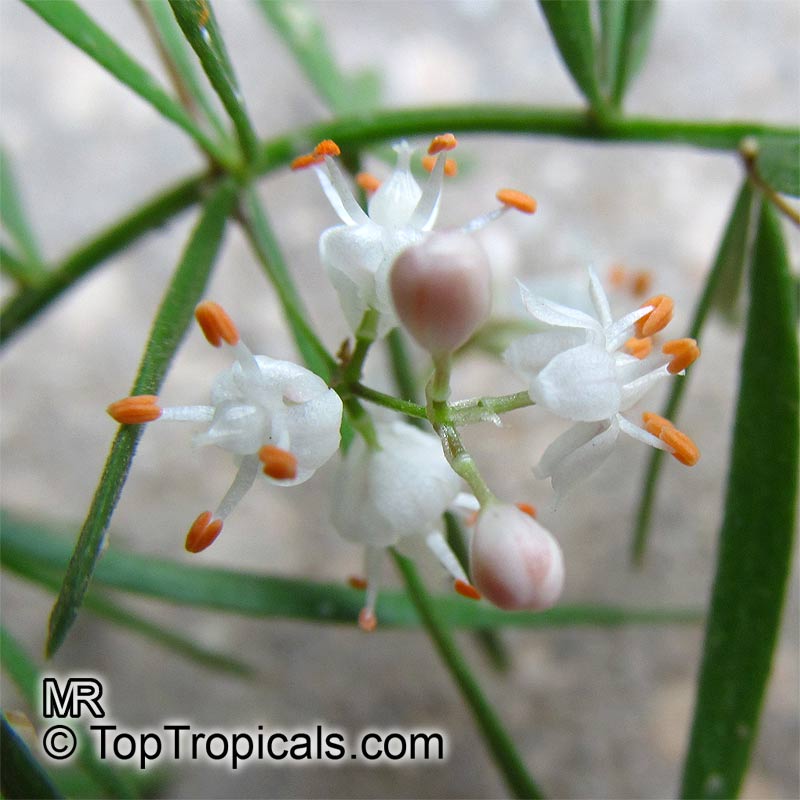
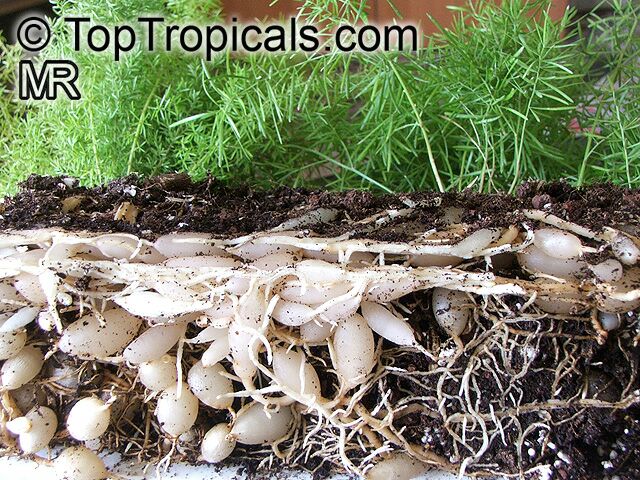
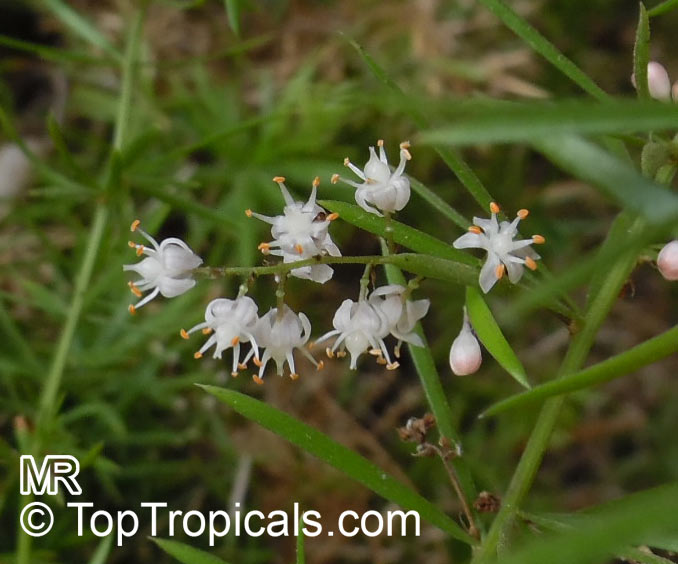
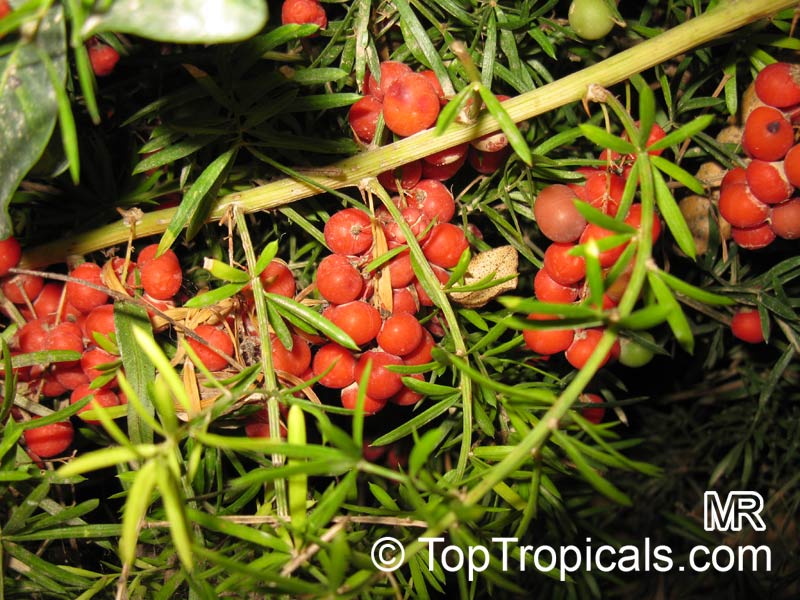
Asparagus aethiopicus has been confused with Asparagus densiflorus, now regarded as a separate species, so that information about A. aethiopicus will often be found under the name A. densiflorus.
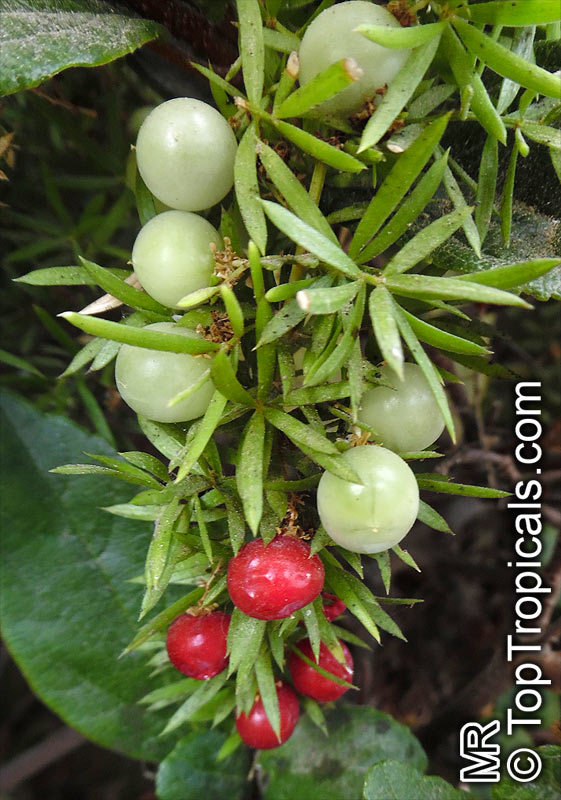
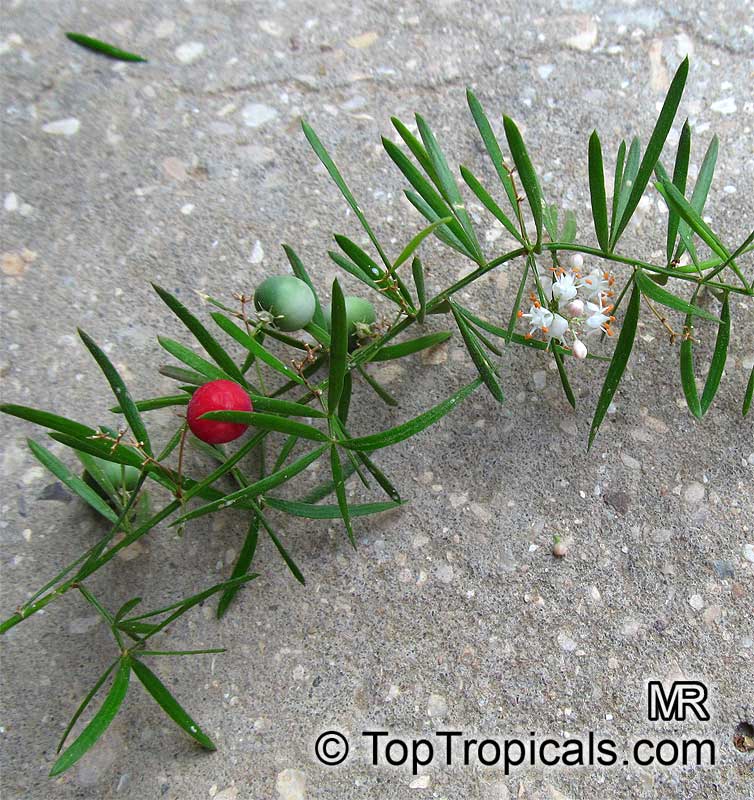
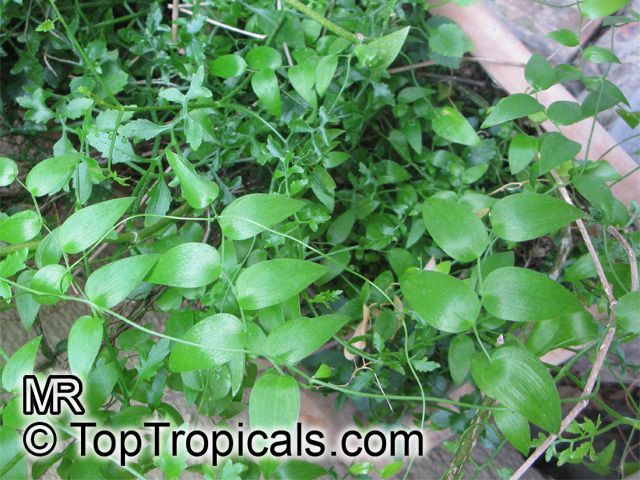
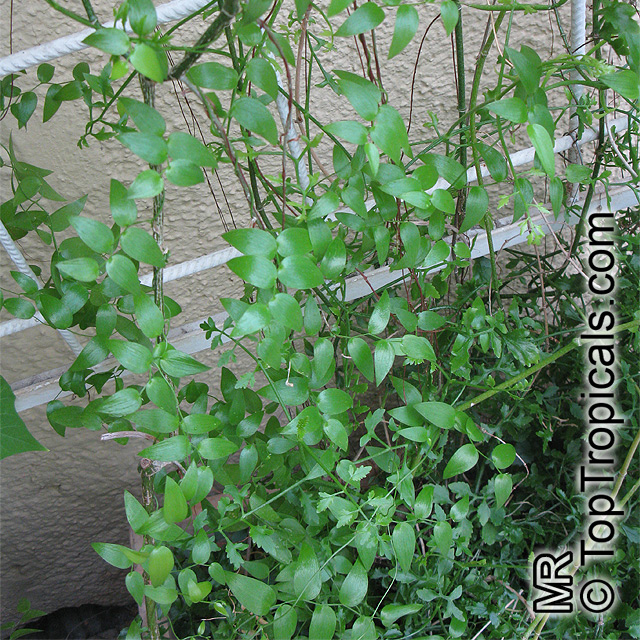
Botanical name: Asparagus asparagoides
Common names: Bridal Creeper, African Asparagus Fern
Family: Asparagaceae (Formerly:Asparagaceae / Hyacinthaceae / Liliaceae)
Subfamily: Asparagoideae
Origin: South Africa
USDA Zone: 9-10
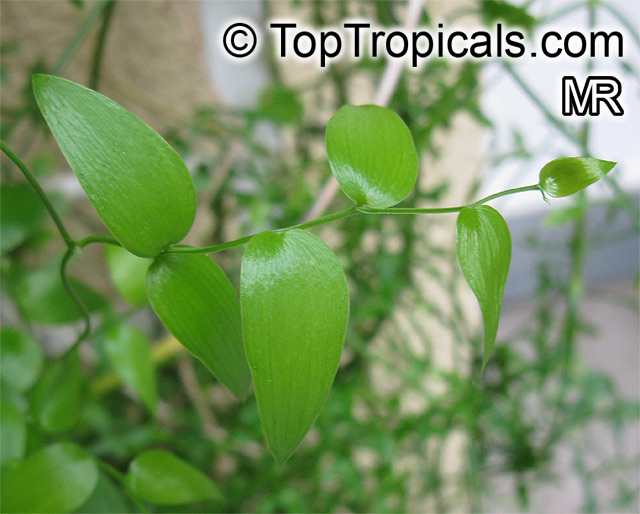
Asparagus asparagoides has shiny green leaf-like structures (phylloclades) which are flattened stems rather than true leaves.
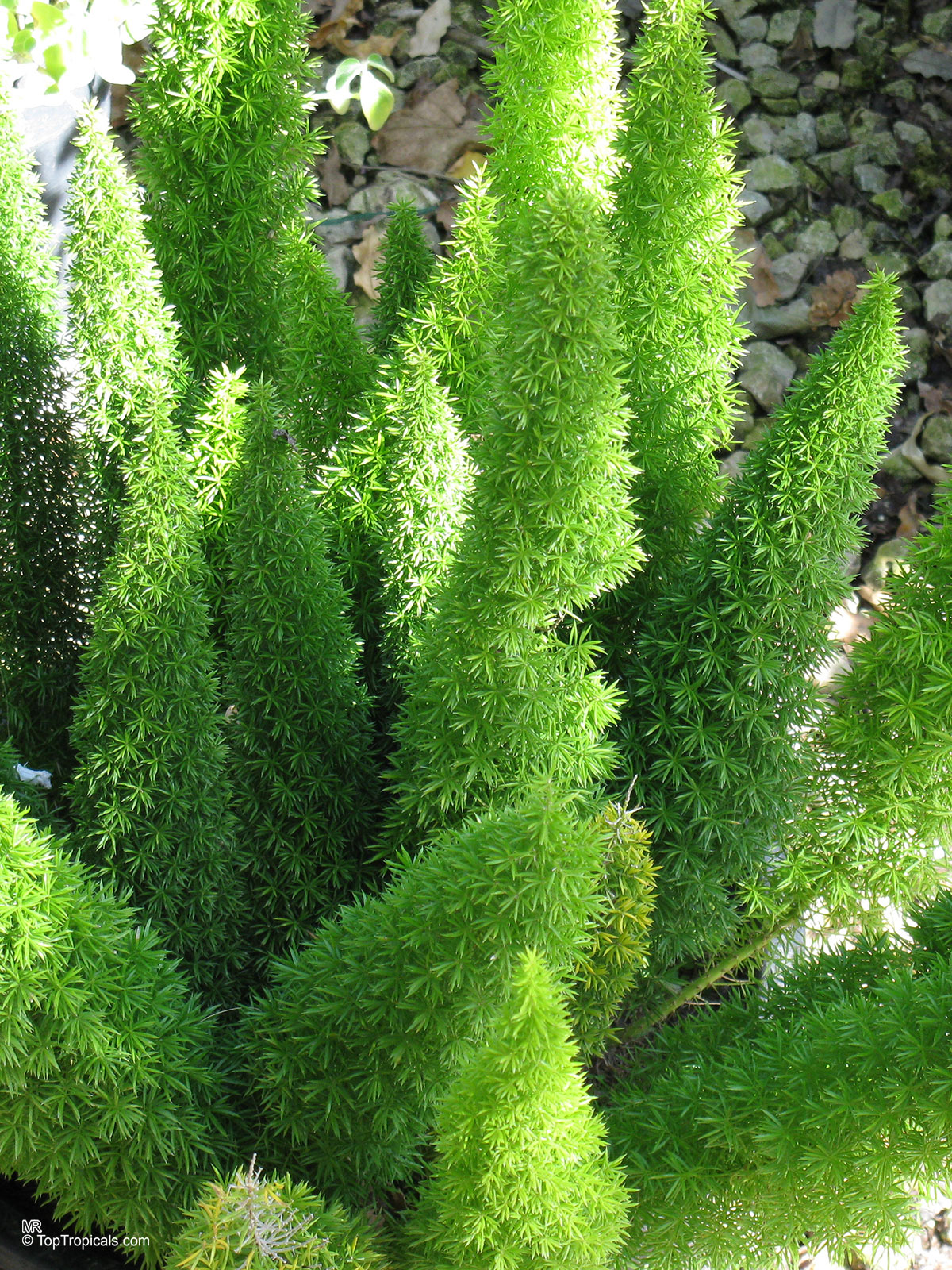
Botanical names: Asparagus densiflorus, Protasparagus densiflorus
Common names: Fox Tail, Foxtail Fern, Emerald Asparagus Fern
Family: Asparagaceae (Formerly:Asparagaceae / Hyacinthaceae / Liliaceae)
Subfamily: Asparagoideae
Origin: South Africa
USDA Zone: 9-11

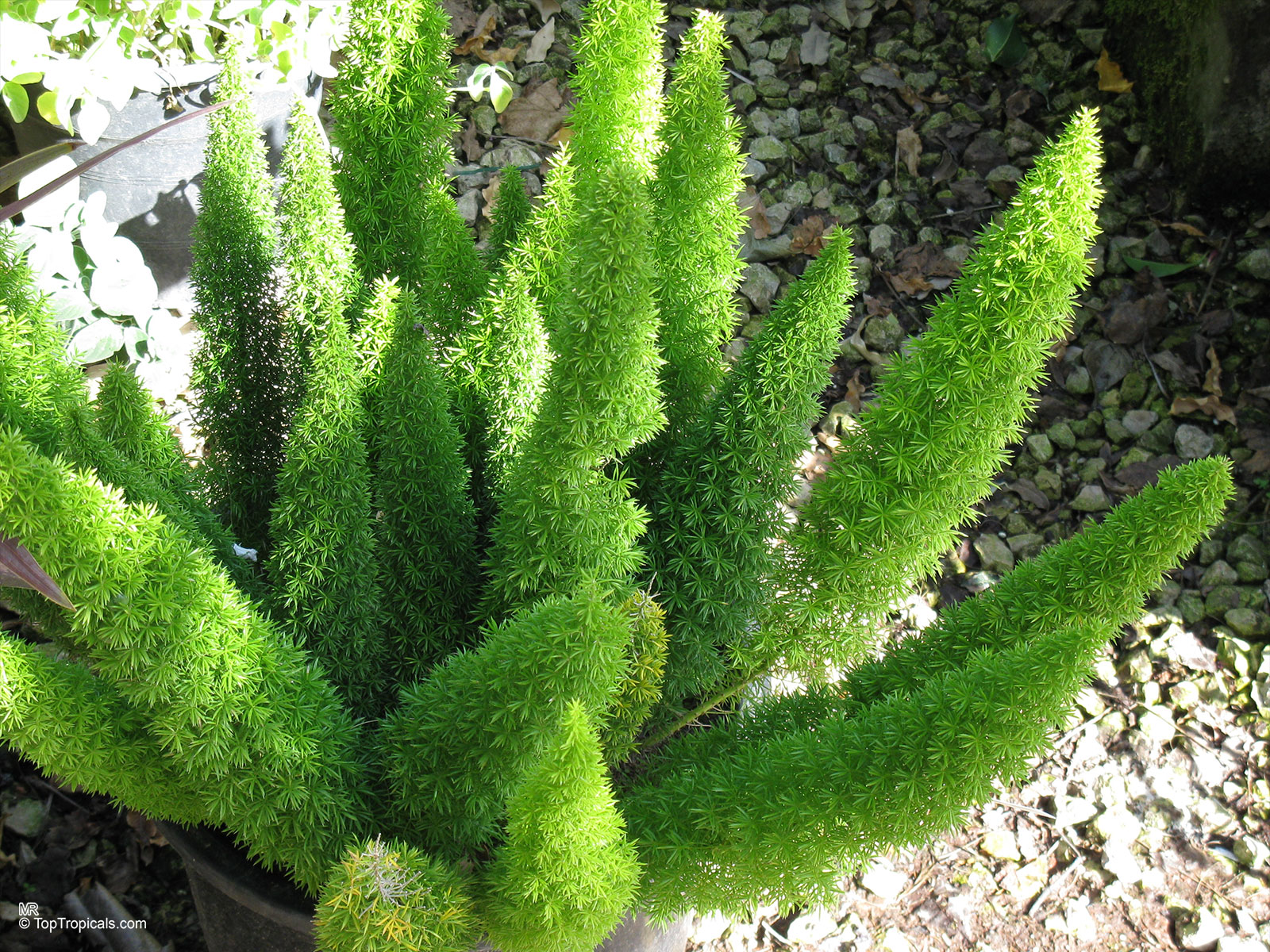
Asparagus densiflorus, also known as the Fox Tail, is a scrambling plant that can grow up to 3 ft long. Its upright or trailing branches are slightly woody and are best known for the 'Sprengeri' cultivar, which forms large cushions with long, arching stems covered in dark green, needle-like leaves. These plants can be used as groundcovers in shade or full sun, or in large containers or hanging baskets. The cultivars 'Cwebe' and 'Myersii' form more upright plants, with the latter having a compact cat's tail-like frond appearance. Cultivar 'Myersii' looks best when grown in shade or semi-shade.
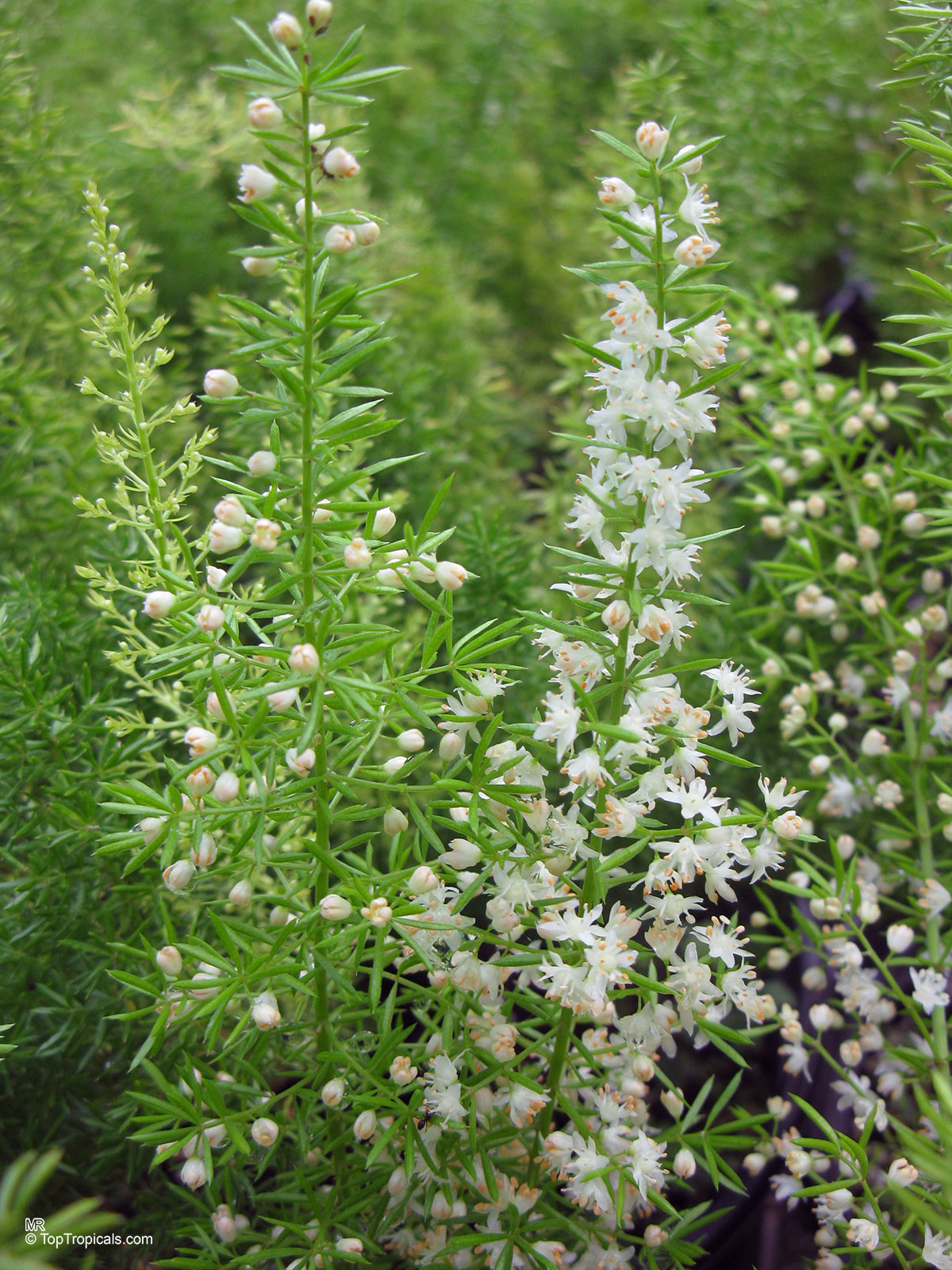
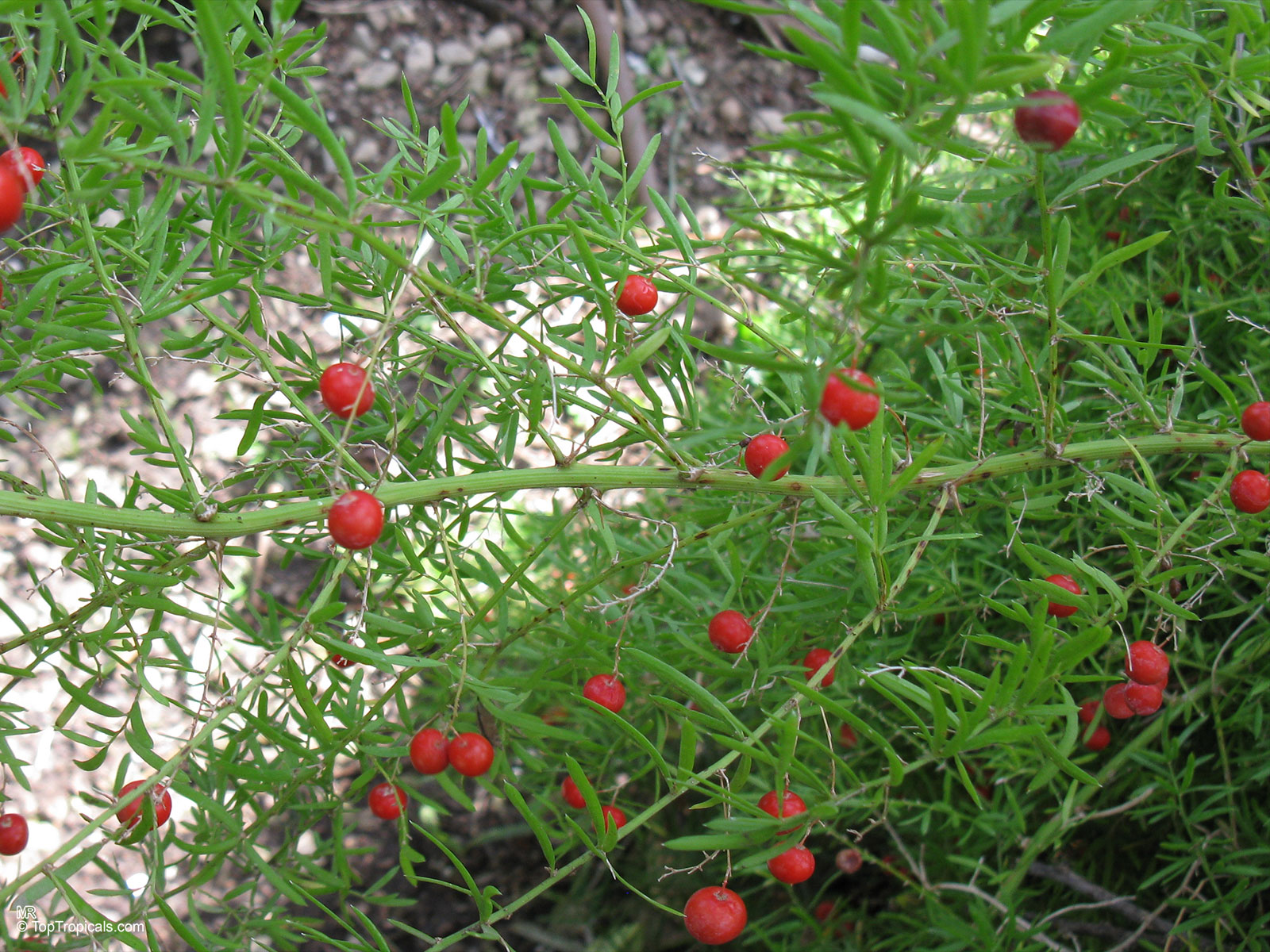
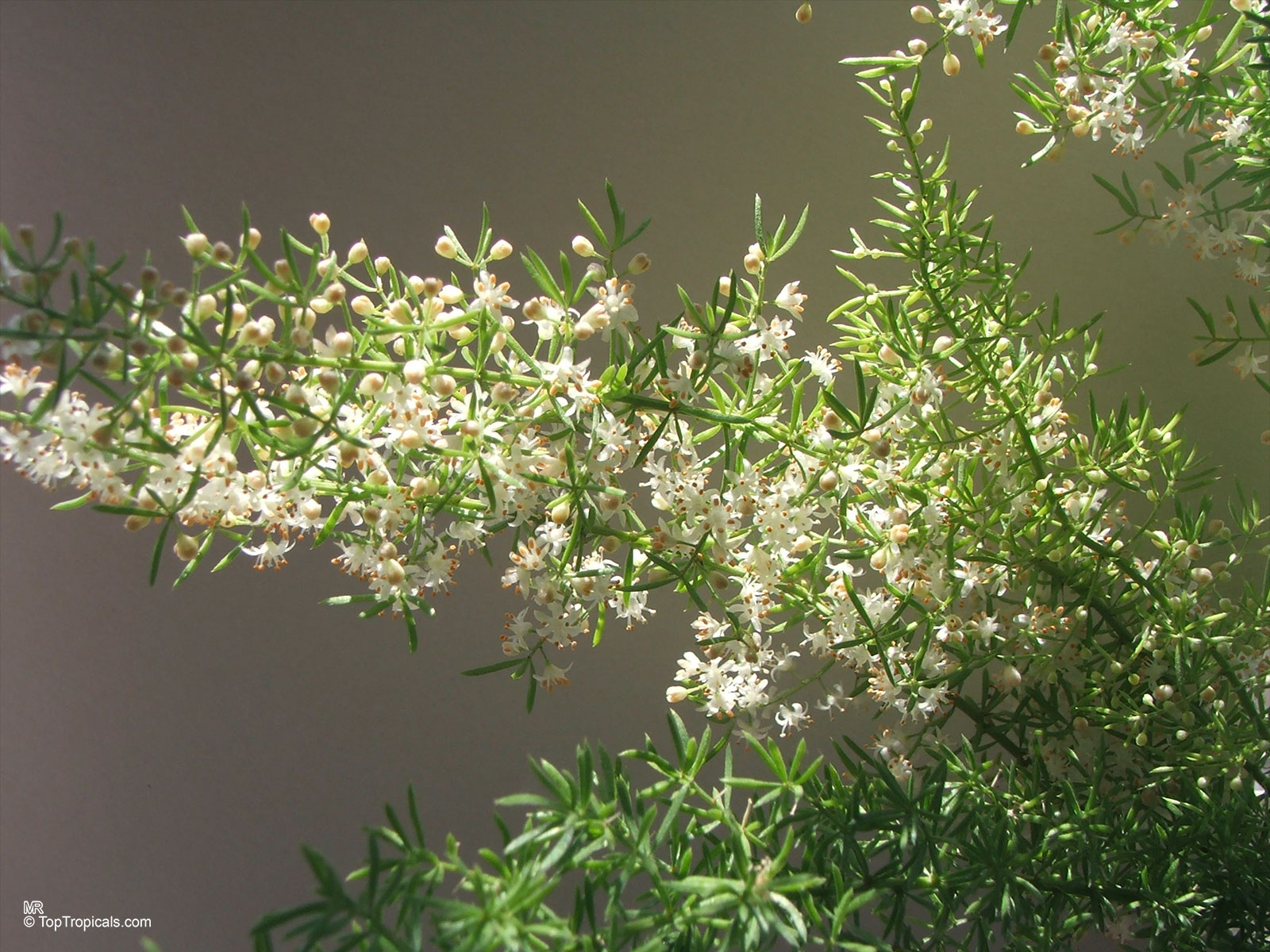
The small, sweetly scented flowers of Asparagus densiflorus are usually white or pale pink, but their flowering can be erratic, with a good flowering year on average only once every three years. The small flowers are followed by showy bright red berries, which are attractive to birds and may be spread by them.
The plant can grow in most soils and is drought tolerant, but it does better in soil that is rich in organic matter and is watered regularly. To rejuvenate the plants, they can be cut back after flowering.
This plant is suitable for growing in USDA Zones 9-11 and can do well as a pot plant in cold regions. The soil should be nutrient-rich, well-drained and moist, and the soil should be kept moist but not wet. Plants should be placed in an area with full sun to partial shade, depending on the variety. Asparagus densiflorus should be watered regularly, with more frequent watering during hot and dry periods. To ensure healthy foliage and growth, fertilize the plant two to three times a year with a balanced fertilizer. Pruning is usually unnecessary, but if, over time, the plants become too large, they can be cut back in late fall or early winter.

Botanical name: Asparagus falcatus
Common name: Sicklethorn
Family: Asparagaceae (Formerly:Asparagaceae / Hyacinthaceae / Liliaceae)
Subfamily: Asparagoideae
Origin: South Africa
USDA Zone: 9-10

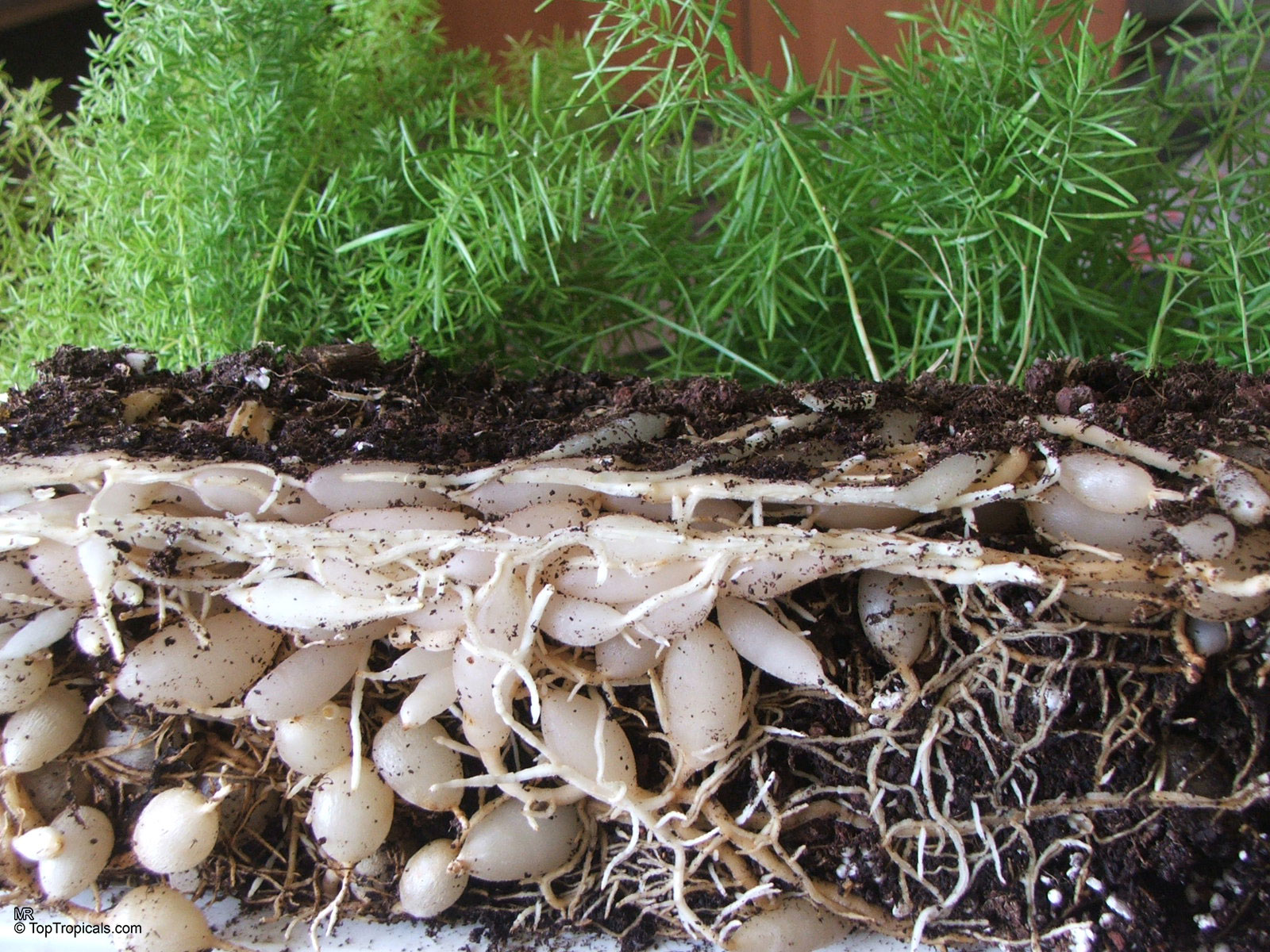
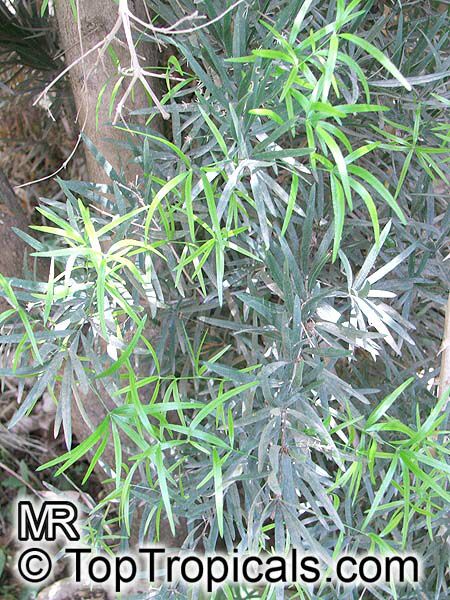
Asparagus falcatus is an evergreen climbing shrub, up to 7 m high. The roots of this plant form swollen tubers that resemble sweet potatoes.
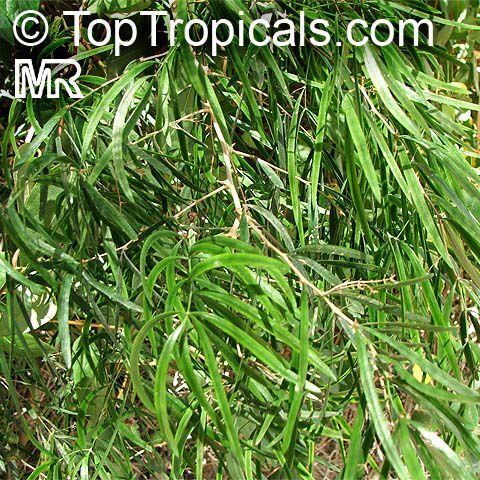
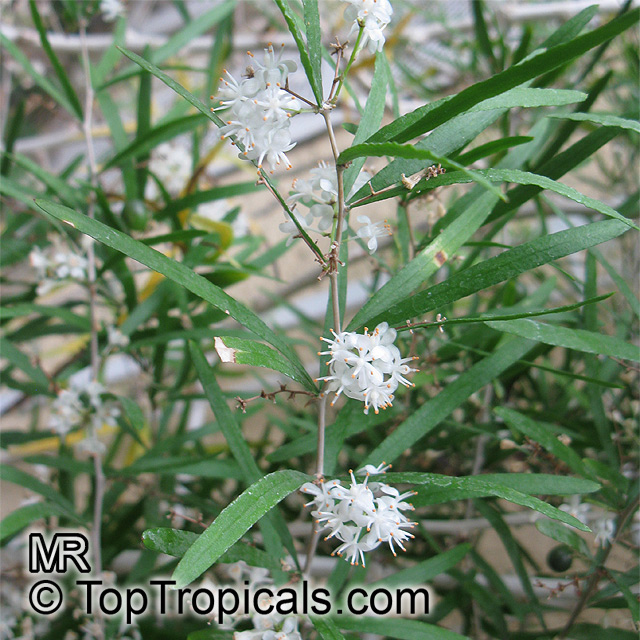
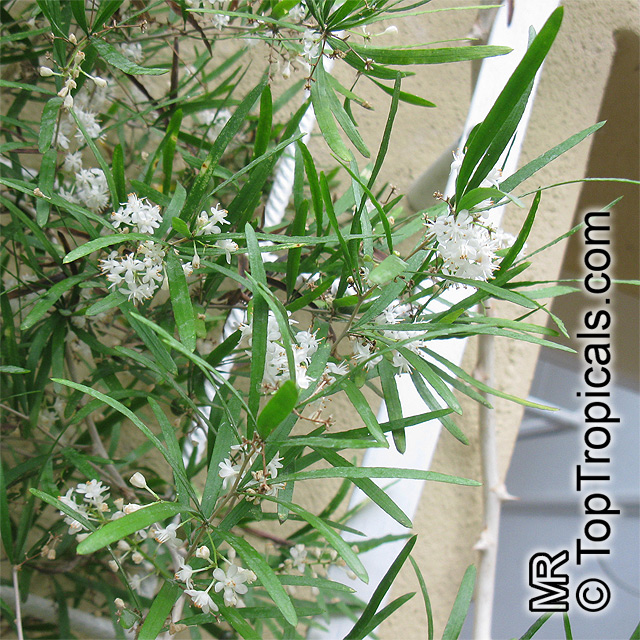
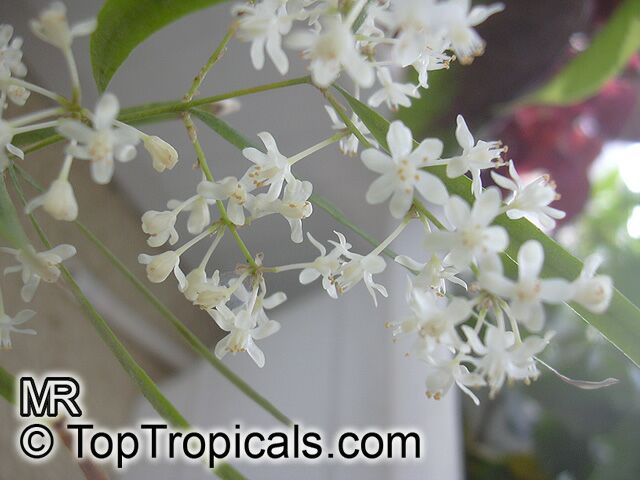

Botanical name: Asparagus juniperoides
Common name: Asparagus
Family: Asparagaceae (Formerly:Asparagaceae / Hyacinthaceae / Liliaceae)
Subfamily: Asparagoideae
Origin: South Africa
USDA Zone: 9-10
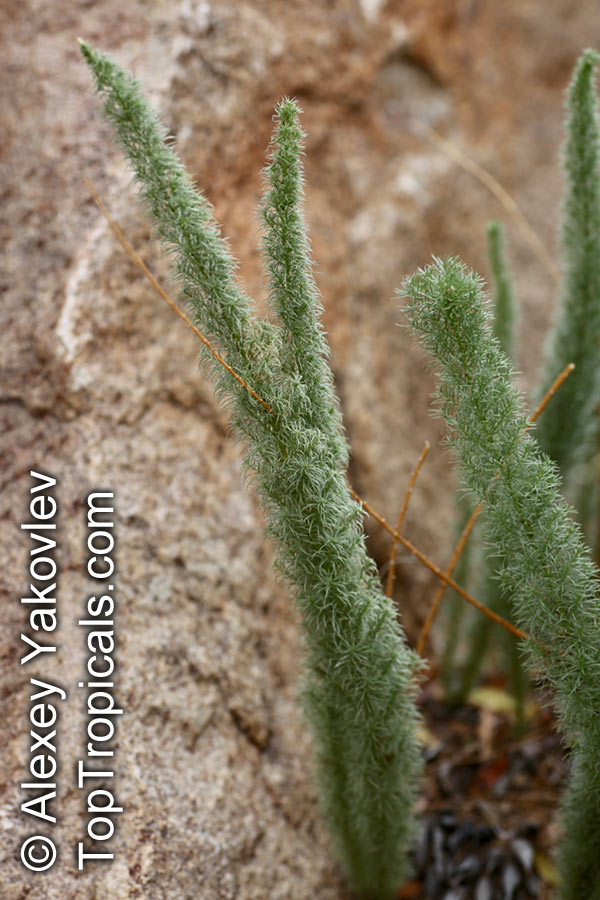
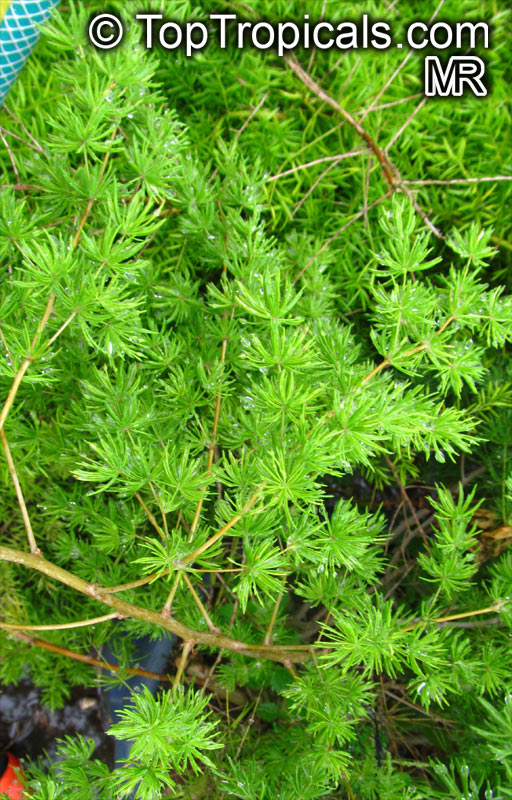
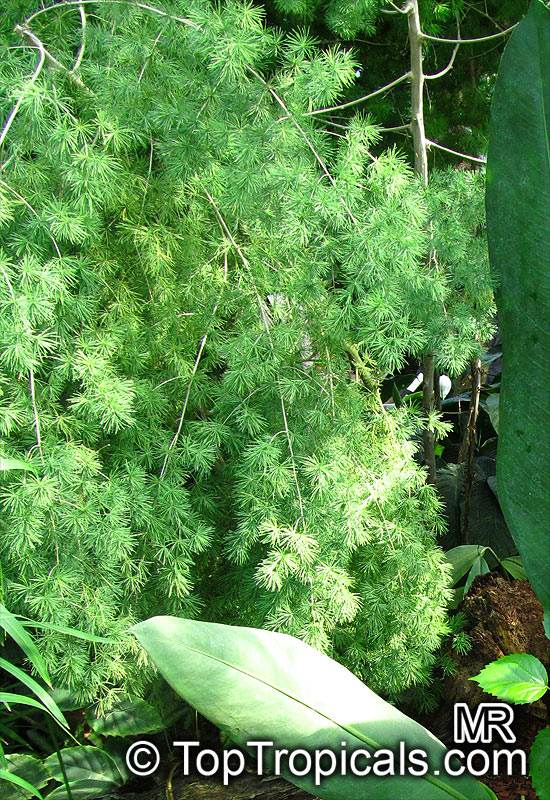
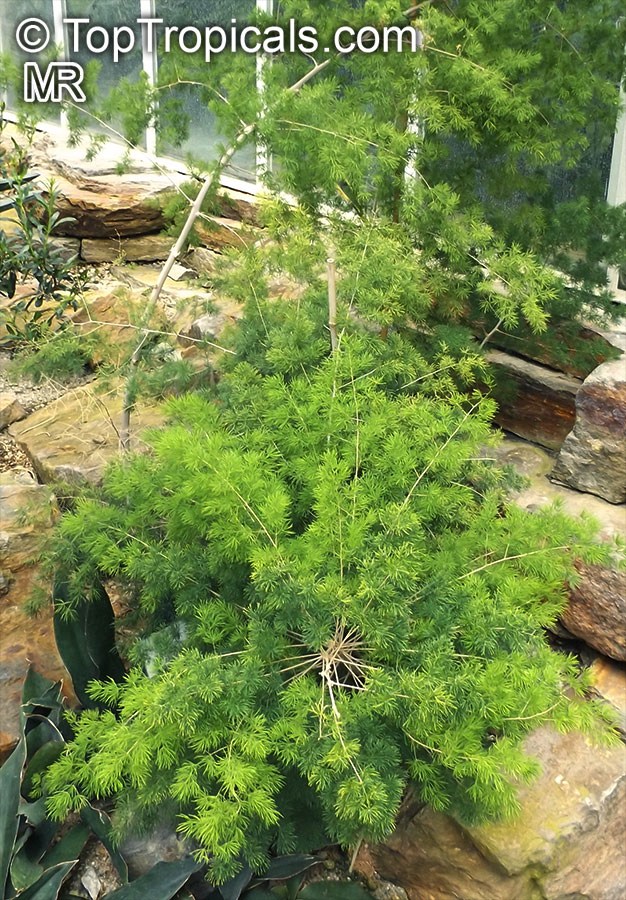
Botanical names: Asparagus laricinus, Protasparagus laricinus, Asparagus angolensis
Common names: Cluster-leaf Asparagus, Bergkatbos
Family: Asparagaceae (Formerly:Asparagaceae / Hyacinthaceae / Liliaceae)
Subfamily: Asparagoideae
Origin: South Africa
USDA Zone: 9-10
| Next | |
Use link to repeat this search:
https://toptropicals.com/cgi-bin/garden_catalog/cat.cgi?search_op=and&keyword_op=and&language=e&family=Liliaceae&number=10
&no_change_lang=1&user=tt&sale=1&first=0