Crassulaceae - Botanical Family
| Number of plants found: 68 | Next | 
|
Go to page: | 1 | 2 | 3 | 4 | 5 | Last |
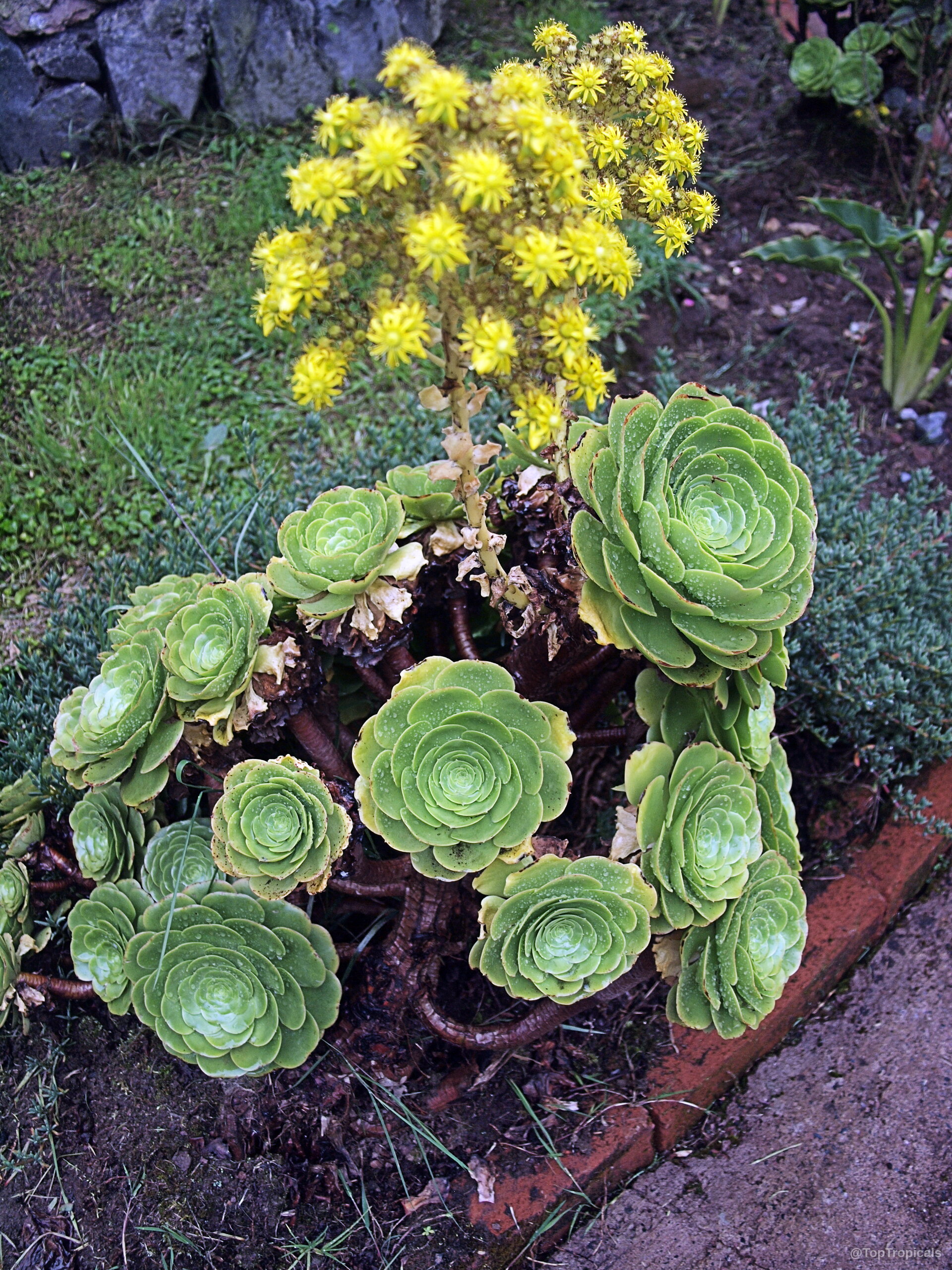
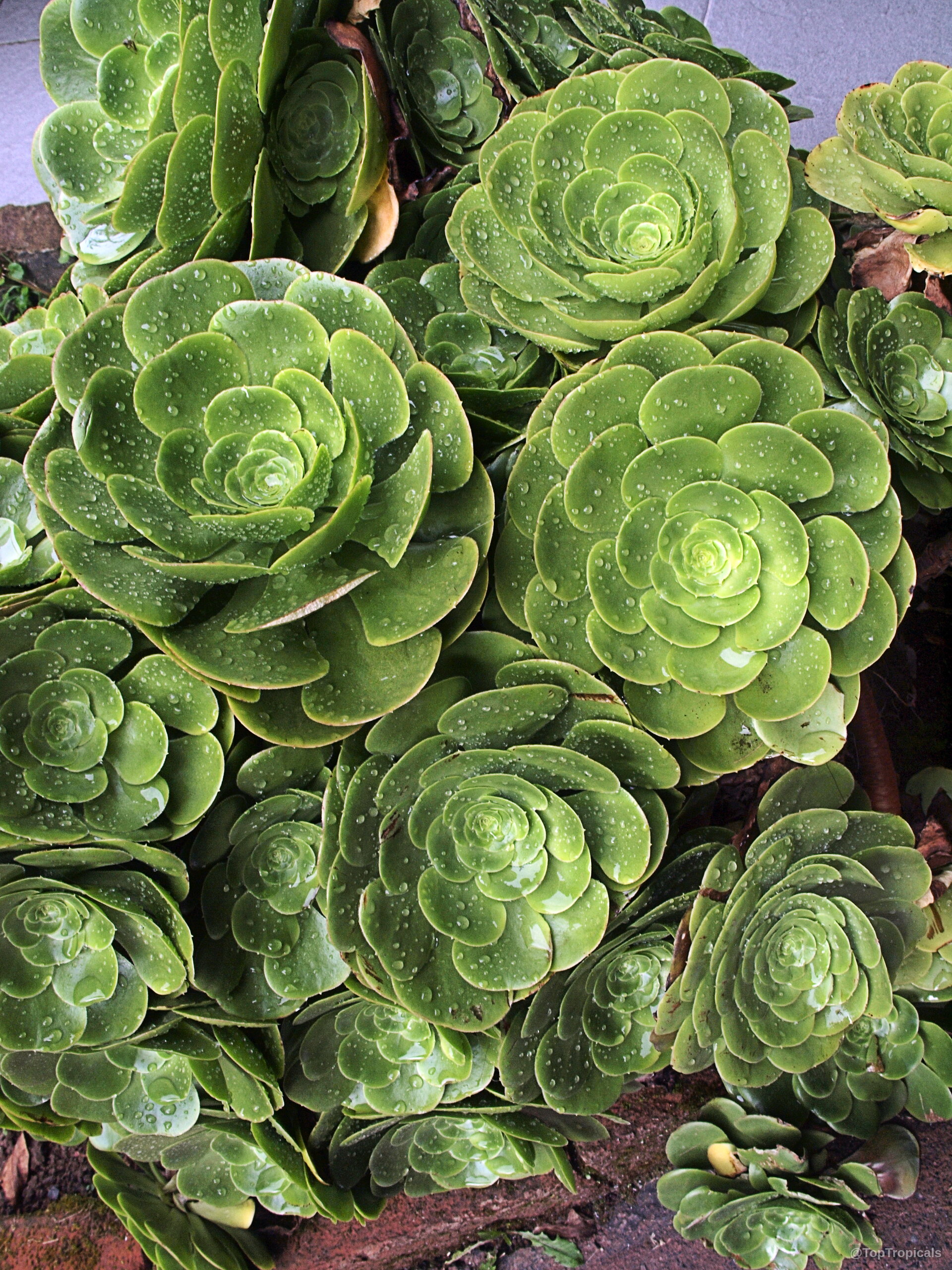
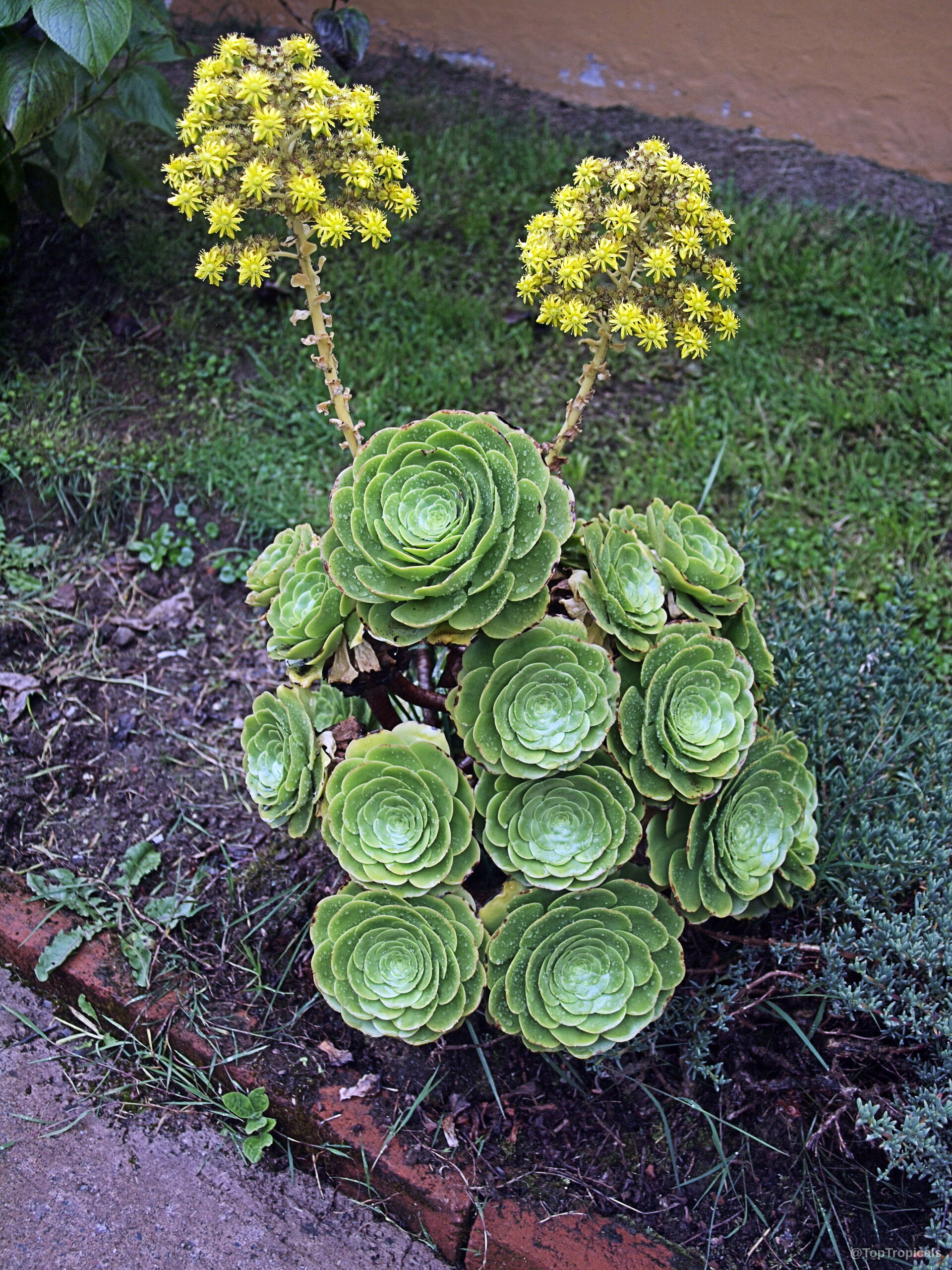
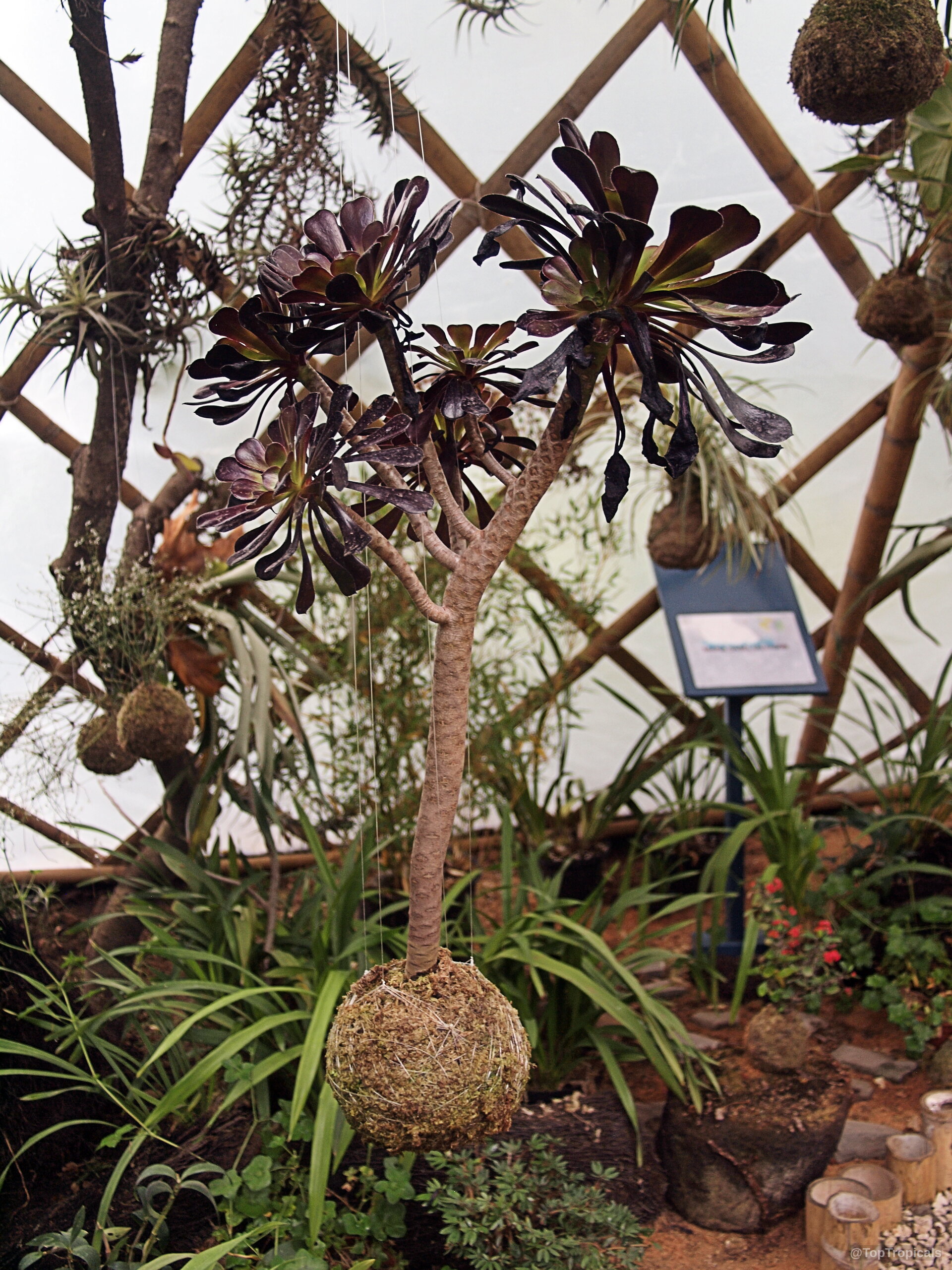
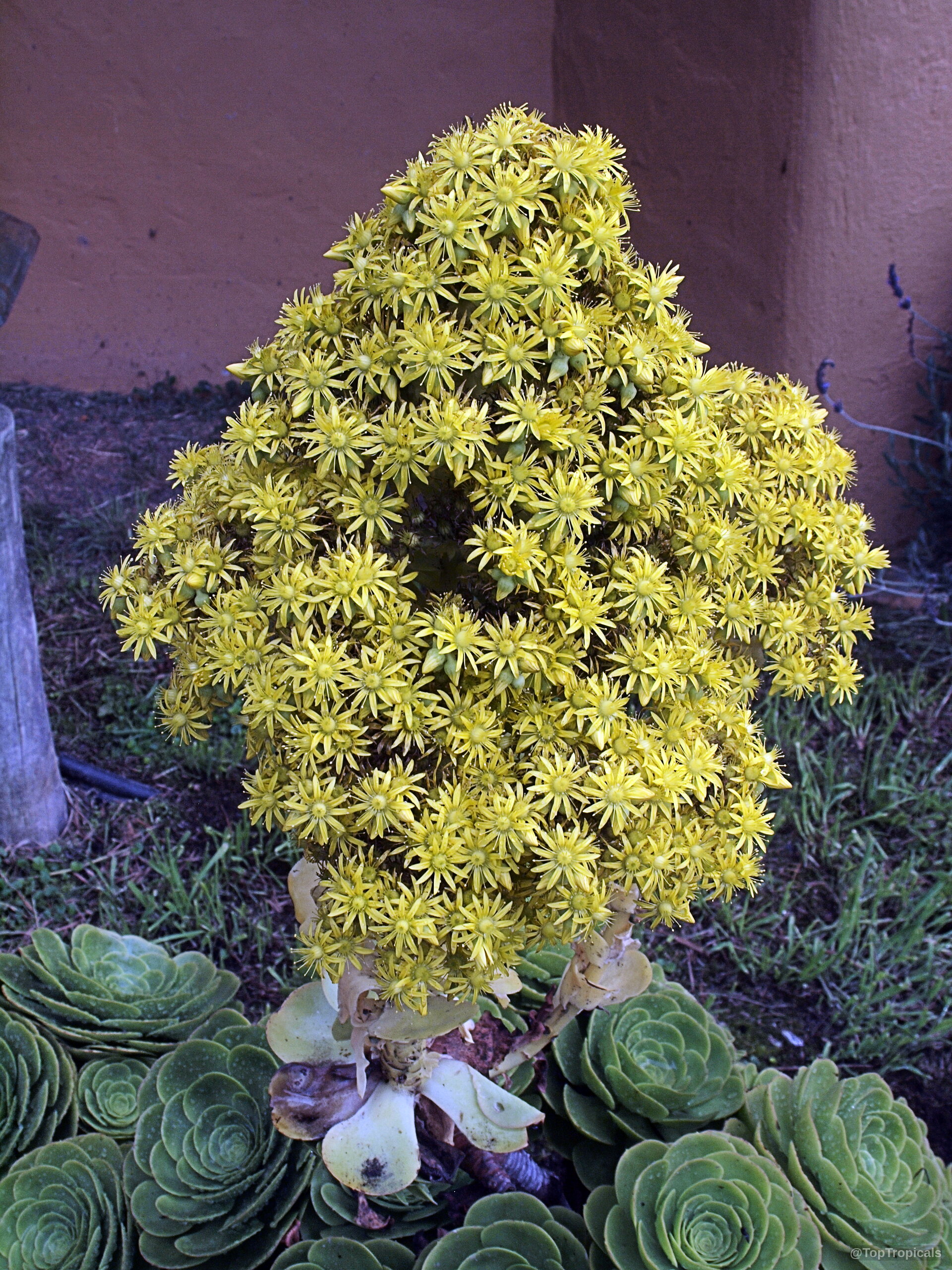
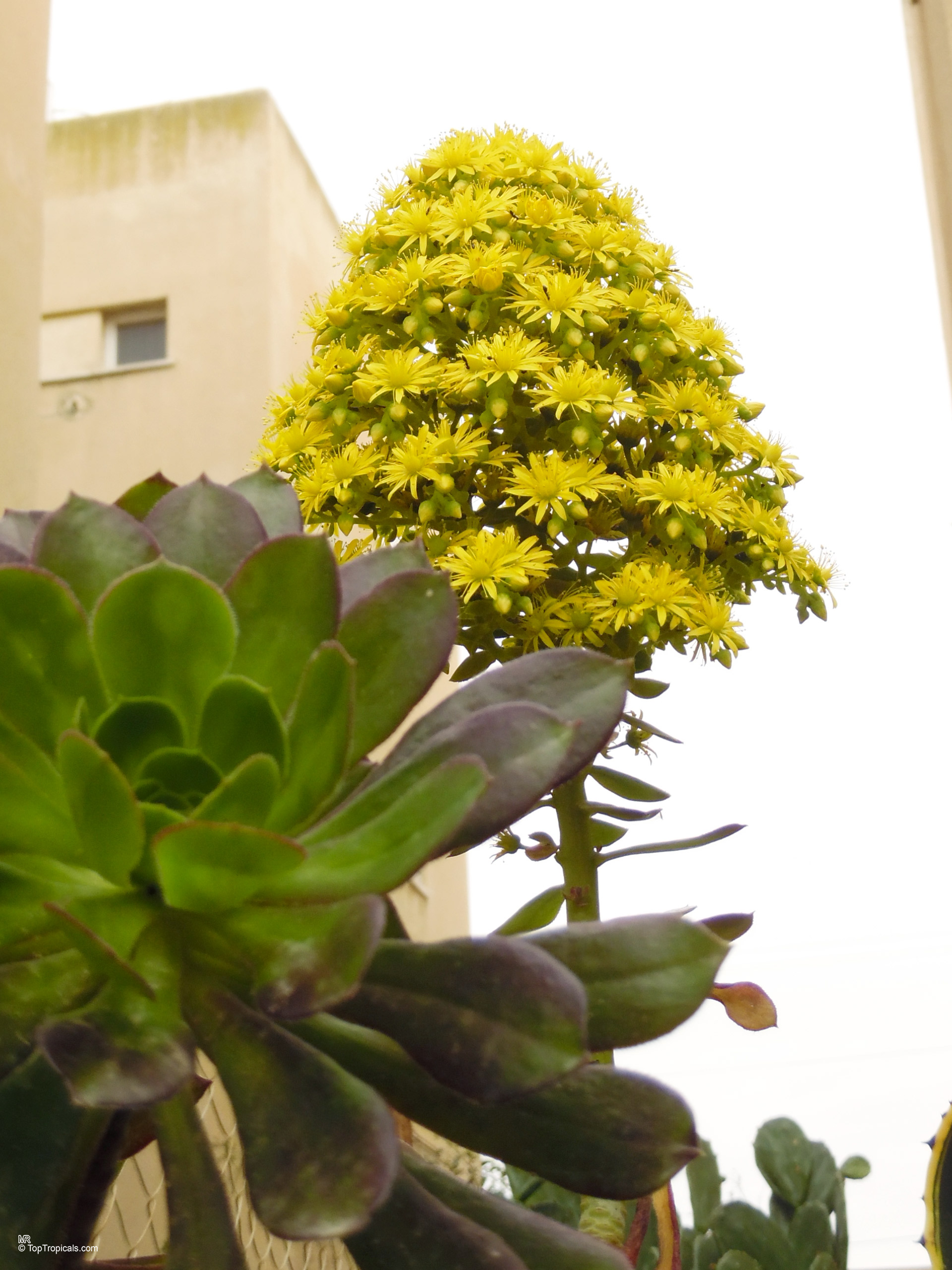
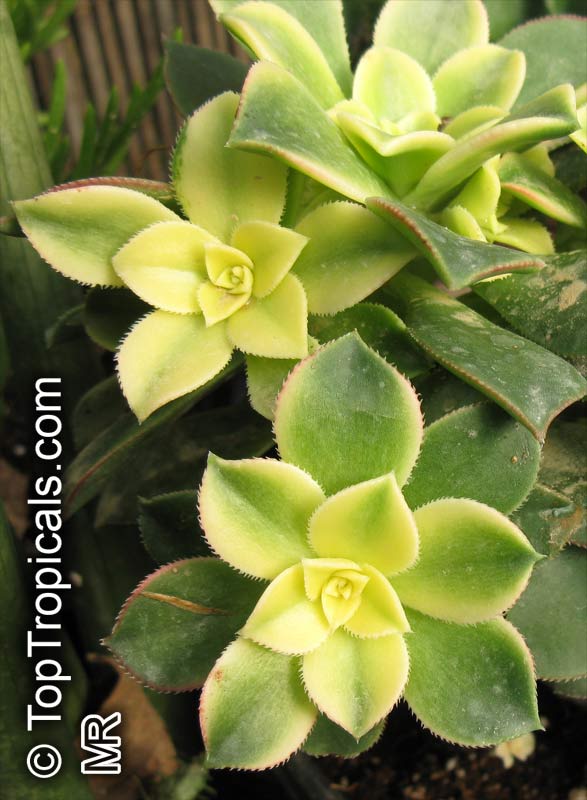
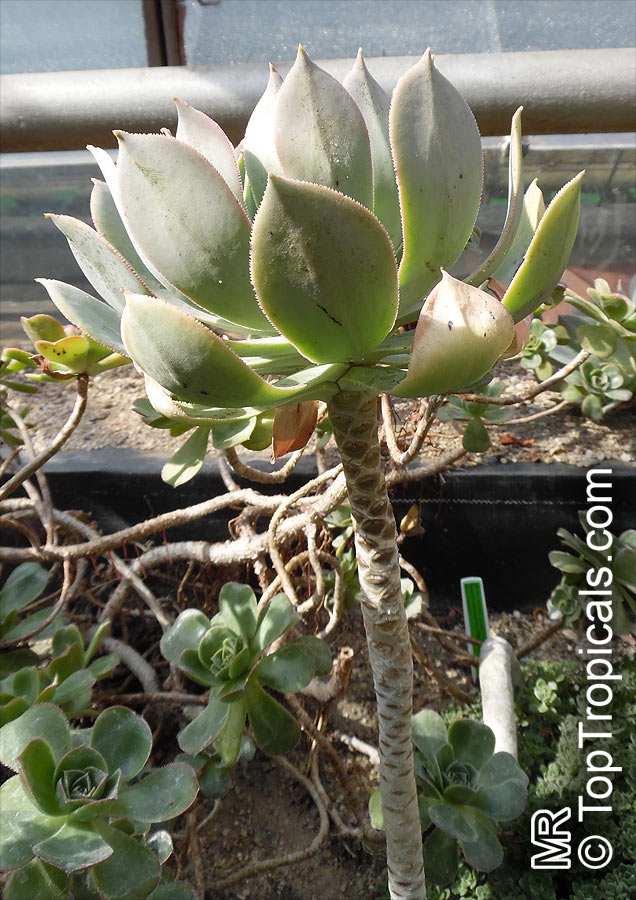
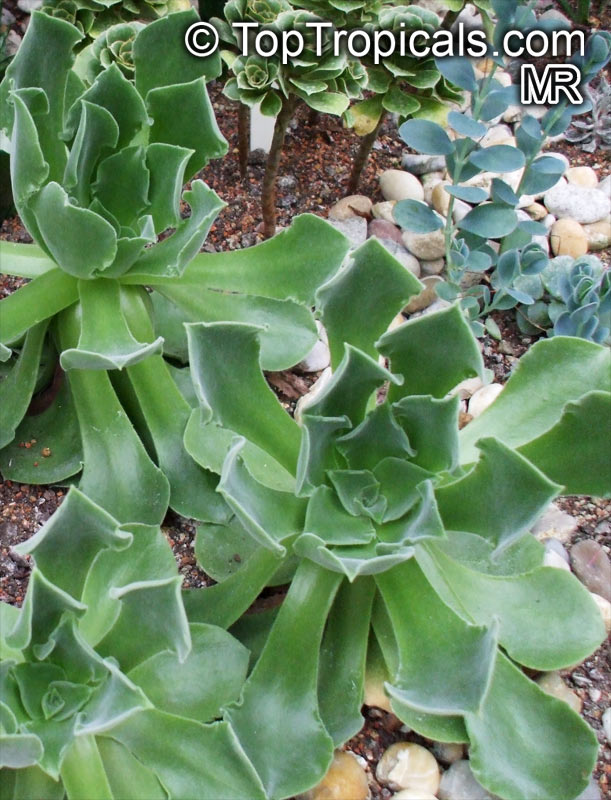
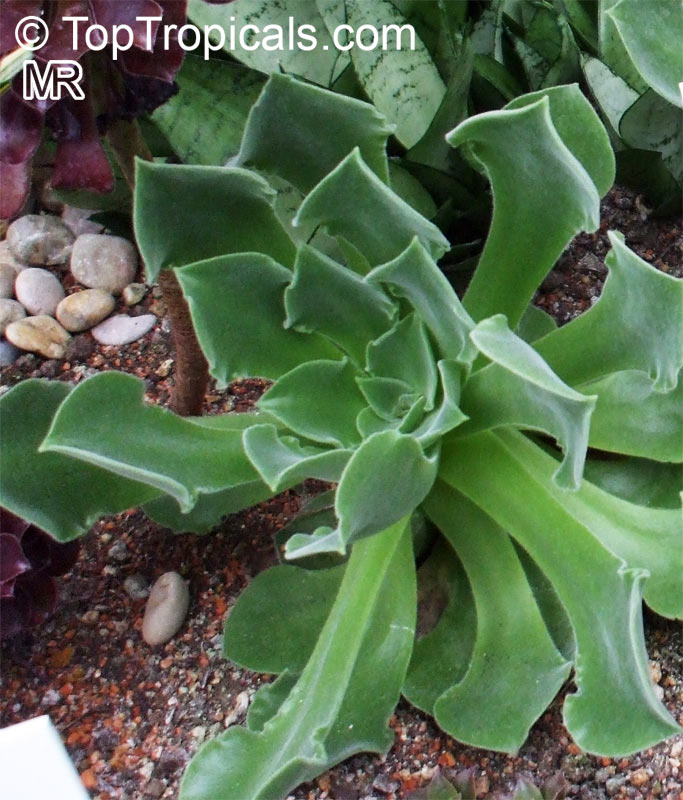
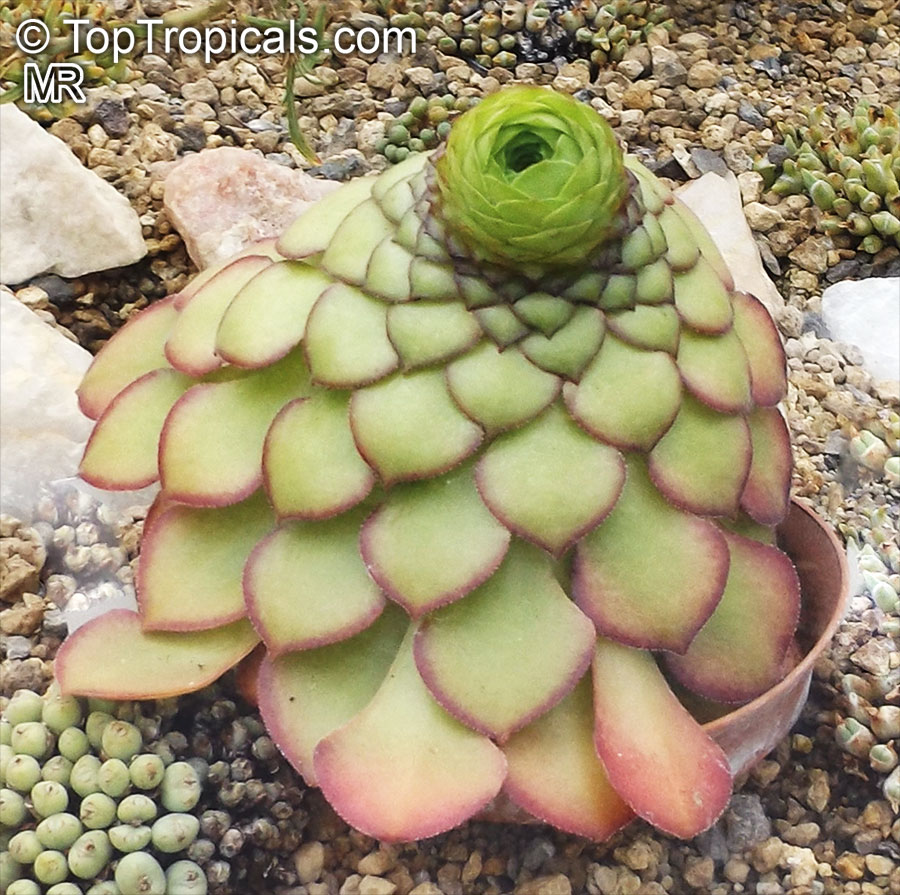
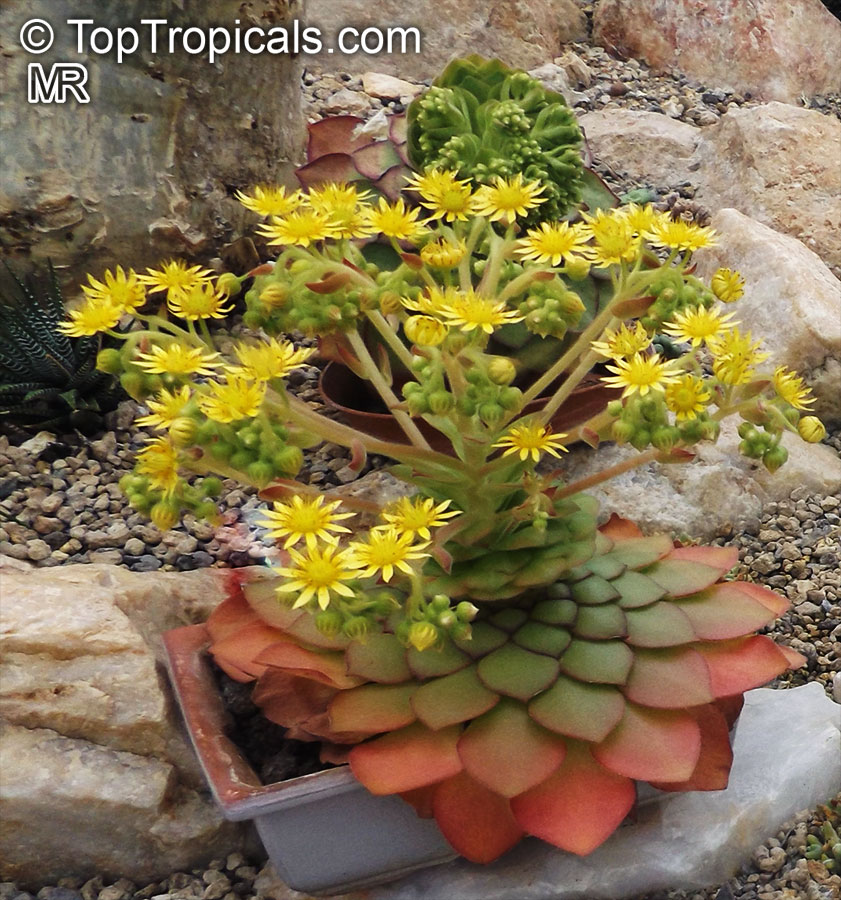
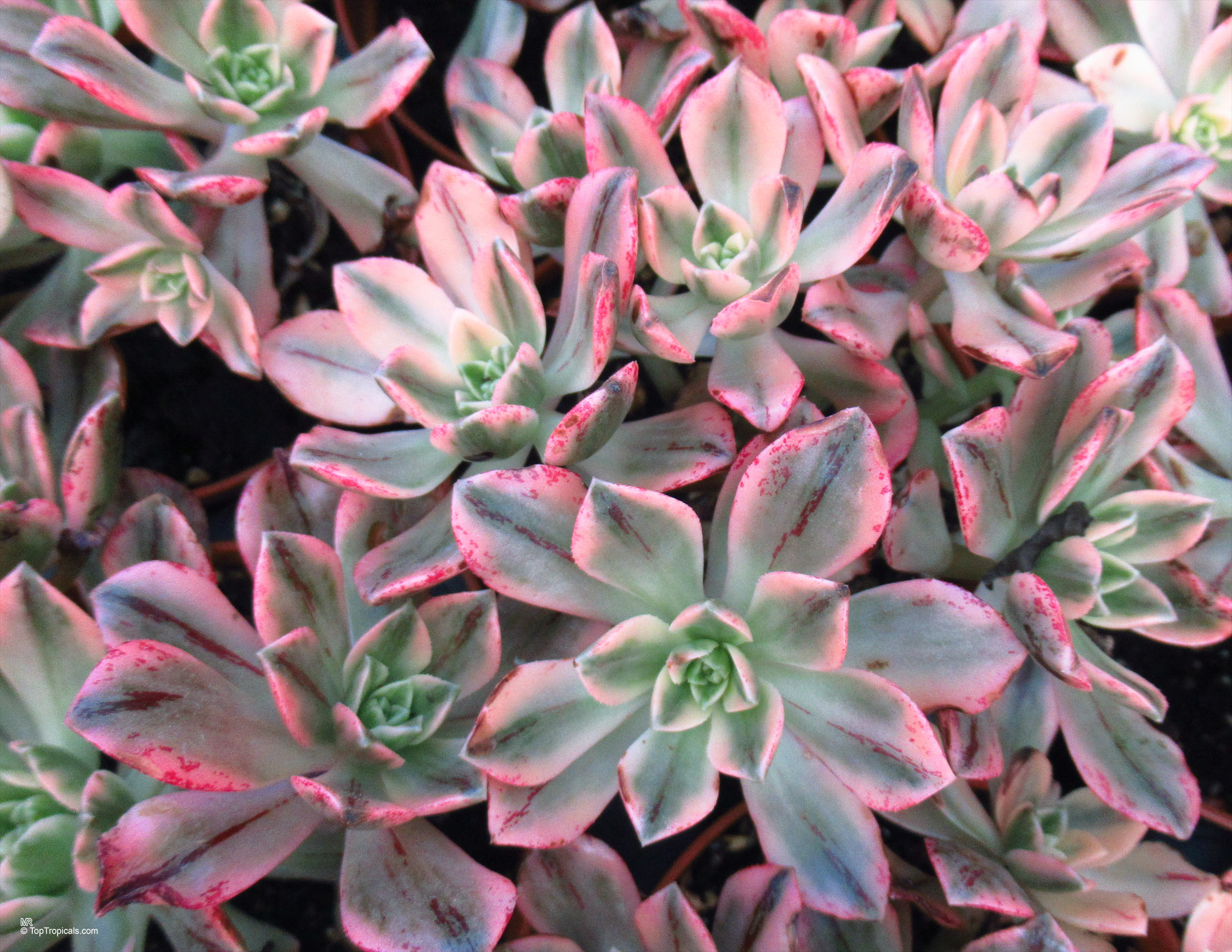
Botanical names: Aeonium arboreum, Sempervivum arboreum
Common names: Tree Aeonium, Houseleek Tree, Irish Rose
Family: Crassulaceae
Origin: Canary Islands
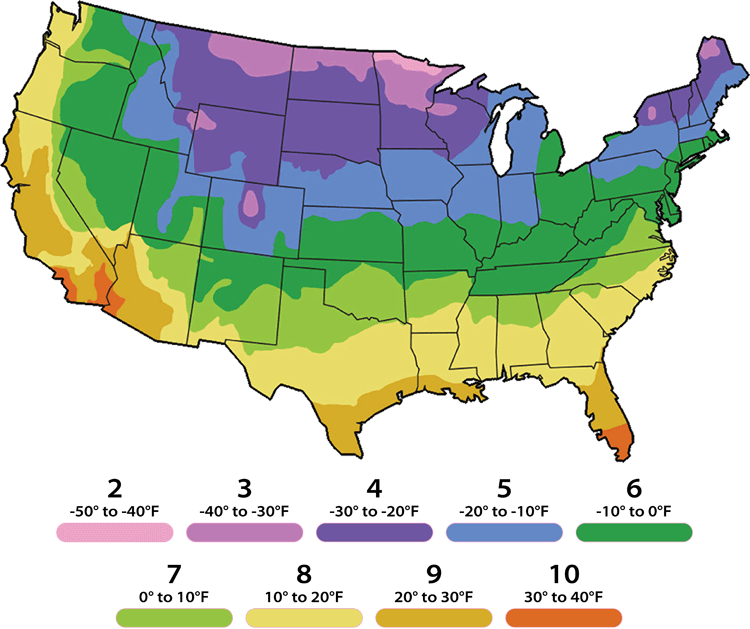
USDA Zone: 9-11


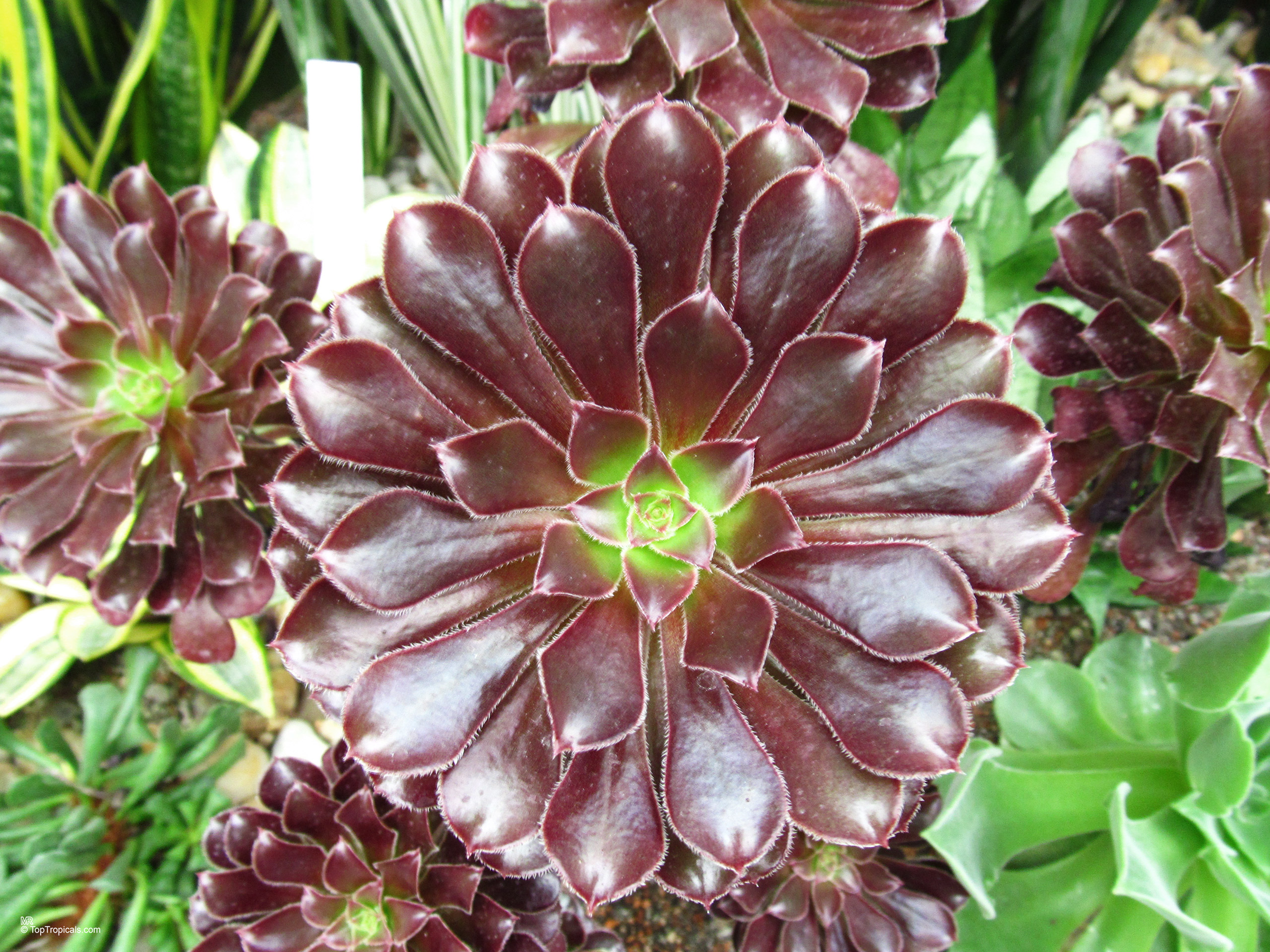
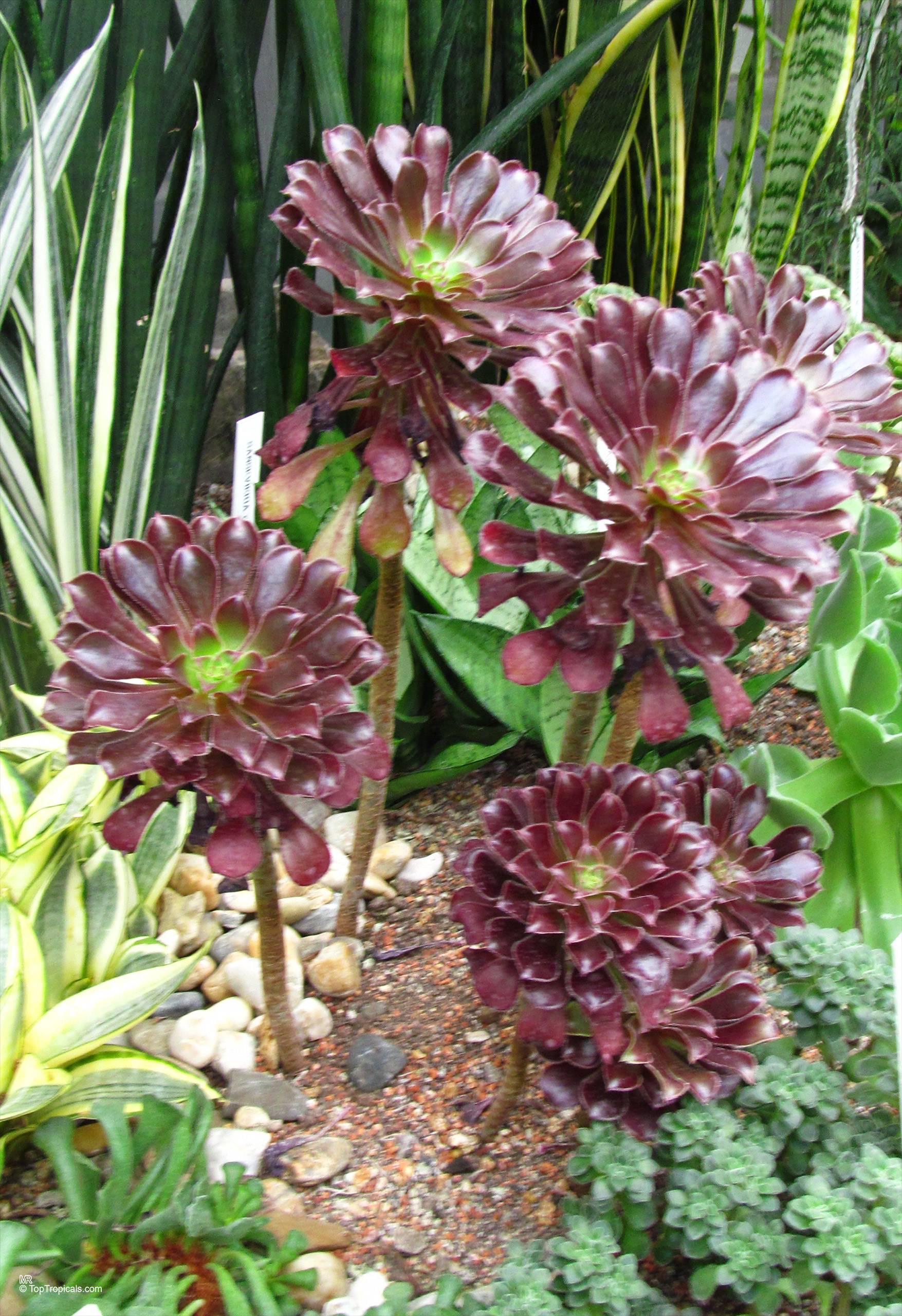
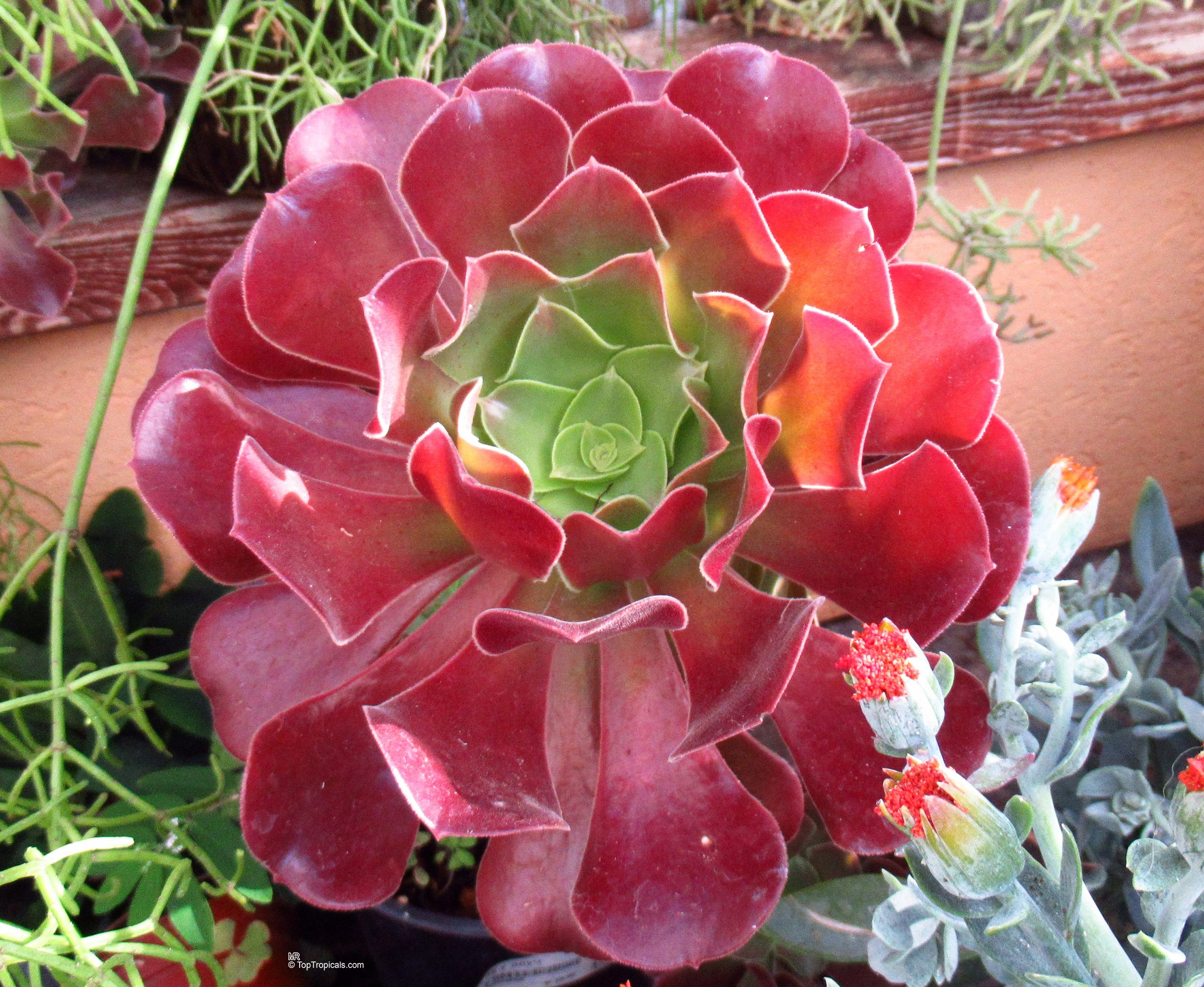
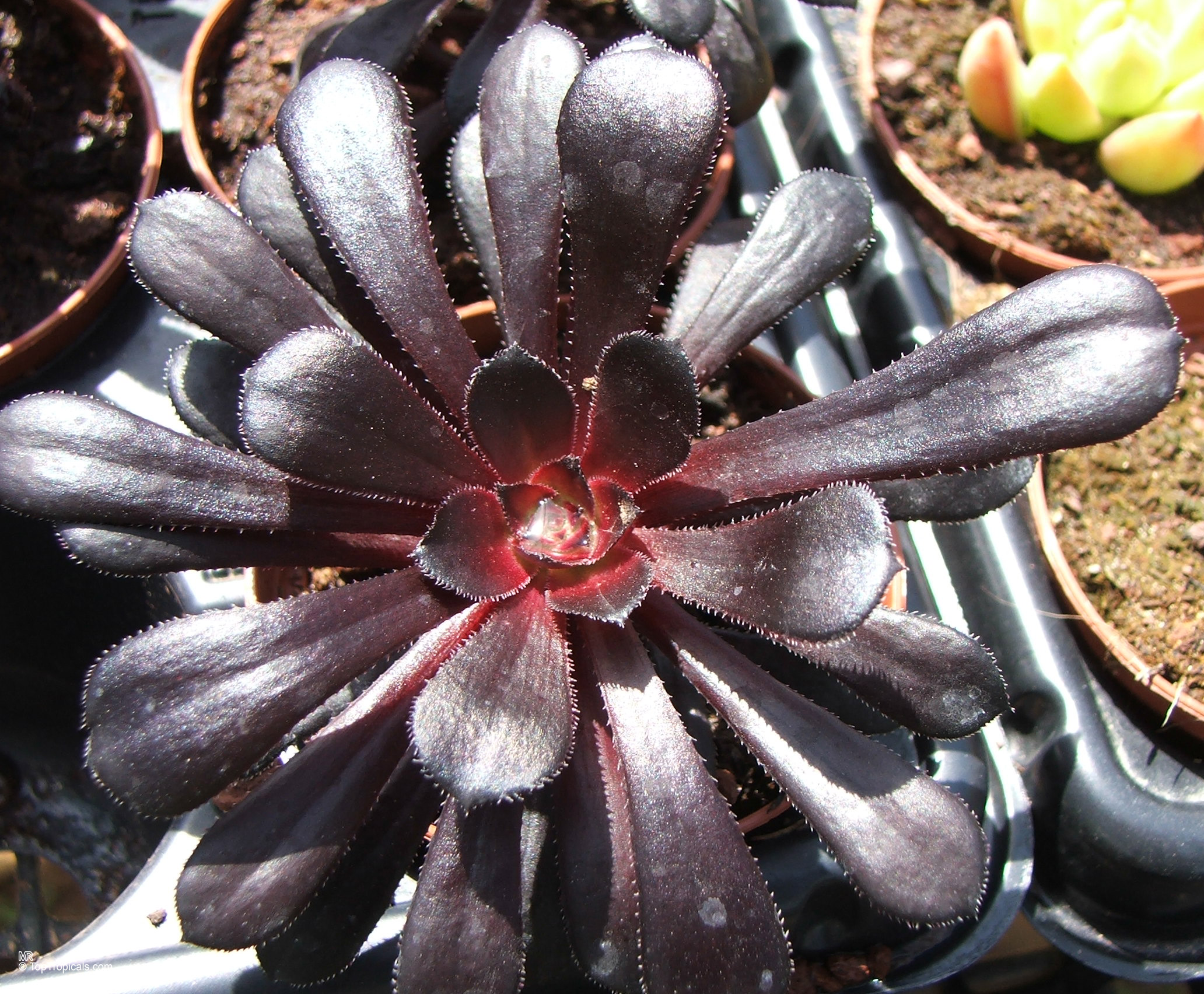
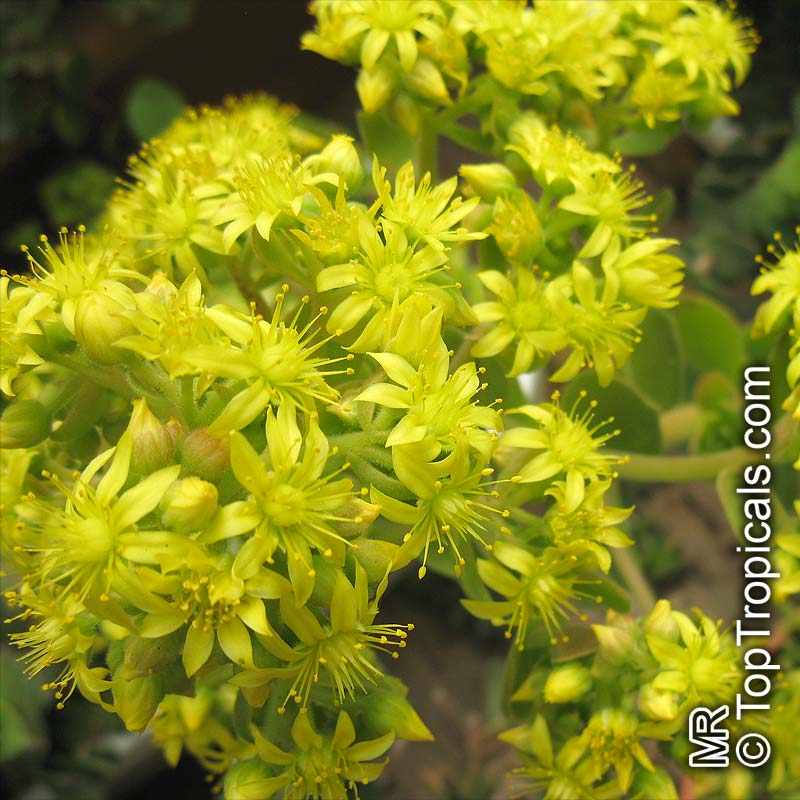
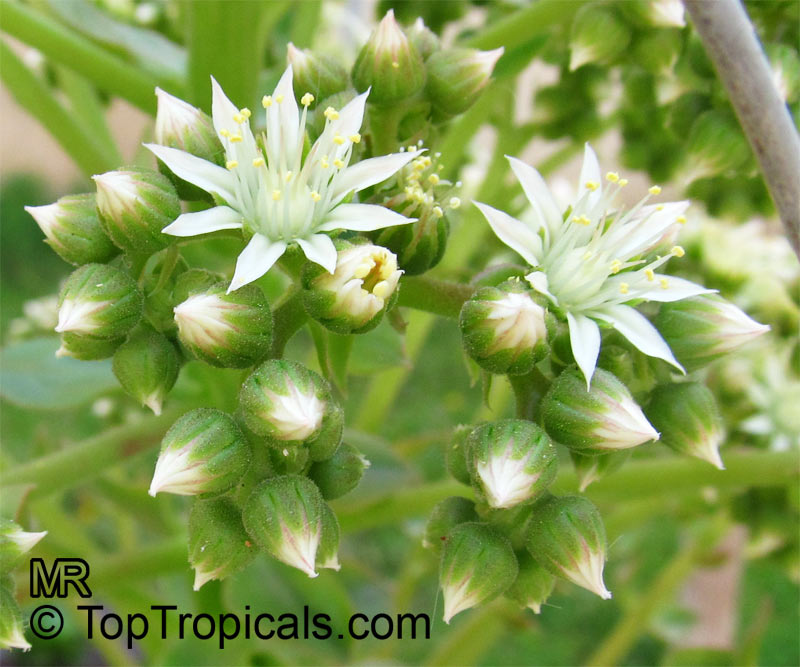
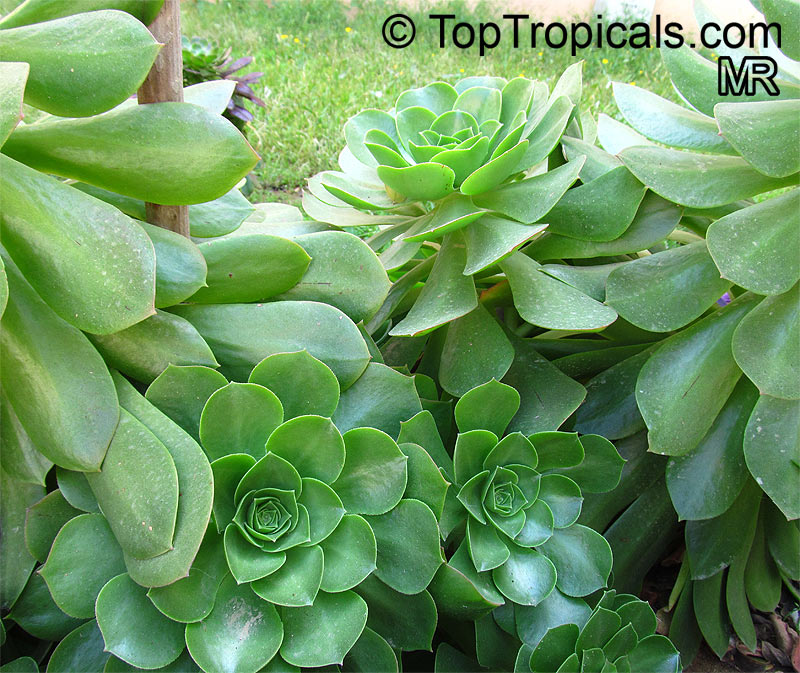
Aeonium arboreum, commonly known as Tree Aeonium or Tree Houseleek, is an evergreen succulent subshrub in the Crassulaceae family native to the Canary Islands and southwestern Morocco. It develops upright, branching, increasingly woody stems topped by large rosettes of smooth, fleshy, spoon-shaped leaves. Plants typically reach 3-6 feet (0.9-1.8 m) tall, gradually developing a distinctive miniature-tree appearance. Mature rosettes produce large conical clusters of numerous small, bright yellow, star-shaped flowers, usually during winter and spring.
Aeonium arboreum grows best in full sun to partial shade and sharply drained soil, with more regular moisture during its active growth in the cooler months and reduced watering during summer dormancy. It is drought tolerant but performs poorly in constantly wet soil. Hardy in USDA Zones 9-11, it should be protected from hard frost and prolonged freezing temperatures. Popular cultivars and selections include the very dark-leaved 'Zwartkop' ('Schwarzkopf') and several green, bronze, and variegated forms. The old name Sempervivum arboreum is an accepted botanical synonym and is still encountered in older literature.
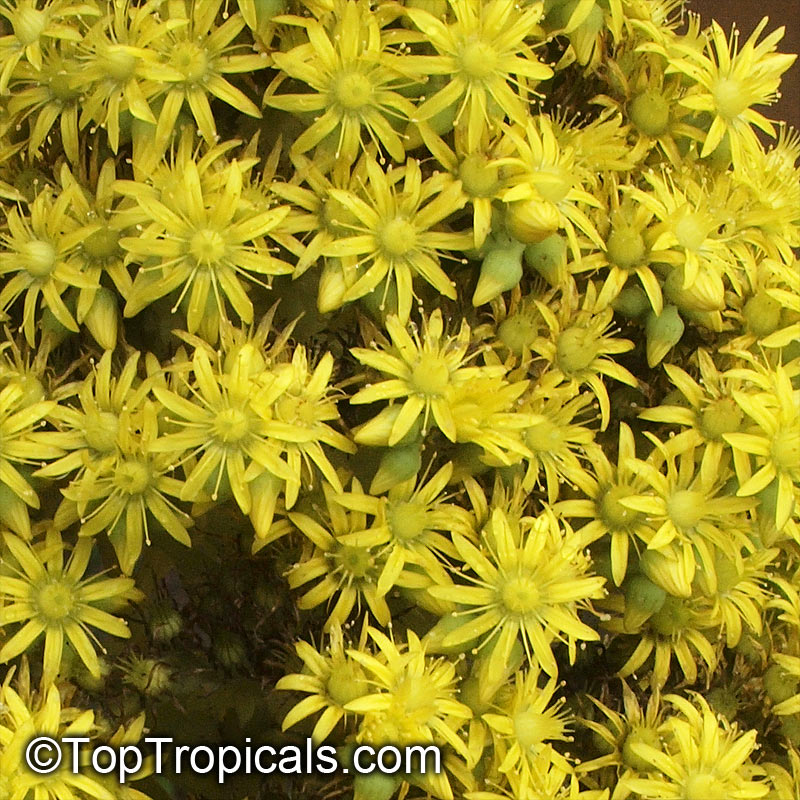
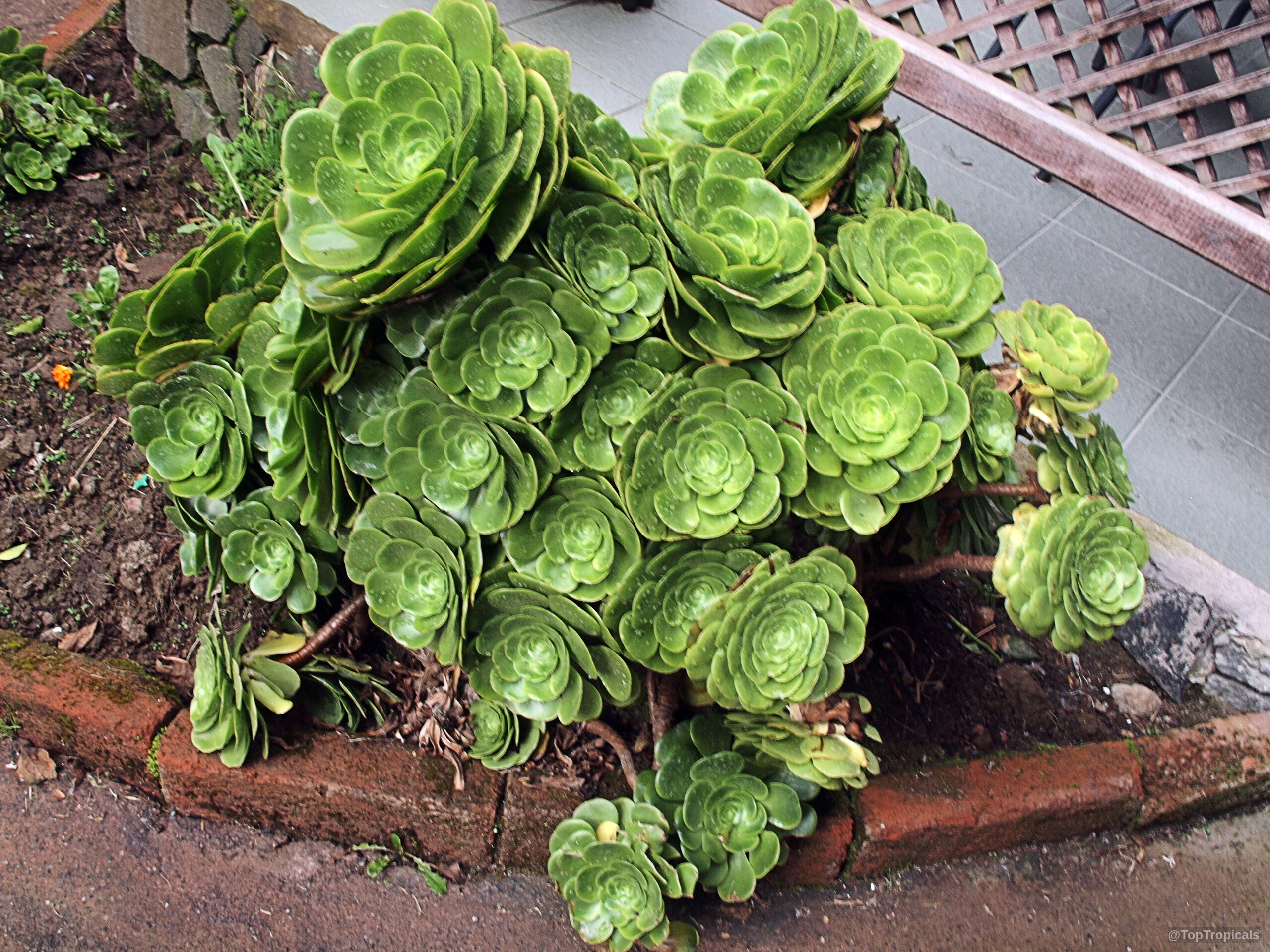
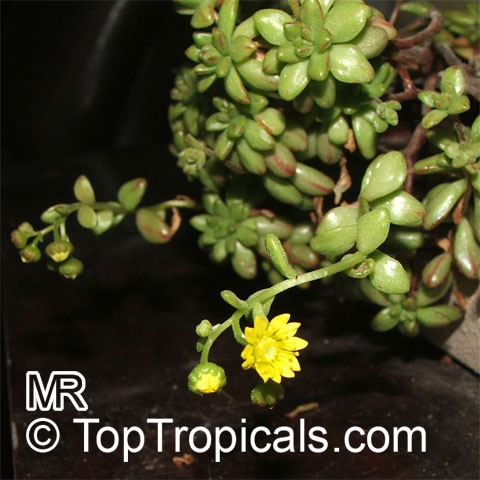
Botanical name: Aeonium sedifolium
Common name: Dwarf Aeonium
Family: Crassulaceae
Origin: Canary Islands
USDA Zone: 9-10
This hardy small shrub is native to the Canary Islands, mainly on Tenerife.
Aeonium sedifolium is easy to grow, and it is perfect for beginning gardeners. It may grow up to 2-5 ft tall and can spread up to 4 ft from the center. It prefers full sunlight but can tolerate partial shade. It needs low water for keeping the soil moist, but not waterlogged, and should be watered moderately. Fertilizing in the spring and summer is necessary for the best results.
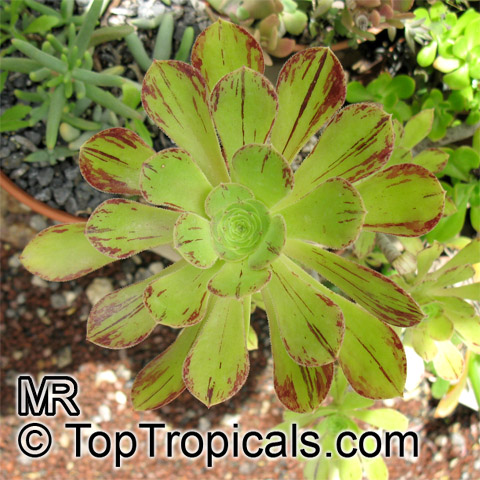
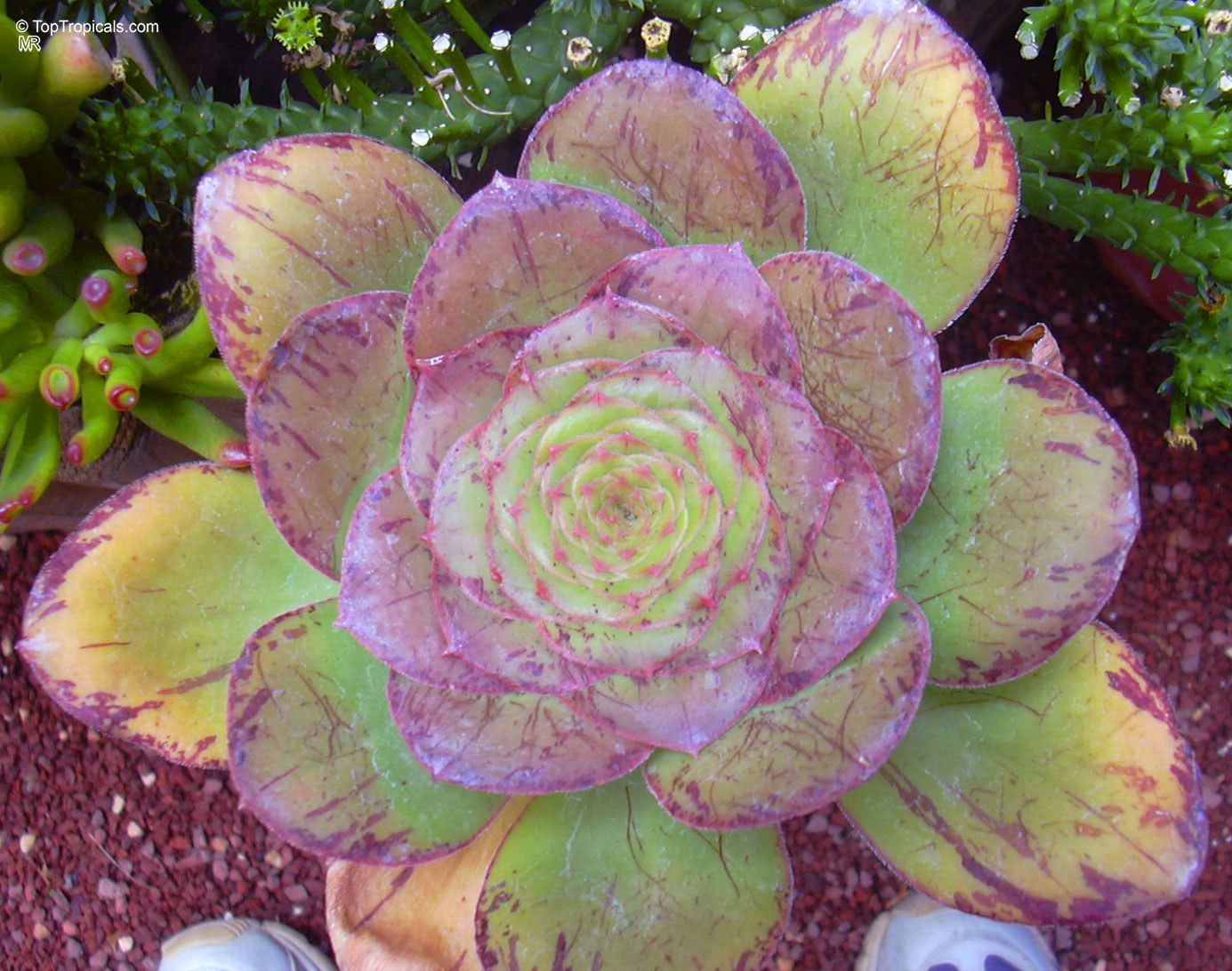
Its ornamental foliage makes it a great addition to any garden. It has oval succulent leaves colored with red stripes and a glossy surface. This small shrub produces small yellow and orange flowers that become very attractive in clusters. The flowers appear in spring, making it a great plant to decorate your garden in this season.
For growing Aeonium sedifolium in colder regions, it is recommended to grow it in pots or containers and move the containers indoors in winter. When the temperatures lower, make sure to keep the soil moist. Be sure to keep it in a bright area. Planting it in a place with good air circulation is also important to prevent diseases.
Aeonium sedifolium is a great addition to any garden. Its ornamental foliage and its yellow and orange flowers make it a great plant to decorate your garden in spring. It is easy to grow, and it is perfect for beginning gardeners. It prefers full sun and low water for keeping the soil moist, and it can tolerate some cold temperatures. It is suitable for USDA Zone 9-11, but growing it in pots or containers in colder regions and moving the containers indoors in winter is the best solution.
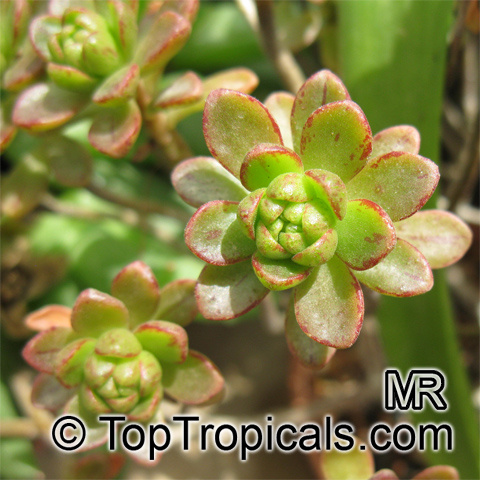
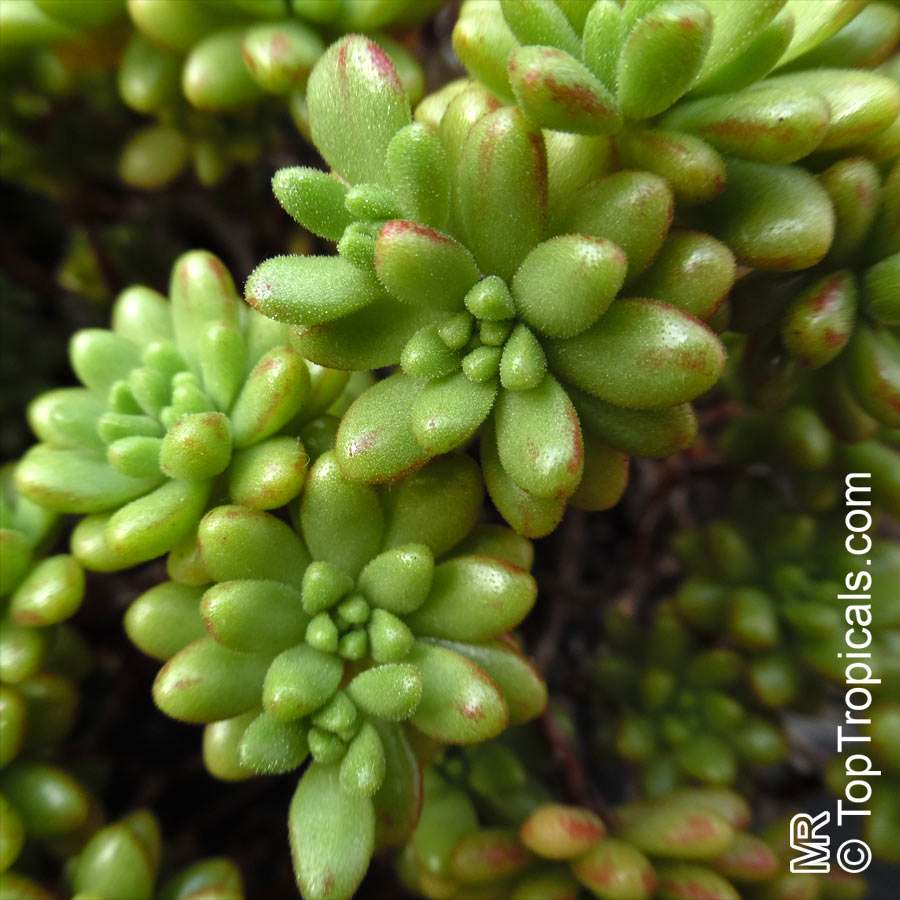
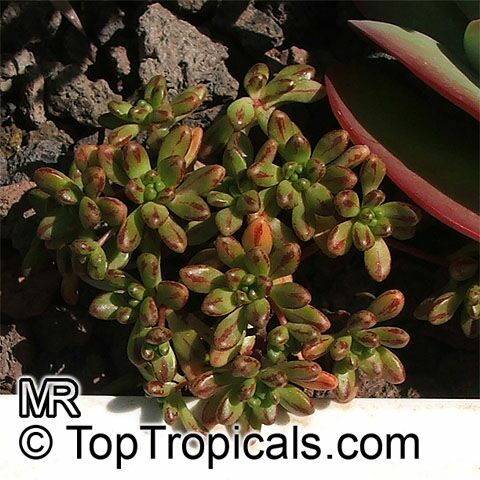

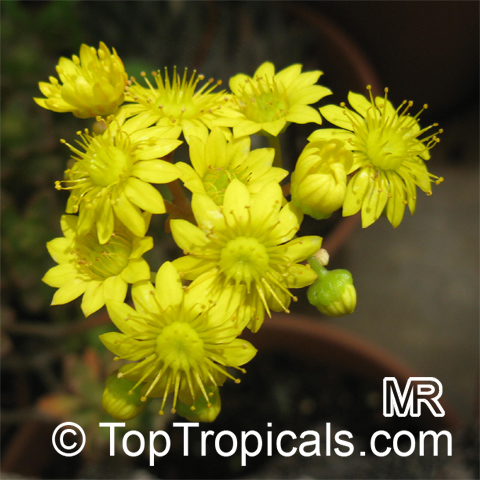
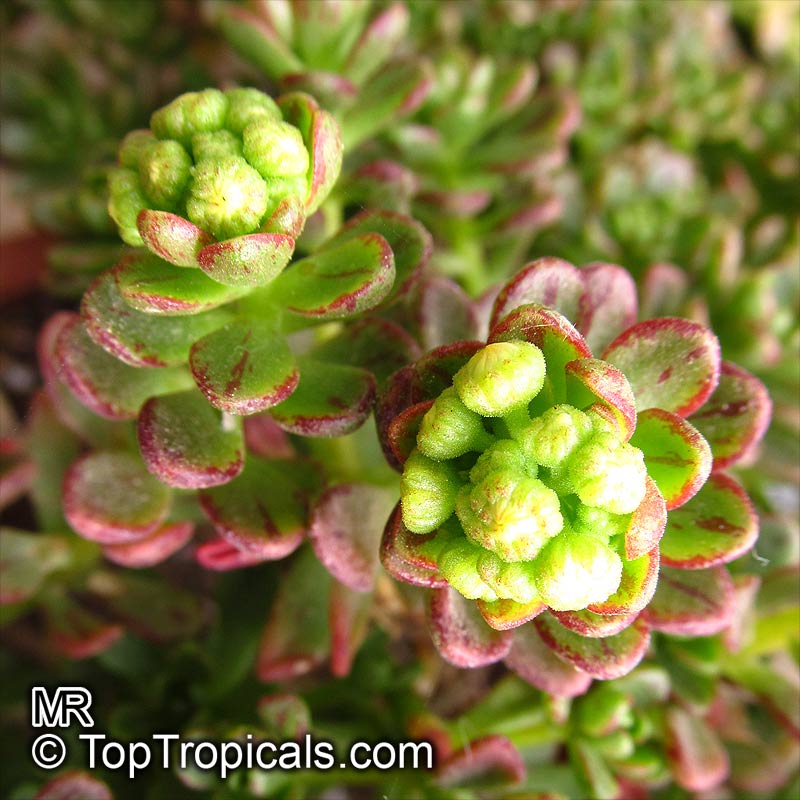
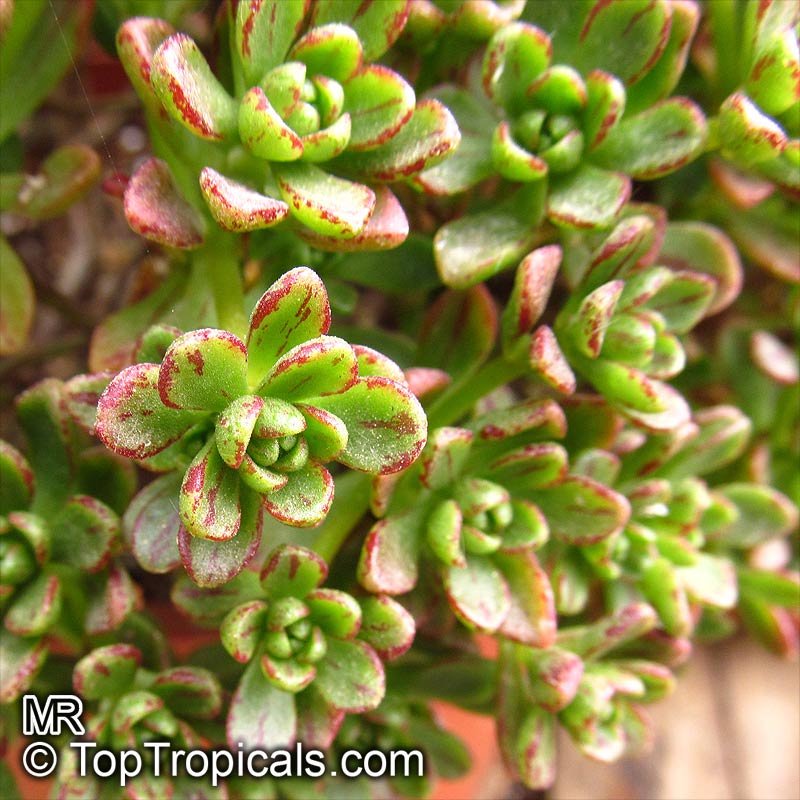
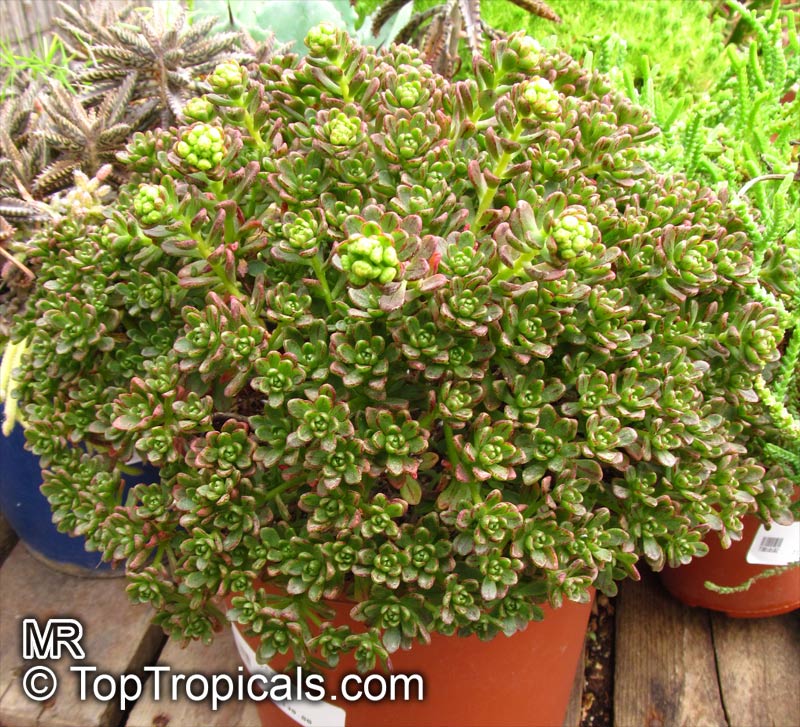
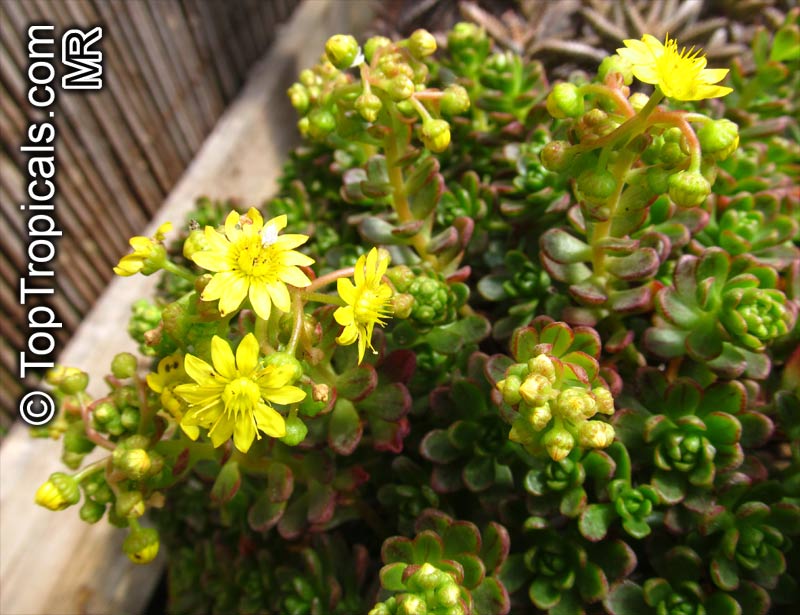
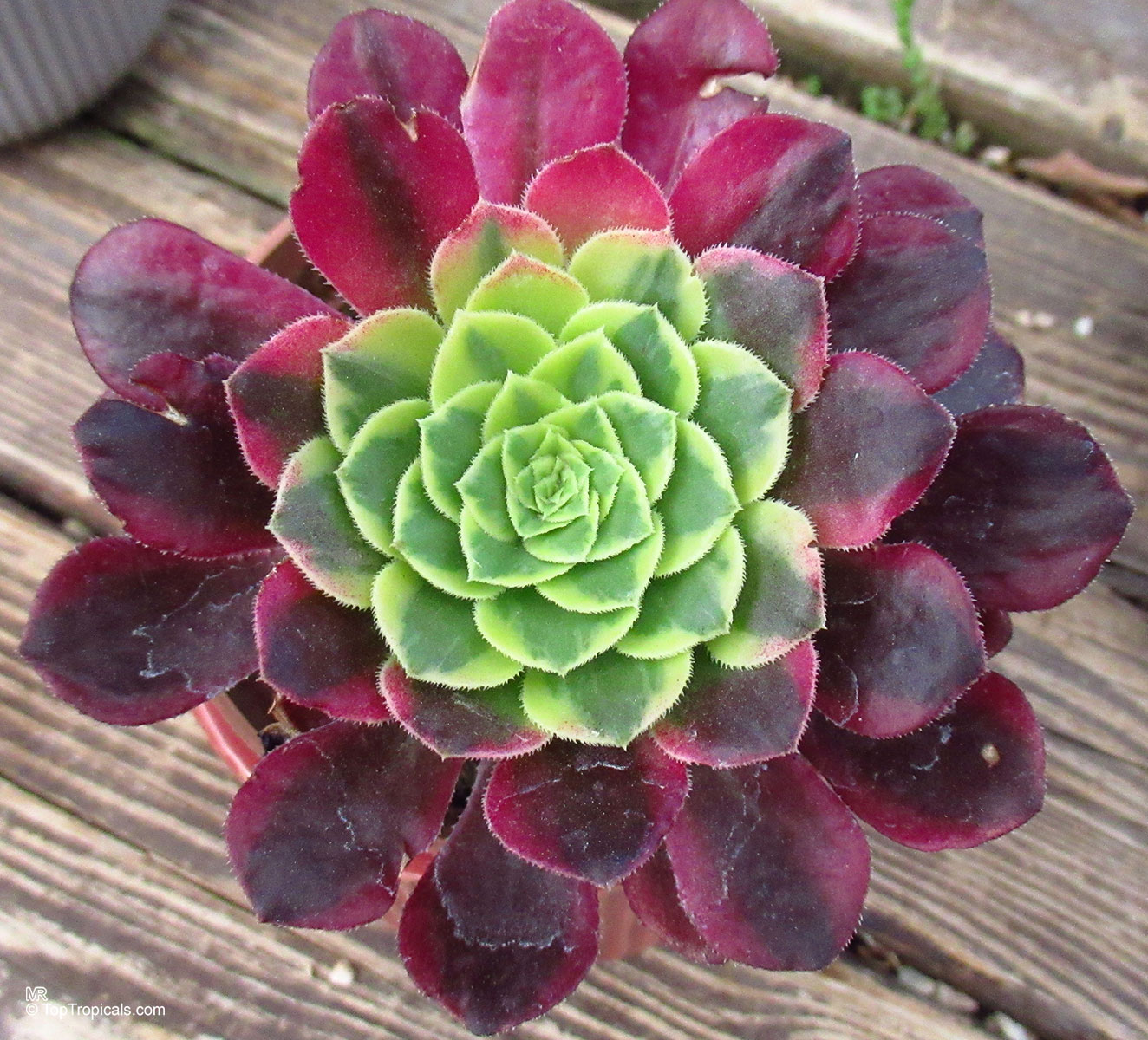
Botanical name: Aeonium sp.
Common name: Aeonium
Family: Crassulaceae
Origin: East Africa, Canary Islands, Morocco
USDA Zone: 9-11
Cold tolerance: 30°F


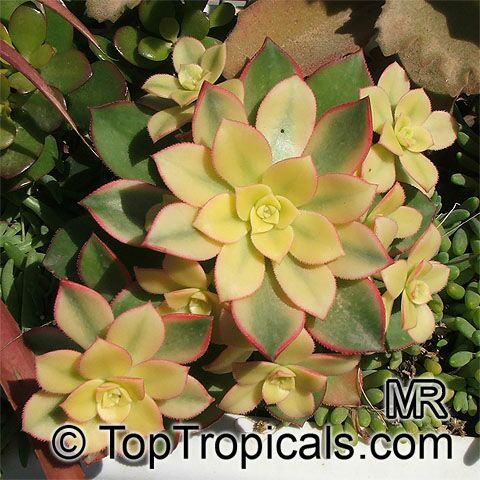
Aeonium is a genus of succulent plants in the stonecrop family, prized for its striking rosettes, architectural growth habit, and exceptional diversity of leaf colors and forms.
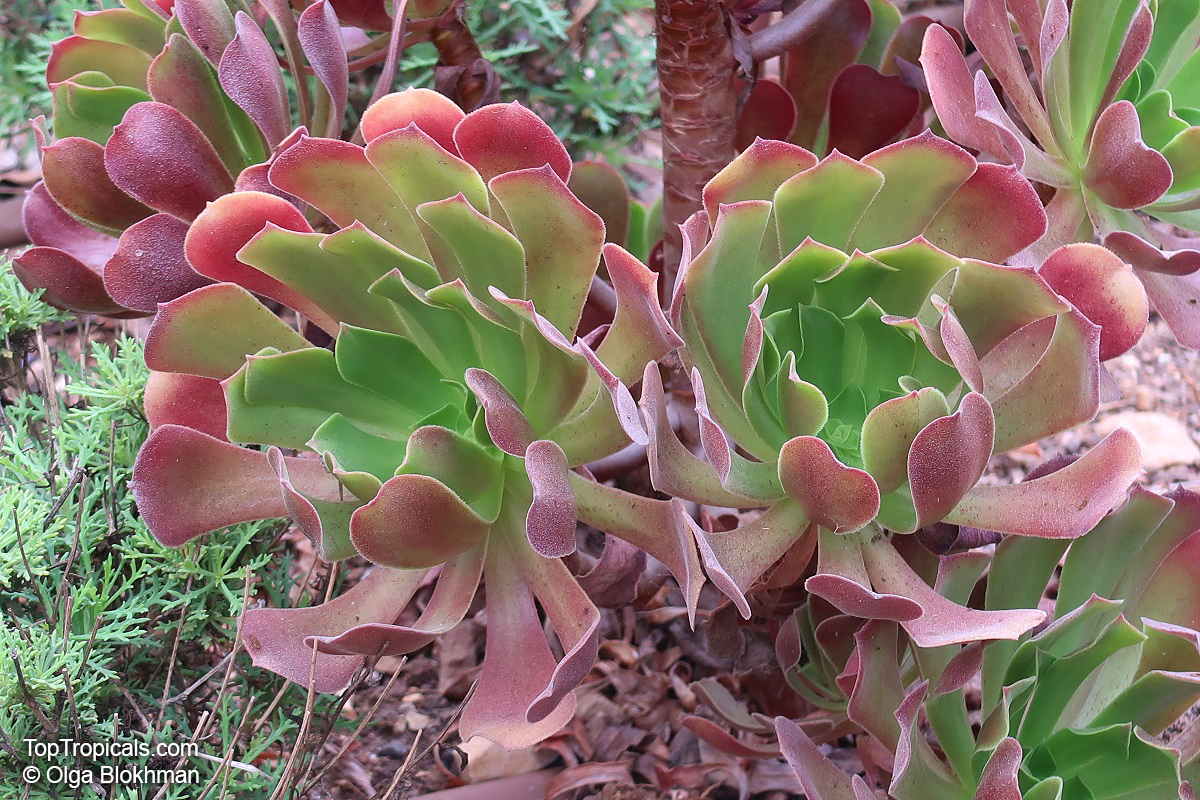
Most species are native to the Canary Islands, with the genus also occurring in Madeira, Morocco, and parts of East Africa. Unlike many desert succulents, aeoniums are adapted to mild winters and dry summers. They range from small branching shrubs to tree-like species several feet tall, with symmetrical rosettes at the tips of stems in shades of green, yellow, red, purple, nearly black, or variegated, depending on the species and cultivar.
Aeoniums are unusual in that they grow most actively during the cooler months and become semi-dormant in hot summer weather. Mature plants produce large conical clusters of star-shaped flowers in yellow, white, pink, or cream. Some species are monocarpic - an individual rosette dies after flowering - while others continue growing through branching stems.
These plants prefer bright light, excellent drainage, and moderate watering during active growth, requiring less summer irrigation than most garden plants and adapting well to containers. Popular species include Aeonium arboreum, A. haworthii, A. canariense, and numerous ornamental hybrids selected for unusual foliage colors and patterns.
USDA Zones 9b-11. Most species tolerate only light frost, although established plants may survive brief exposure to temperatures near 25-30F under favorable conditions.
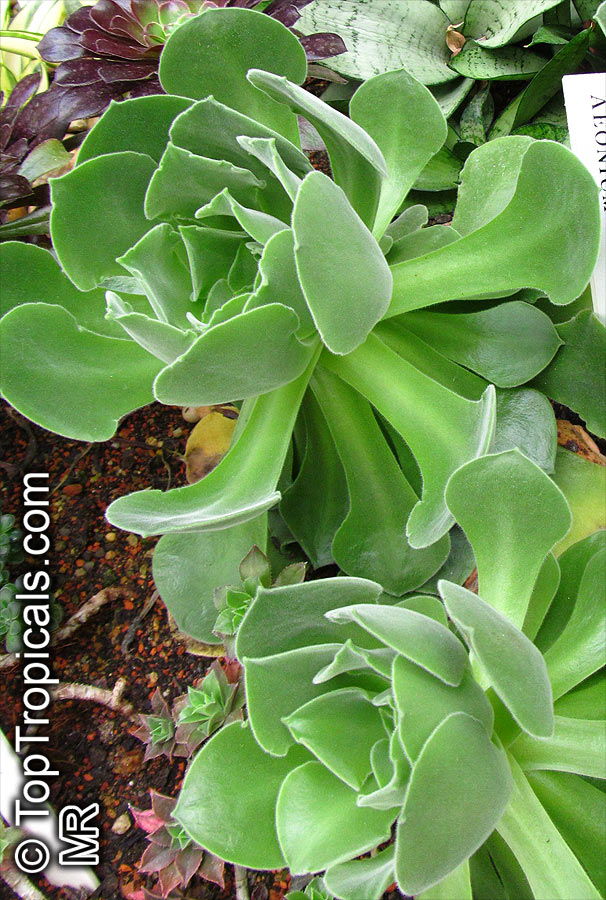
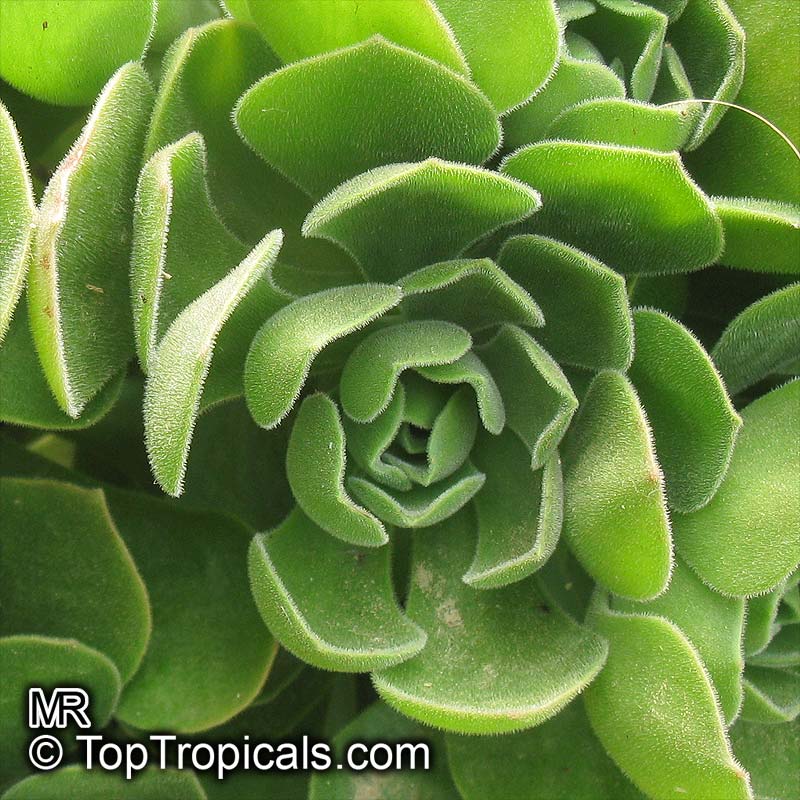

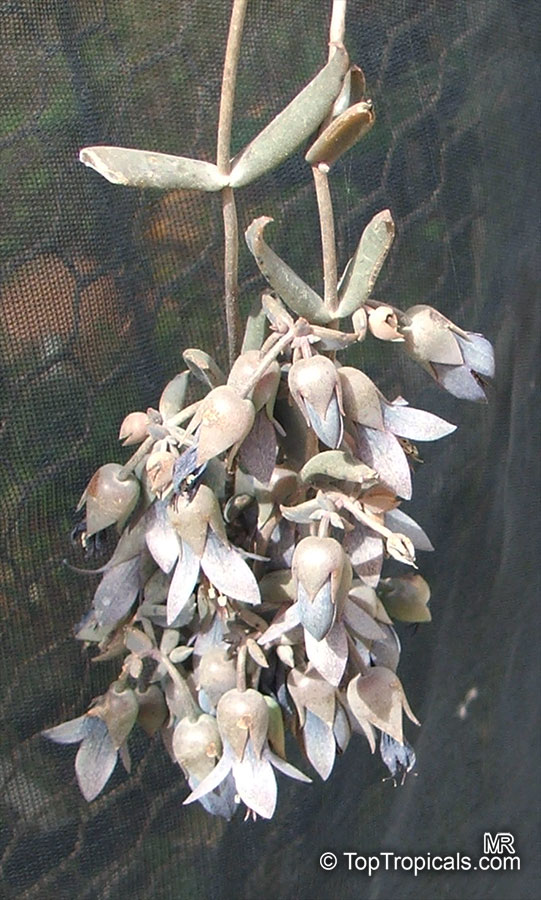
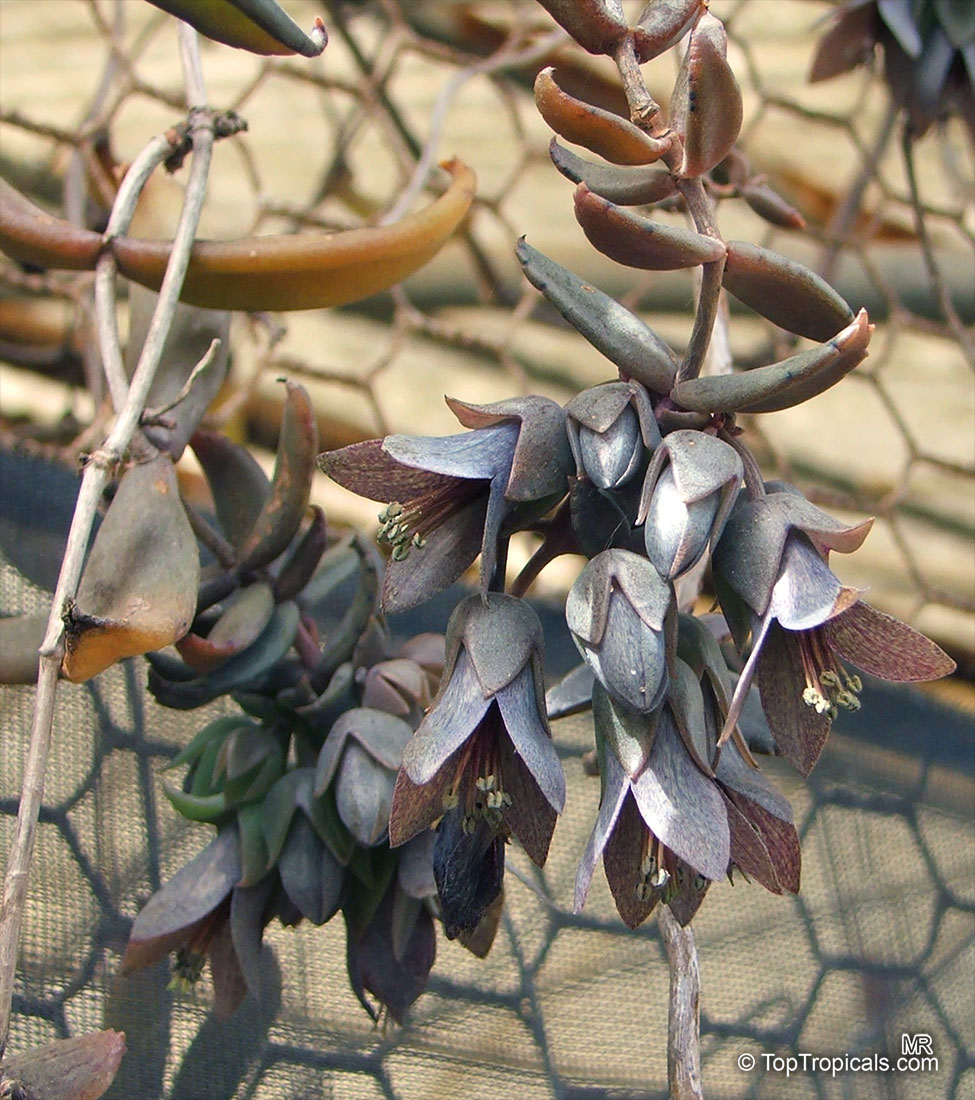
Botanical names: Bryophyllum beauverdii, Kalanchoe beauverdii
Common name: Kalanchoe
Family: Crassulaceae
Origin: Madagascar
USDA Zone: 9b-11


Bryophyllum beauverdii, more commonly known as Kalanchoe, is a vine native to Madagascar. It is a small plant, usually growing no more than 2-5 feet tall. Its leaves are up to 2 inches long, and have unique black-violet color. While the plant prefers full sun, it is also able to thrive in semi-shade and requires moderate to occasional watering. It is a hardy plant and can be grown outdoors in USDA Zones 9-11.
Kalanchoes are great for garden beds as both a ground cover and a climber. Its unique leaves and flowers will add color and interest to your garden. As an indoor houseplant, Kalanchoe is one of the best gifts for gardeners, being easy to care for and long-lasting.
When planting Kalanchoe outdoors, ensure it is in well-drained soil in a sunny area. The plant prefers soil with a slightly low acidity. Water regularly but don't overwater - allowing the soil to dry out between watering can help prevent root rot. Mulching helps to provide the plant with a more consistent temperature, as well as retaining moisture in the soil.
For those living in colder regions, Kalanchoe can be grown in pots and stored in a cool, dry place during winter. During the colder months, water only occasionally, and avoid too much direct sunlight, as the strong sun can damage foliage.
Overall, Kalanchoe is a beautiful, vibrant plant with plenty of color to add to your outdoor and indoor garden. With regular care, you can enjoy its unique leaves and flowers for many years to come.
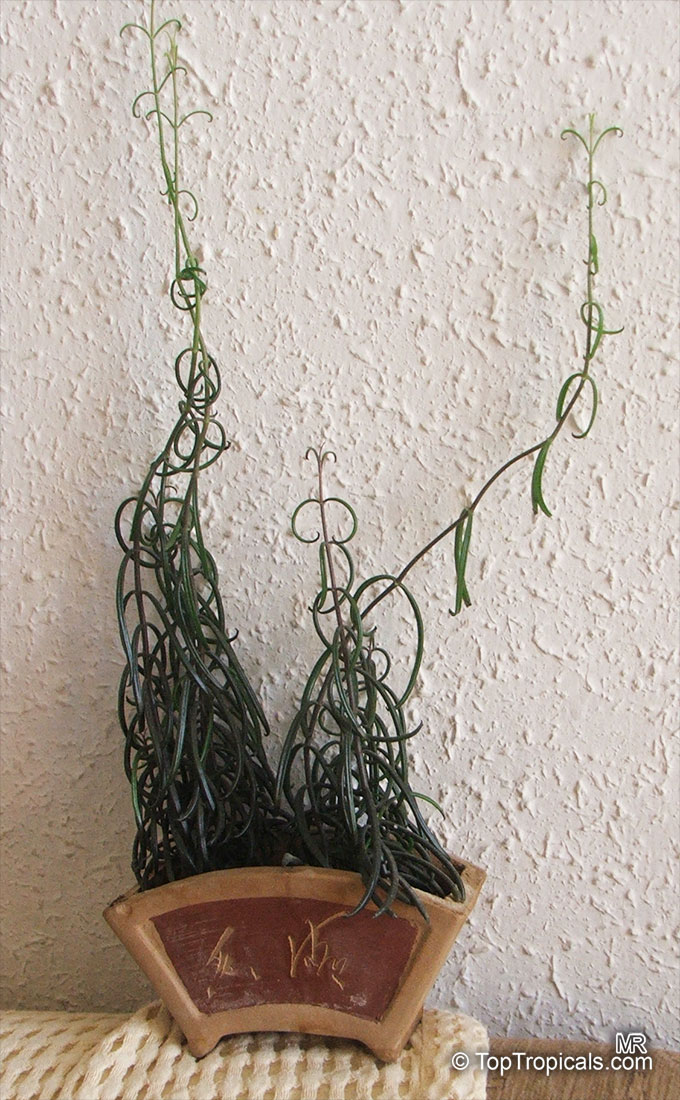

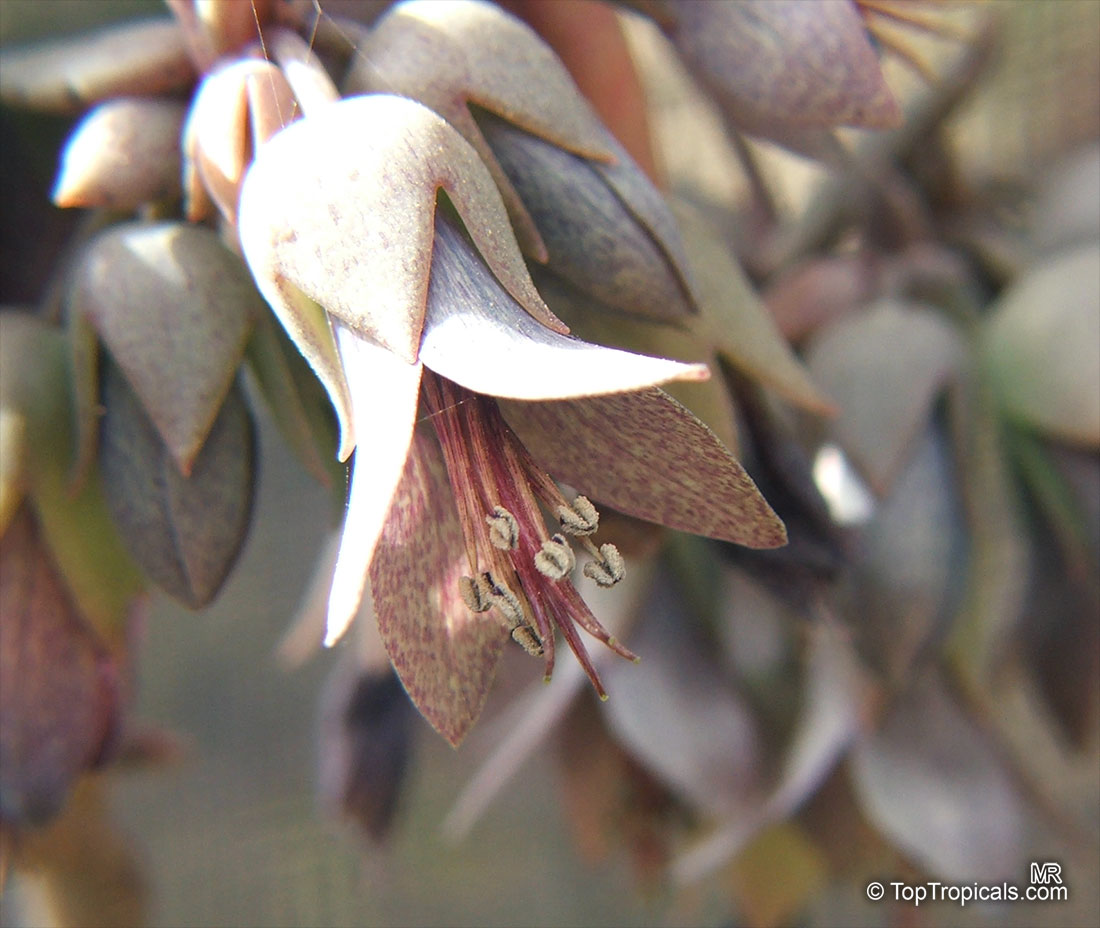
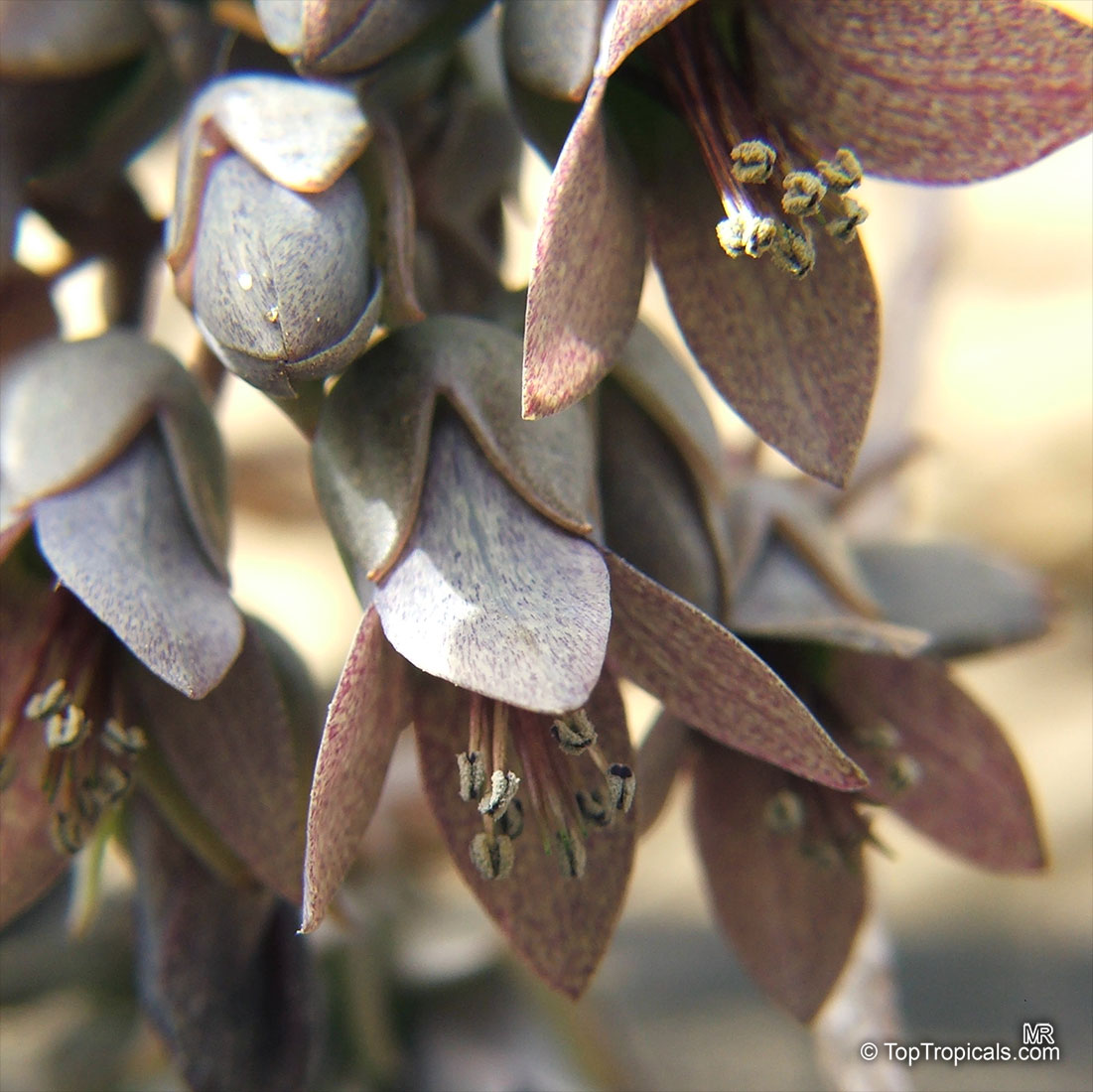
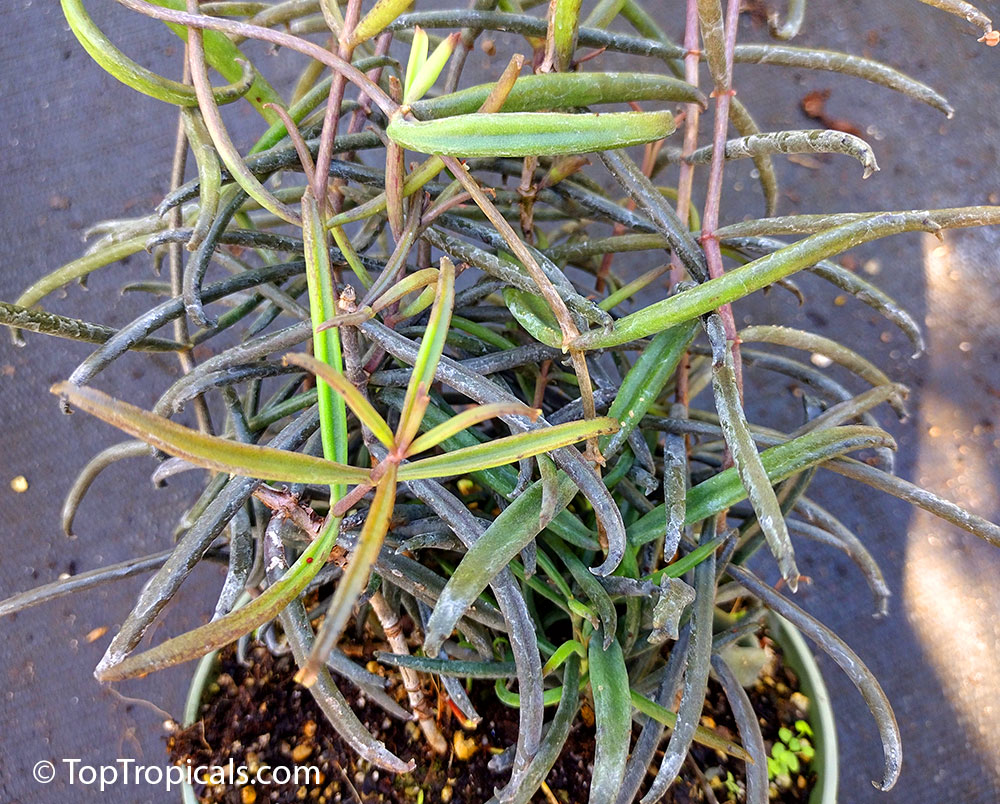
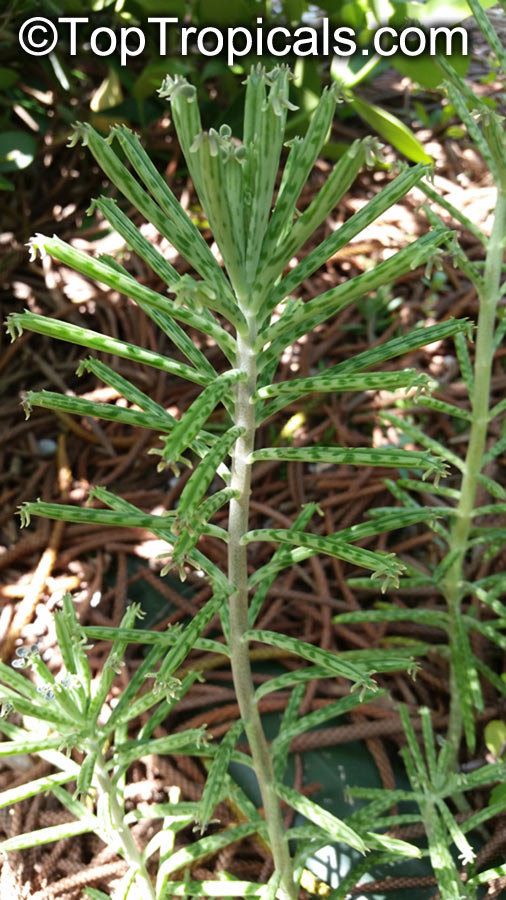
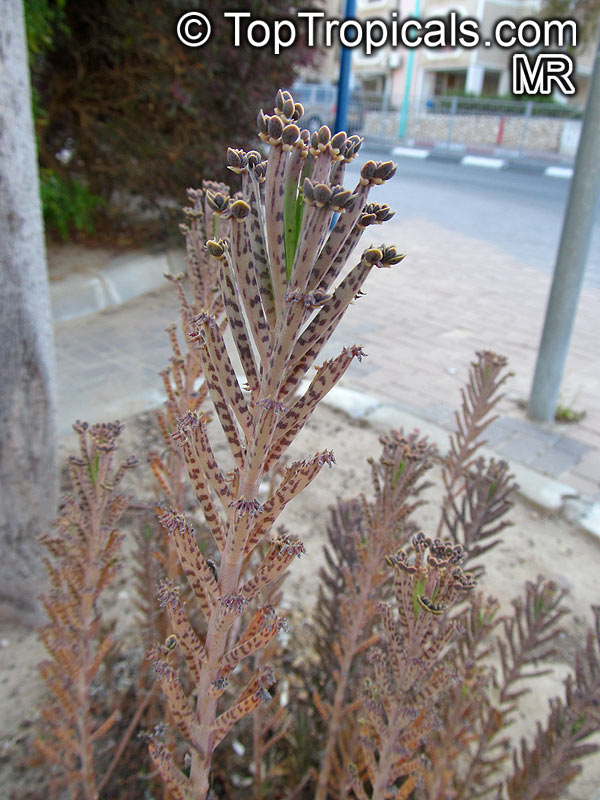
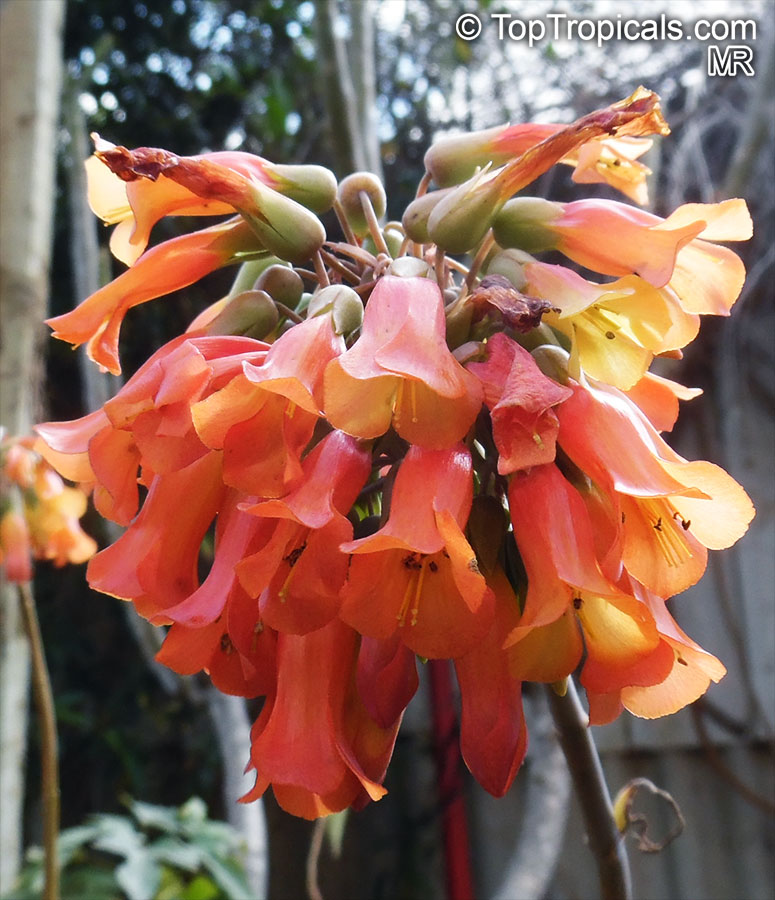
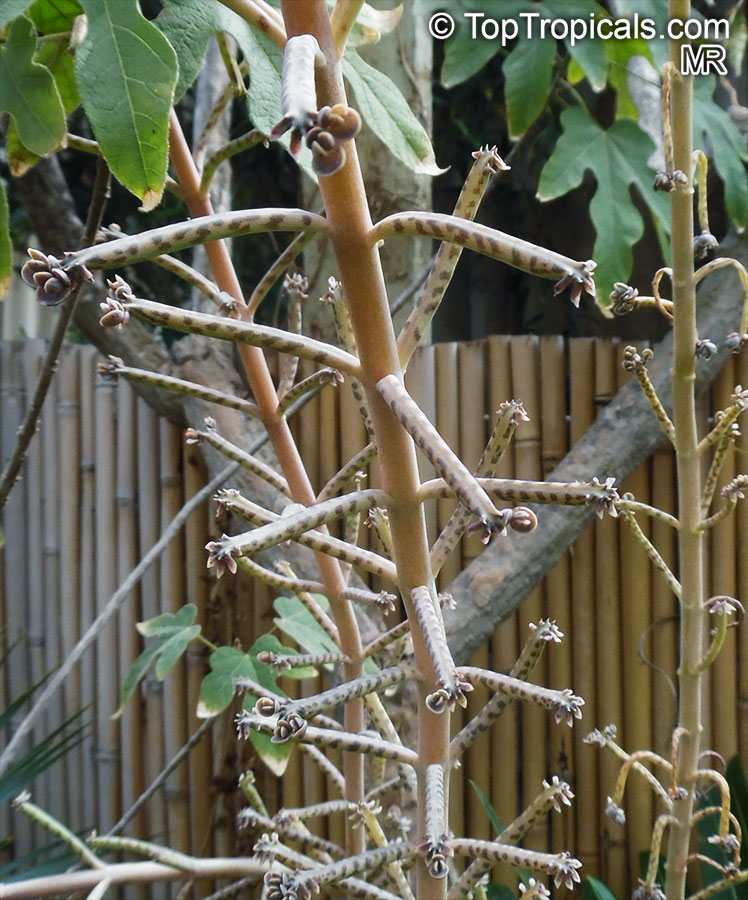
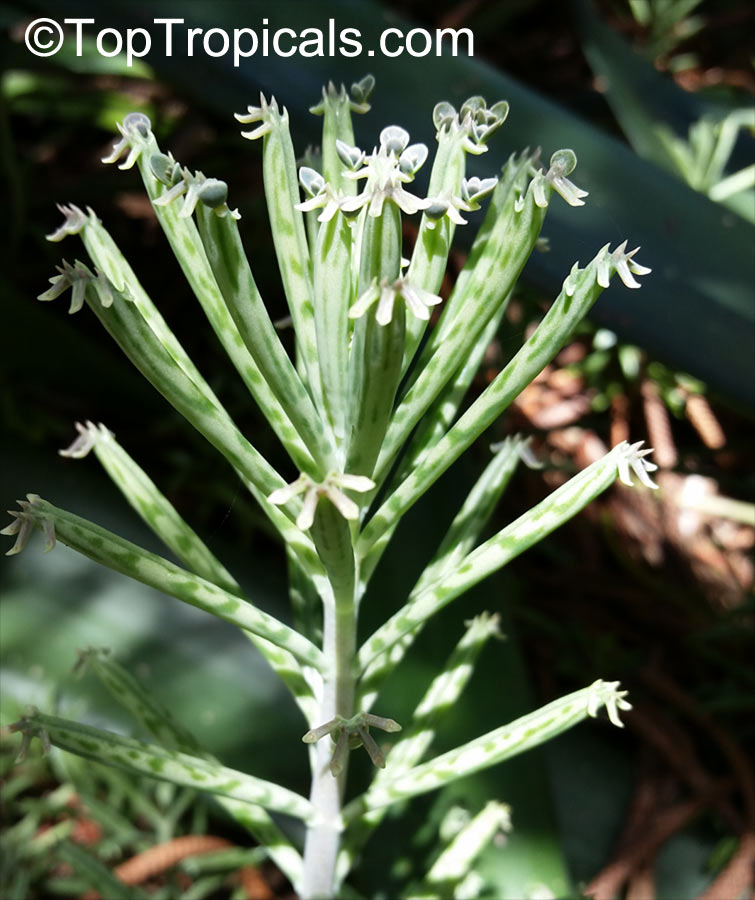
Botanical names: Bryophyllum delagoense, Kalanchoe delagoensis, Kalanchoe tubiflora, Bryophyllum tubiflorum, Bryophyllum verticillatum
Common name: Chandelier plant
Family: Crassulaceae
Origin: Tropical and South Africa
USDA Zone: 9-10


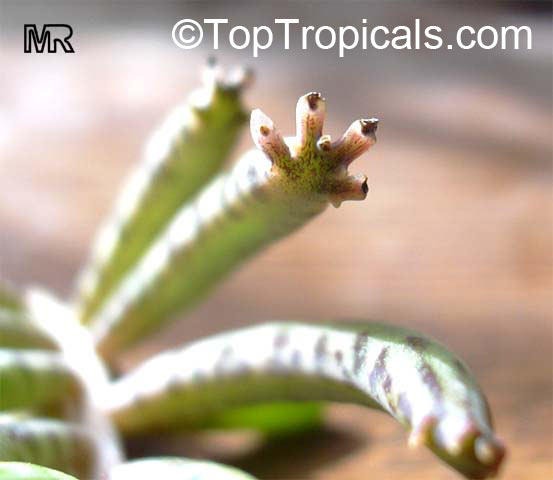
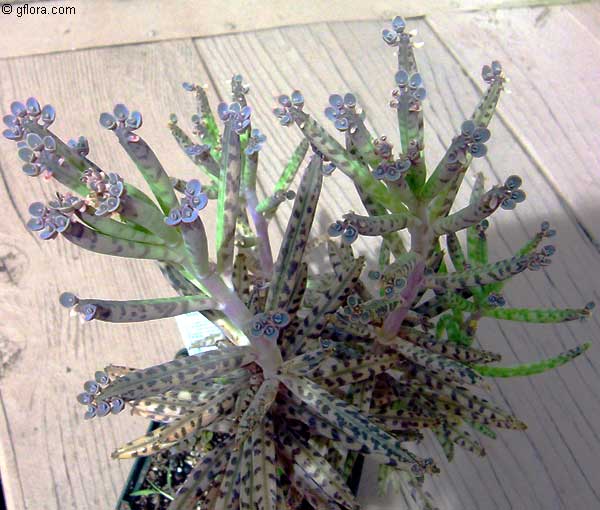
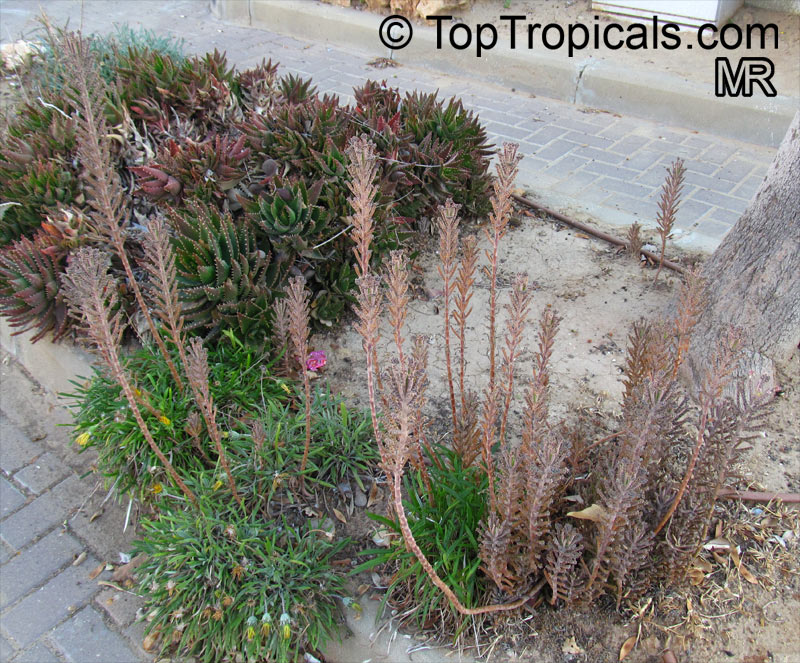
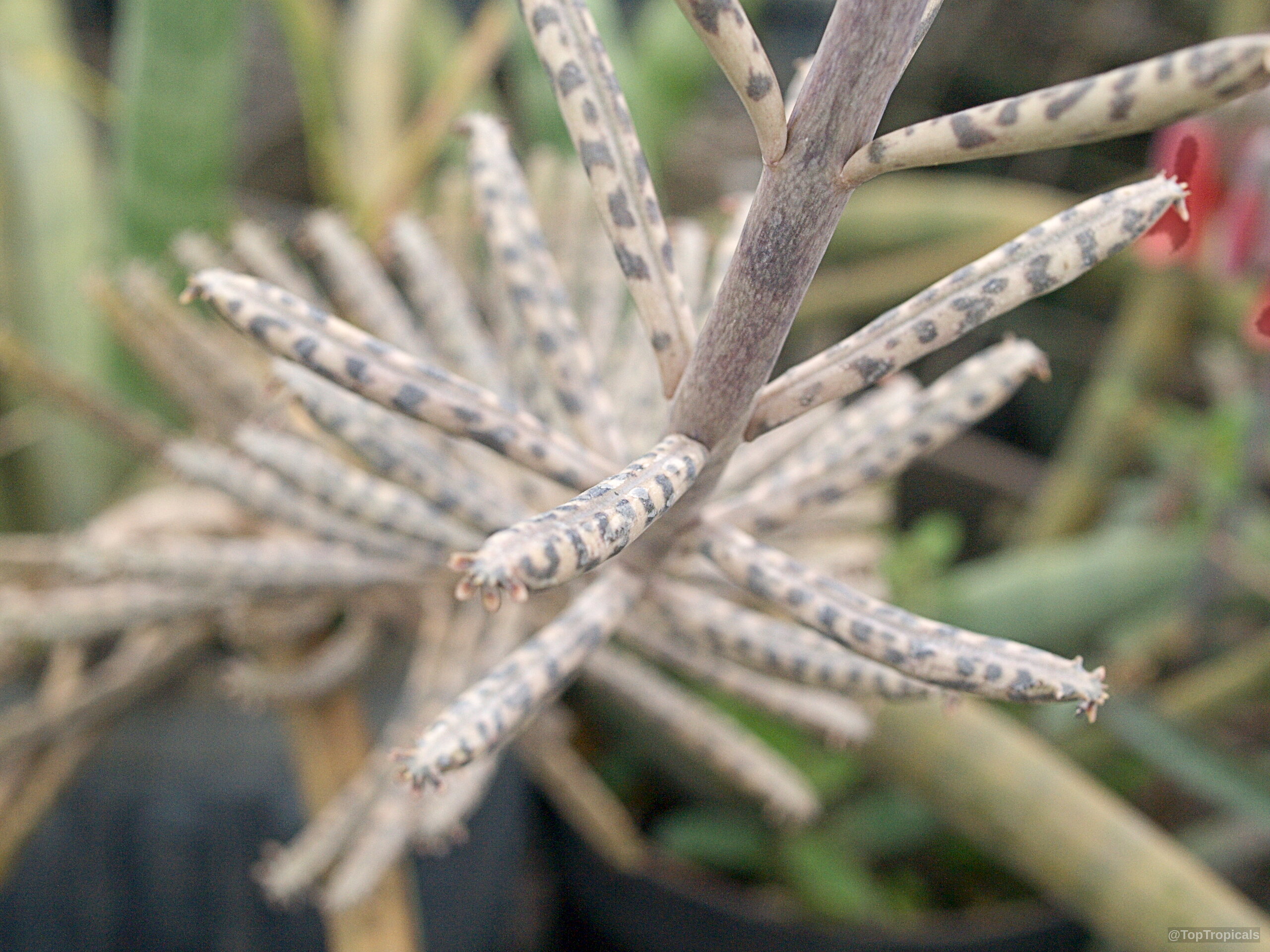
Very prolific round tubular leaves forming plantlets on the ends that quickly start new plants if they fall to the ground. This plant needs a rather dry atmosphere and complete exposure to sunlight. Throughout the summer, the soil should be kept moist, but in the winter, very little water is needed.
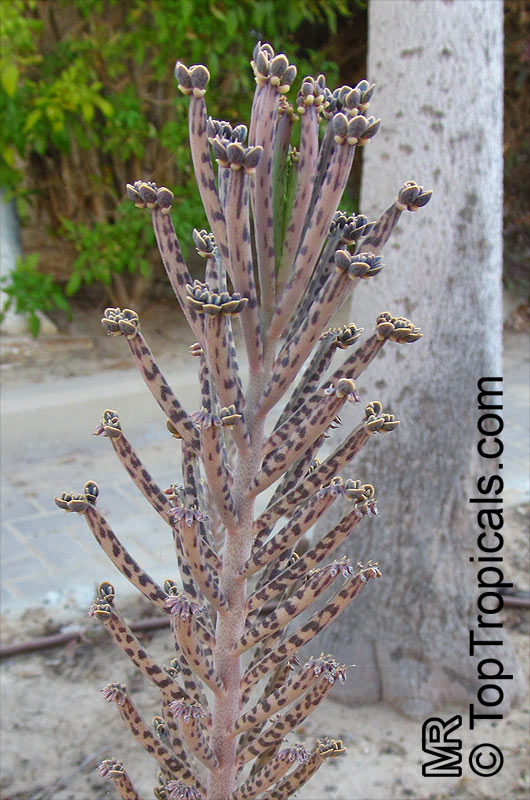
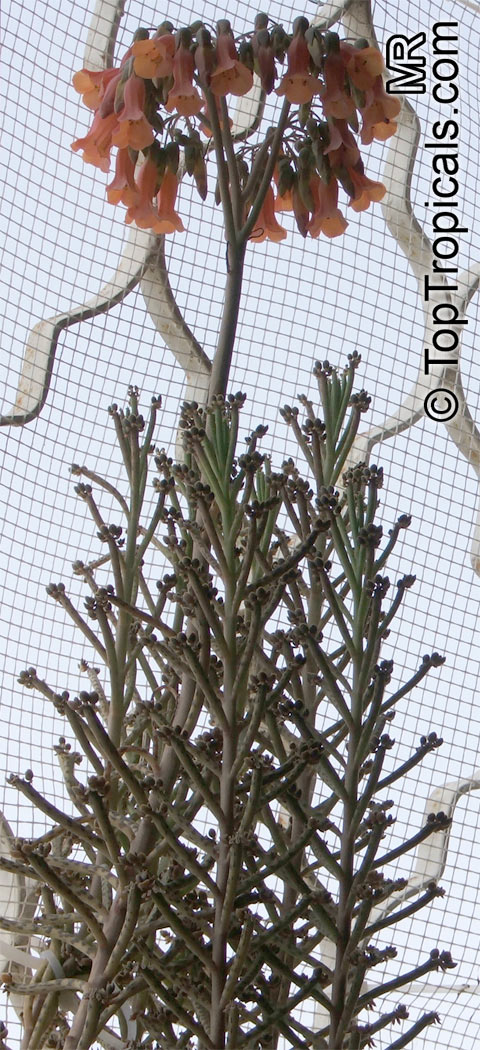
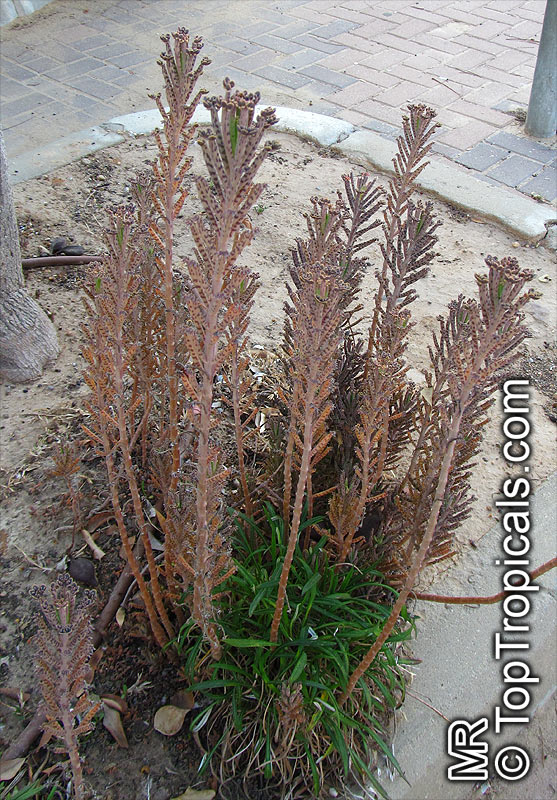
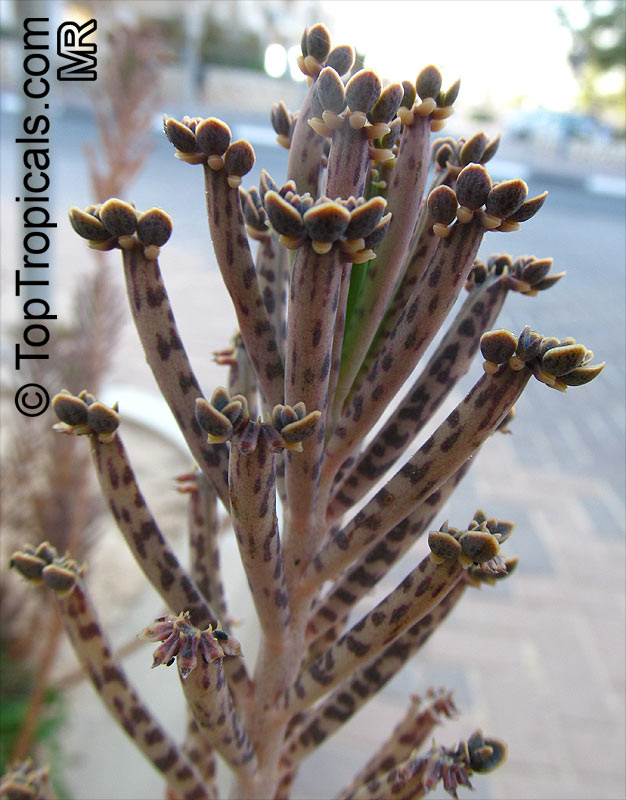

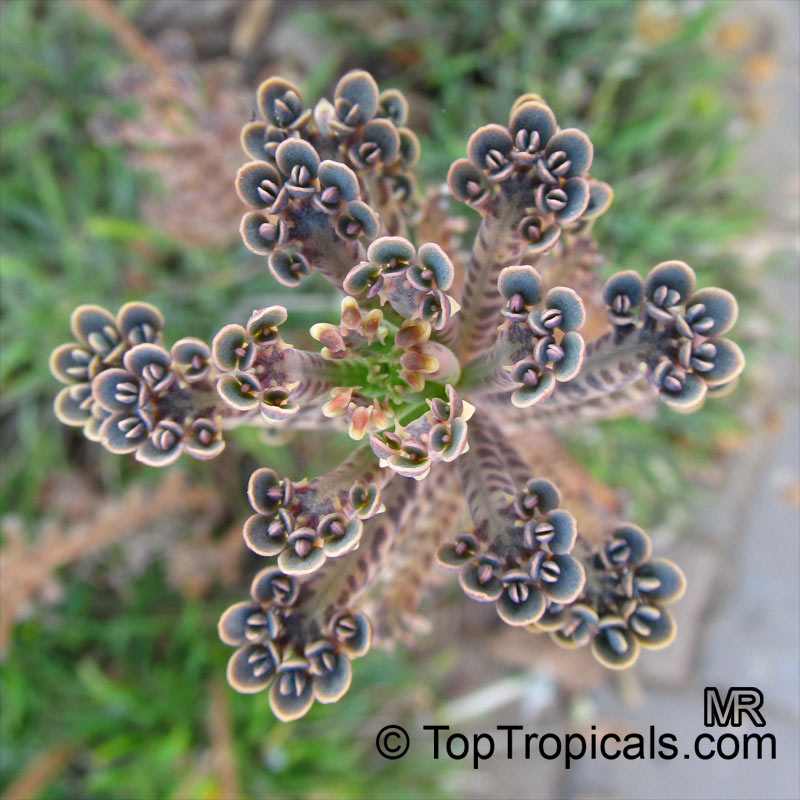
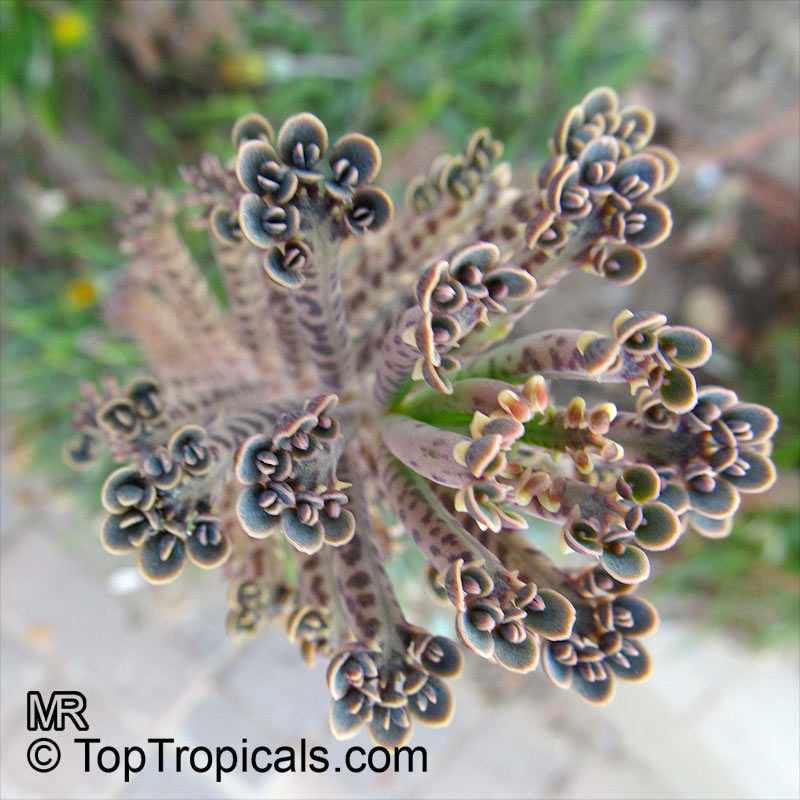
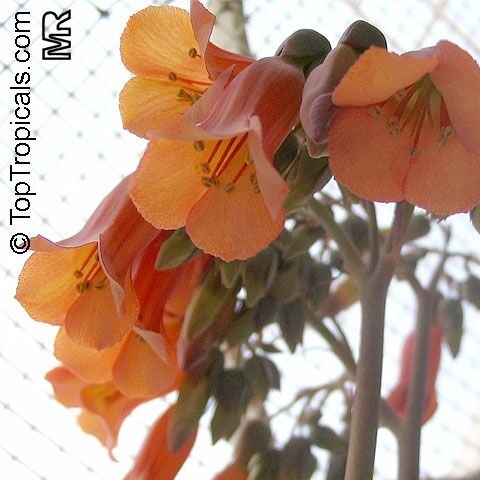
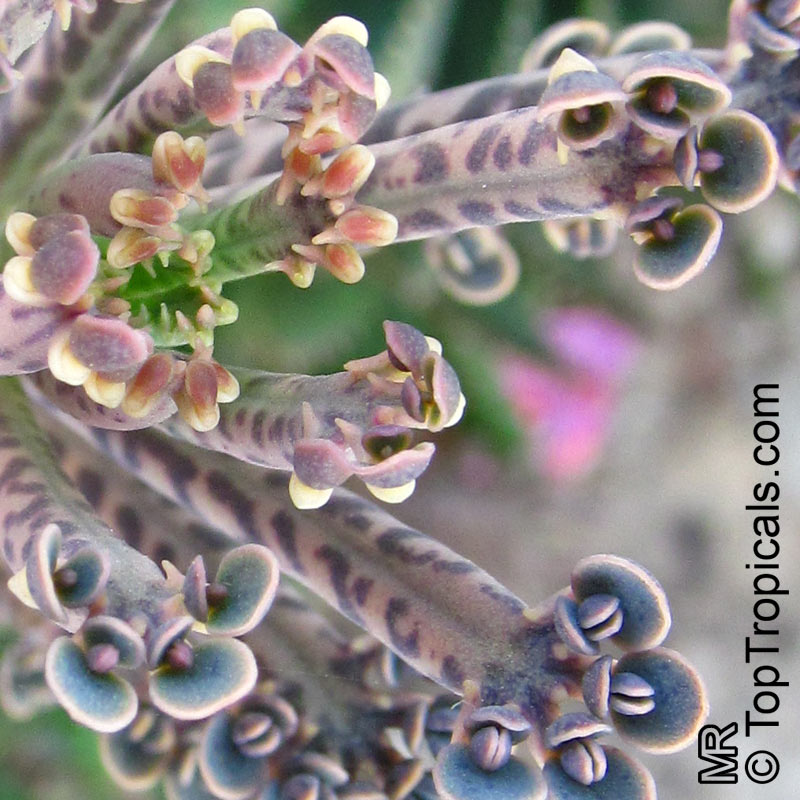
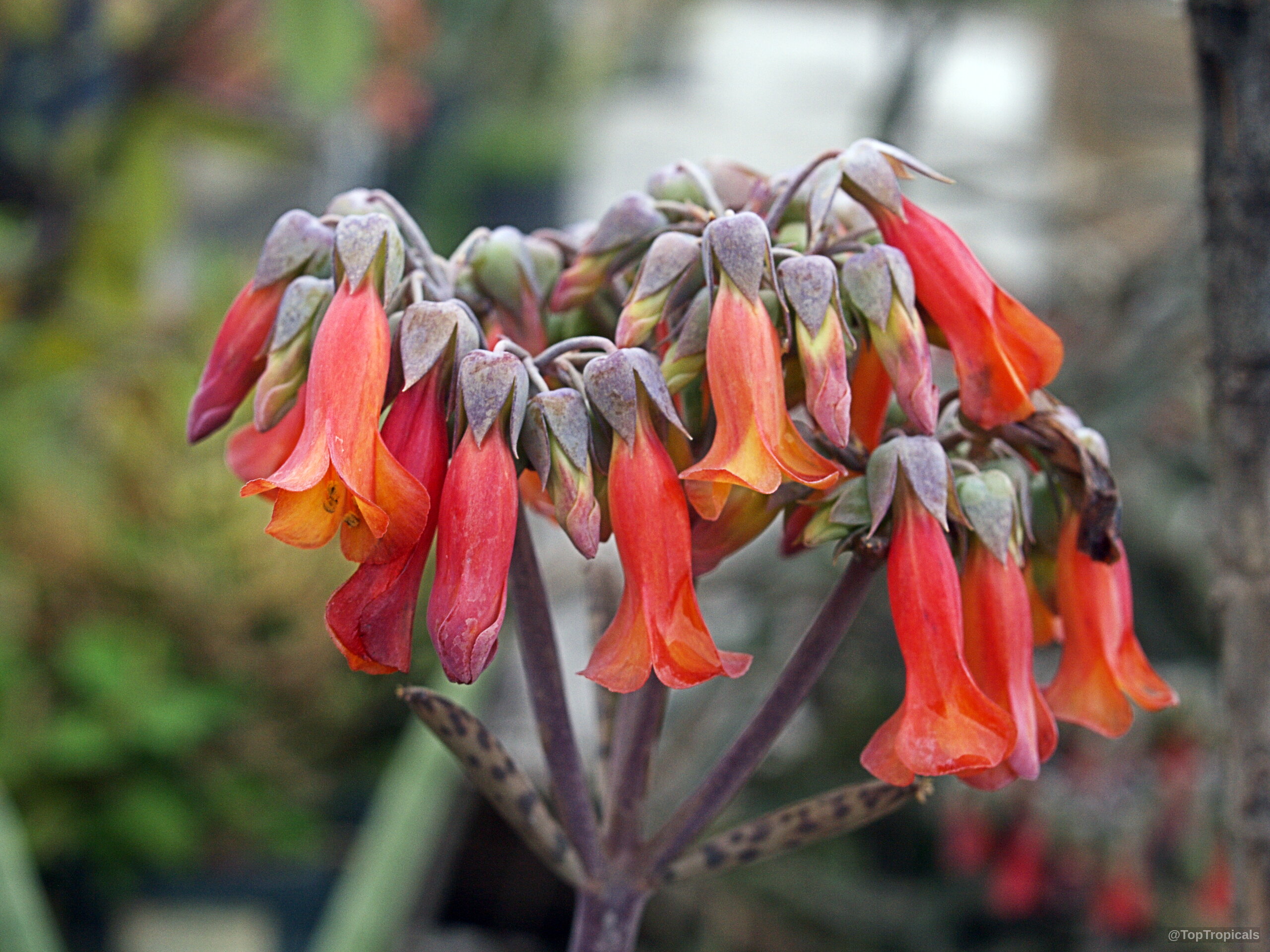

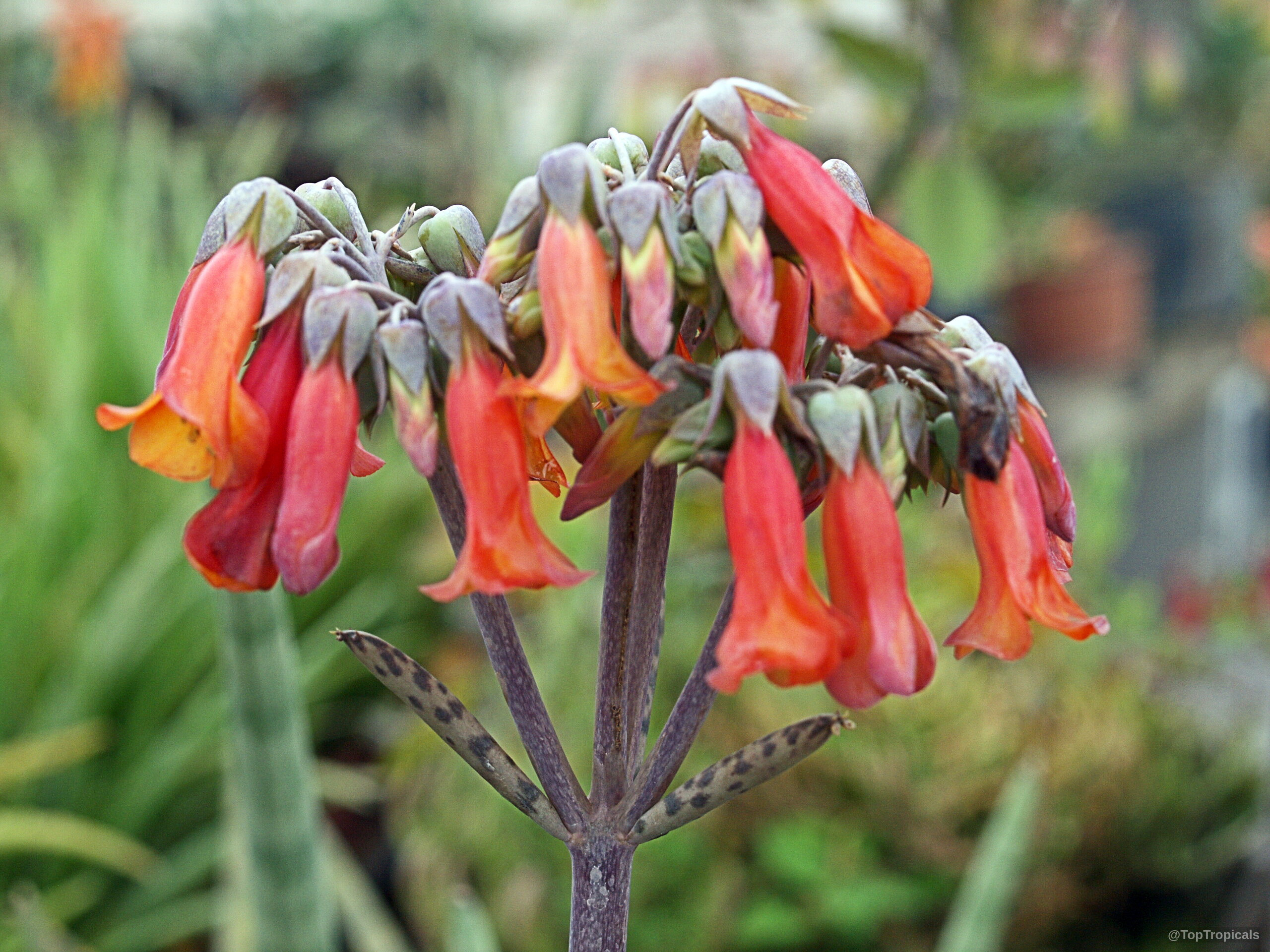
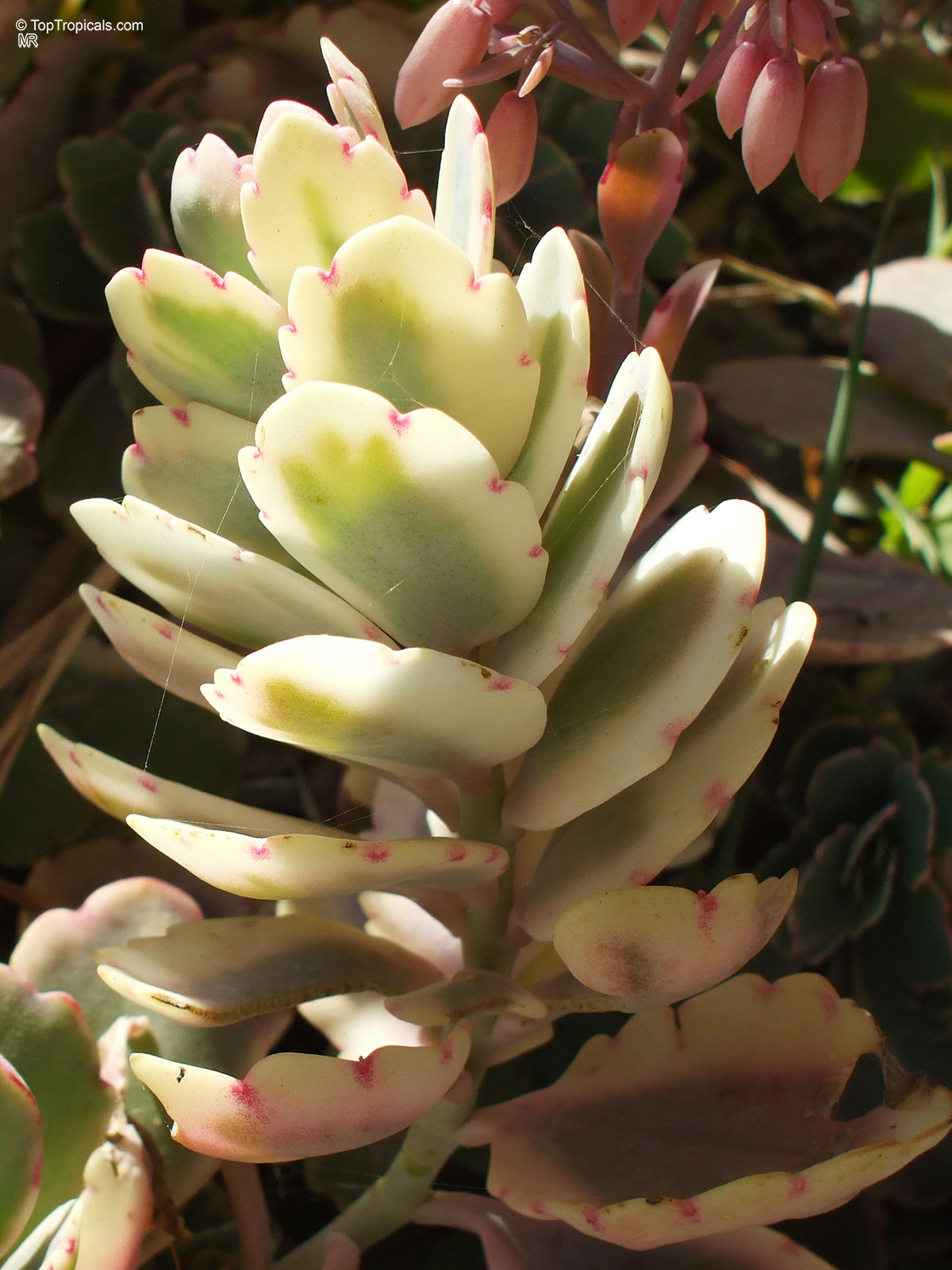
Botanical names: Bryophyllum fedtchenkoi, Kalanchoe fedtschenkoi
Common name: Kalanchoe
Family: Crassulaceae
Origin: Madagascar
USDA Zone: 9-10
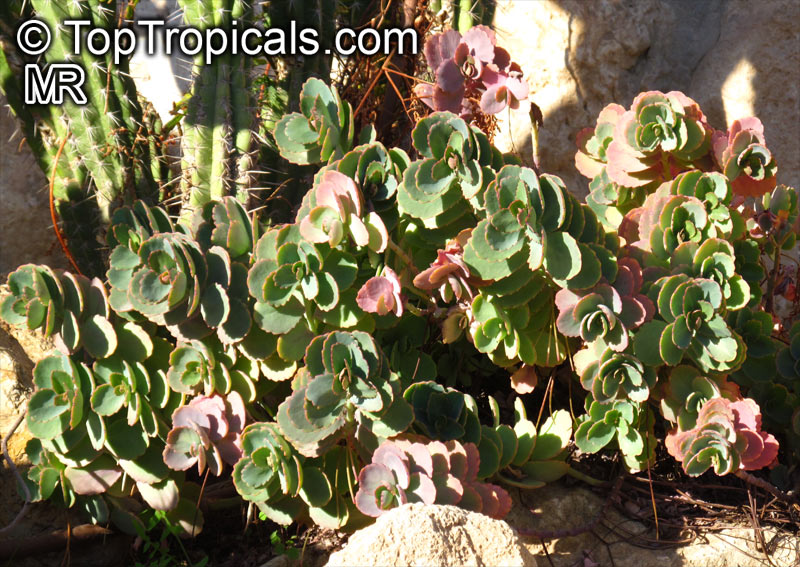
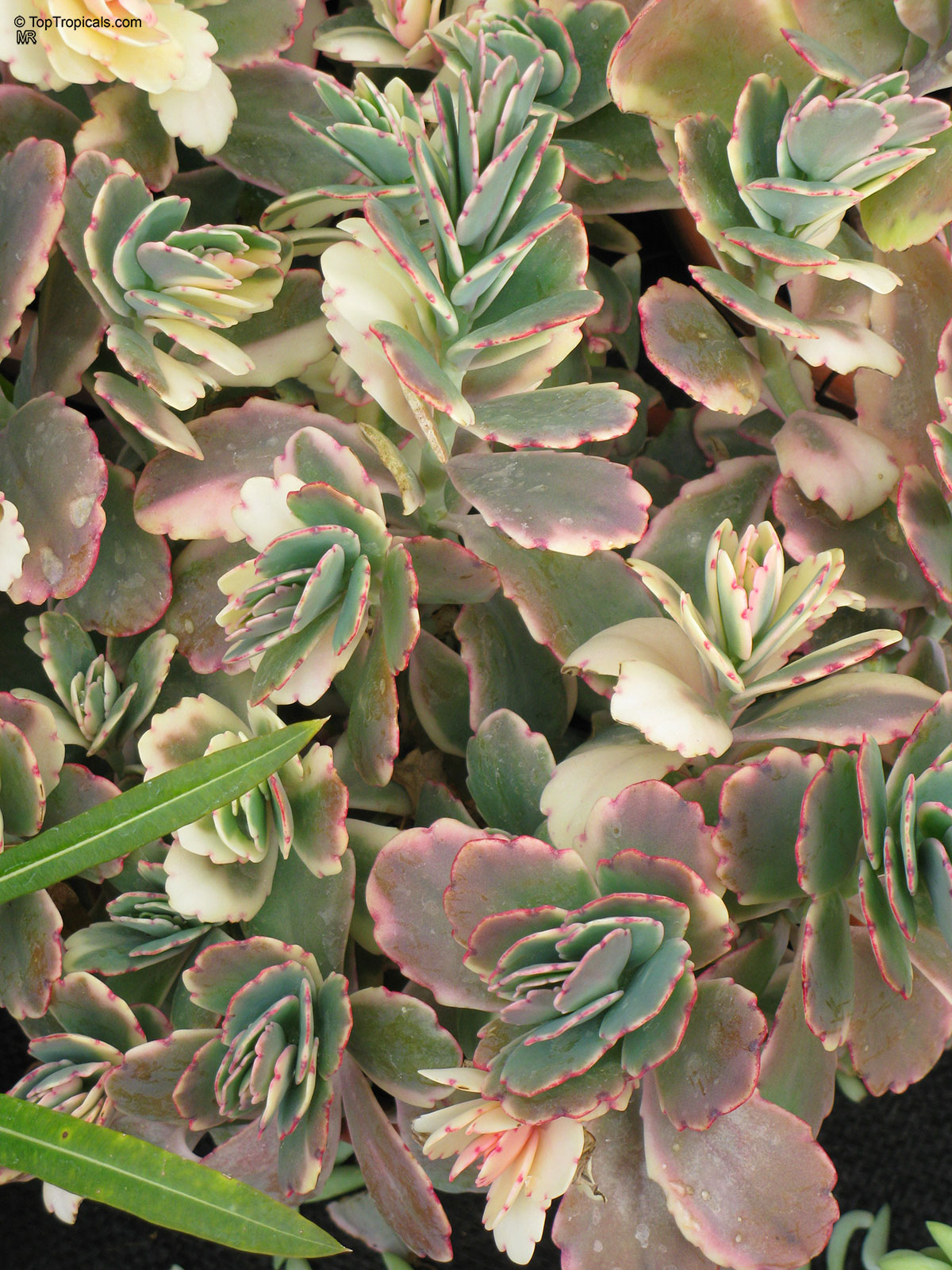
Bryophyllum fedtchenkoi, otherwise known as Kalanchoe, is a small plant native to Madagascar that can grow 2-5 feet in height. It is an extremely ornamental species, containing leaves of bluish-green hue with brown margins that can take on a pink hue when exposed to a sufficient amount of full sun. These foliage-rich plants are hardy in USDA Zones 9-11, and are typically seen in seaside climates due to their salt tolerance.
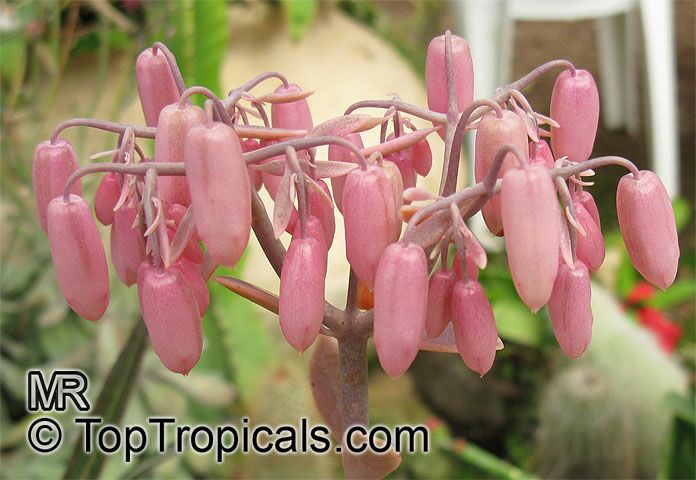
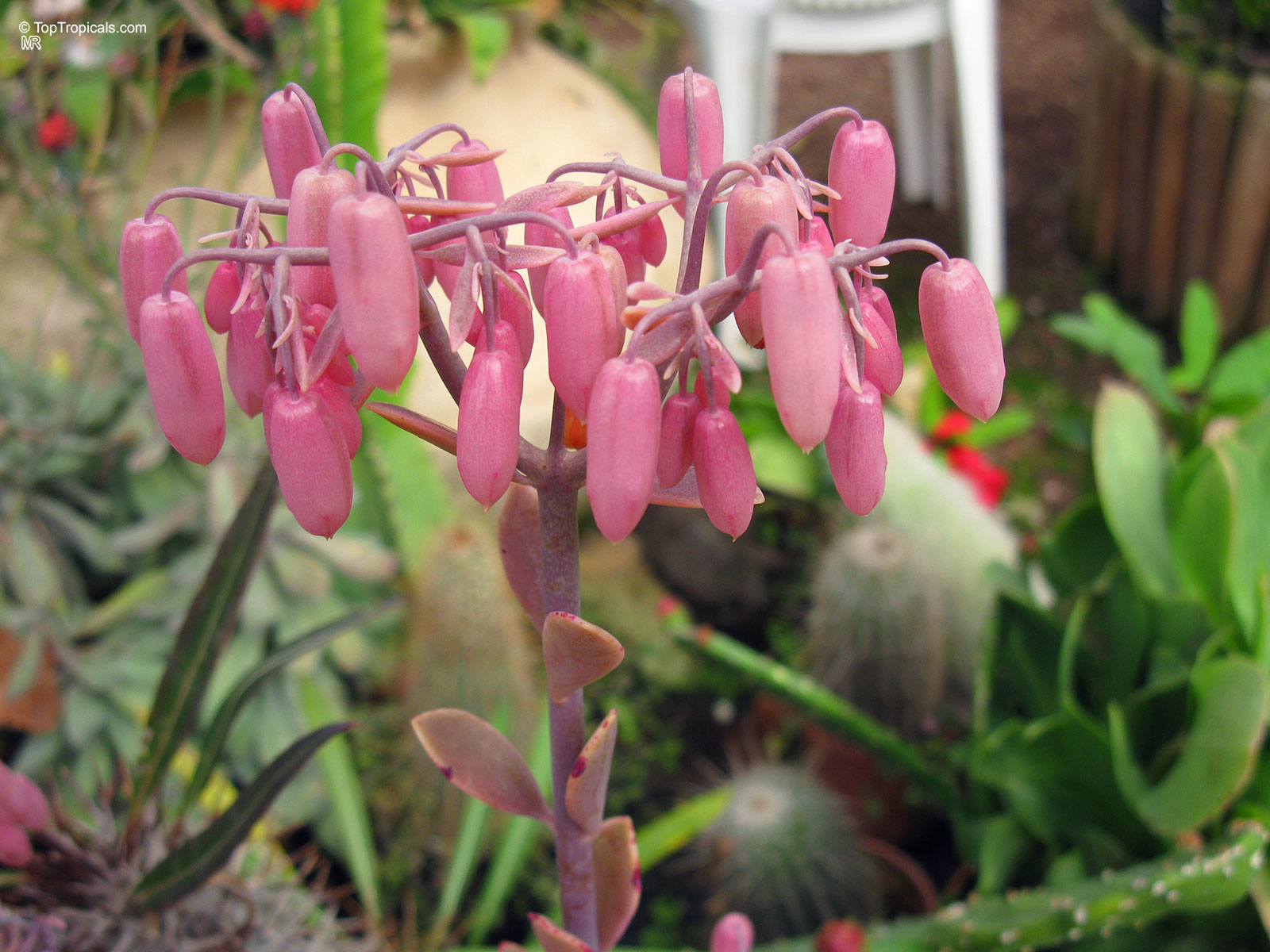
The flowers of Bryophyllum fedtchenkoi are vinous in colour, ranging from a deep red to a crimson hue, with their inflorescence reaching 12" tall. The blooms are incredibly attractive, making it a popular choice for gardeners.
Growing this bushy-branched specimen is easy - and it can be done in pots for those living in colder climates. When planting in pots, it is important to use a well-draining material, and avoid moist and waterlogged conditions for best results. Moderately watering about once a week during dry seasons, and keeping the plant in plenty of full sun should not pose too much of a challenge, and should allow the Kalanchoe to thrive.
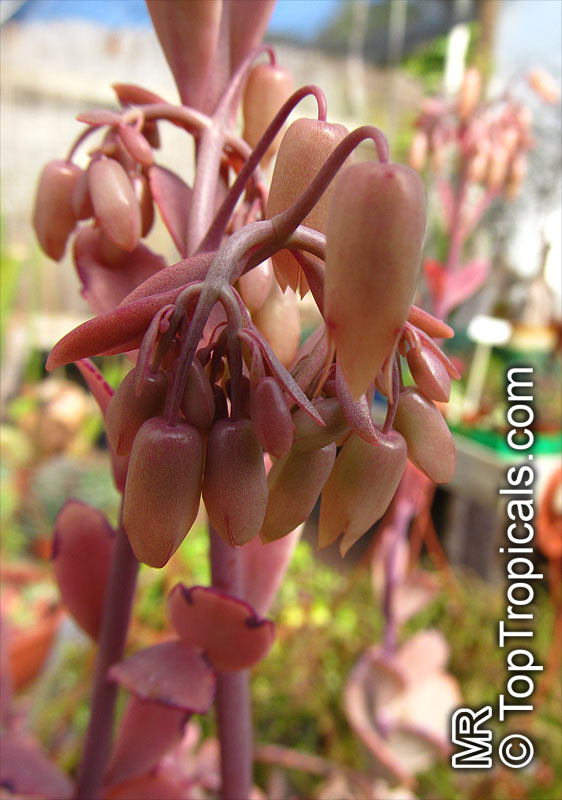
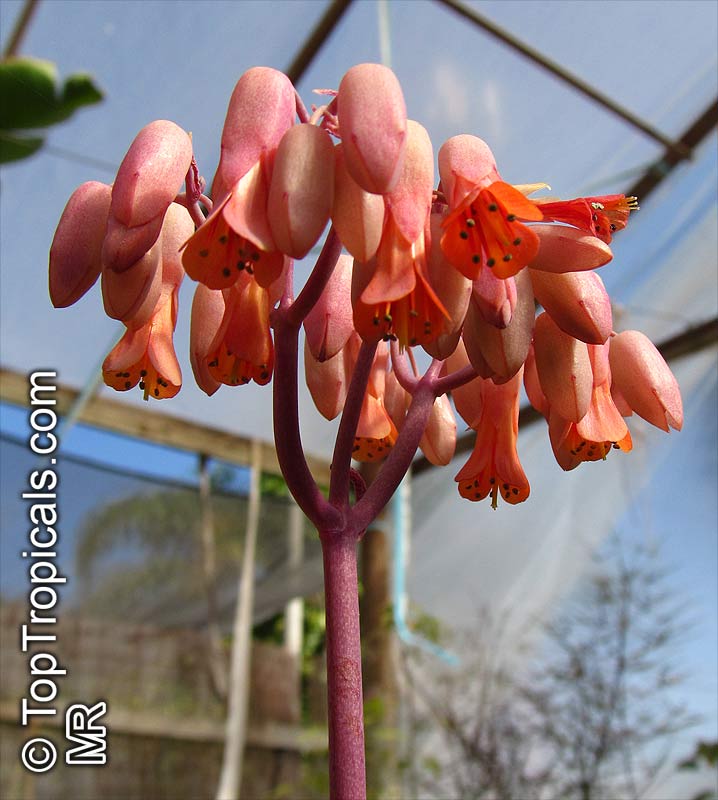

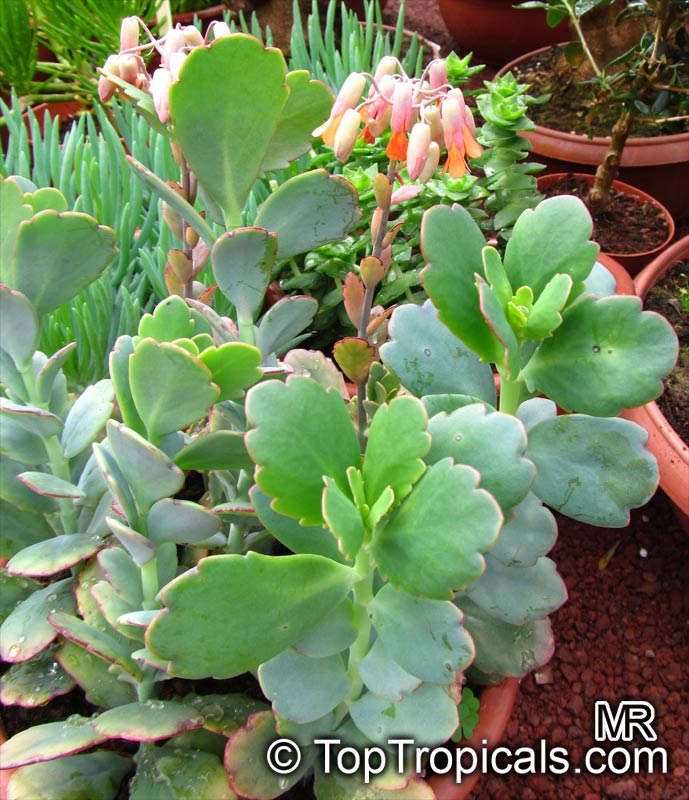
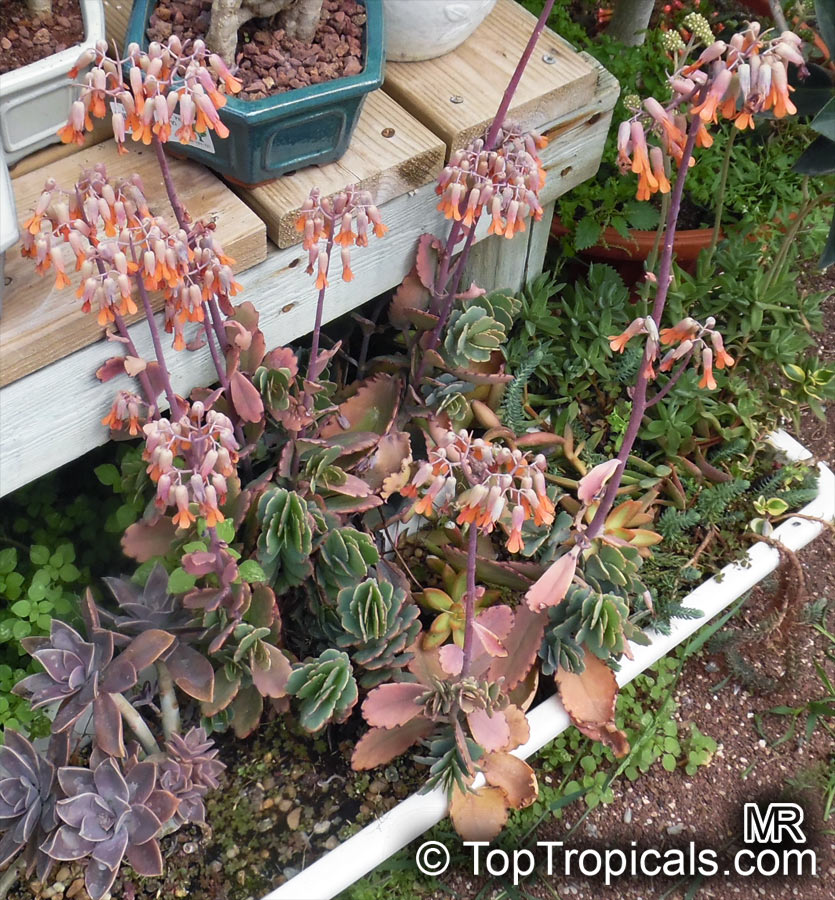
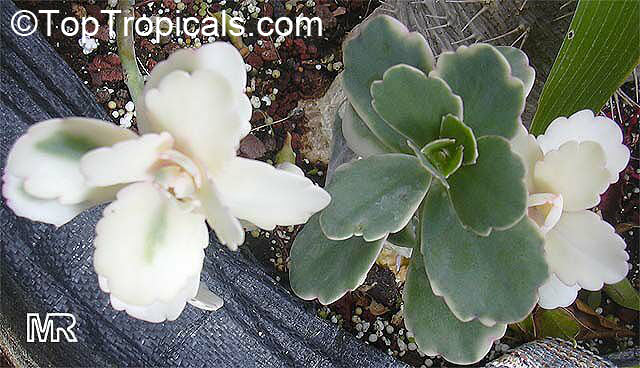
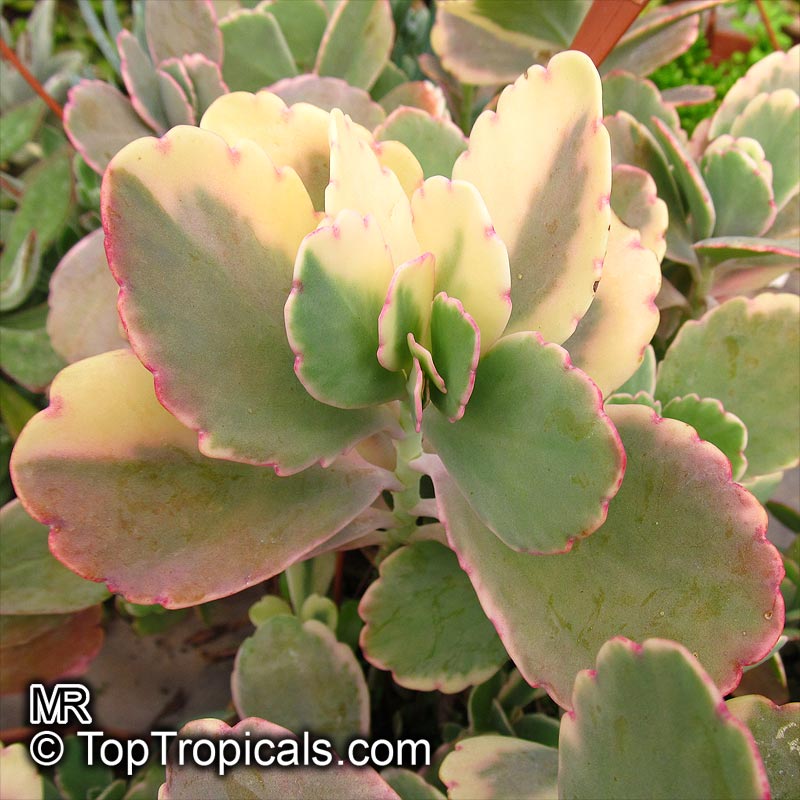
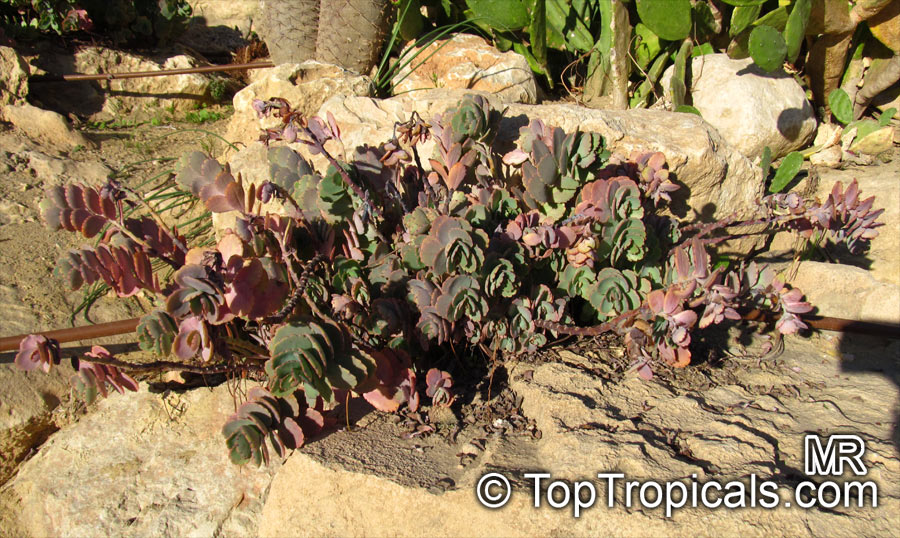
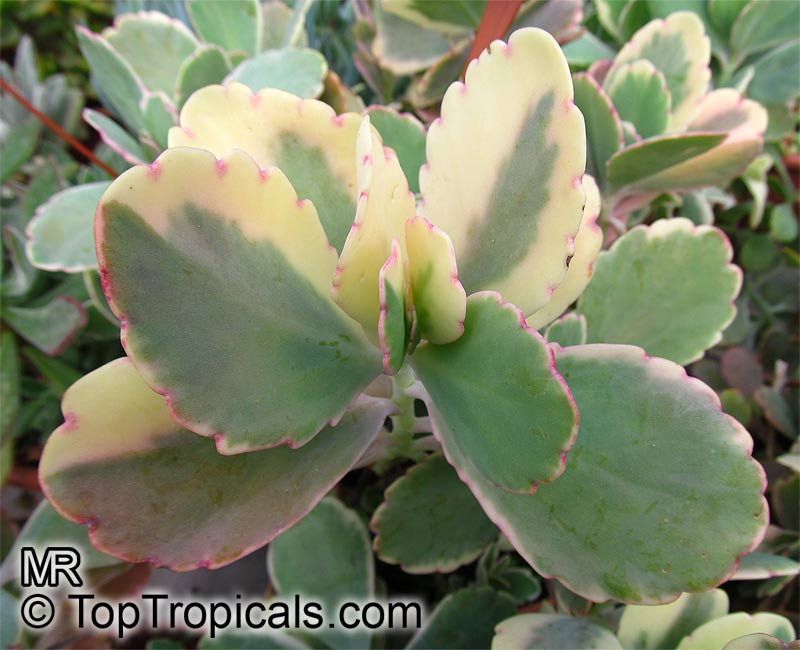
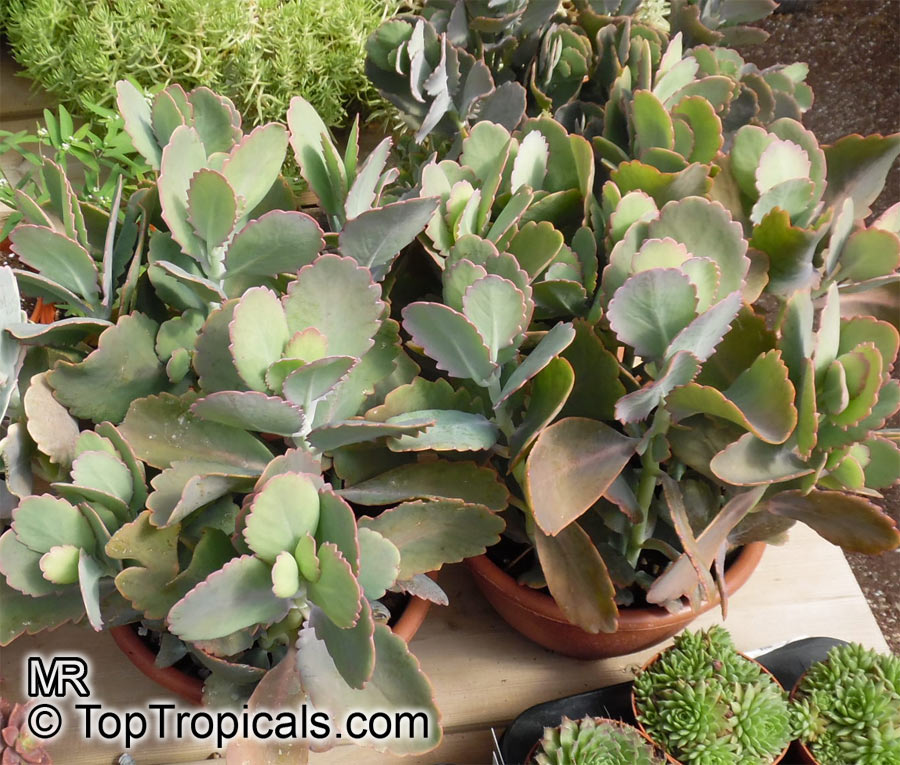
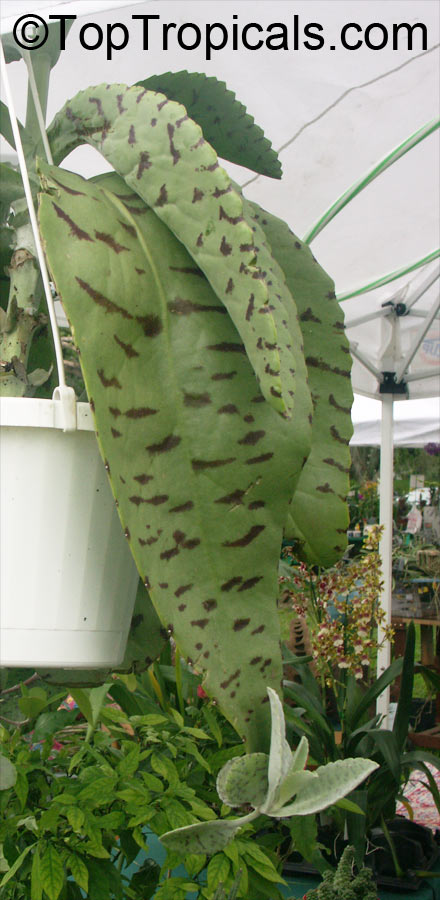
Botanical names: Bryophyllum gastonis-bonnieri, Kalanchoe gastonis-bonnieri, Kalanchoe adolph-engleri, Bryophyllum adolph-engleri
Common names: Giant kalanchoe, Donkey Ears; Life Plant; Miracle Leaf; Sprouting Leaf; Sprout Leaf Plant; Leaf of Life; Good Luck Leaf, Tree Of Life
Family: Crassulaceae
Origin: Thailand
USDA Zone: 9-11
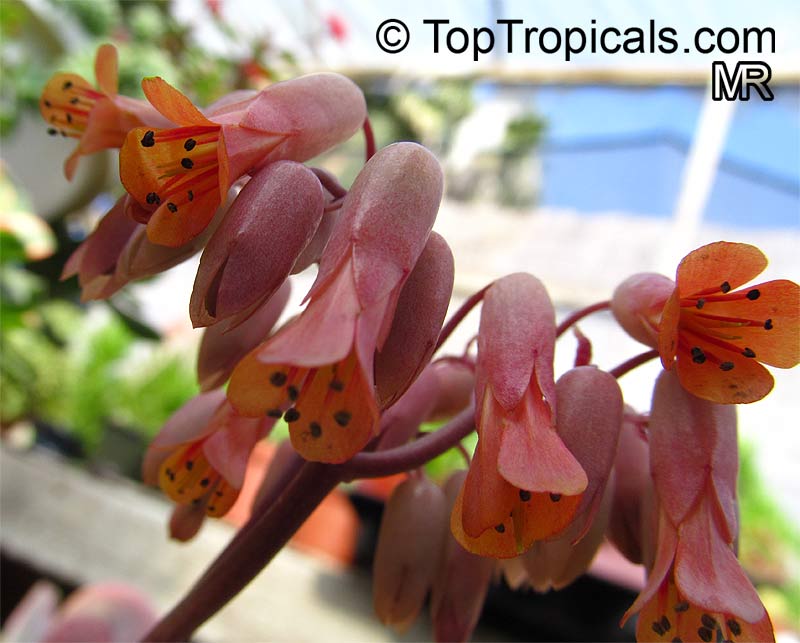
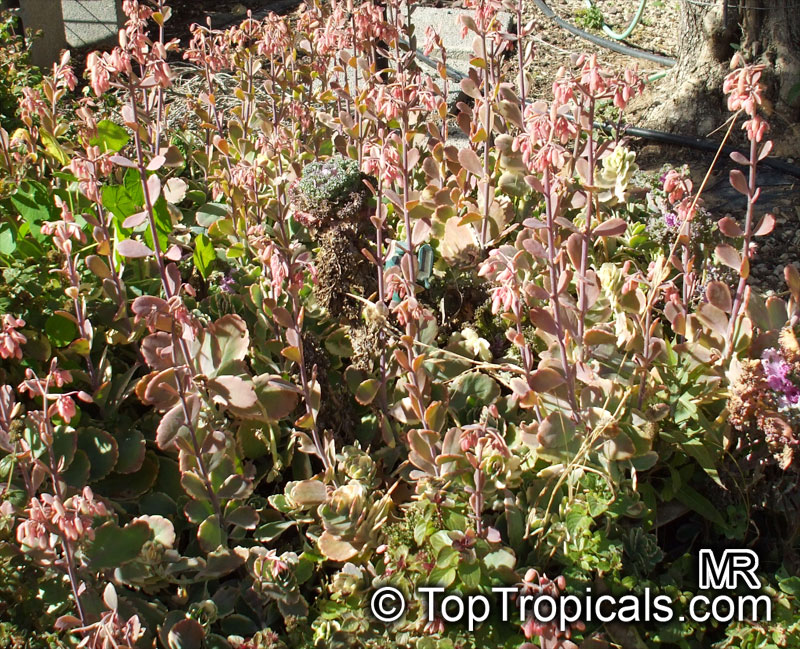
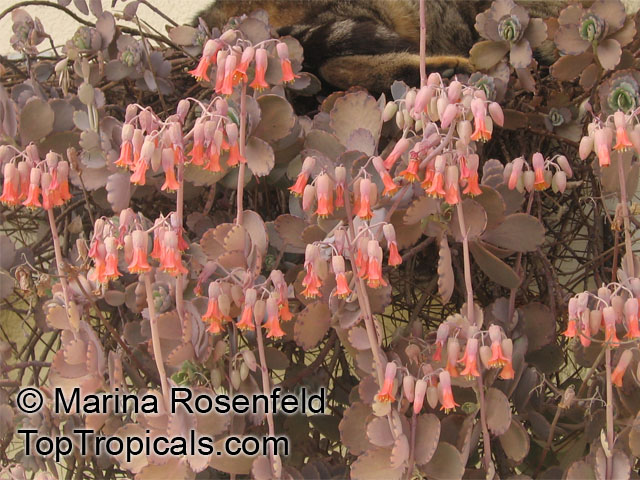
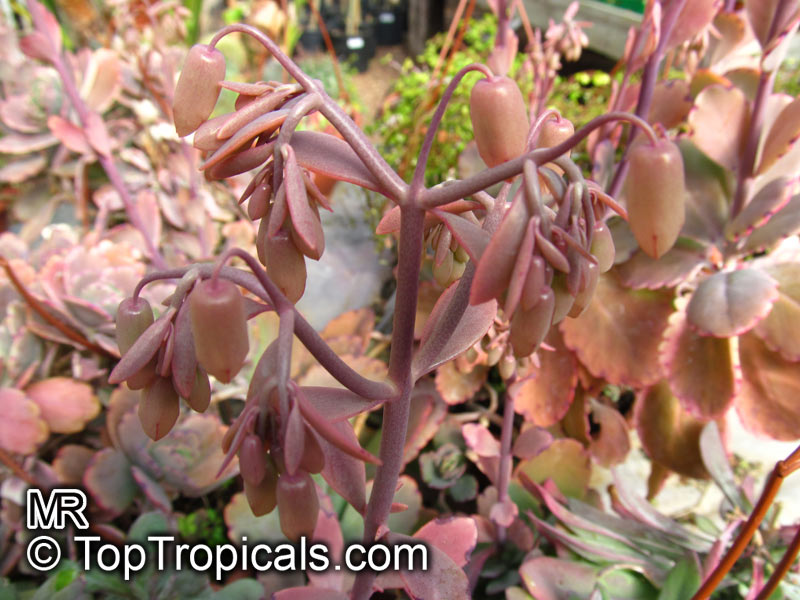
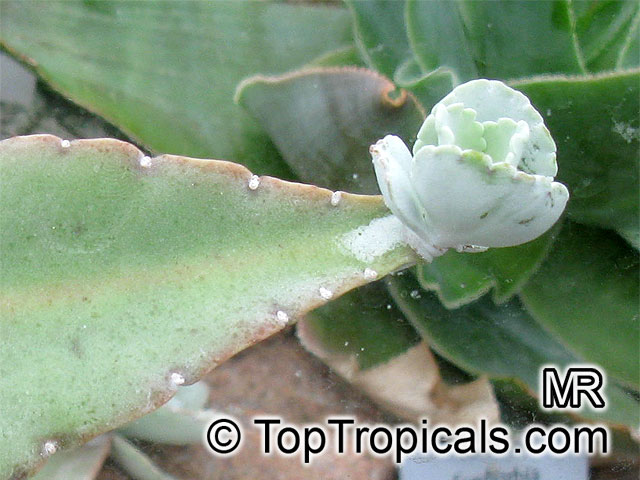
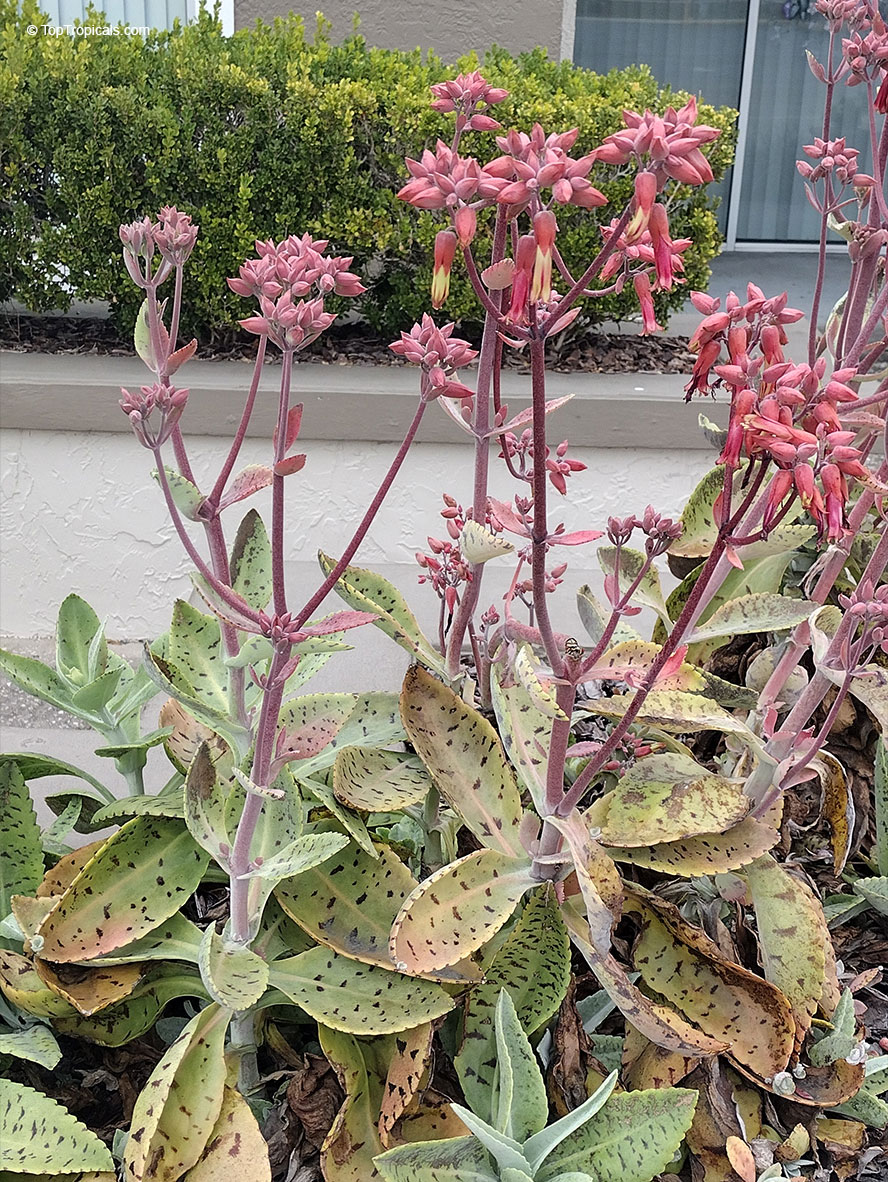
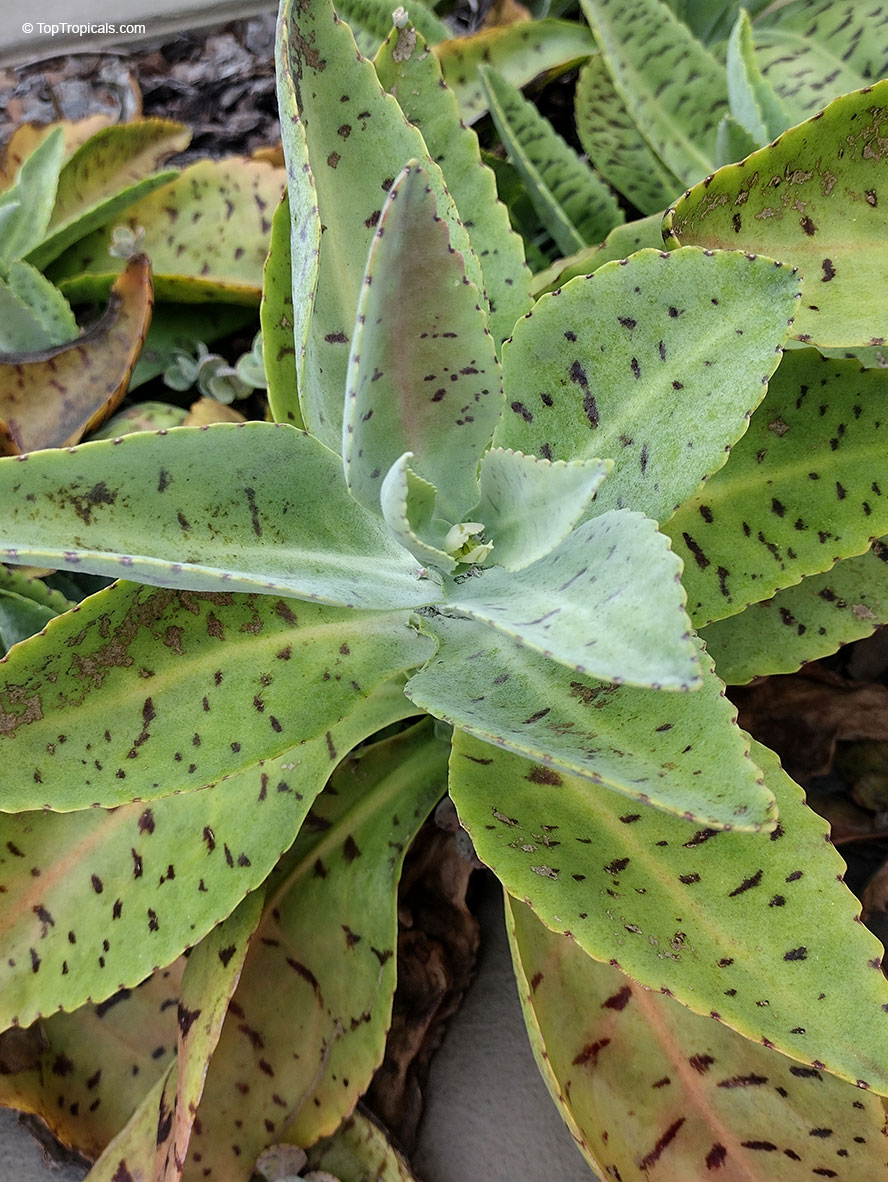
This rare variety brought from Thailand has large fleshy leaves 1-2 ft in length. Leaves and stems are covered with silvery coating. Flowers are very showy, red with orange-yellow or light yellow. When planted in groups, these plants make very unforgettable view, covered with flame-like flowers. Like other kalanchoes, leaflets form easily, they are fuzzy and silver. Easy to grow just from one leaf set on top of moist soil. Very fast growing, drought tolerant small shrub. Tolerates almost any conditions.
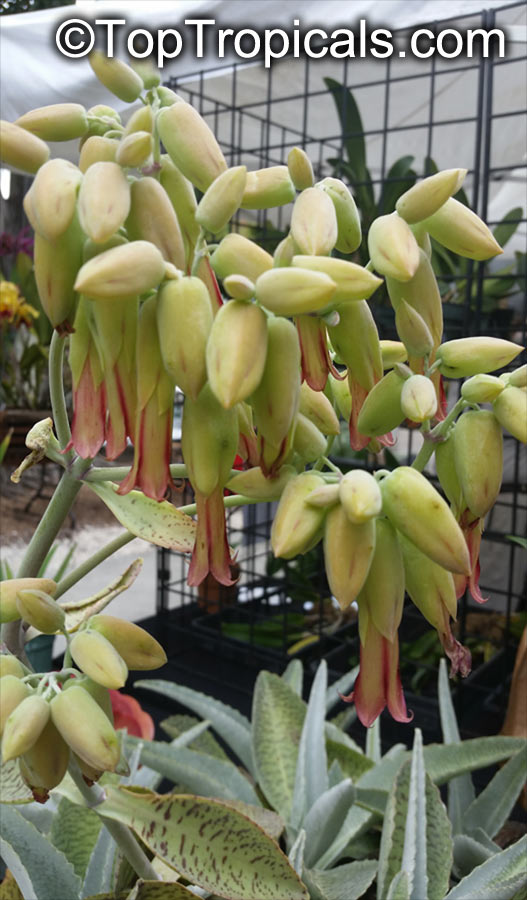
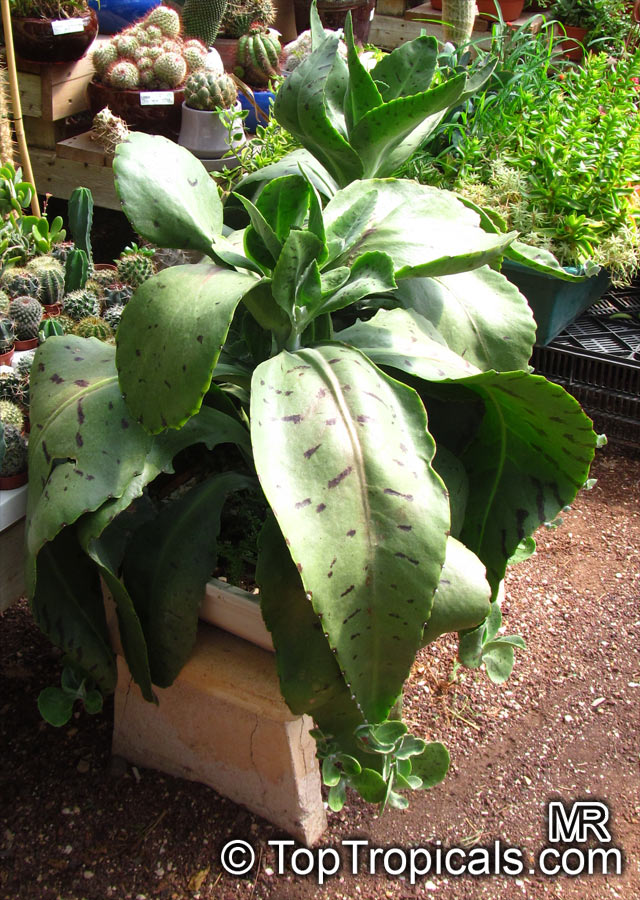
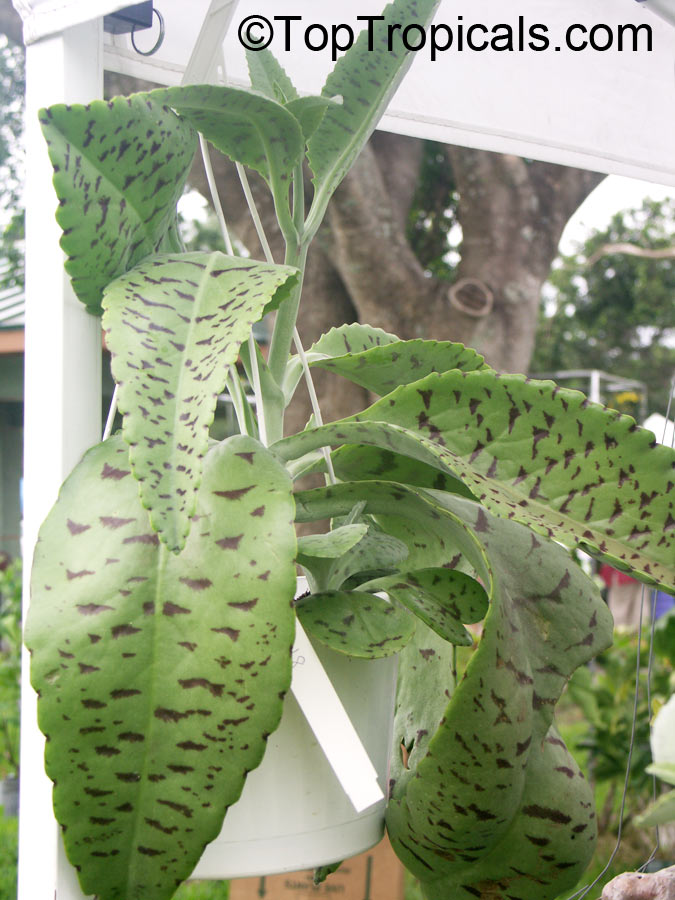
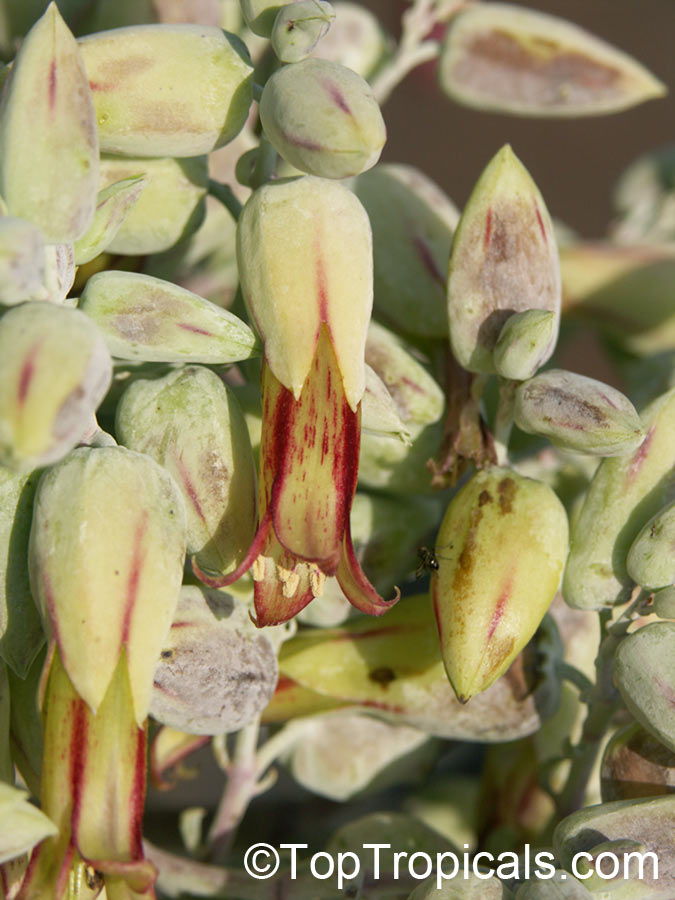
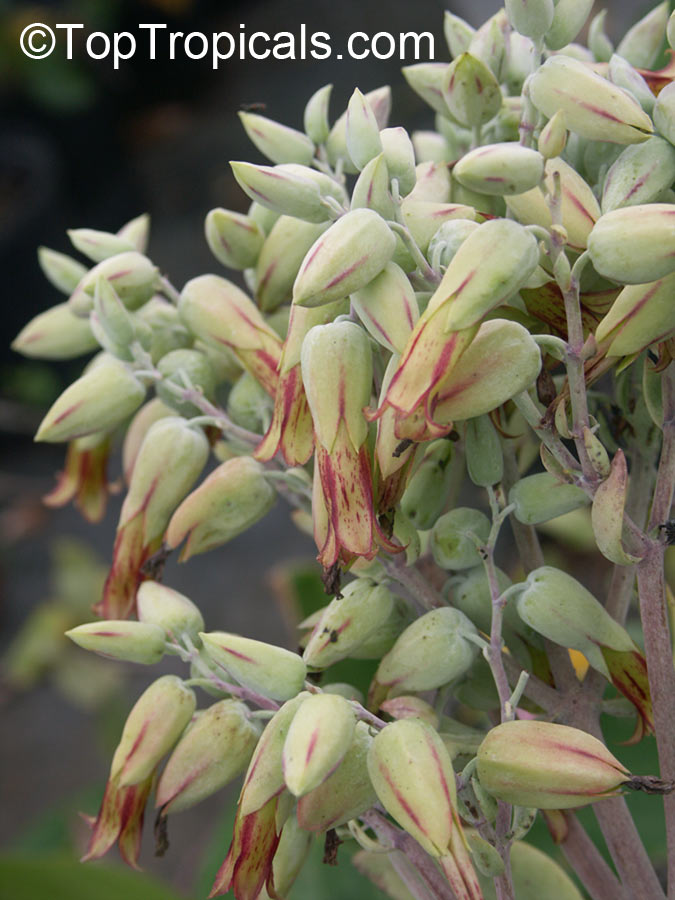
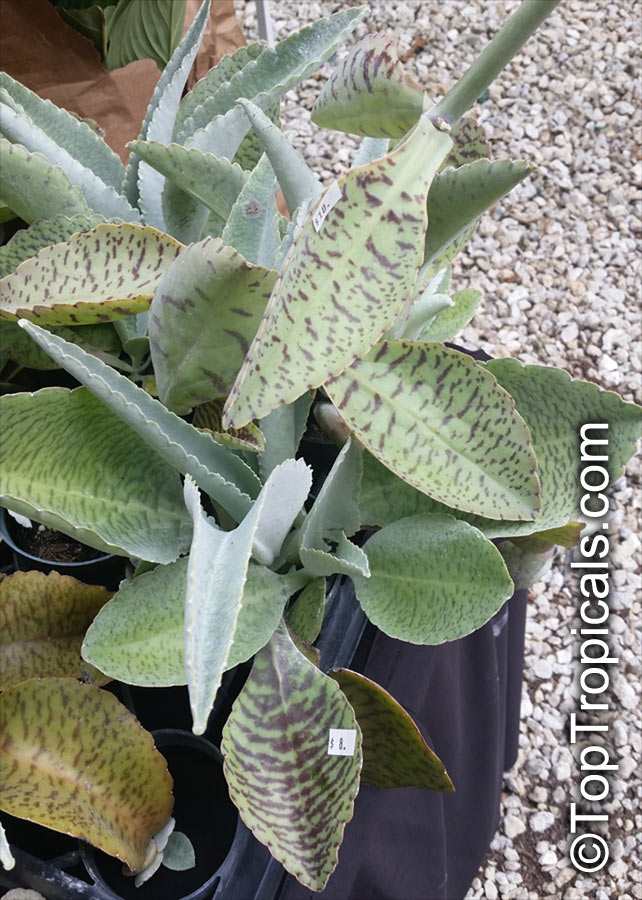
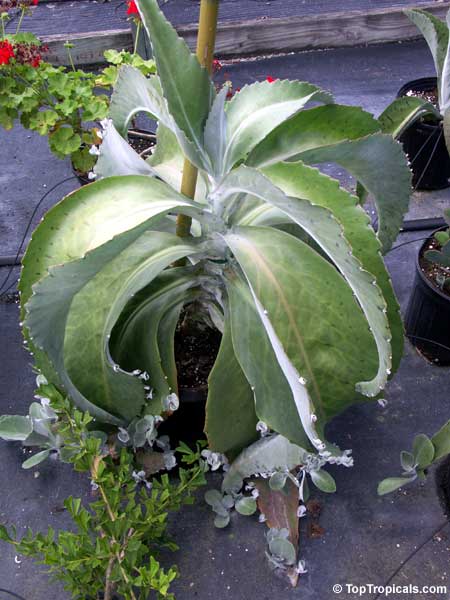
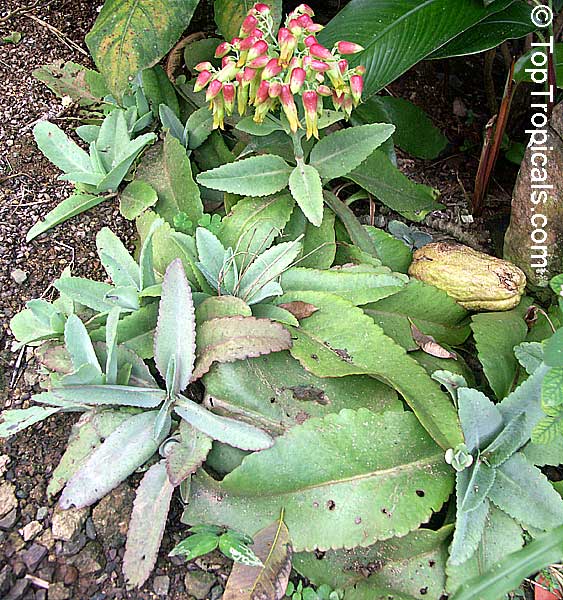
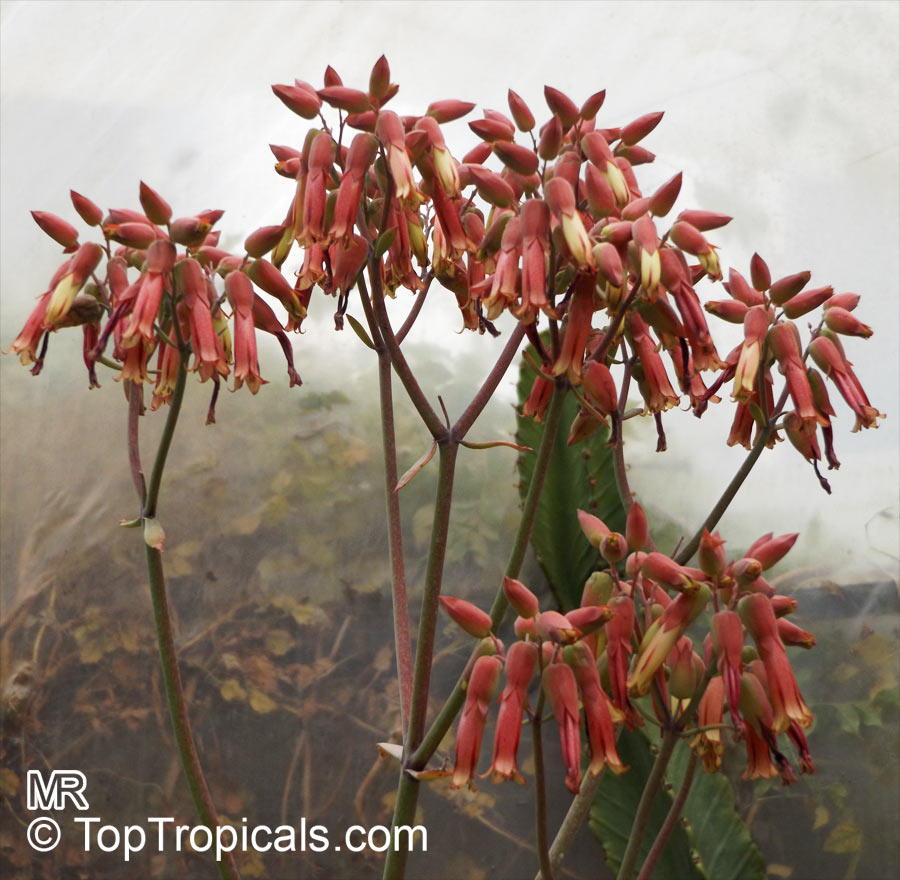
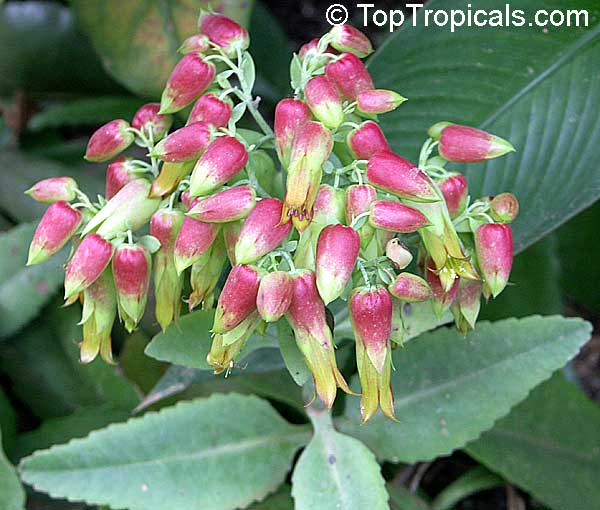
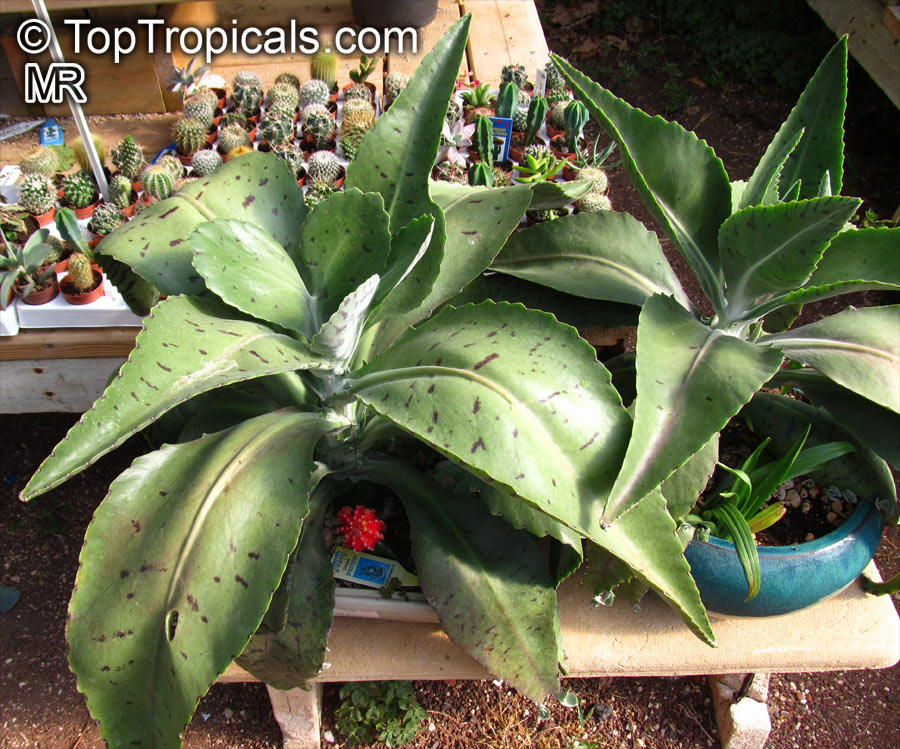

Botanical names: Bryophyllum pinnatum, Kalanchoe pinnata, Bryophyllum calycinum
Common names: Bahamas Breath Plant, Hawaiian Air Plant
Family: Crassulaceae
Origin: Bahamas
USDA Zone: 9-12


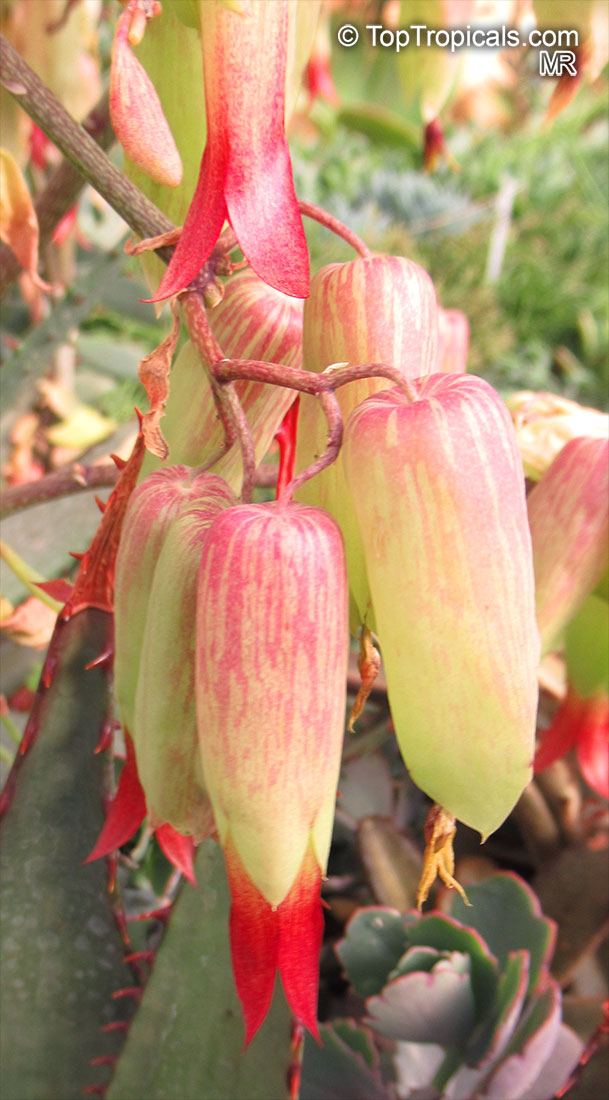
Native Hawaiian plant. Easy to grow just from one leaf set on top of moist soil. Very fast growing, drought tolerant small shrub. Tolerates almost any conditions. Spectacular bloomer! Other common names: Donkey Ears; Life Plant; Miracle Leaf; Sprouting Leaf; Sprout Leaf Plant; Leaf of Life; Resurrection Plant; Canterbury Bells; Cathedral Bells; Mexican Love Plant; Floppers; Good Luck Leaf; Tree Of Life; Hawaiian Air Leaf; Palm Beachbells. Bahamians call it Life Leaf or Ploppers. In the Bahamas it is mostly used for Asthma or shortness in breath.
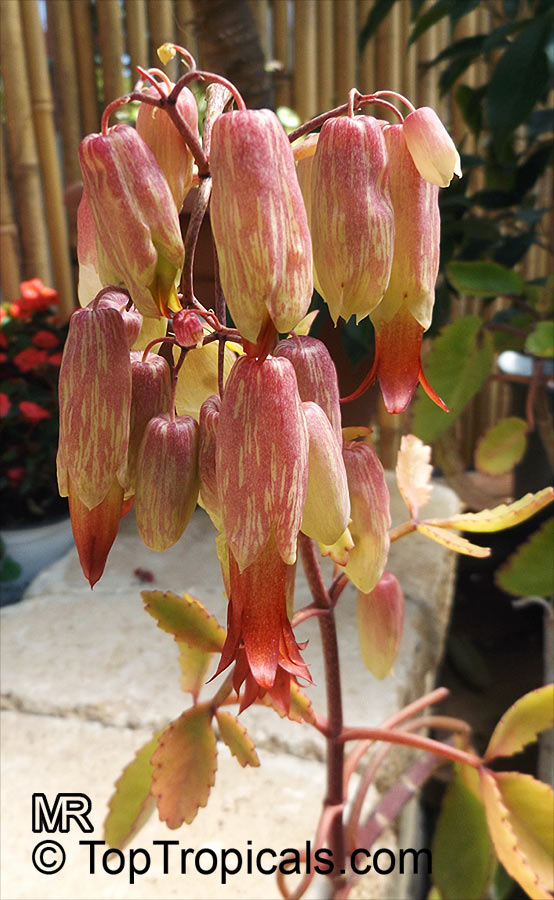
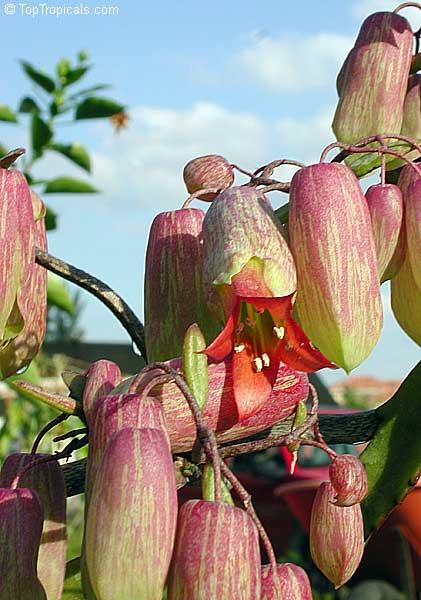
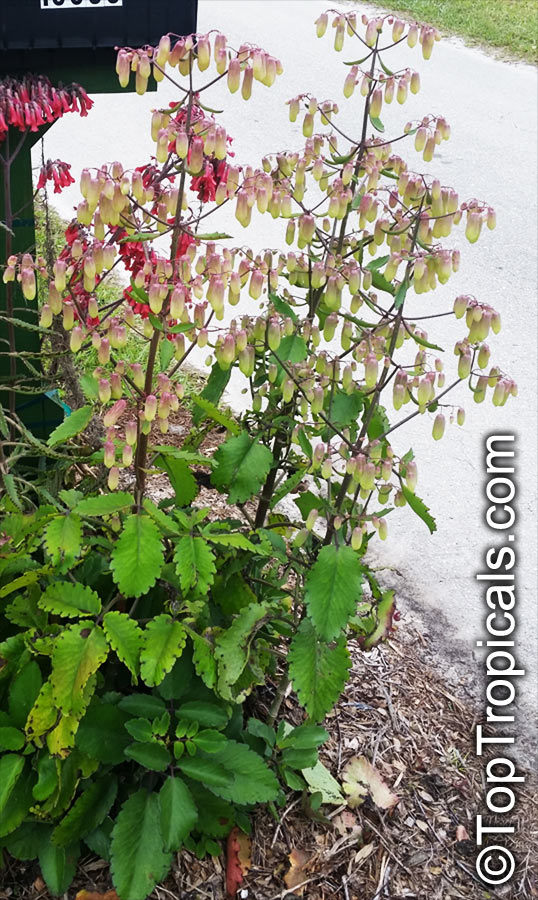
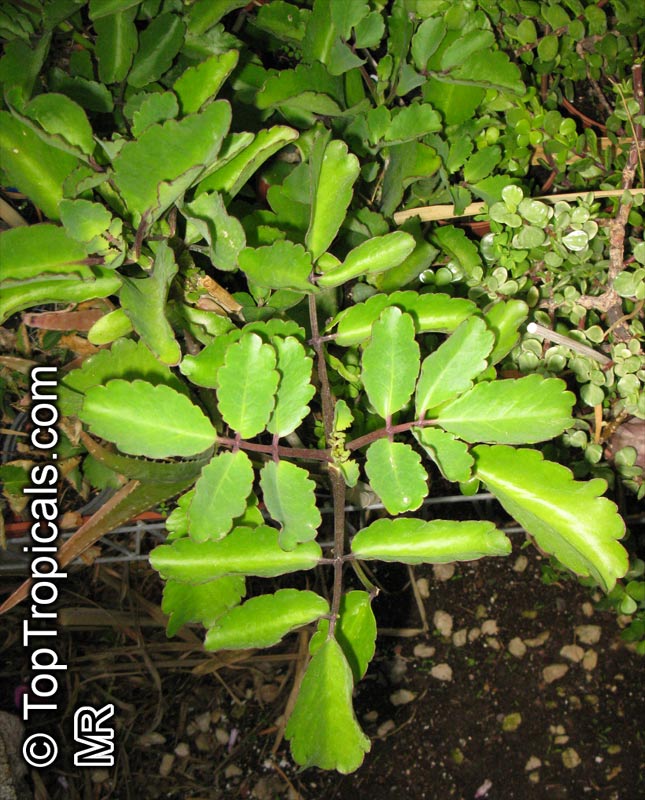
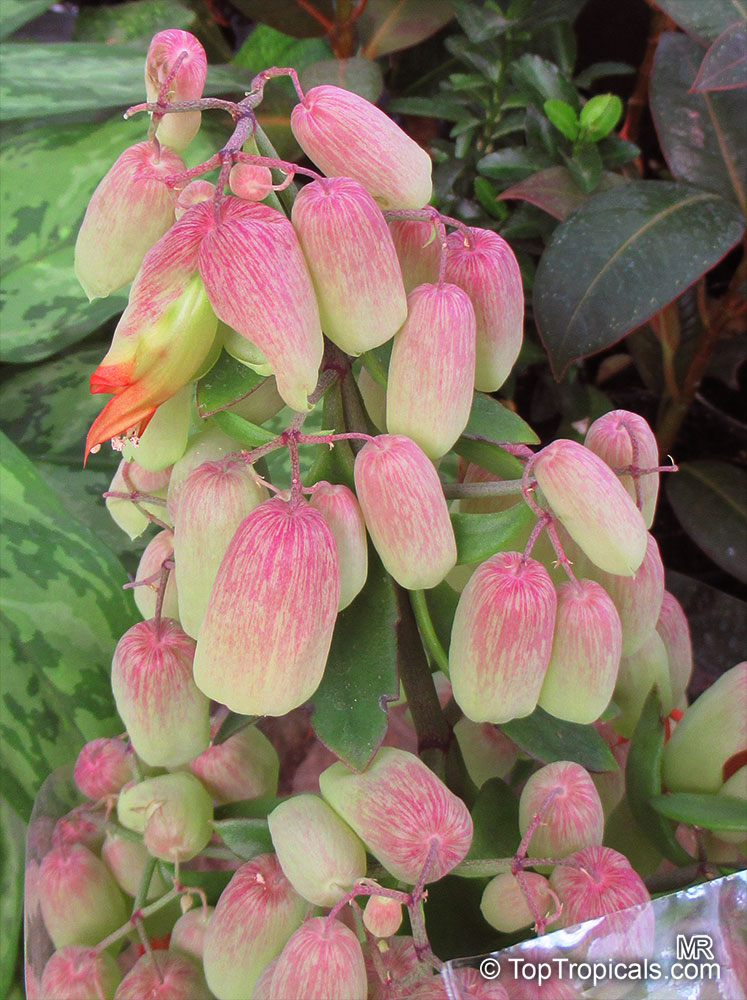
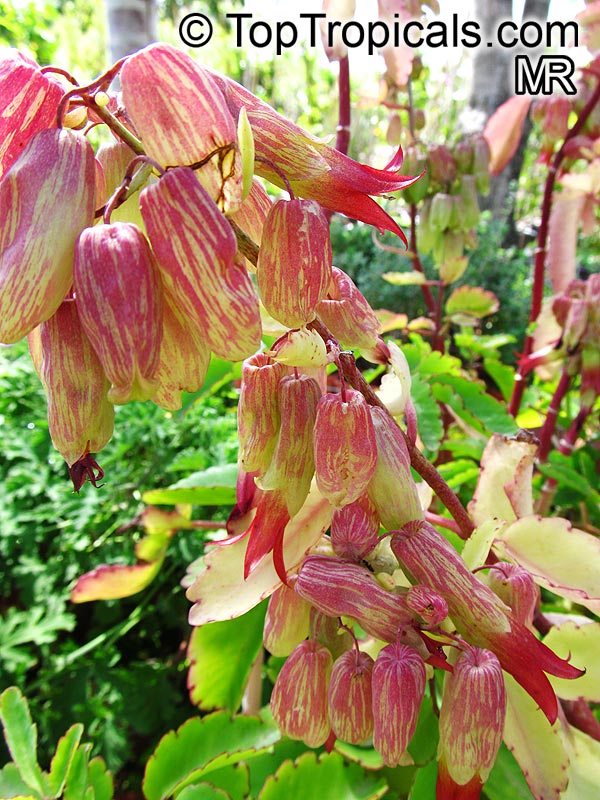
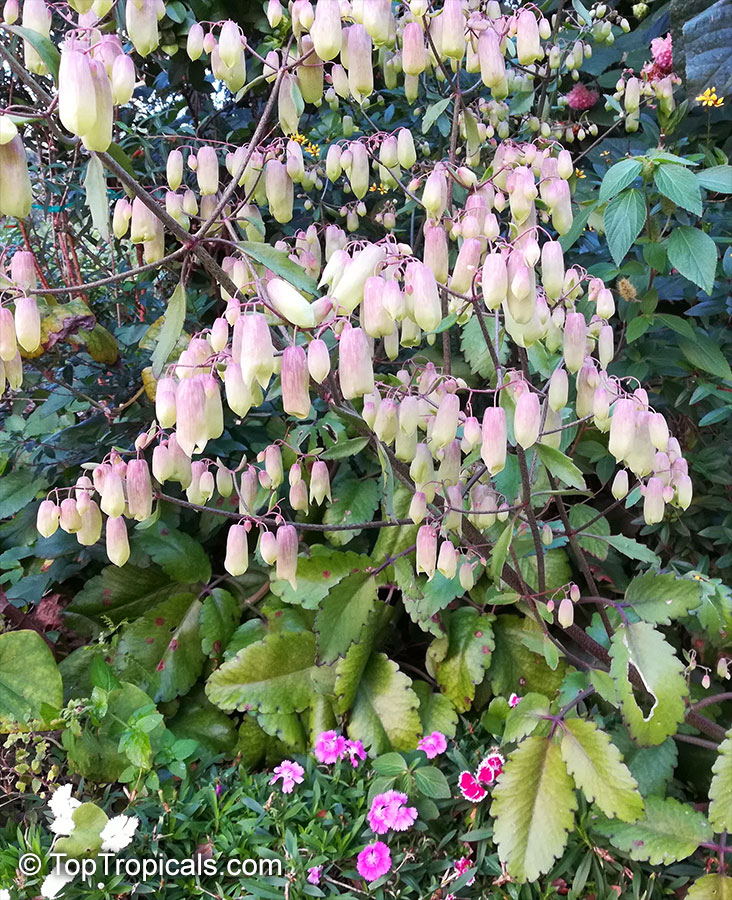
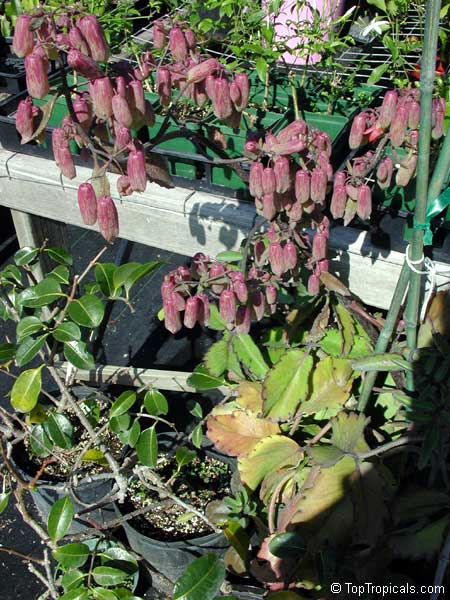
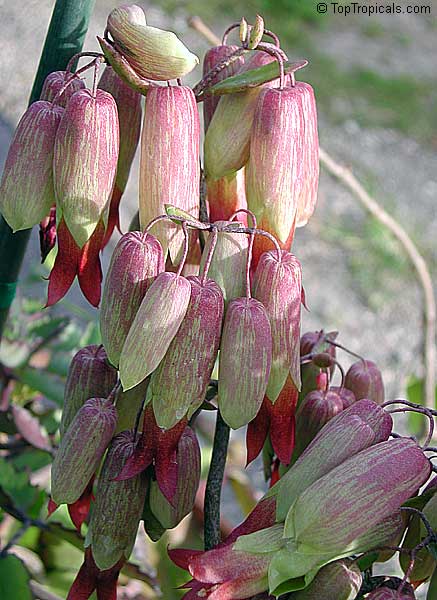
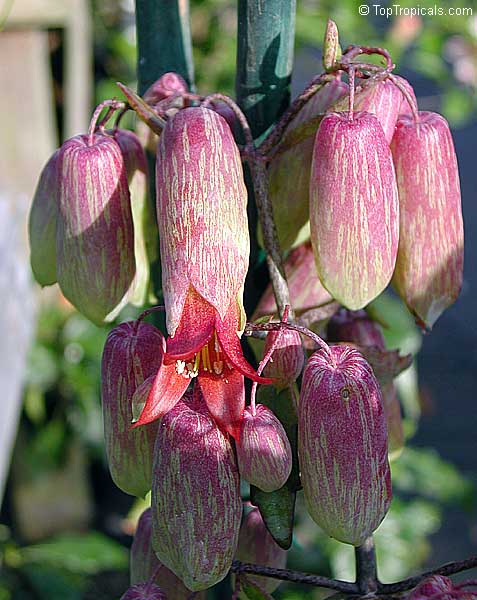
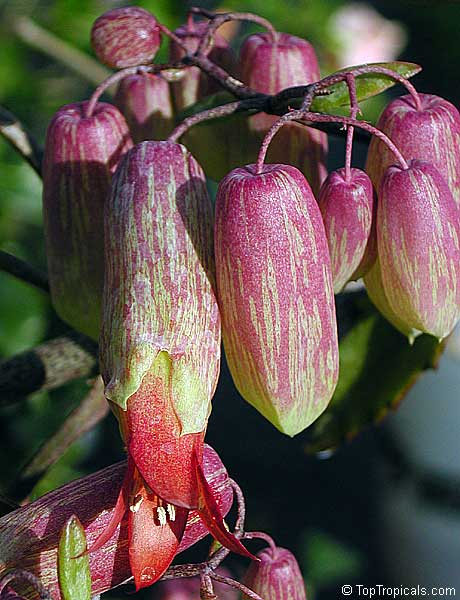
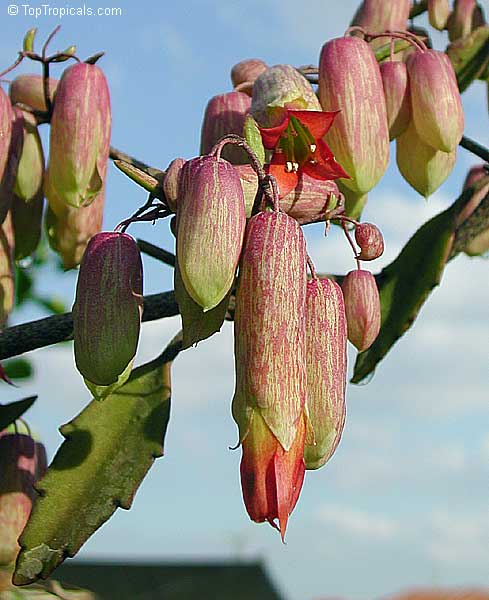

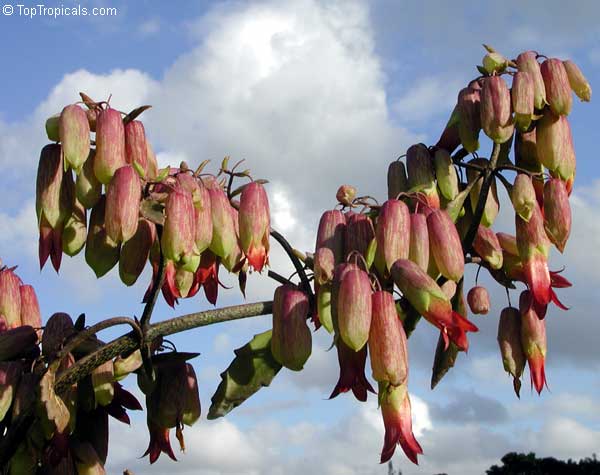
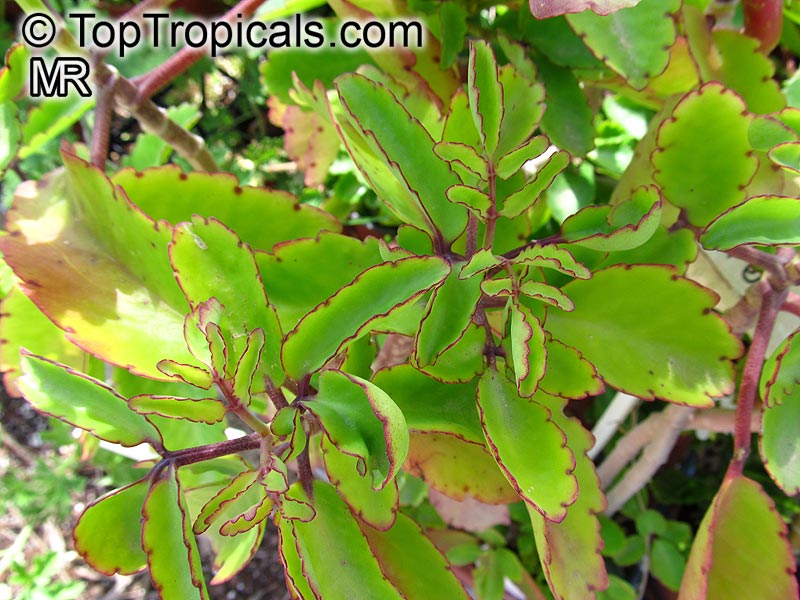
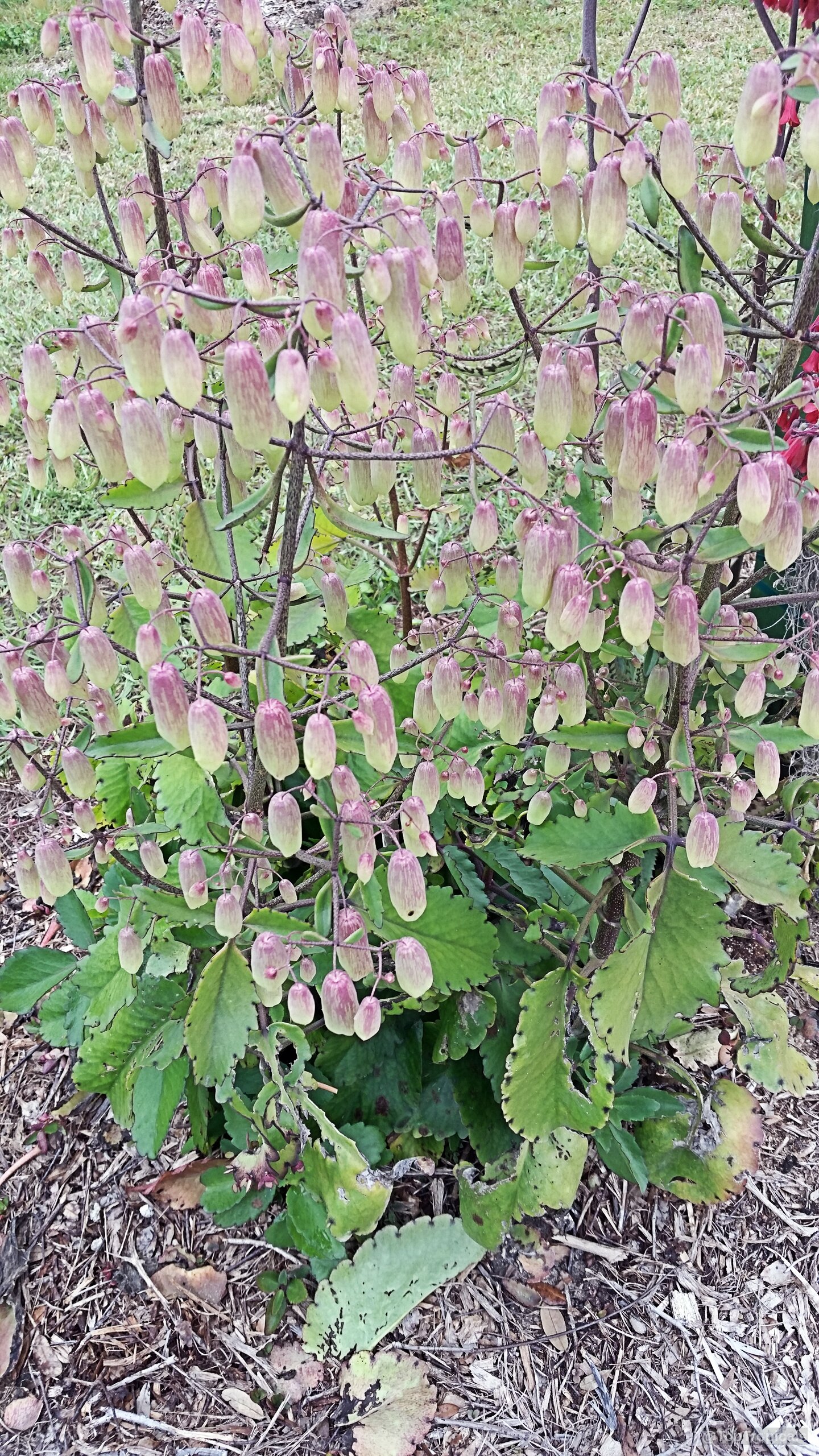
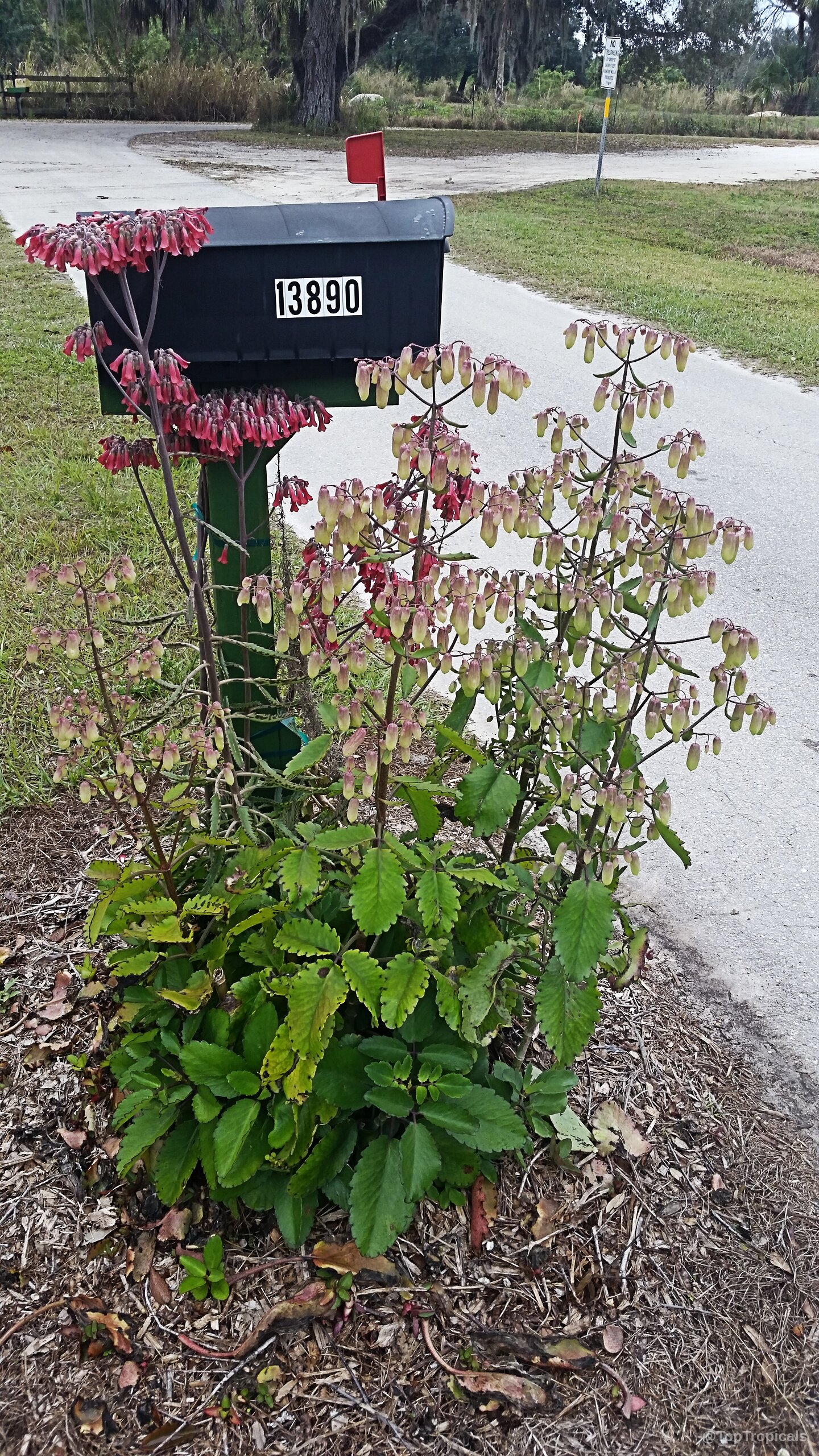
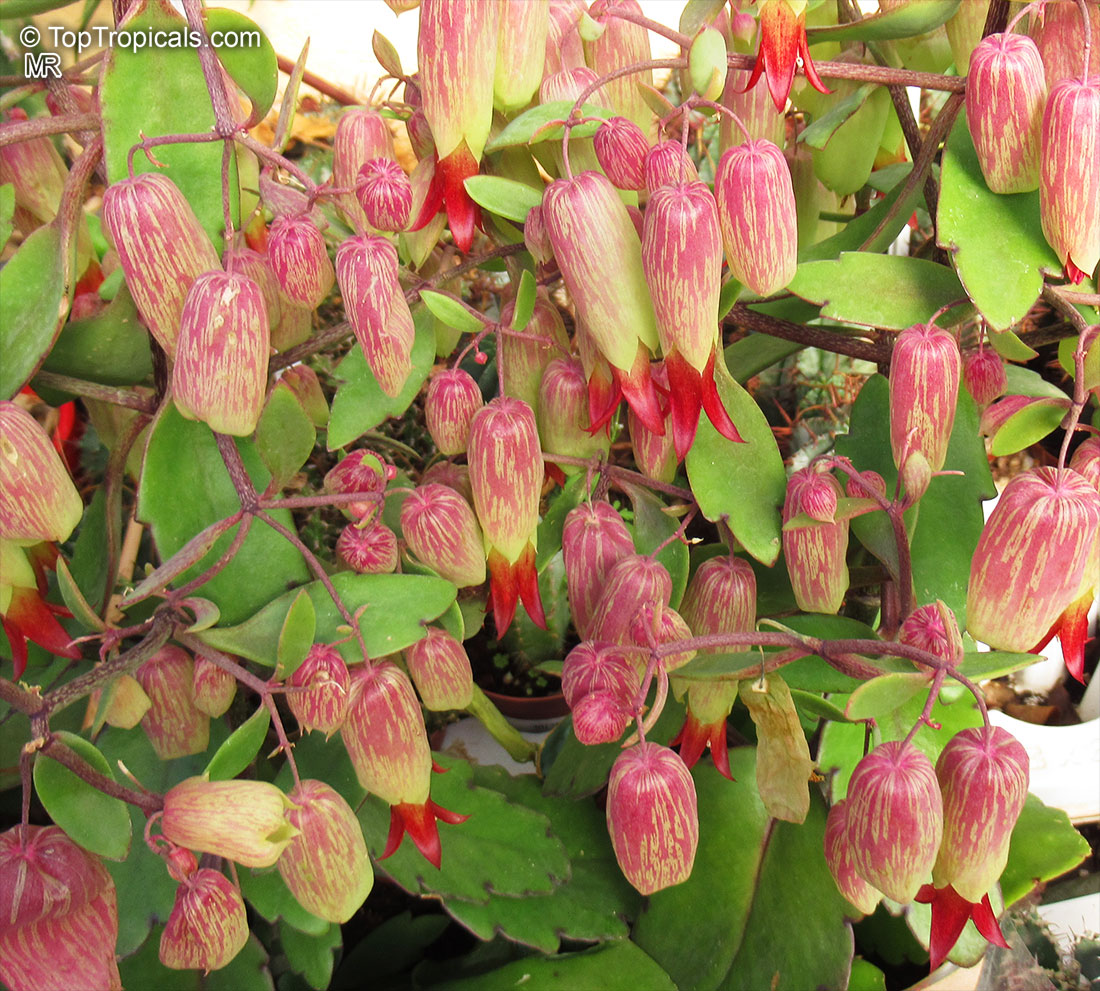
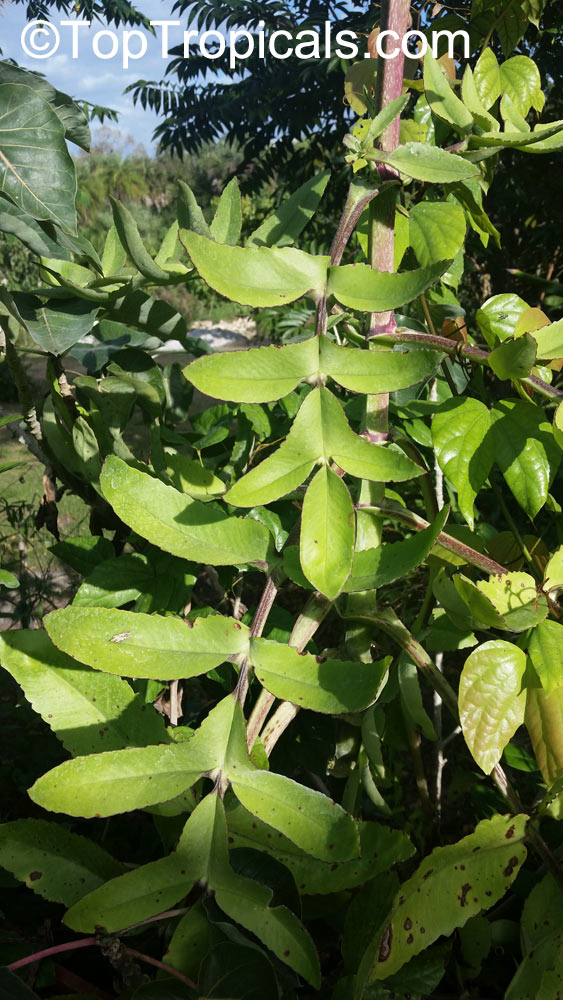
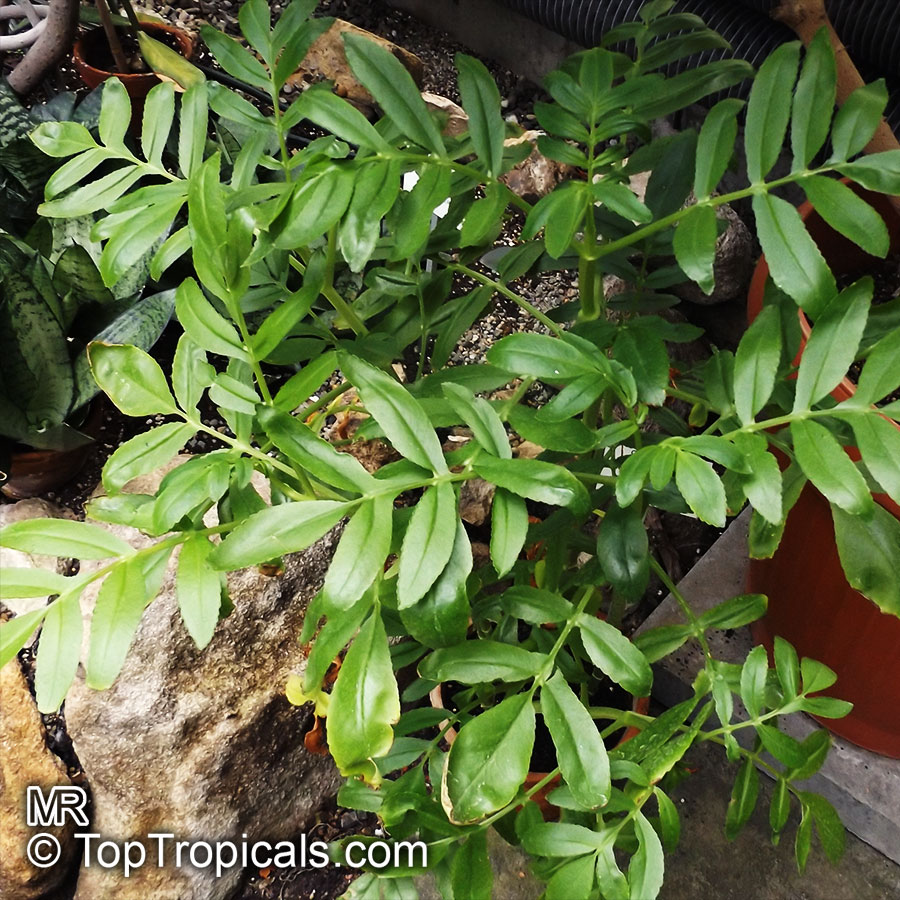
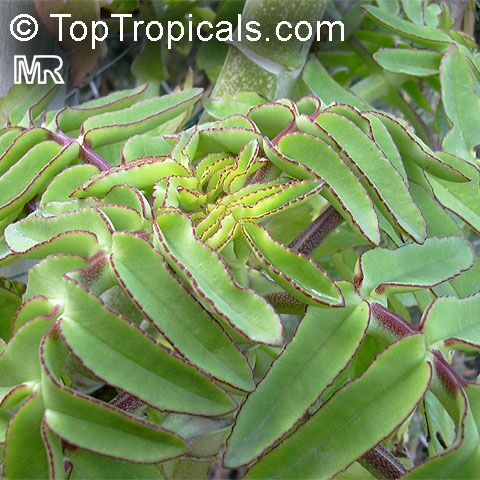
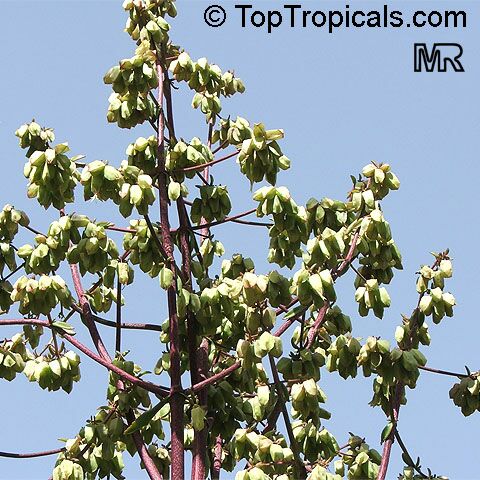
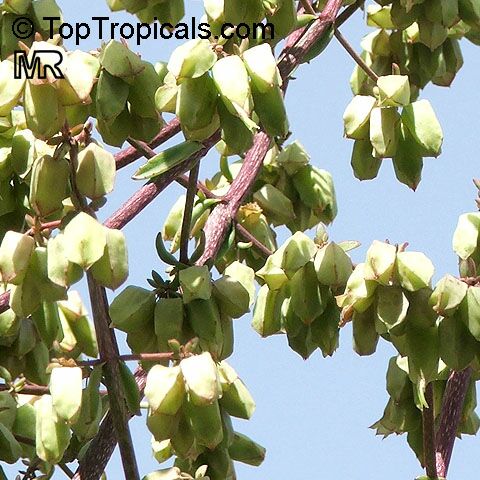
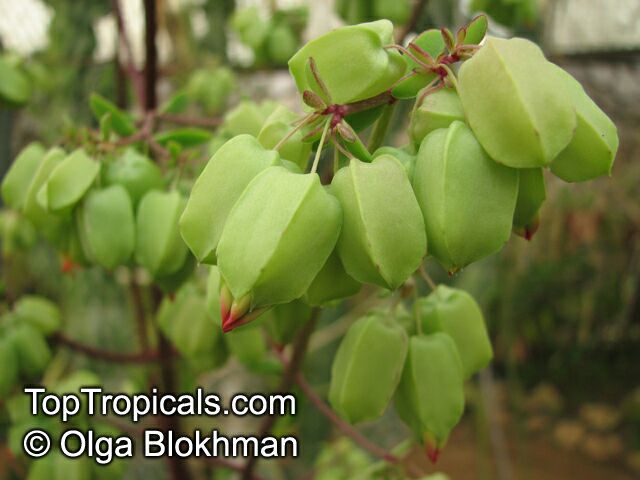
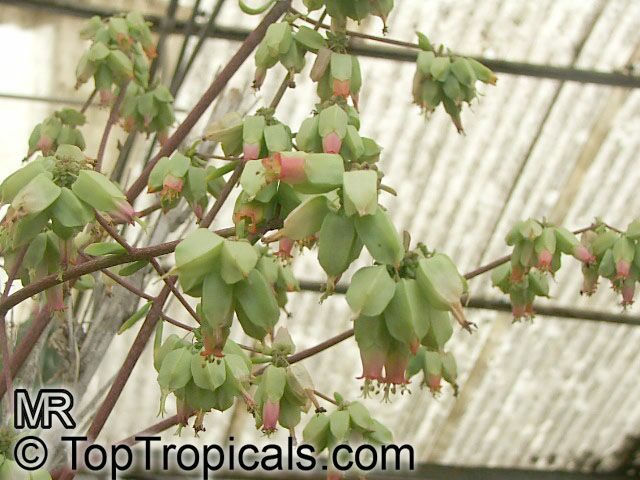
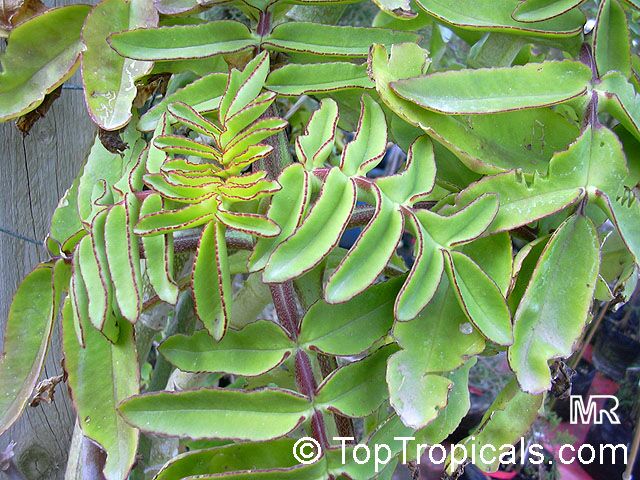
Botanical names: Bryophyllum proliferum, Kalanchoe prolifera
Common name: Blooming Boxes
Family: Crassulaceae
Origin: Island of Madagascar
USDA Zone: 9-11

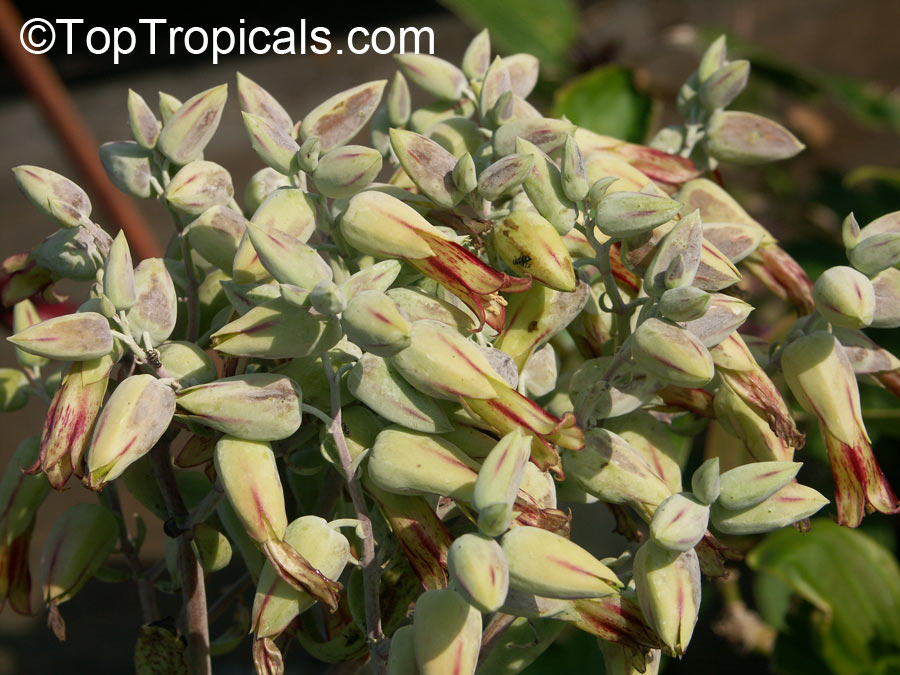
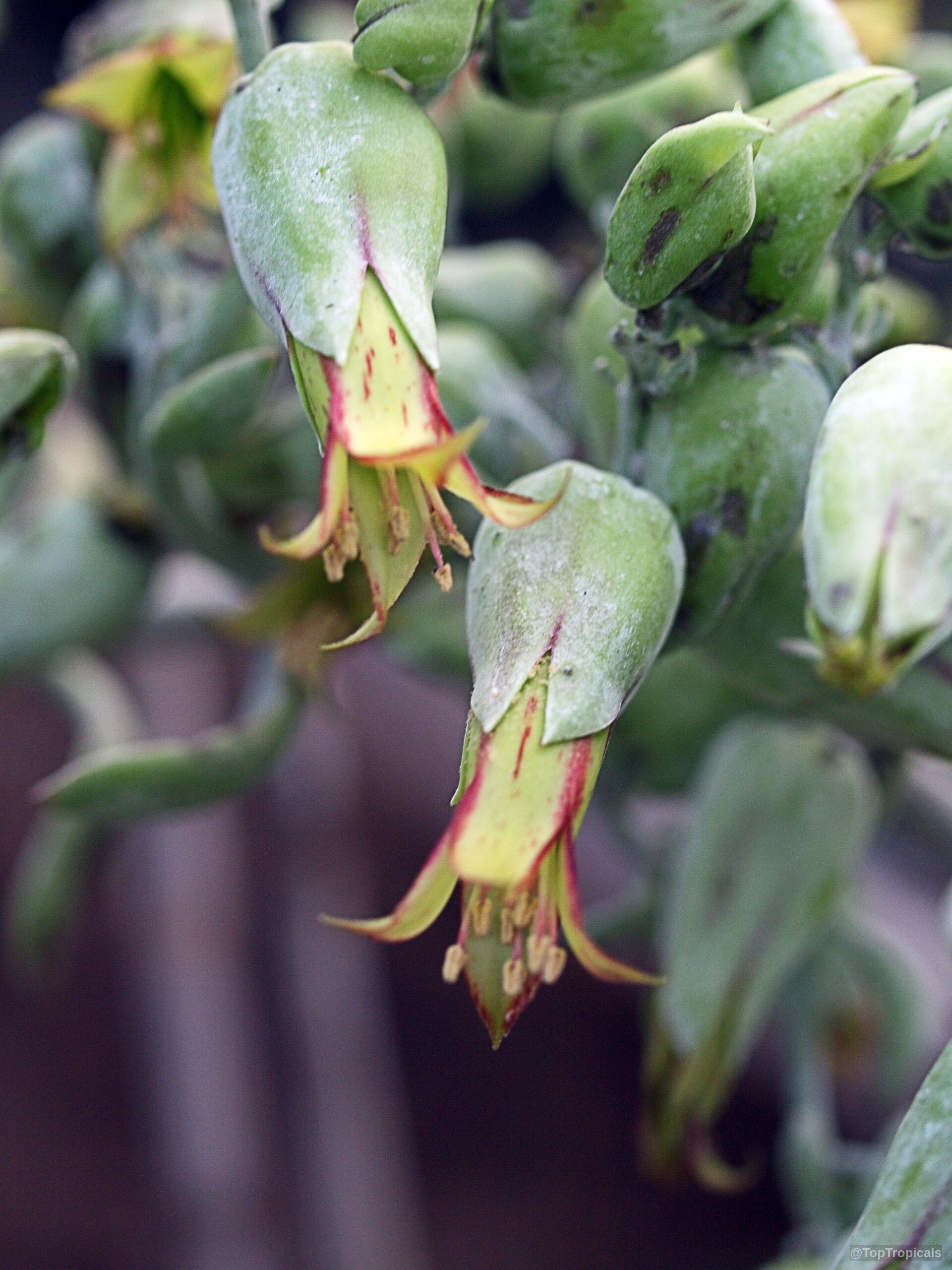
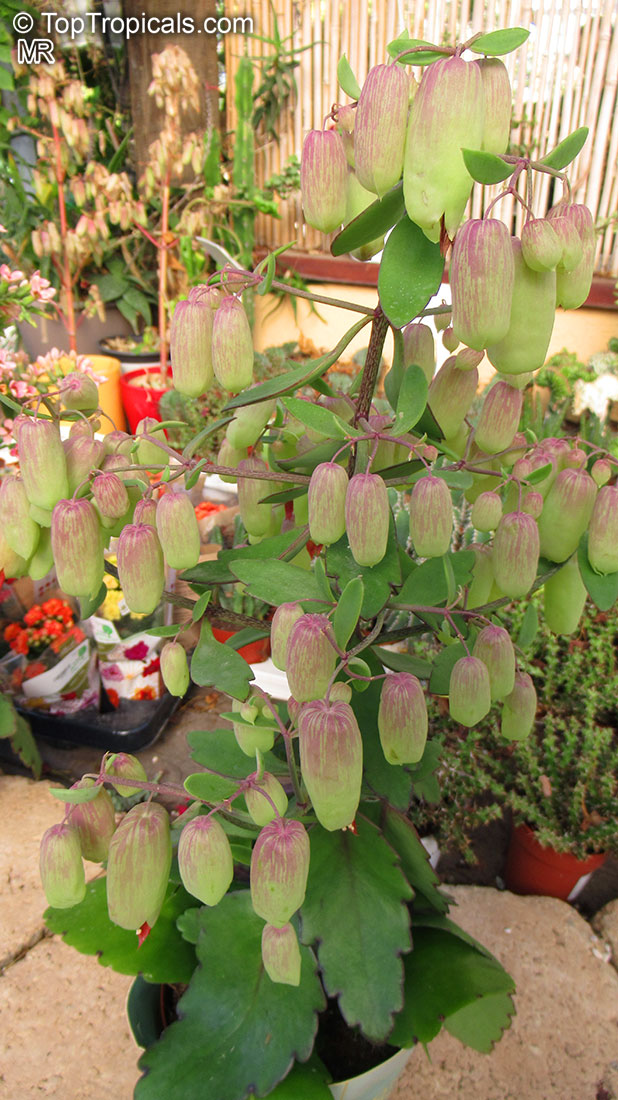
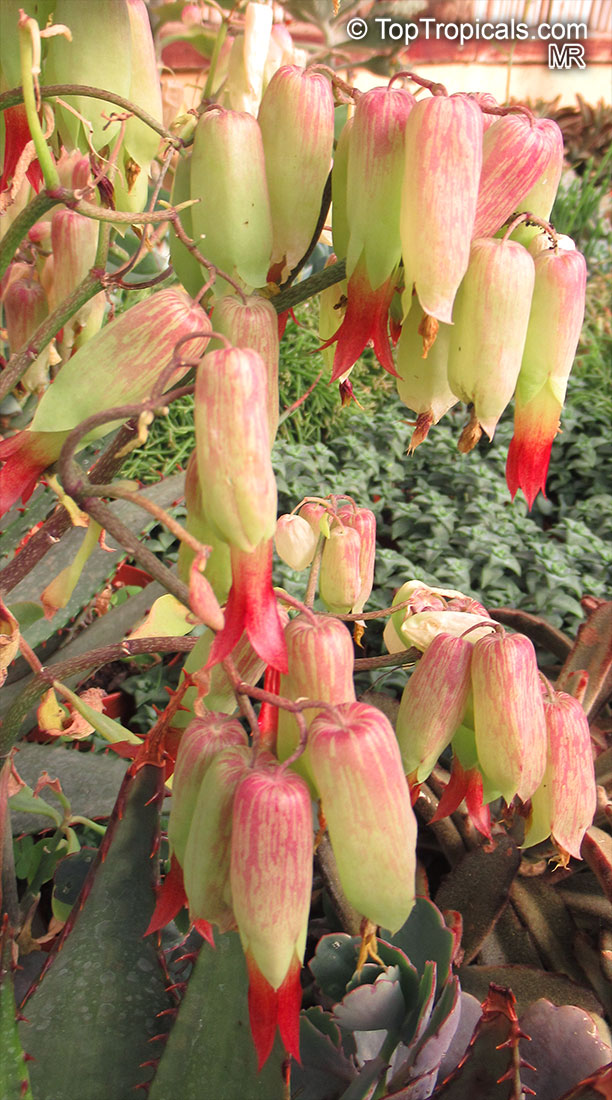
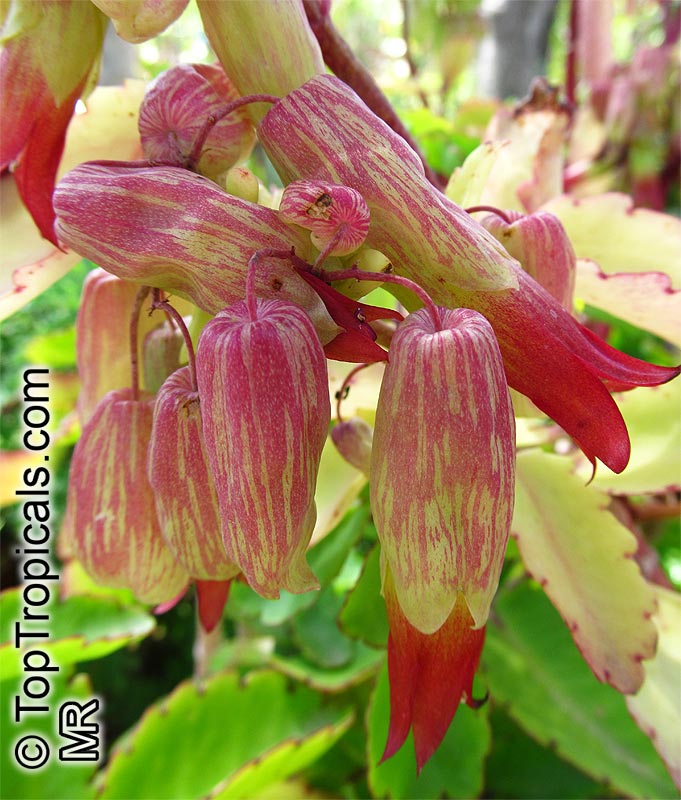
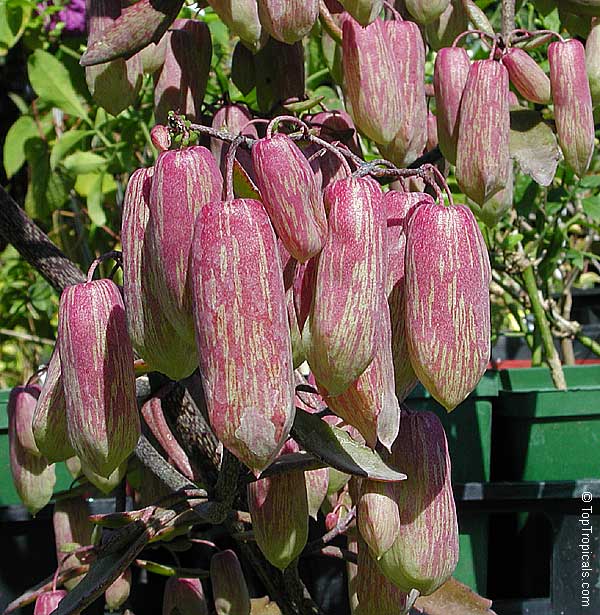
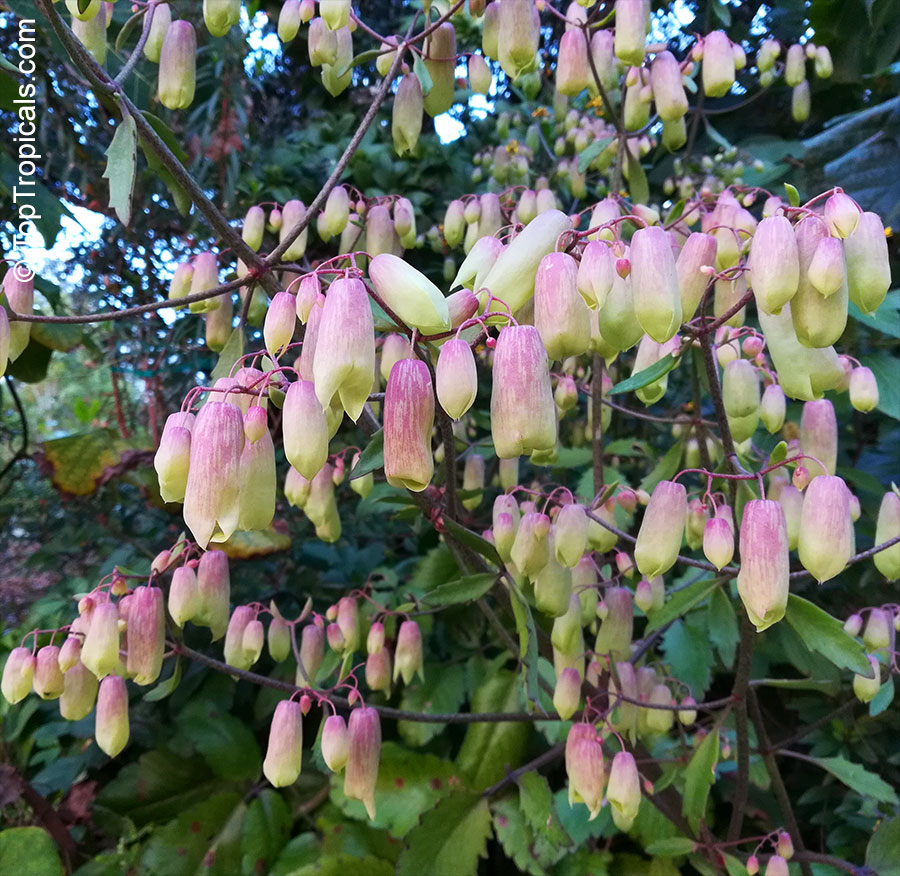
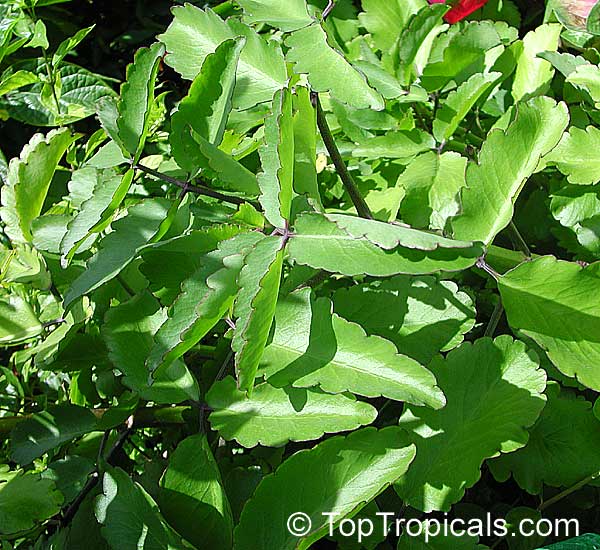
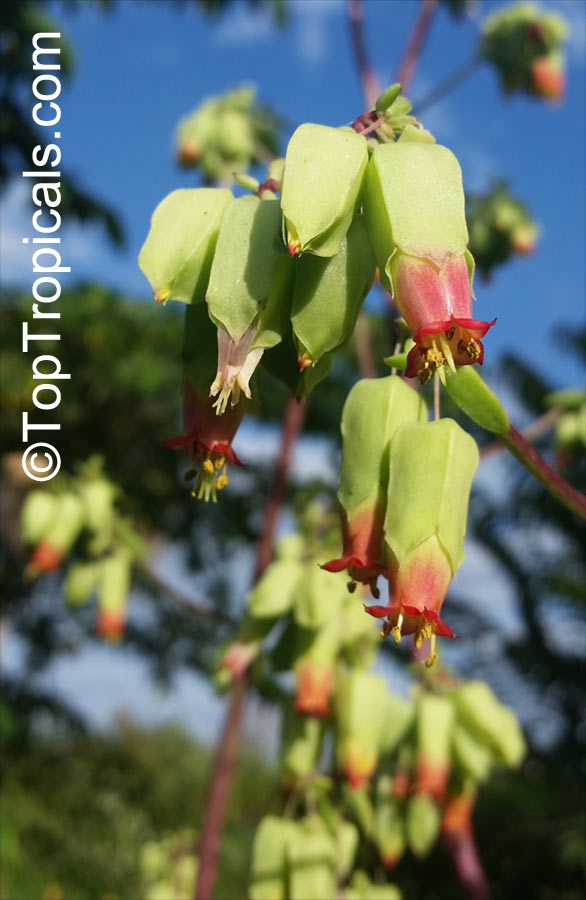
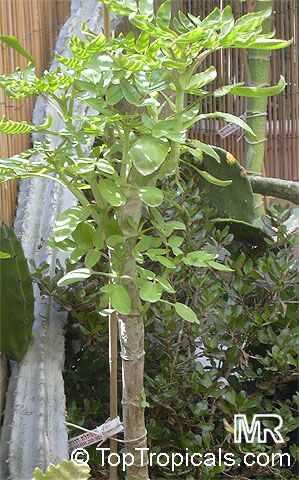
A very interesting giant specie, inch thick jointed stems are waxy, as are the opposite pairs of fleshy, succulent leaves. Terminal inflorescence of yellow flowers from dangling four-sided box-like bracts yields a multitude of plantlets. Propagation: Bulbils coming after the flowers, underground stolons.

Recommended Fertilizer: SUNSHINE Robusta - Rapid Growth Booster
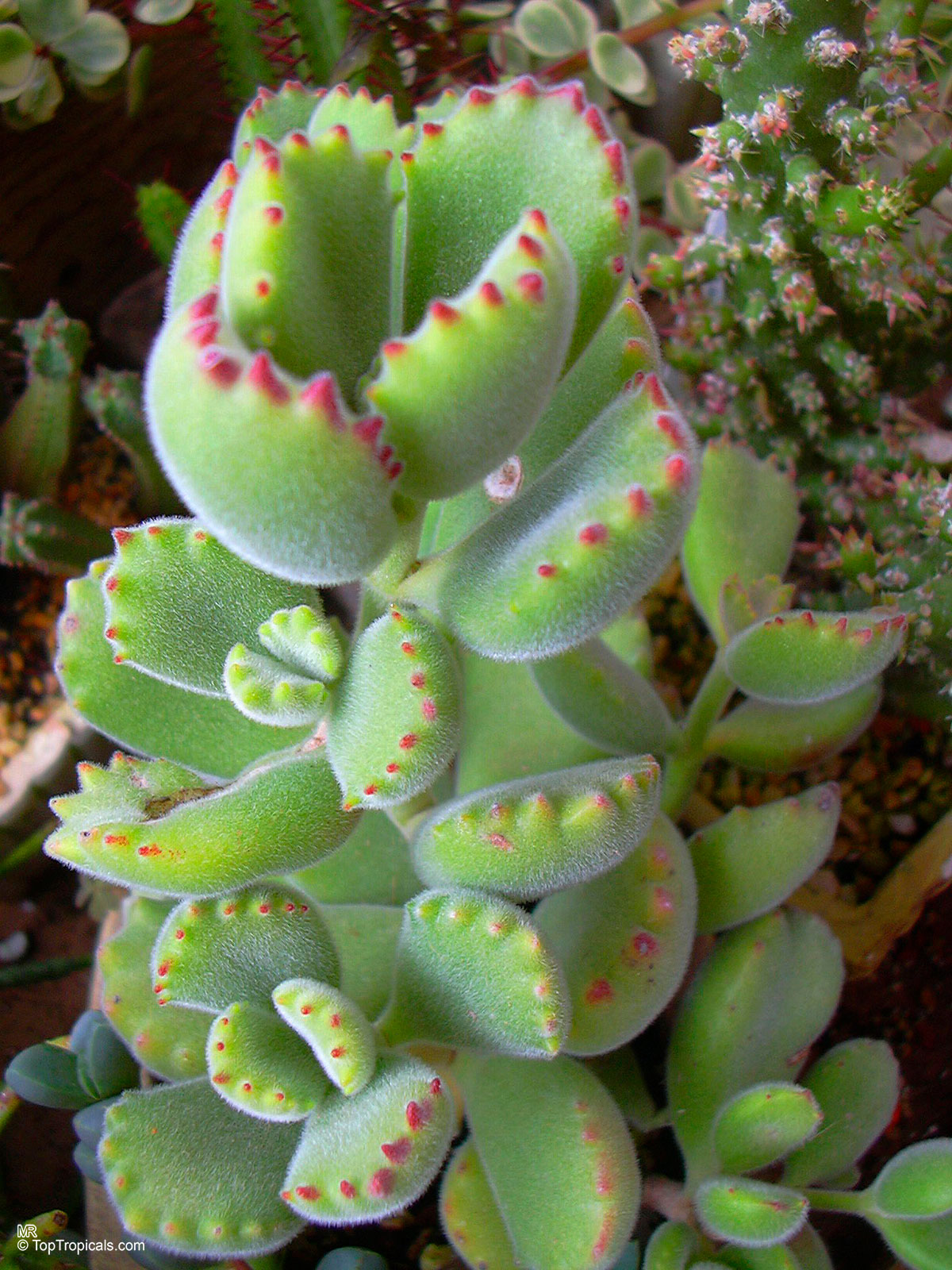
Botanical names: Cotyledon ladismithiensis, Cotyledon tomentosa subsp. ladismithiensis
Common name: Bear 's Paws
Family: Crassulaceae
Origin: South Africa
USDA Zone: 10-11
Cold tolerance: 30°F

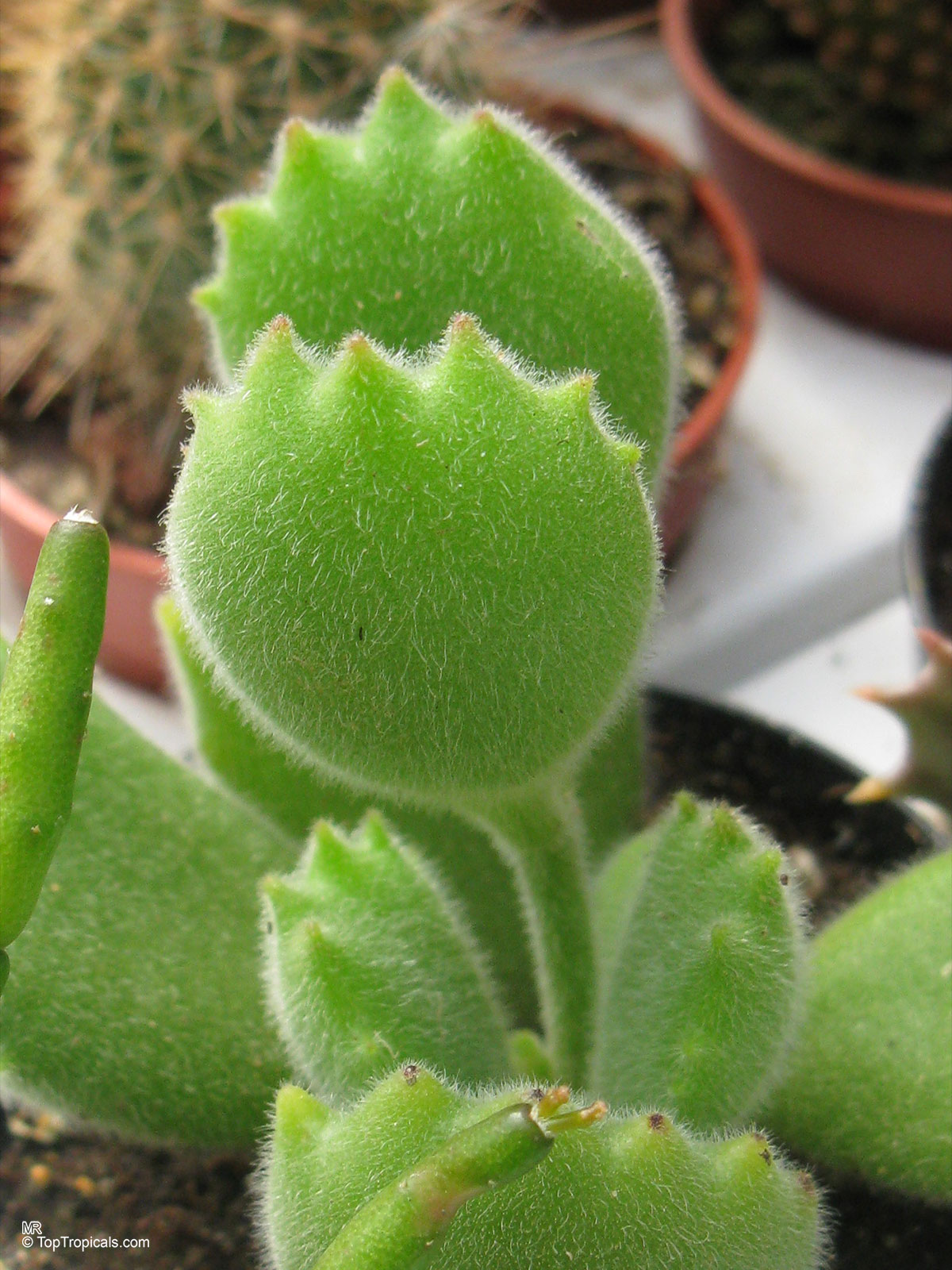
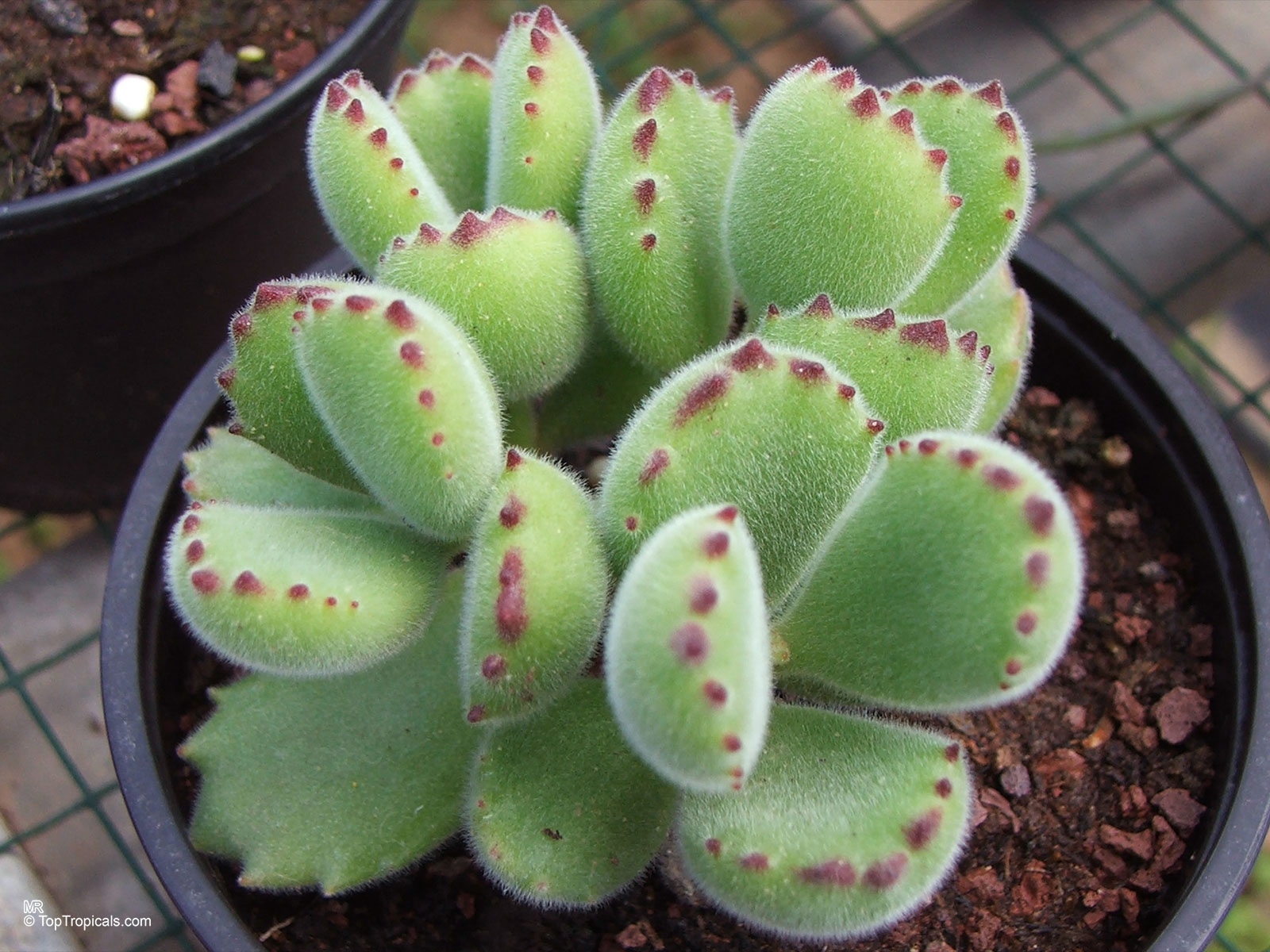
Cotyledon tomentosa ssp. ladismithiensis is a distinctive South African succulent prized for its thick, velvety leaves that resemble soft green paws tipped with reddish markings, a feature that gives rise to its popular name Bear Paw. This slow growing subshrub forms compact, branching clumps with upright to slightly spreading stems, making it especially attractive as a container plant. The leaves are densely covered with fine hairs, which reduce moisture loss and give the plant a muted, silvery green appearance with decorative red or brownish tooth like tips along the margins.
Cotyledon tomentosa ssp. ladismithiensis thrives in bright light with some direct sun, which enhances leaf color and keeps growth compact. It prefers well drained, gritty soil and infrequent watering, allowing the substrate to dry completely between waterings. In late winter to spring, mature plants may produce tubular, bell shaped flowers in shades of orange to coral on short stalks, adding seasonal interest. It is best suited to warm, dry climates and indoor or patio cultivation in cooler regions, with protection from frost, as prolonged cold and excess moisture can quickly damage the plant.
| Next | |
Use link to repeat this search:
https://toptropicals.com/cgi-bin/garden_catalog/cat.cgi?search_op=and&keyword_op=and&language=e&family=Crassulaceae
&number=10&no_change_lang=1&user=tt&sale=1&first=0