Cochlospermaceae - Botanical Family

Number of plants found: 7    

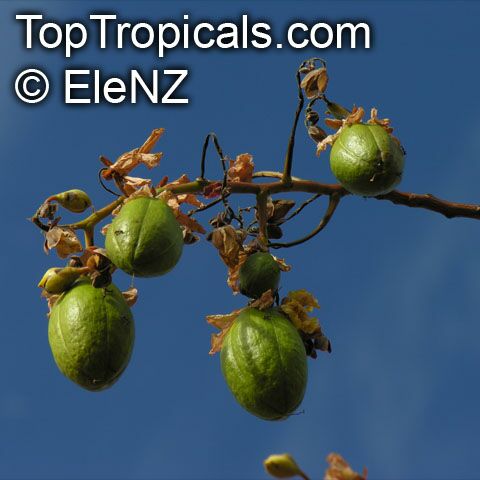
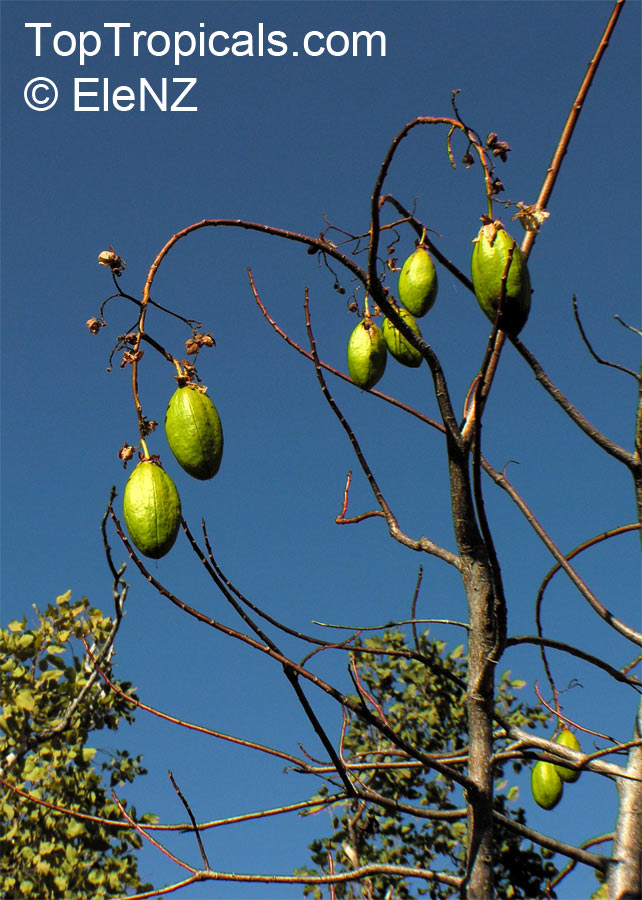
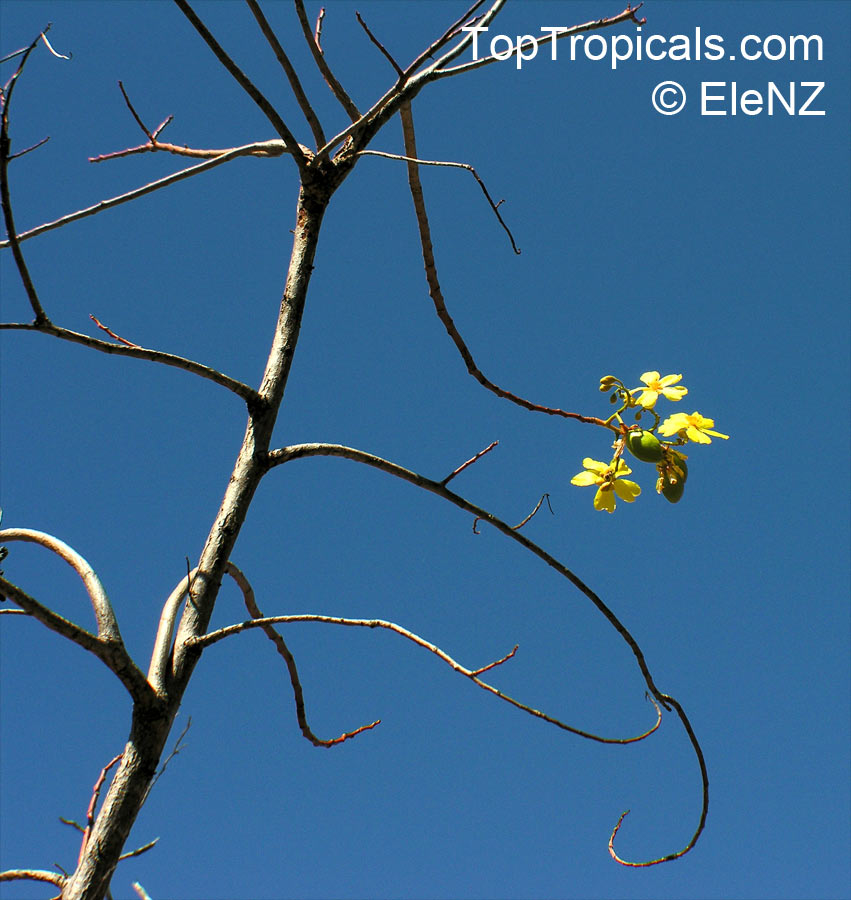
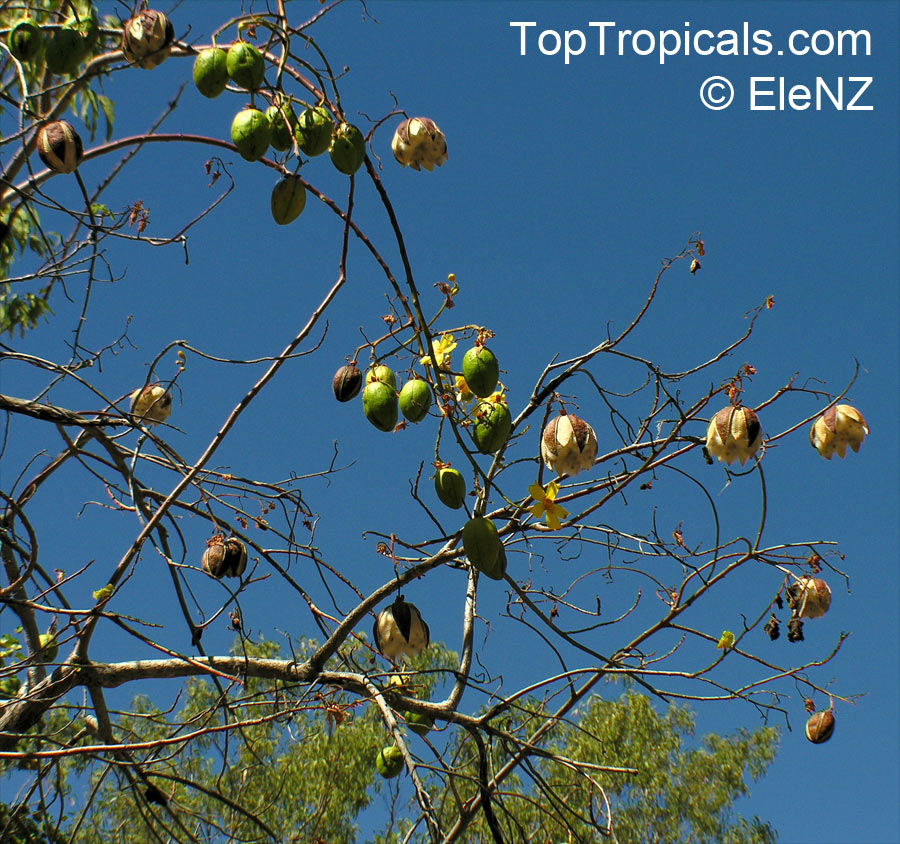
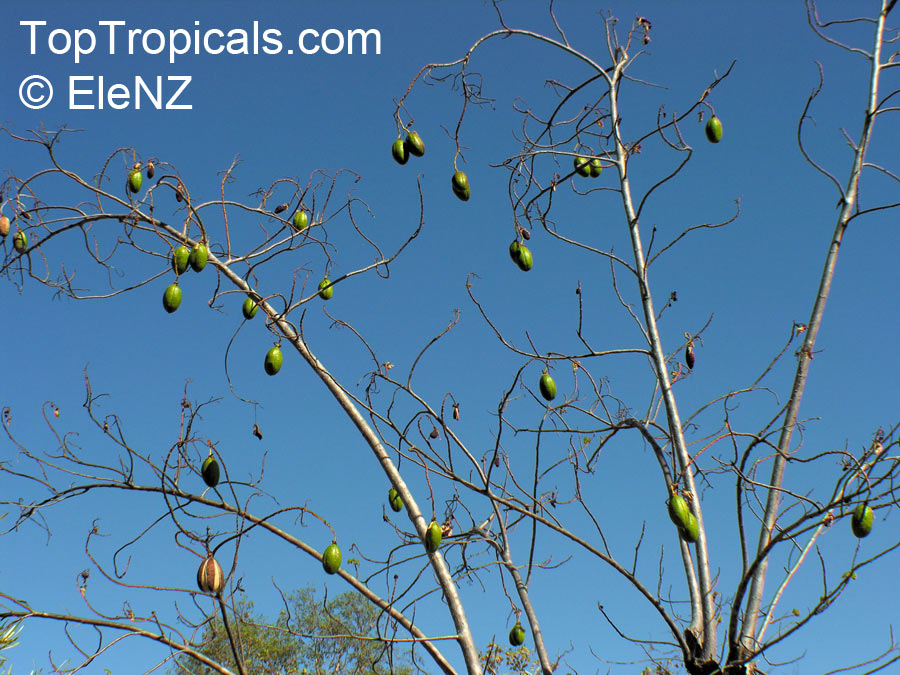
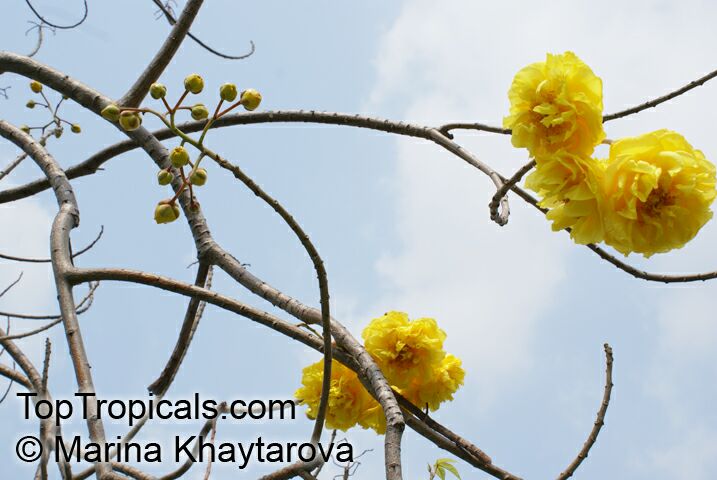
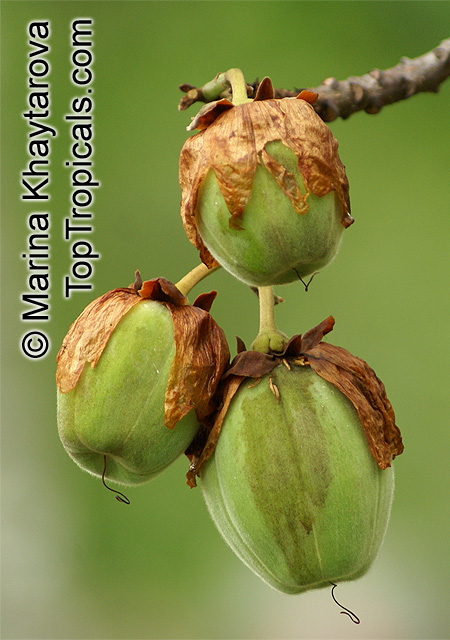
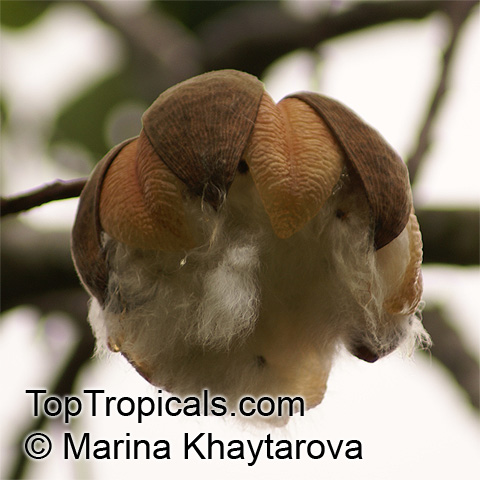
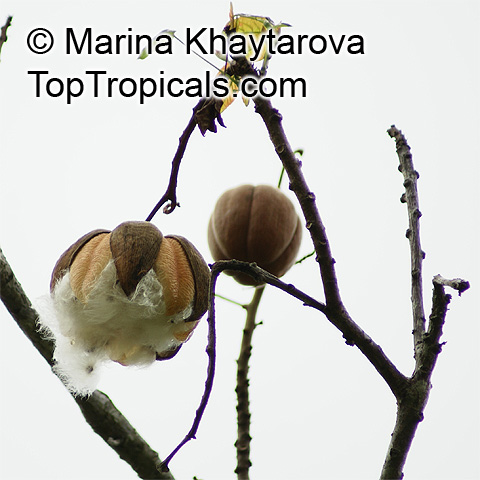
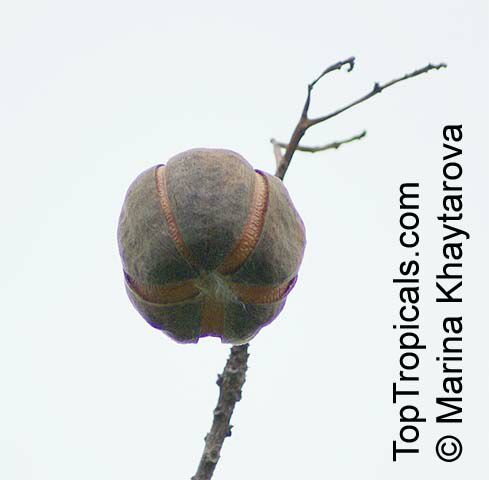
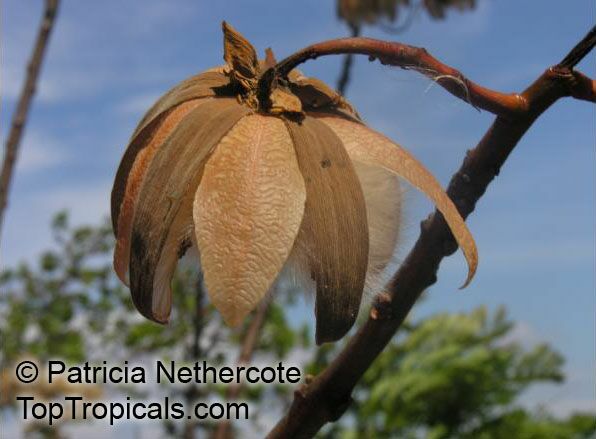
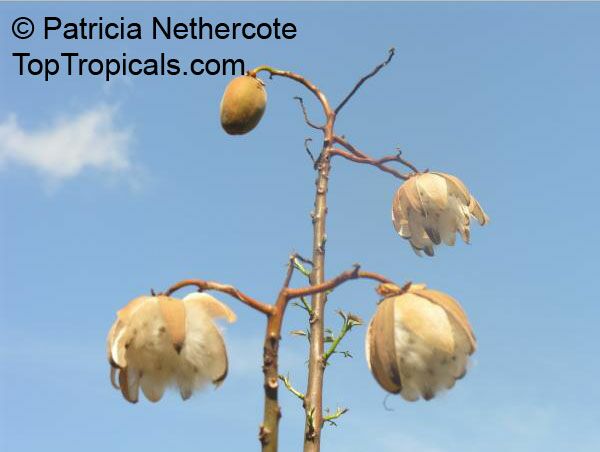
Cochlospermum fraseri (Kapok) round green fruit on branch against blue sky close up
Cochlospermum fraseri (Kapok) round green fruit hanging from a wooden branch against a blue sky.

Botanical name: Cochlospermum fraseri

Common name: Kapok

Family: Cochlospermaceae

Origin: Australia
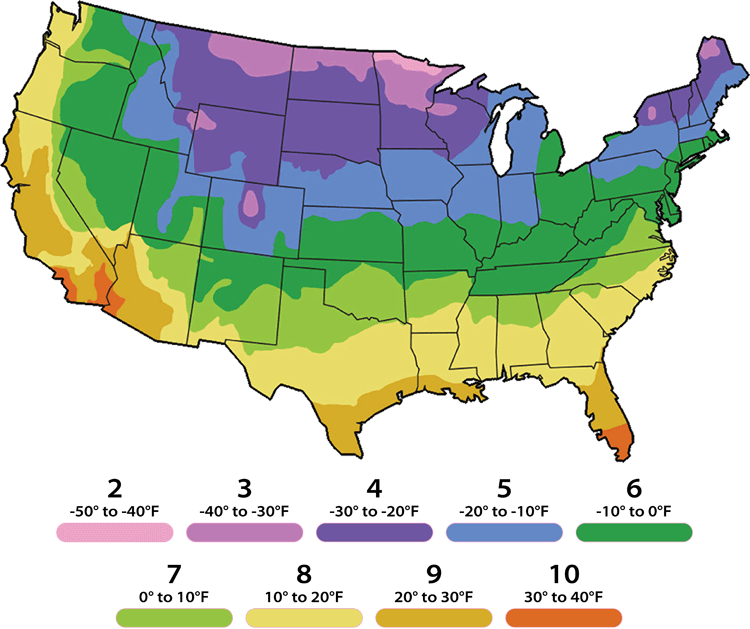
USDA Plant Hardiness MapSmall tree 10-20 ftFull sunWatering: Moderate. Water when top soil feels dryYellow, orange flowersPlant attracts butterflies, hummingbirdsDeciduous plantEthnomedical plant.
Plants marked as ethnomedical and/or described as medicinal, are not offered as medicine but rather as ornamentals or plant collectibles.
Ethnomedical statements / products have not been evaluated by the FDA and are not intended to diagnose, treat, cure, or prevent any disease. We urge all customers to consult a physician before using any supplements, herbals or medicines advertised here or elsewhere.

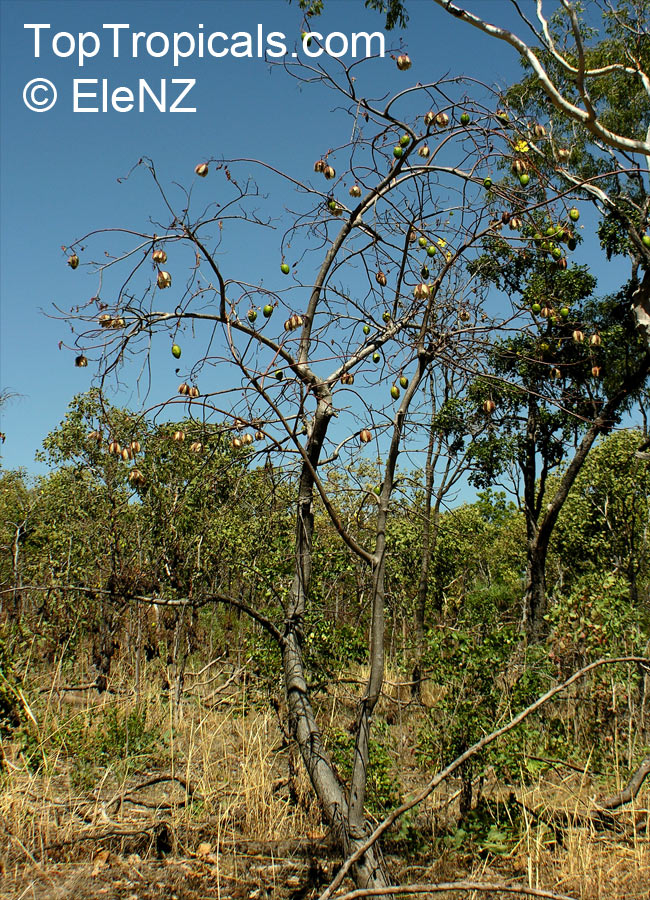
Cochlospermum fraseri, commonly known as Kapok, is a deciduous small tree species native to Australia. It typically stands between 10 - 20 ft. tall and has a moderately sparse canopy. This plant is a great addition to any garden and a must have for those who are interested in ethnomedical plants as it has a long-standing tradition of being used for medicinal purposes.

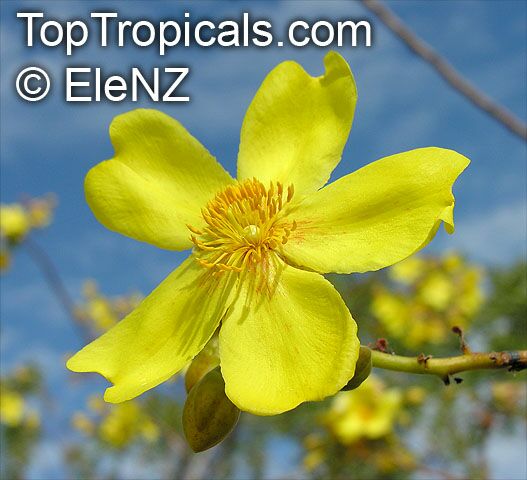
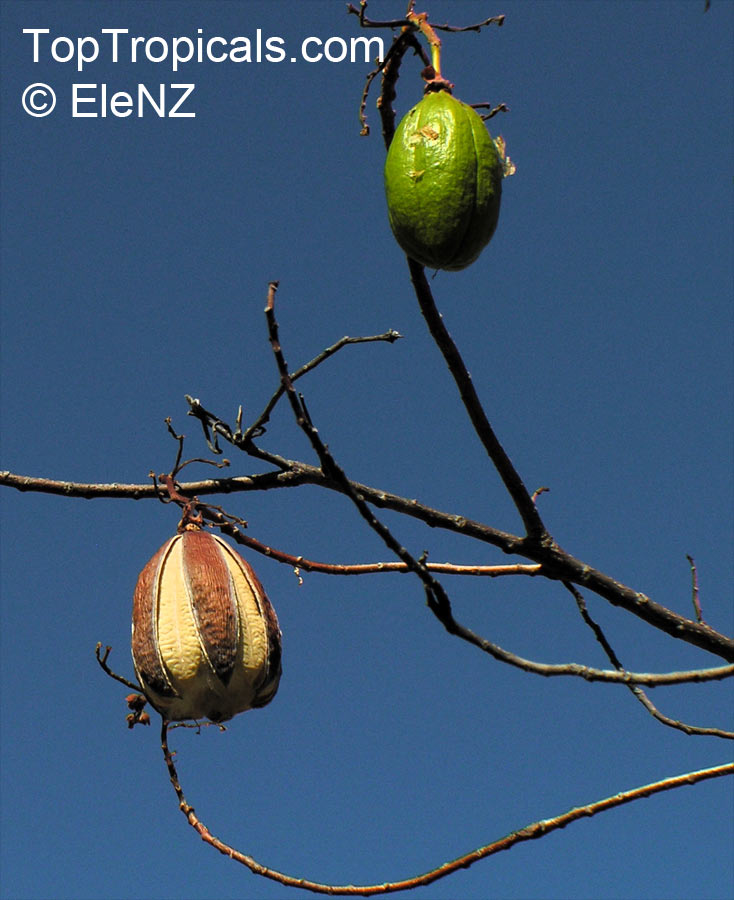
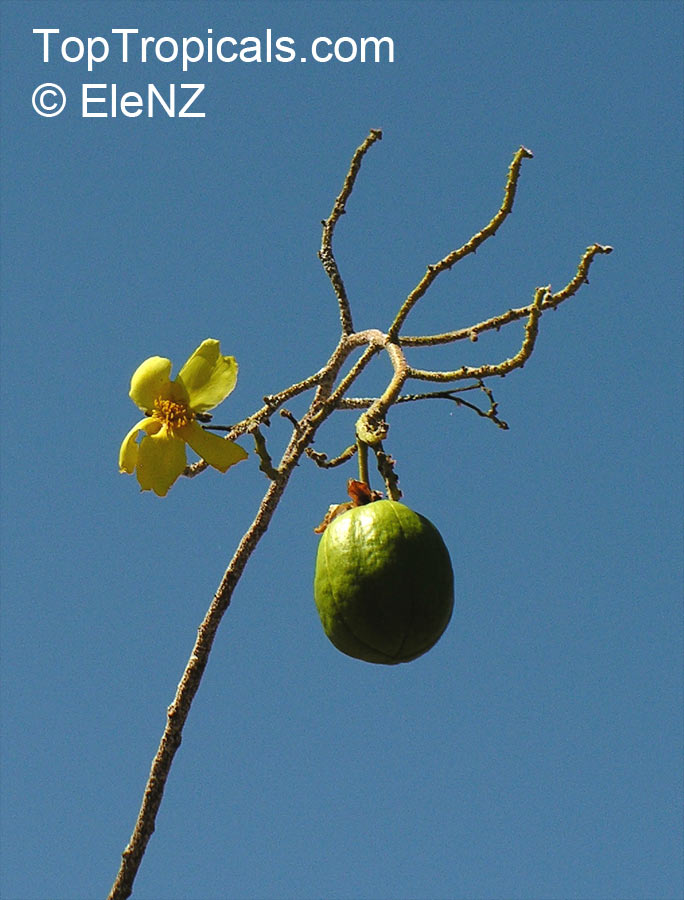
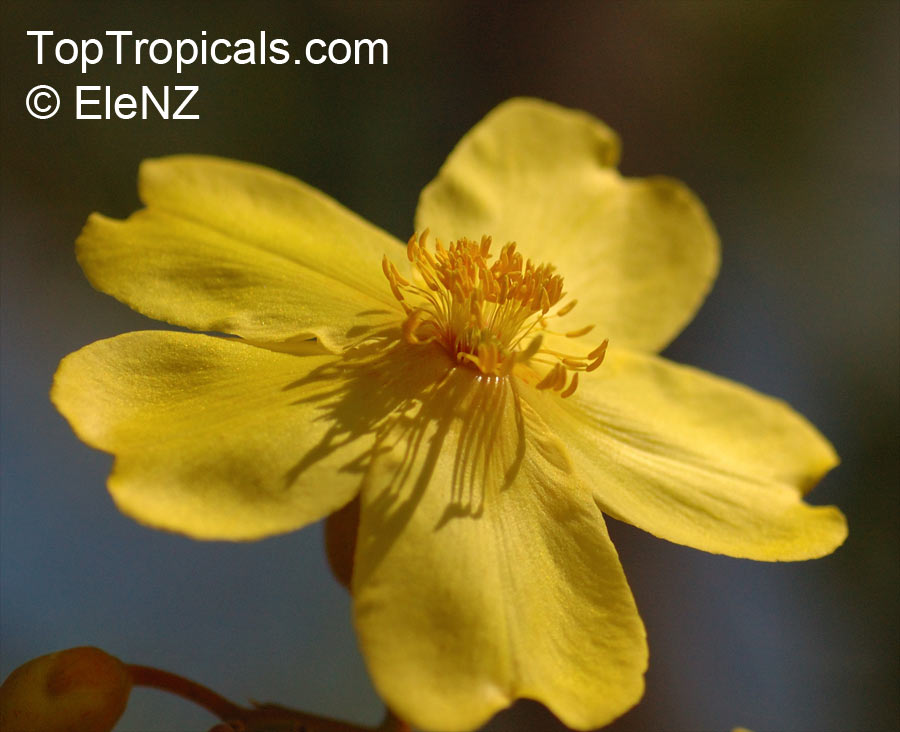
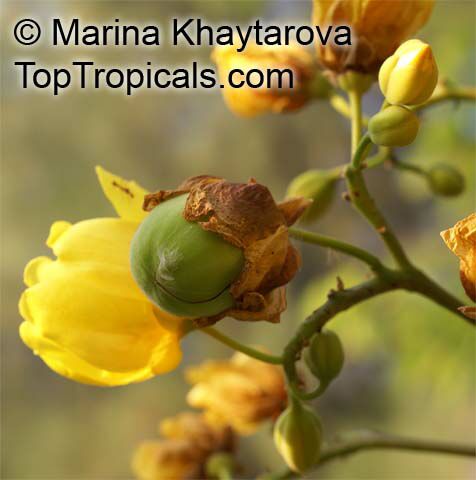
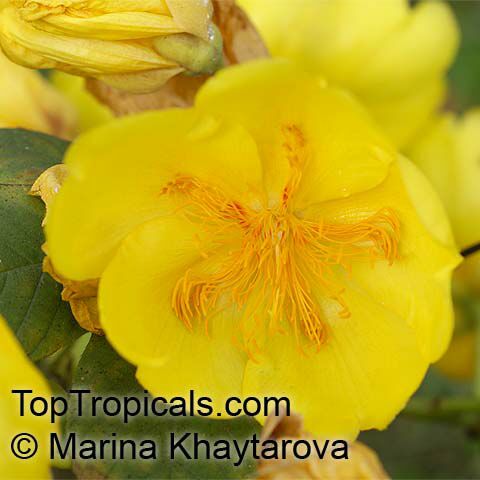
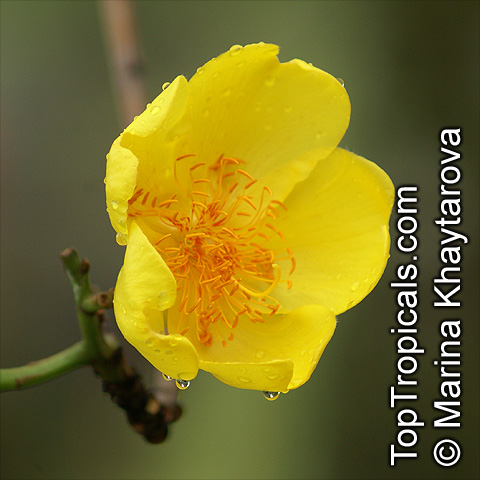
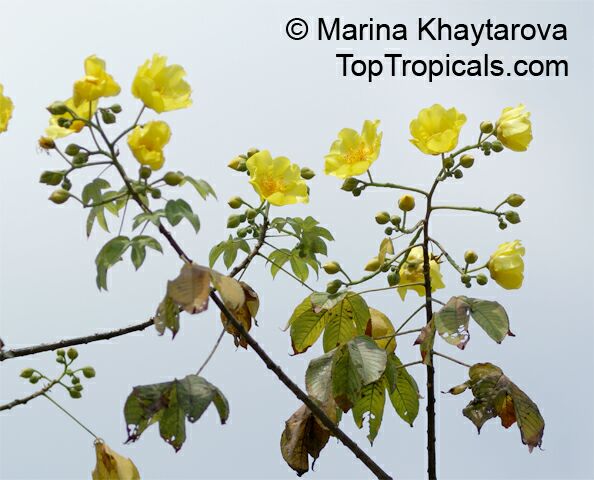
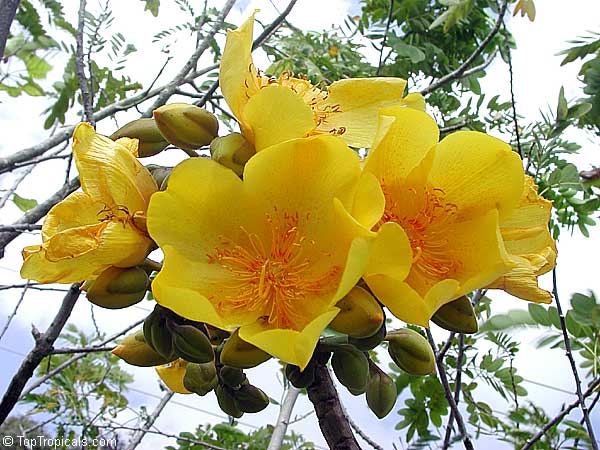
Kapok is a very low maintenance plant that prefers full sun and moderate amounts of water. Its foliage is made up of clustered, alternate, mid-green to yellow, bi- or tri-pinnate leaves. Offset against this are the large, waxy, five-petalled yellow orange flowers that open in late summer. Once pollinated the flowers give rise to large globular green papery fruit which eventually turn to brown and split along the seams to release their seed. These small black seeds are protected by dense mats of fine silky hairs.

Kapok is an attractive small tree that not only adds vibrant color to gardens, but also attracts butterflies and hummingbirds. In order to thrive, it requires well-drained soil and should be grown in USDA zone 9-11. In areas with cooler temperatures its growth is slowed down, thus making container gardening a great option. In cold regions it should be planted in a frost-free area before winter and protected with a suitable mulch when temperatures drop. During the active growing season the soil should remain moist; however in winter the Kapok tree should not be over-watered, as standing water can cause root rot and cause death of the plant.

This specie of tree has long been used for medicinal purposes and is also understood to have certain antioxidant and anti-inflammatory properties. Kapok is a versatile plant that can be planted for its ornamental value and its medicinal properties. As such, it is a great addition to any garden.


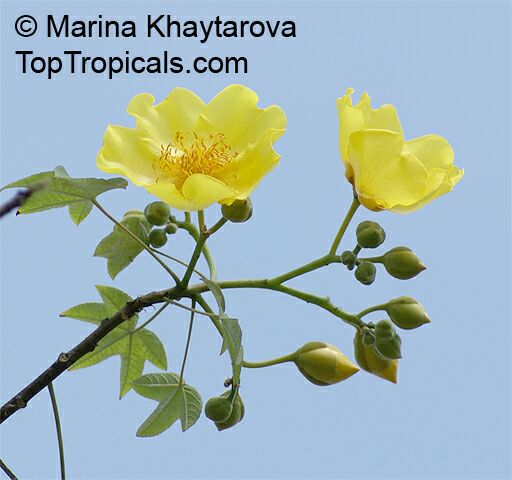
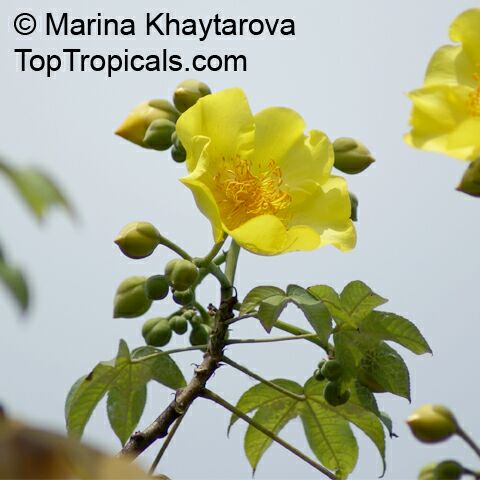
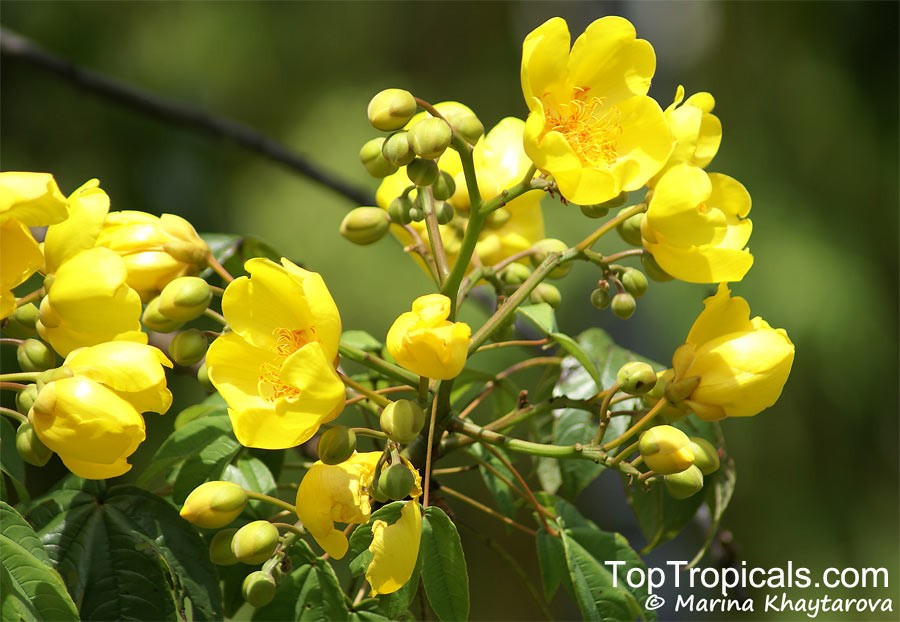
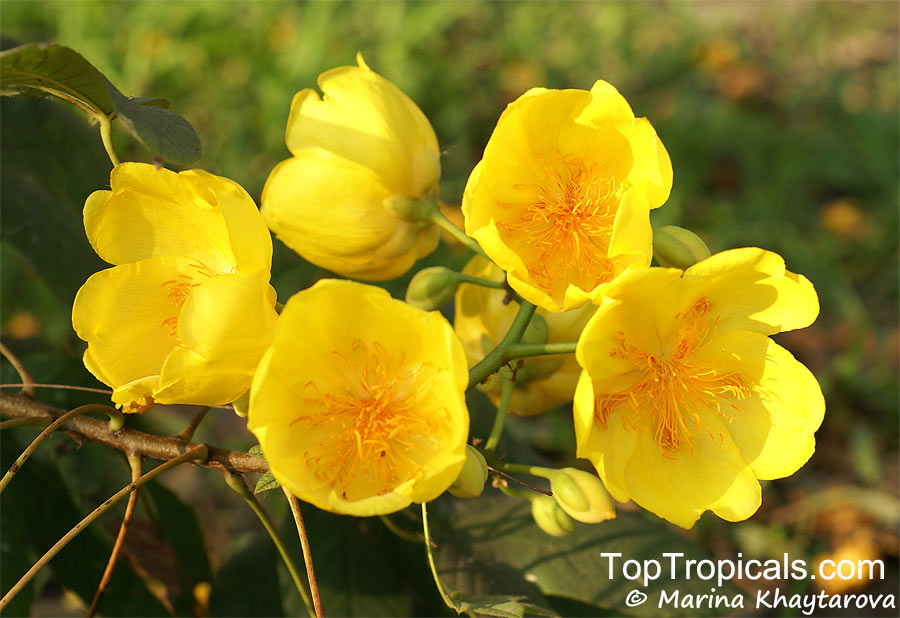
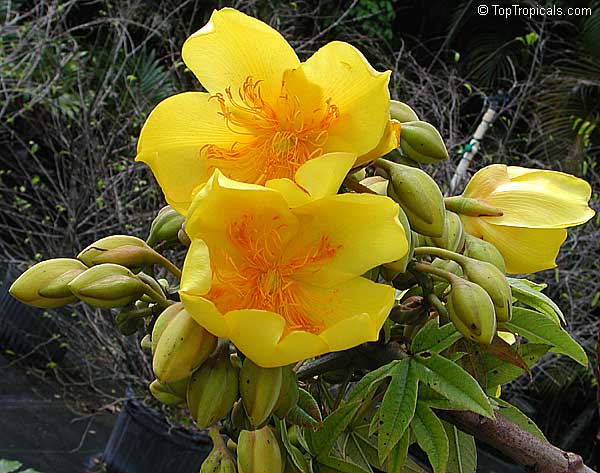
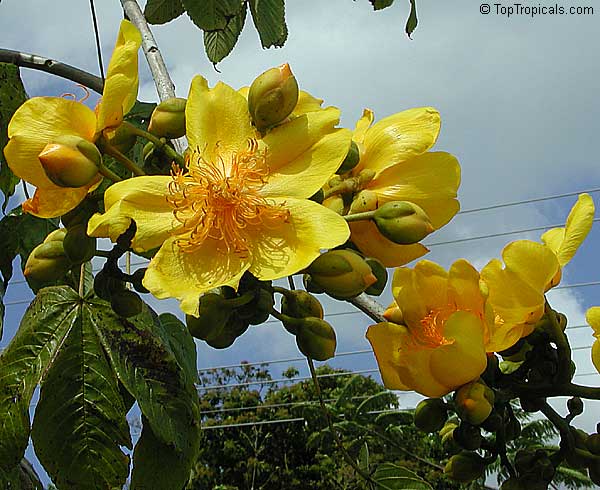
Cochlospermum fraseri (Kapok) yellow flower close up capturing five soft petals and central stamens.
Cochlospermum fraseri (Kapok) yellow flower with five delicate petals on a thin wooden branch.
Cochlospermum fraseri (Kapok) yellow flower close up with thin brown woody branches in the background
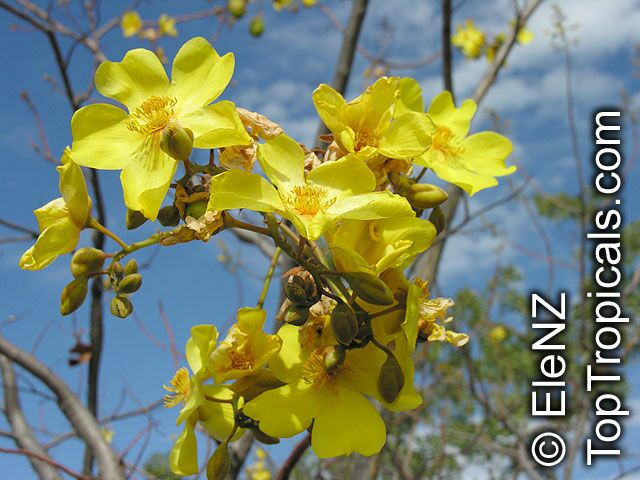
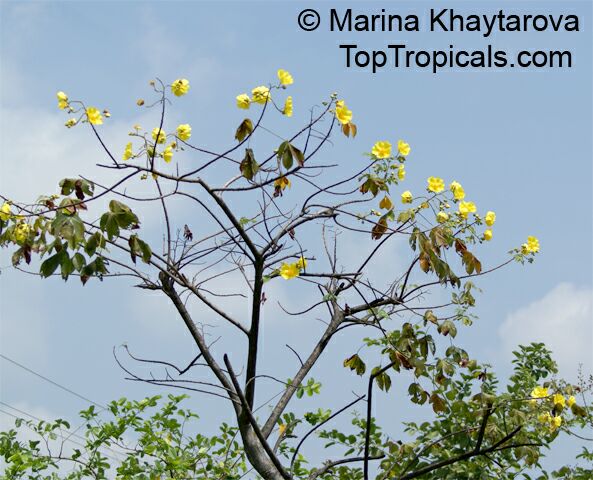
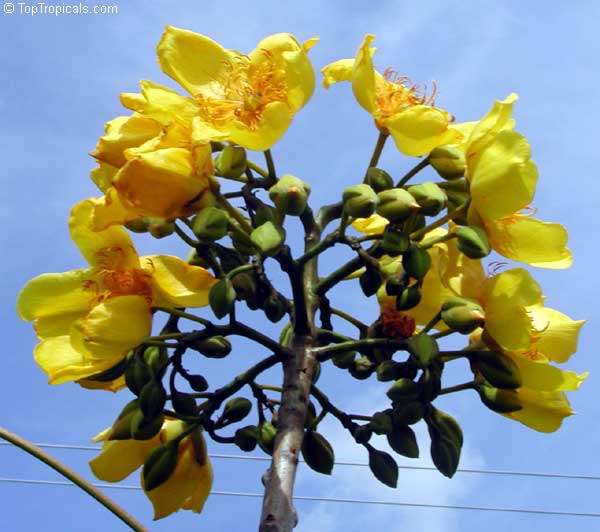
Cochlospermum fraseri (Kapok) yellow flower clusters on woody branches against a blue sky.
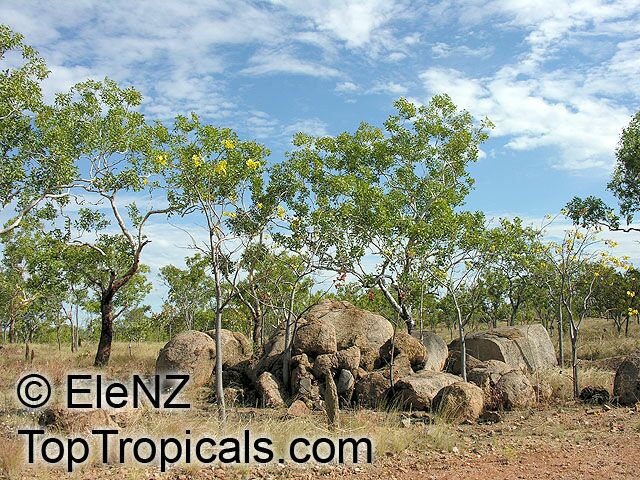
Cochlospermum fraseri (Kapok) yellow flower tree with green leaves amidst large grey boulder rock formations
Cochlospermum fraseri (Kapok) tree with yellow flowers growing near large grey rocks under blue sky
Cochlospermum fraseri (Kapok) tree with yellow flower clusters and thin gray bark among large rocks.
Cochlospermum fraseri (Kapok) tree branches covered in yellow flowers grow near large round stone formations.


Link to this plant:
https://toptropicals.com/catalog/uid/cochlospermum_fraseri.htm

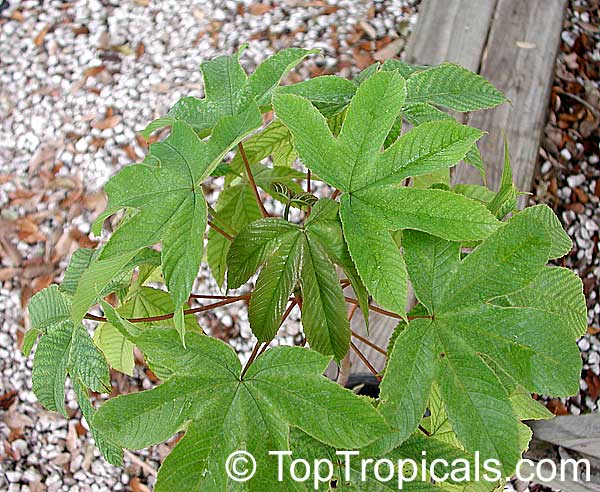
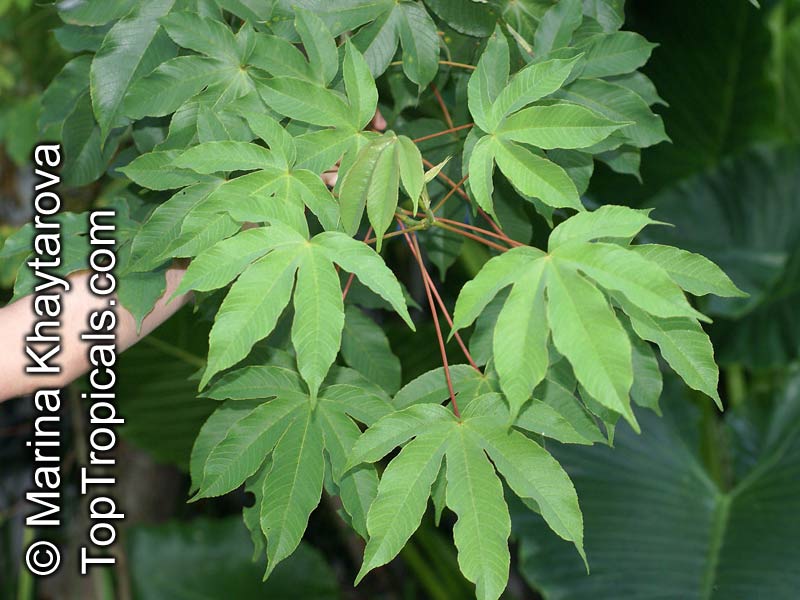
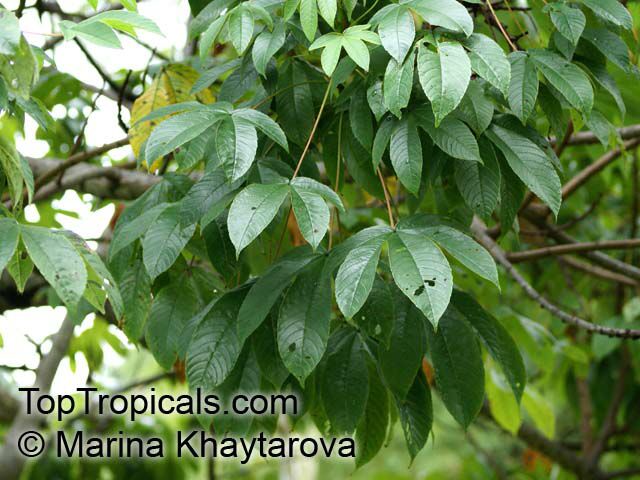
Cochlospermum gillivraei green palm-shaped leaves on a branch close up top view
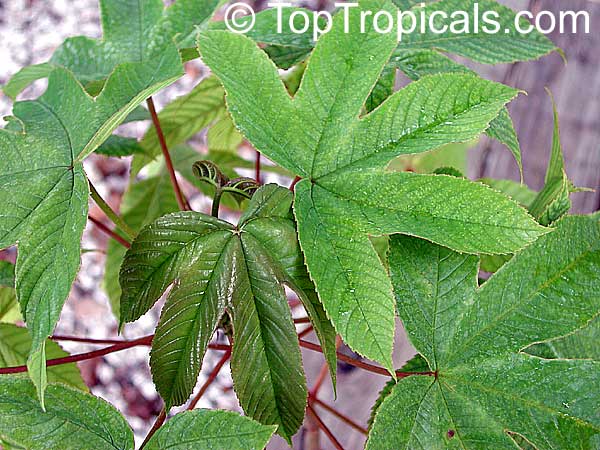
Cochlospermum gillivraei palm-shaped green leaves spreading from a central reddish stem

Botanical name: Cochlospermum gillivraei

Common name: Kapok

Family: Cochlospermaceae

Origin: North Australia

USDA Plant Hardiness MapSmall tree 10-20 ftFull sunWatering: Moderate. Water when top soil feels dryWatering: Regular. Let topsoil dry slightlyYellow, orange flowersDeciduous plantEthnomedical plant.
Plants marked as ethnomedical and/or described as medicinal, are not offered as medicine but rather as ornamentals or plant collectibles.
Ethnomedical statements / products have not been evaluated by the FDA and are not intended to diagnose, treat, cure, or prevent any disease. We urge all customers to consult a physician before using any supplements, herbals or medicines advertised here or elsewhere.

Cochlospermum gillivraei is a small tree, 3 to 12 metres in height, which is deciduous in the dry season. The bright yellow flowers appear before the new leaves. Seeds are borne in egg-shaped capsules,about 8 cm long, which split open when ripe to release black seeds embedded in a cotton-like fibre.

In cultivation the plant needs well drained soils and a sunny position.

Kapok may be propagated from seed.

Similar species -Cochlospermum vitifolium


Cochlospermum gillivraei green palmately lobed leaves on red stems close up
Cochlospermum gillivraei palmately lobed green leaves attached to thin red stems


Link to this plant:
https://toptropicals.com/catalog/uid/cochlospermum_gillivraei.htm

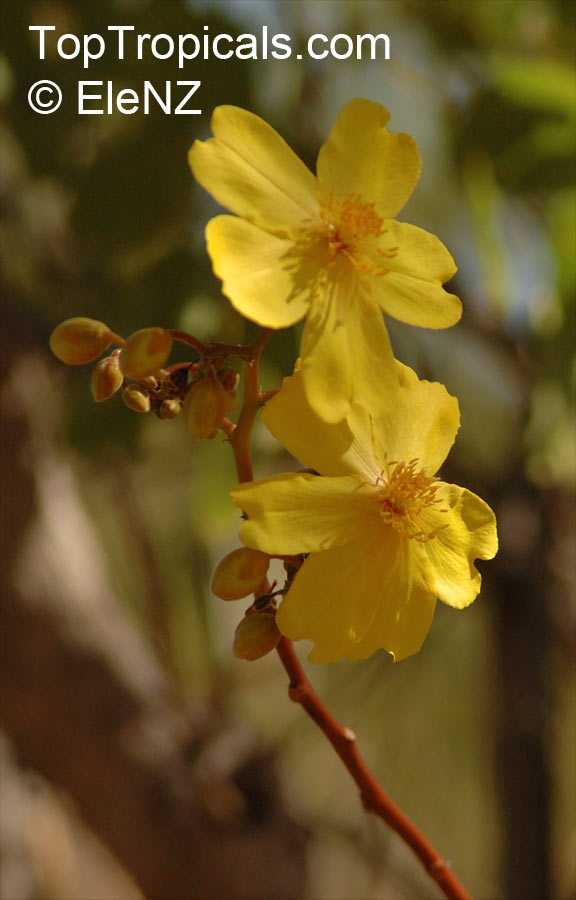
Cochlospermum gregorii (Cotton Tree) yellow flower close up on a slender branch
Cochlospermum gregorii (Cotton Tree) yellow flower and small buds attached to a thin brown stem.

Botanical name: Cochlospermum gregorii

Common name: Cotton Tree

Family: Cochlospermaceae

Origin: Australia

USDA Plant Hardiness MapSmall tree 10-20 ftFull sunWatering: Moderate. Water when top soil feels dryYellow, orange flowersDeciduous plant


Link to this plant:
https://toptropicals.com/catalog/uid/cochlospermum_gregorii.htm

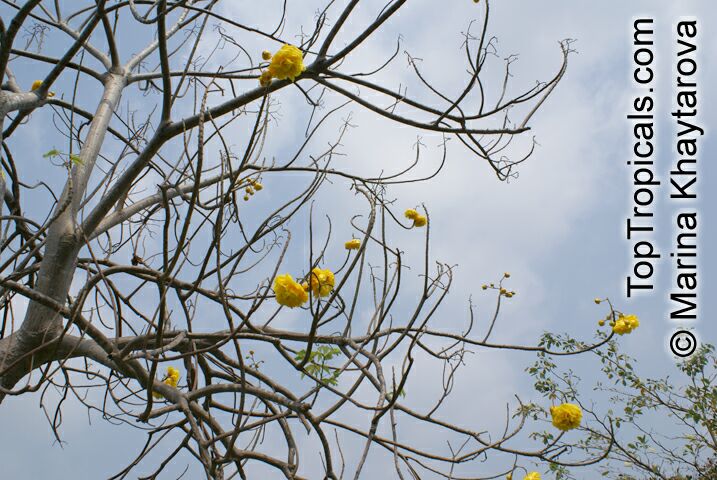
Cochlospermum regium (Yellow Cotton Tree) yellow flower, close up on thin gray woody branches.
Cochlospermum regium (Yellow Cotton Tree) yellow flower on woody branches against the blue sky.

Botanical name: Cochlospermum regium

Common name: Yellow Cotton Tree

Family: Cochlospermaceae

Origin: South America
USDA Plant Hardiness MapSmall tree 10-20 ftFull sunWatering: Moderate. Water when top soil feels dryWatering: Regular. Let topsoil dry slightlyYellow, orange flowersPlant attracts butterflies, hummingbirdsDeciduous plantEthnomedical plant.
Plants marked as ethnomedical and/or described as medicinal, are not offered as medicine but rather as ornamentals or plant collectibles.
Ethnomedical statements / products have not been evaluated by the FDA and are not intended to diagnose, treat, cure, or prevent any disease. We urge all customers to consult a physician before using any supplements, herbals or medicines advertised here or elsewhere.


Link to this plant:
https://toptropicals.com/catalog/uid/cochlospermum_regium.htm

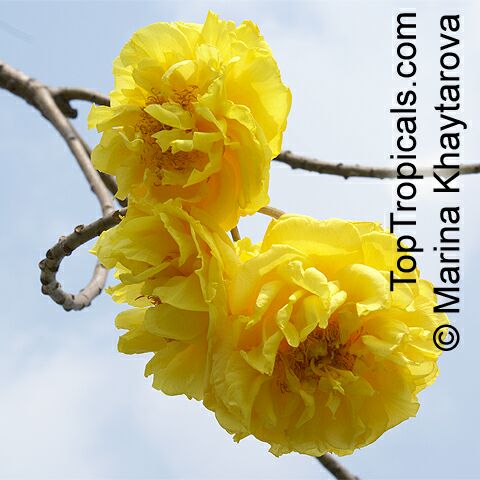
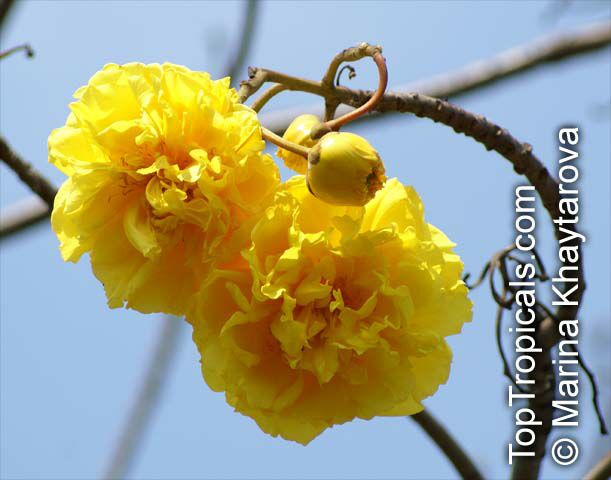
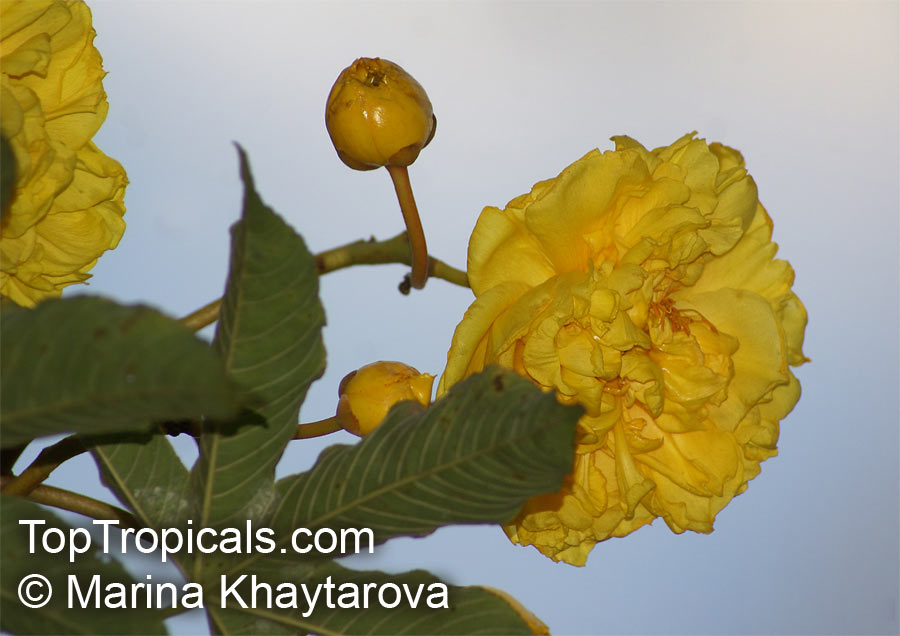
Cochlospermum religiosum (Silk Cottontree) yellow flower close up on branch against blue sky background
Cochlospermum religiosum (Silk Cottontree) yellow flower and buds on a thin woody branch

Botanical names: Cochlospermum religiosum, Cochlospermum gossypium

Common name: Silk Cottontree

Family: Cochlospermaceae

Origin: Indo-China

USDA Plant Hardiness MapSmall tree 10-20 ftFull sunWater Requirement: Low. Allow soil to dry out between wateringsWatering: Moderate. Water when top soil feels dryYellow, orange flowersPlant attracts butterflies, hummingbirdsDeciduous plant

A very common and conspicuous tree, characteristic of the hottest, driest and stoniest slopes. The leaves are palmately 5-lobed. Flowers are large, bright golden yellow. Seeds covered with silky hairs.

Similar species -Cochlospermum vitifolium


Link to this plant:
https://toptropicals.com/catalog/uid/cochlospermum_religiosum.htm

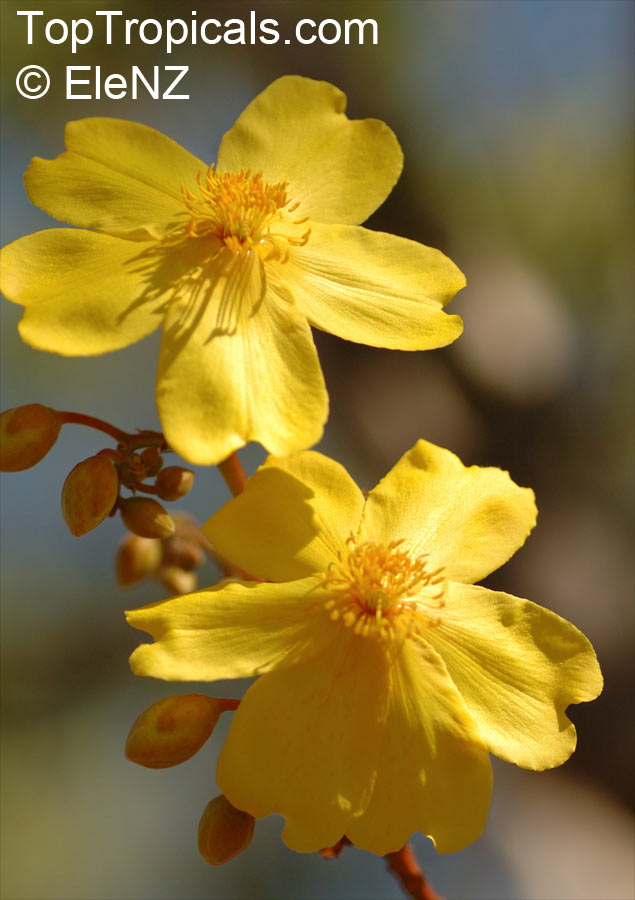
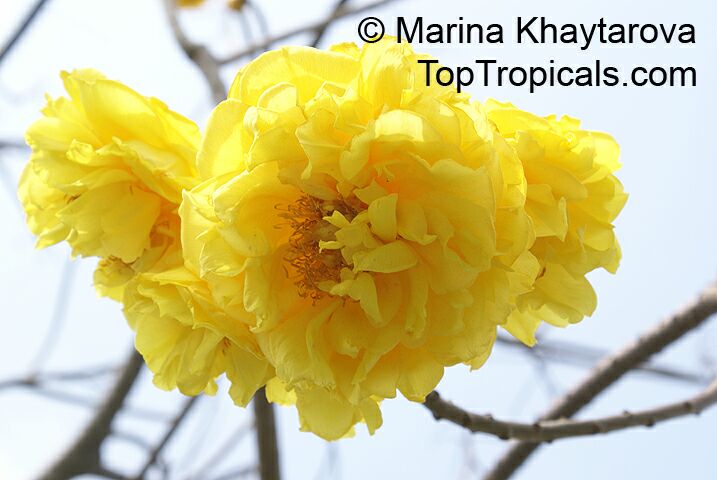
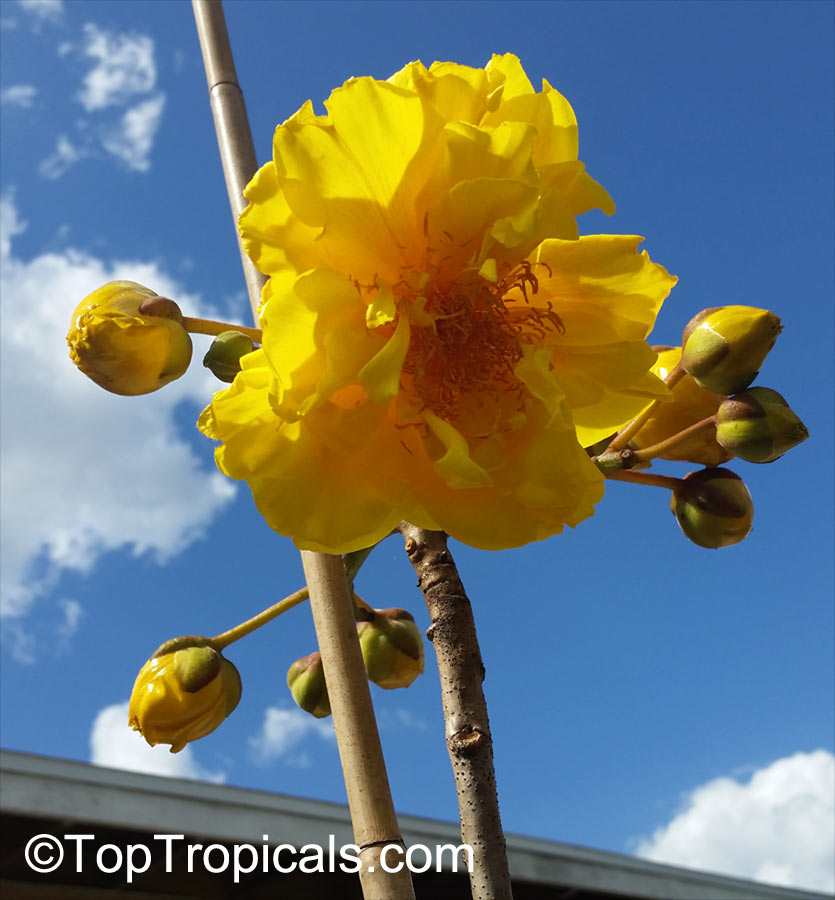
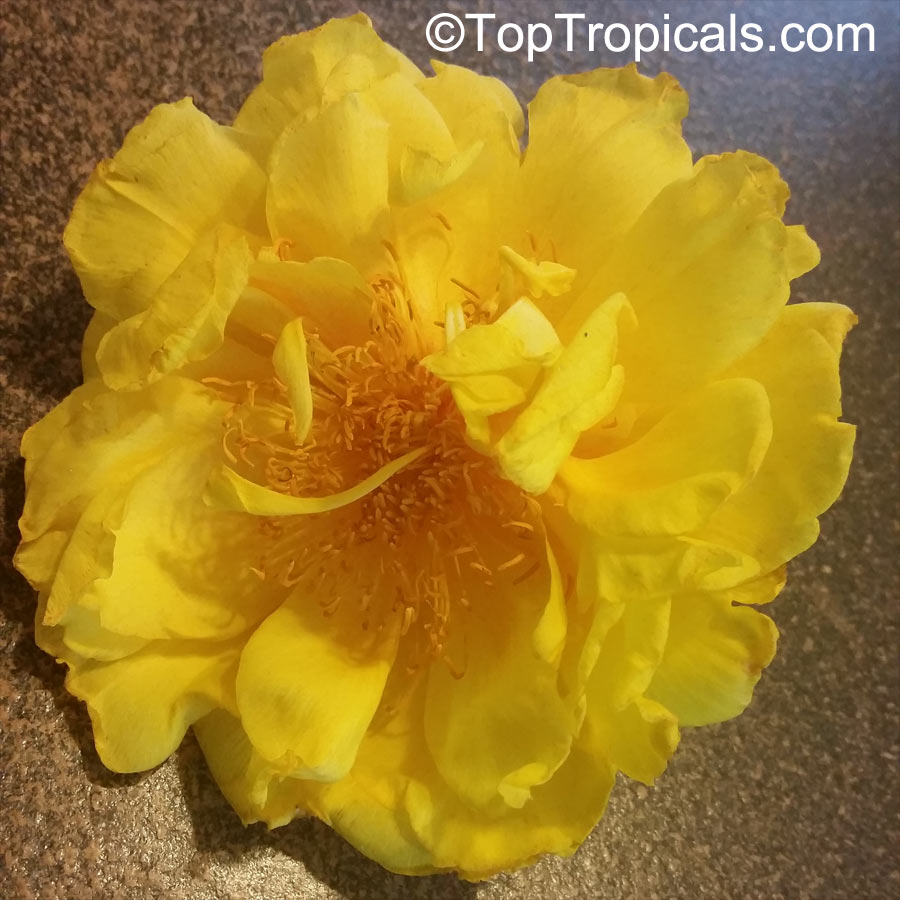
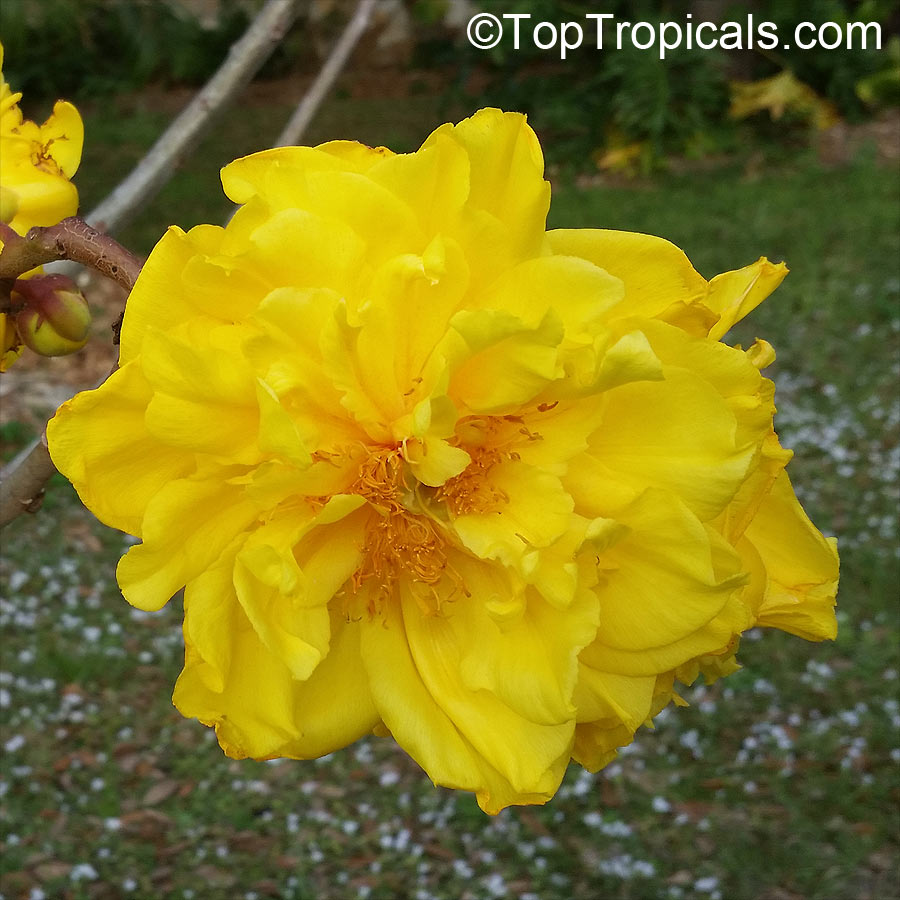
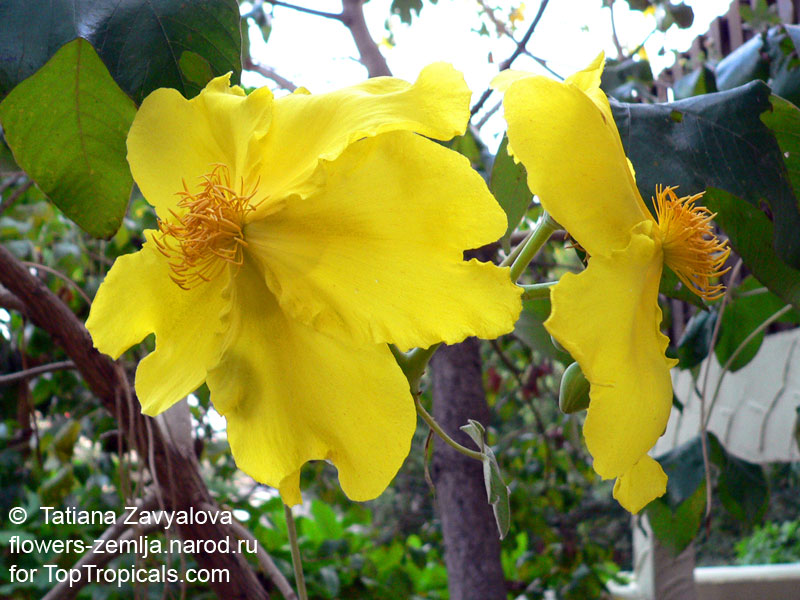
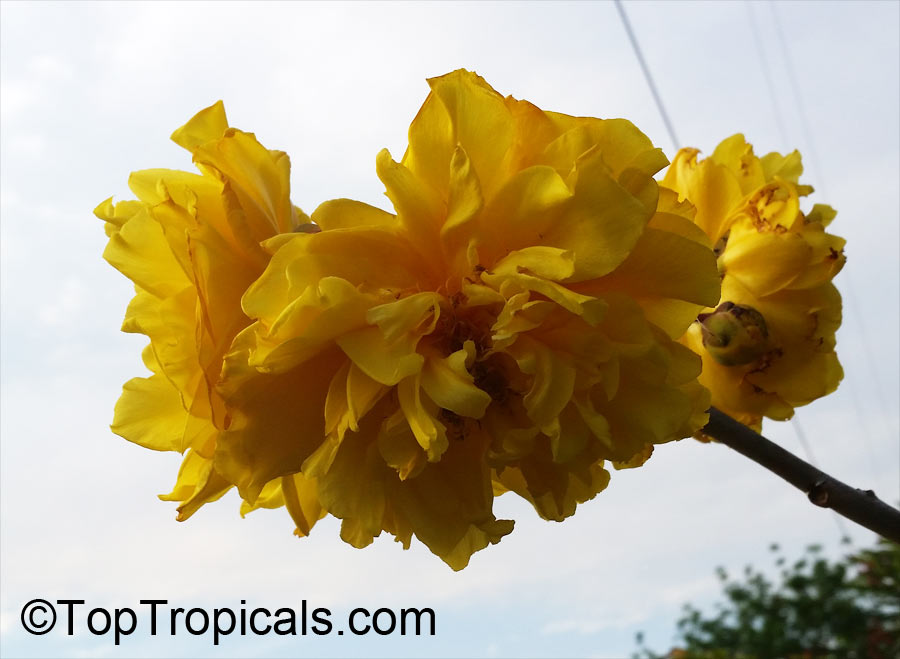
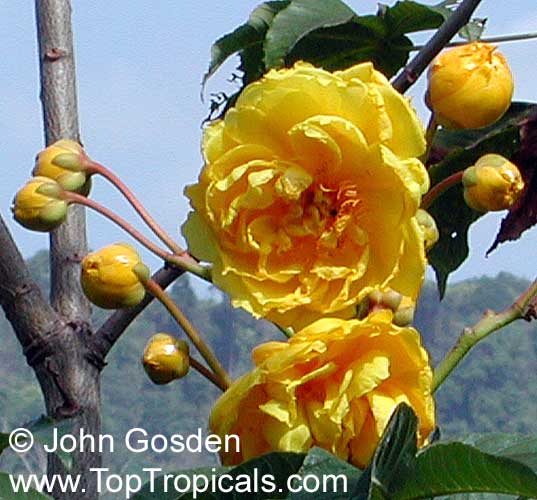
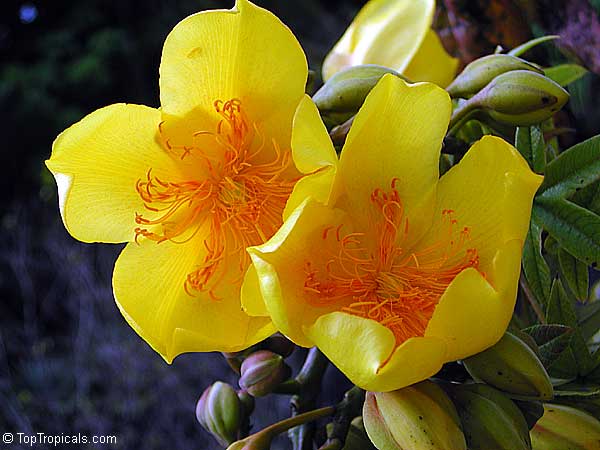
Cochlospermum sp. (Yellow Cotton Tree) vibrant yellow flower close up
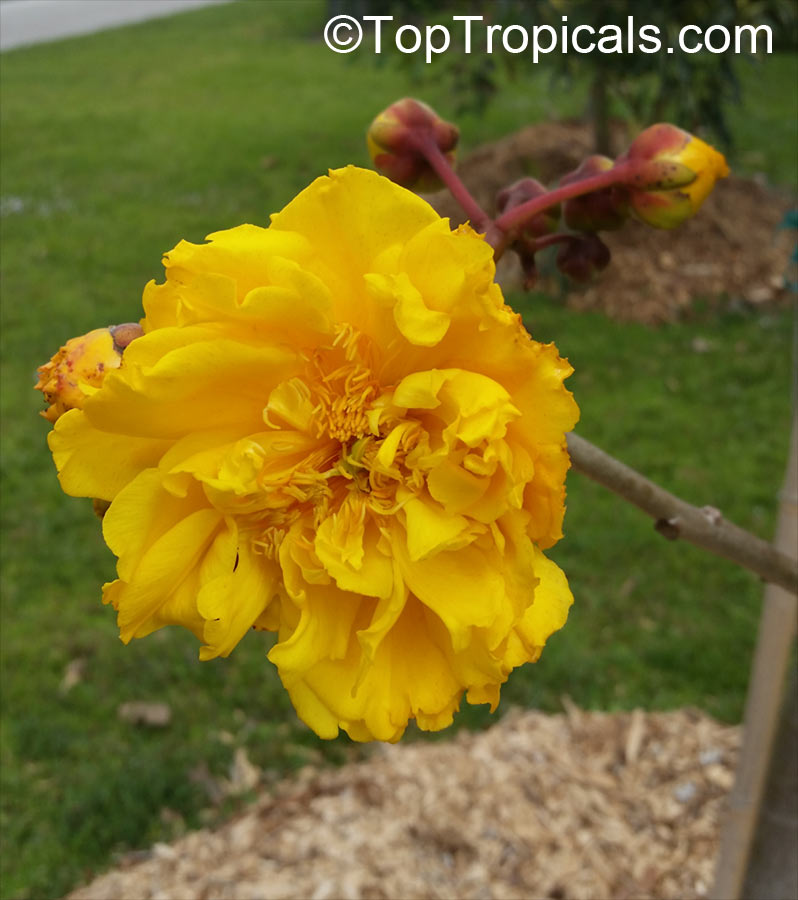
Cochlospermum sp. (Yellow Cotton Tree) flower with ruffled petals and dense golden center

Botanical name: Cochlospermum sp.

Common name: Yellow Cotton Tree

Family: Cochlospermaceae

USDA Plant Hardiness MapLarge tree taller than 20 ftSmall tree 10-20 ftSemi-shadeFull sunWatering: Moderate. Water when top soil feels dryWatering: Regular. Let topsoil dry slightlyYellow, orange flowersPlant attracts butterflies, hummingbirdsEthnomedical plant.
Plants marked as ethnomedical and/or described as medicinal, are not offered as medicine but rather as ornamentals or plant collectibles.
Ethnomedical statements / products have not been evaluated by the FDA and are not intended to diagnose, treat, cure, or prevent any disease. We urge all customers to consult a physician before using any supplements, herbals or medicines advertised here or elsewhere.

The 30-odd species of the genus of shrubs and small trees are scattered throughout the tropics, growing mainly in regions of strongly seasonal rainfall, and are mostly deciduous in the dry season.

Species:

Cochlospermum fraseri

Cochlospermum gillivraei

Cochlospermum gregorii

Cochlospermum regium

Cochlospermum religiosum

Cochlospermum vitifolium


Link to this plant:
https://toptropicals.com/catalog/uid/cochlospermum_sp.htm

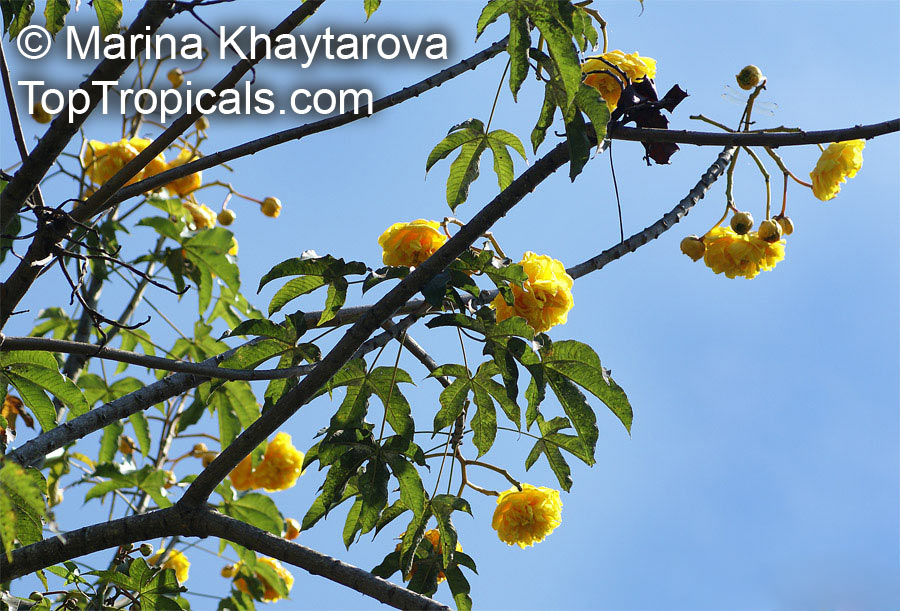
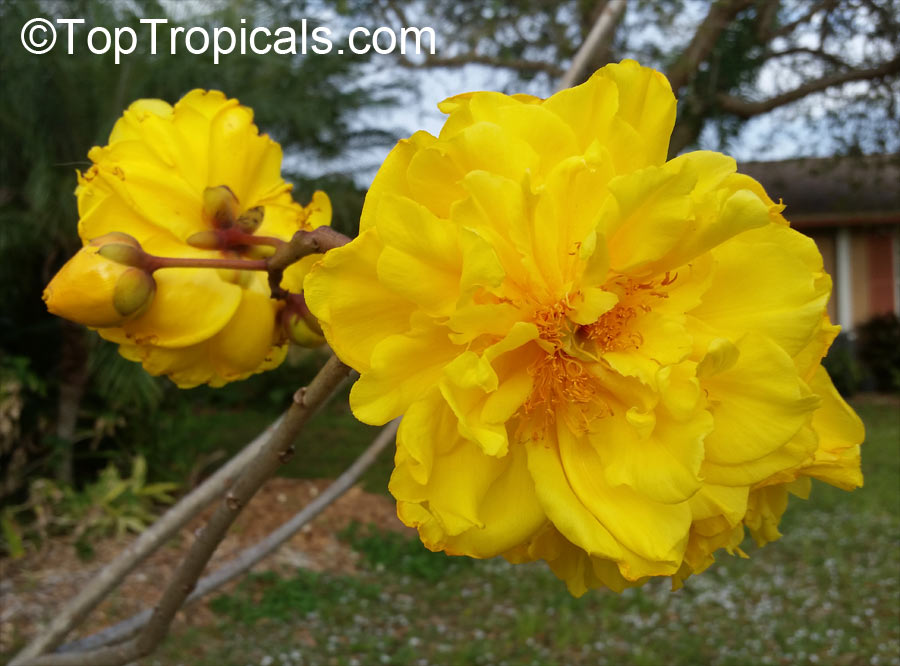
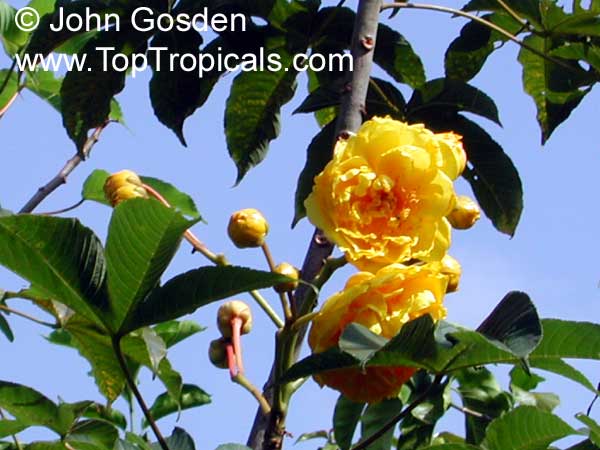
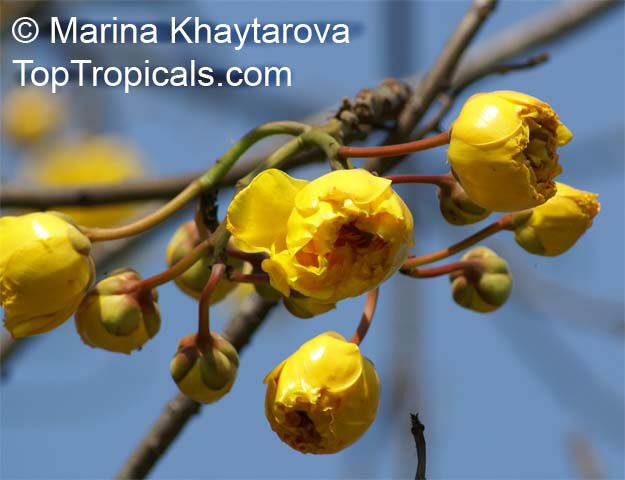
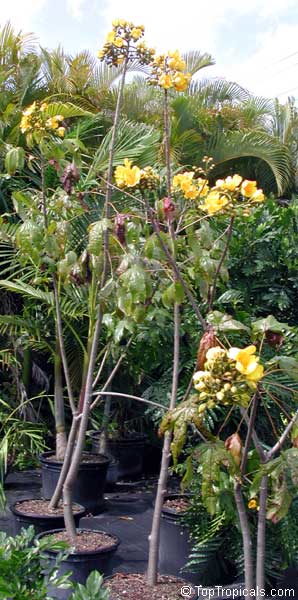
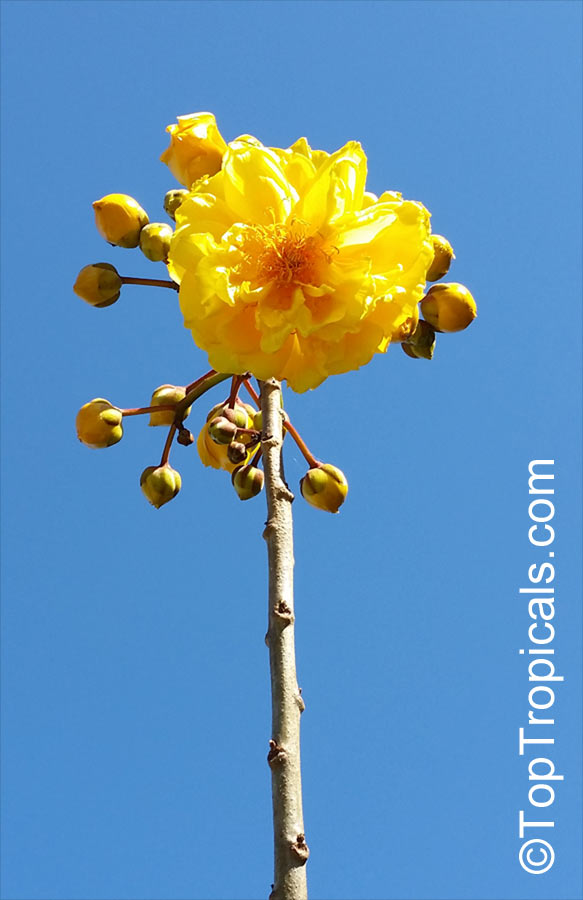
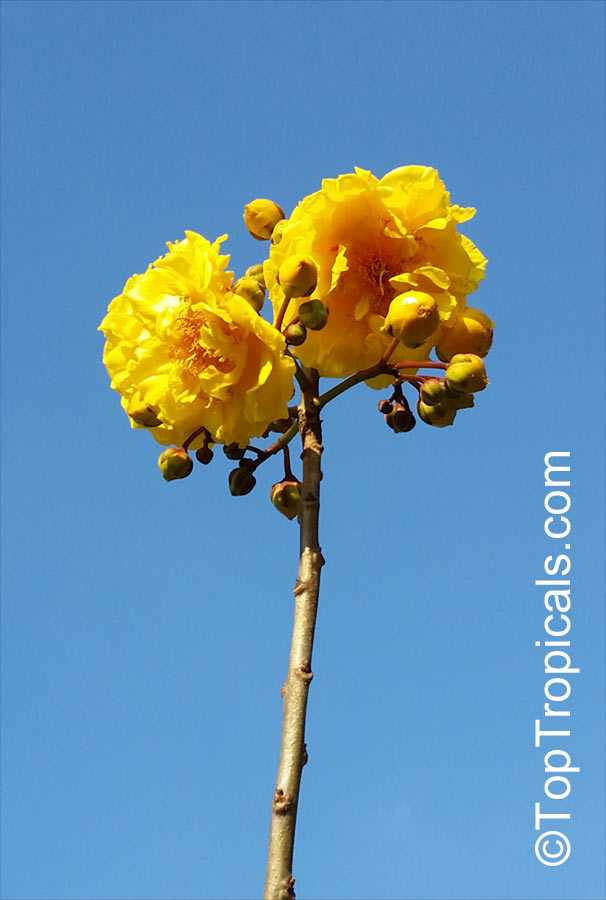
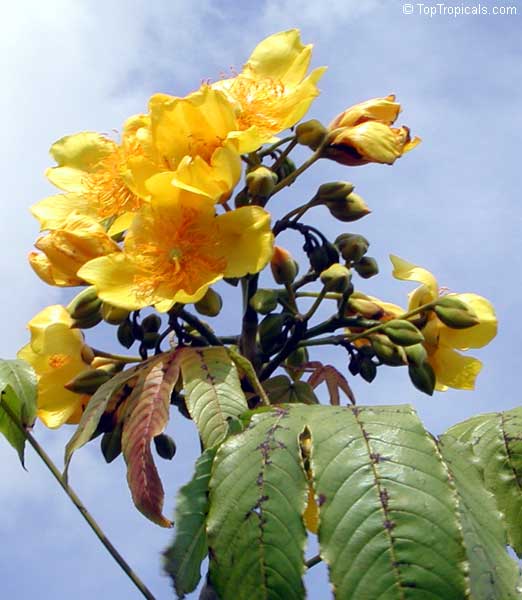
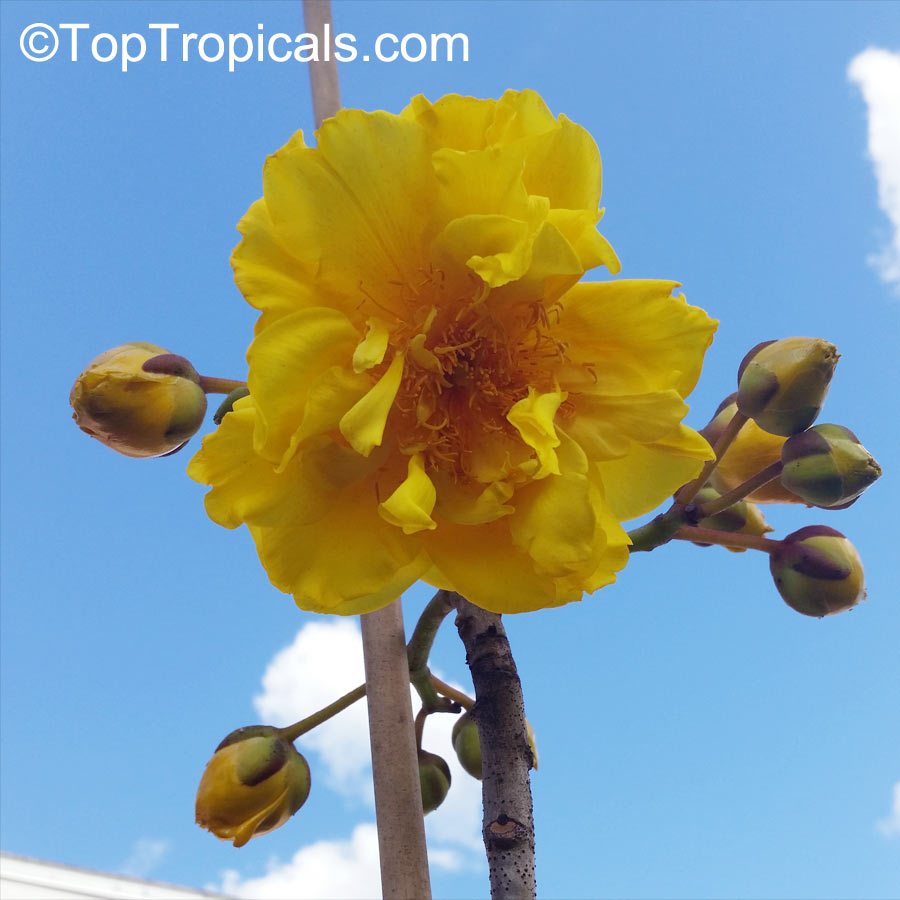
Cochlospermum vitifolium (Buttercup tree) yellow flower close up on a slender woody stem plant
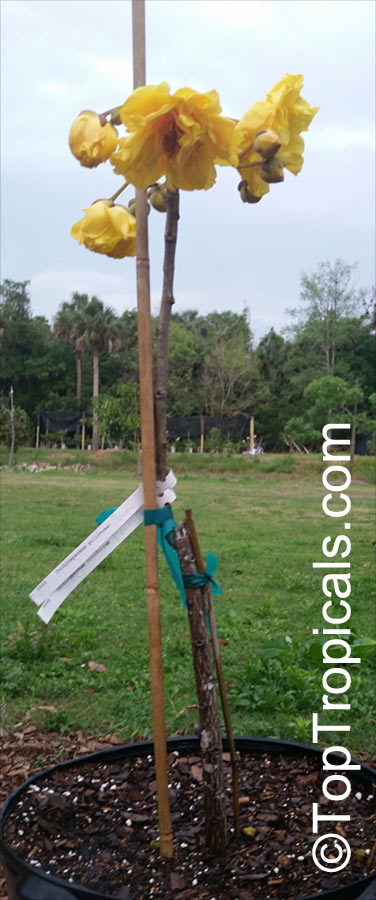
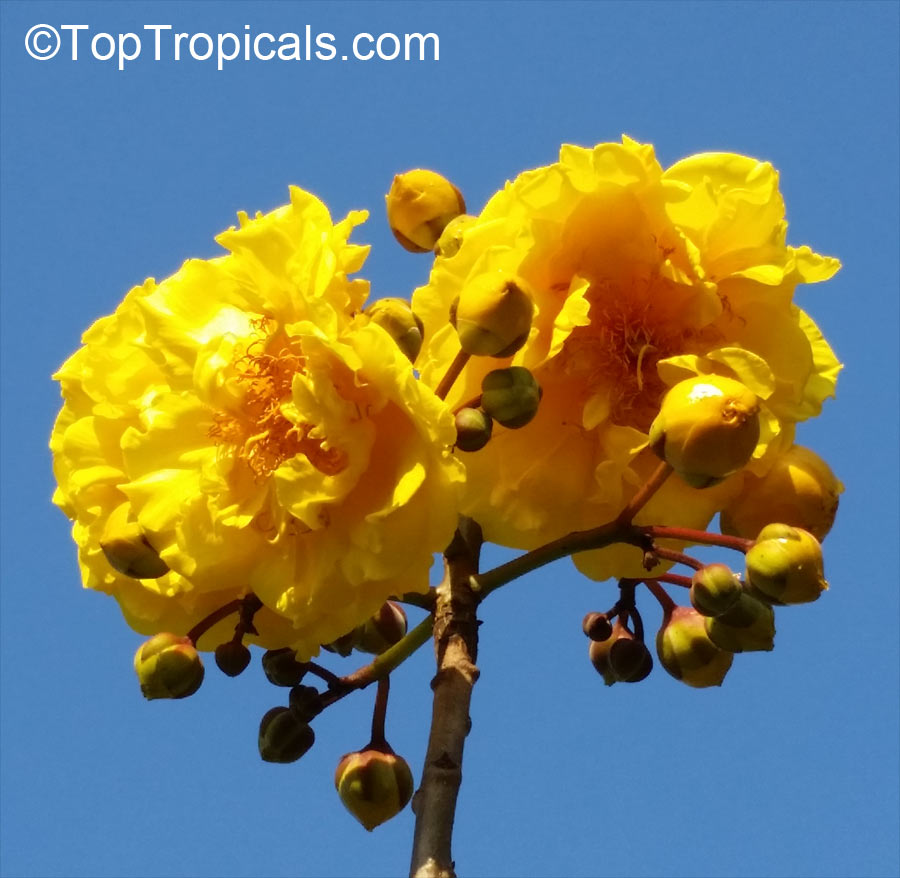
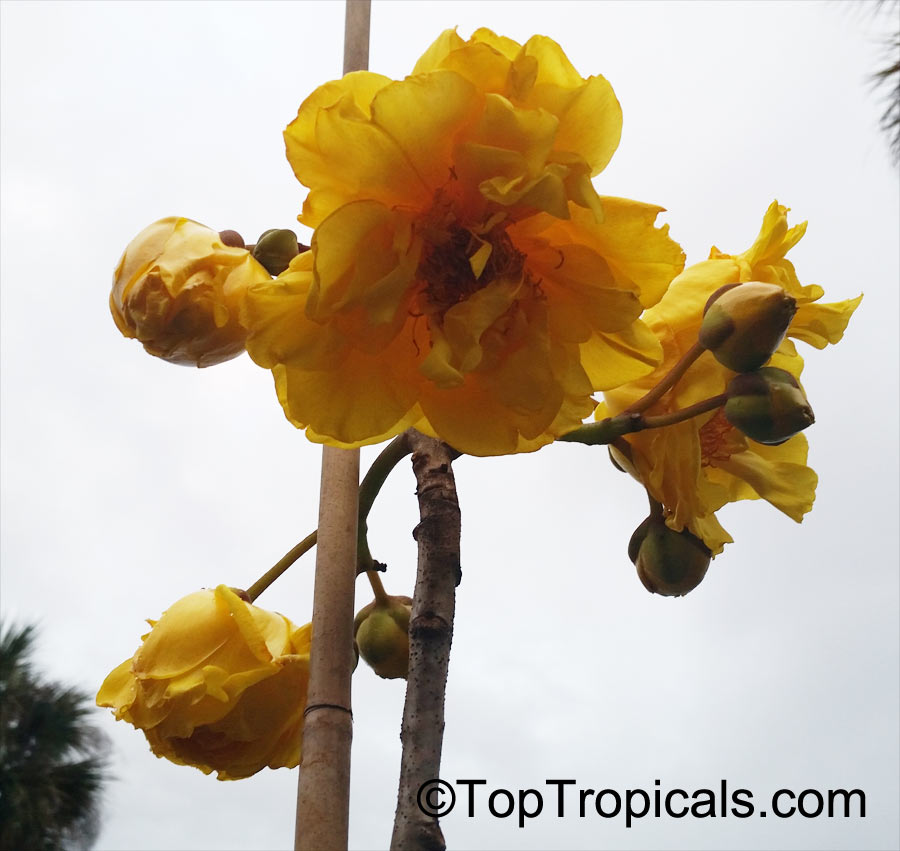
Cochlospermum vitifolium (Buttercup tree) yellow flower clusters attached to a thin supported woody tree stem

Botanical name: Cochlospermum vitifolium

Common names: Buttercup tree, Mountain Cotton, Cotton-tree

Family: Cochlospermaceae

Origin: South America
USDA Plant Hardiness MapSmall tree 10-20 ftFull sunWatering: Moderate. Water when top soil feels dryYellow, orange flowersPlant attracts butterflies, hummingbirdsDeciduous plantSeaside, salt tolerant plant

This plant loves full sun and moderate water during the summer growing season. Water sparingly during the dormant season of the winter months. Cochlospermum vitifolium will attract butterflies, hummingbirds and other beneficial pollinators to your garden. It is a deciduous plant, that will shed its leaves in the winter. This plant is native to South America and is found normally in USDA Zones 9-11, but can also be grown in colder regions in a pot. It can tolerate some light frost but mature plants can survive temperatures down to the 30sF for a short time. This plant is also salt tolerant, making it a great choice for seaside areas. With proper care and maintenance this plant will bring you years of joy!
Link to this plant:
https://toptropicals.com/catalog/uid/cochlospermum_vitifolium.htm


Use link to repeat this search:
https://toptropicals.com/cgi-bin/garden_catalog/cat.cgi?search_op=and&keyword_op=and&language=e&family=Cochlospermaceae
&number=10&no_change_lang=1&user=tt&sale=1&first=0