Bromeliaceae - Botanical Family
| Number of plants found: 43 | Next | 
|
Go to page: | 1 | 2 | 3 | 4 | 5 |
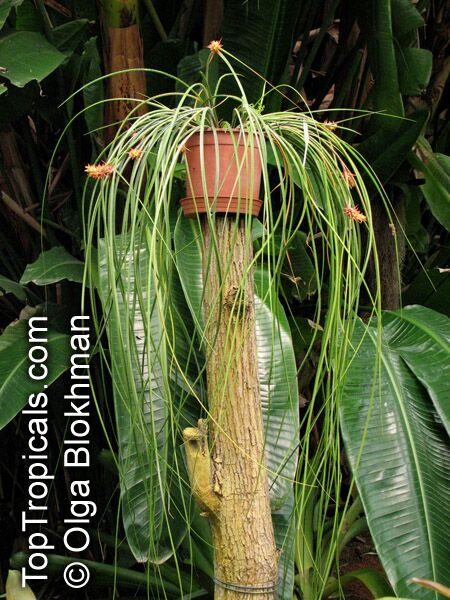
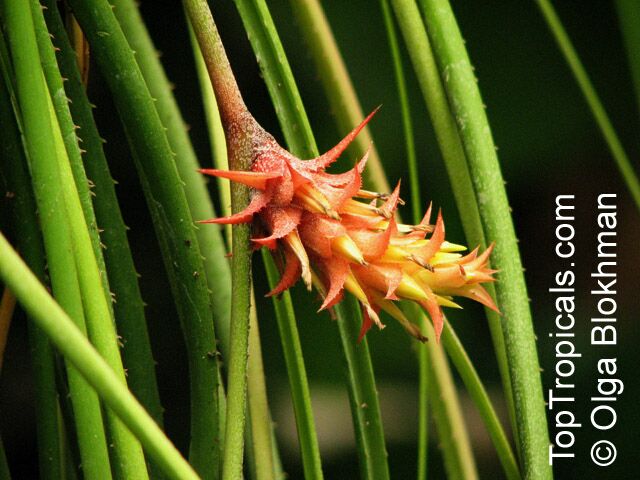
Botanical name: Acanthostachys strobilacea
Common name: Pinecone Bromeliad
Family: Bromeliaceae
Subfamily: Bromelioideae
Origin: Brazil, Paraguay, Argentina



Native to Brazil, Paraguay, and Argentina, Acanthostachys strobilacea (Pinecone Bromeliad) is a small shrub that grows to reach 2-5ft in height. This attractive epiphyte requires a moderate amount of water and semi-shade to grow and thrive, making it the perfect plant for a hanging basket in a sunny or partially-shaded location. Its leaves are a deep green with gray scurf and spines, while its flowers range in color from yellow to orange.
Despite its exotic appearance, Acanthostachys strobilacea is low-maintenance, making it ideal for gardeners who don't have much time to spare on tending to their plants. In addition, it is drought-tolerant and can even thrive in xeriscaped environments.
For those who live in USDA Zone 9-11, Acanthostachys strobilacea is well-suited for growing in containers. The plant can be successfully grown in cold regions as long as its soil is kept moist. In cooler climates, the plant should be moved to a sheltered area during the winter months to ensure the soil does not become too cold and wet, as this could damage the roots. Furthermore, when growing in a pot, it is important to ensure the pot is well-drained and to water the plant regularly and deeply.
Overall, Acanthostachys strobilacea is a beautiful and exotic plant that is low-maintenance and drought-tolerant, making it a great addition to any sunny or partially-shaded garden. With the right care, it can thrive in its environment and bring a unique beauty to any garden.
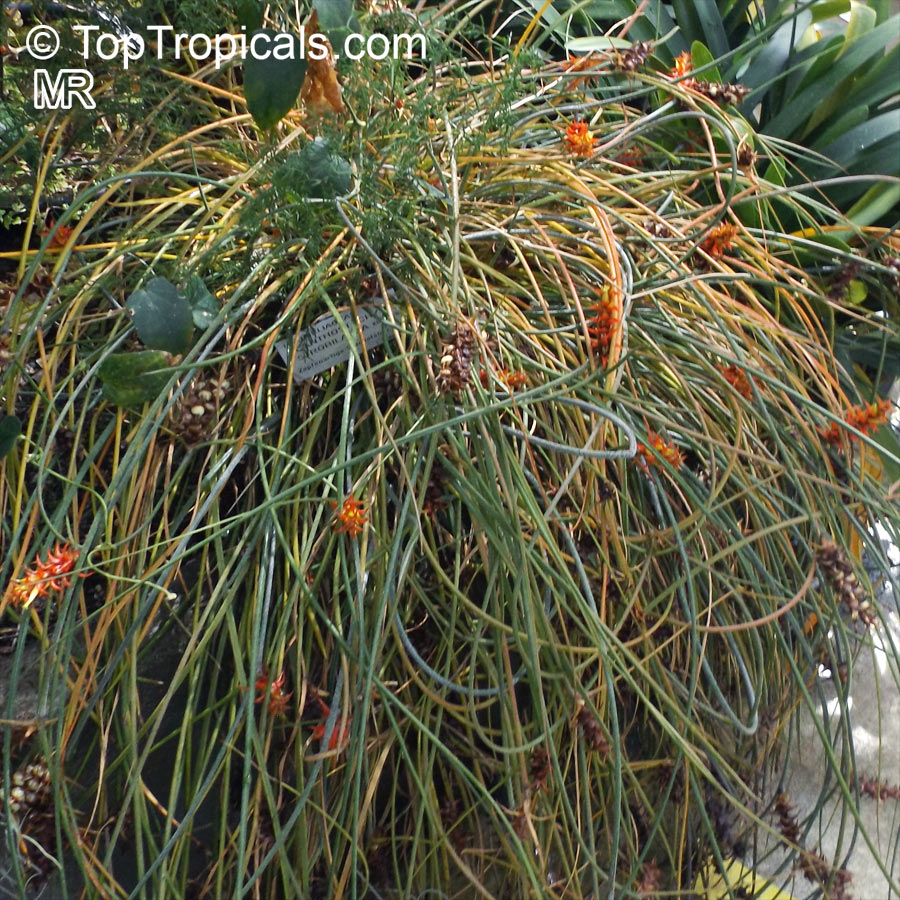
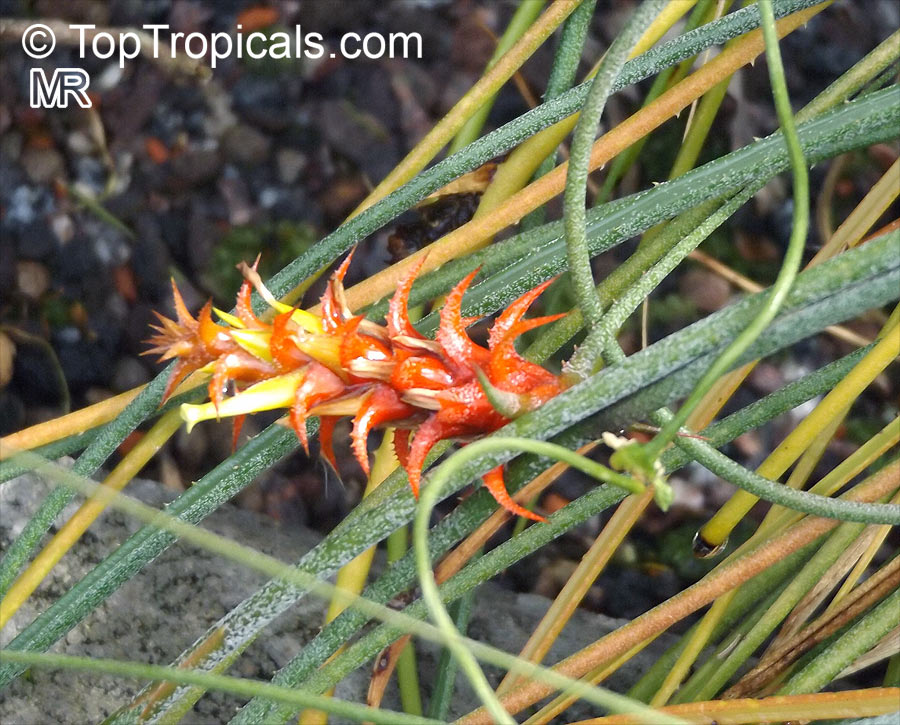
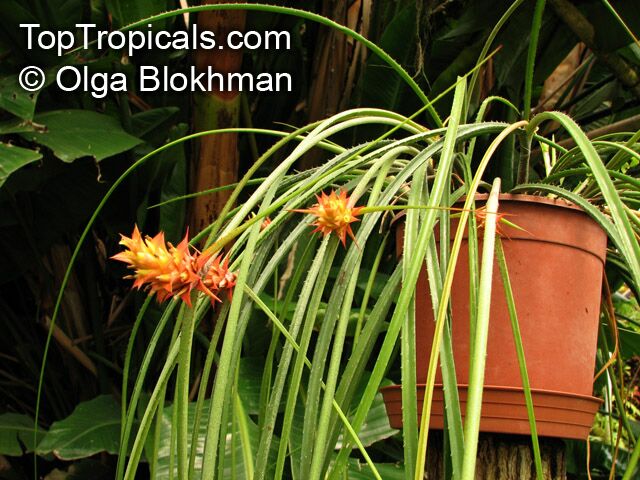
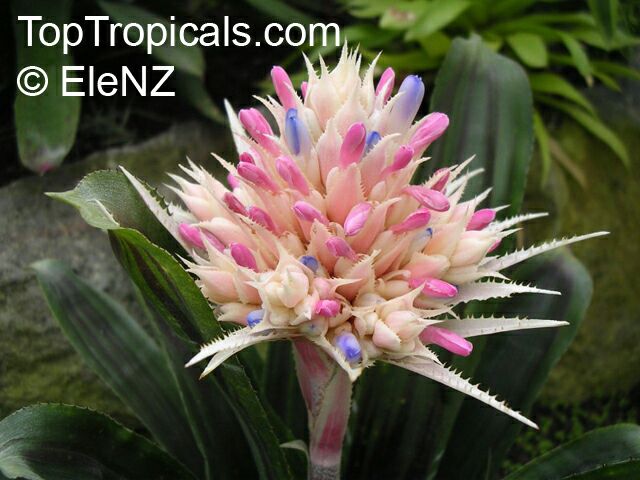
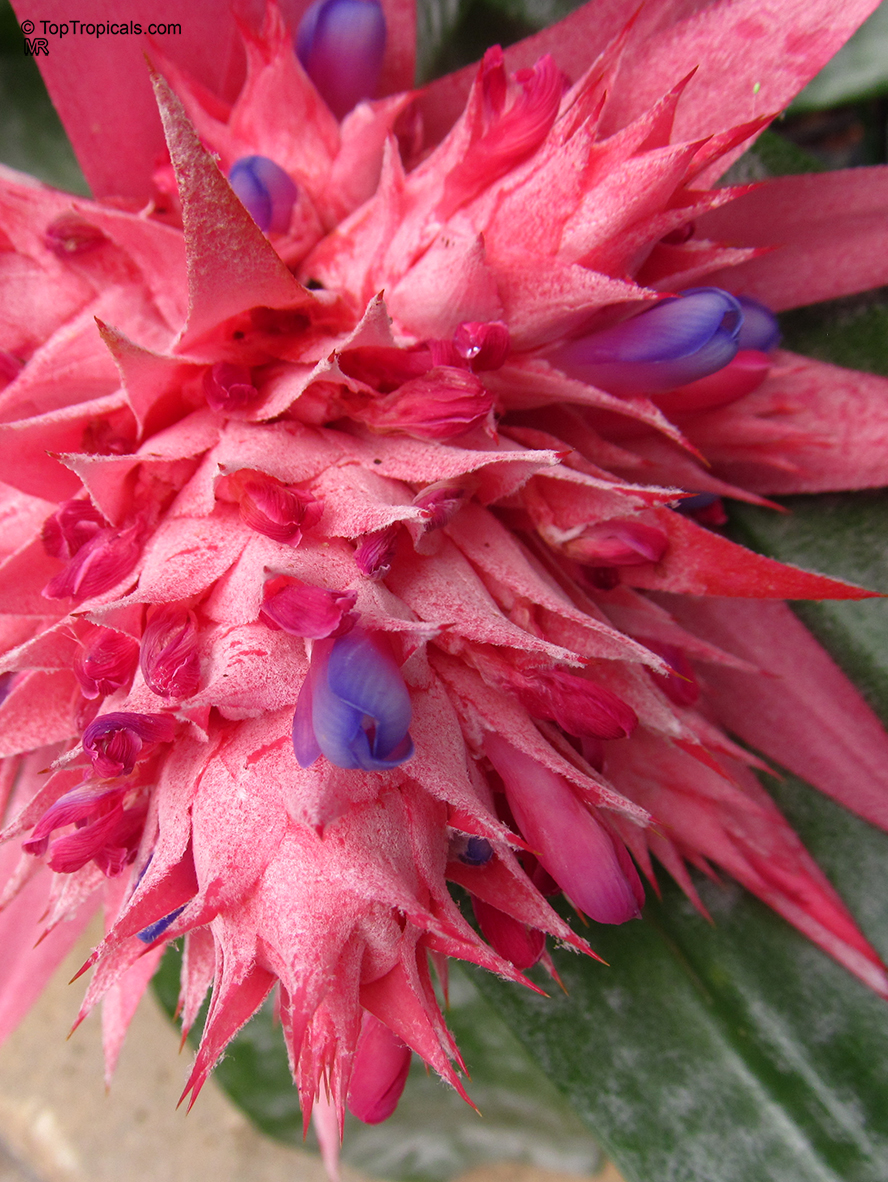
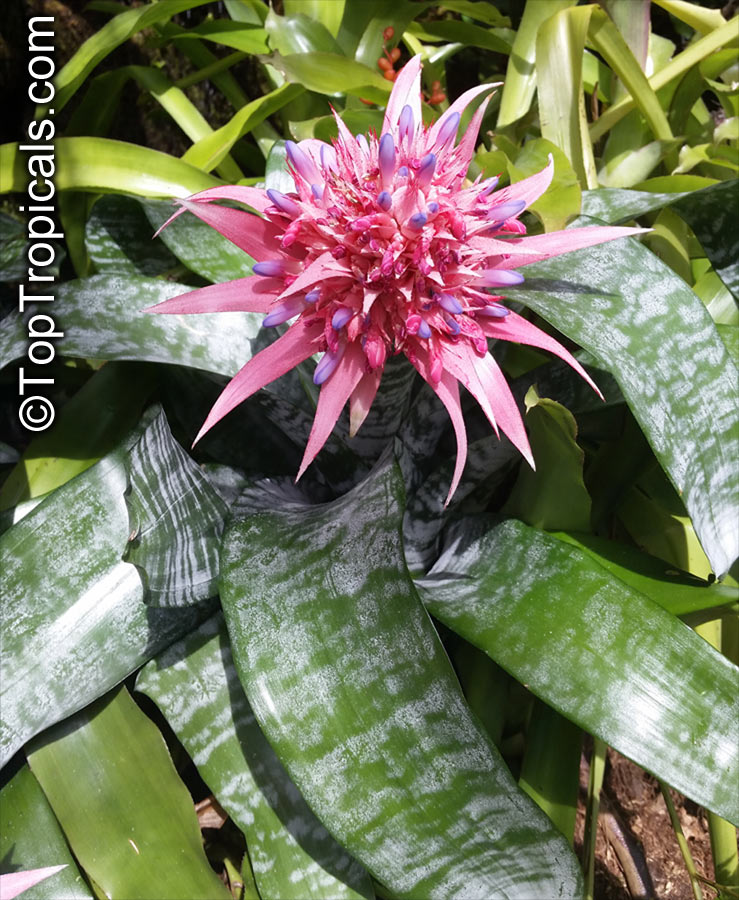
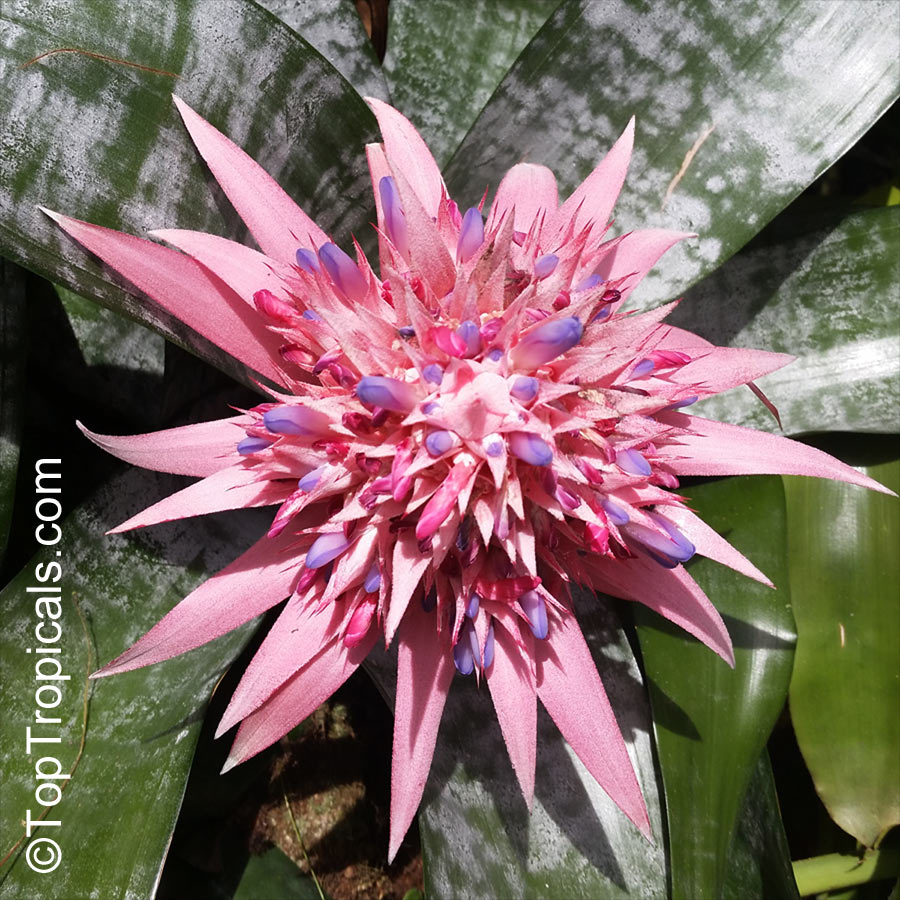
Botanical name: Aechmea fasciata
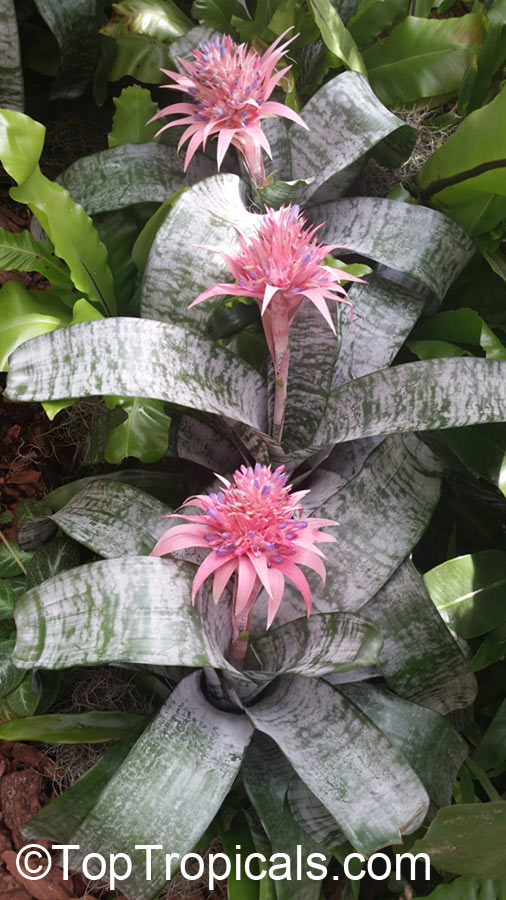
Common name: Silver Vase
Family: Bromeliaceae
Origin: Brazil


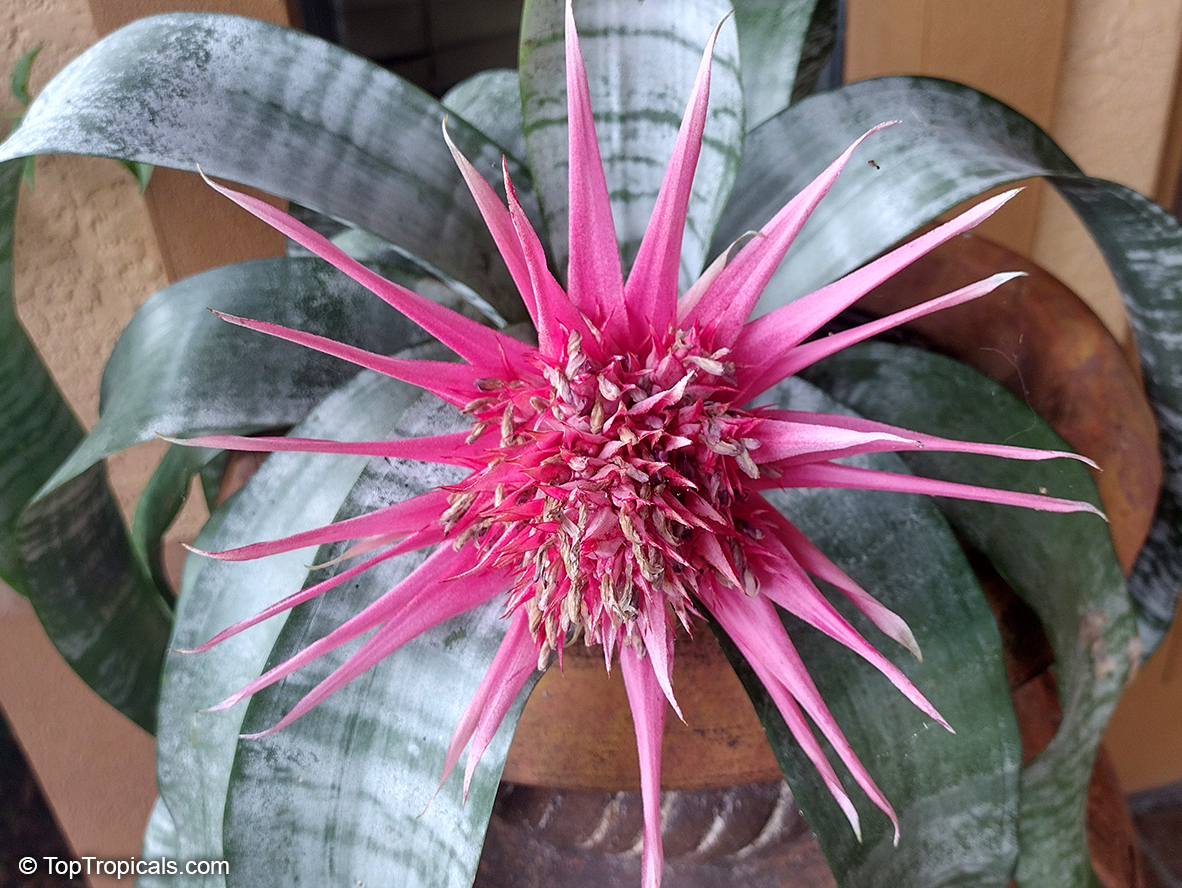
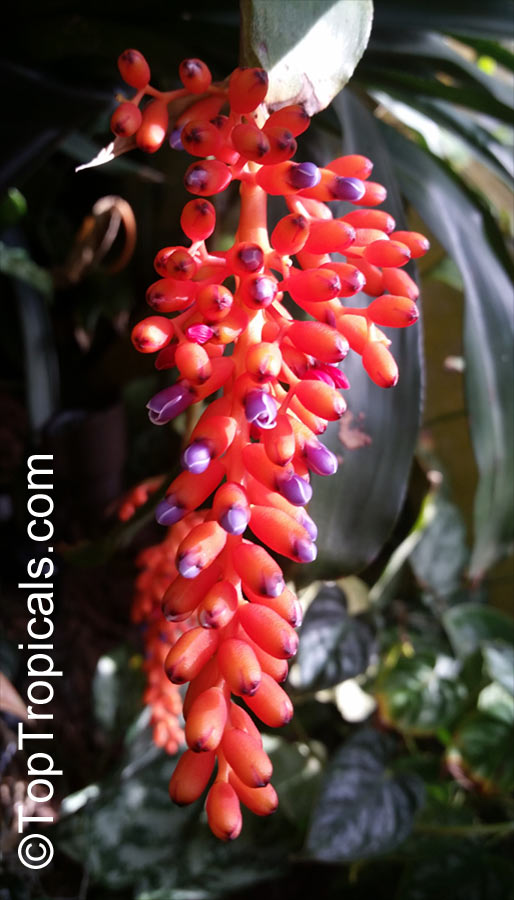
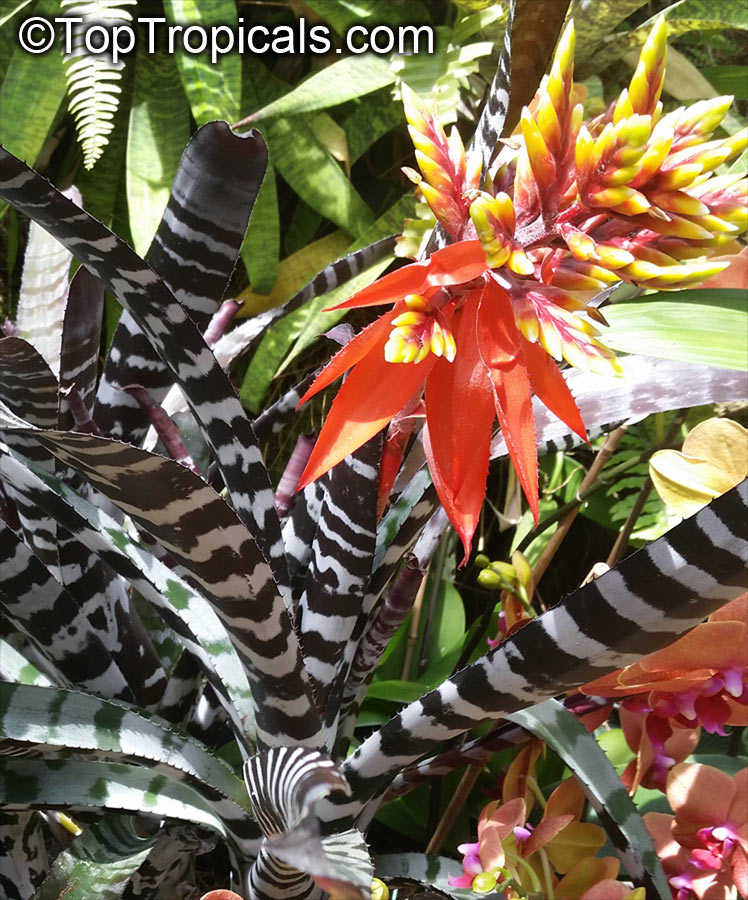
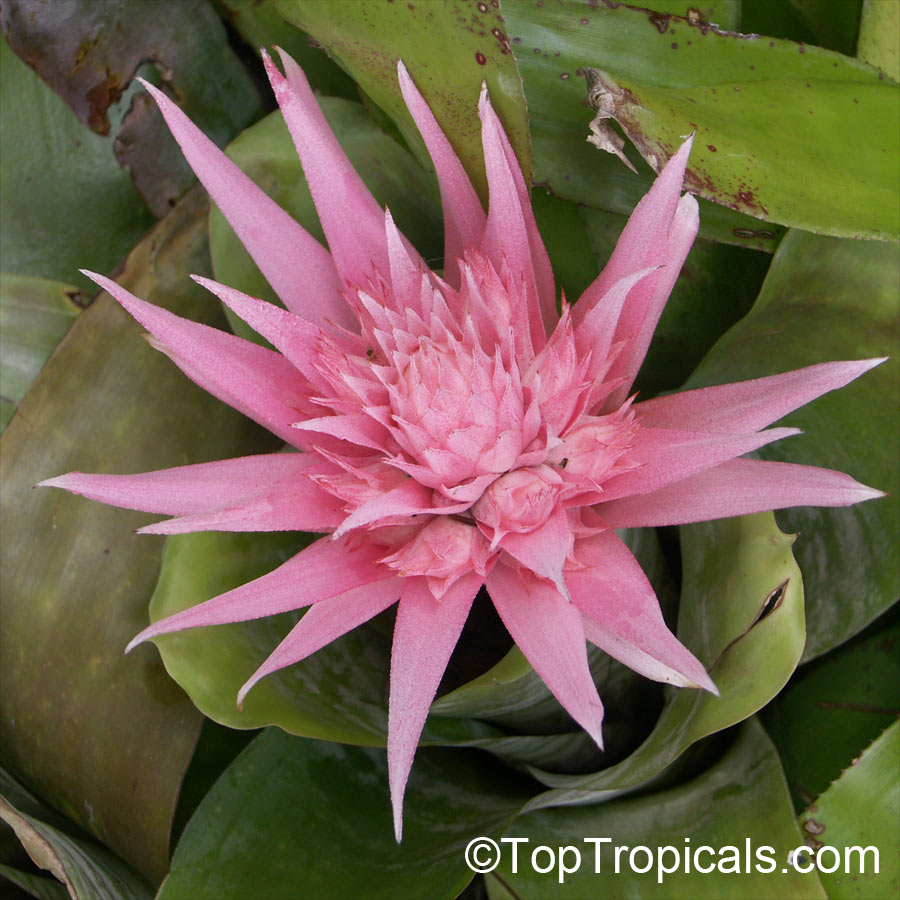
Aechmea fasciata has silver/green bands, rose pink bracts and blue, purple or red flowers. It requires partial shade and a well-drained, but moisture-retentive soil. It can also be grown epiphytically, as, for example, with moss around its roots and wired to rough bark.
Botanical name: Aechmea sp.
Common name: Bromeliad
Family: Bromeliaceae
Subfamily: Bromelioideae
Origin: Tropical America


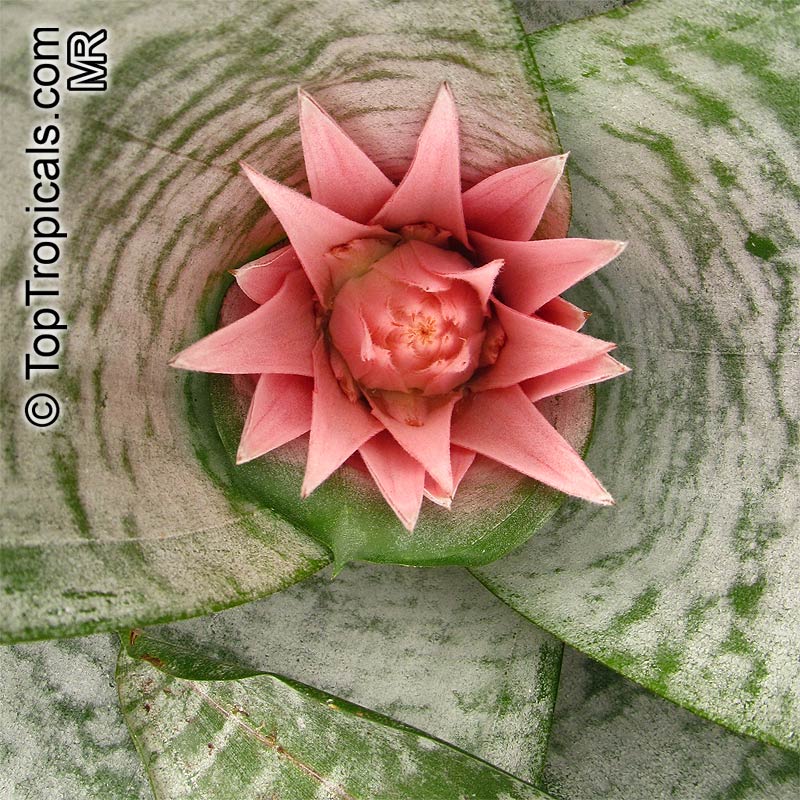
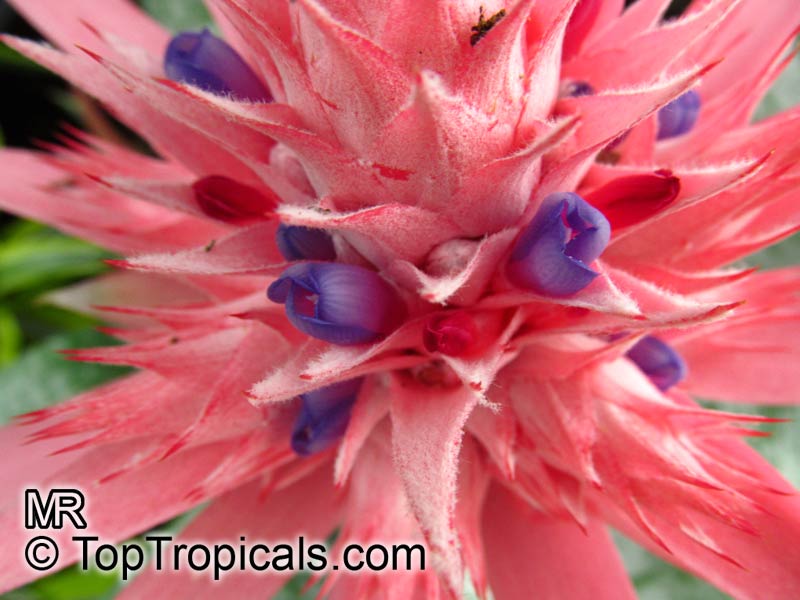
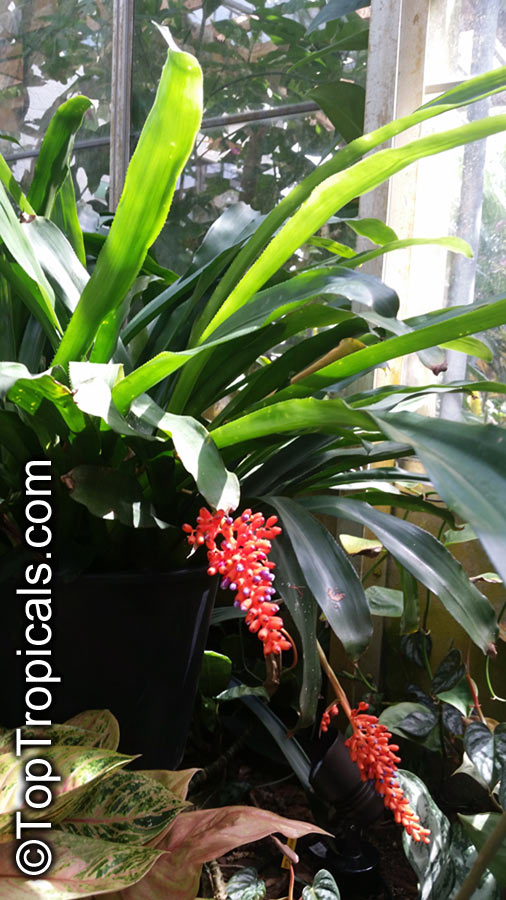
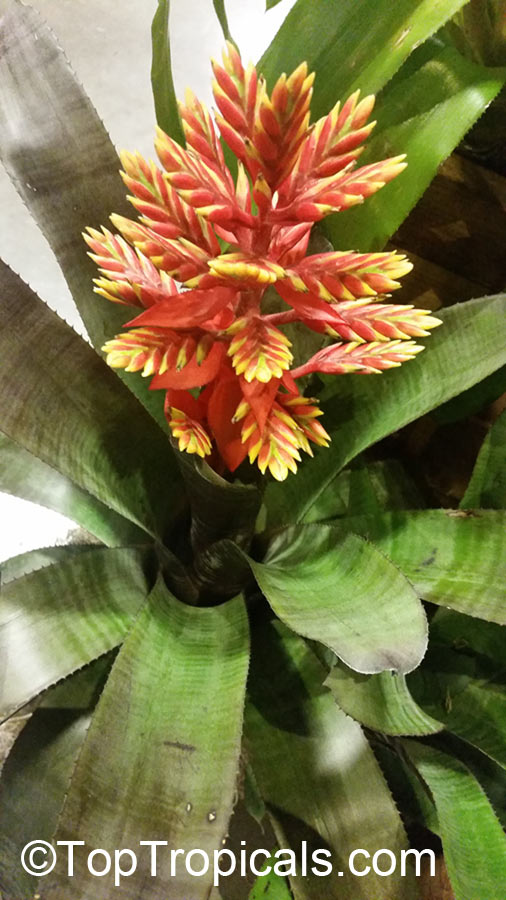
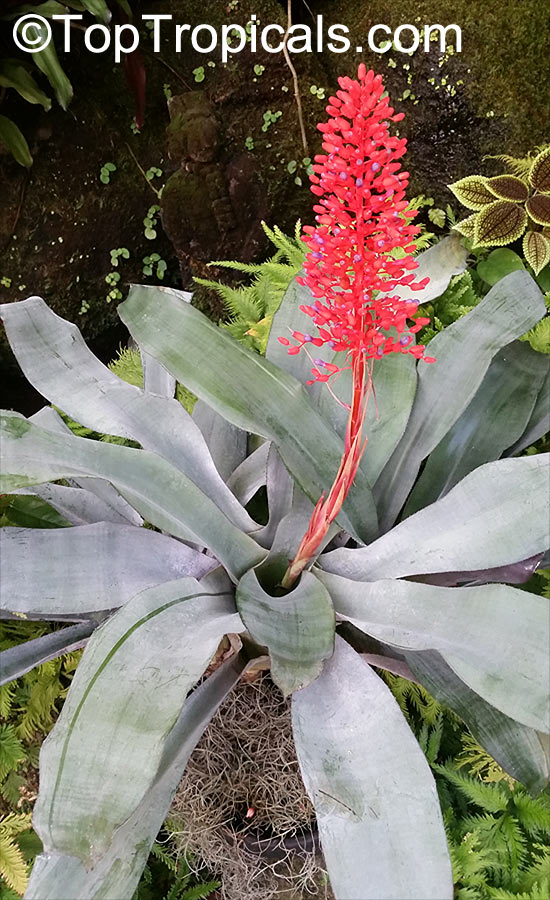
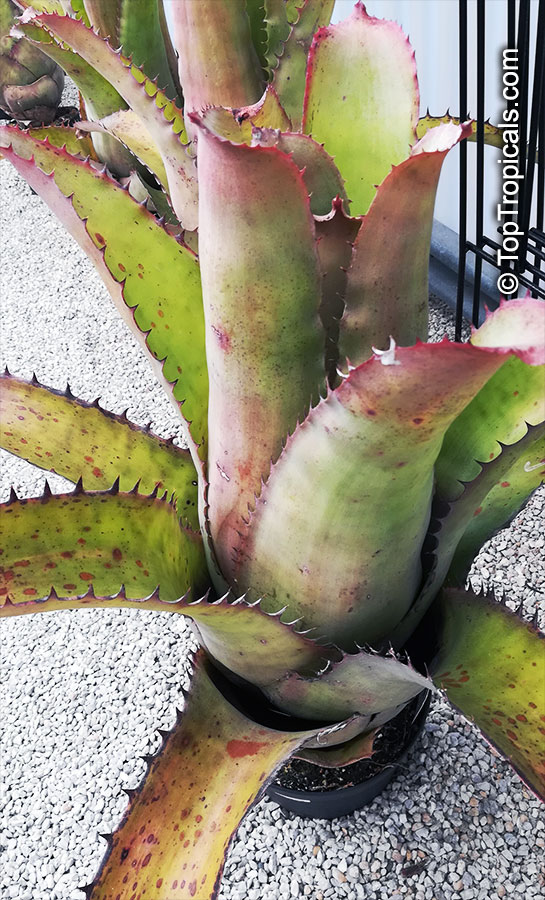
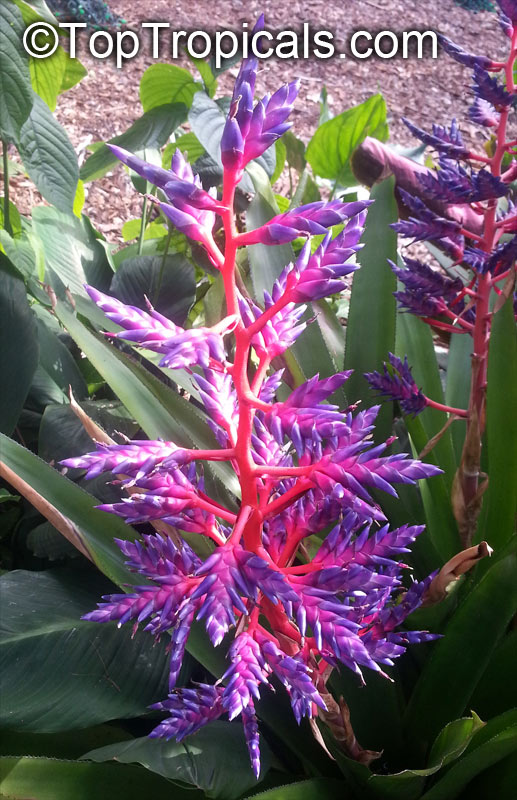
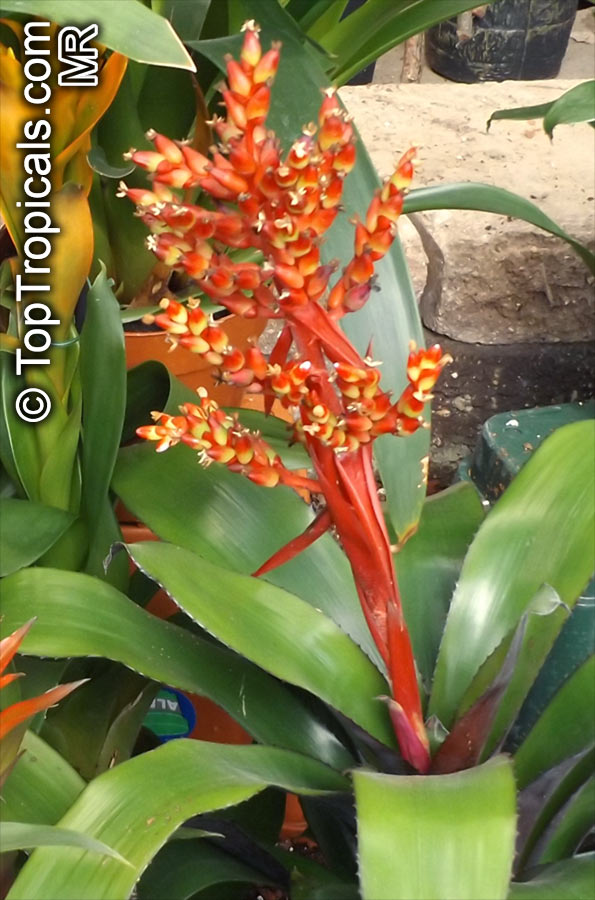
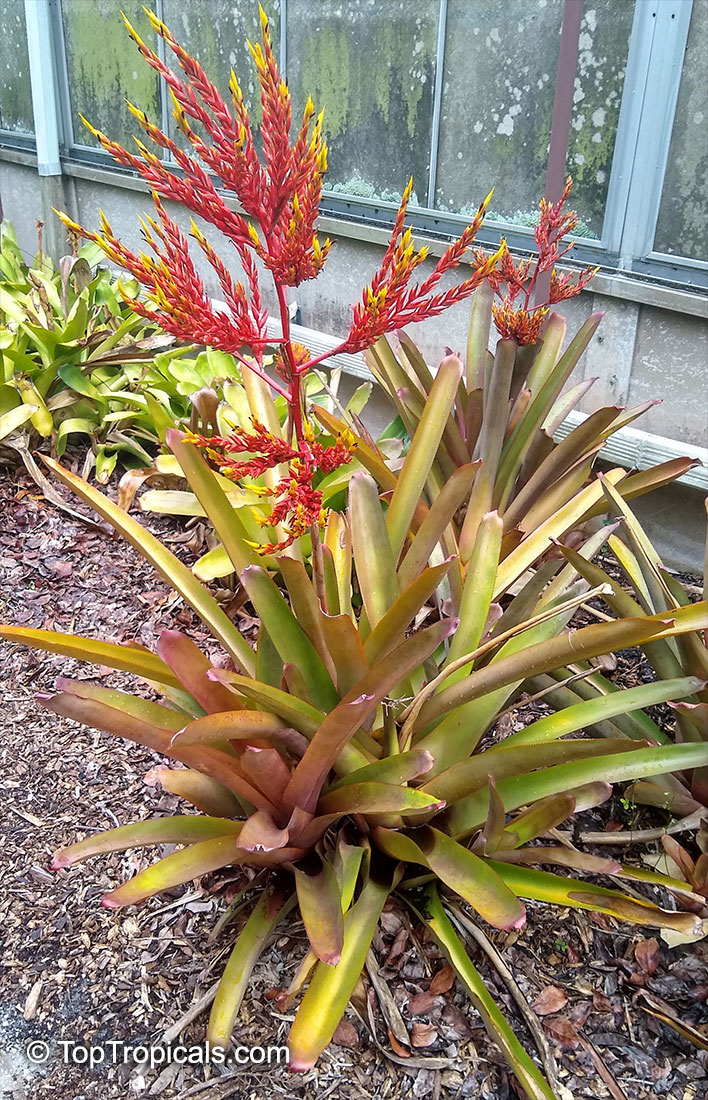
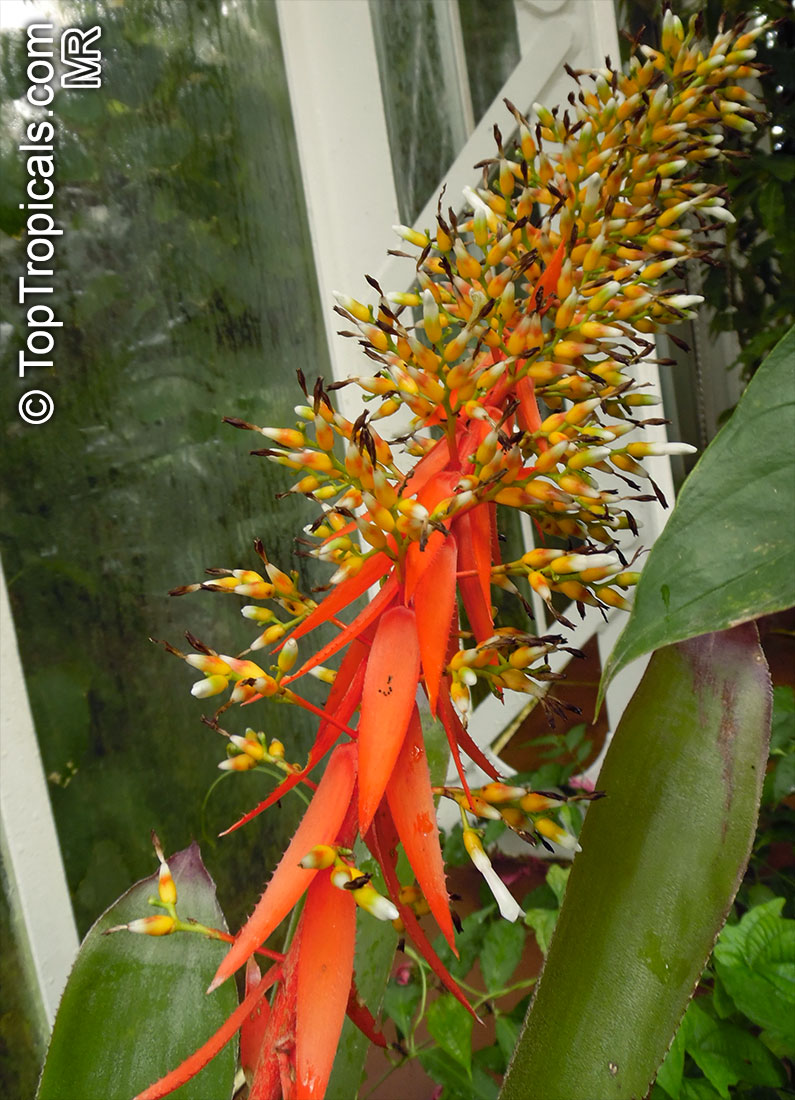
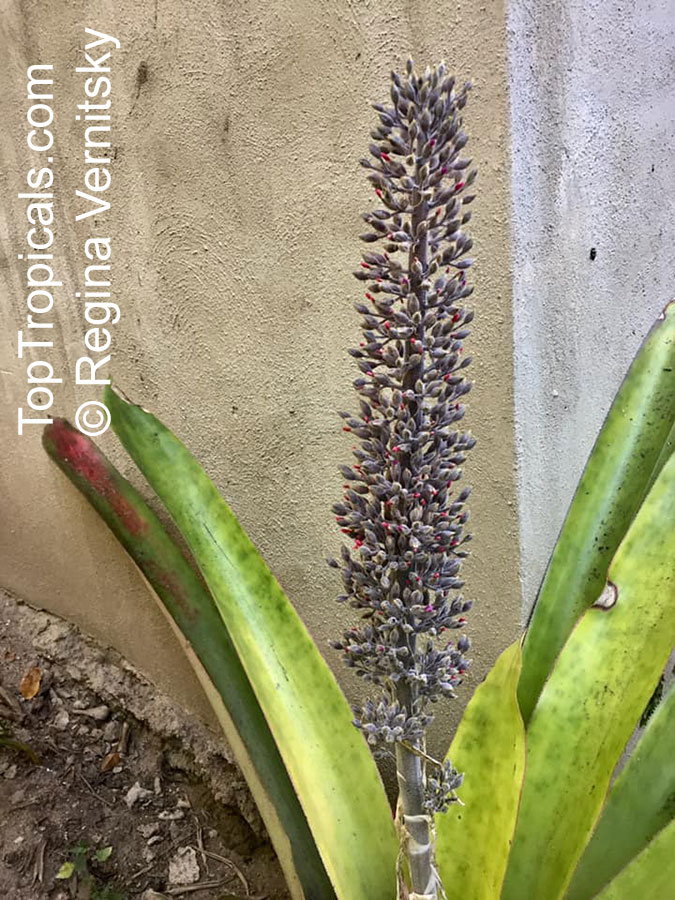
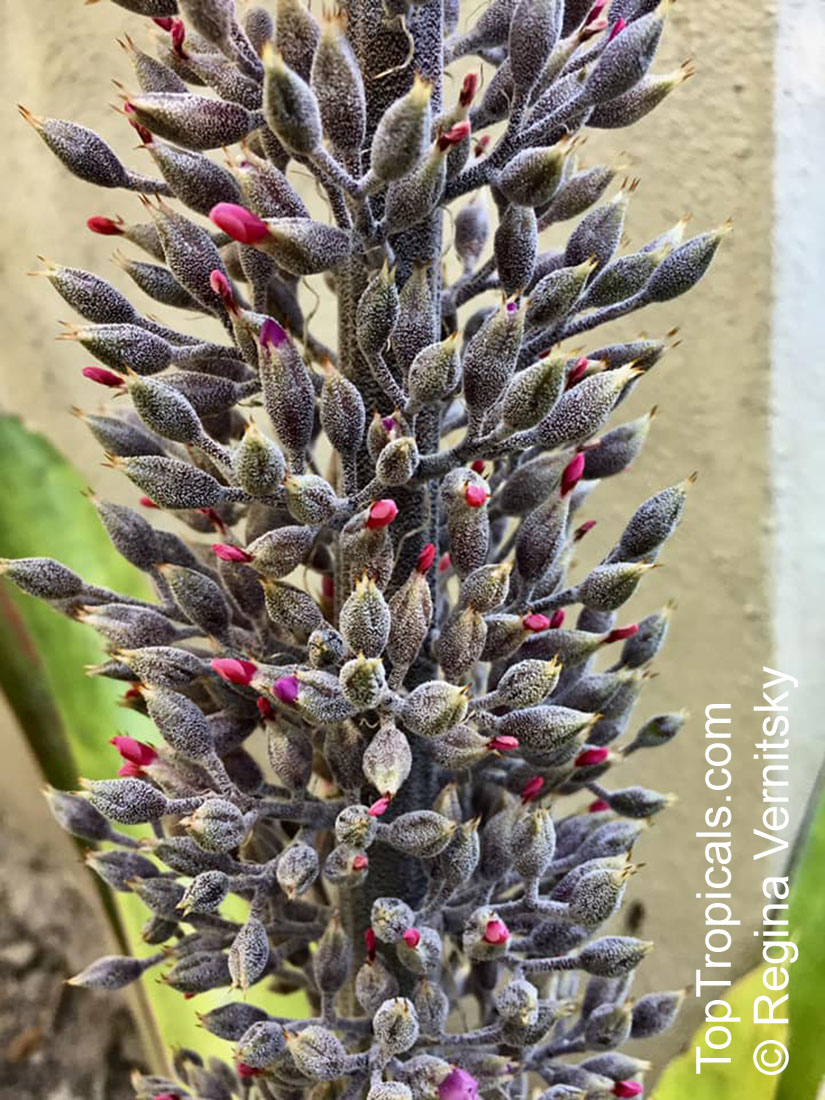
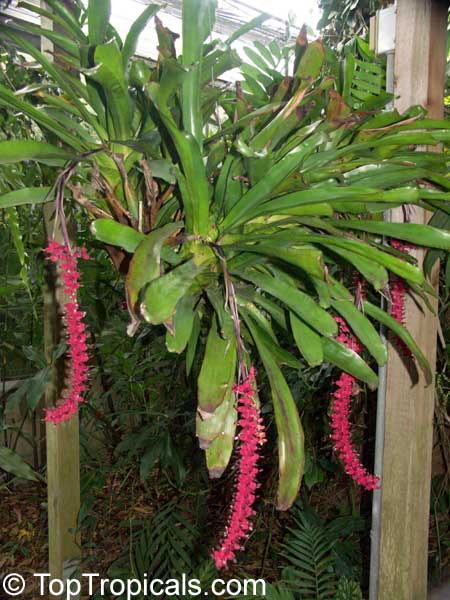
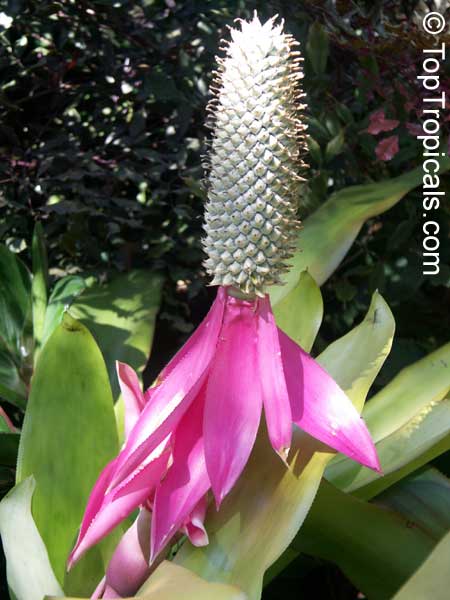
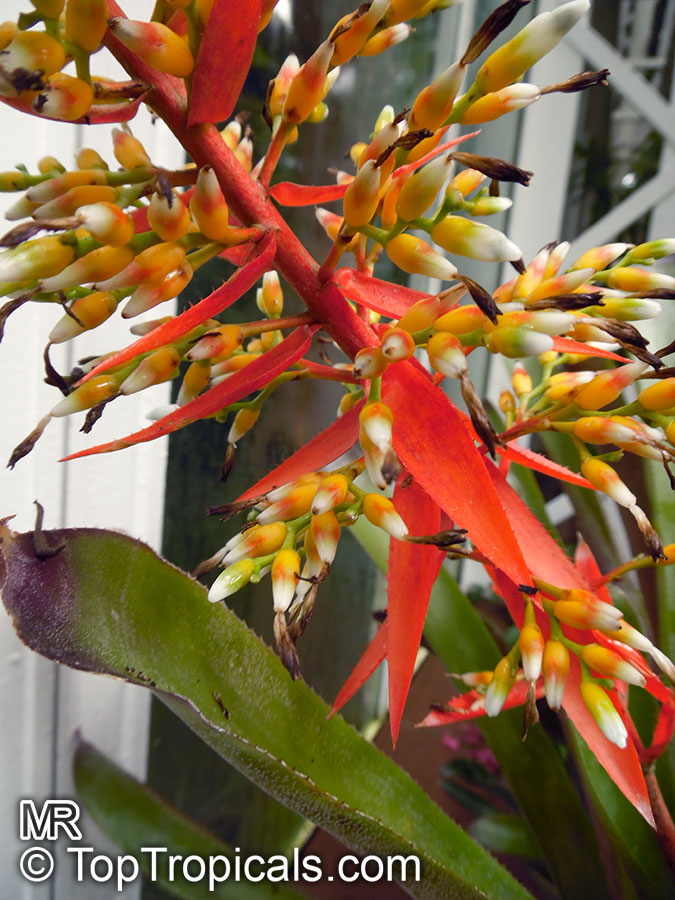
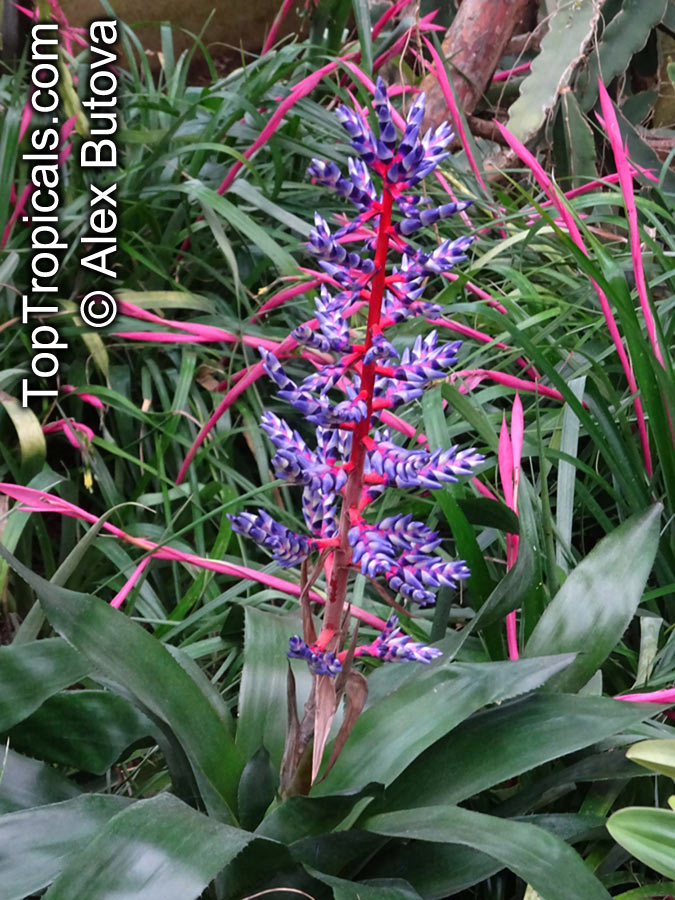
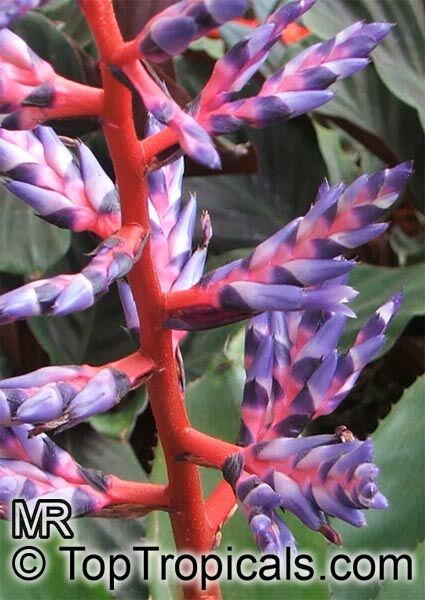
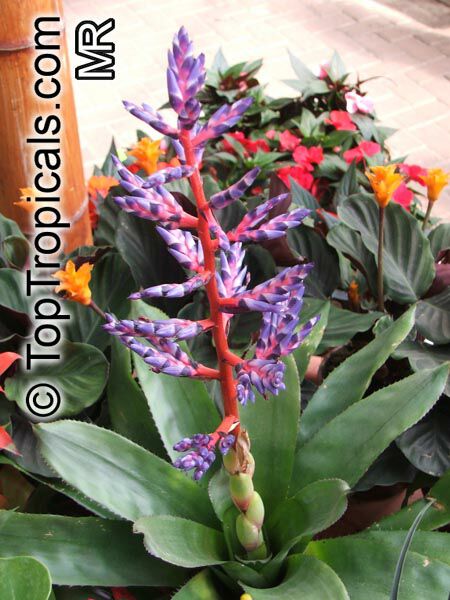
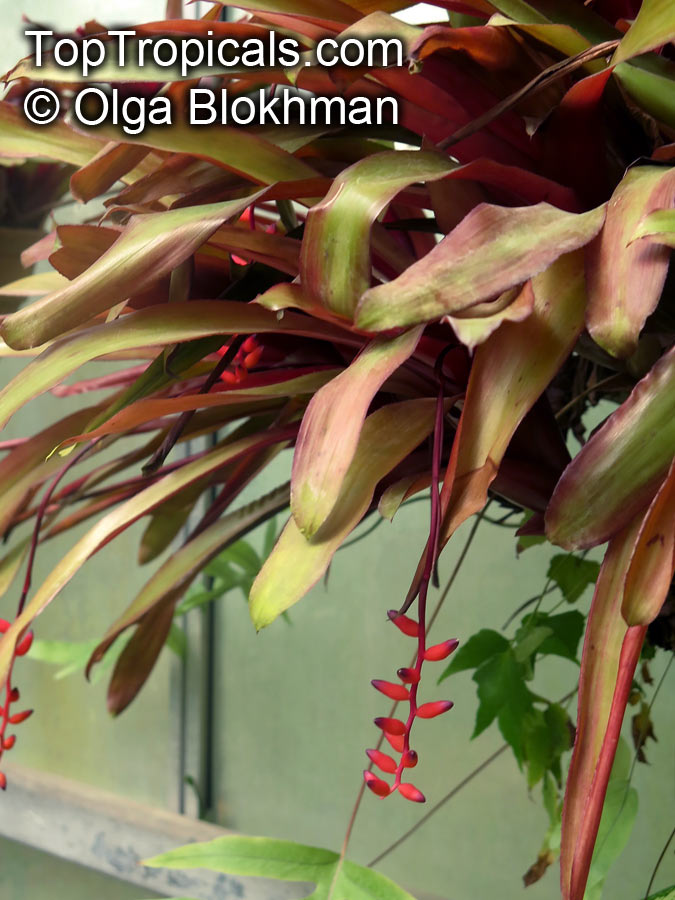
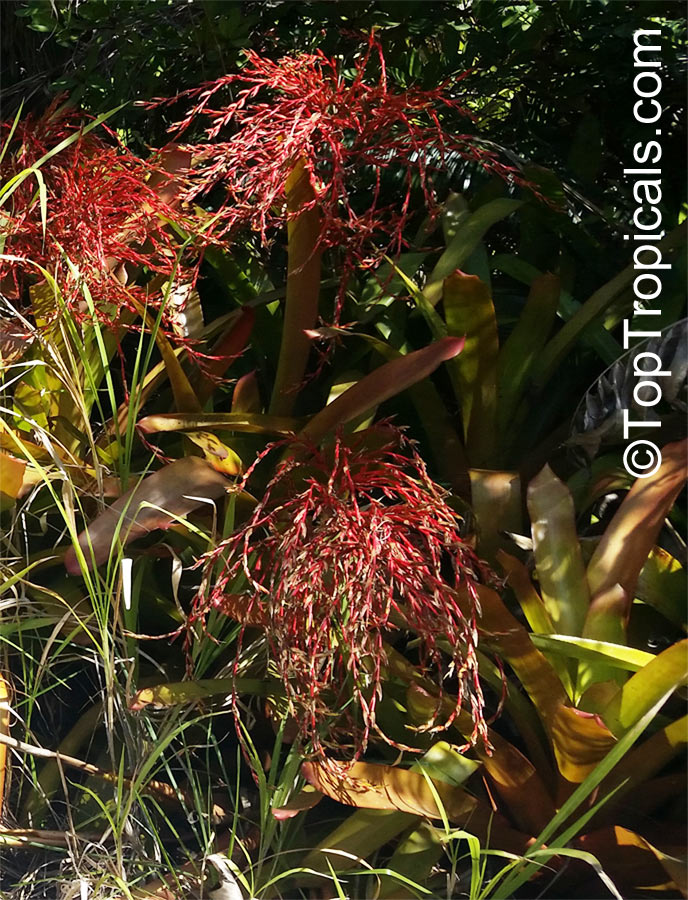
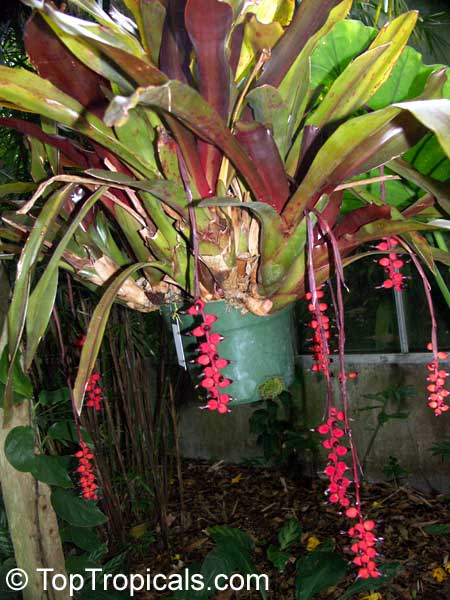
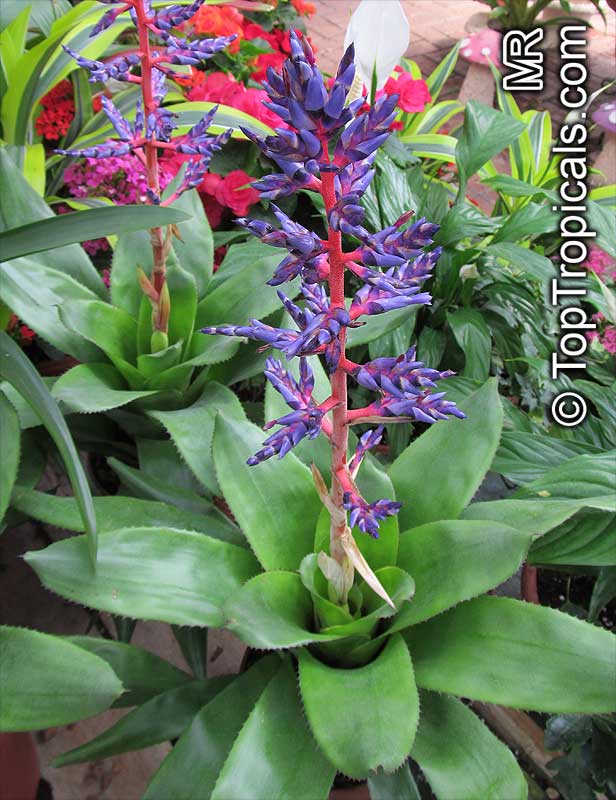
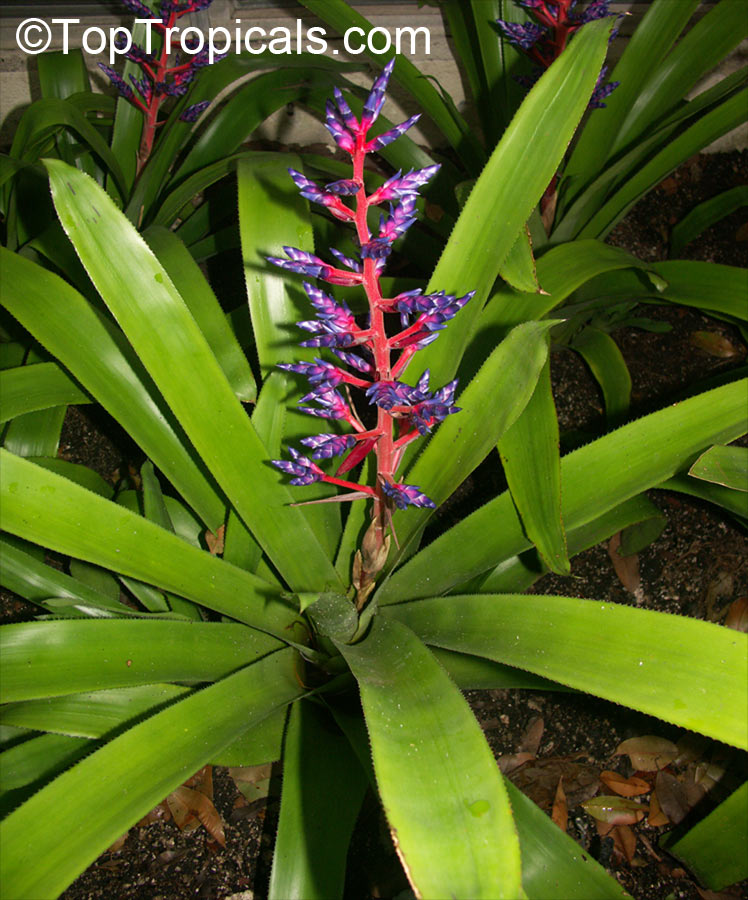
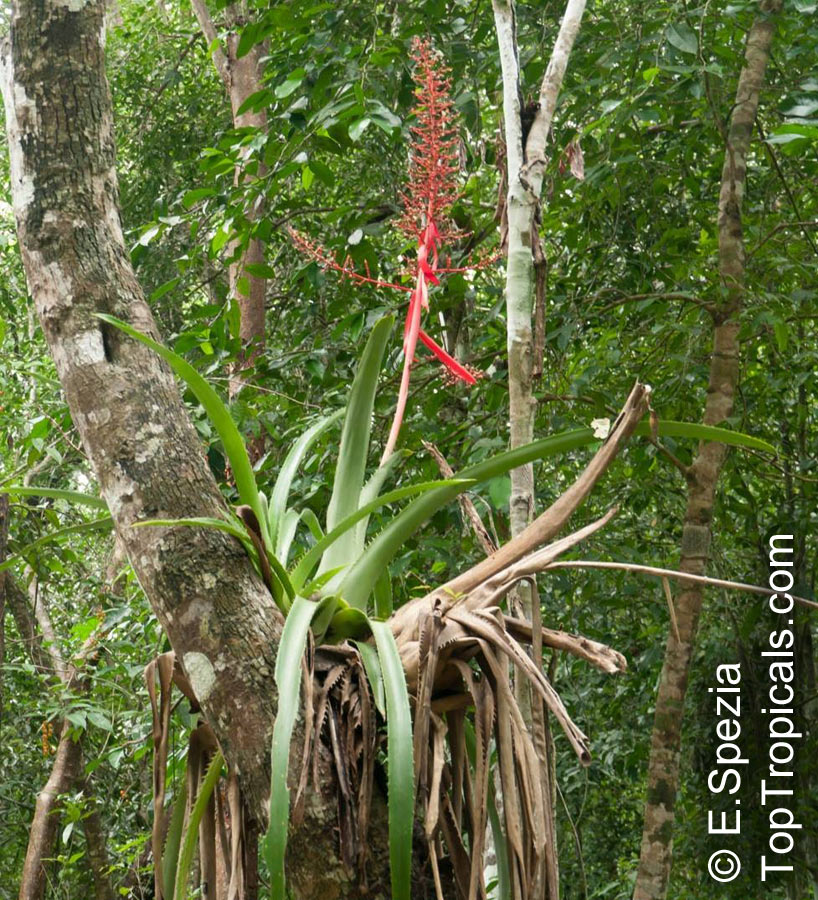
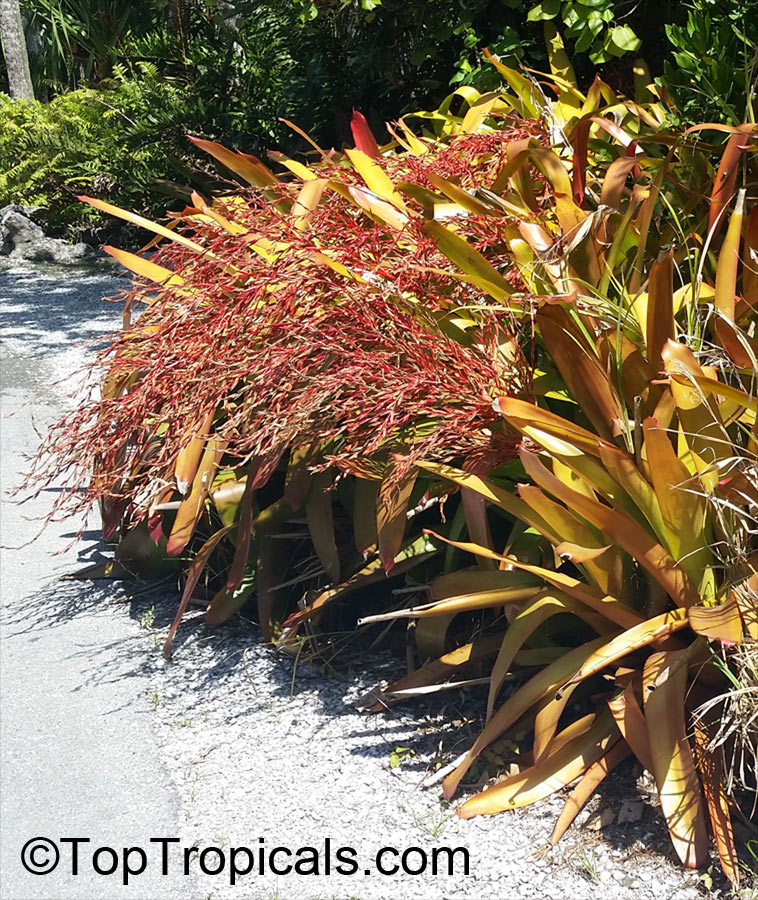
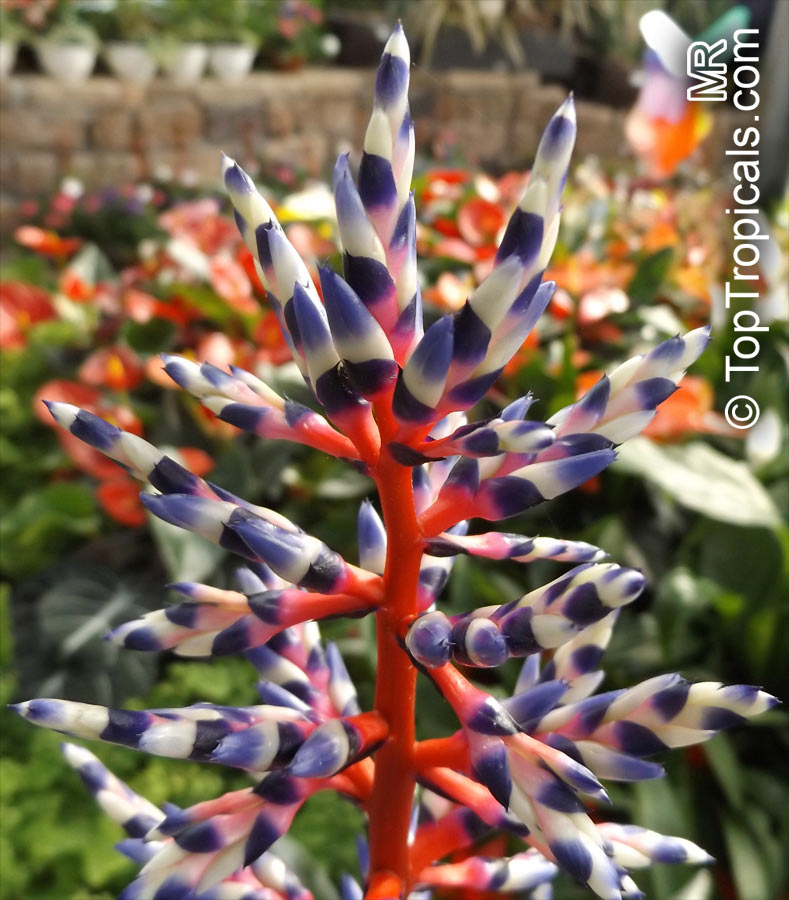
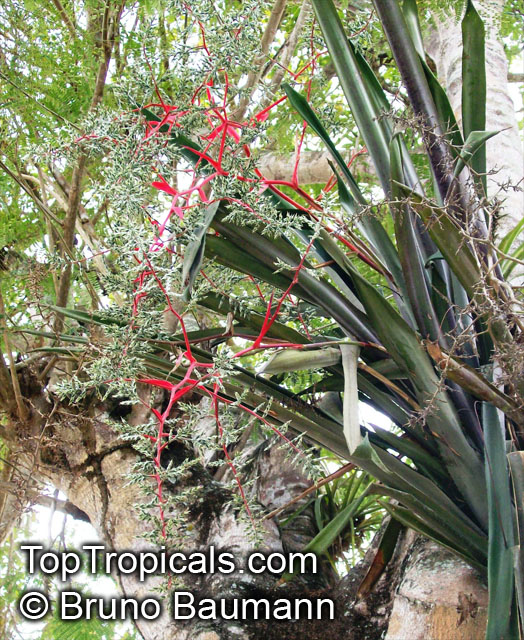
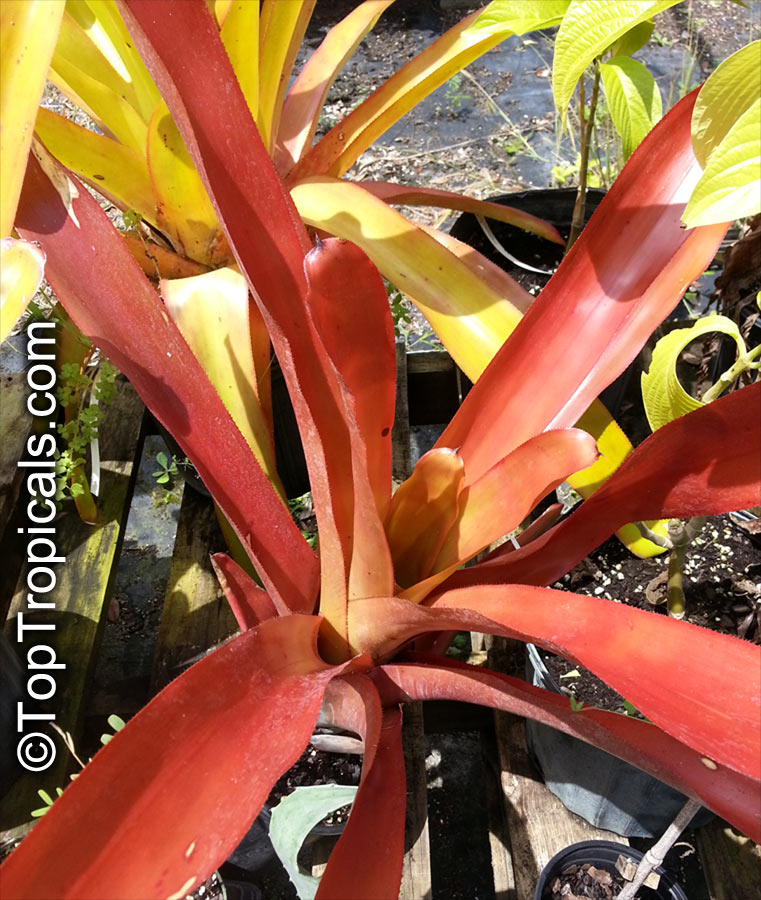
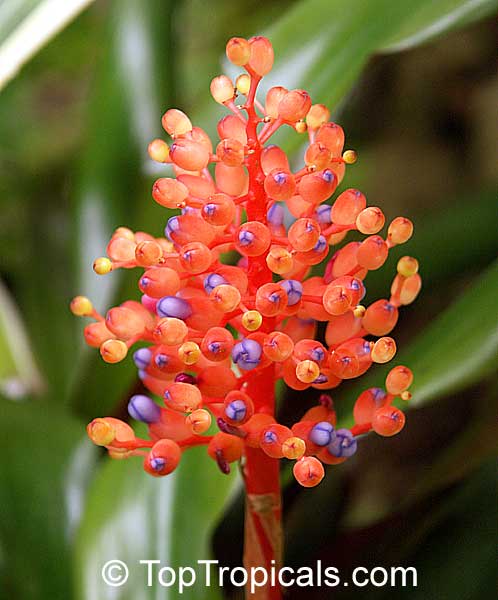
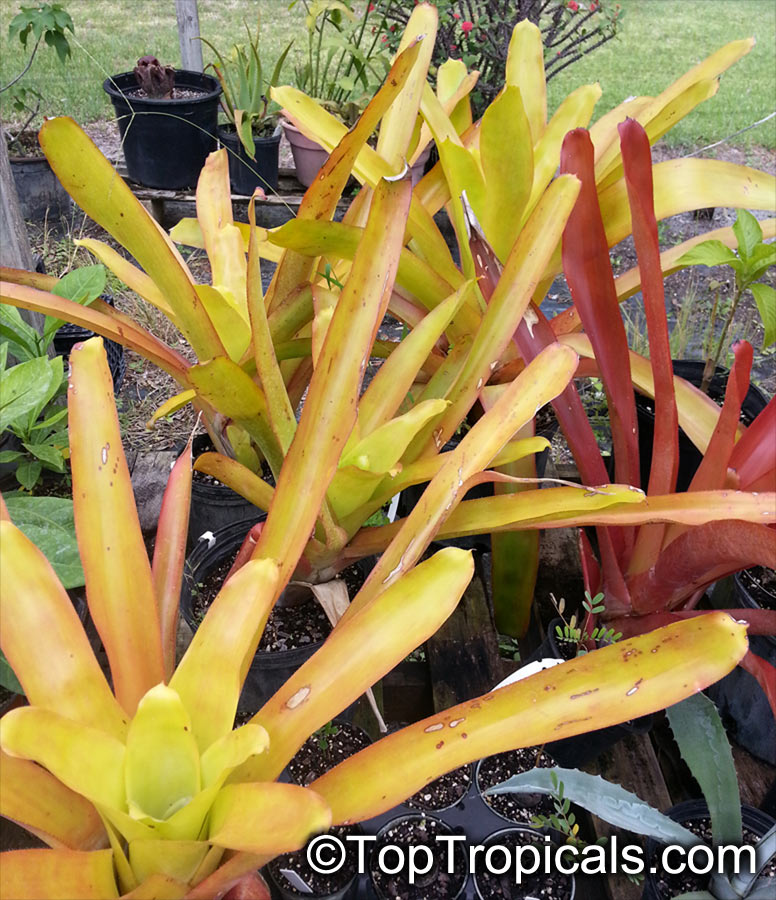
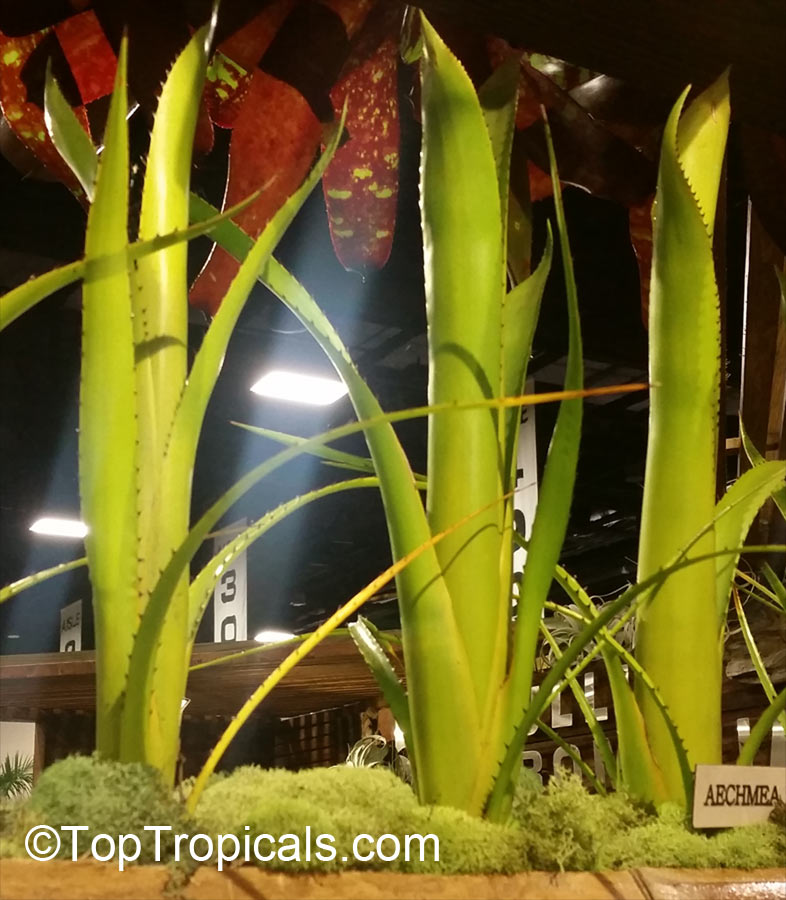
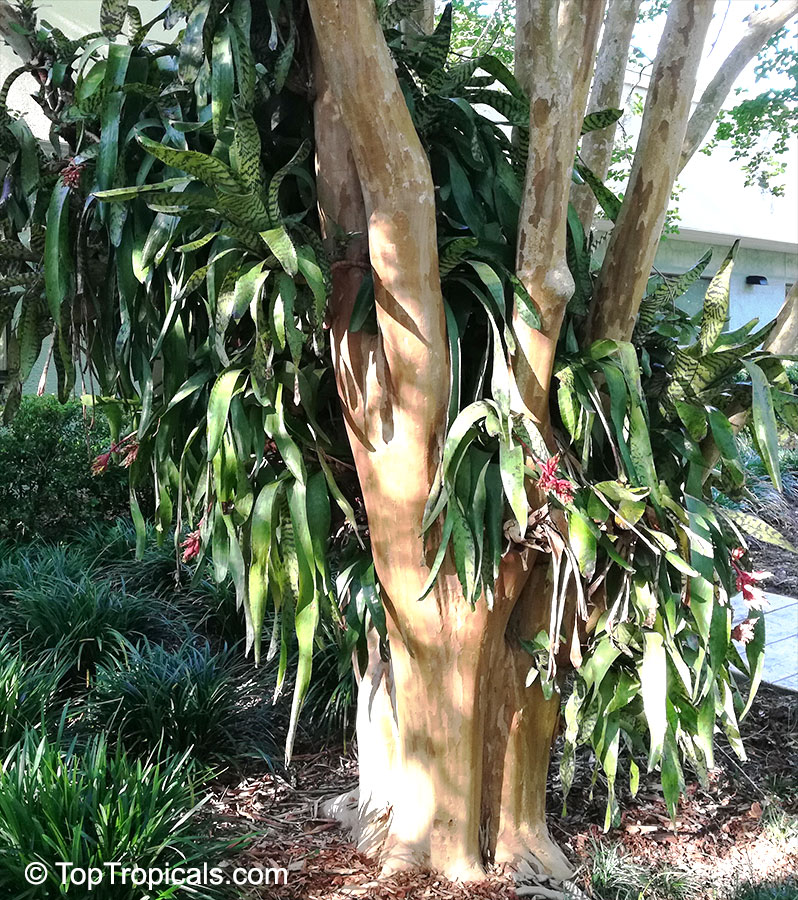
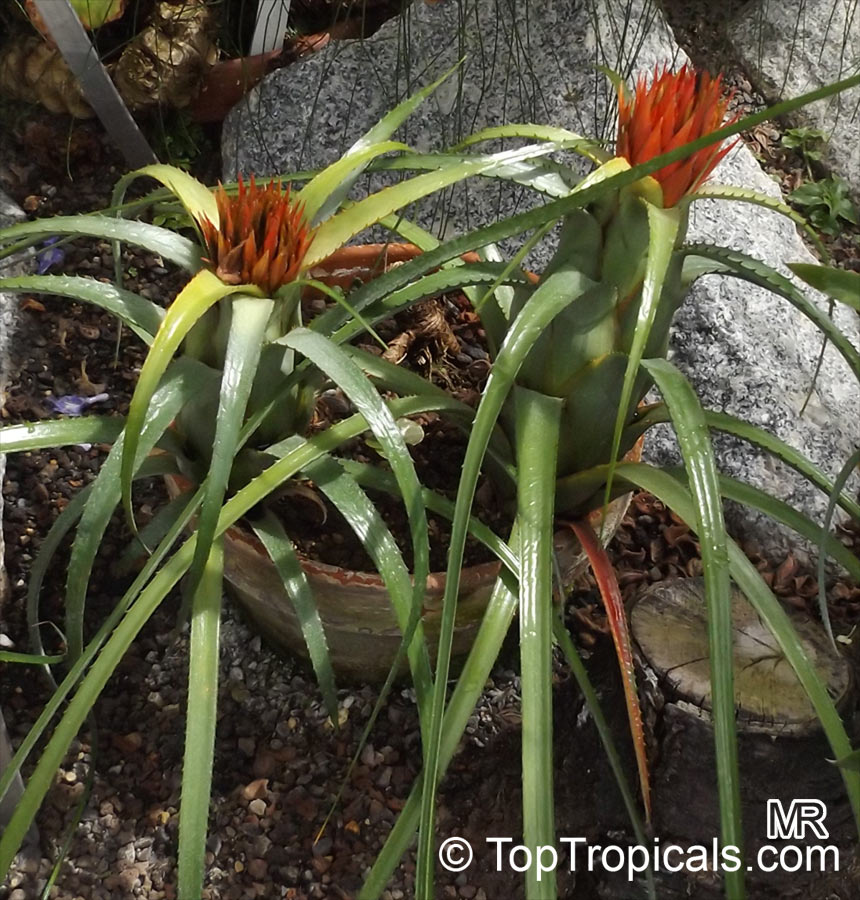
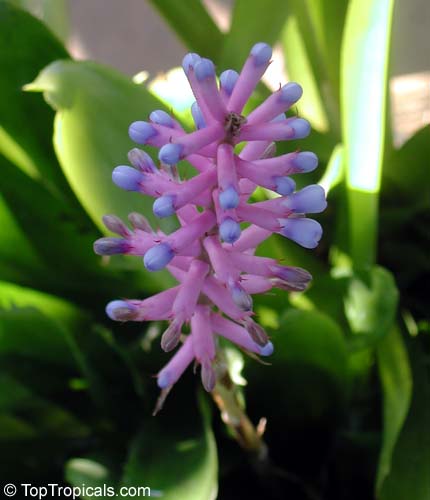
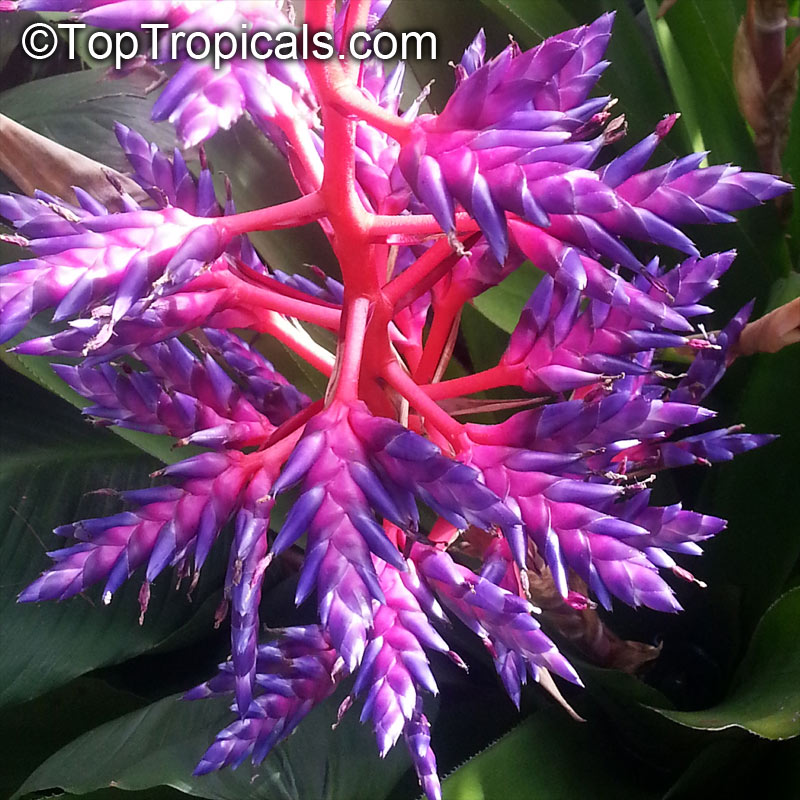
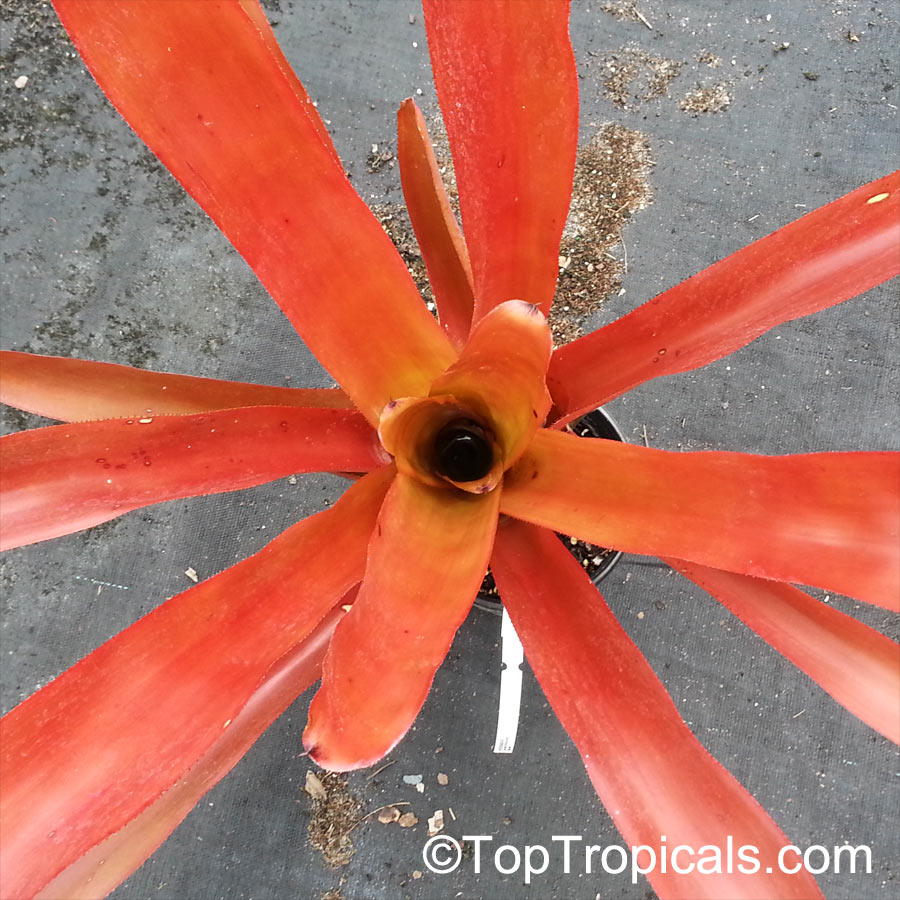
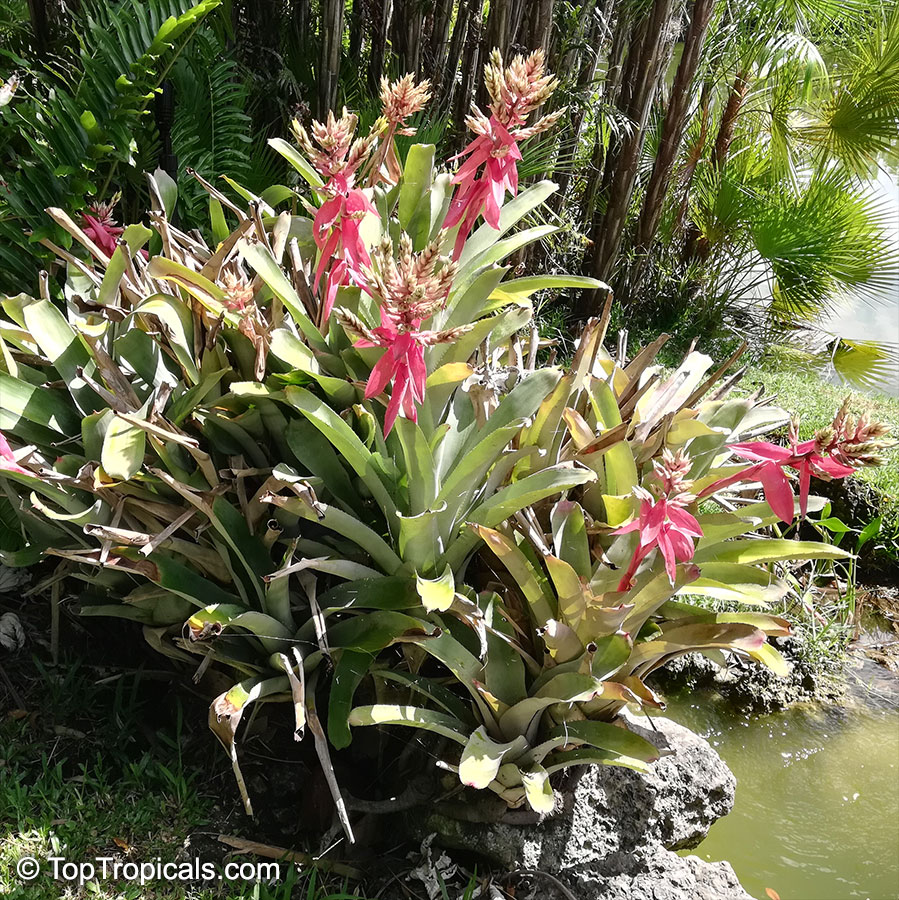
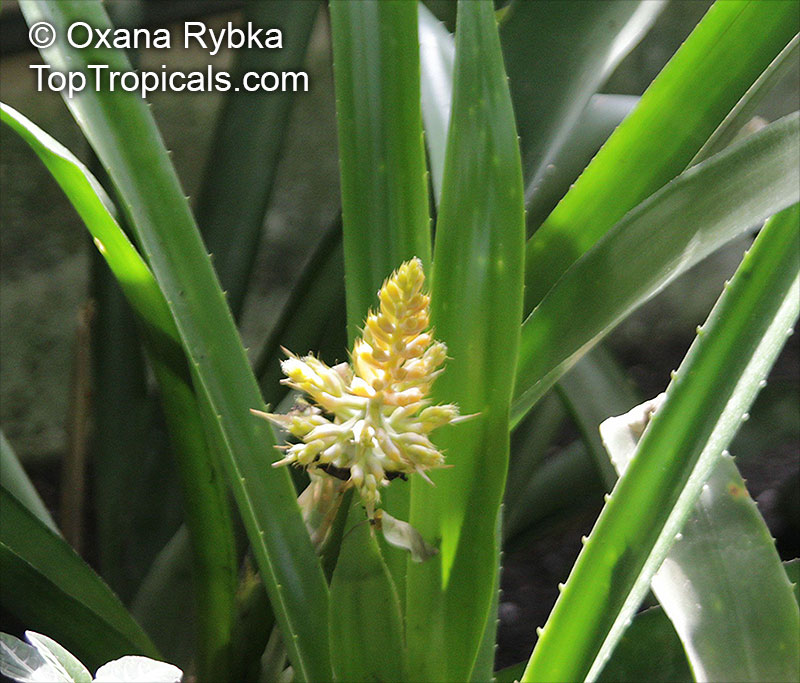
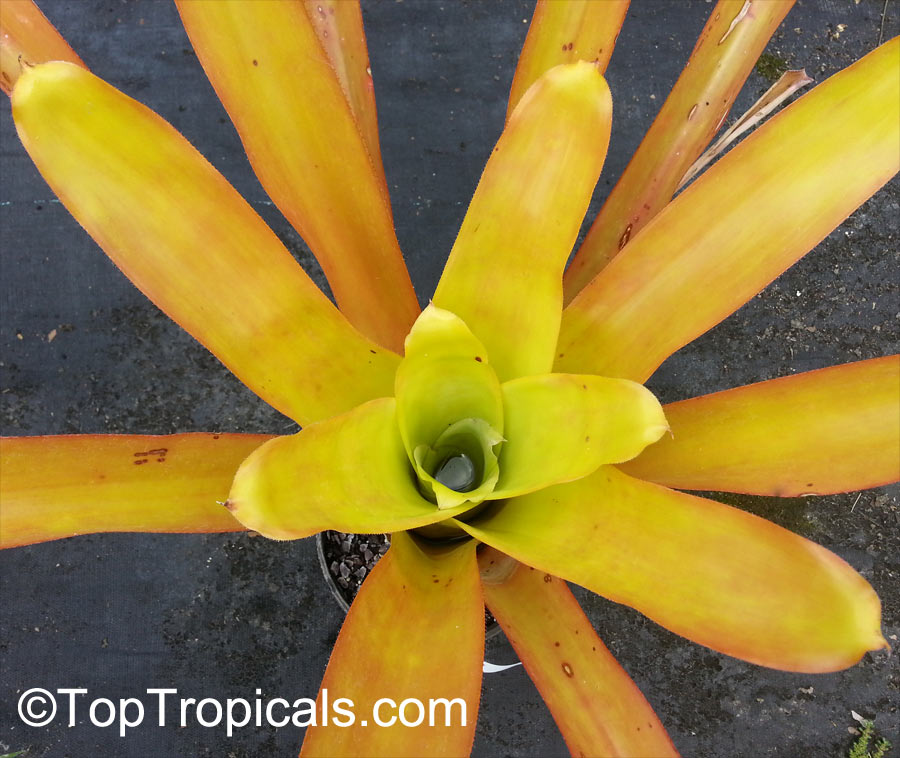
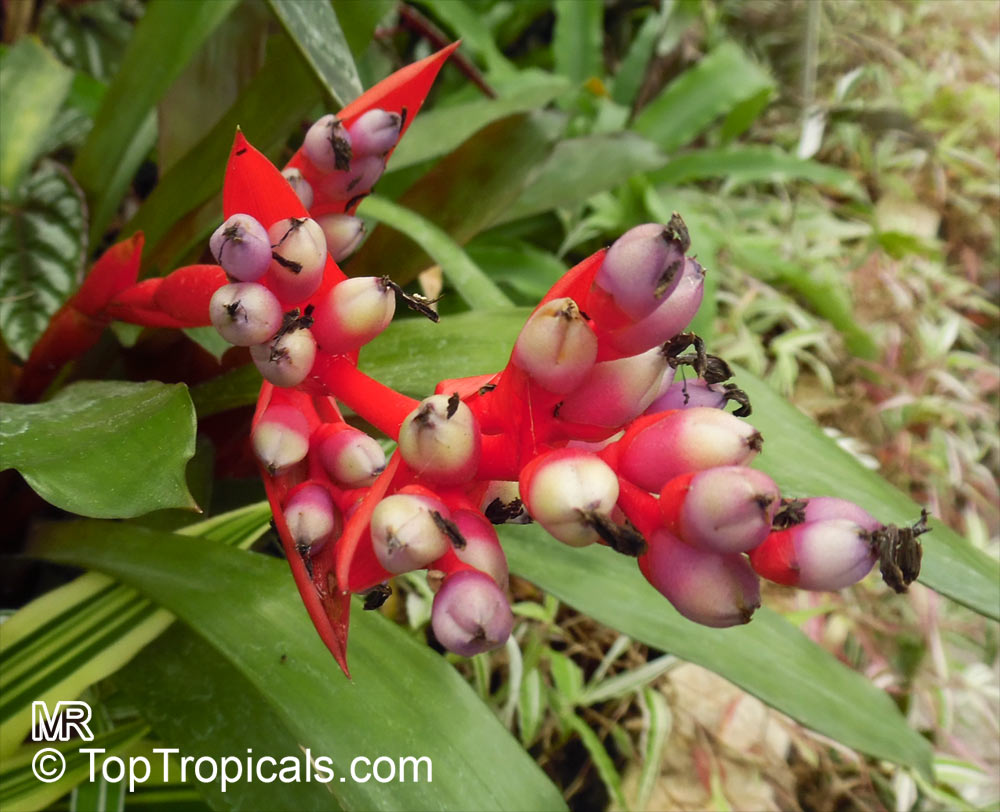
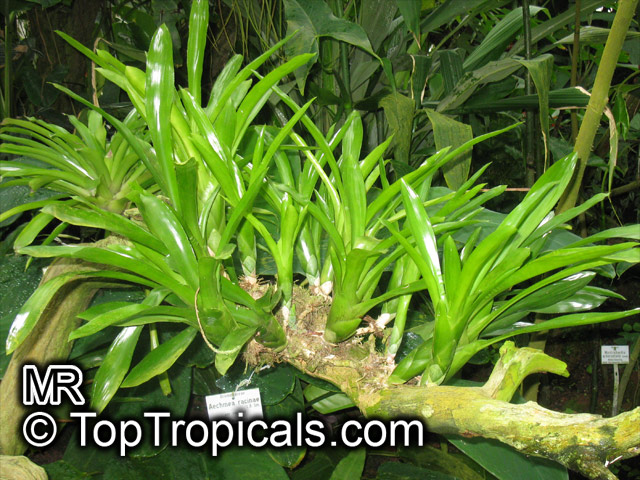
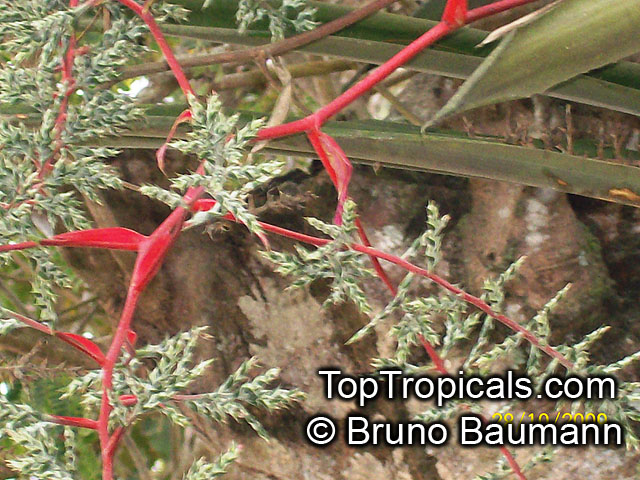
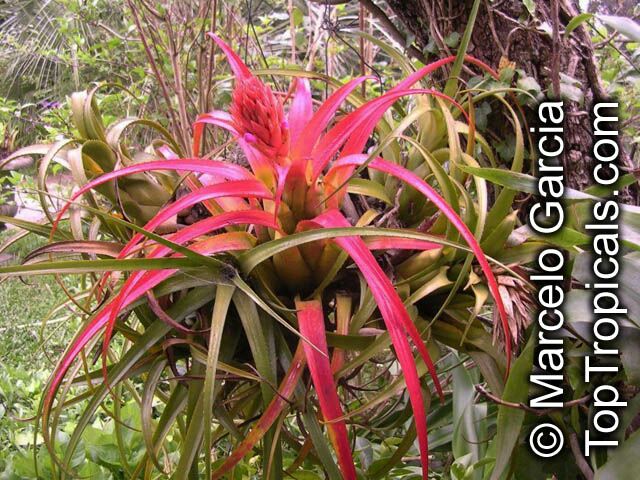
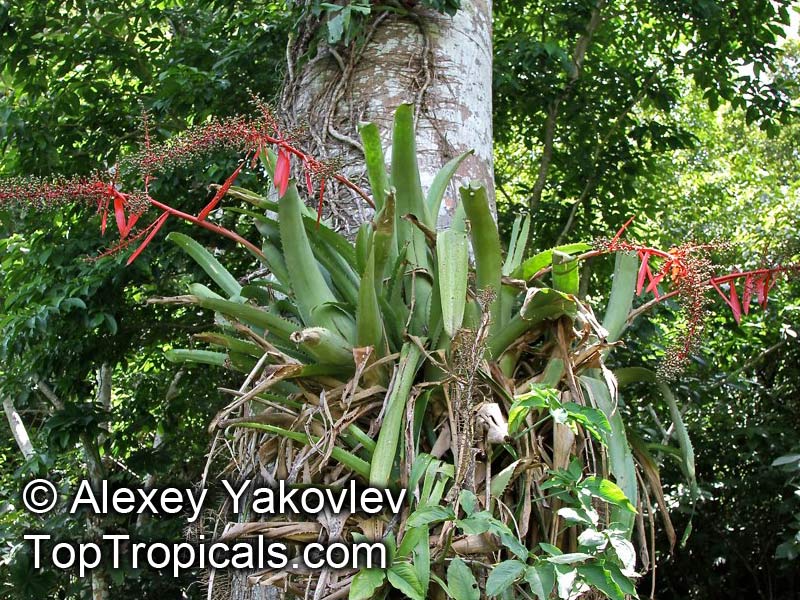
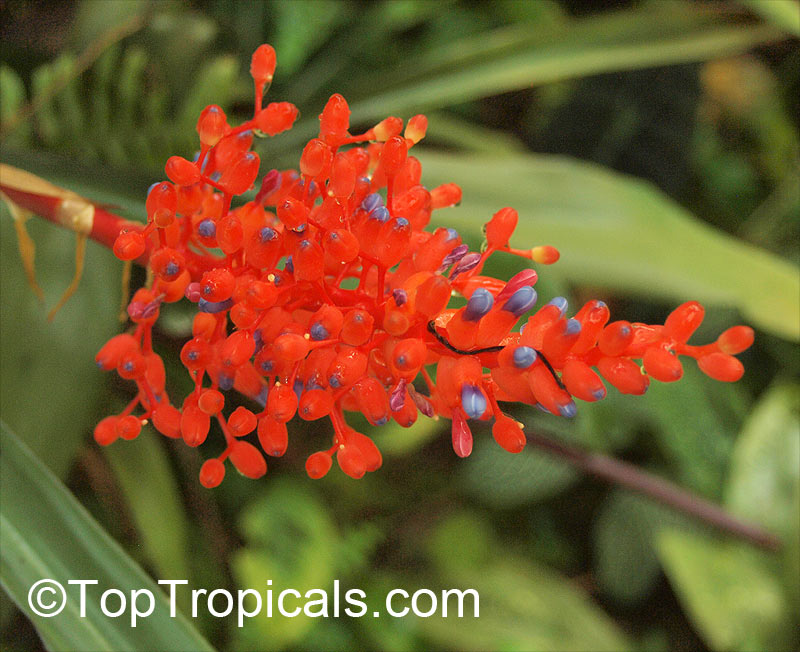
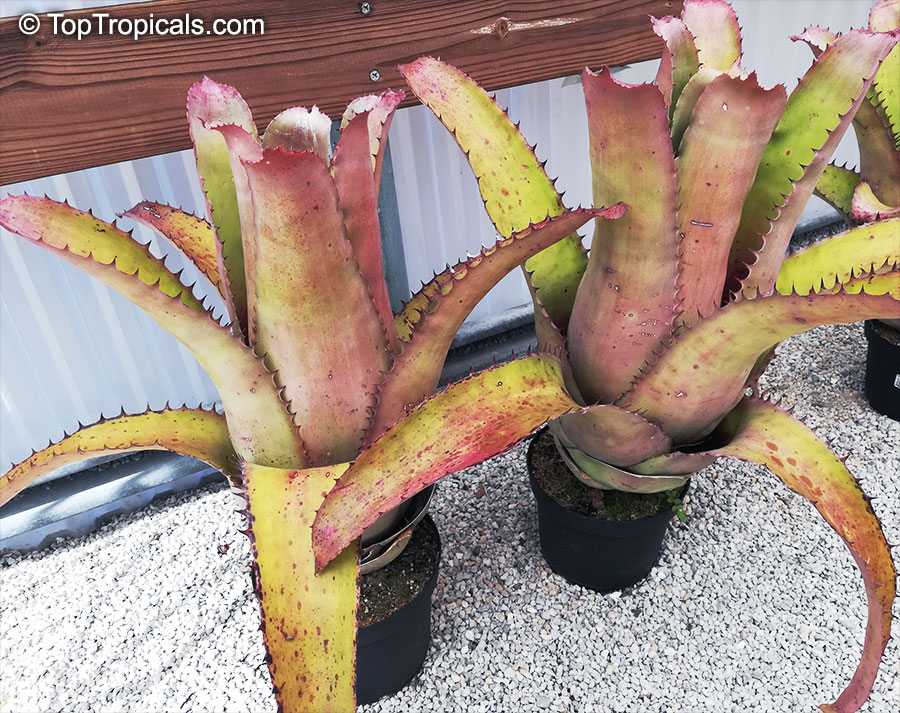
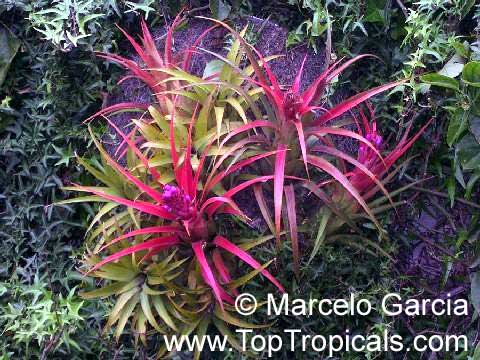
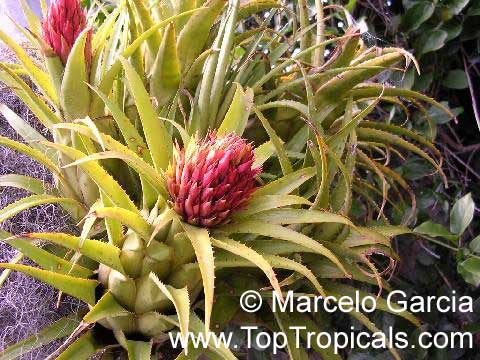
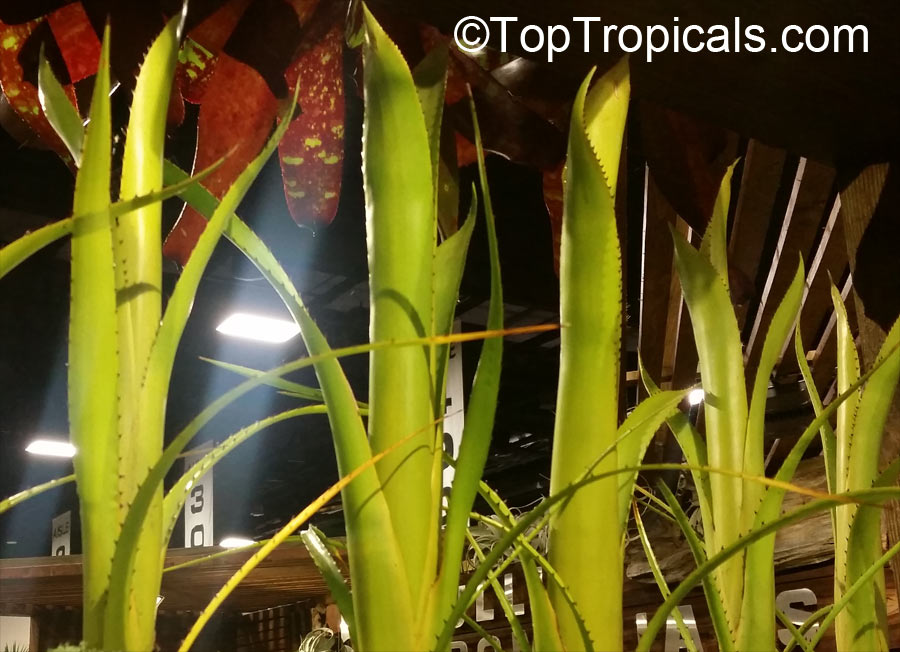
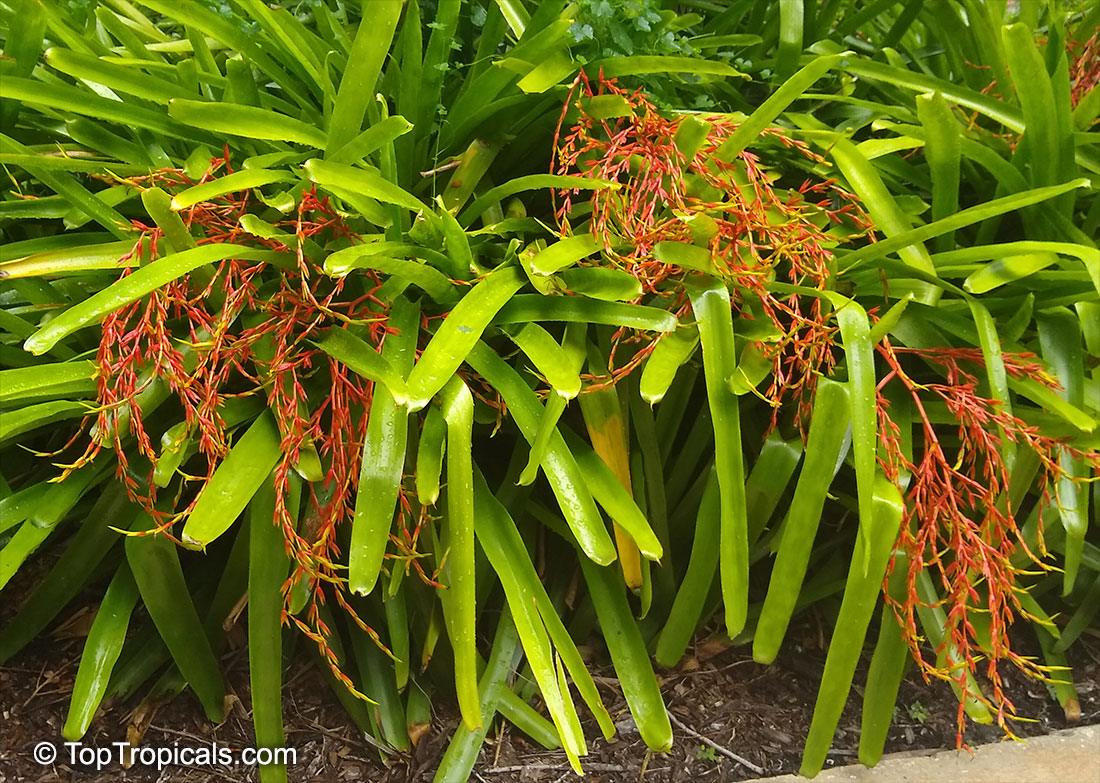
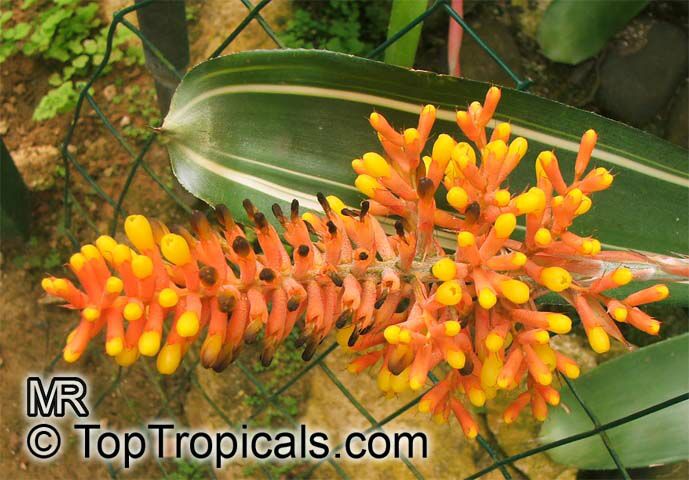
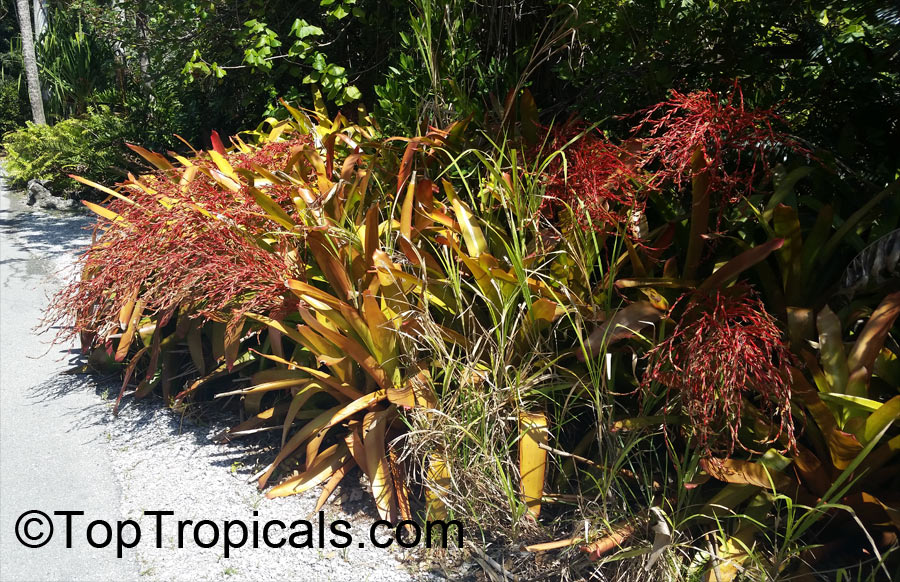
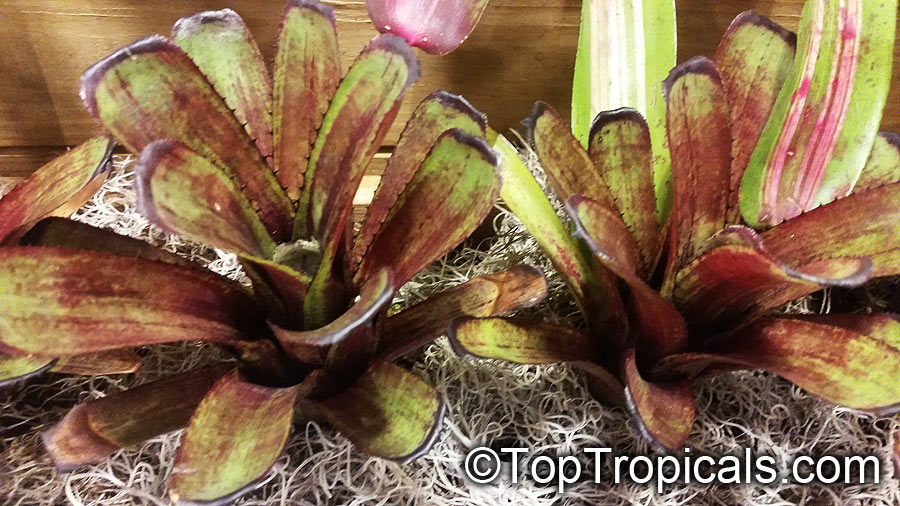
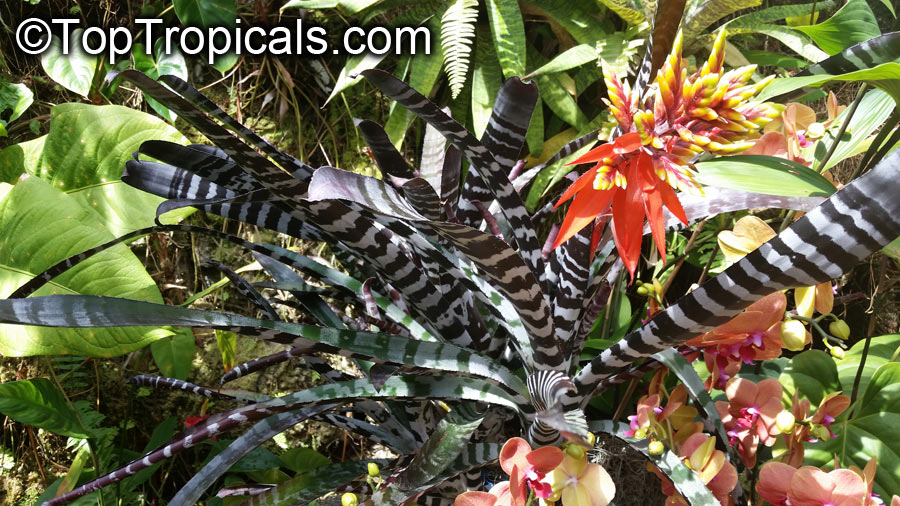
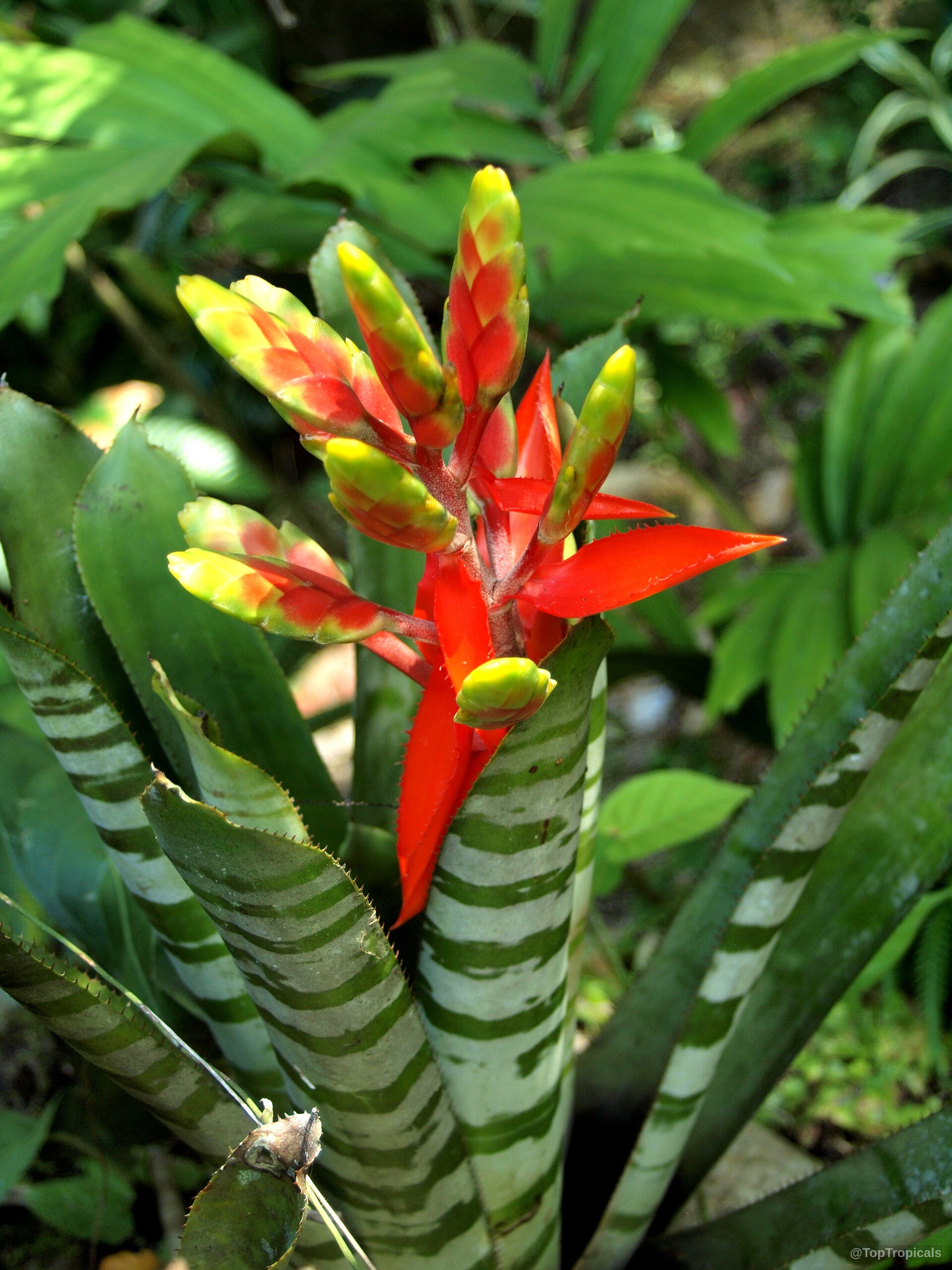
The Aechmea is very diversified, hardy, extremely popular, and very easily cultivated in the bromeliad family group. They range in sizes from a very tiny 6 inches, to more than 10 feet in height and 6 feet in diameter. Their foliage colors vary from lime green, yellow, red, burgundy, and black, and incorporates many patterns, spots, stripes, bands, silvering, shadings, and blotches. These patterns often vary form the top of the leaf to the bottom of it. The Aechmea family has large inflorescence and brightly colored, long lasting bracts that holds the magnitude of tiny flowers. Often the colorful berry-like fruits mature for a long time on the flower spike. It's a very healthy, cold and rot resistant plant to grow outdoors fixed in trees, walls, or, in pots in an orchid mix.
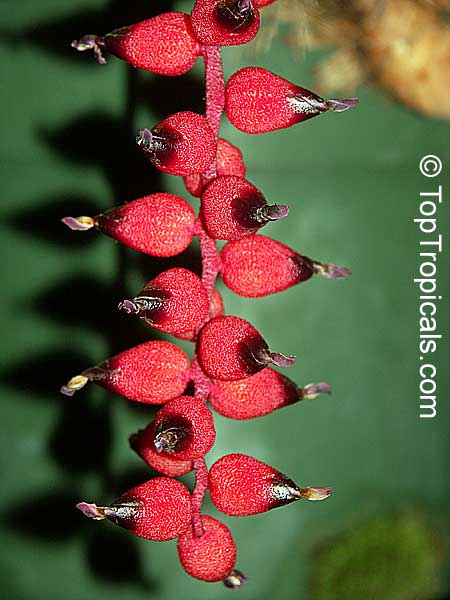
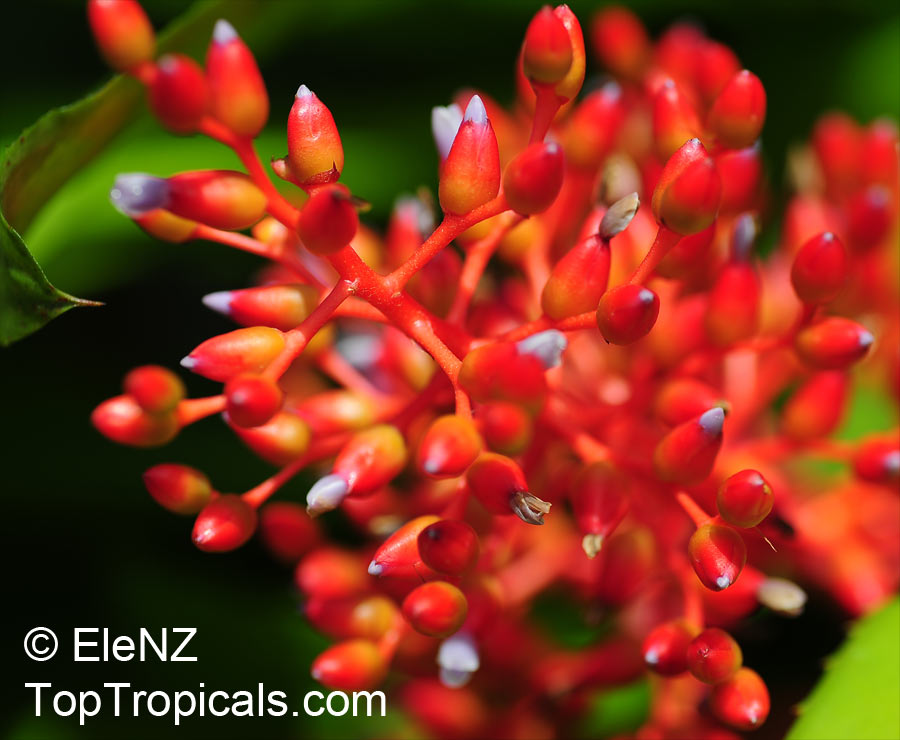
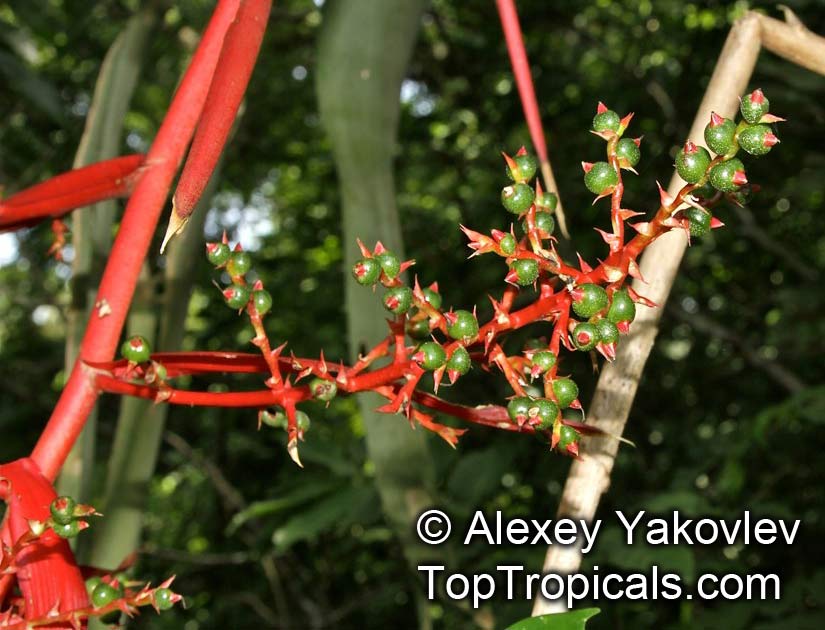
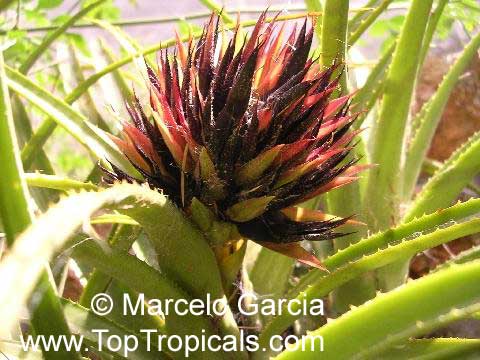
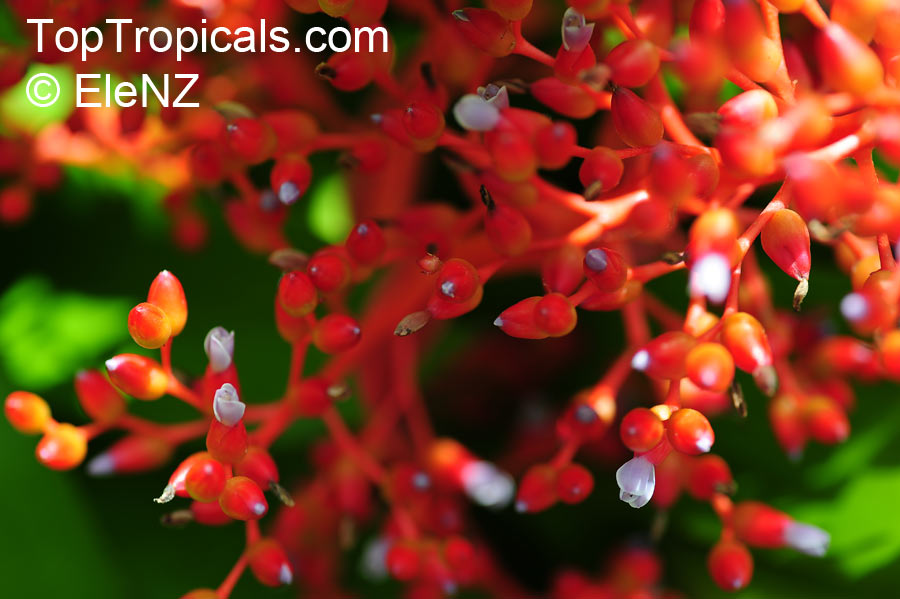
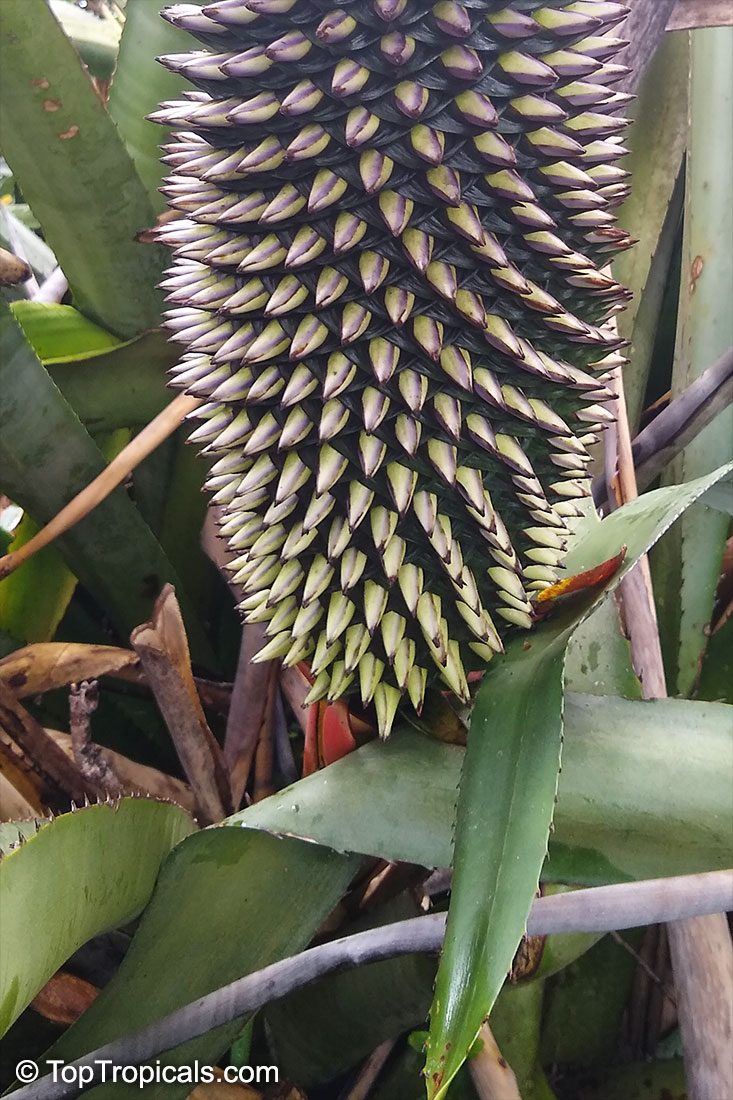
Adult plants need a sunny position to become red in the blooming period. In a luminous shade it flowers, but the leaves remain green. The rose bracts persist a long time, and if flowers are pollinated black pointed fruits will appear as shown in the picture. It's curious because, when the plant grows in very shaded locations the leaves become very long, to the point to seem a completely different plant and very elegant indeed, with no weak aspects. However, if it is gradually moved to full sun it blooms and the leaves become red.


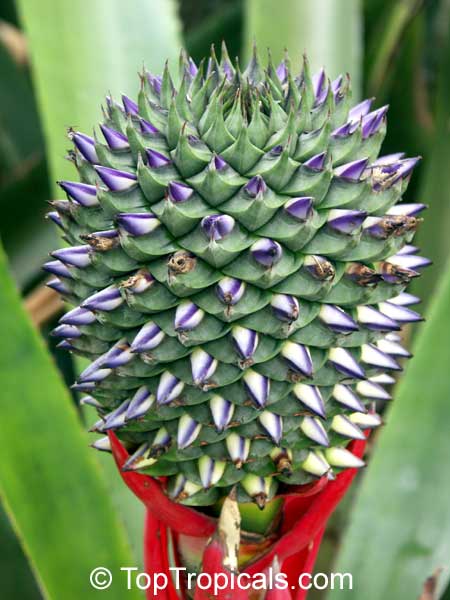
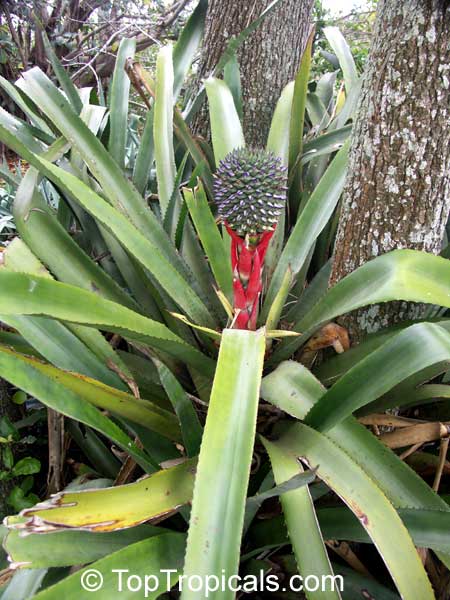
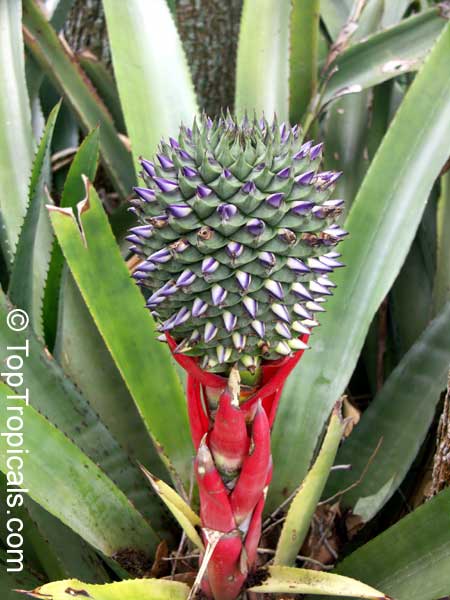
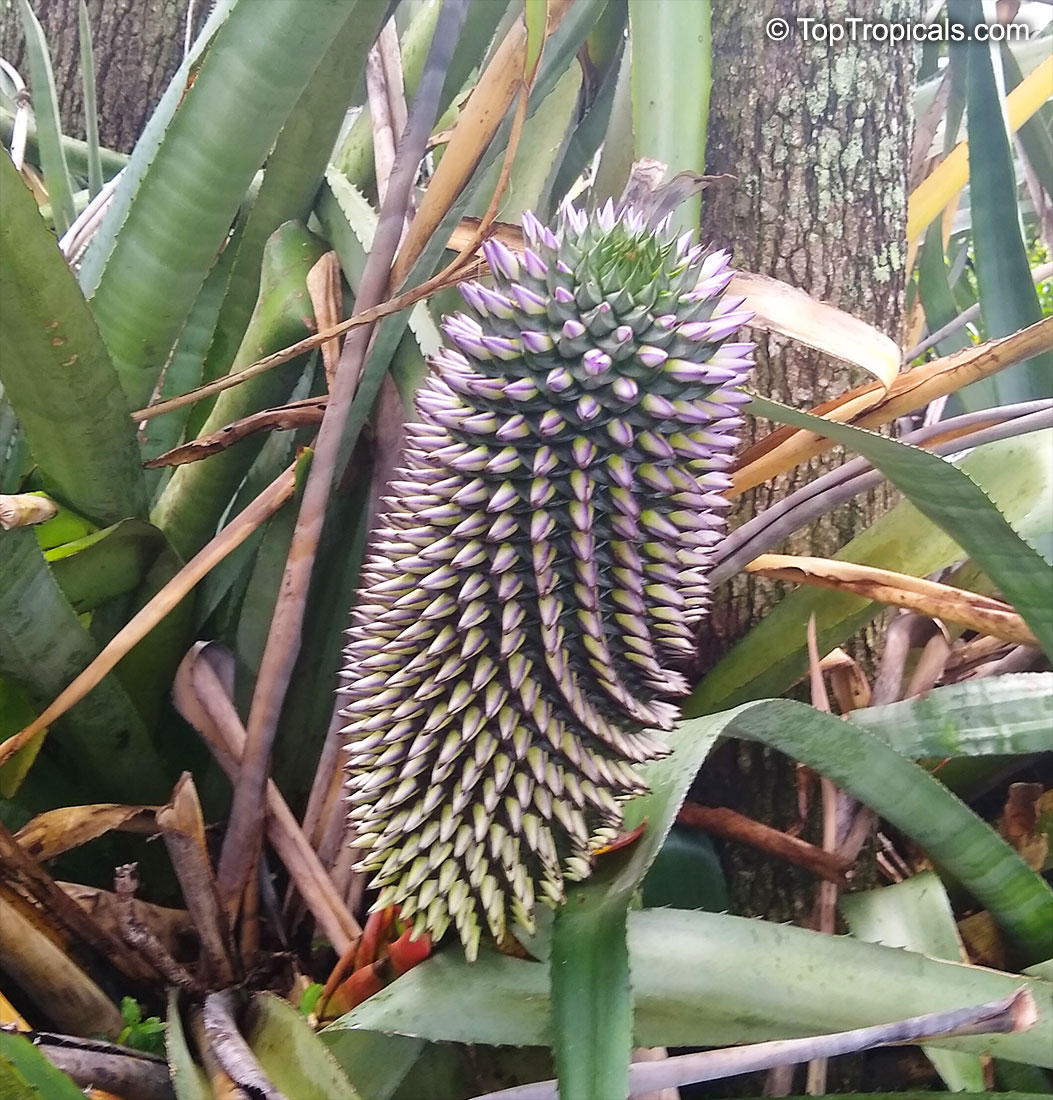
Botanical name: Aechmea sphaerocephala
Common names: Aechmea Bromeliad, Urn Plant
Family: Bromeliaceae
Subfamily: Bromelioideae
Origin: Brazil


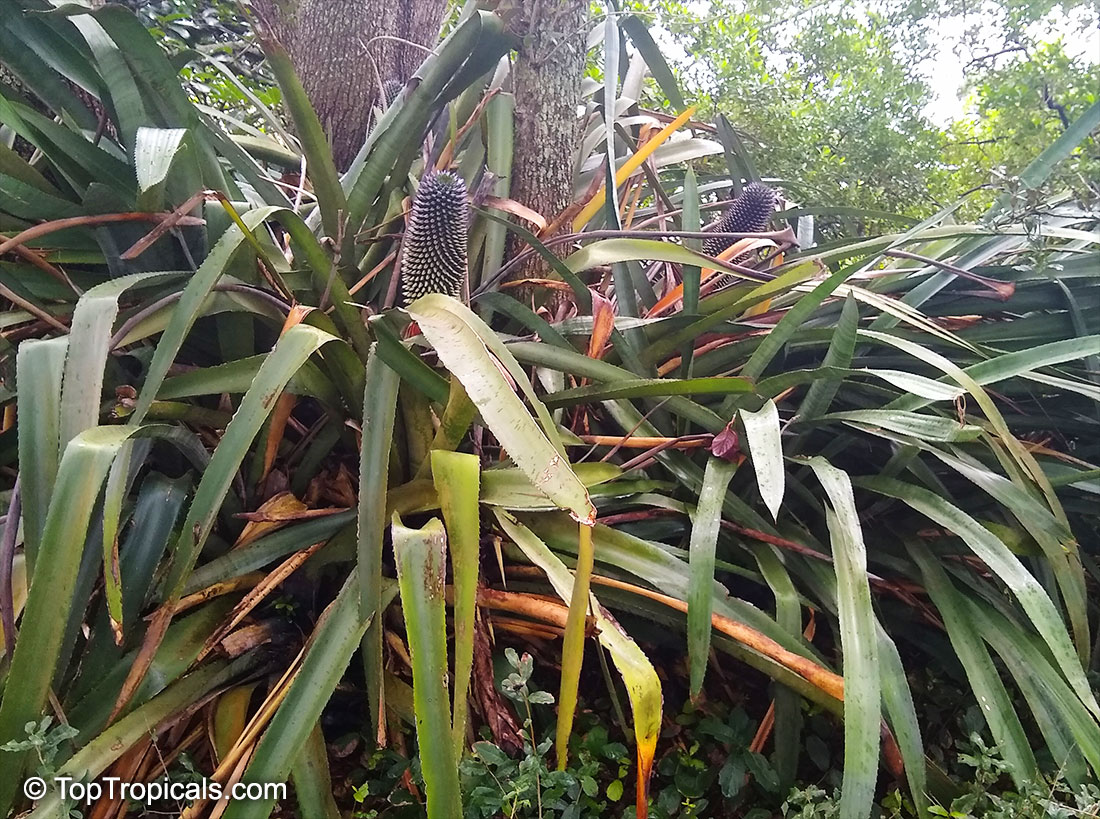
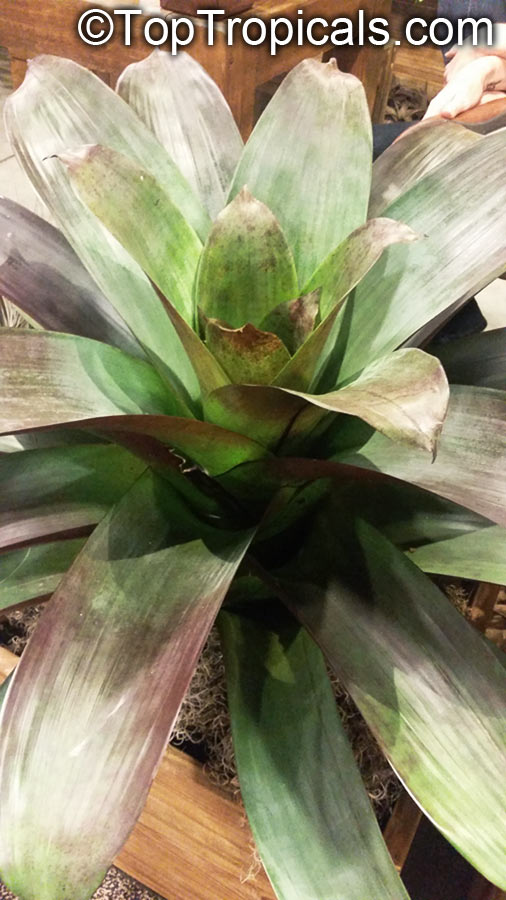
Botanical names: Alcantarea imperialis, Vriesea imperialis
Common name: Giant Bromeliad
Family: Bromeliaceae
Subfamily: Tillandsioideae


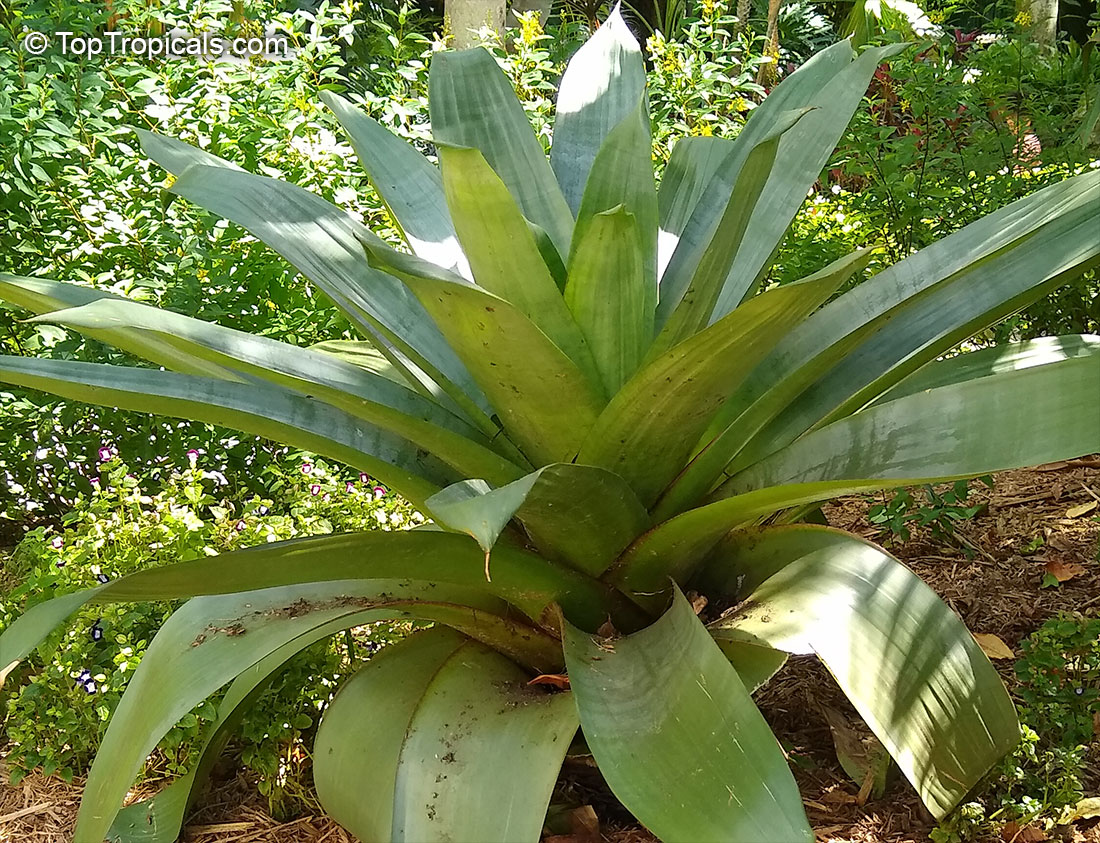
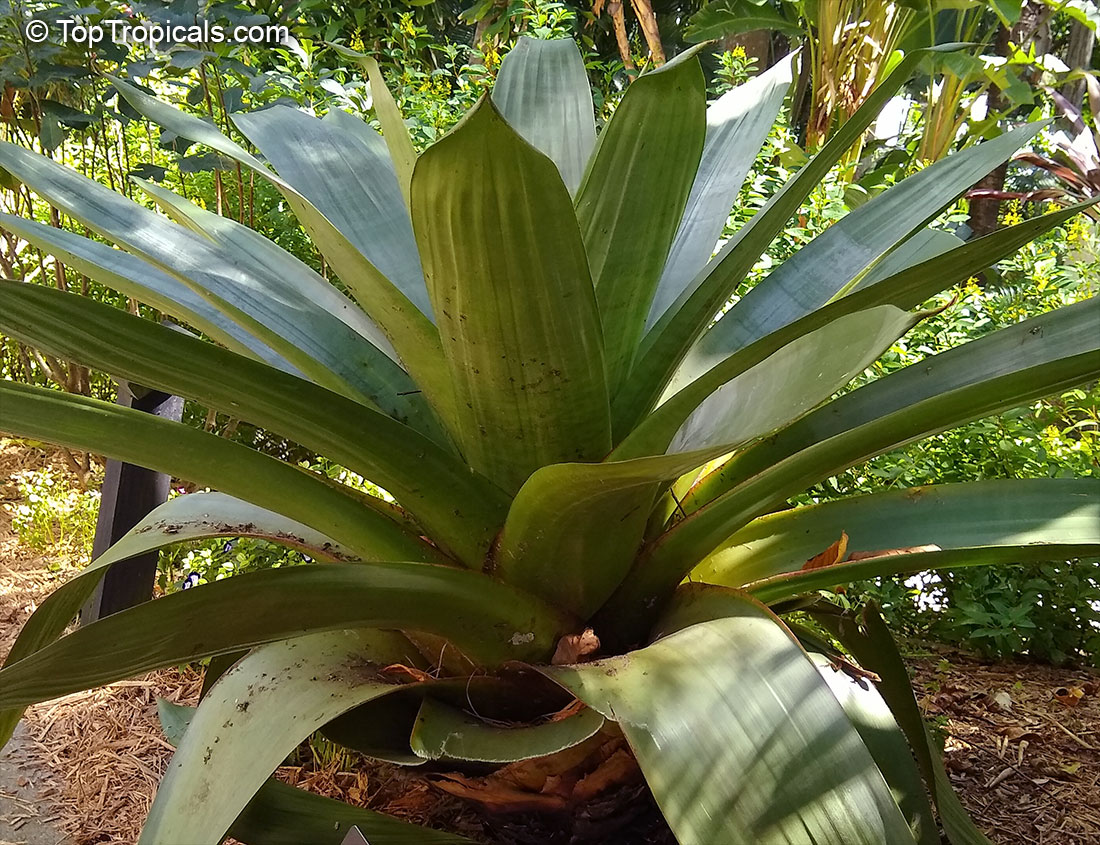
Once known as Vriesea imperialis, this plant is usually considered the signature species of the genus Alcantarea. A giant among bromeliads, it can grow to be more than 5 feet tall! It makes a wonderful focal point in any tropical landscape.

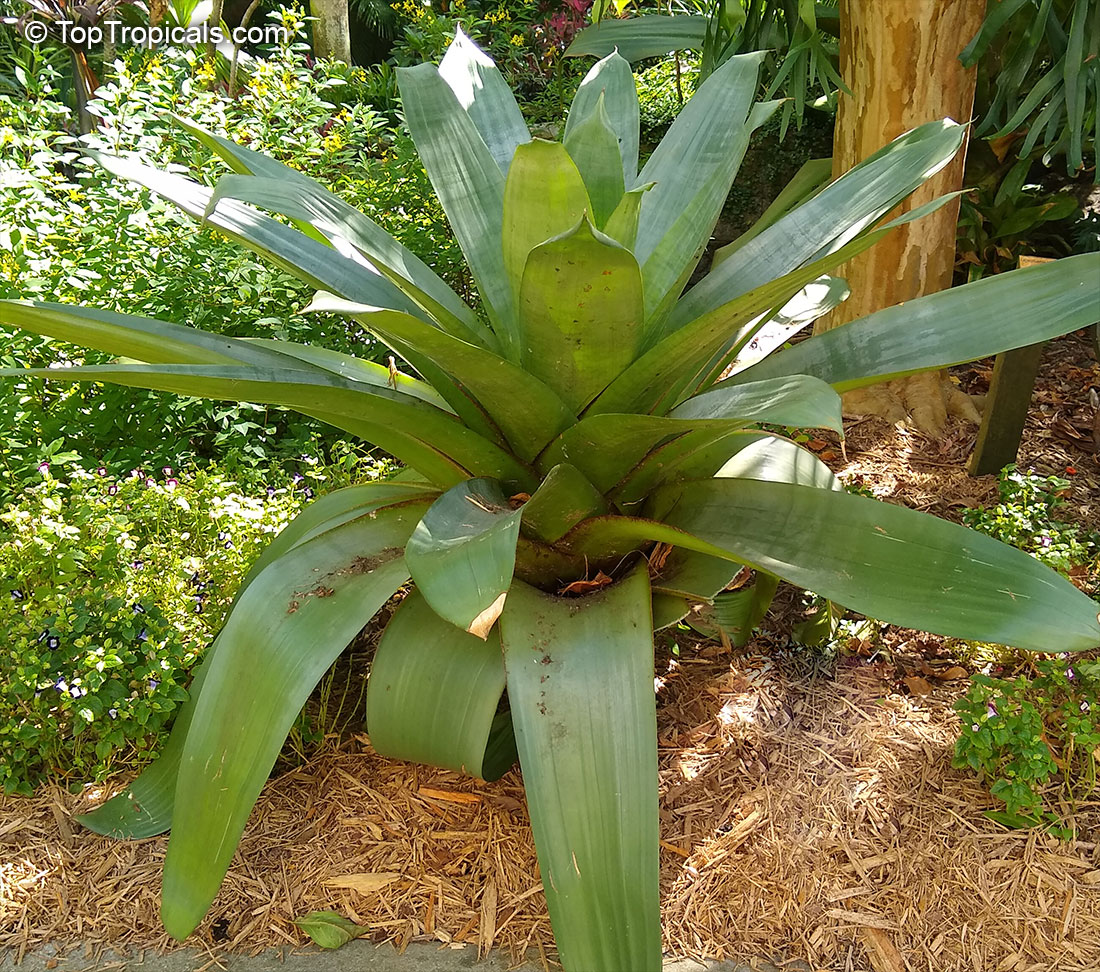
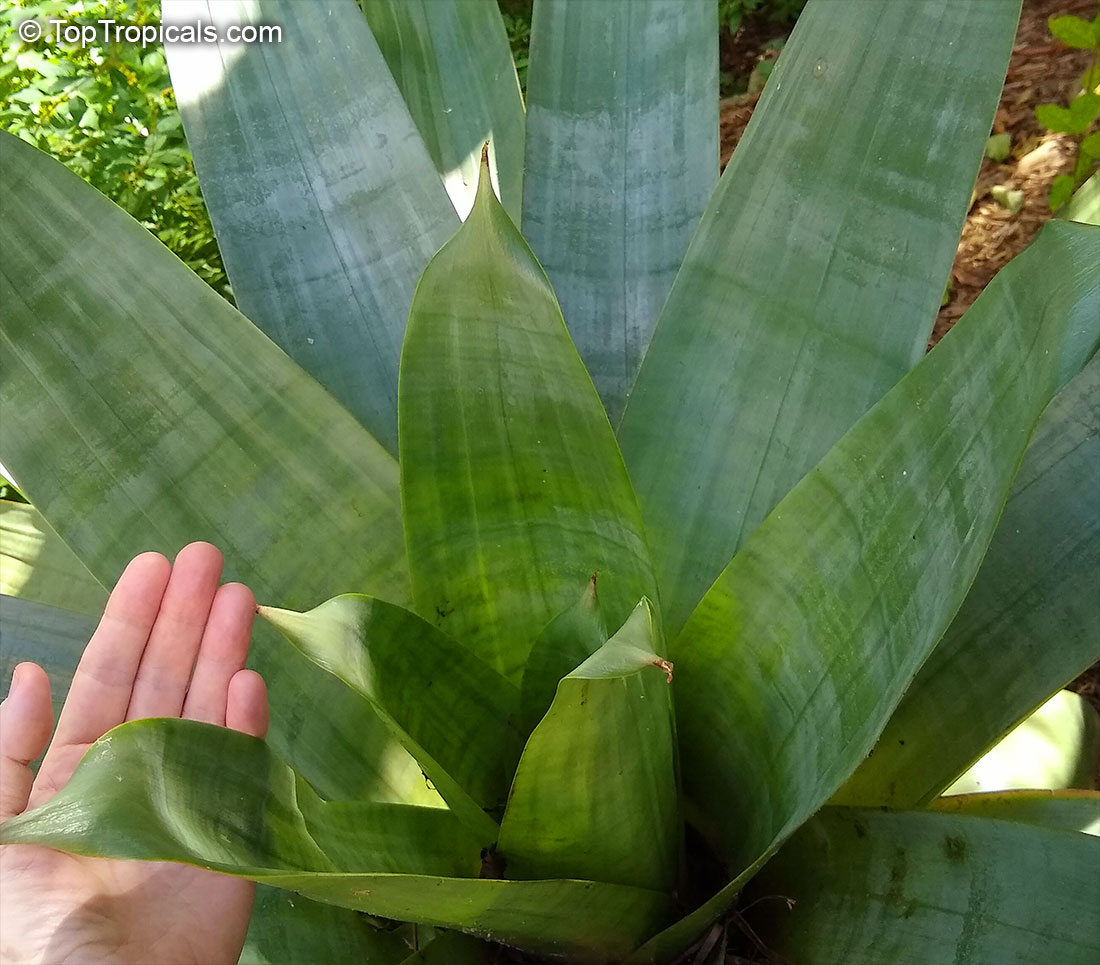


Botanical name: Ananas bracteatus
Common name: Red Pineapple
Family: Bromeliaceae
Hardiness: 30°F

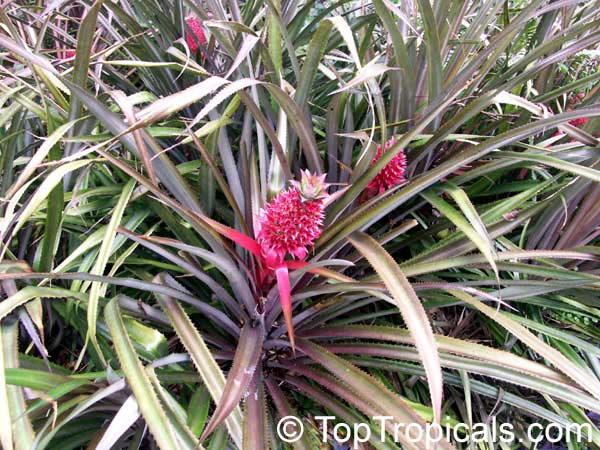
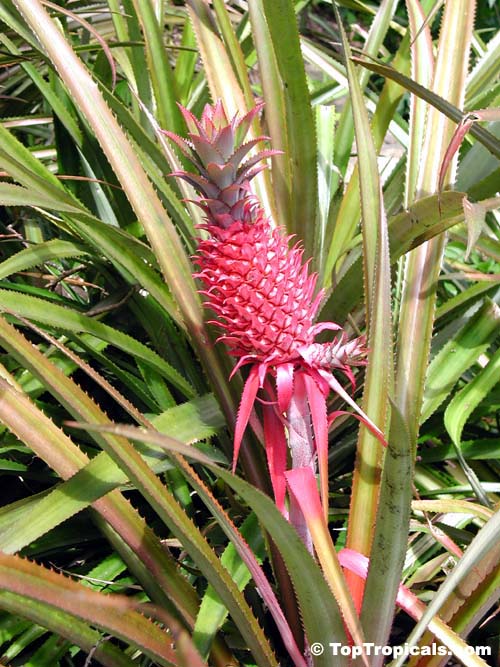
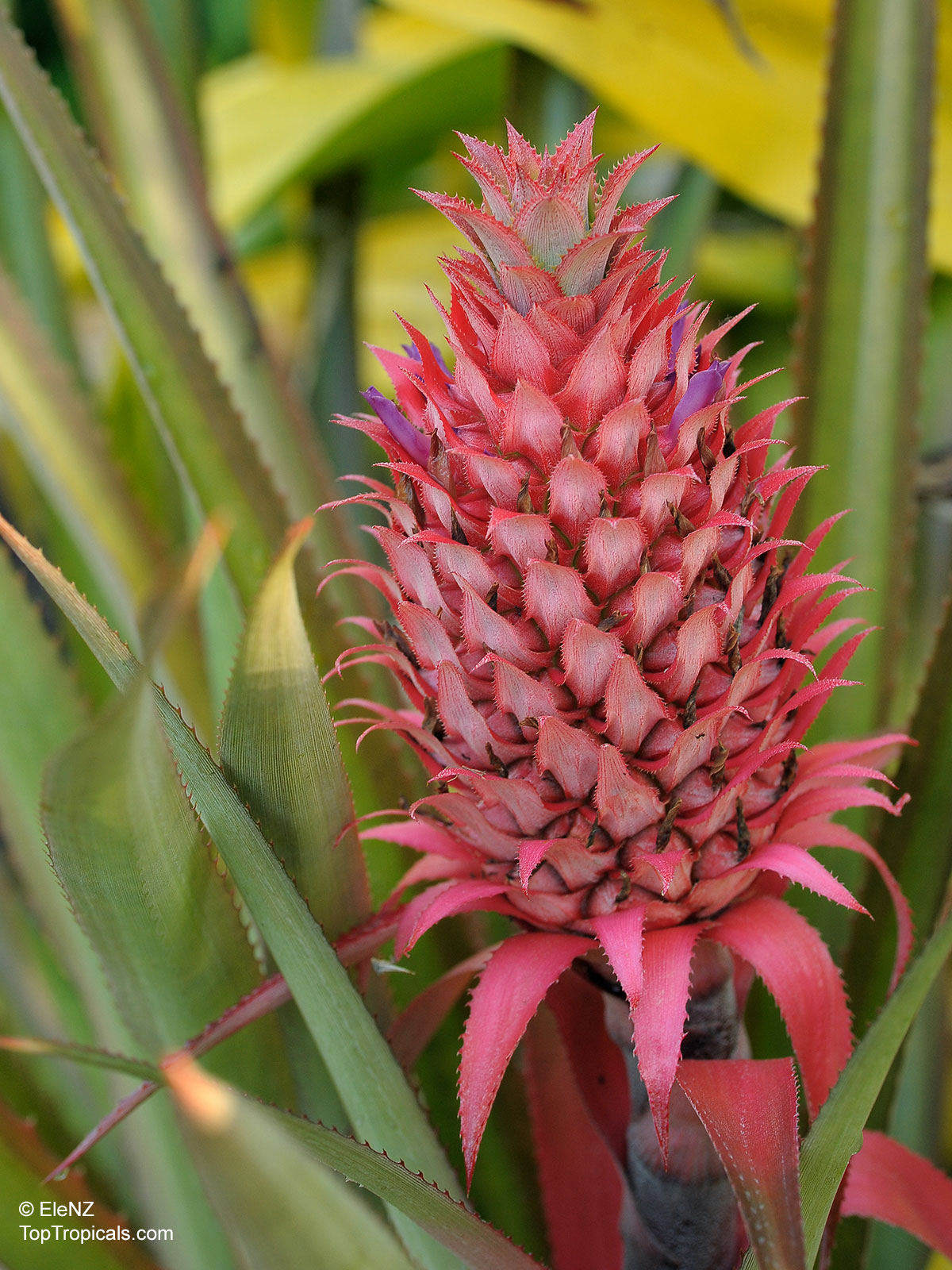
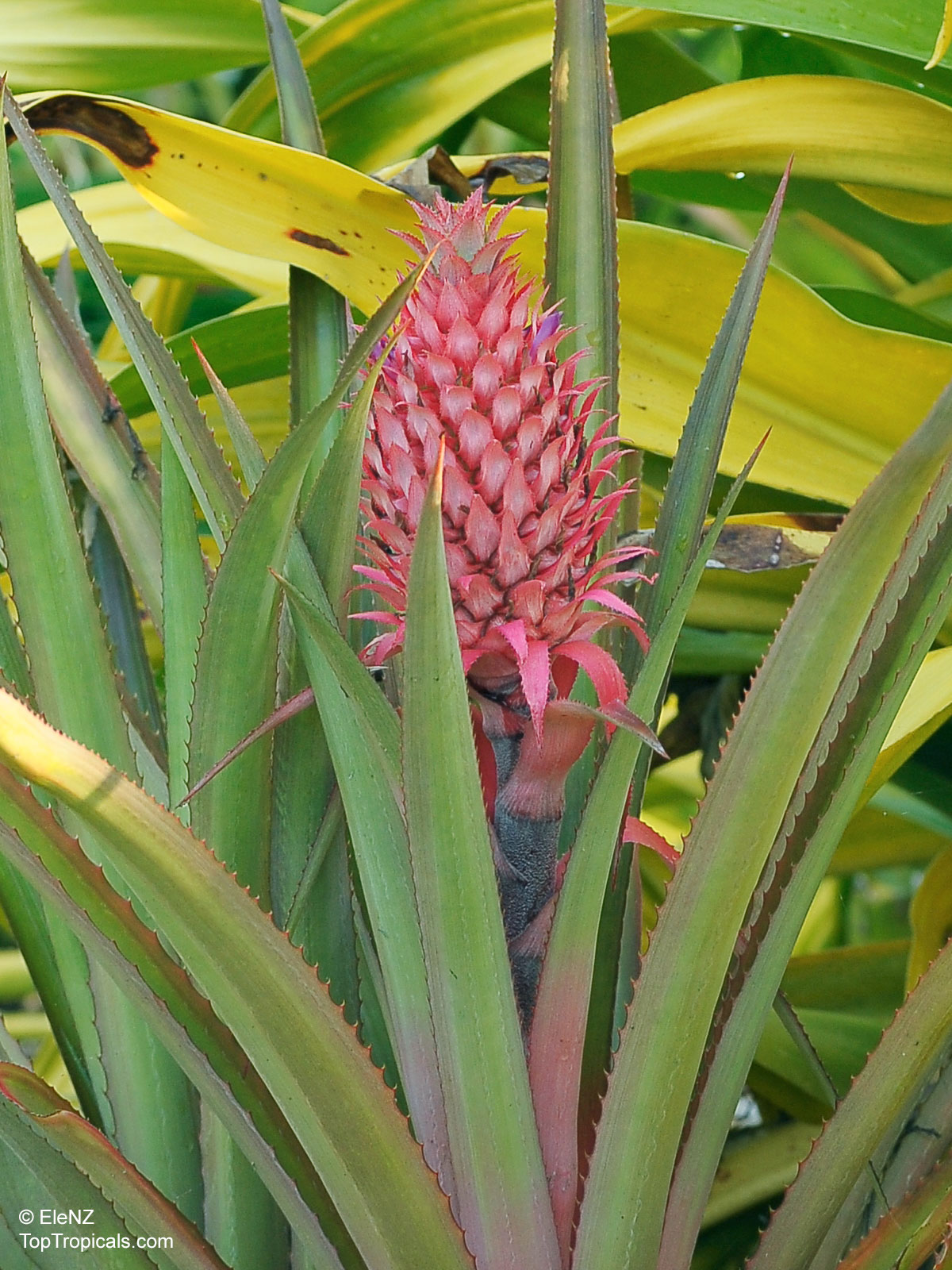
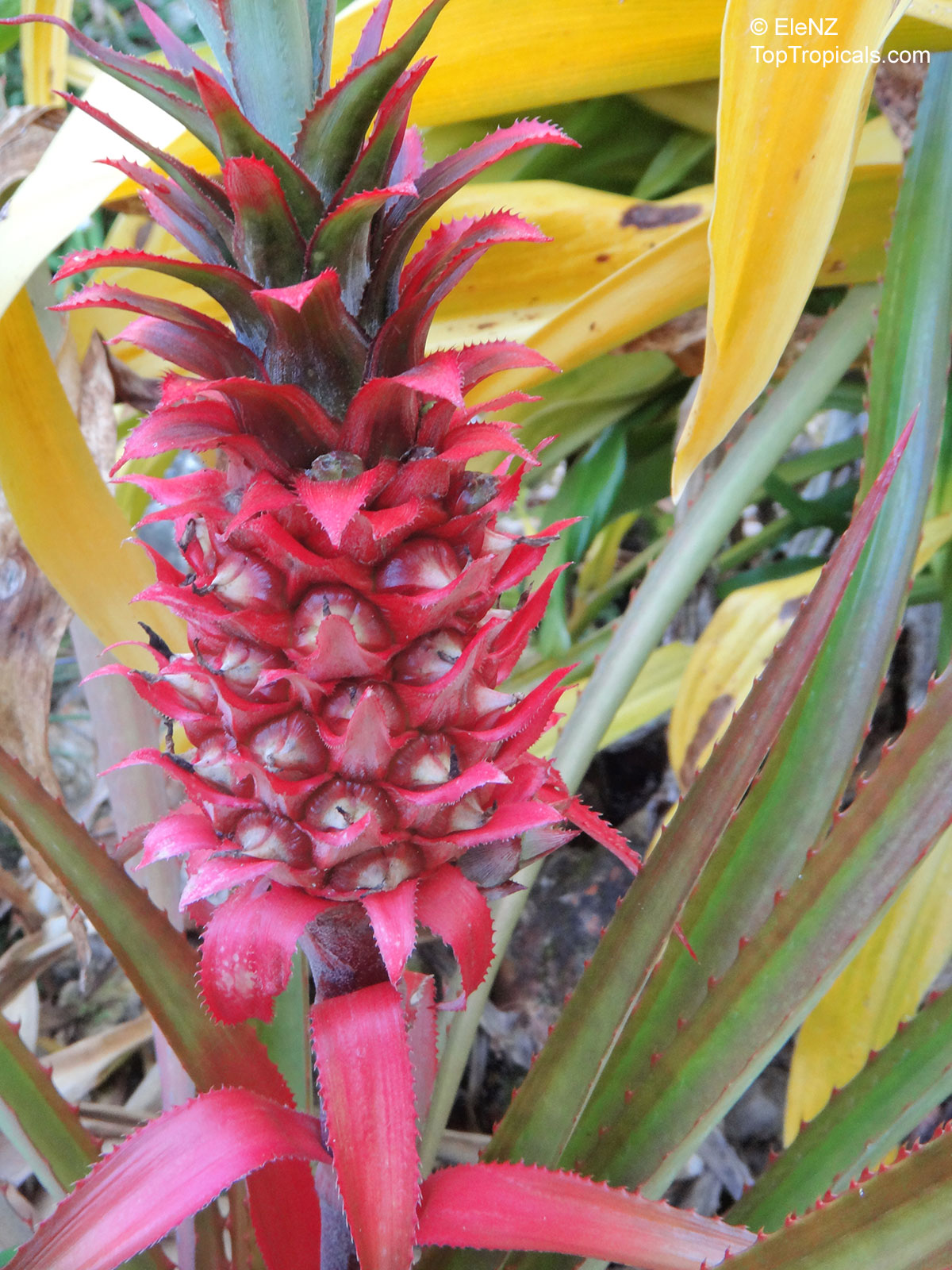
Ananas bracteatus is a striking ornamental bromeliad native to South America, grown for its vivid red bracts and colorful foliage. The plant forms a dense rosette of stiff, arching leaves that are often edged with small spines. In the variegated cultivar A. bracteatus 'Tricolor', the foliage displays green, white, and pink tones, especially bright in strong light. The inflorescence emerges on a short central stalk, surrounded by scarlet-red bracts that contrast sharply with the developing fruit. While the fruit is edible, it is typically grown for visual appeal rather than consumption.
Grow Ananas bracteatus in full sun to partial shade, in well-draining soil with regular watering during the warm season. In tropical climates, it can be planted directly in the landscape; in cooler regions, it adapts well to container culture and can be overwintered indoors. The plant benefits from high humidity and warmth to maintain its bright coloration. Propagation is done through crowns, slips, or basal pups. Hardy in USDA Zones 10-11.
Botanical name: Ananas comosus
Common names: Pineapple, Pina
Family: Bromeliaceae
Subfamily: Bromelioideae
Origin: Brazil and Paraguay
Hardiness: 35°F

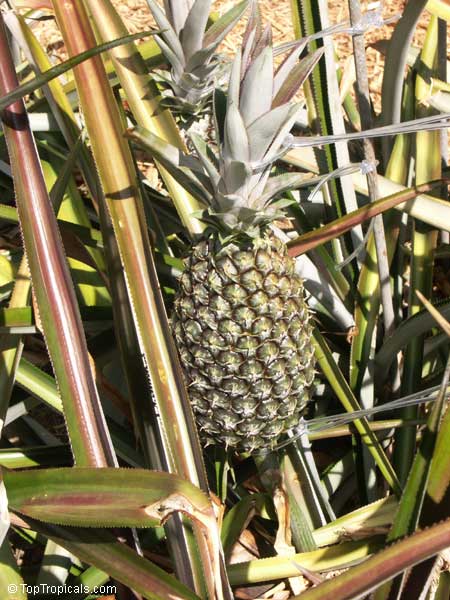
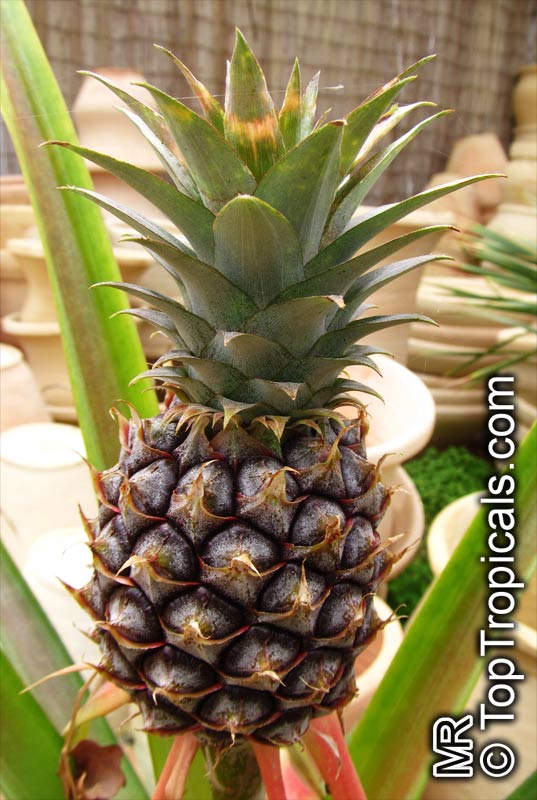
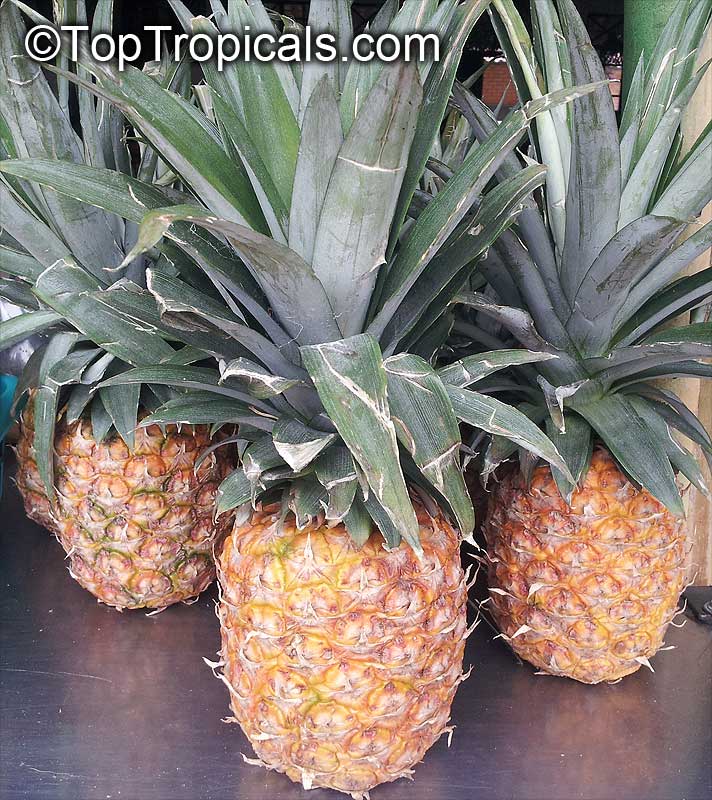
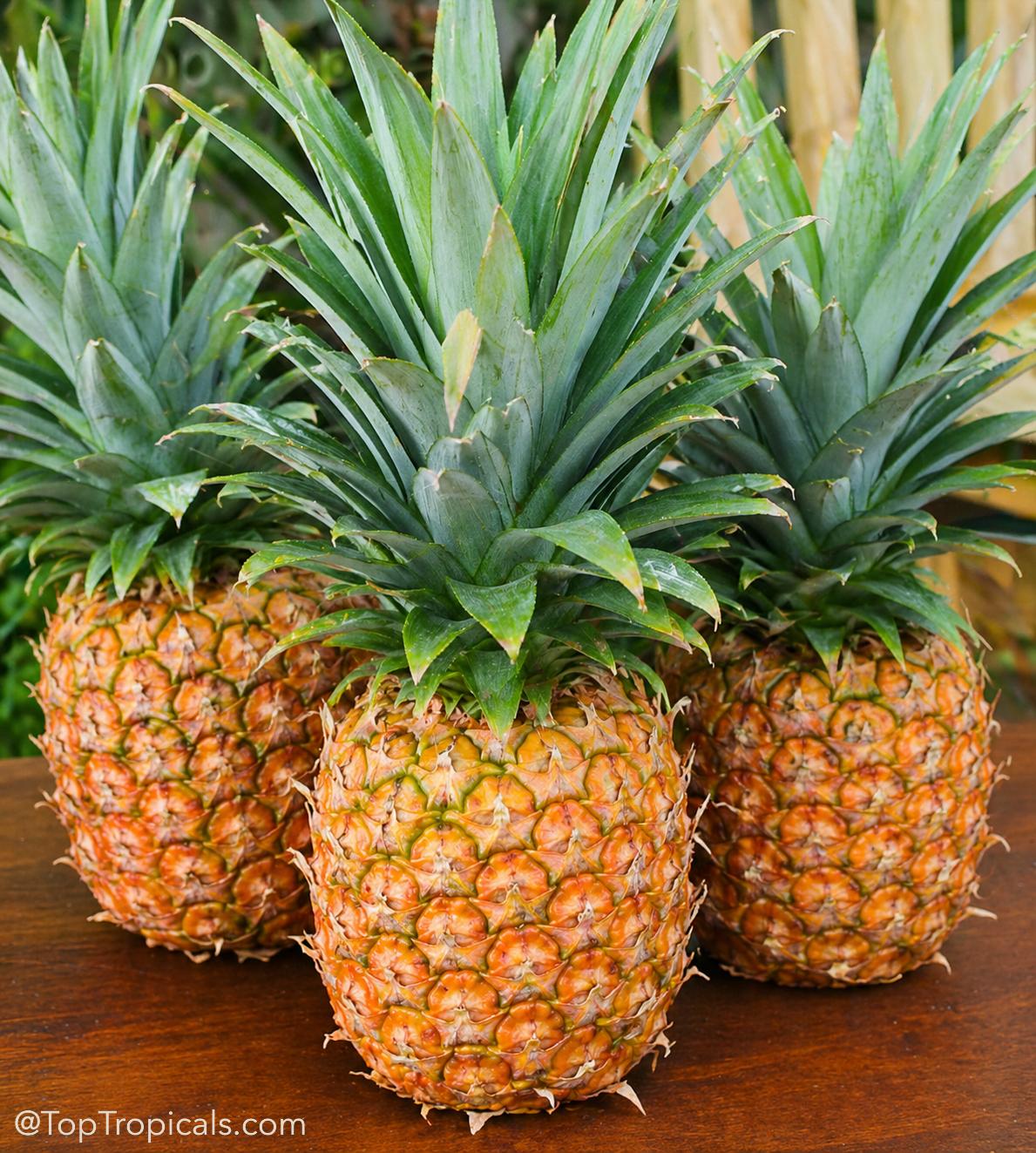
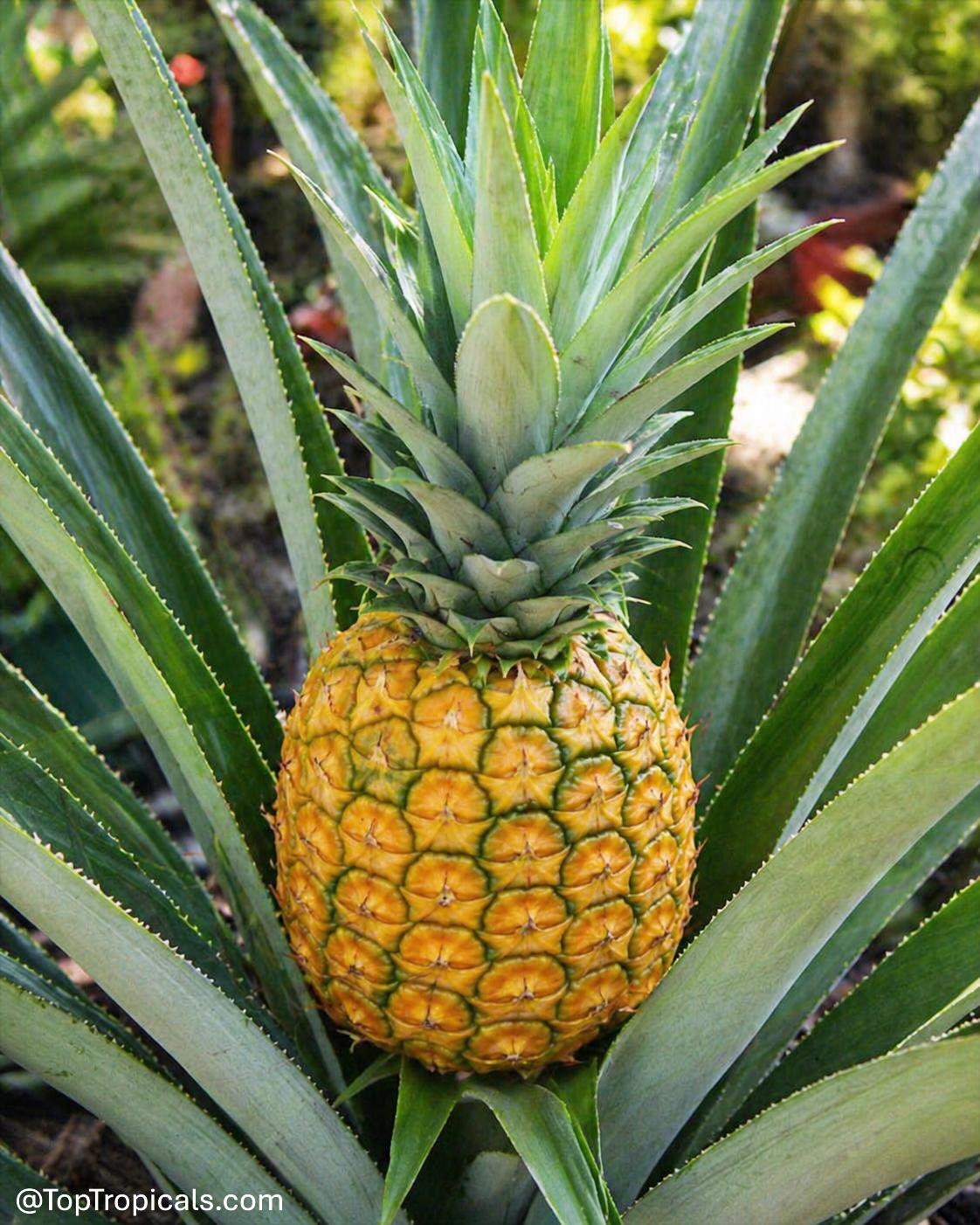
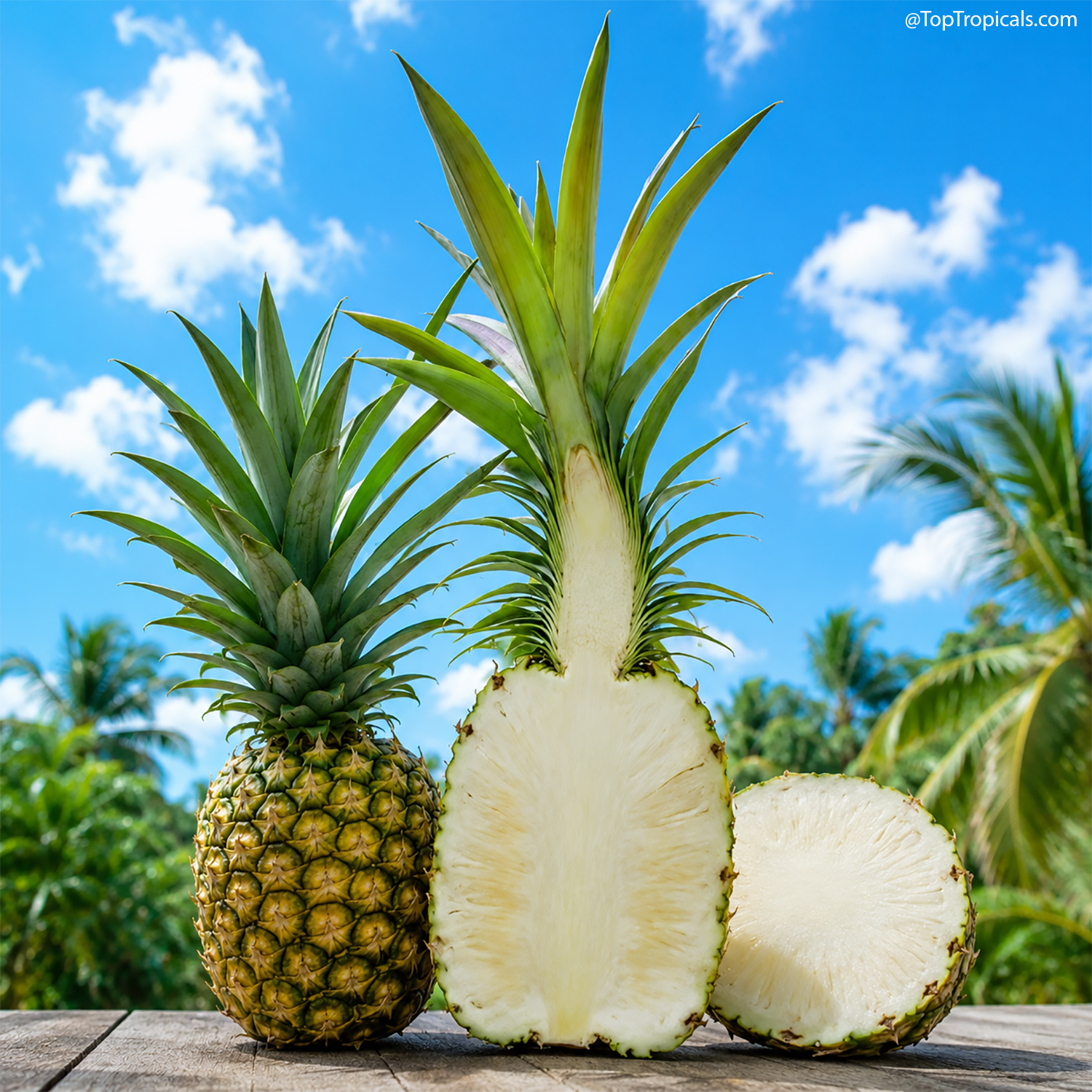
Ananas comosus is a tropical plant in the bromeliad family cultivated for its edible fruit. It forms a compact rosette of stiff, sword-shaped leaves, often edged with small spines. The plant sends up a stout central stalk topped with a dense inflorescence of small lavender to purplish flowers. After flowering, the individual fruits fuse into a single, cylindrical, golden-yellow pineapple, topped by a leafy crown. This species is widely grown across warm regions of the world and has been selected into many cultivars for fruit quality, size, and ornamental value.
Grow Ananas comosus in full sun and well-drained soil with regular watering during active growth. The plant is drought-tolerant once established but produces best with consistent moisture and warmth. It thrives in humid tropical climates and can also be grown in containers in subtropical zones, overwintered indoors where winters are cool. Propagation is typically done by planting the leafy crown or side shoots (slips and suckers). Hardy in USDA Zones 10-11. Fruiting may take 18-24 months under ideal conditions.
Recommended Fertilizer: SUNSHINE Ananas - Pineapple and Bromeliad Booster
SUNSHINE-Honey - sugar booster
SUNSHINE-Superfood - micro-element booster
Recommended Fertilizer: SUNSHINE Ananas - Pineapple and Bromeliad Booster
SUNSHINE-Honey - sugar booster
SUNSHINE-Superfood - micro-element booster
Recommended Fertilizer: SUNSHINE Ananas - Pineapple and Bromeliad Booster
SUNSHINE-Honey - sugar booster
SUNSHINE-Superfood - micro-element booster
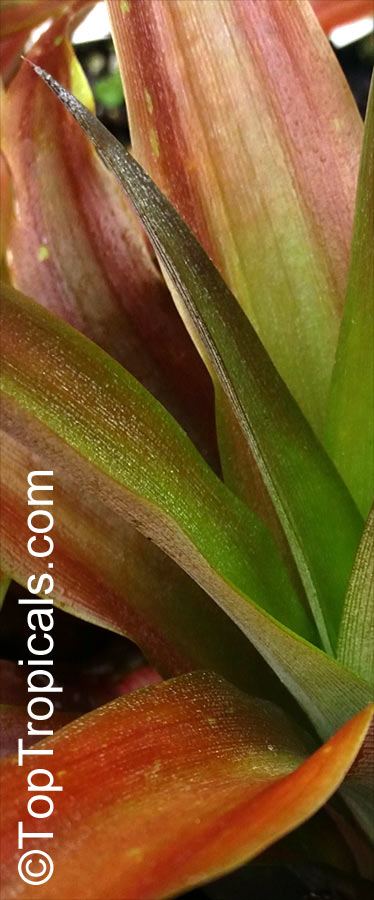
Botanical names: Ananas lucidus, Ananas comosus f. lucidus
Common names: Miniature Pineapple, Smooth Cayenne
Family: Bromeliaceae
Origin: Brazil
Hardiness: 30°F
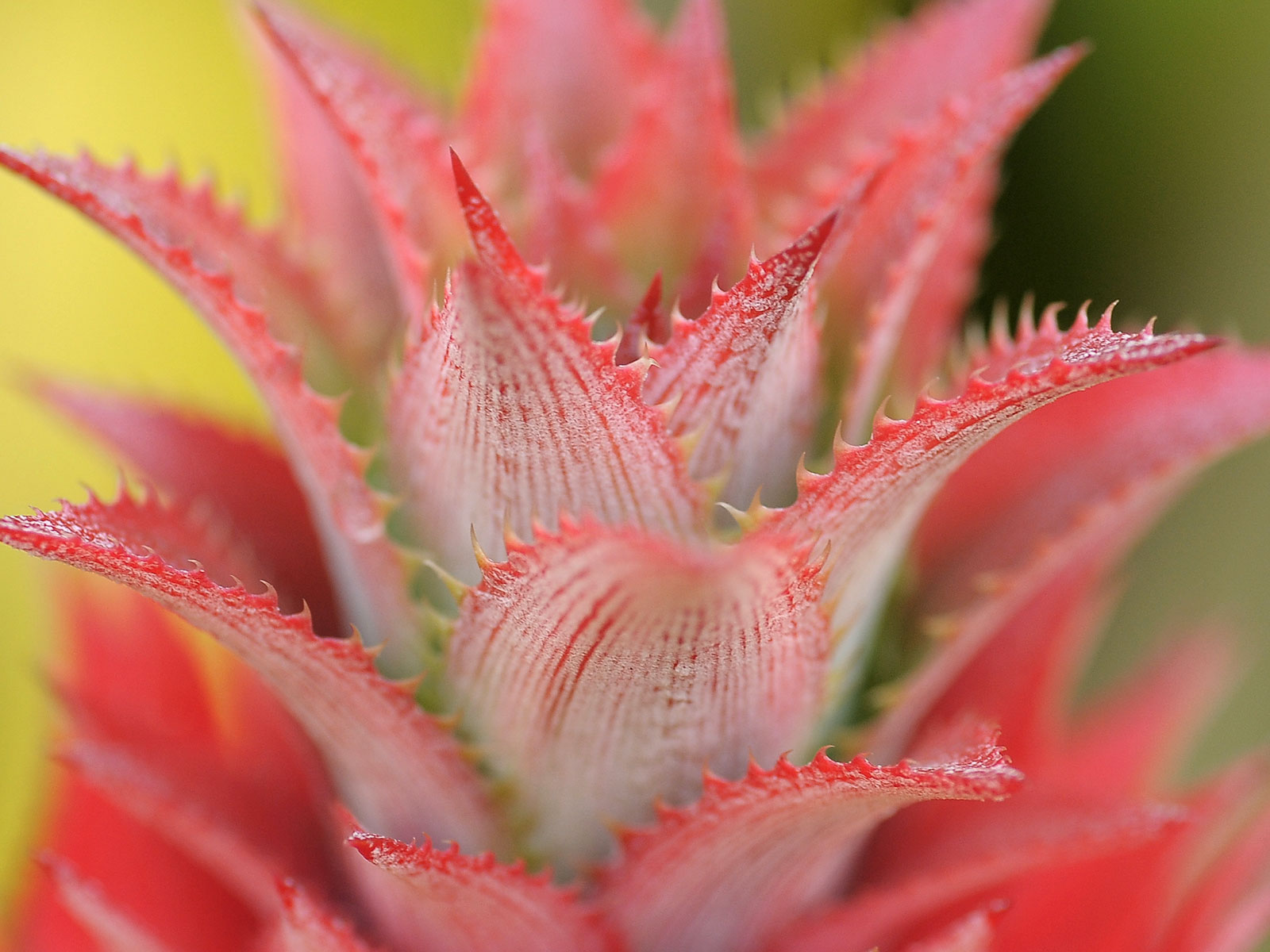
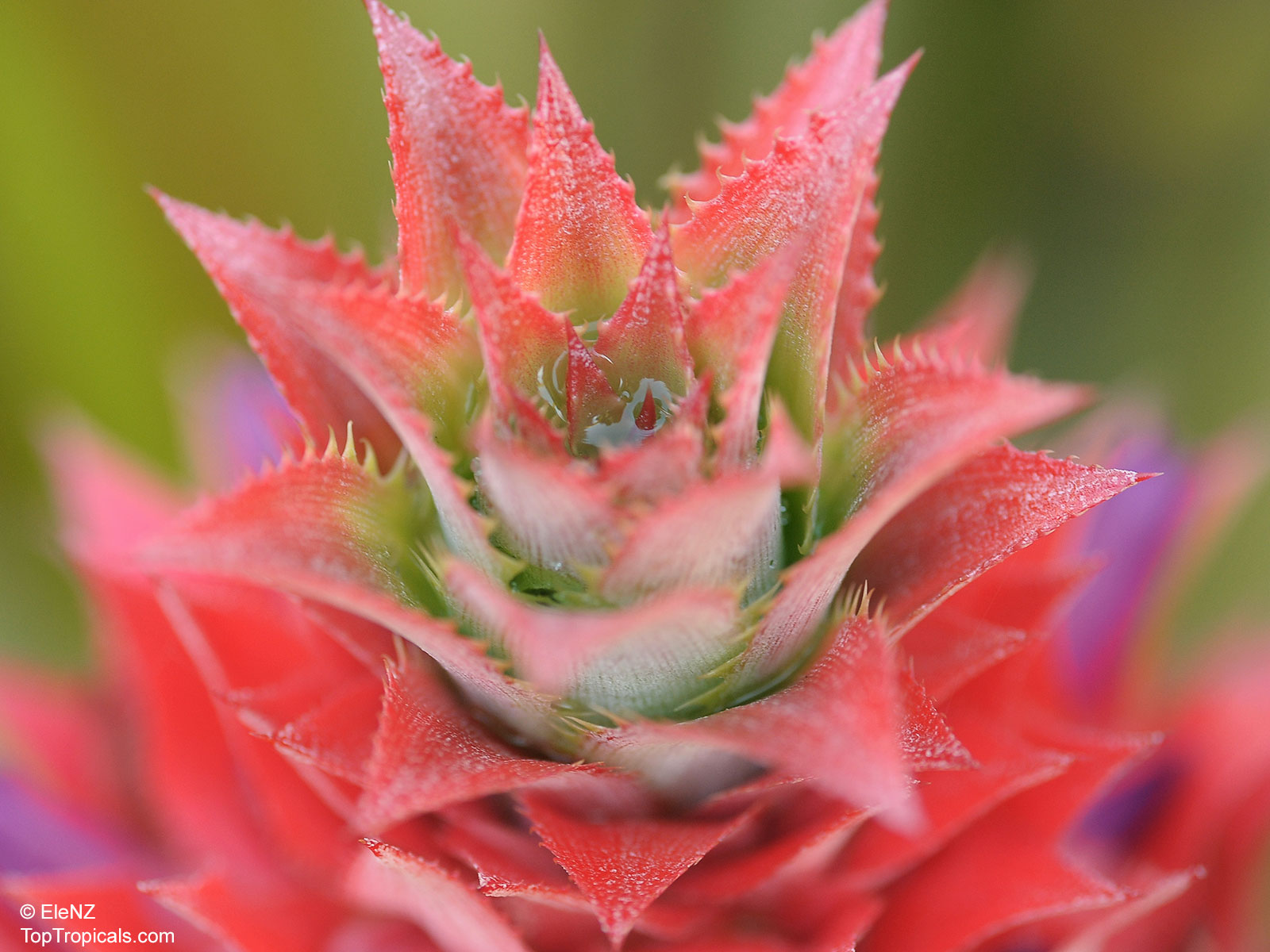
Ananas lucidus (Smooth Cayenne) is a striking ornamental bromeliad native to tropical South America, valued for its vivid red bracts and smooth, spineless foliage. The plant forms a neat rosette of stiff, narrow, glossy leaves and produces a short flowering stalk topped with a bright red‑bracted inflorescence. At the center, a developing fruit is accented by small purple and white blooms, creating a brilliant contrast against the foliage.
Grow Ananas lucidus in full sun to bright filtered light to enhance its rich coloration. Plant in well‑draining, sandy soil and water regularly during the growing season, allowing the surface to dry slightly between waterings. In cooler climates, it can be grown in containers and overwintered indoors in a bright location. Hardy in USDA Zones 10 11, this pineapple is grown primarily for its ornamental value rather than for eating. Its intense color and compact size make it an excellent choice for patio containers, tropical borders, or as a vivid focal point in the garden.

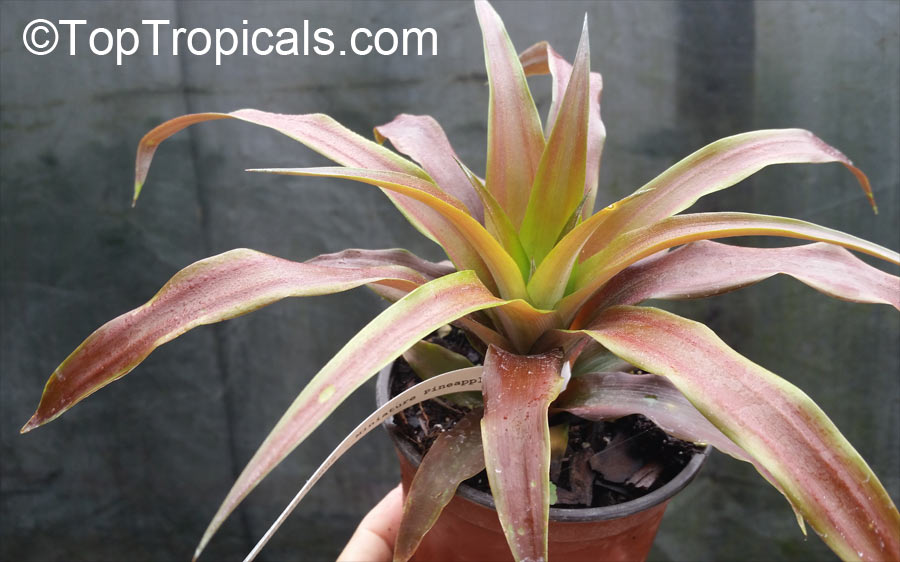
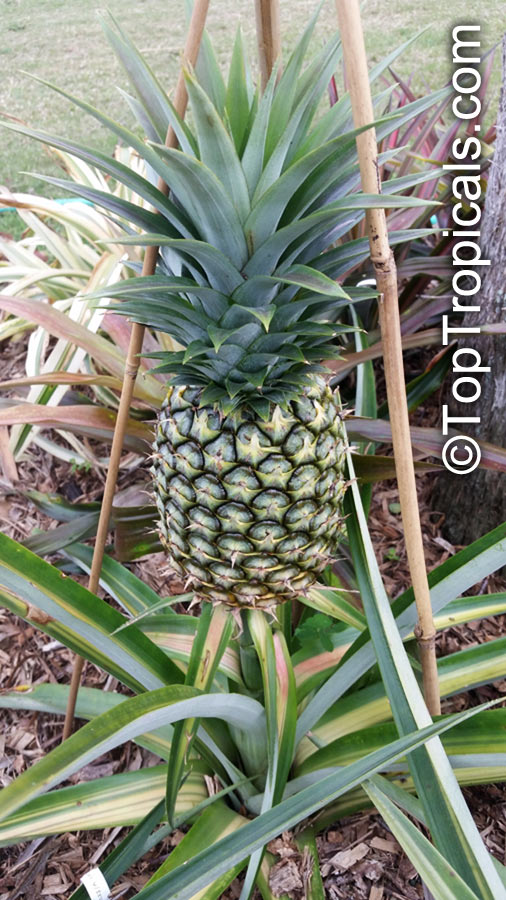
Botanical name: Ananas sp.
Common names: Pineapple, Pina
Family: Bromeliaceae
Subfamily: Bromelioideae
Origin: Brazil and Paraguay
Hardiness: 25°F
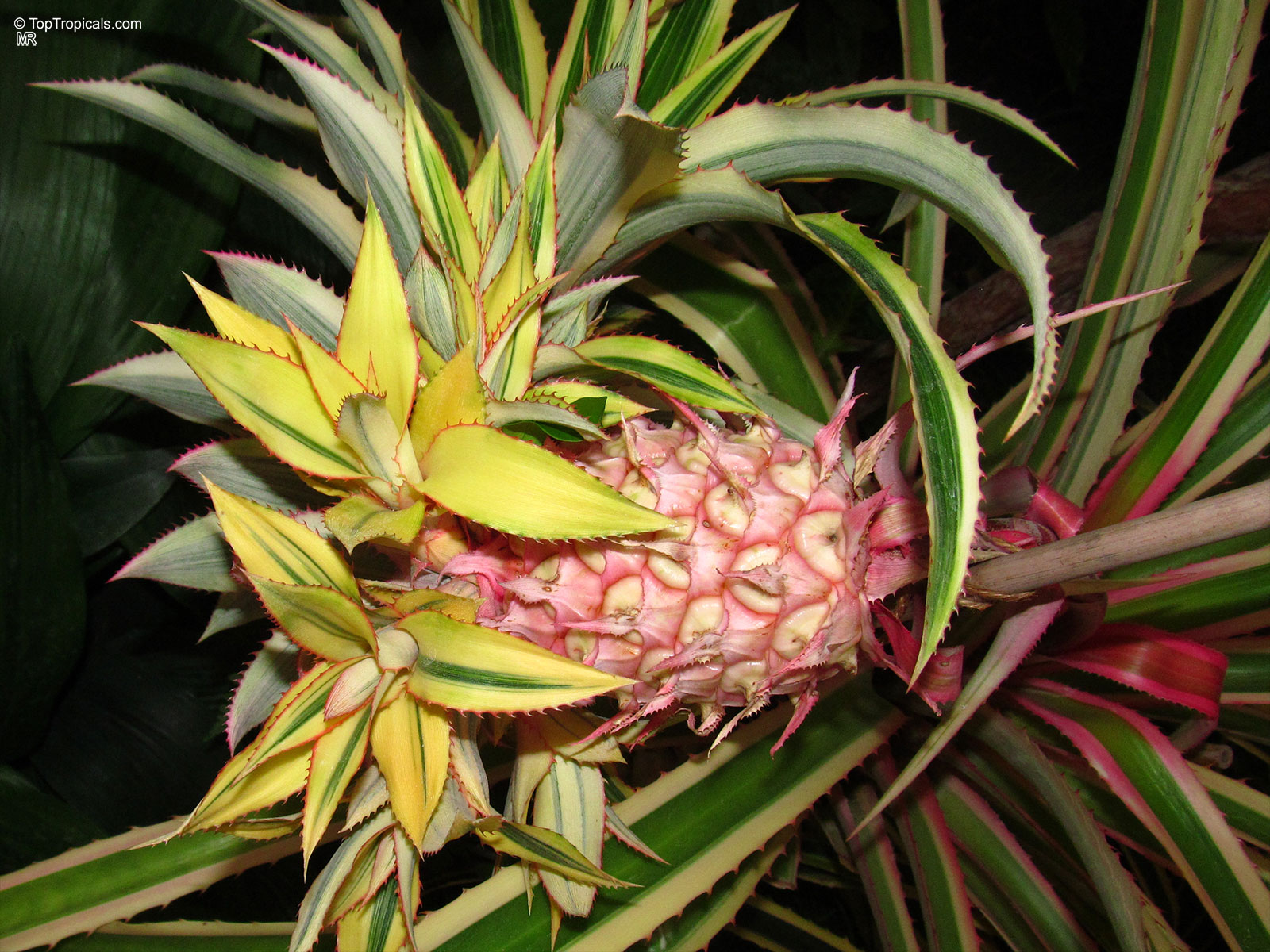
King of fruits! One of the most delicious fruits in the world, especially when picked and eaten fresh. Pineapples are a tropical fruit that is rich in vitamins and dietary fiber, with the ability to boost the immune system. Popular varieties of pineapples include Royal Hawaiian, Victoria Gourmet, Hawaiian Gold, Sugar Loaf, and Miniature Dwarf. There are also ornamental varieties, such as the variegated pineapple "Ivory Coast," that are valued for their exotic tropical look and require very little care.
Pineapples are short, stiff herbaceous plants that are closely related to bromeliads. They have long, thin leaves with spiny tips and prickly edges, and a violet or reddish flower on a dense head, which appears from January to March in Florida. The fruit is compound, fleshy, and usually yellow to orange when ripe, with a rough outer skin.
Pineapples are not very susceptible to diseases, but they can suffer from root rot, mealy bugs, and spider mites. To prevent these issues, it is important to keep the area clean and free of any infestations. In cold regions, it is necessary to bring the pineapple container inside and keep it in a cool place during the winter. If temperatures drop below freezing for an extended period, it is necessary to cover the container with a thick layer of mulch to protect the plant.
Pineapples can be grown and harvested in pots, but it is important to be careful with watering and only use acidic soil. Like any bromeliad, pineapples need very little water and the soil should be allowed to dry between waterings. The heaviest fruiting season for pineapples is summer, from May to September, although some varieties have a staggered fruiting season throughout the year.
Read more about Pineapple: The most luscious Hospitality Fruit: Pineapple.
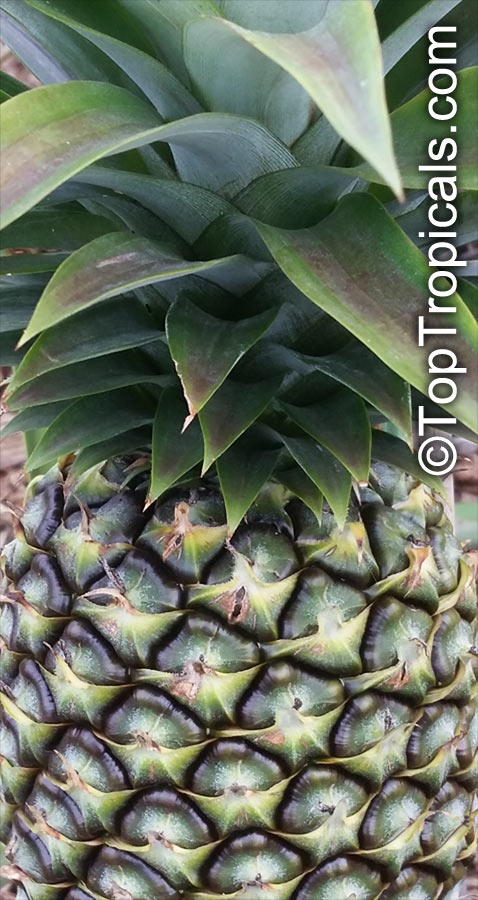
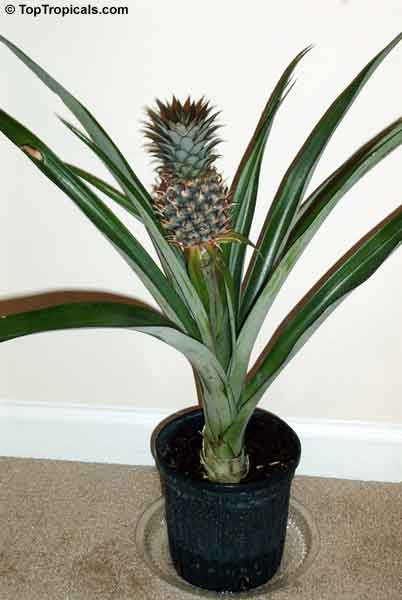
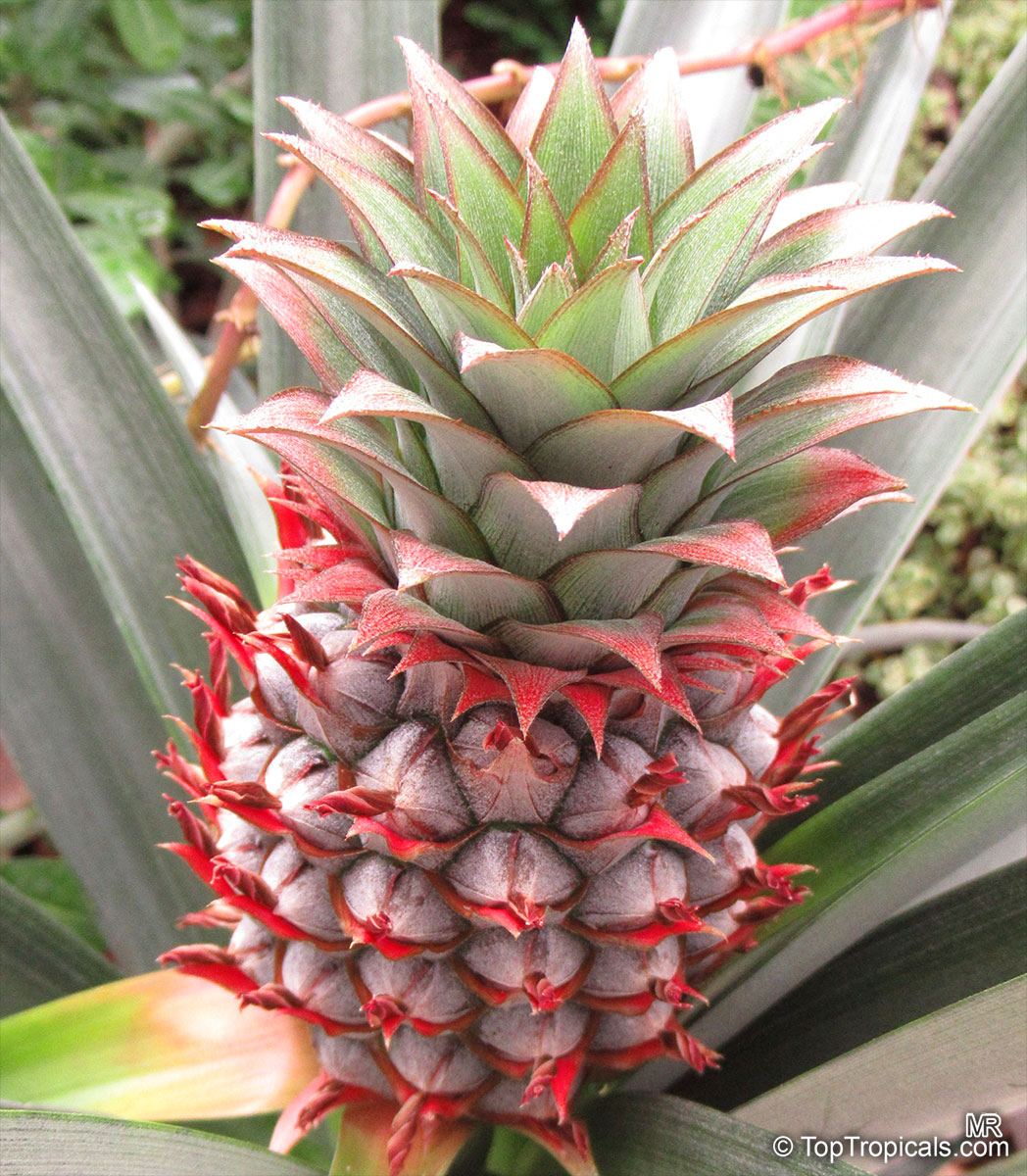
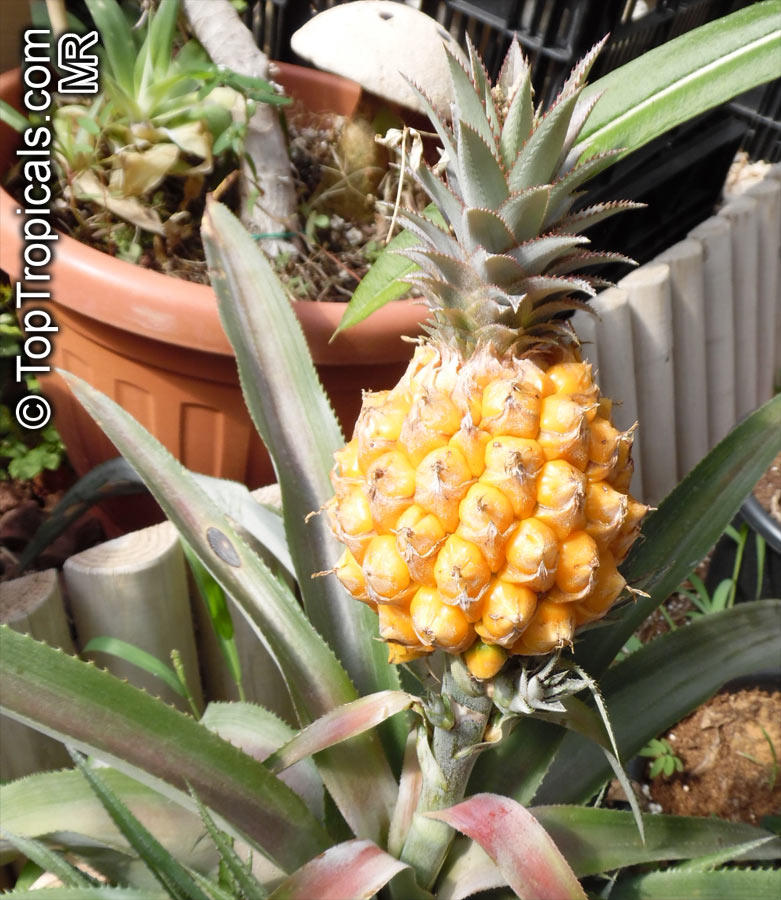
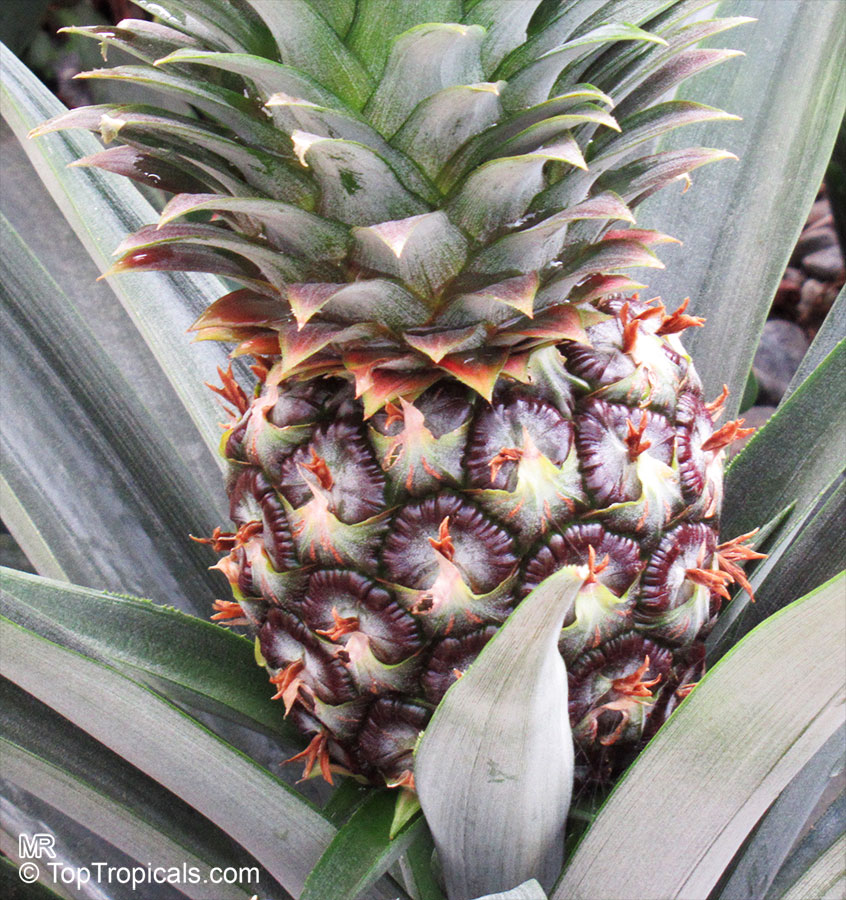

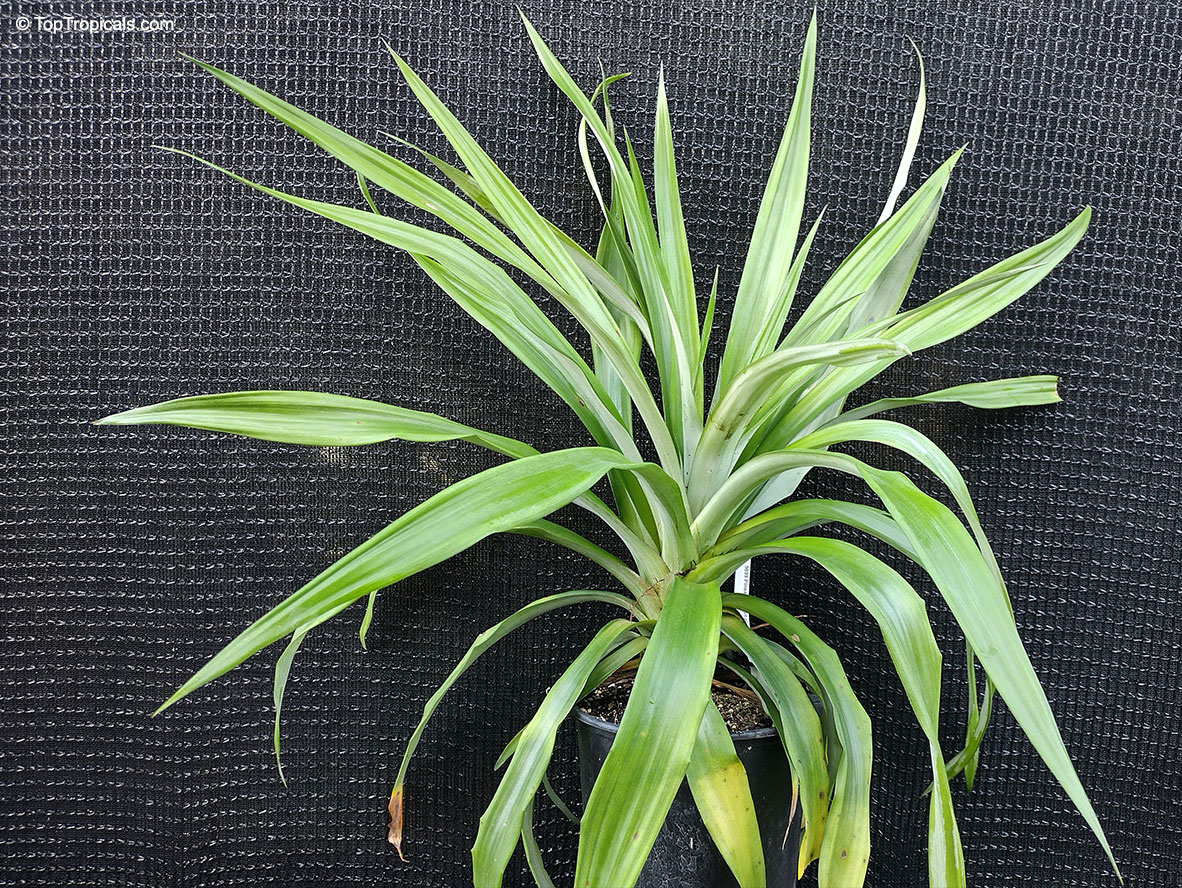
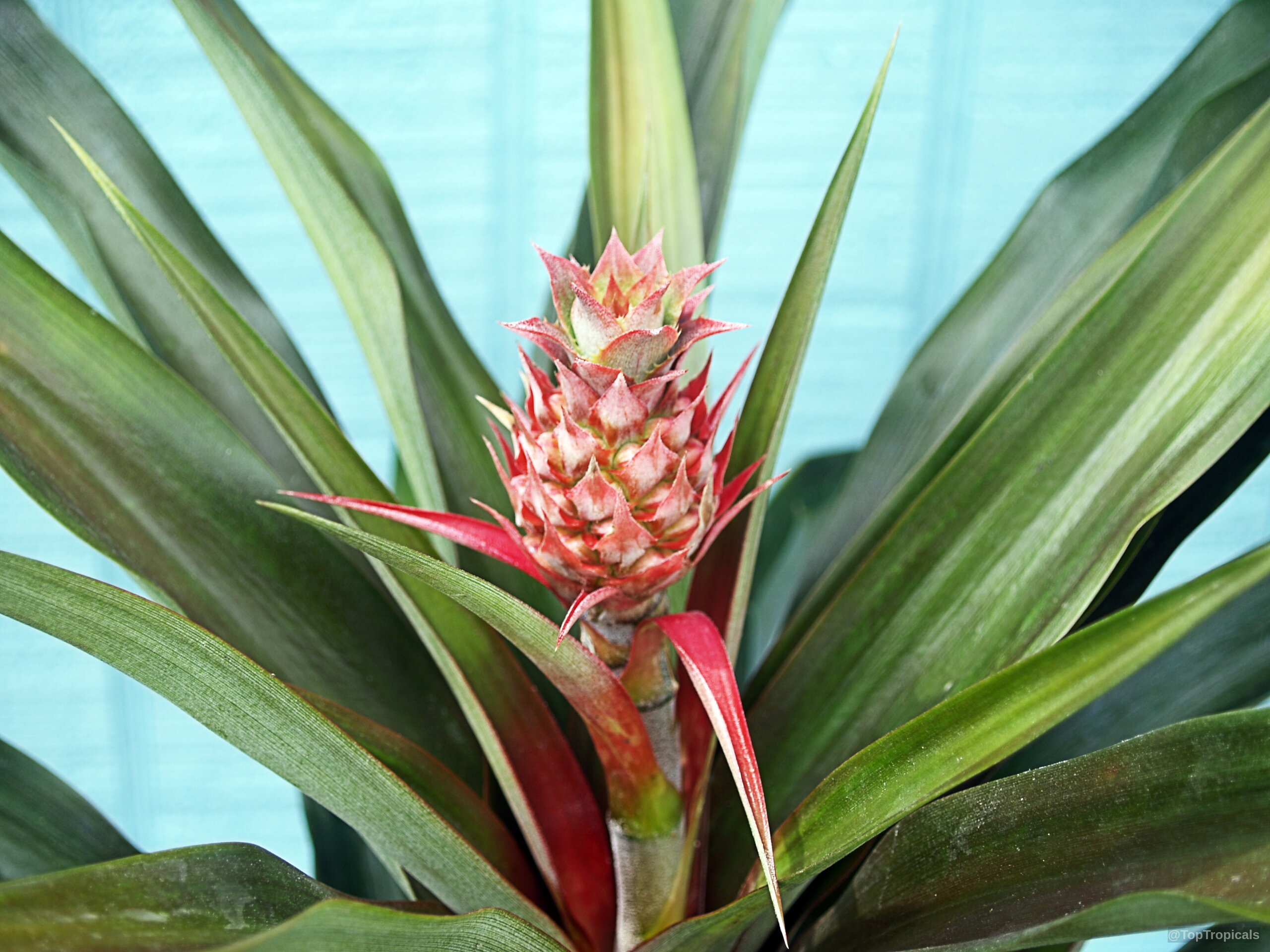
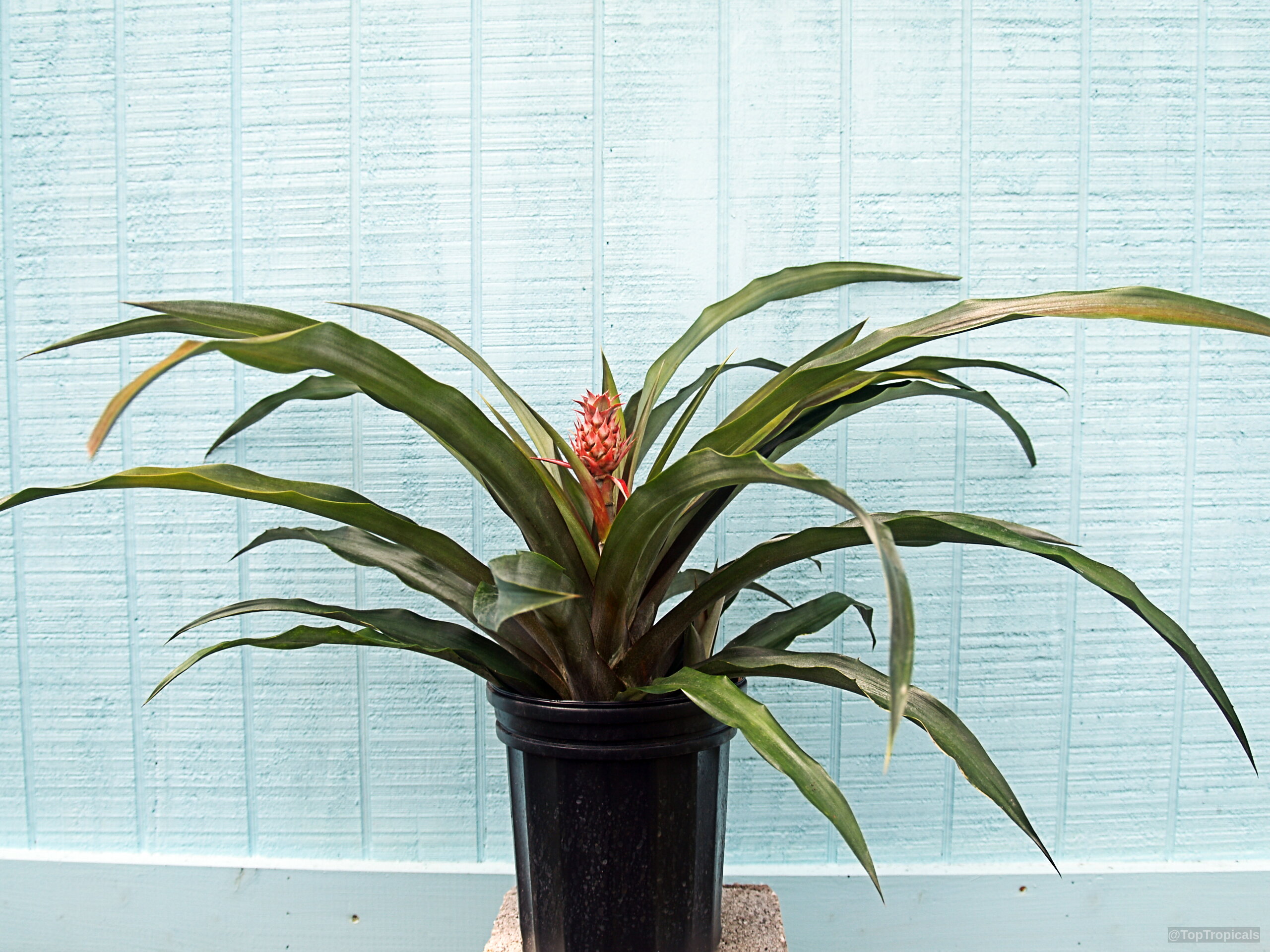
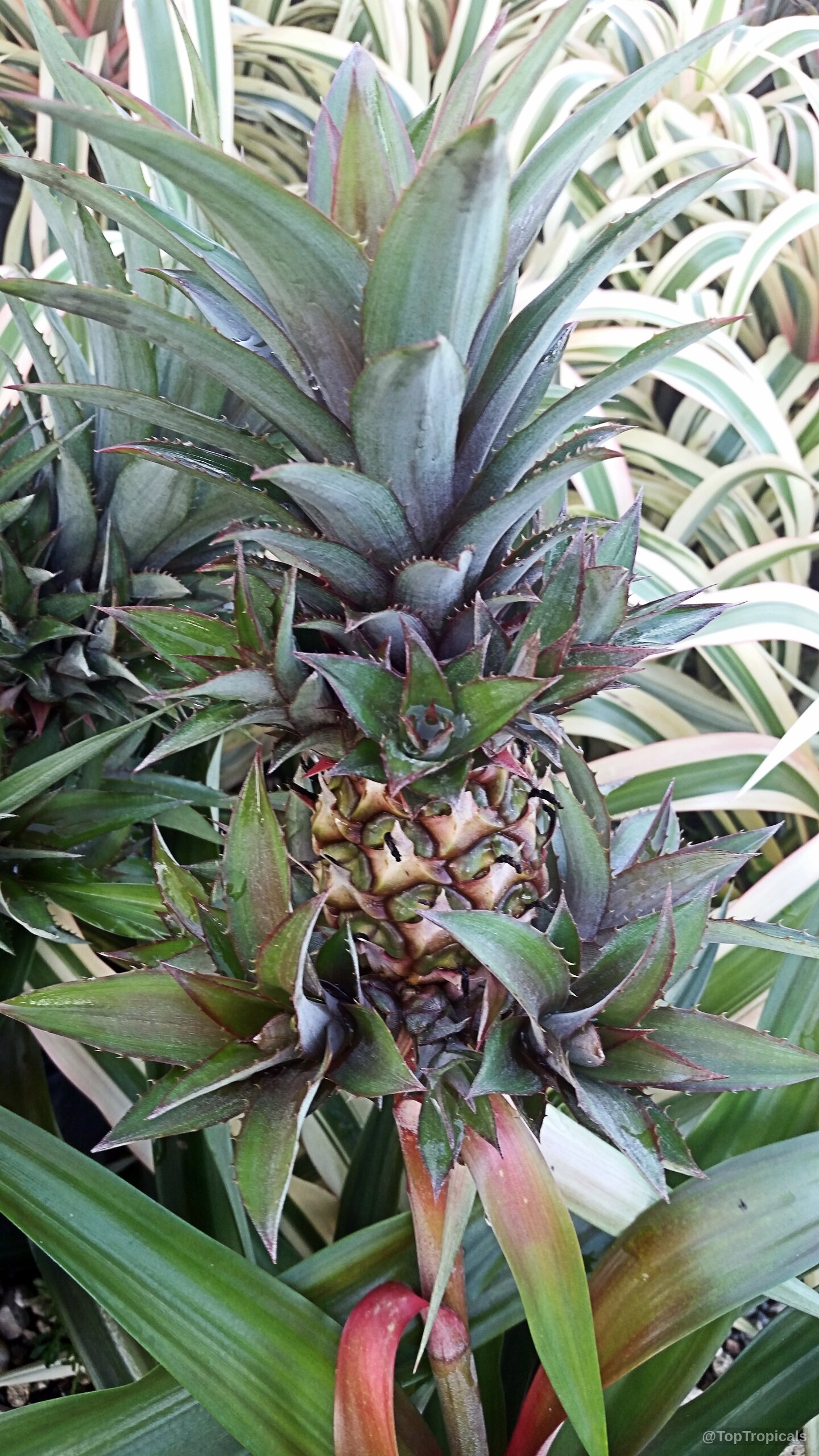
Botanical name: Ananas sp.
Common name: 'Mongo' Pineapple
Cultivar: Mongo
Family: Bromeliaceae
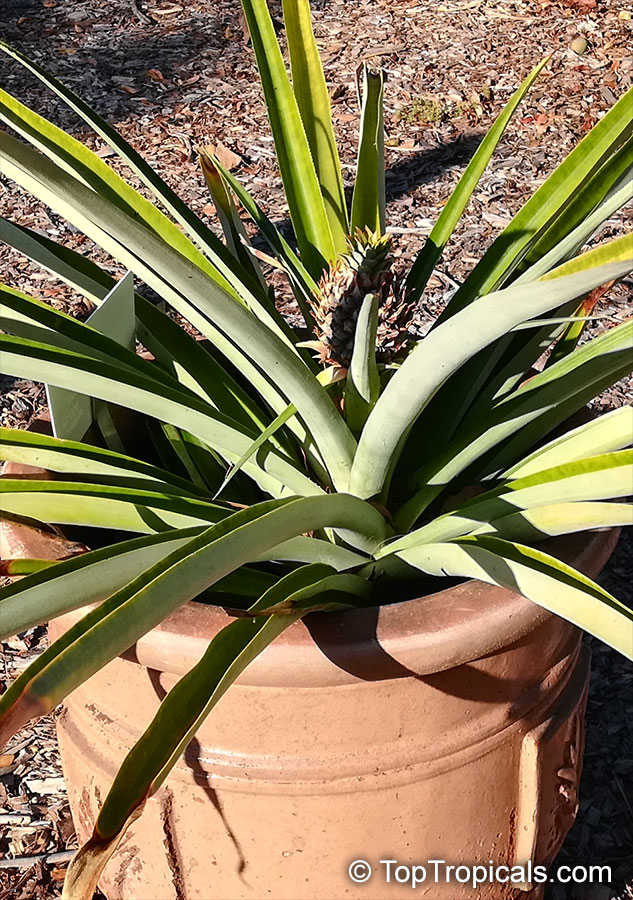
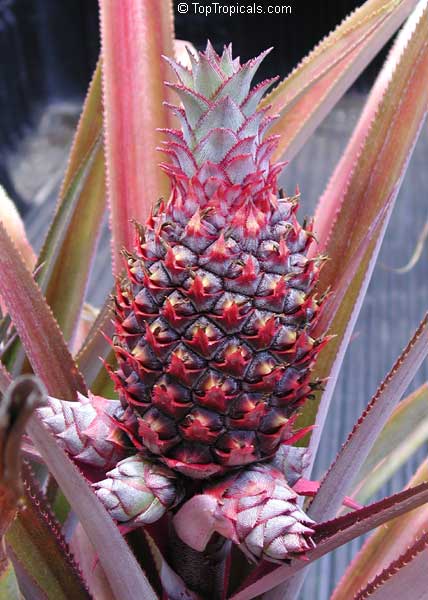
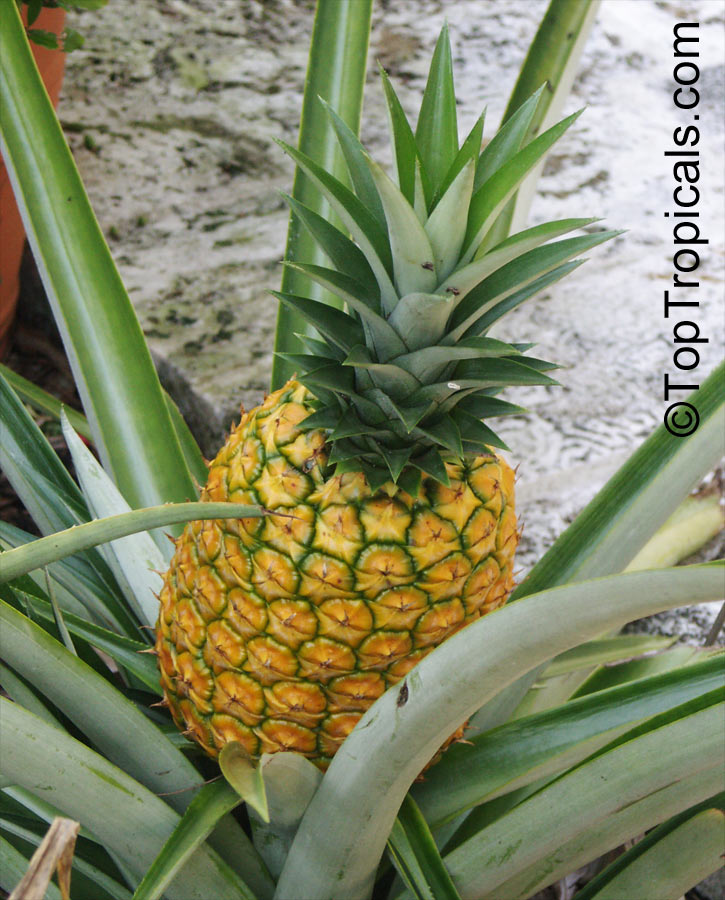
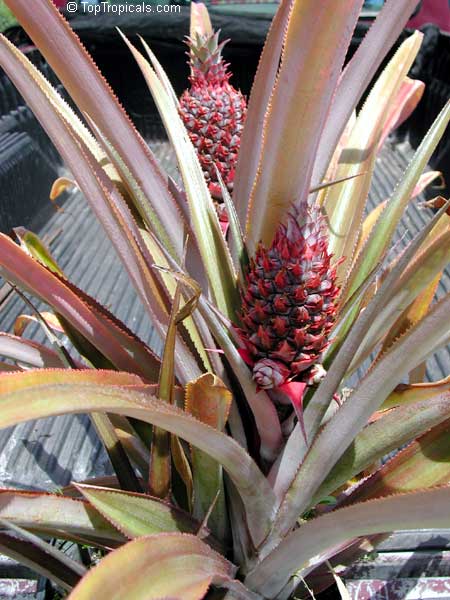
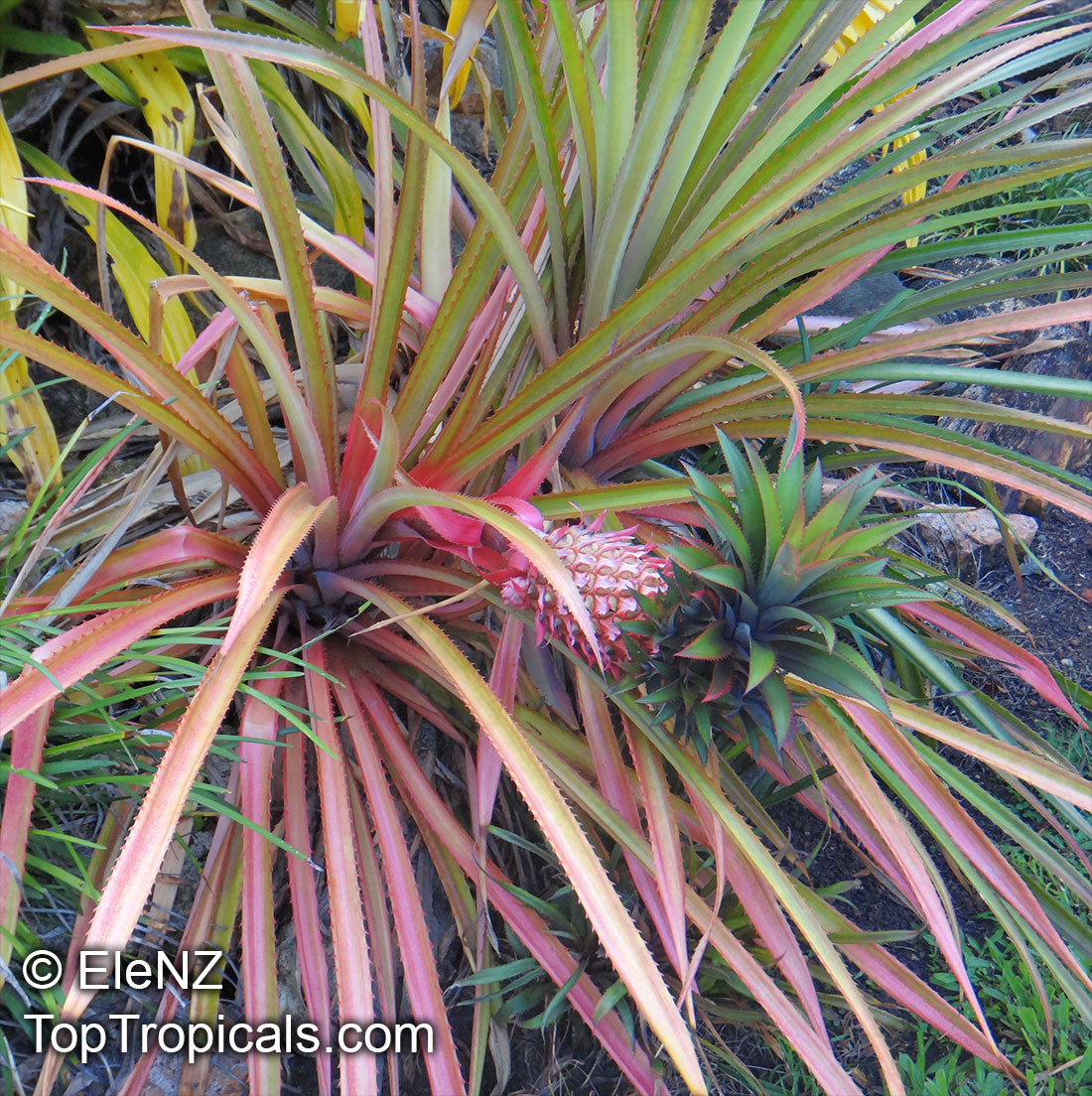
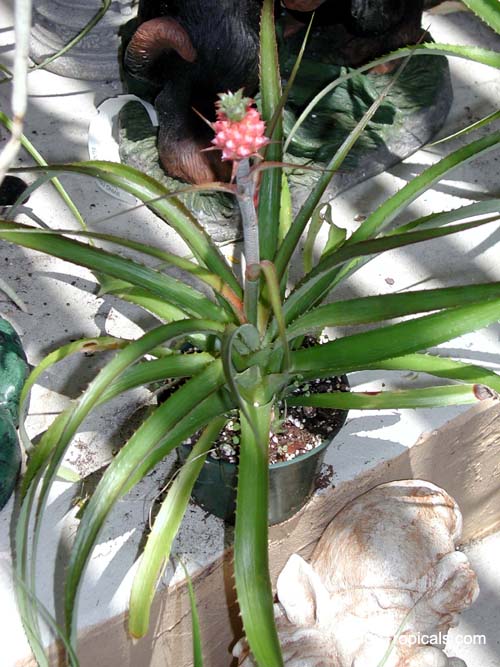
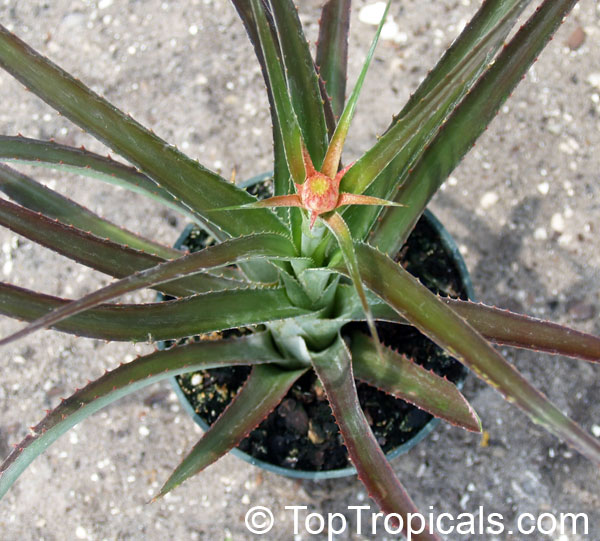
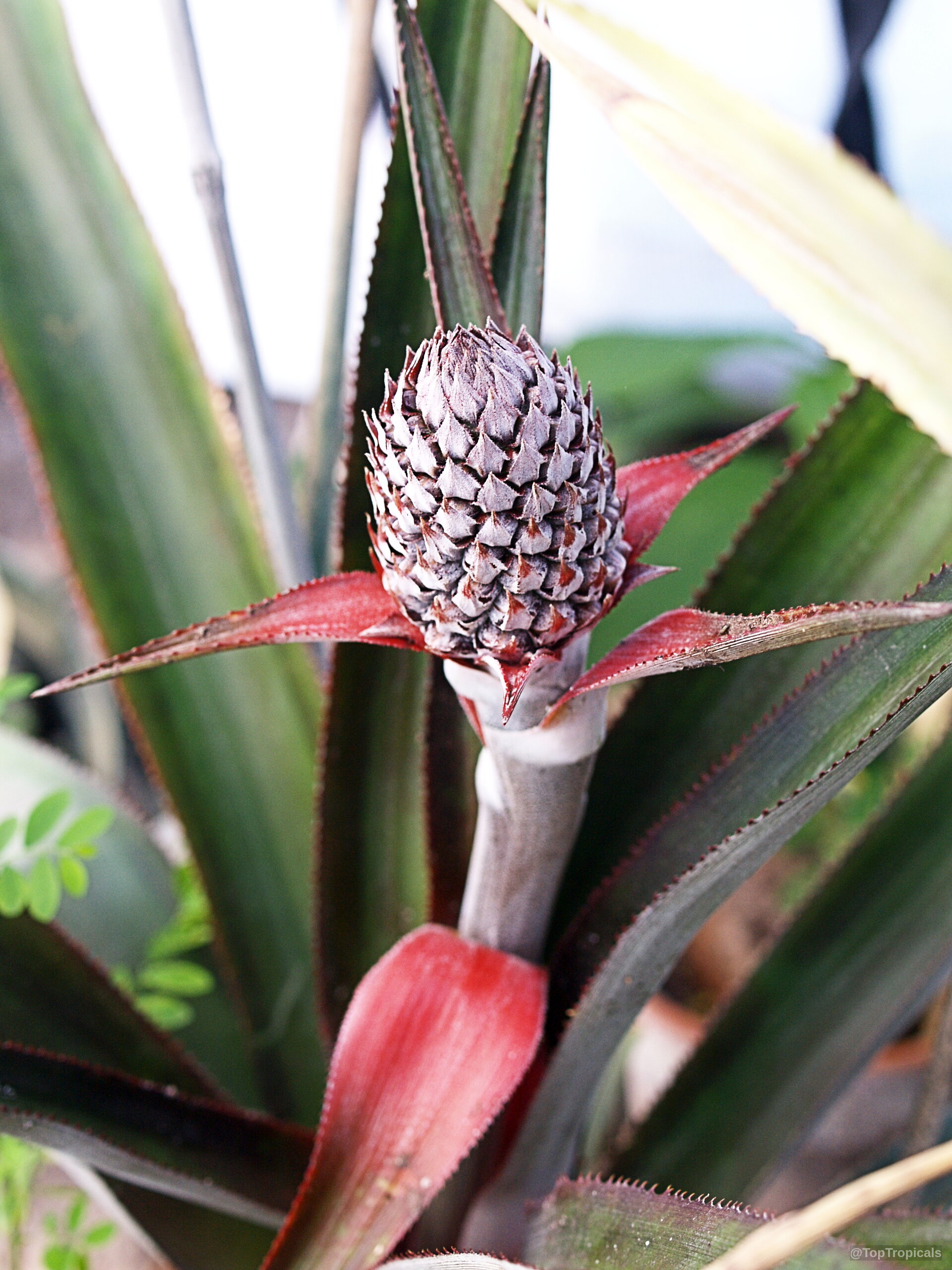
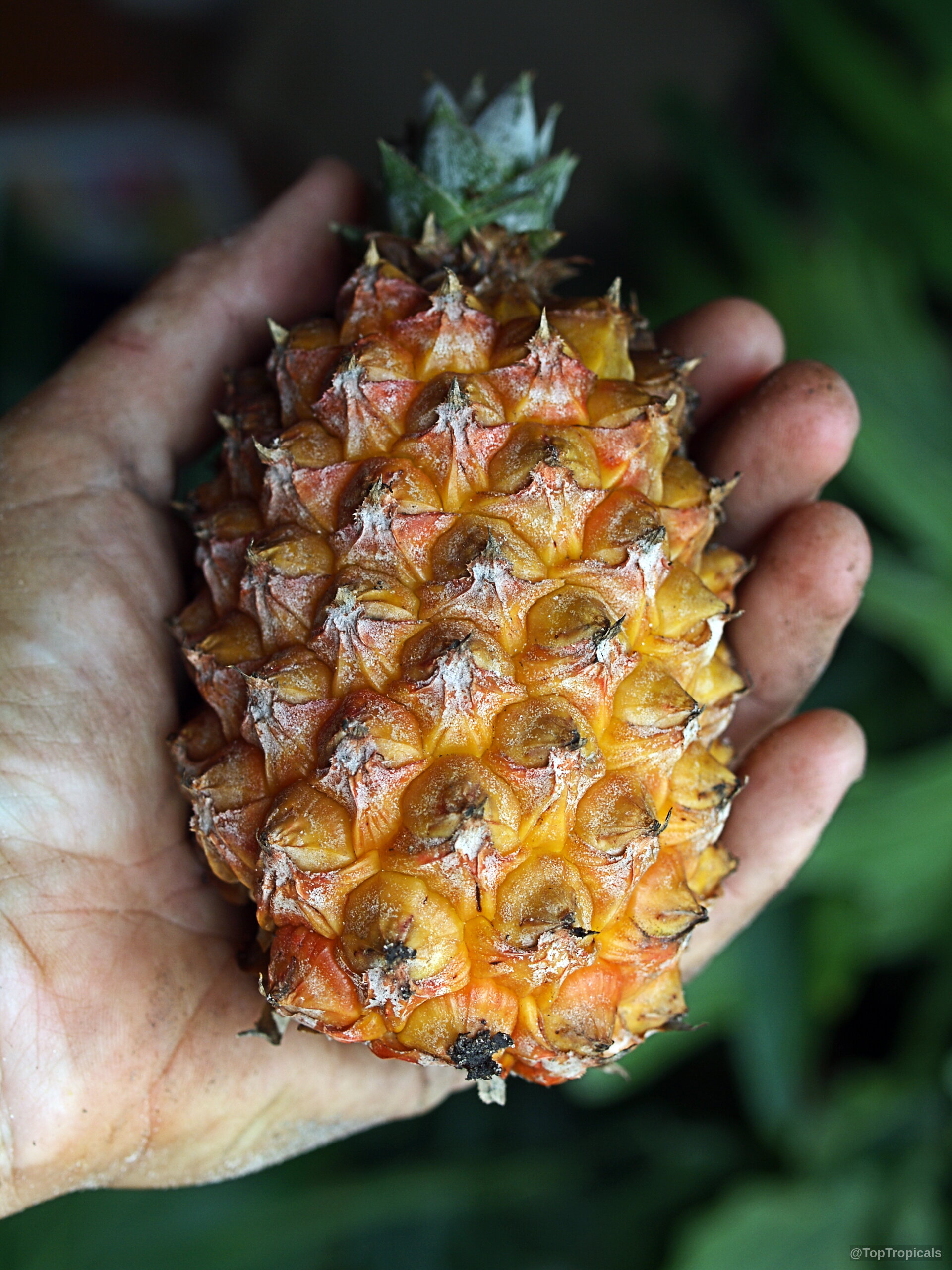
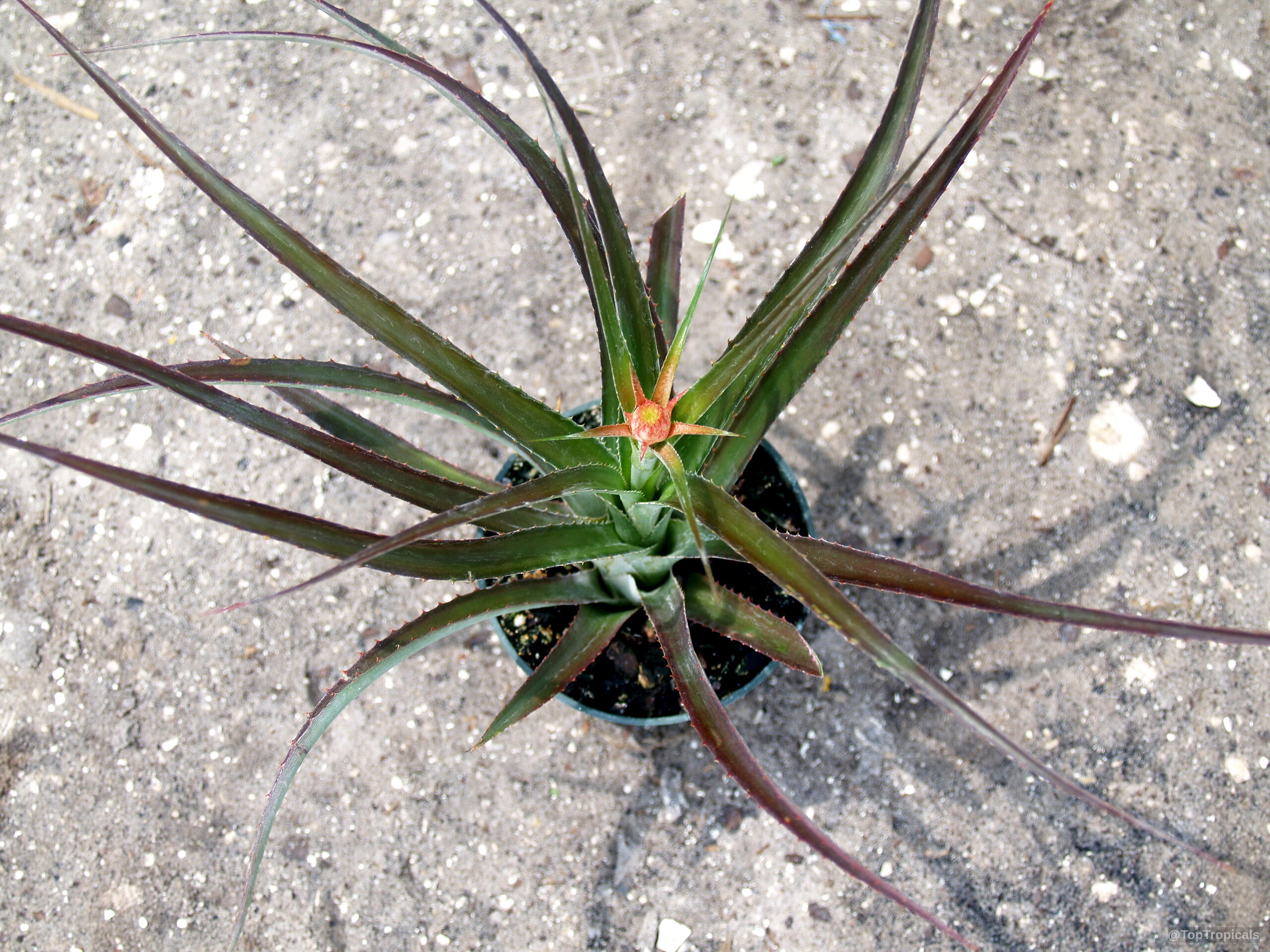
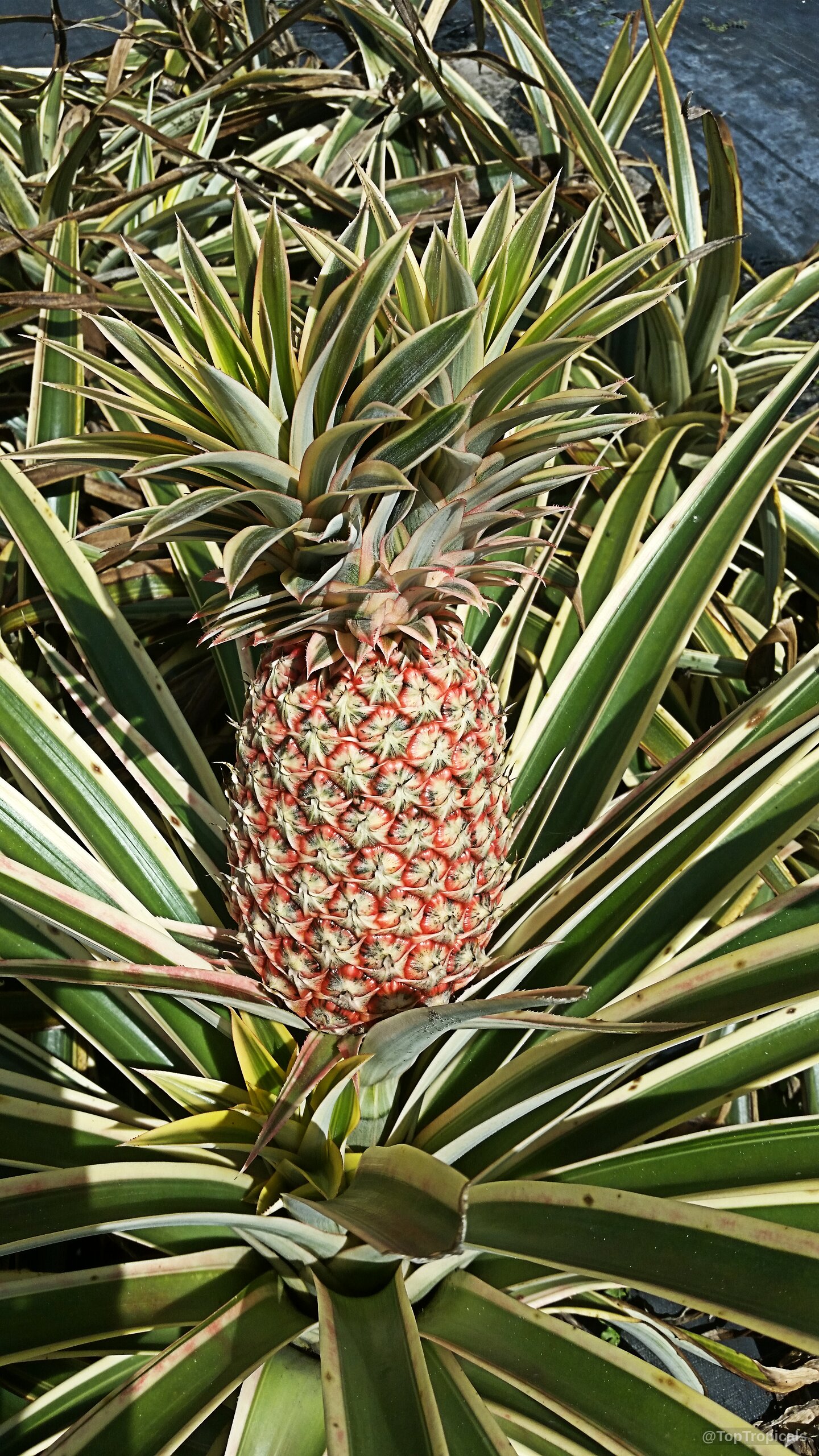
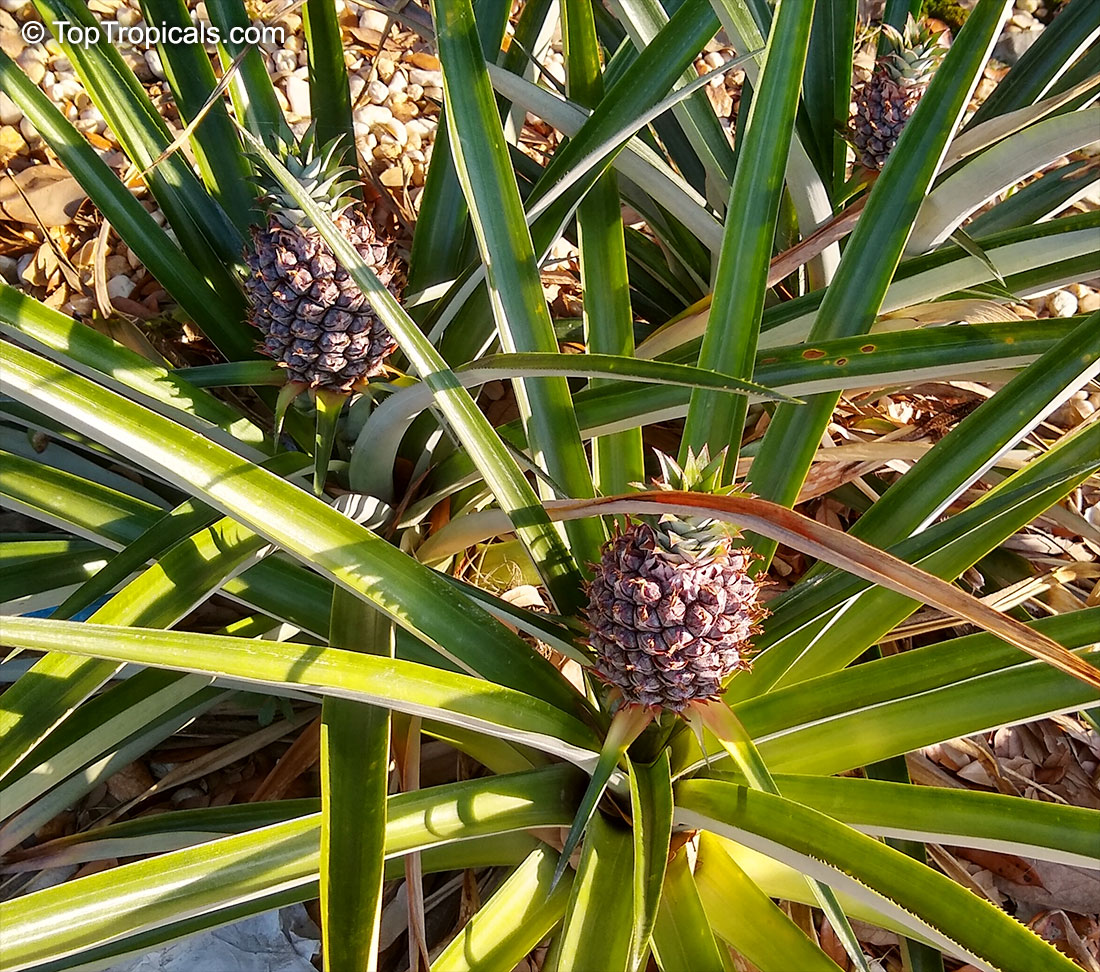
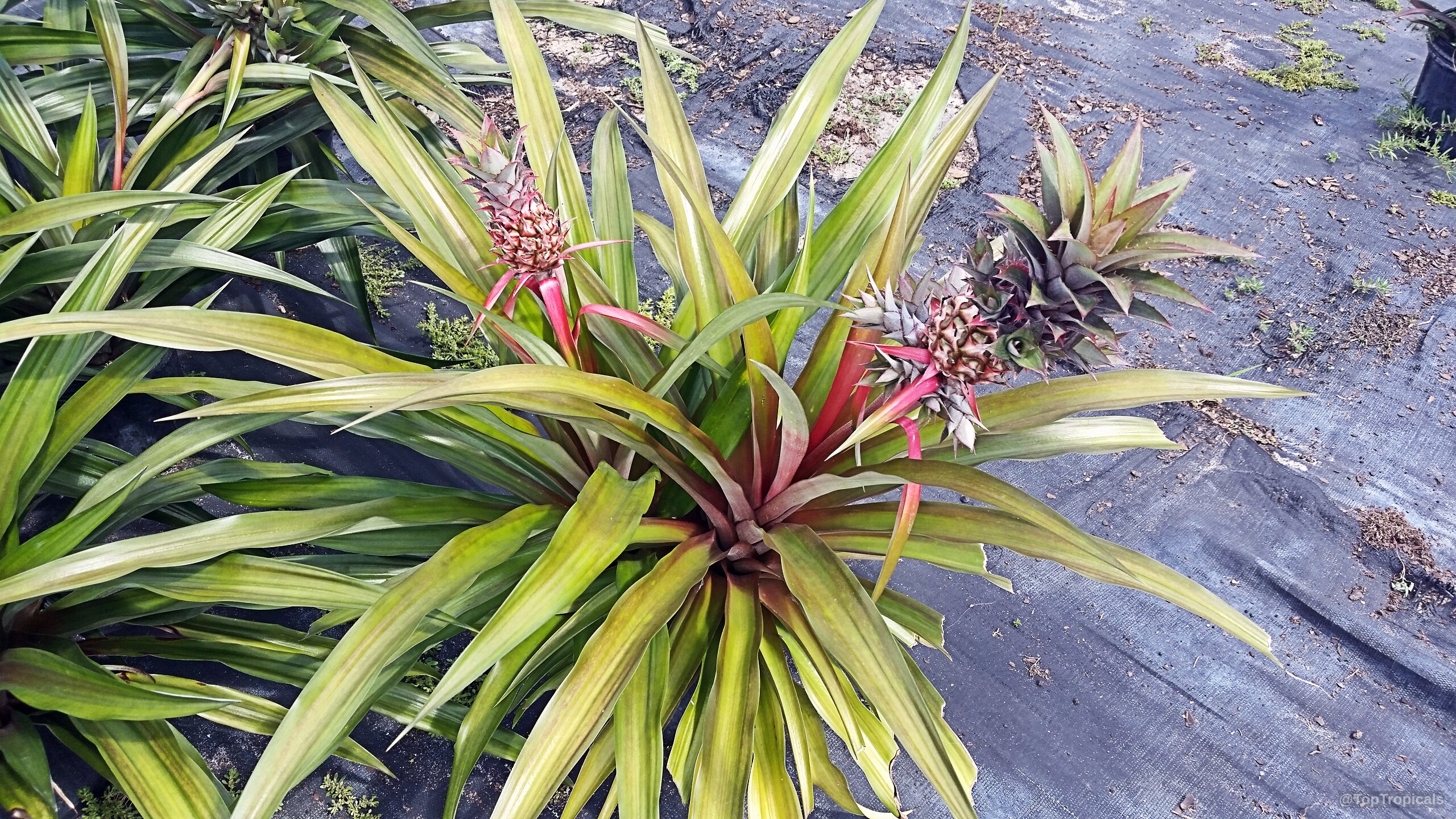
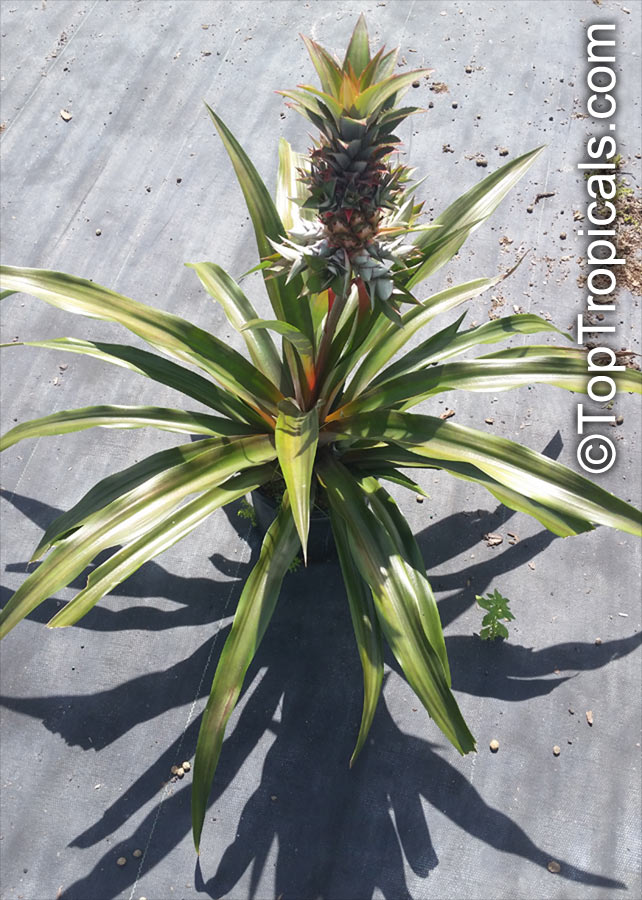
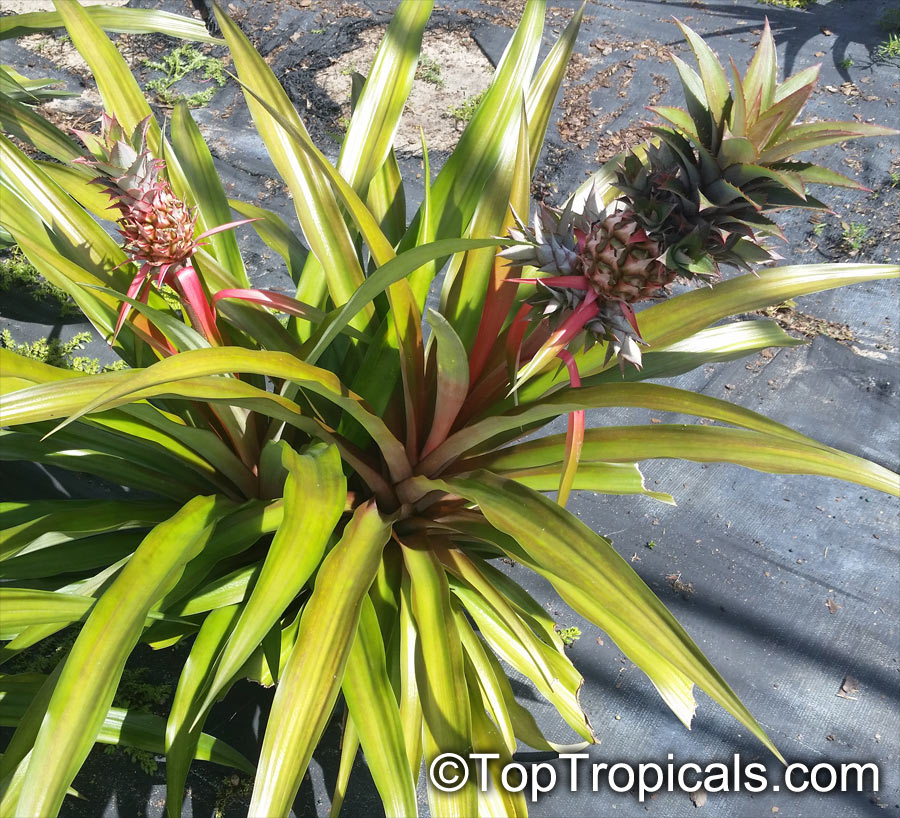
Ananas 'Mongo' is an ornamental pineapple variety distinguished by its compact growth and vibrant red bracts surrounding the developing fruit, making it a striking accent for tropical gardens and decorative containers. Looks great in the garden paired with other bromeliads.
| Next | |
Use link to repeat this search:
https://toptropicals.com/cgi-bin/garden_catalog/cat.cgi?search_op=and&keyword_op=and&language=e&family=Bromeliaceae
&number=10&no_change_lang=1&user=tt&sale=1&first=0