Aristolochiaceae - Botanical Family
| Number of plants found: 23 | Next | 
|
Go to page: | 1 | 2 | 3 |
Botanical name: Aristolochia arborea
Common name: Aristolochia Tree
Family: Aristolochiaceae
Origin: Mexico


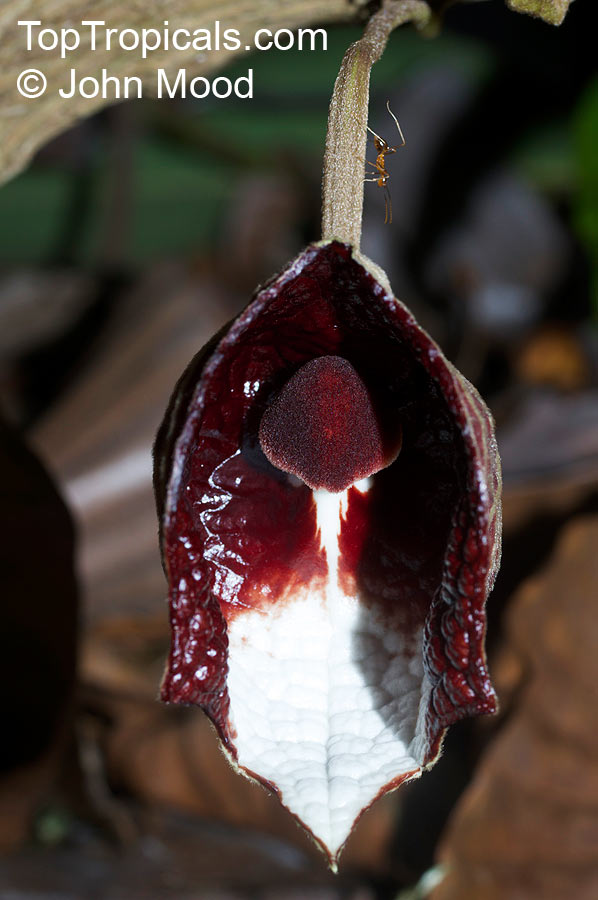
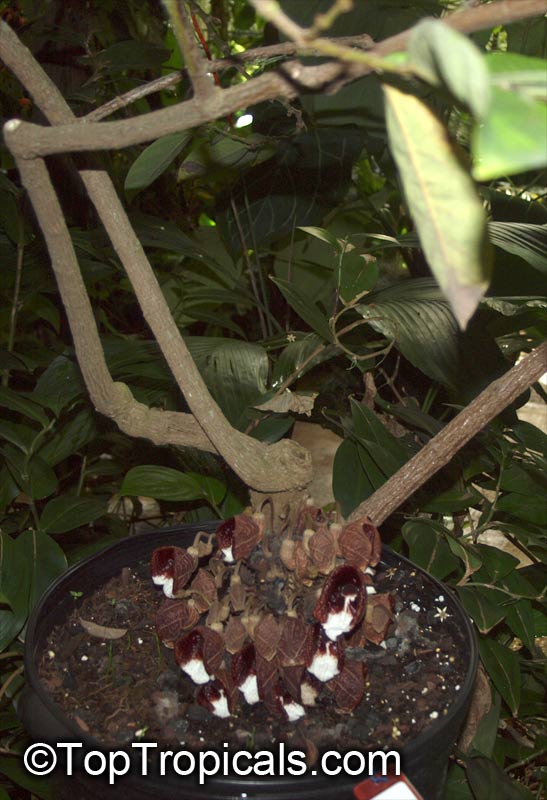
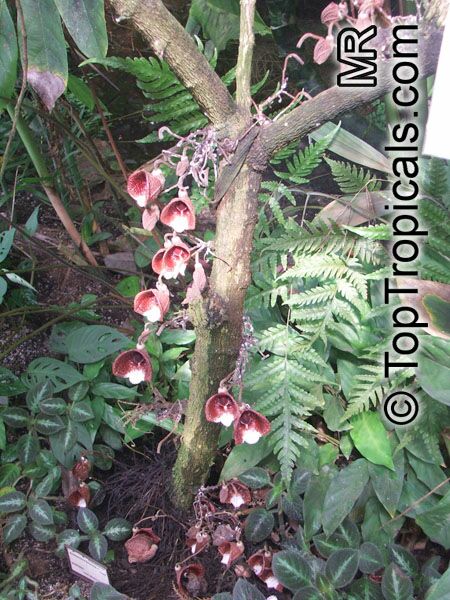
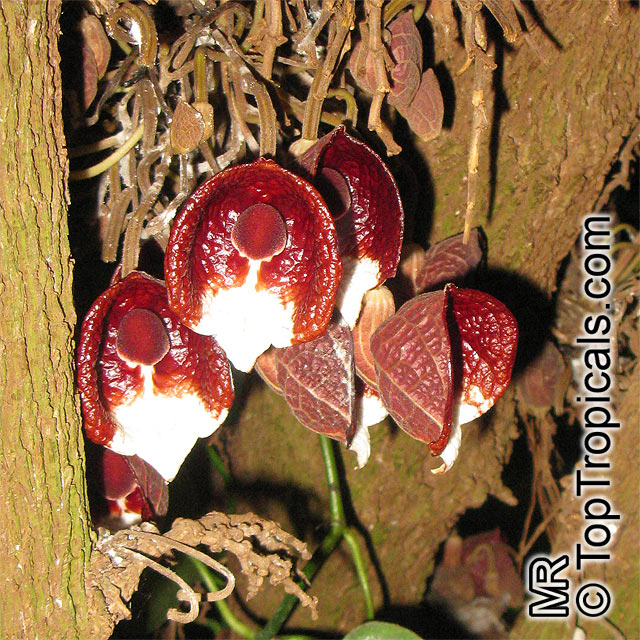
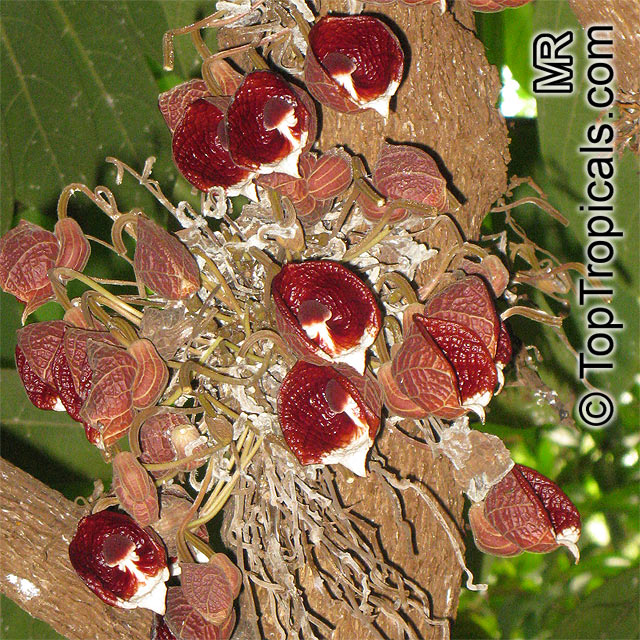
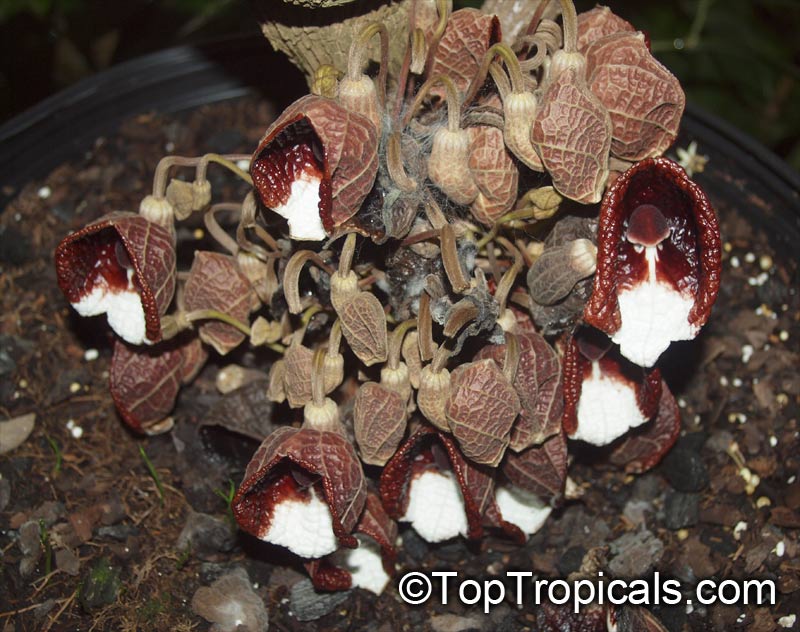
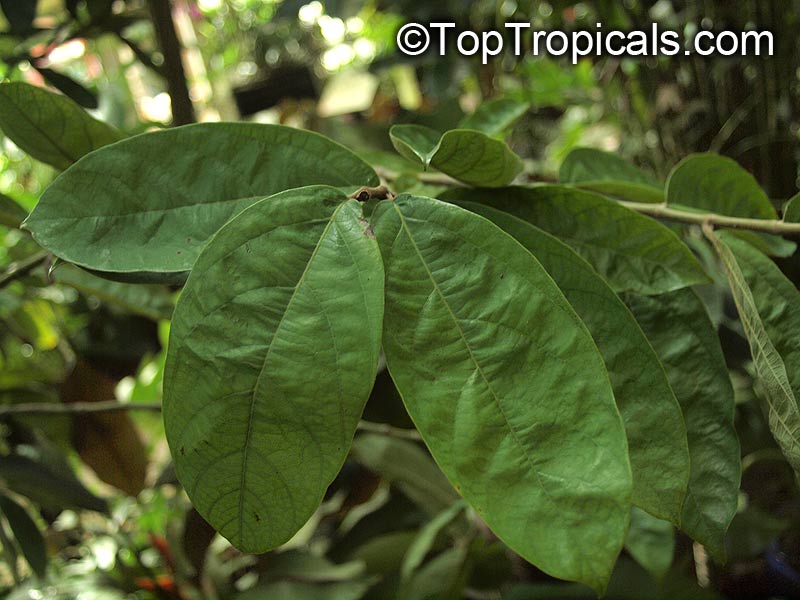
Aristolochia arborea is known for its rare and unique beauty, making it a desirable addition to any garden or natural area. This large shrub or small tree, native to Mexico, stands between five to ten feet tall. In some cases, Aristolochia arborea has been observed growing up to twenty feet tall. The attractive greyish-brown bark is corky, providing texture and interest to the surroundings.
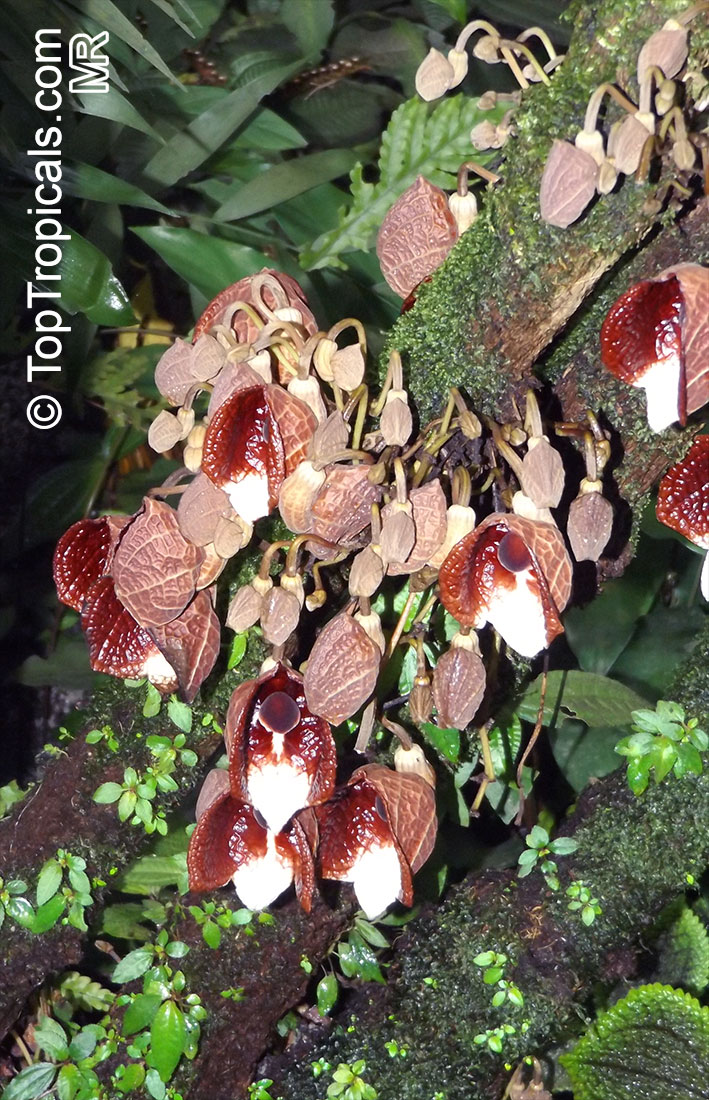
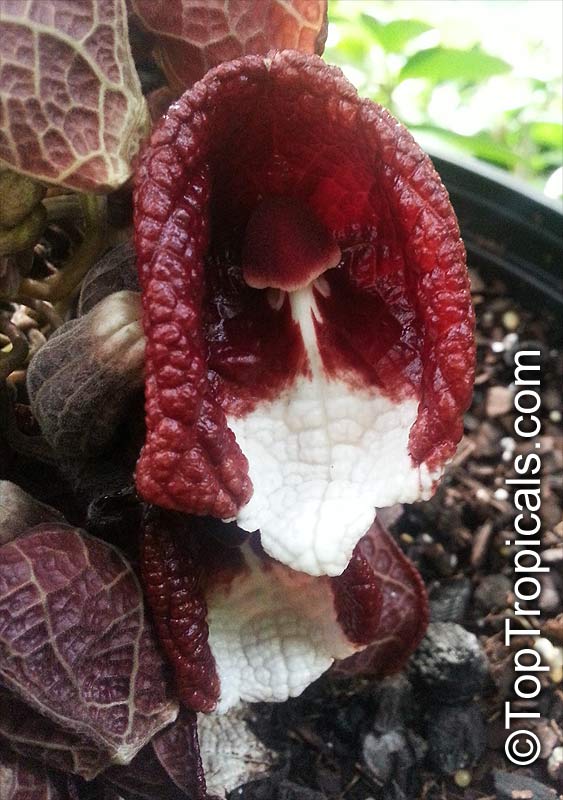
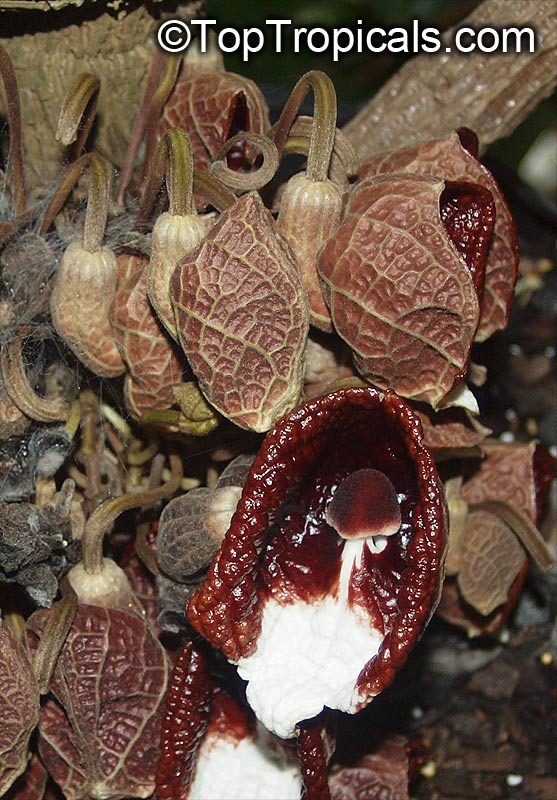
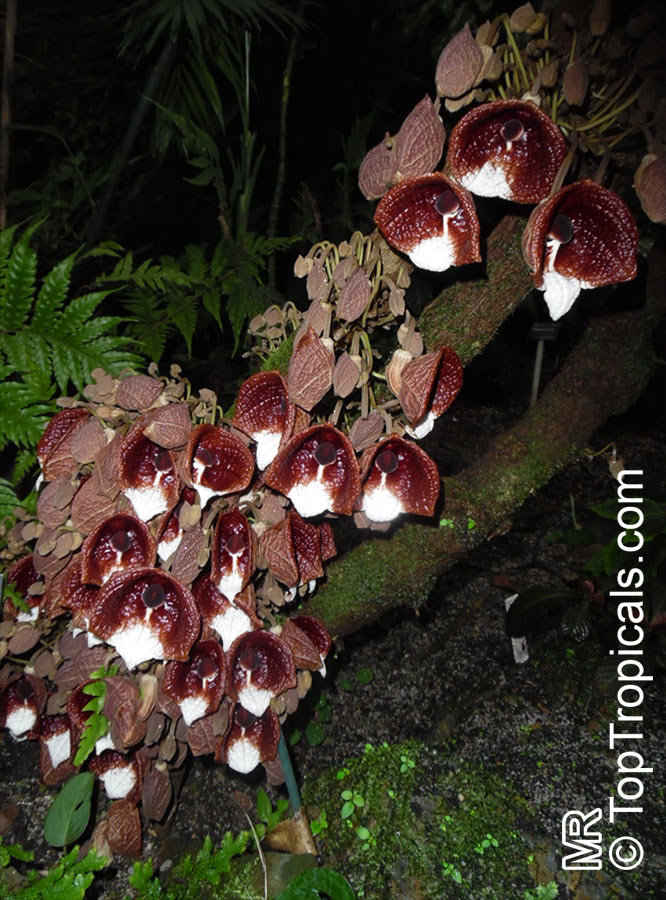
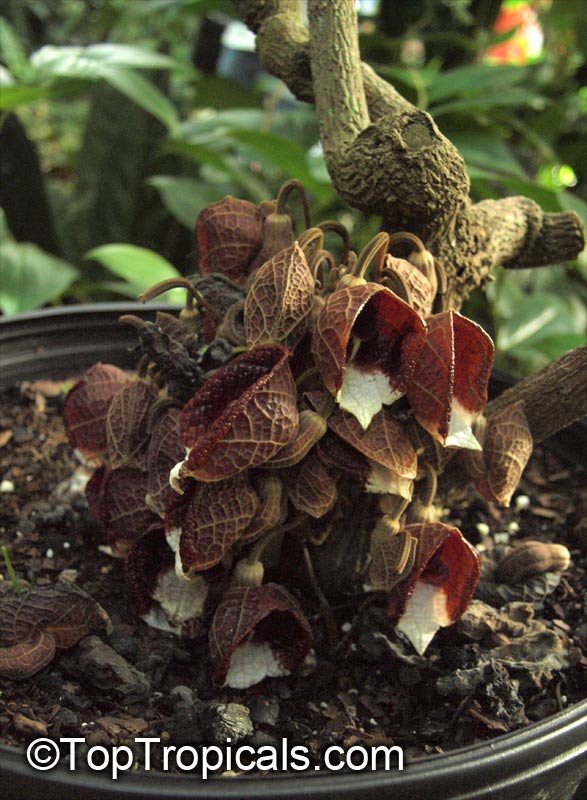
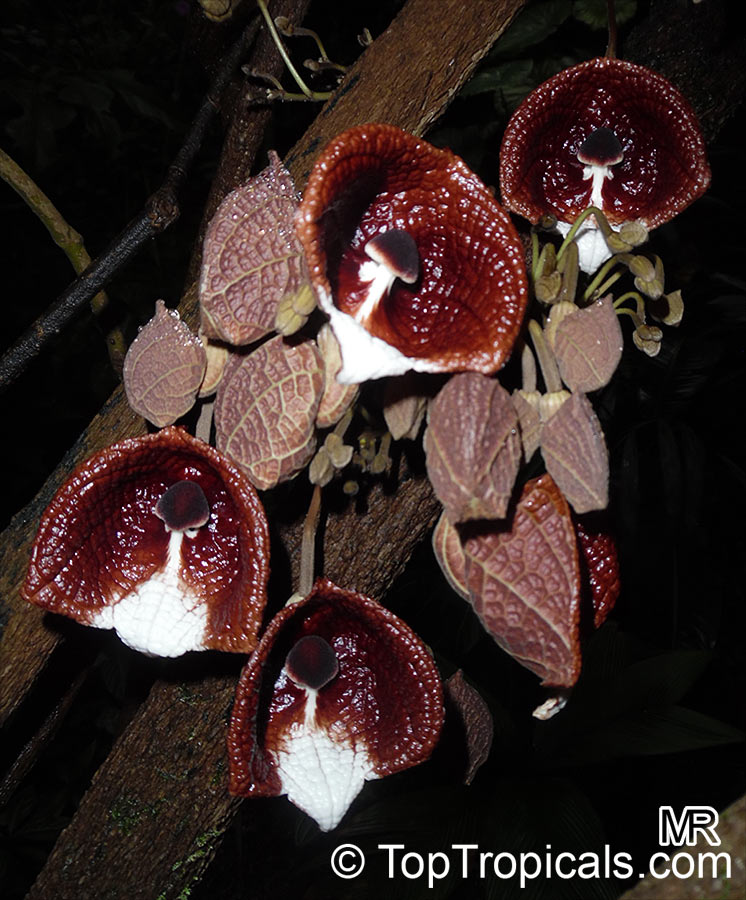
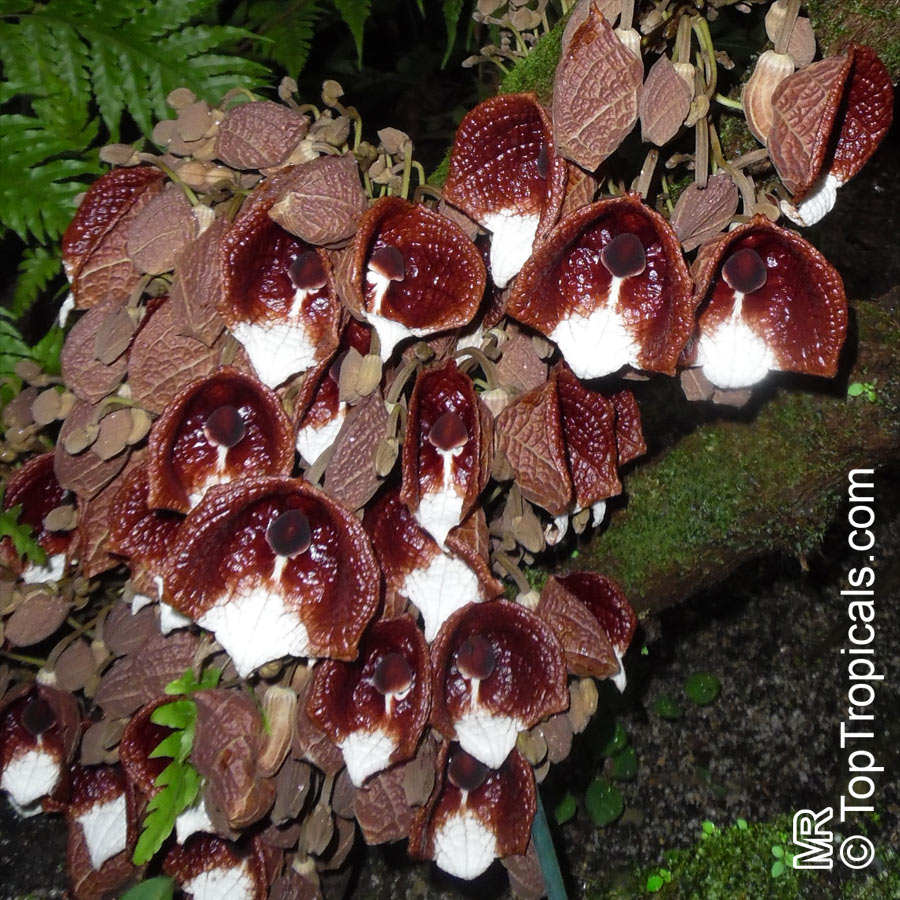
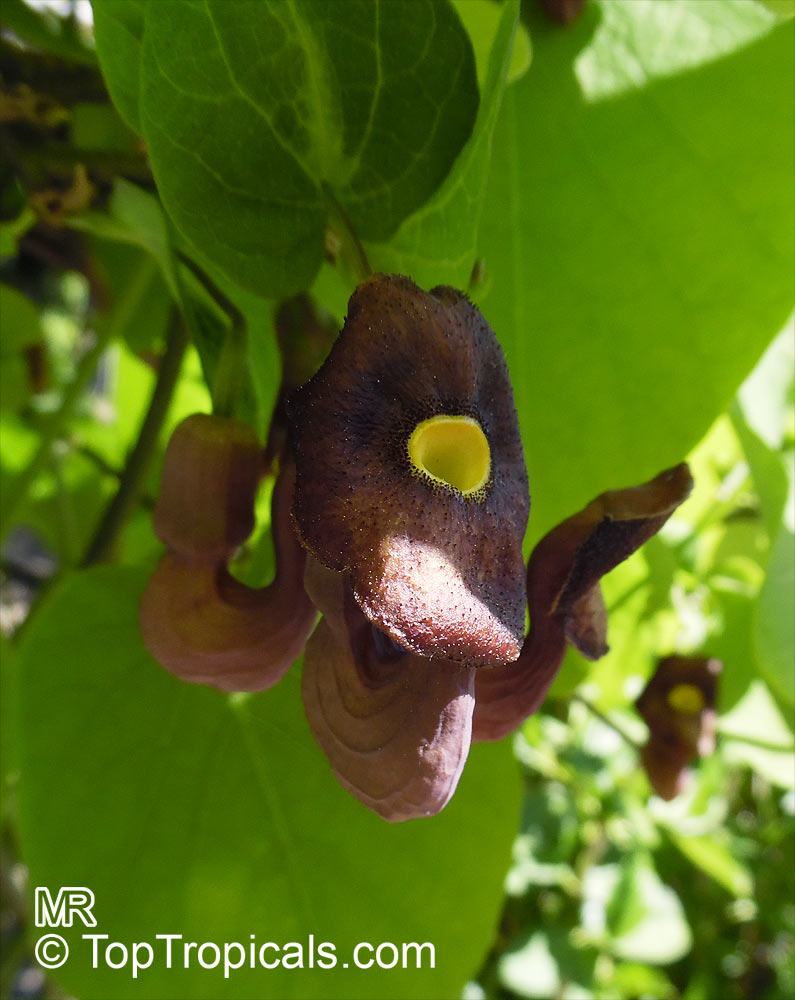
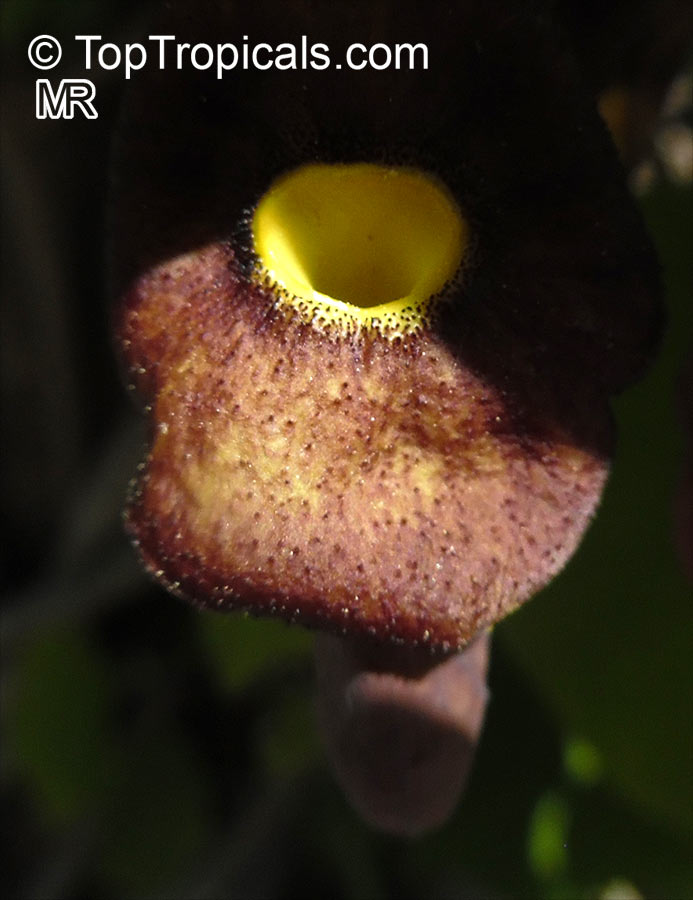
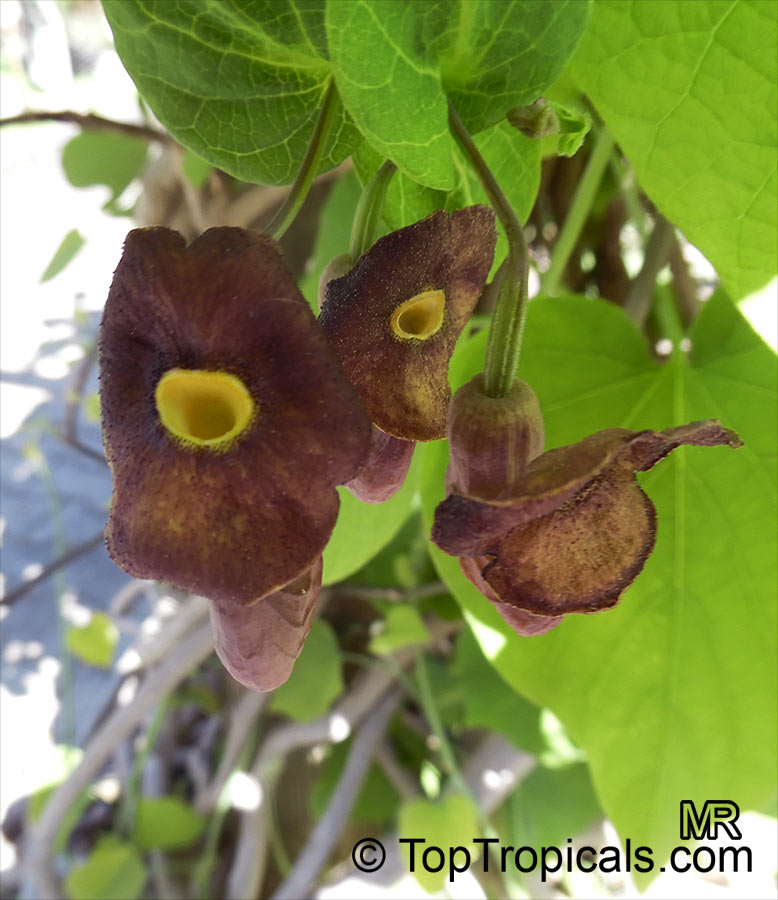
For truly stunning visuals, Aristolochia arborea boasts flowers that bloom in clusters near the base and occasionally a solitary or paired flower can be seen near the top of the tree. The flowers are quite unusual, resembling a small capped mushroom in the genus Marasmius.
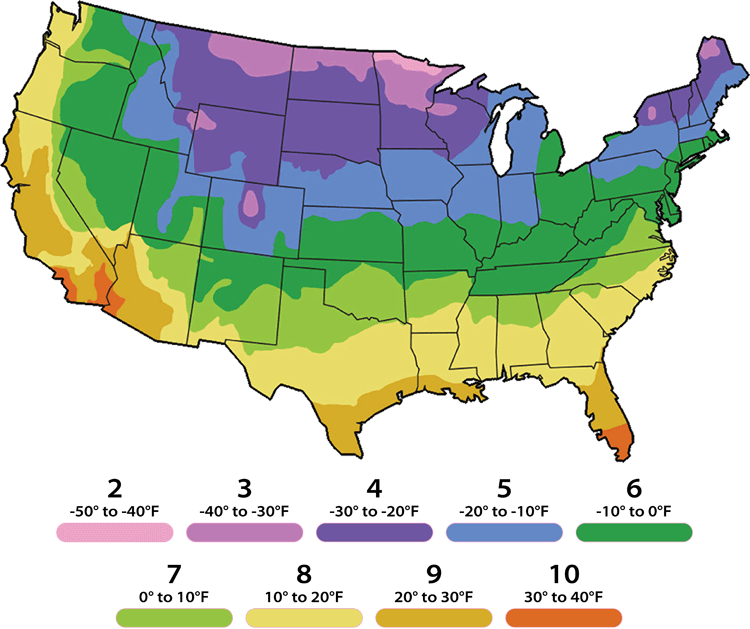
Aristolochia arborea is best grown in USDA zones 9 to 11, in a location where it will receive partial shade. It is important that soil remain consistently moist, without drying out between watering sessions. Propagation can be done with cuttings or division.
Gardeners located in cold regions can also enjoy growing Aristolochia arborea in a pot with the proper care. The container should be large enough to allow for adequate root growth, with a rich organic and well-draining soil. Water when soil is dry, but avoid overwatering. A bit of protection from the cold will be necessary if the temperature falls below freezing. To support the shrub's growth, use slow-release fertilizer and prune lightly.
In conclusion, Aristolochia arborea is a beautiful tree or shrub with unique and unusual flowers. With proper care and in the right location, Aristolochia arborea can be a welcome addition to any garden or natural area.






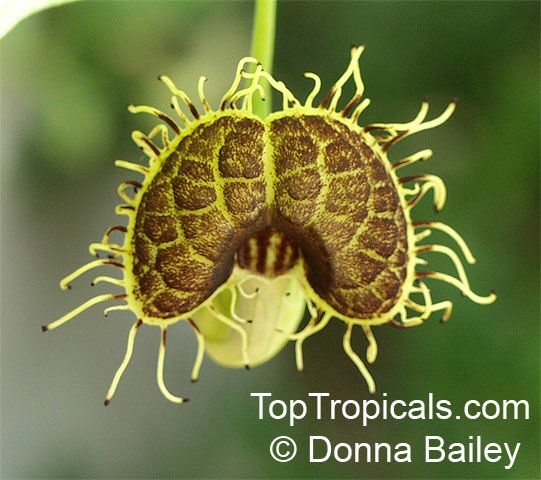
Botanical name: Aristolochia fimbriata
Common names: Fringed Aristolochia, Fringed Dutchman's Pipe
Family: Aristolochiaceae
Origin: Southern Brazil


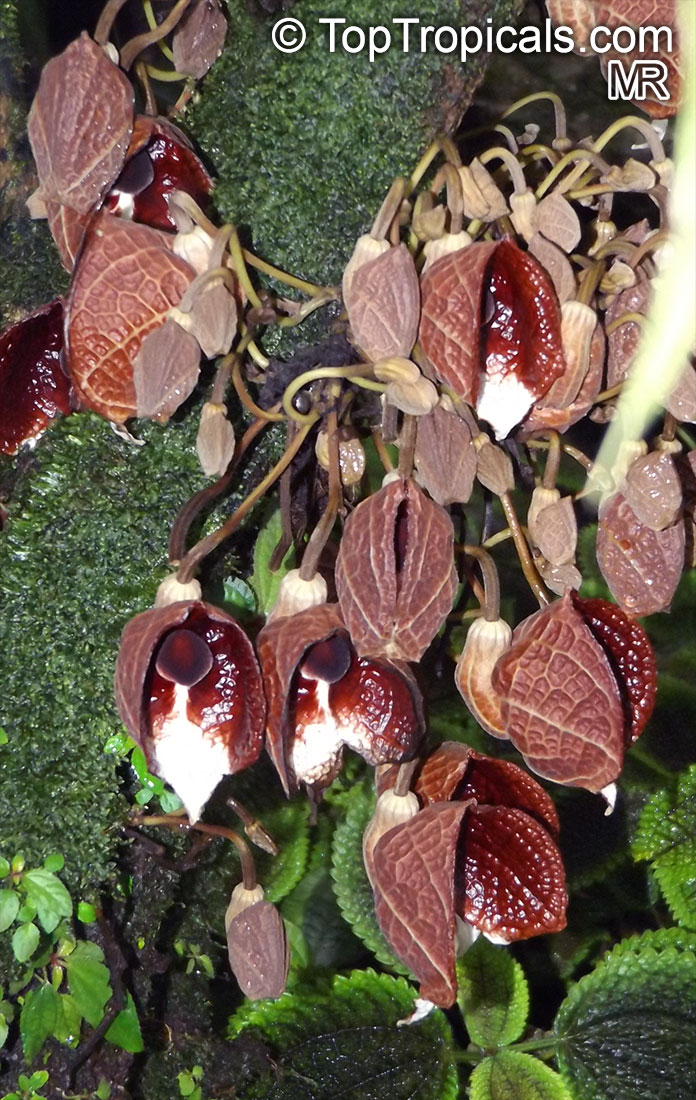
Aristolochia fimbriata is an excellent hanging basket plant. Each rounded leaf is medium green, highlighted with dramatic silver veining.
Aristolochia fimbriata like to grow in a light and airy place, but not in direct sunlight. Water regularly during the growth period, once or twice a week. Water no more than once a week during winter. In winter, the stems retreat back to the base. It grows best in rich, well-drained soil.

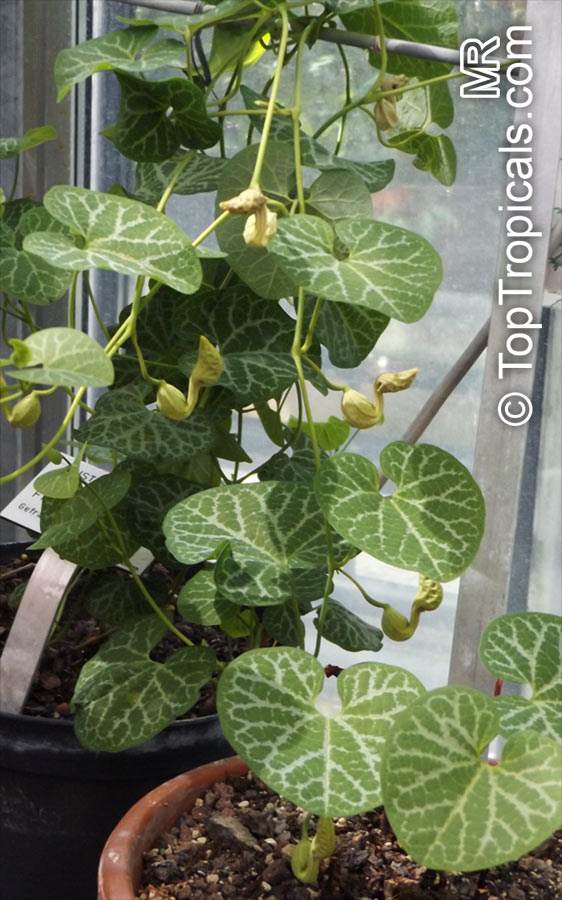
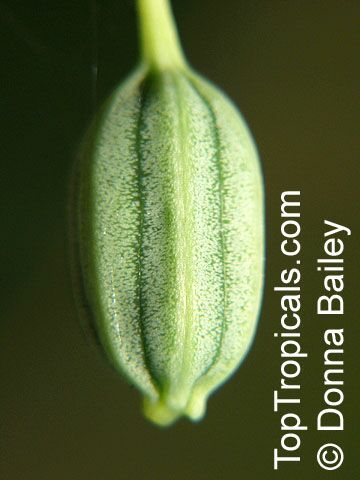
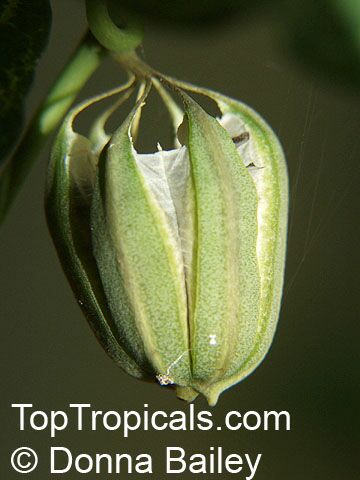
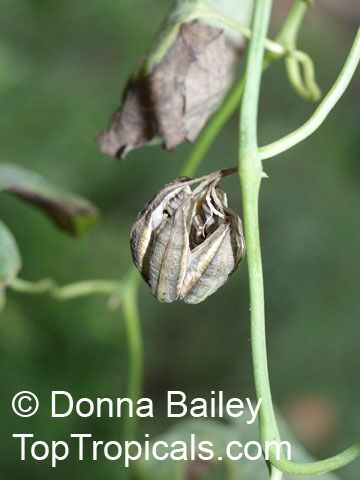

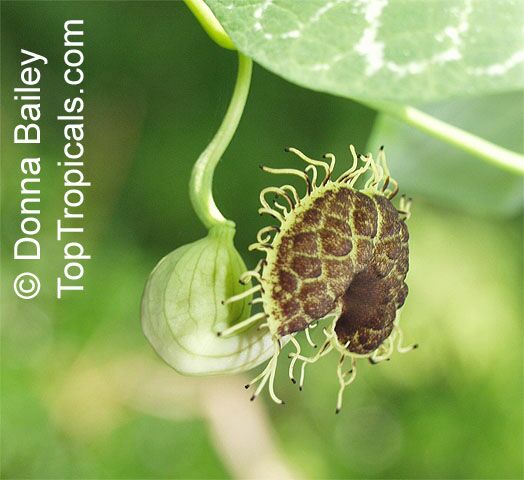
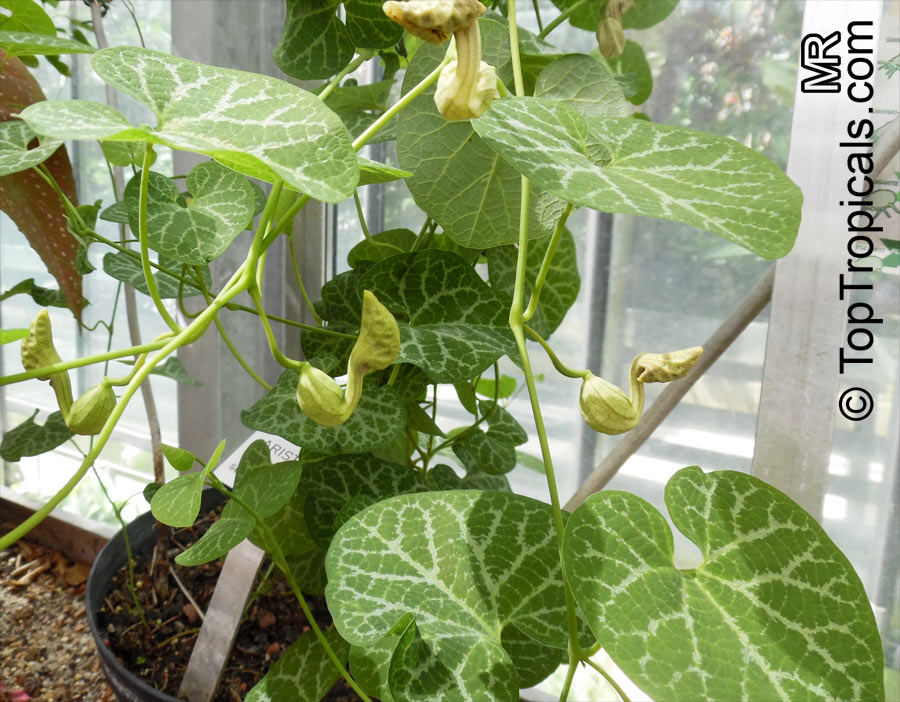

Botanical name: Aristolochia gibertii
Common name: Dutchman's Pipe
Family: Aristolochiaceae

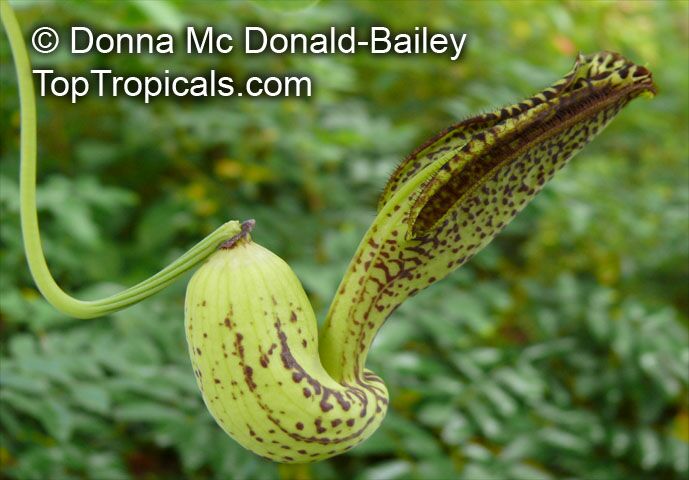
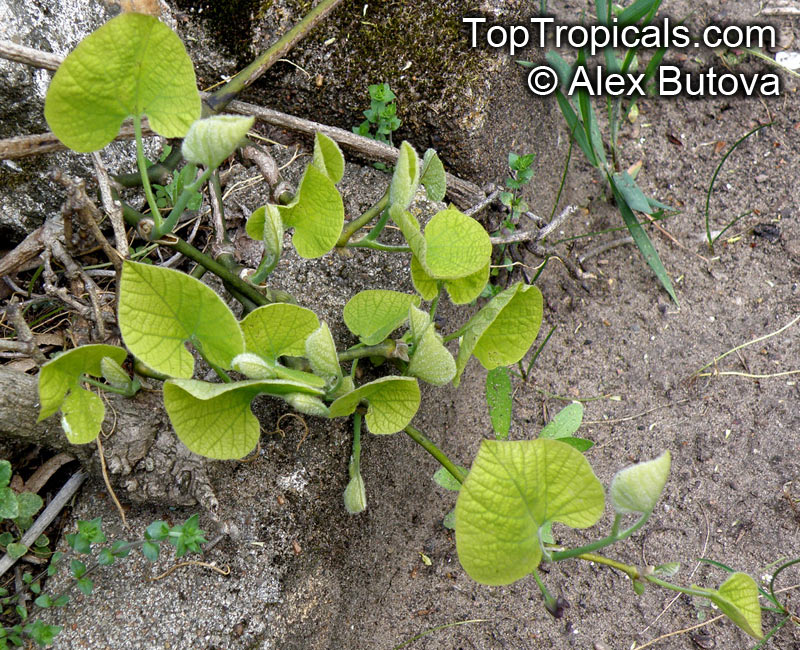
Aristolochia gibertii is a twining perennial vine native to South America, known for its vigorous climbing habit and unusual tubular flowers that attract specialist pollinators.
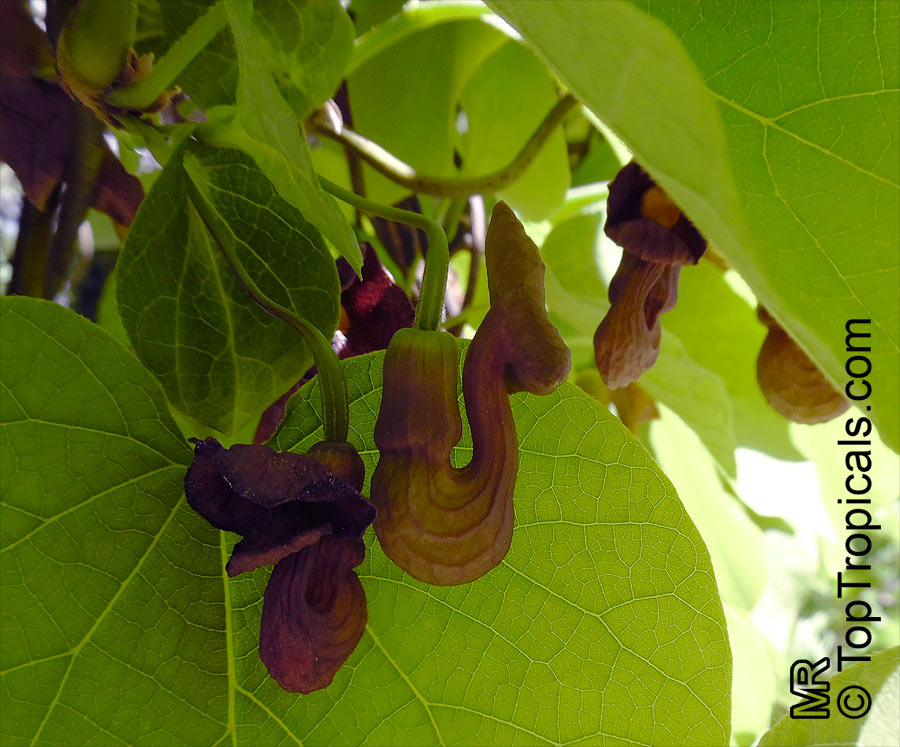
It develops long flexible stems that cling to supports and produce broad heart shaped leaves, forming a dense green cover in warm seasons. The flowers appear along the stems and show the characteristic curved pipe shape typical of the genus, with mottled brown and cream coloring. This species grows reliably in warm, humid climates and adapts well to trellises, fences, and pergolas.
What are the key features of Aristolochia gibertii?
This vine prefers bright filtered light or light shade and grows best in evenly moist, well drained soil. It responds to warmth and steady humidity, showing reduced vigor if exposed to prolonged dryness or cold. It is frost sensitive and should be protected from temperatures near 40 F. Suitable for USDA Zones 10-11. Container growing is possible in warm regions, with pruning helping to control length and encourage new growth.
Aristolochia gilbertii is similar to Aristolochia ringens.

Botanical name: Aristolochia gigantea
Common names: Calico Flower, Giant Pelican Flower
Family: Aristolochiaceae
Origin: Brazil, Mexico, Panama


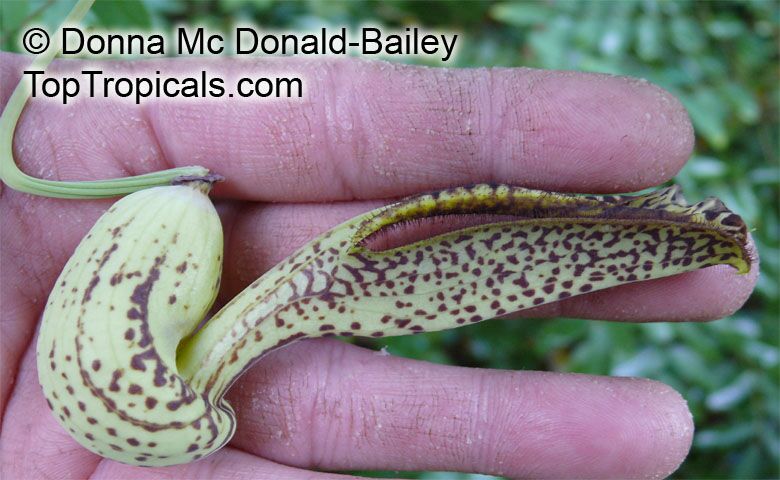
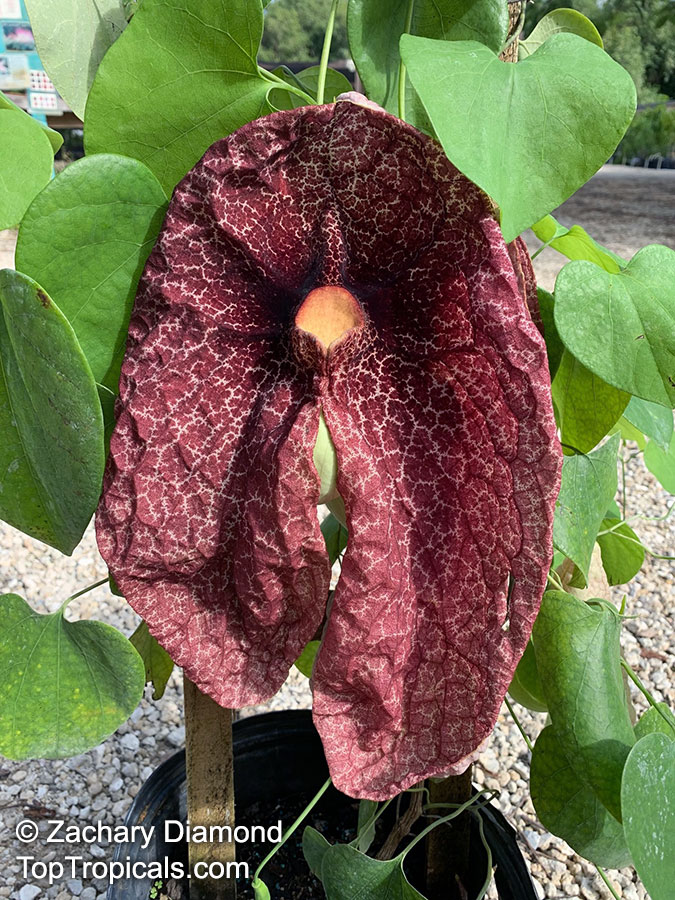
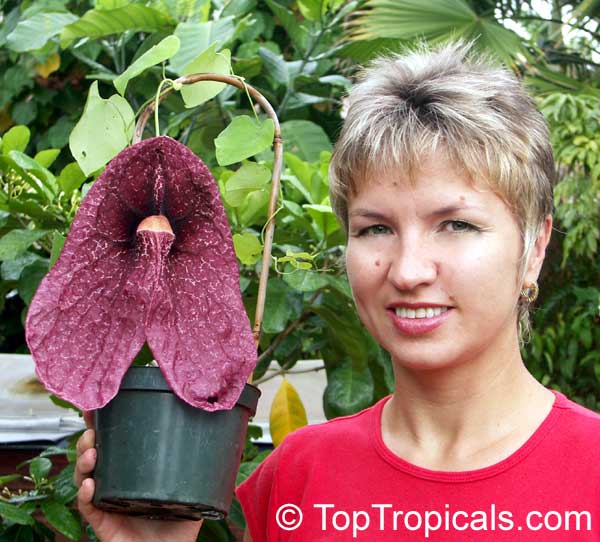
The Aristolochia gigantea will inspire a sense of marvel to anyone who gazes upon it. This truly spectacular blossom produces a pouch that in some cultivars is almost 2 feet long and more than a foot across. Ivory veins network across a burgundy velvet background as the flower unfurls. Heart-shaped, light green leaves, about 6 inches in length, adorn this easy-to-grow vine. The plant blooms at a young age and grows in full sun or partial shade.
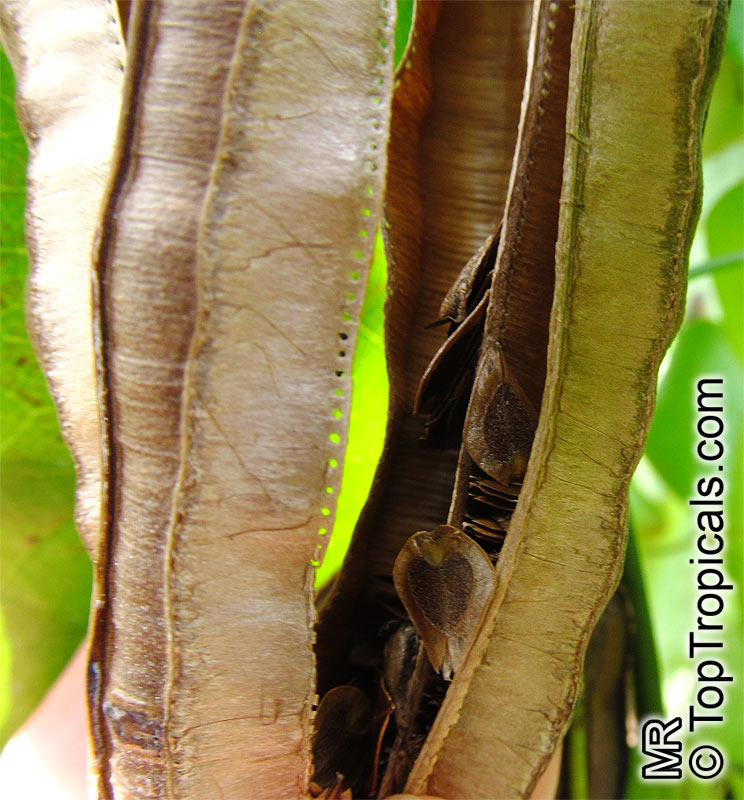
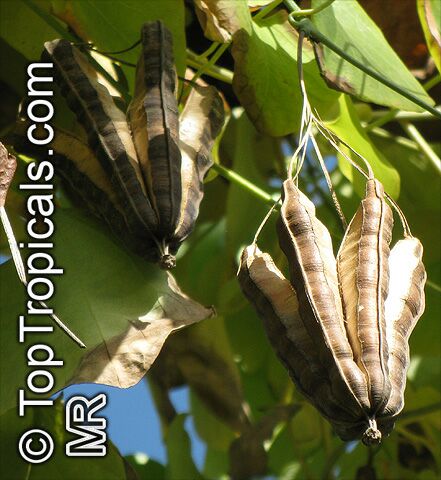
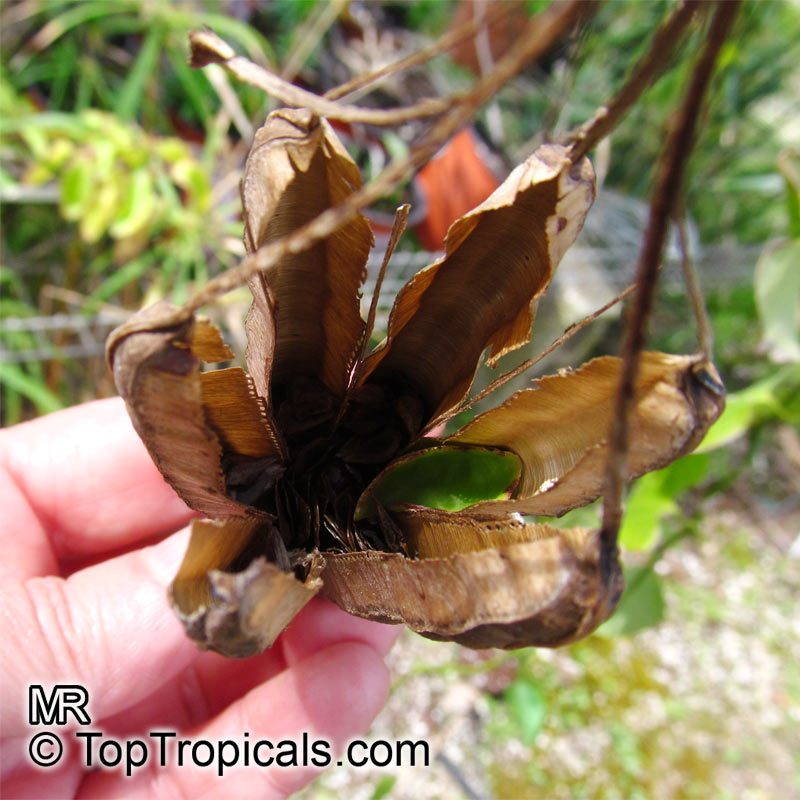
In some sources, Aristolochia gigantea is considered as Aristolochia grandiflora var. Hookeri. The cultivation of Aristolochias is undemanding. Sun lovers that appreciate some shade in hotter inland areas, they adapt to any soil that drains well. Any pruning necessary to contain or shape the plants should be done in late winter or early spring. Cultivation is easy, and growth can be tamed. Papery capsule containing many seeds.
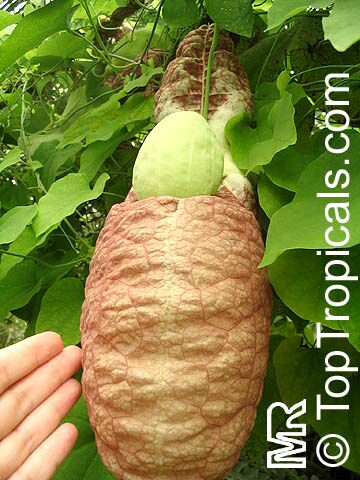
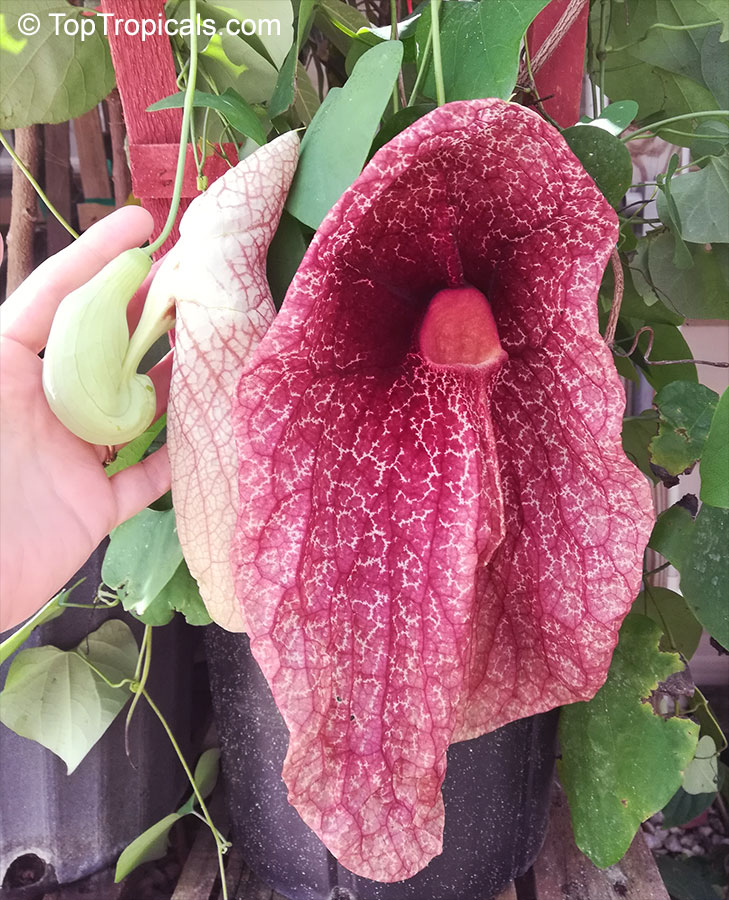
A. gigantea var. Brasiliensis has even larger lemon-scented flowers and exhibits an elaborate pattern of white and mottled reddish brown. Since it is not a vigorous vine, it can easily be trained on a stake, trellis or even a hanging basket.
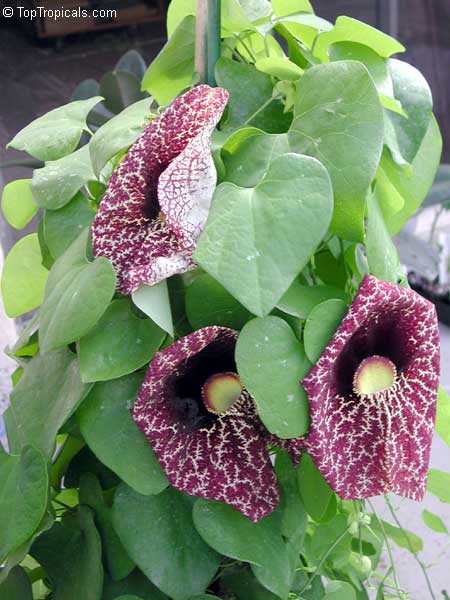
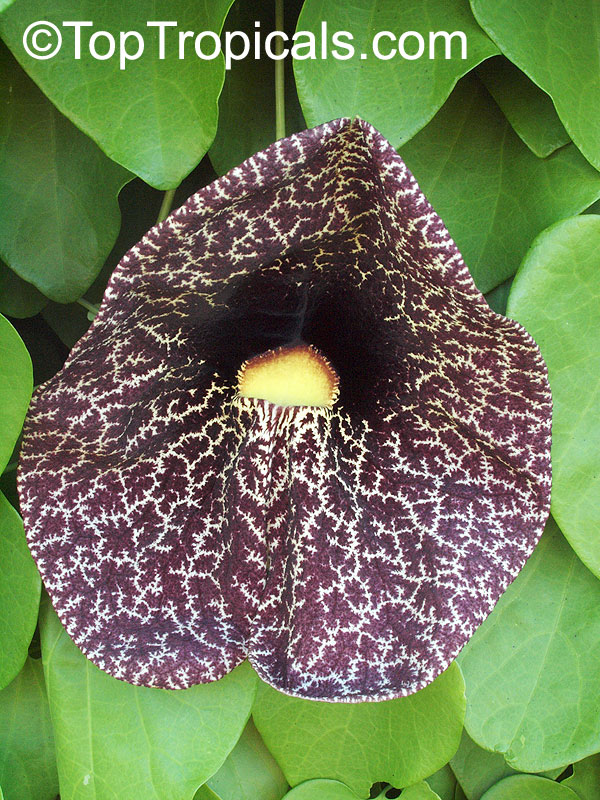
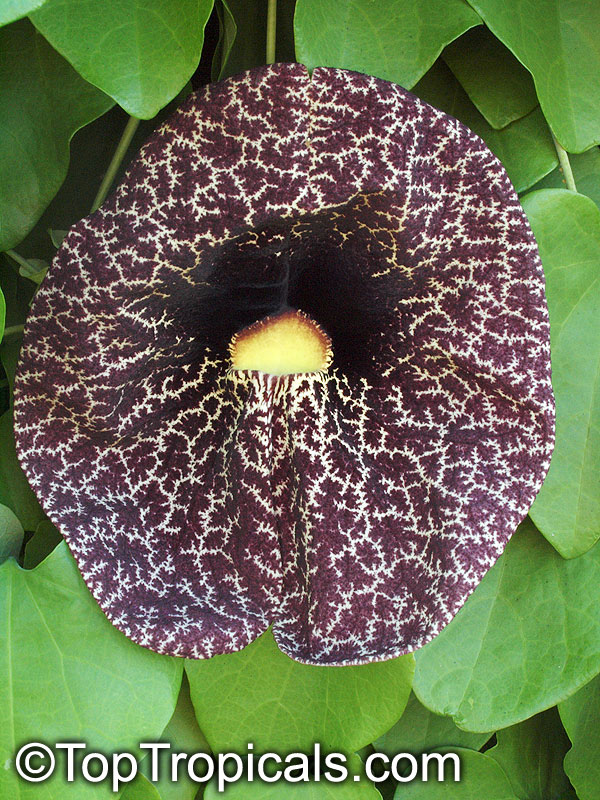
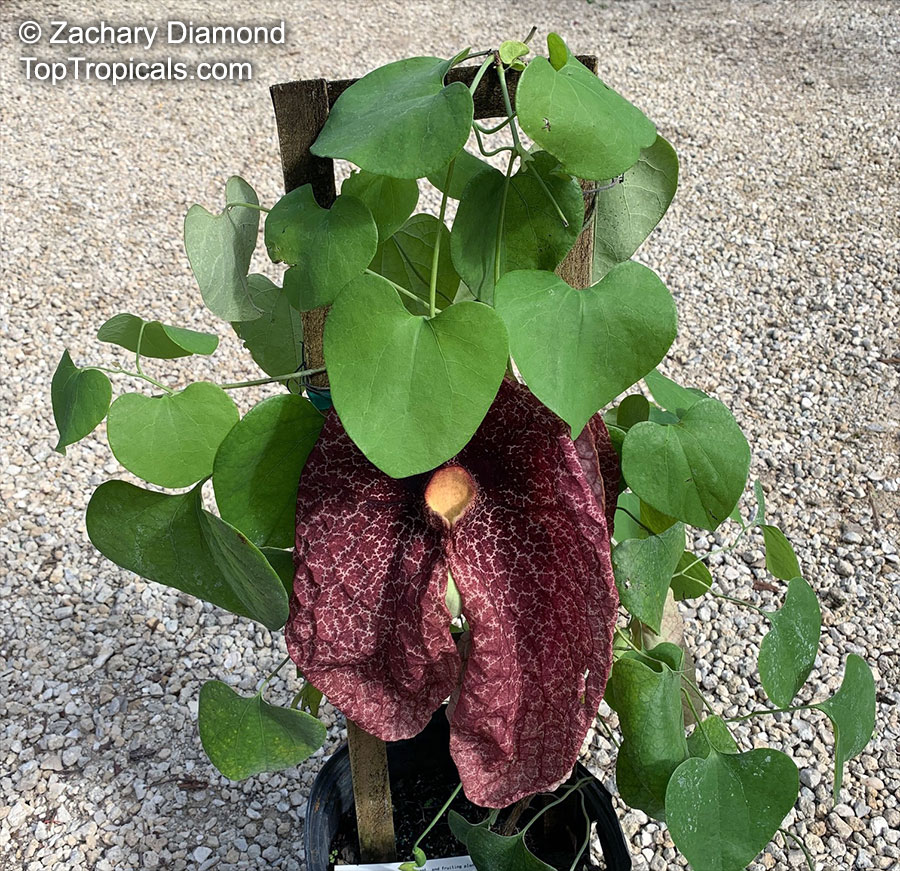
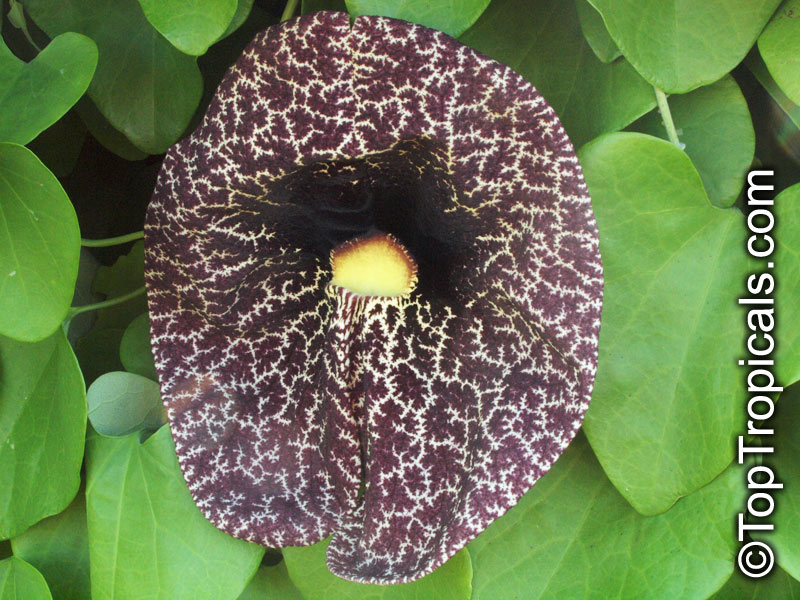
The Aristolochia gigantea will inspire a sense of marvel to anyone who gazes upon it. This truly spectacular blossom produces a pouch that in some cultivars is almost 2 feet long and more than a foot across. Ivory veins network across a burgundy velvet background as the flower unfurls. Heart-shaped, light green leaves, about 6 inches in length, adorn this easy-to-grow vine. The plant blooms at a young age and grows in full sun or partial shade.
In some sources, Aristolochia gigantea is considered as Aristolochia grandiflora var. Hookeri. The cultivation of Aristolochias is undemanding. Sun lovers that appreciate some shade in hotter inland areas, they adapt to any soil that drains well. Any pruning necessary to contain or shape the plants should be done in late winter or early spring. Cultivation is easy, and growth can be tamed.
Recommended Fertilizer: SUNSHINE Megaflor - Bloom Nutrition Booster
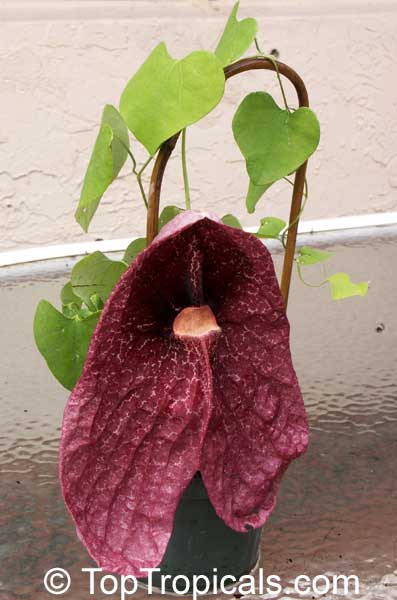
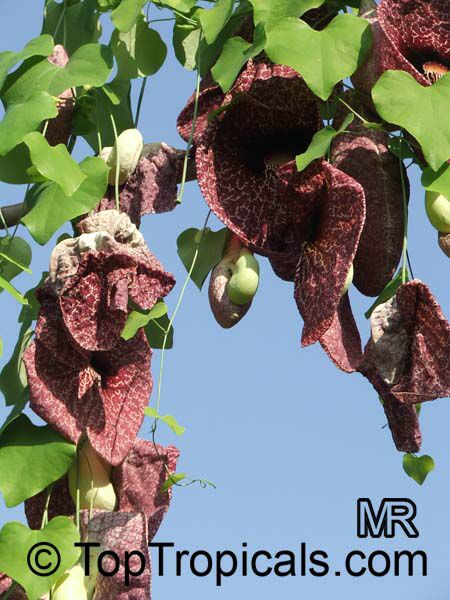
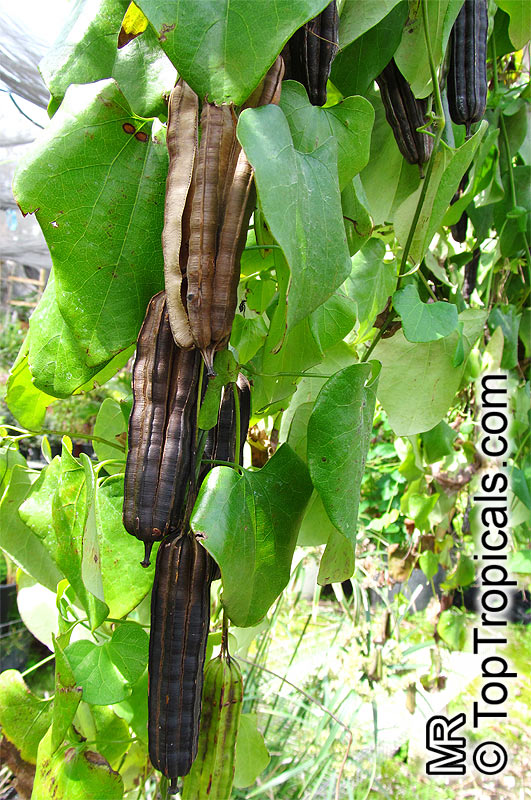
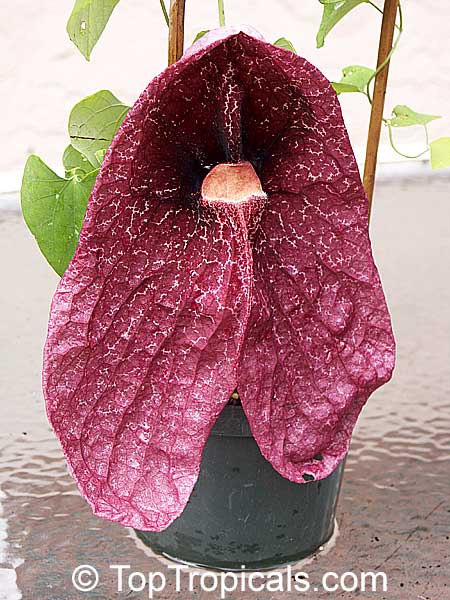
Botanical name: Aristolochia gigantea var. brasiliensis
Common names: Giant Calico Flower, Giant Pelican Flower
Cultivar: Brasiliensis
Family: Aristolochiaceae
Origin: Brazil and Mexico


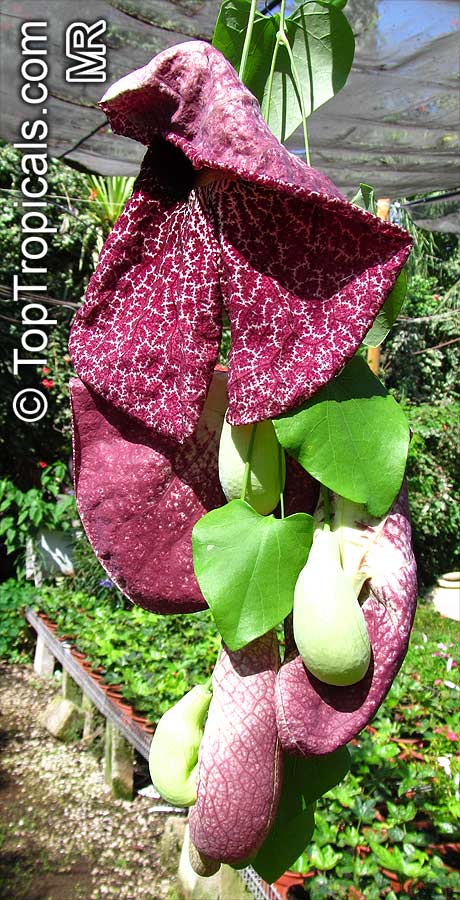
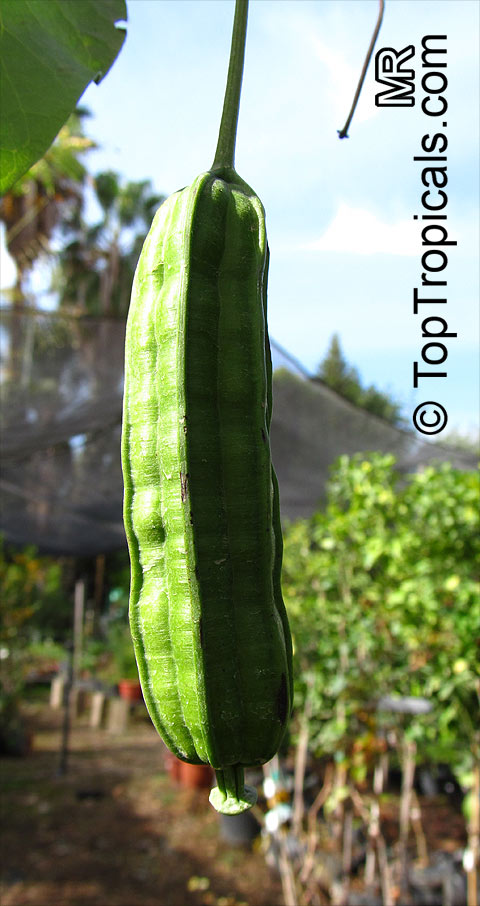
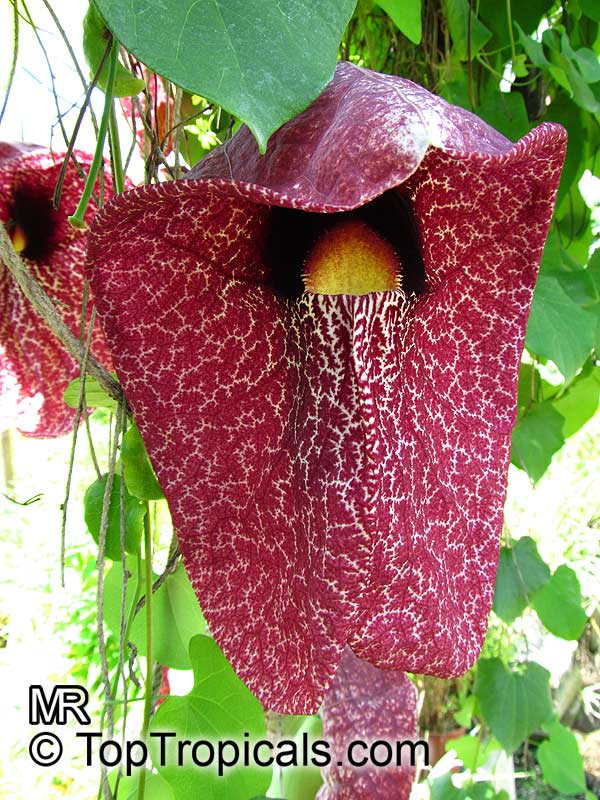
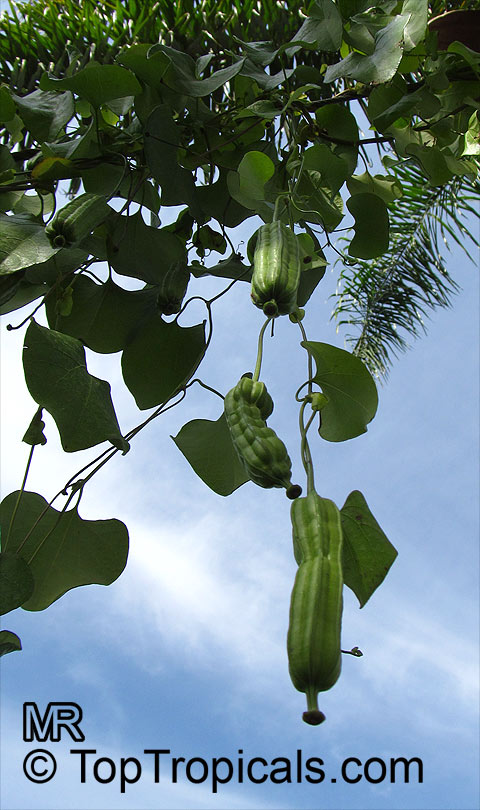
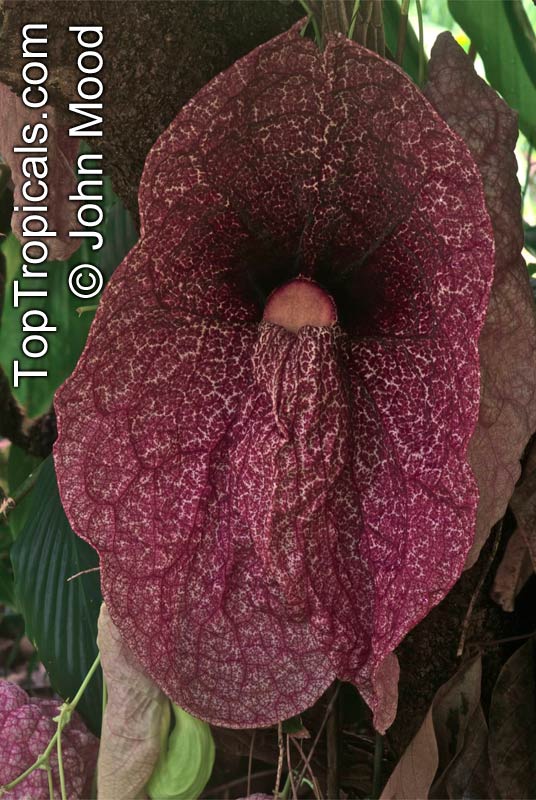
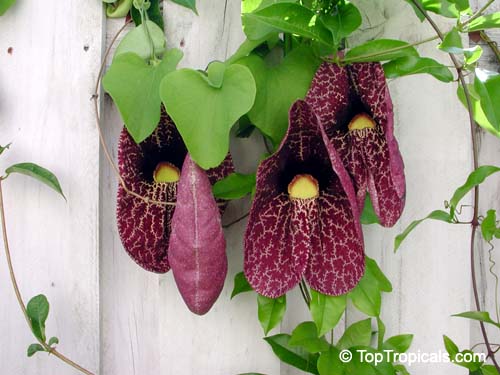
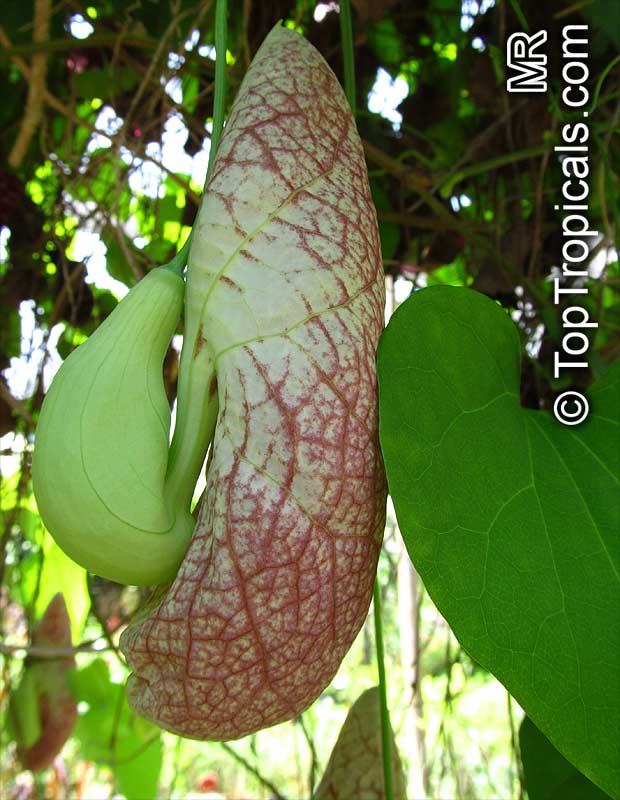
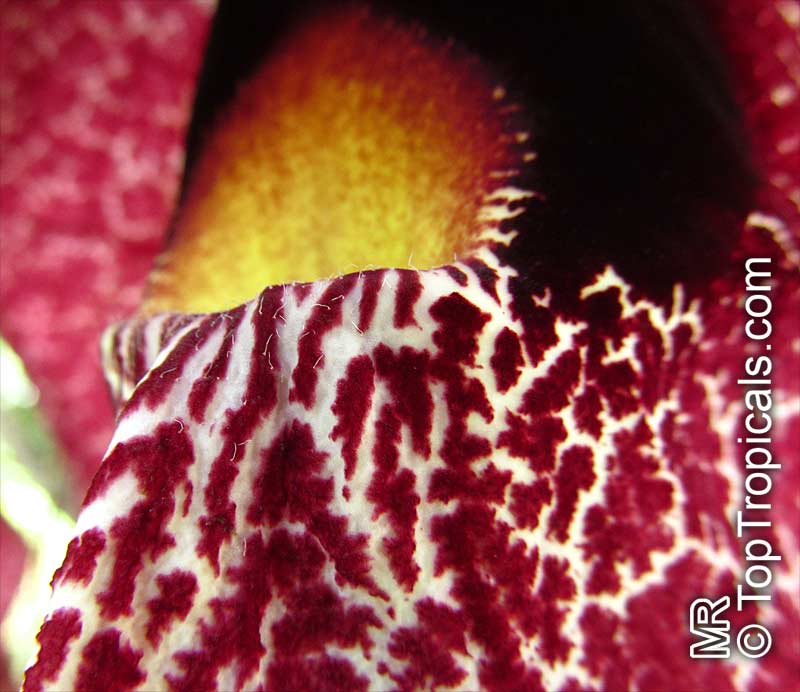
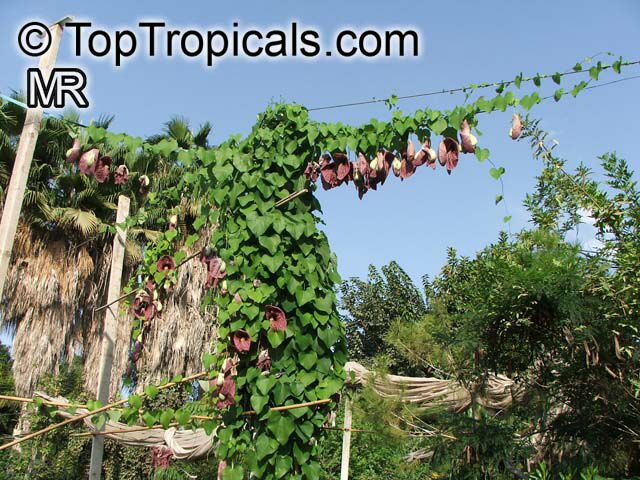
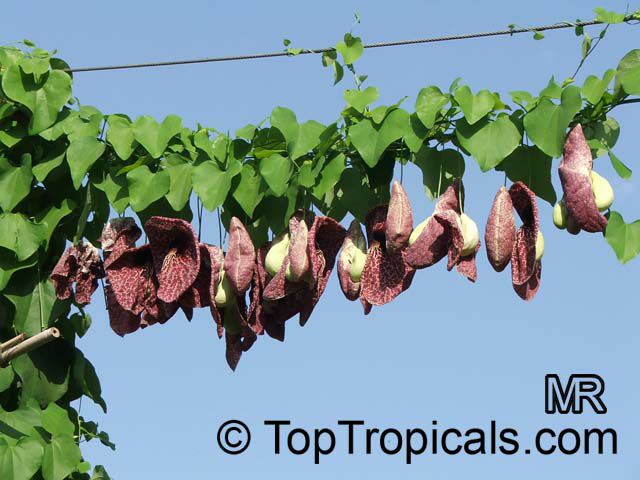
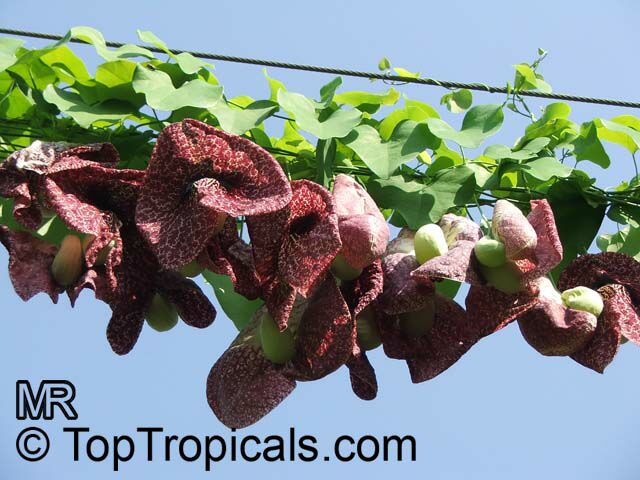
Variety Brasiliensis is an exceptional cultivar of A. gigantea. It has even larger flowers that are lemon-scented and exhibits an elaborate pattern of white and mottled reddish brown. Since it is not a vigorous vine, it can easily be trained on a stake, trellis or even a hanging basket.
It is important not to confuse "Brasilensis" cultivar of A. gigantea with Aristolochia brasilensis - a synonym of A. labiata.



Recommended Fertilizer: SUNSHINE Megaflor - Bloom Nutrition Booster
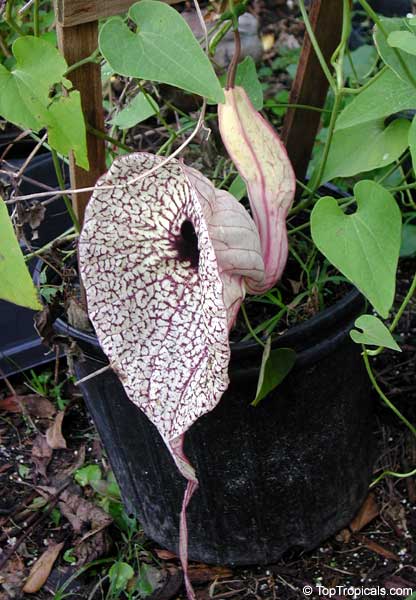
Botanical names: Aristolochia grandiflora, Aristolochia gigas
Common names: Calico Flower, Pelican Flower
Family: Aristolochiaceae
Origin: Brazil, Mexico, Panama

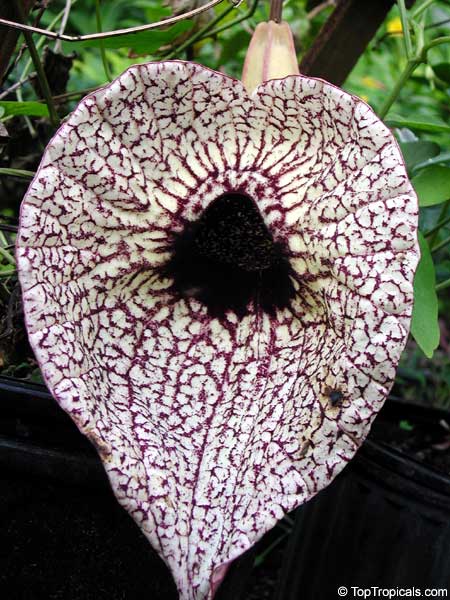
This creeper produces a gargantuan flower that is more beautiful than Aristolochia gigantea (in some sources, Aristolochia gigantea is considered as Aristolochia grandiflora var. Hookeri). The solitary blooms have heart-shaped faces about a foot long and 8 inches wide. Rich purple blotches and veins cover the creamy white face of the flower. At the center of the blossom, a livid purple bull's-eye leads to an inflated pouch. As added adornment, a foot-long, slender tail hangs from the flower. There is a malodorous aspect to the bloom; however, it dissipates after the first 24 hours. Papery capsule containing many seeds.
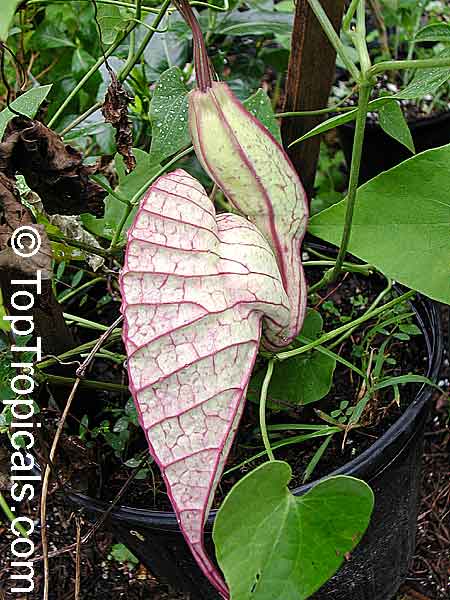
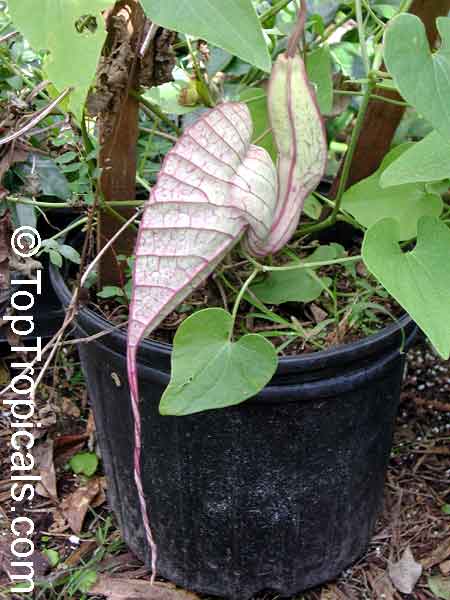
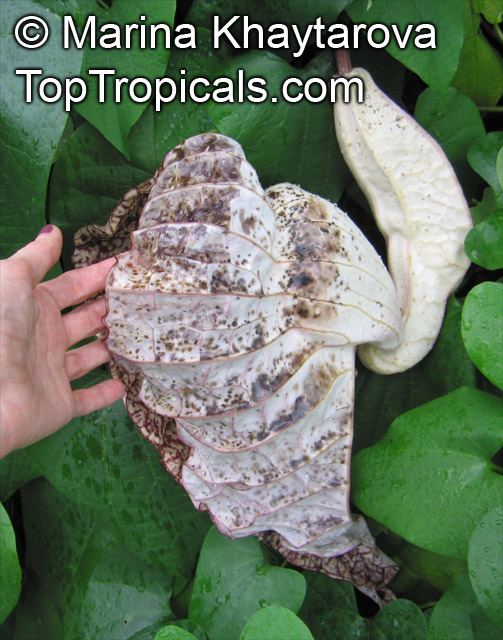
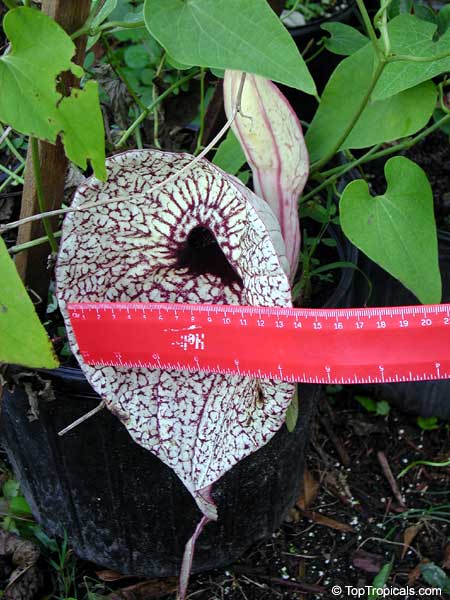
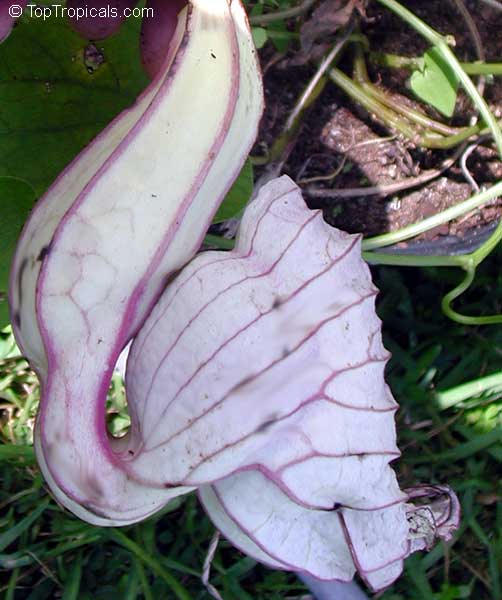


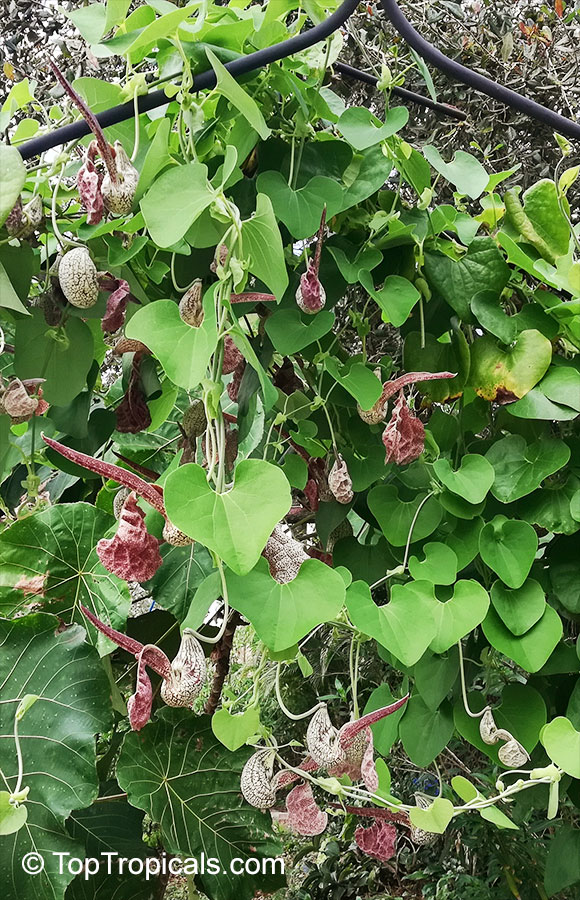
Botanical names: Aristolochia labiata, Aristolochia brasiliensis
Common names: Mottled Dutchman's Pipe, Roster Flower
Family: Aristolochiaceae
Origin: Brazil
Vigorous climbing vine, tropical to subtropical.
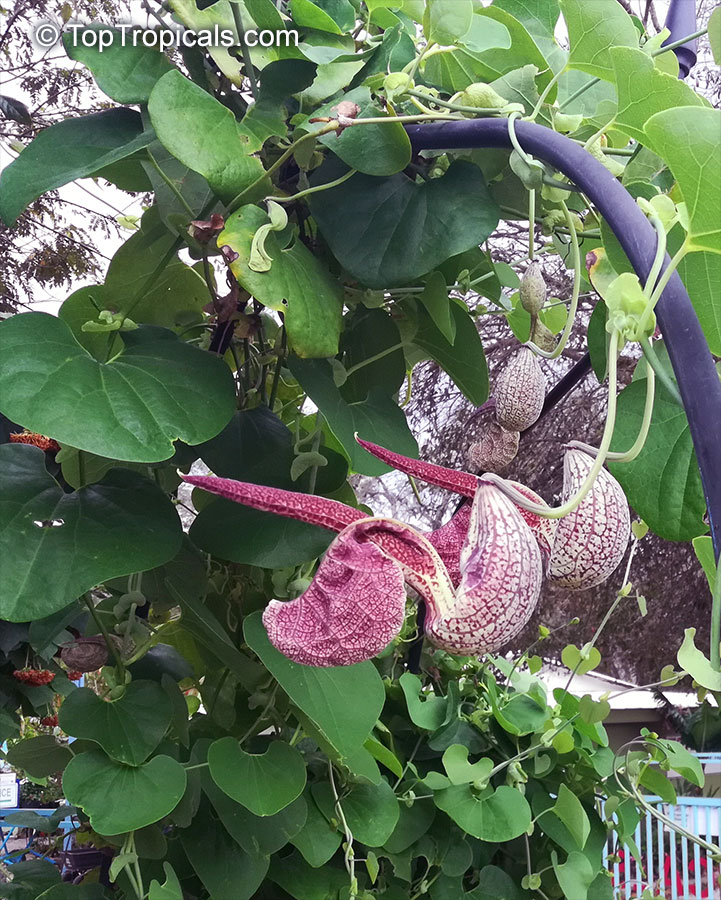
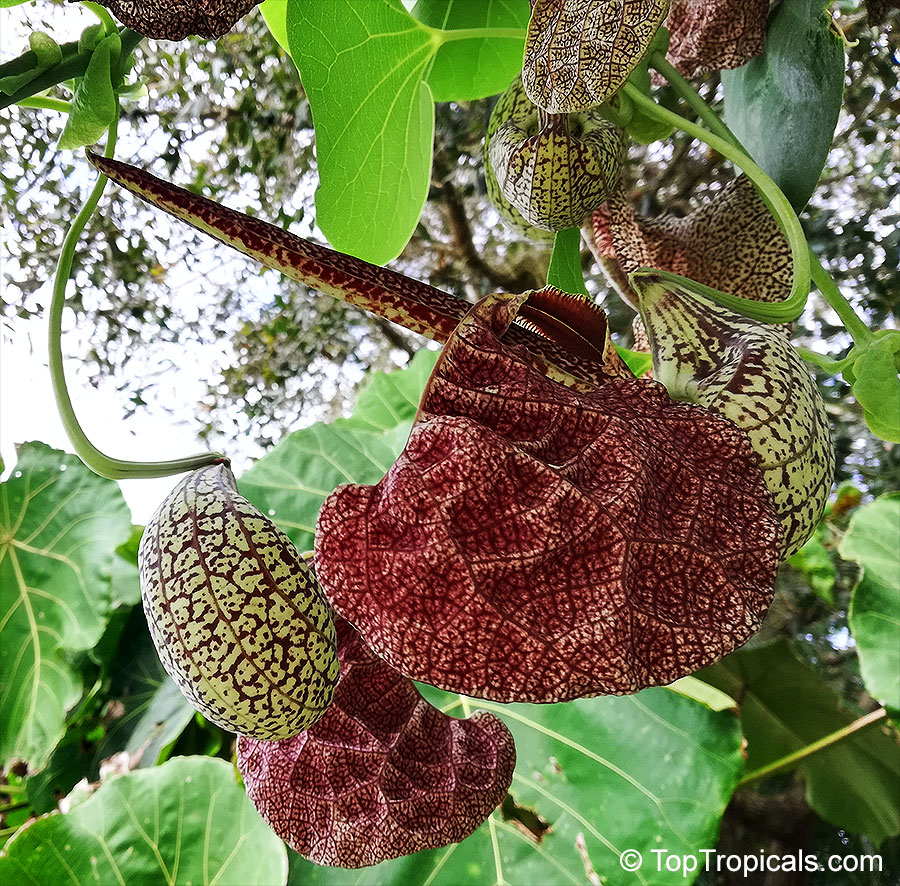
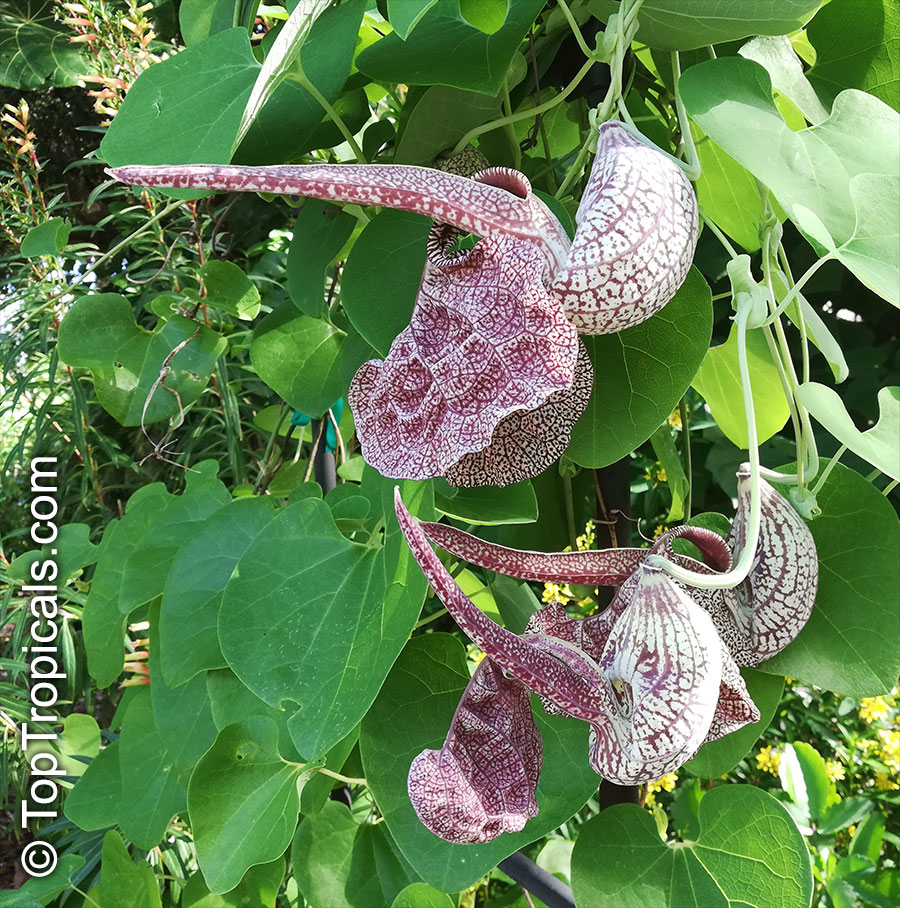
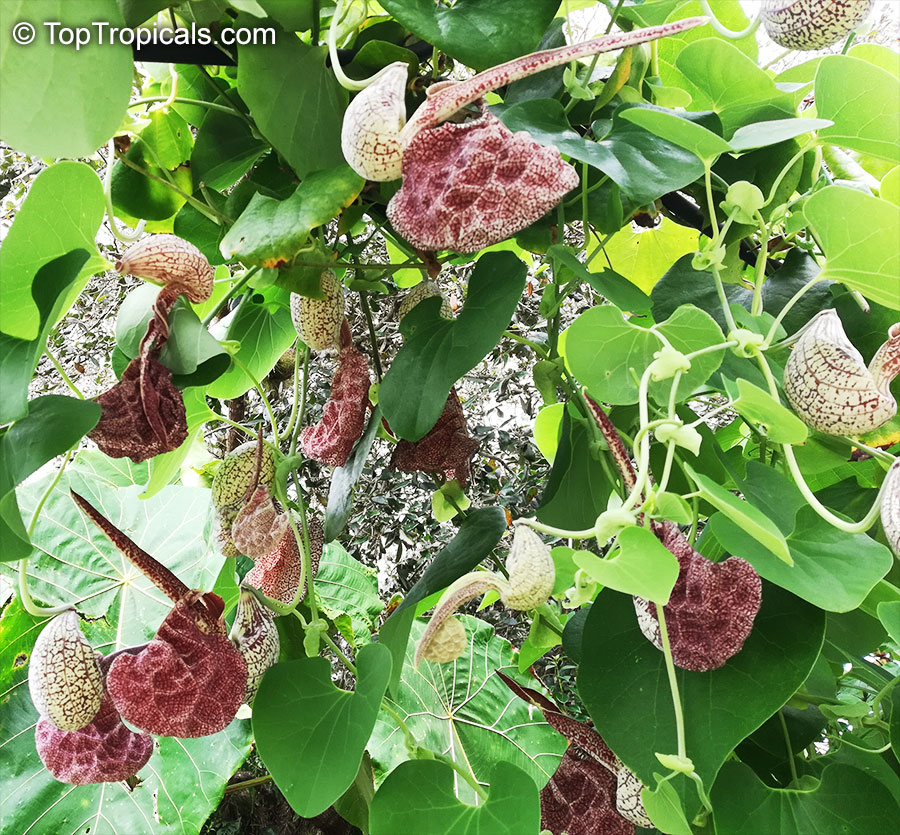
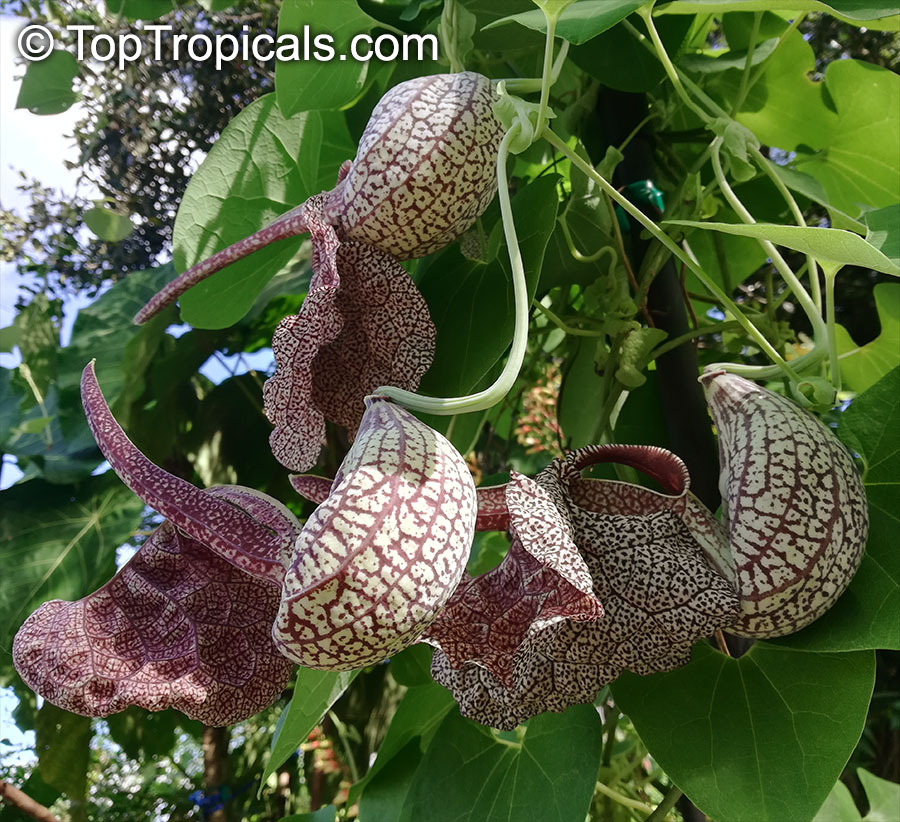
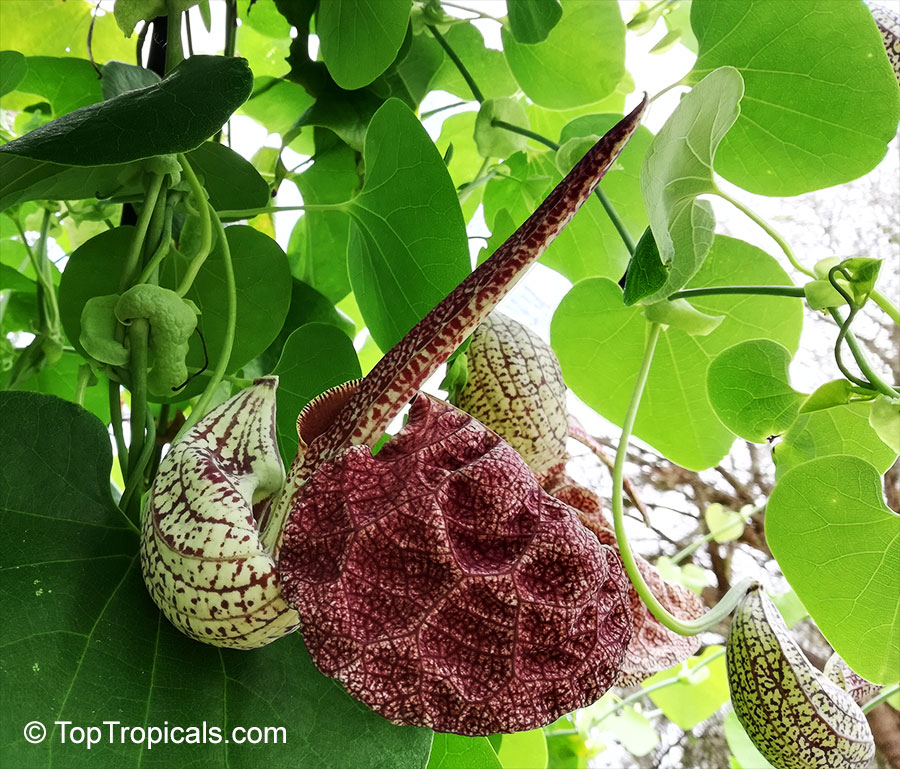
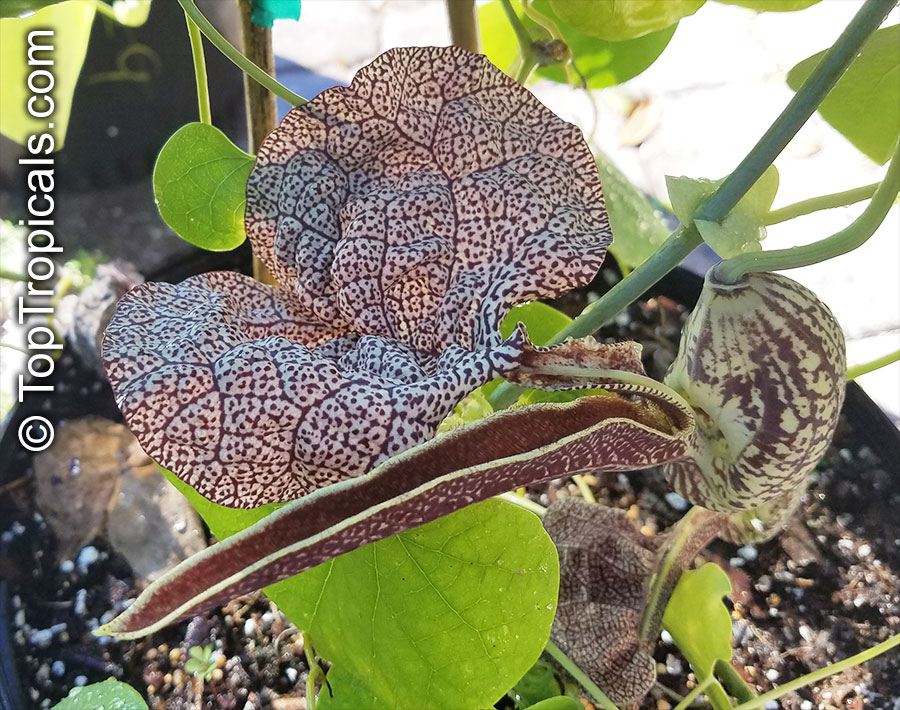
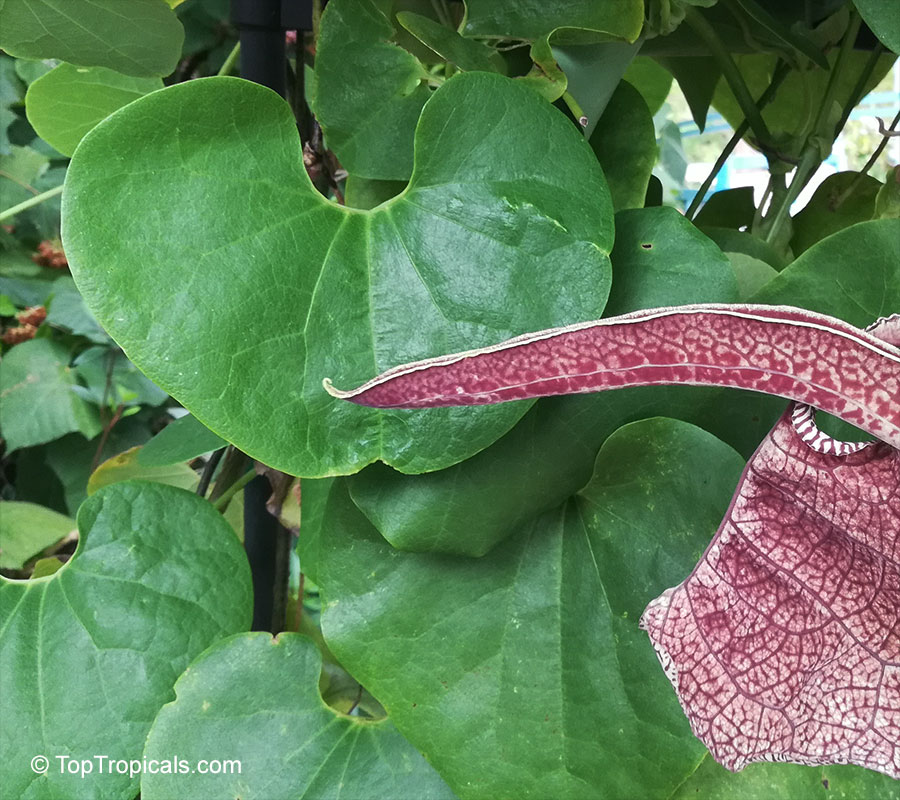
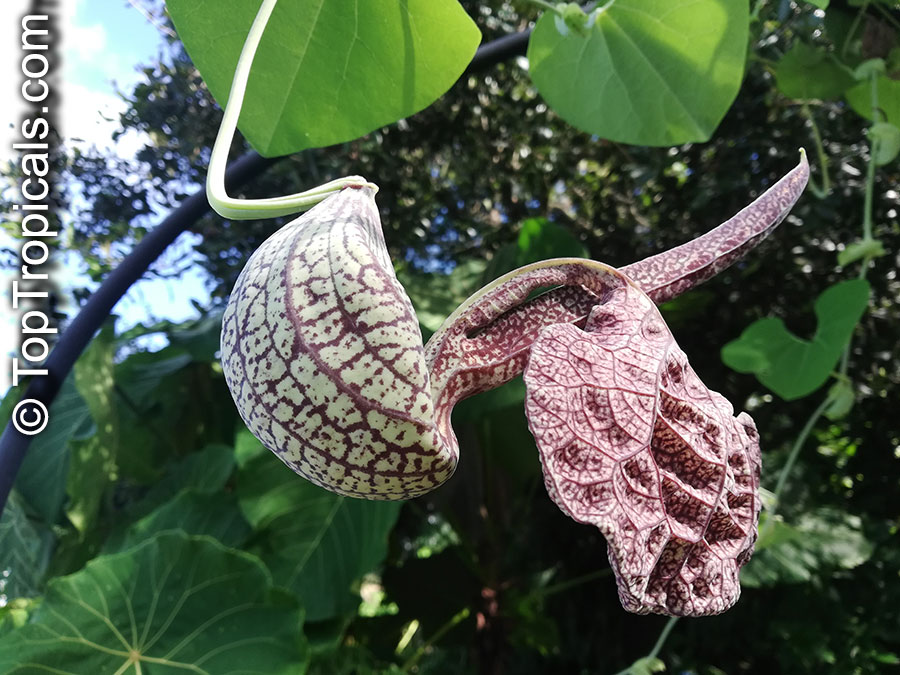
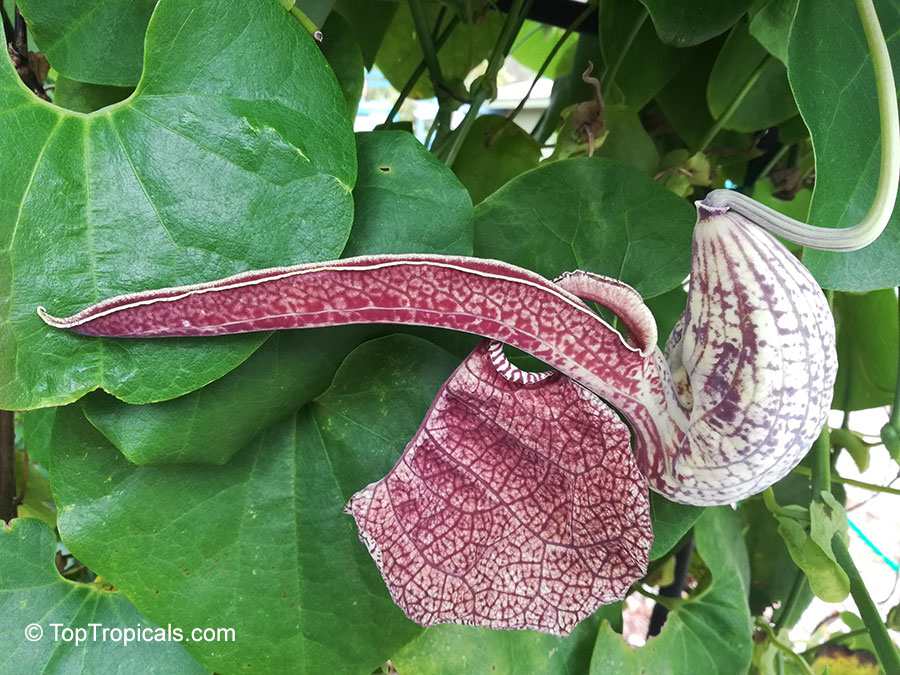
Aristolochia labiata flower has somewhat similar shape to Aristolochia ringens but has much bigger calyx which is dingy-yellow with purple veins. Tube of the flower is inflated, with 2-lipped limb; the upper lip is narrow, up to 4" long, and the lower lip expanded into a reniform lobe 4" long and 7" across. Leaves are large, up to 8" across.
It is important not to confuse Aristolochia brasilensis, a synonym of Aristolochia labiata, with "Brasilensis" cultivar of Aristolochia gigantea.
Botanical name: Aristolochia leuconeura
Common name: Pipe Flower
Family: Aristolochiaceae
Origin: Costa Rica
Aristolochia leuconeura (Pipe Flower) is a vine or creeper native to Costa Rica and grows in USDA Zone 9-11. It has unusual colored flowers and ornamental foliage that attracts butterflies and hummingbirds, making it a great choice for the garden.
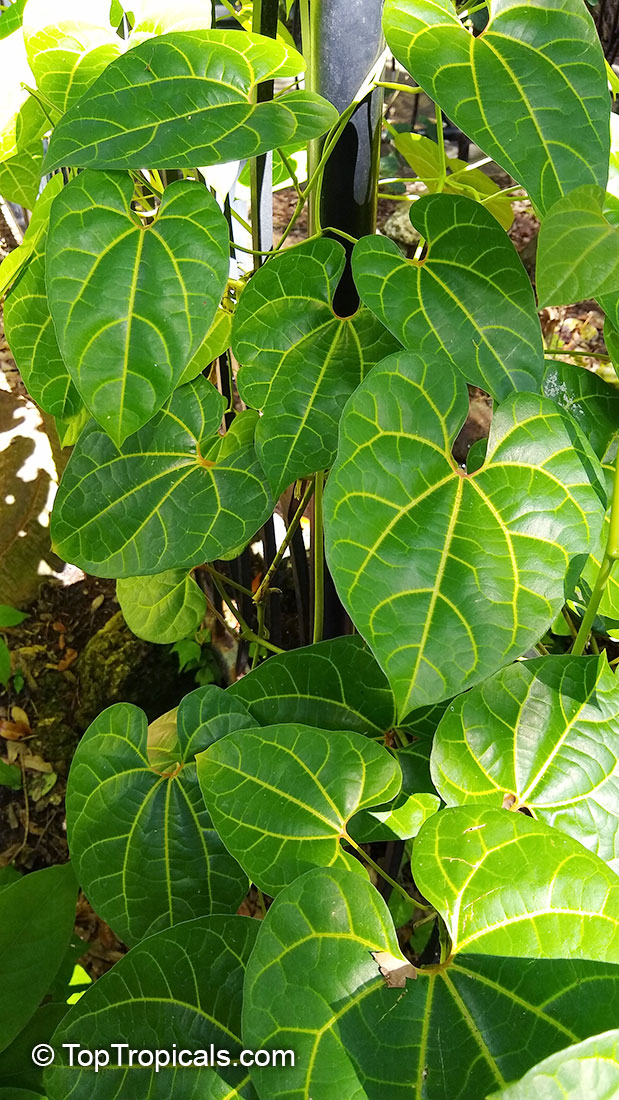
This plant requires full sun to semi-shade and regular watering. It prefers soil that is kept moist, but not soggy. The leaves are 5-6 inches wide and leathery, almost like aroid leaves. The small flowers are an unusual shape too.
Grown in a pot, Aristolochia leuconeura can be moved indoors or protected in cold weather if it is expected to drop below 30s F for a short period of time. It is best to cover the pot if the temperature drops too low so the roots will not be damaged. If growing in the ground, mulching can help the plant survive cold weather.
Aristolochia leuconeura is a great way to add unusual color and texture to your garden.




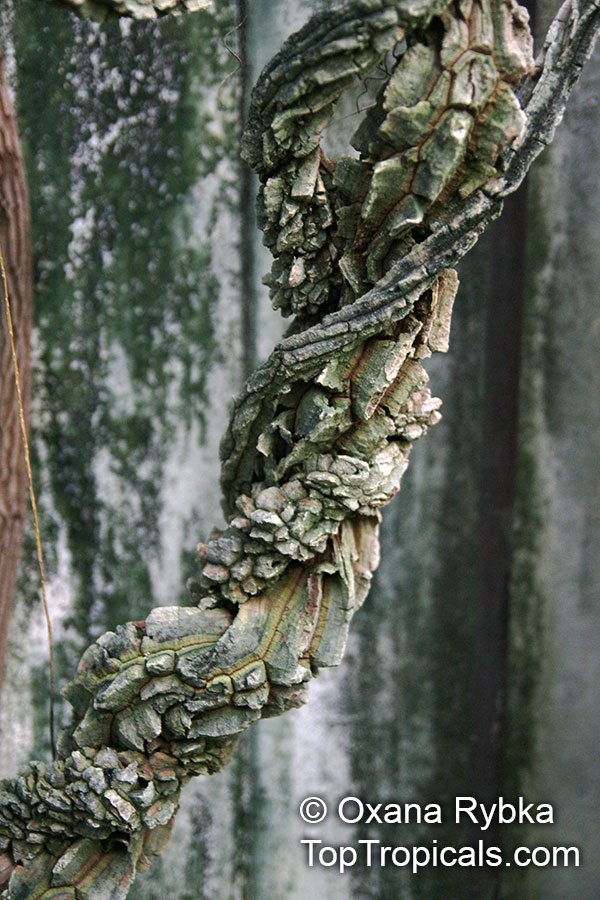
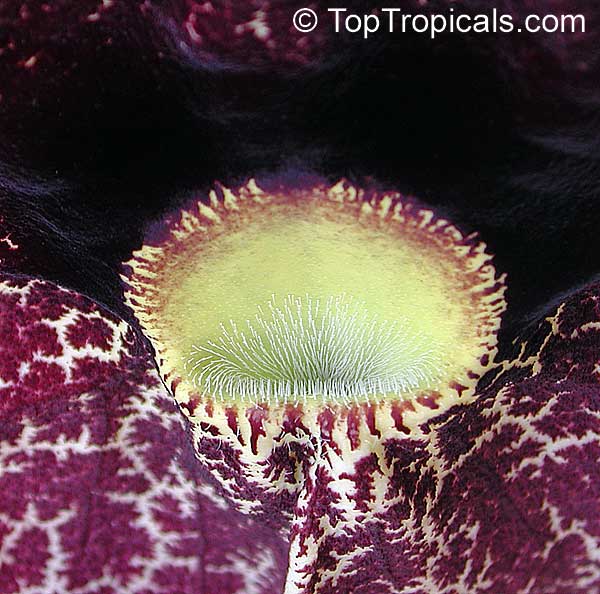
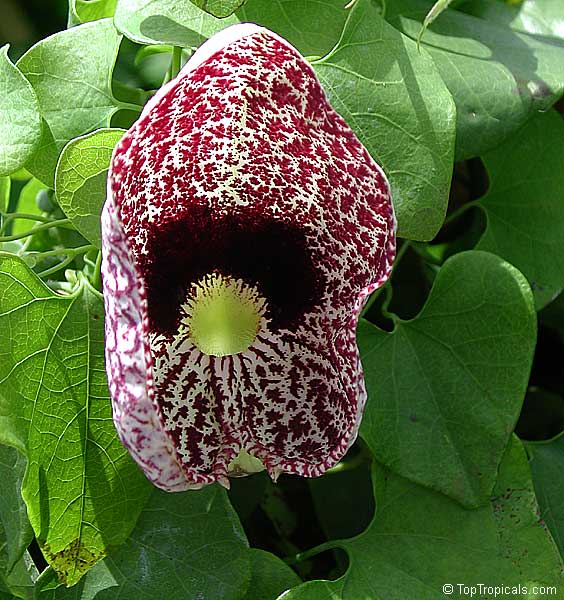
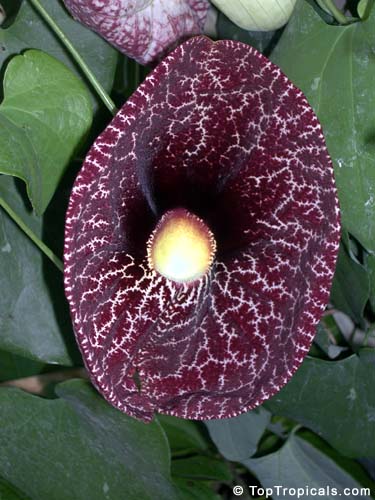
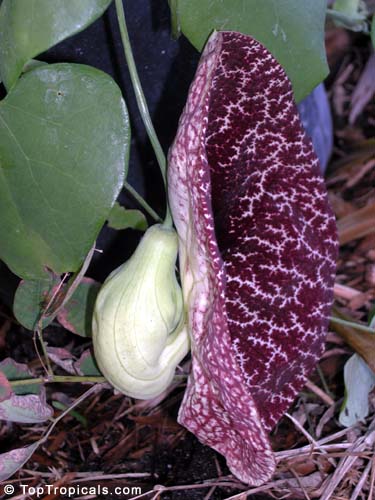
Botanical names: Aristolochia littoralis, Aristolochia elegans
Common names: Elegant Dutchmans Pipe, Calico Flower
Family: Aristolochiaceae
Origin: Brazil
This vine does best in full sun to semi-shade areas, but is able to tolerate light shade. It prefers moderate water during the growing season and drier periods during dormancy, but will become drought tolerant with maturity. Plant in well-drained soil and feed with general fertilizer in the spring. Prune to shape as desired.
The name is derived from the Greek aristos, meaning best, and lochia, meaning delivery, because it was valued in child birthing and the resemblance of the shape of the flower as a human fetus in the womb.
It grows well in USDA Zones 9-11. For cold regions, it can be grown in a pot. The vines are heavy and require strong support. Keep in a bright, warm spot indoors for winter and move it outdoors in summer when the threat of frost is gone. Water as necessary, keeping the soil slightly moist, but not soggy. Move the pot to a sheltered location in autumn before the cold weather sets in, and bring it back indoors if temperatures drop below freezing for more than a short time.
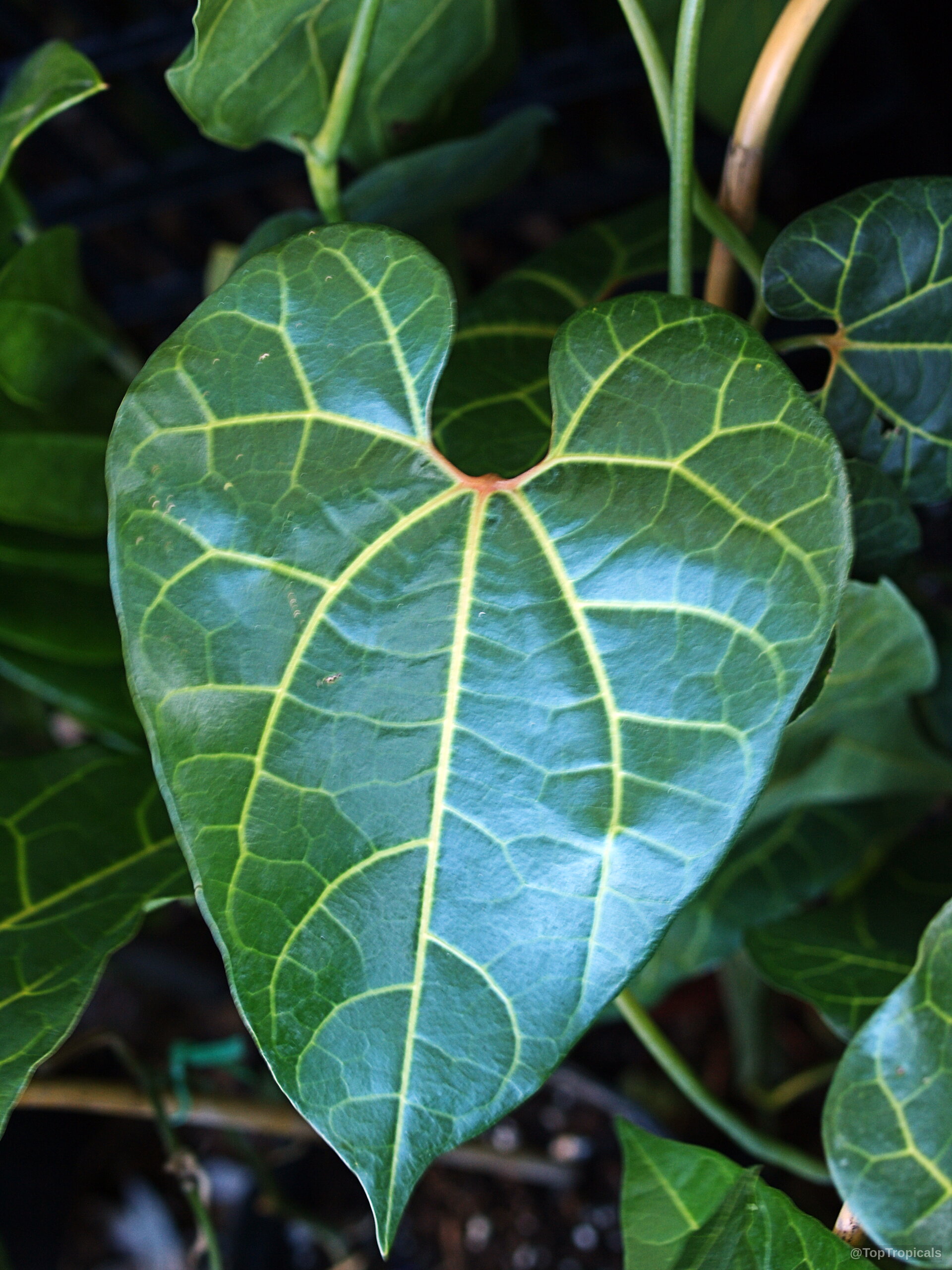
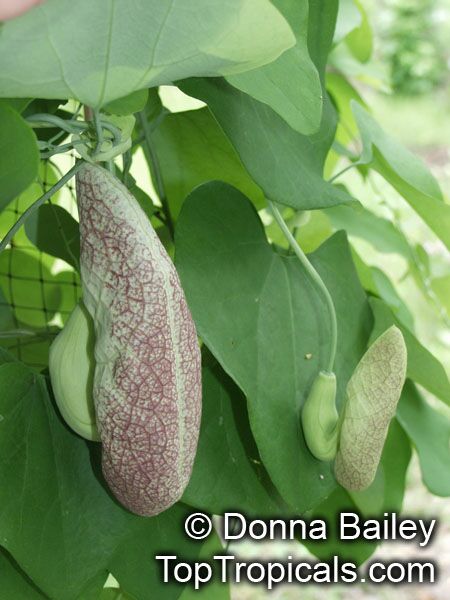
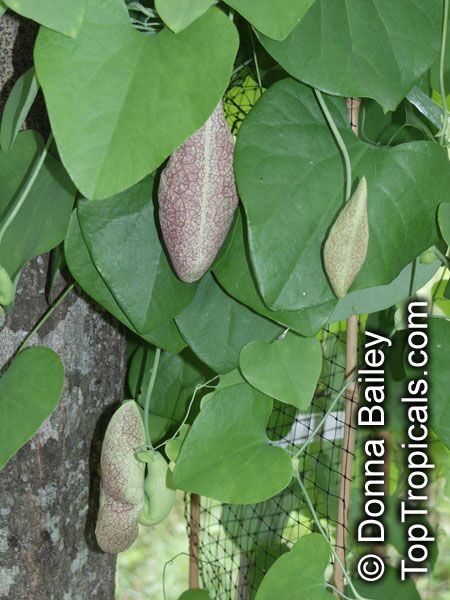
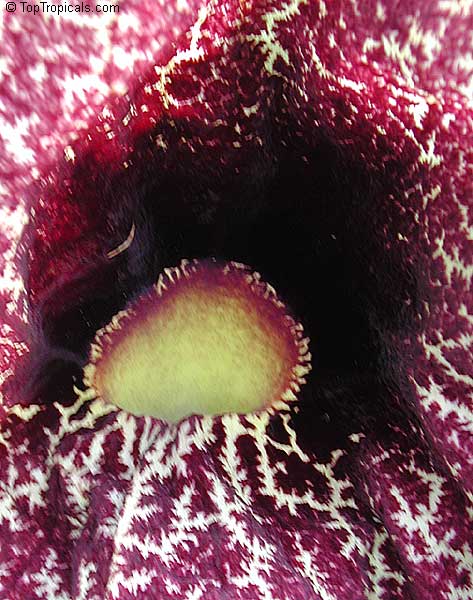
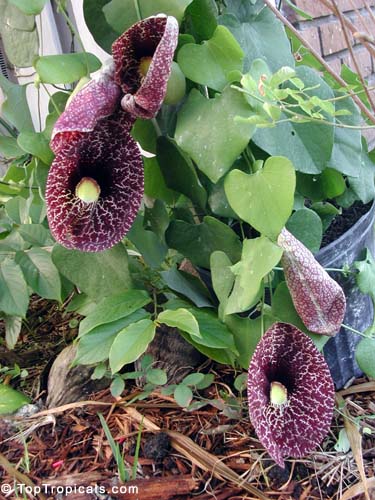
Aristolochia littoralis is an attractive plant, with its white and off-white flowers, tinged with red or crimson, and large yellowish-green pipe-like calyx. The blooms are also a favorite of butterflies and hummingbirds. This plant is butterfly larval plant. This ornamental vine is cultivated in Hawaii and other tropical areas for its colorful and unique pipe shaped flowers that are usually pollinated by flies which are attracted to the carrion-like odor and to the purple and brown color of the flowers. The striking foliage and flowers add interest to any garden. Though considered an invasive species in some areas, in more temperate regions this plant is a great addition to the garden.
Recommended Fertilizer: SUNSHINE Megaflor - Bloom Nutrition Booster
 SUNSHINE Megaflor (NPK 2-2-4) - Bloom Booster for every watering. Formulated especially for blooms, to boost flowering, improve flower size and quality, and stimulate pollen development. This is an eco-friendly nutrition booster that can be used for organic gardens. Can be used for daily feeding with every watering. Scientifically-balanced stable formula is organic Amino-acid based and has NO EDTA chelators to eliminate nutrients lockup; it does not affect crop taste. Organic Amino acids greatly enhance stability of all Sunshine boosters and provide excellent absorption of trace elements. Pollinating insects friendly.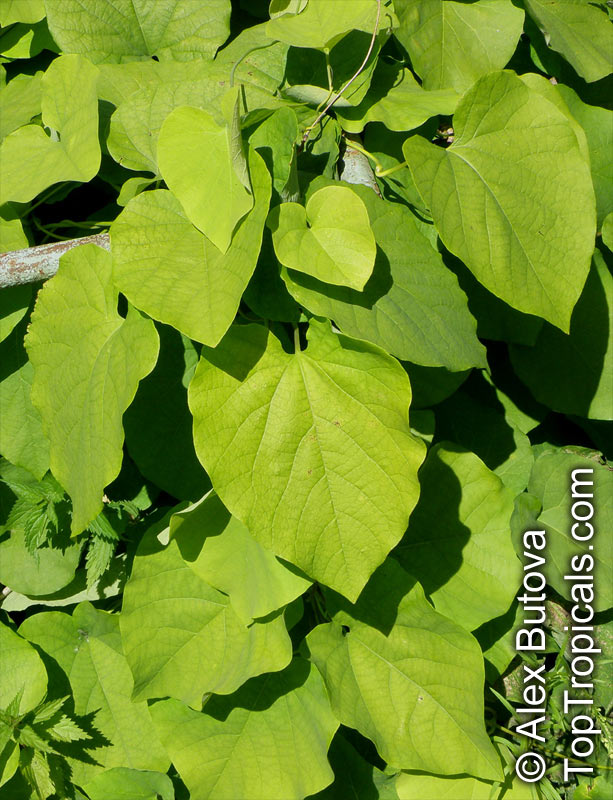
Botanical names: Aristolochia macrophylla, Aristolochia durior
Common name: Dutchman's Pipe
Family: Aristolochiaceae
Origin: Eastern USA

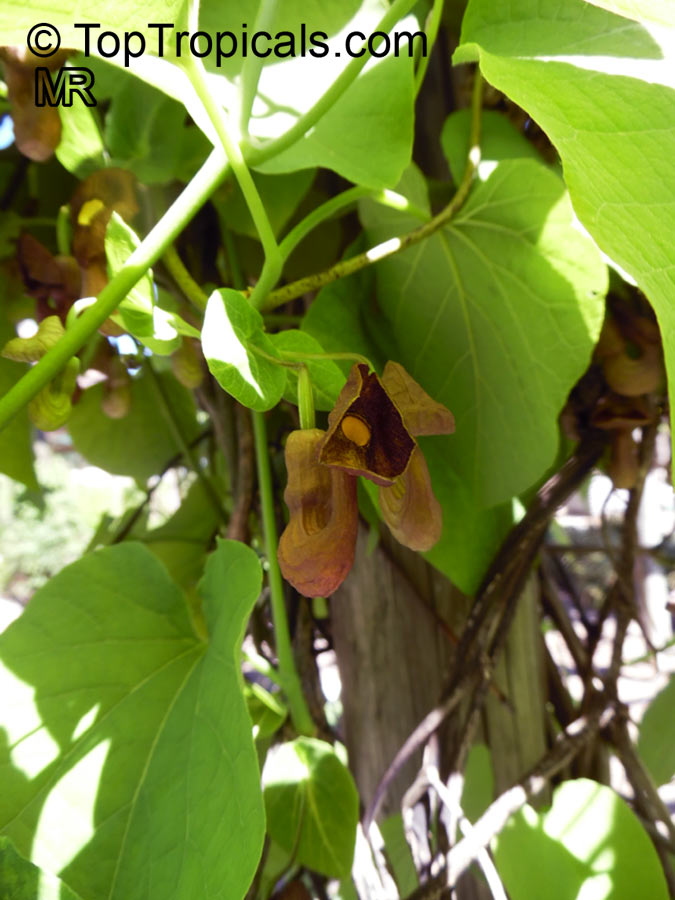
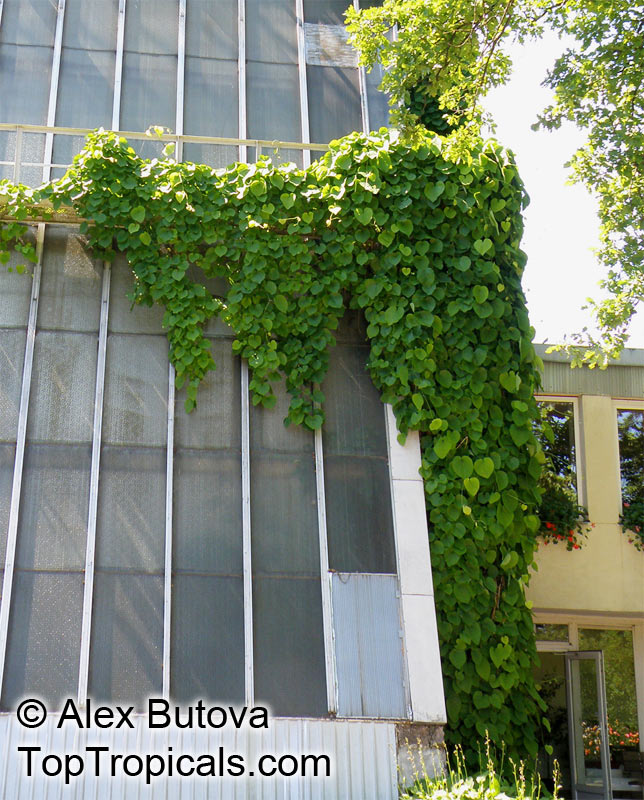
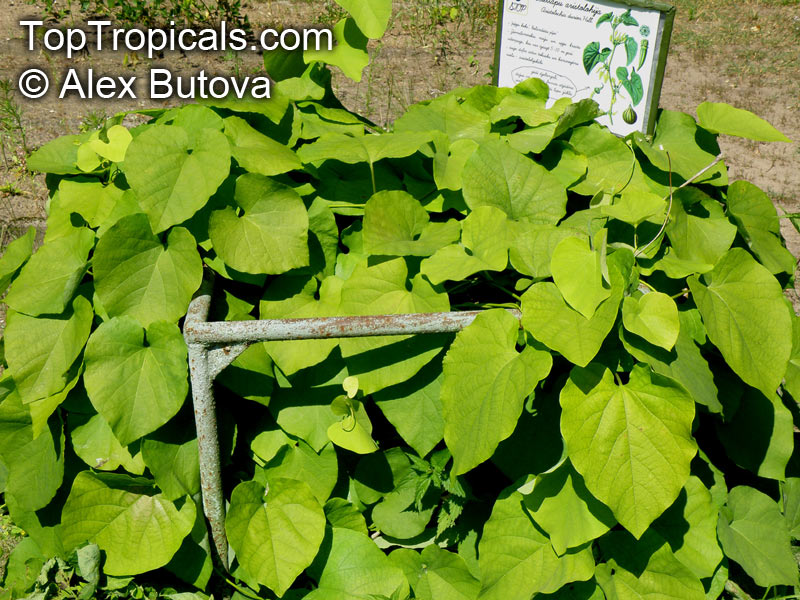
Primarily grown for foliage: dark green, heart shaped leaves (6 to 10 inches); ordinary, well-drained soil; requires a strong trellis; withstands urban pollution; rarely bothered by insects or diseases; creates a dense shade.

| Next | |
Use link to repeat this search:
https://toptropicals.com/cgi-bin/garden_catalog/cat.cgi?search_op=and&keyword_op=and&language=e&family=Aristolochiaceae
&number=10&no_change_lang=1&user=tt&sale=1&first=0