Anacardiaceae - Botanical Family
| Number of plants found: 95 | Next | 
|
Go to page: | 1 | 2 | 3 | 4 | 5 | Last |
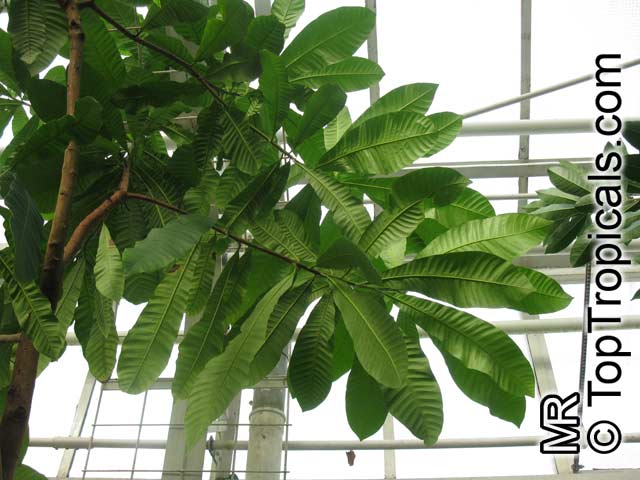
Botanical name: Anacardium excelsum
Common name: Wild Cashew
Family: Anacardiaceae
Origin: Central America


Anacardium excelsum is a towering tropical tree recognized for its impressive height, broad crown, and distinctive fruiting structures within the cashew family.
This species develops a massive trunk with spreading branches and produces fleshy pedicels that support hard nut-like seeds, giving it a characteristic appearance in mature landscapes.
What makes Anacardium excelsum distinctive?
Anacardium excelsum grows into a very large canopy tree with straight boles and wide crowns that dominate their surroundings. Its evergreen leaves are broad, leathery, and arranged to capture high light levels in humid lowland forests. The small flowers appear in loose clusters, followed by swollen, pear-shaped pedicels that turn yellow or reddish and hold the hard seed at the tip. The seeds and fruit of this wild cashew species are poisonous when raw, but after roasting the nuts become edible - many people say they taste similar to common cashews.The tree prospers in deep, moist soils of tropical regions, showing rapid growth in hot, rainy seasons and steady vigor in warm, frost-free environments. Its size and structure make it suitable primarily for spacious tropical landscapes, where it serves as a defining shade tree with notable fruit morphology typical of the genus.

Botanical name: Anacardium giganteum
Common names: Caja Acu, Caja Asu
Family: Anacardiaceae
Origin: South America

Similar to the Anacardium occidentale, the Anacardium giganteum is a juicy, false fruit with a slight strawberry flavor. Nuts can be roasted and reportedly taste like cashew nuts.

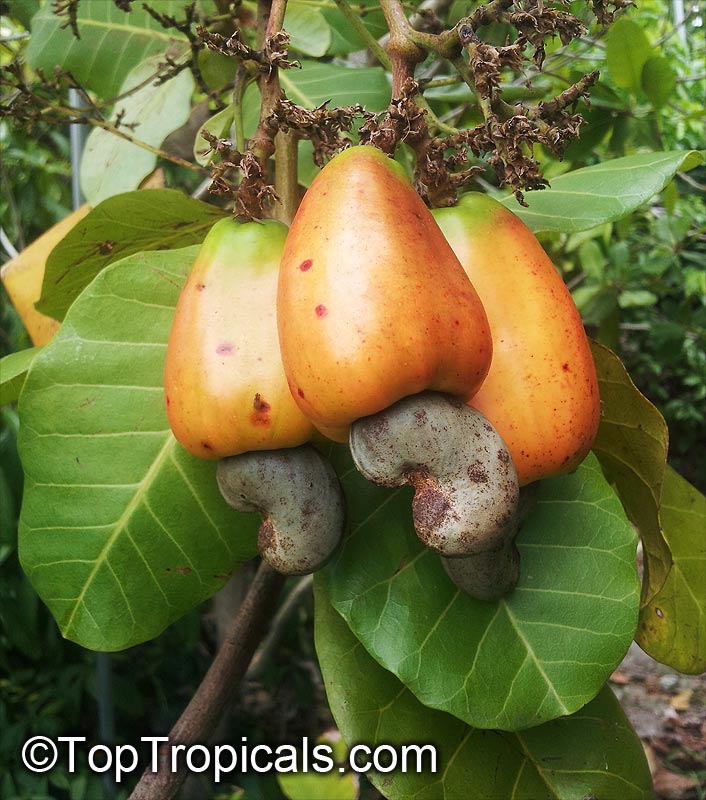
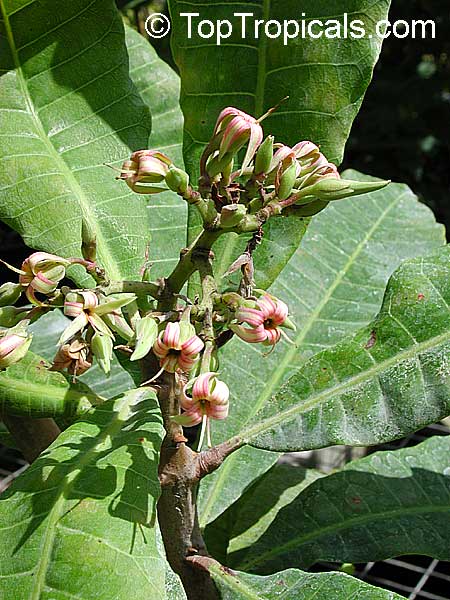
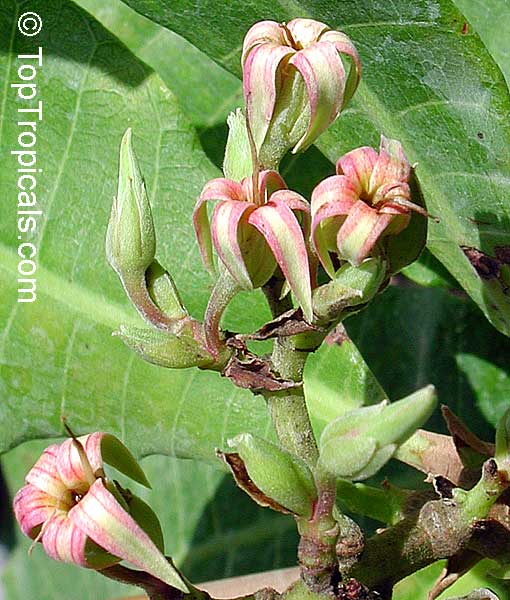
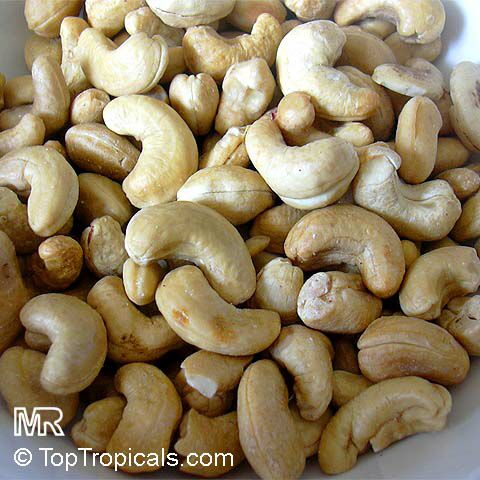
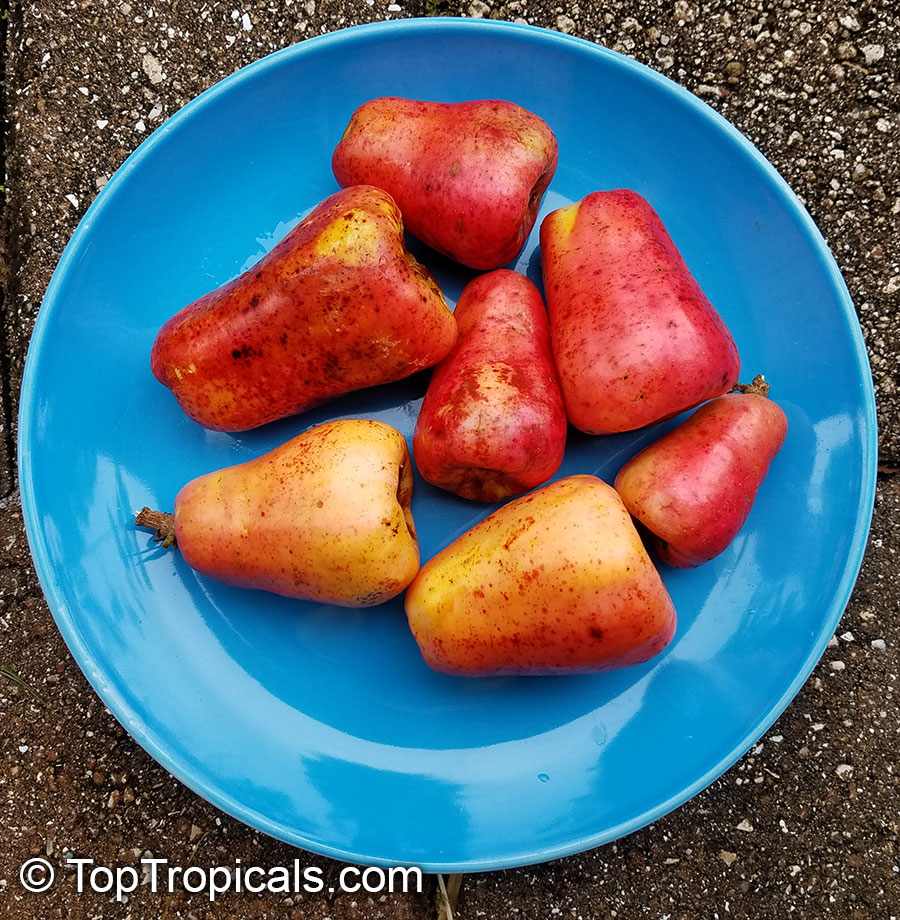
Botanical name: Anacardium occidentale
Common names: Cashew Nut, Cashew Apple, Caju
Family: Anacardiaceae
Origin: Brazil


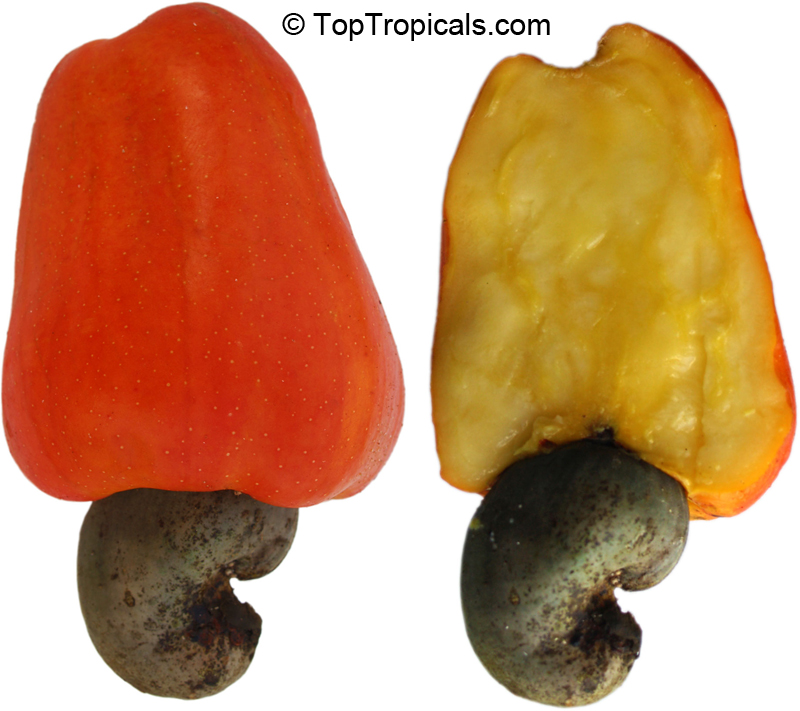
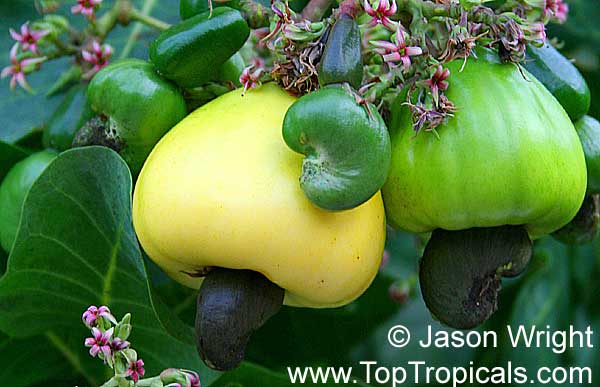
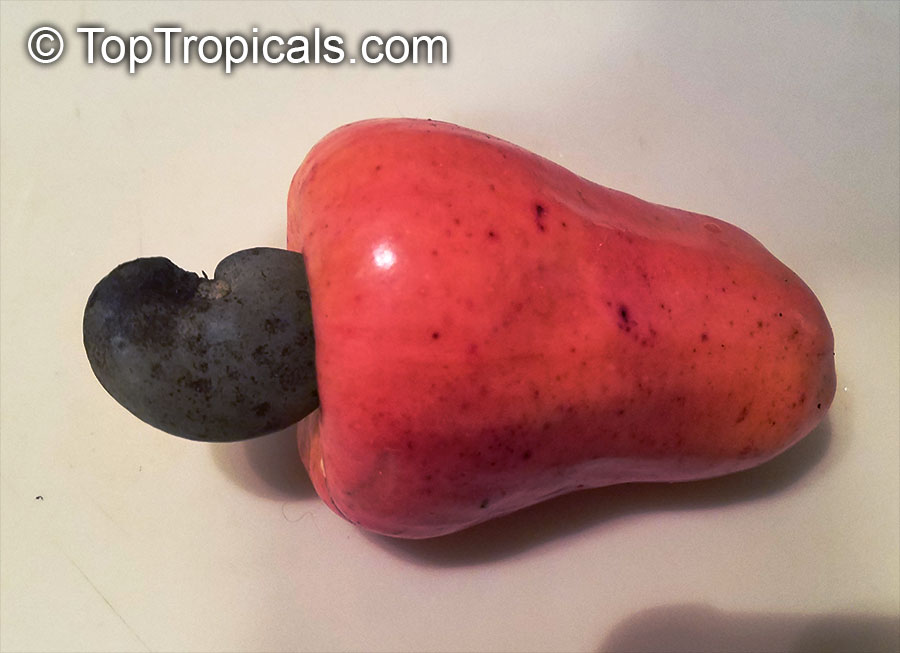
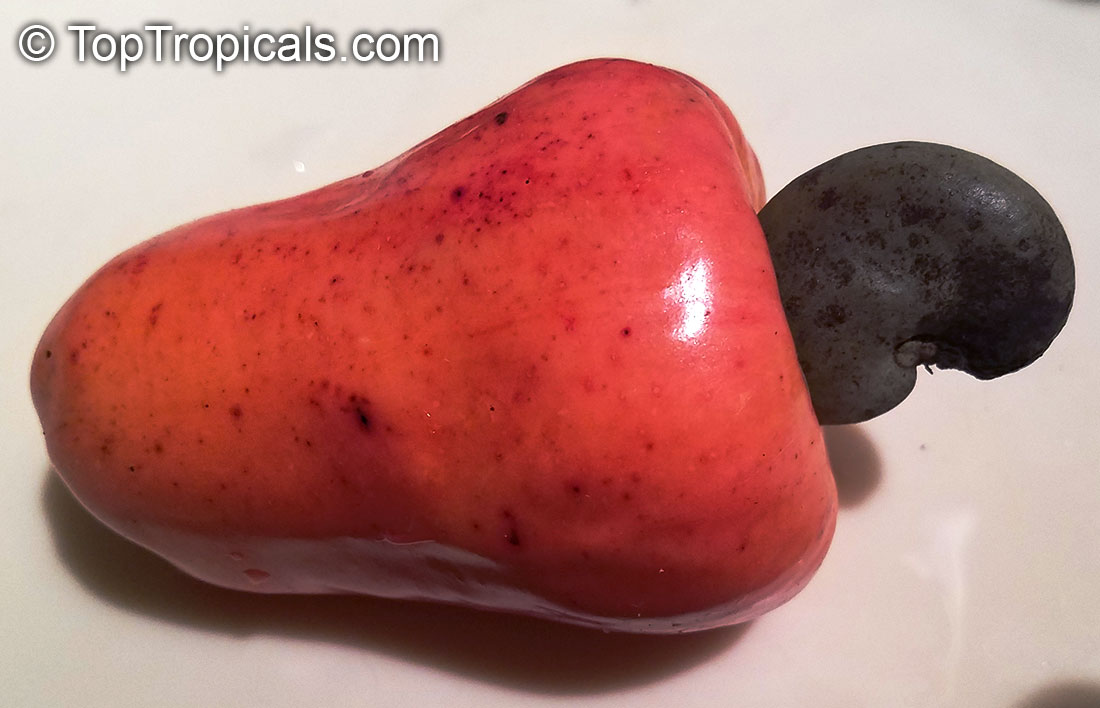
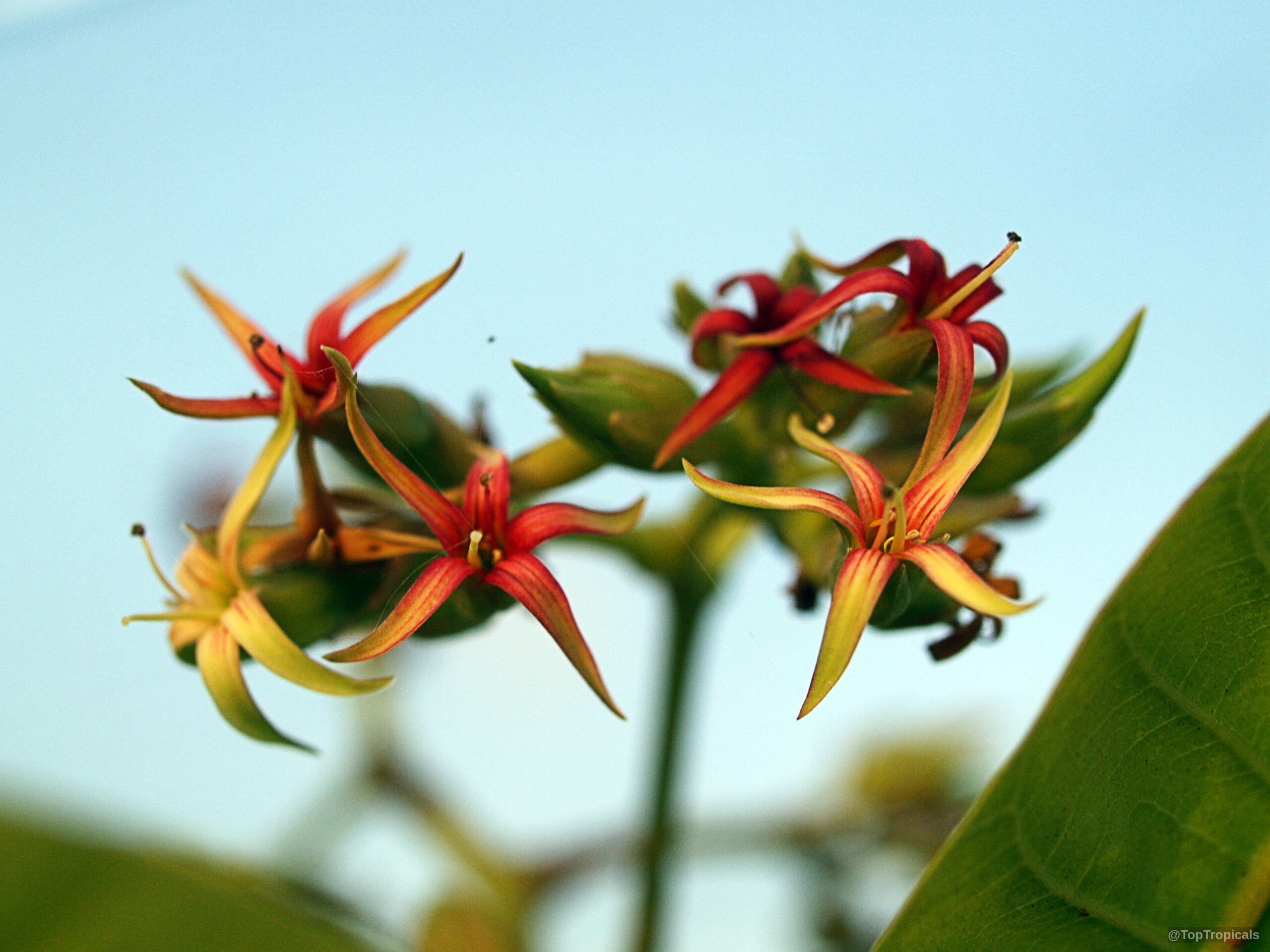
The actual fruit is the nut, the apple is a swollen stem. Cashew apple is eaten fresh or stewed. Has a sweet-astringent taste. Nut itself is caustic until roasted. Must be roasted outdoors because fumes are irritating. Very fast growing under favorable conditions, it may fruit in container, within 2 years from seed. Tolerates very poor soil and drought, as well as salty wind.
Shipped at customers risk, no replacements or refunds. Leaf drop possible. We guarantee healthy plant to be shipped and the best packaging. Express shipping optional.
Recommended Fertilizer: SUNSHINE C-Cibus - Crop Nutrition Booster
SUNSHINE-Honey - sugar booster
 SUNSHINE C-Cibus (NPK 2-2-4) - Crop Booster for every watering.
  SUNSHINE C-Cibus (NPK 2-2-4) - Crop Booster for every watering.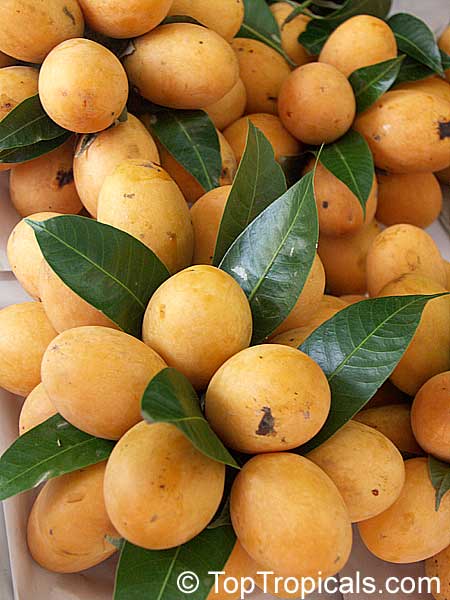
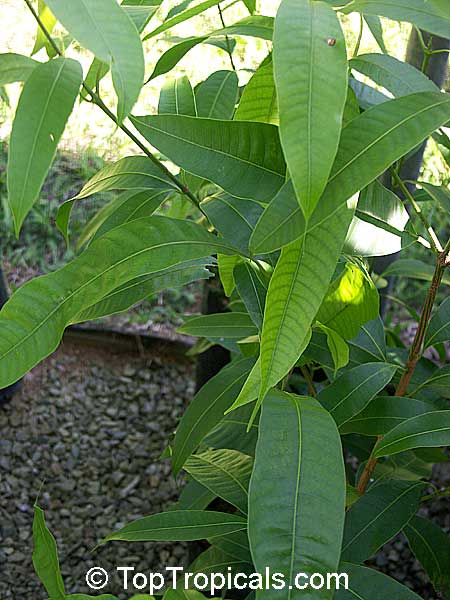
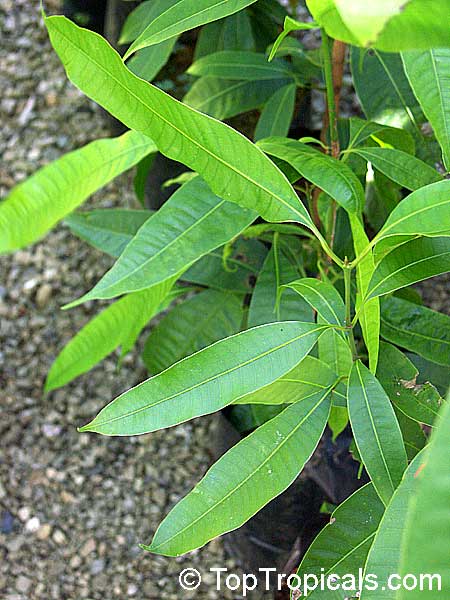
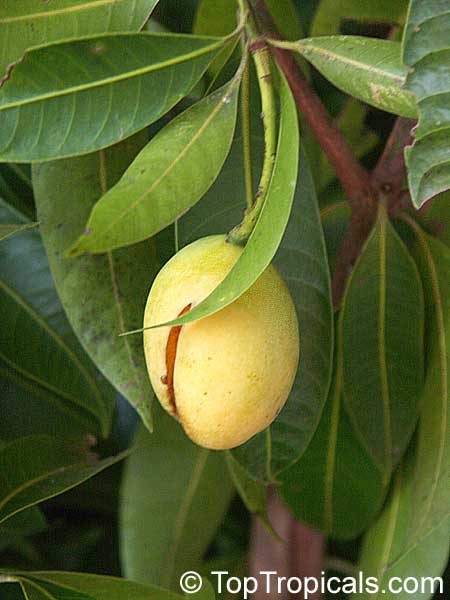
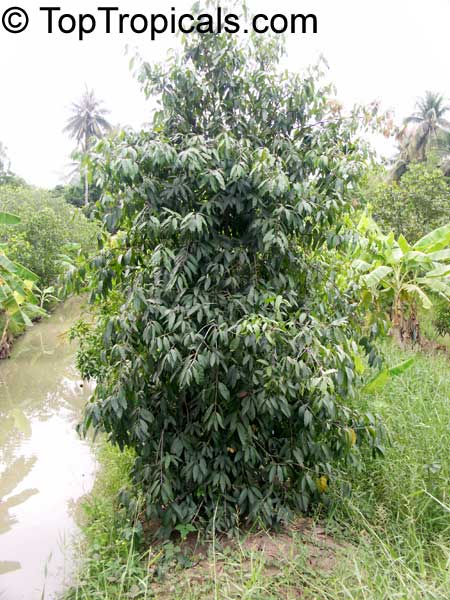
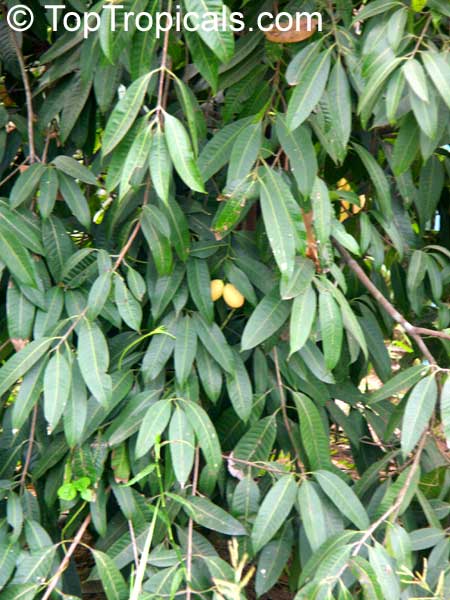
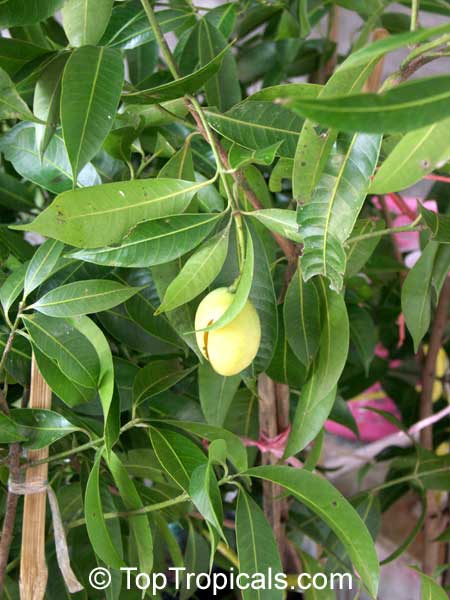
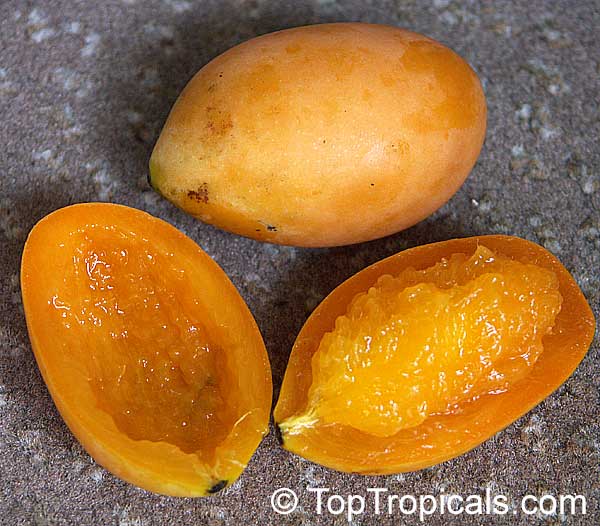
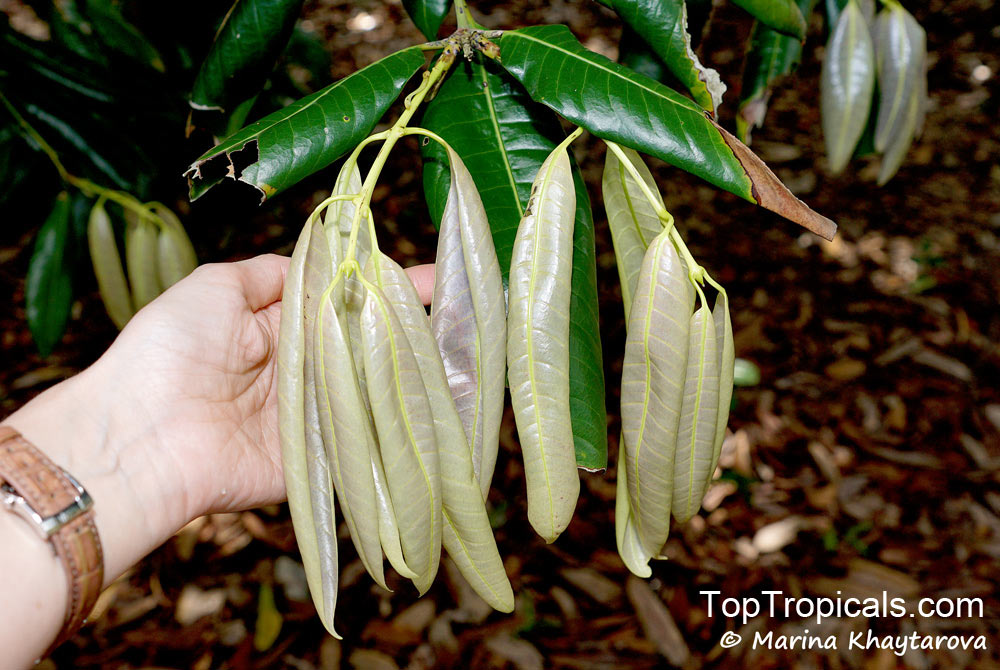
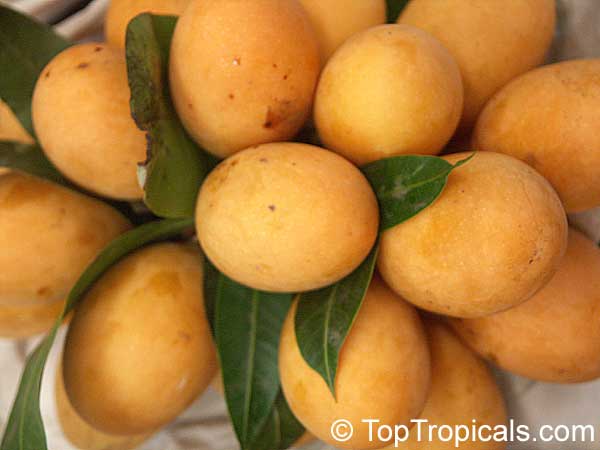
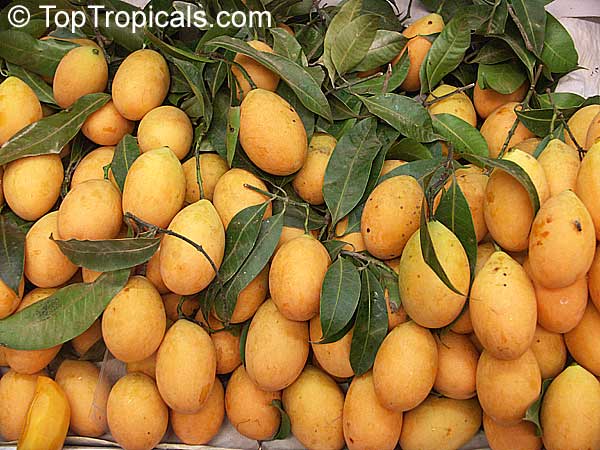
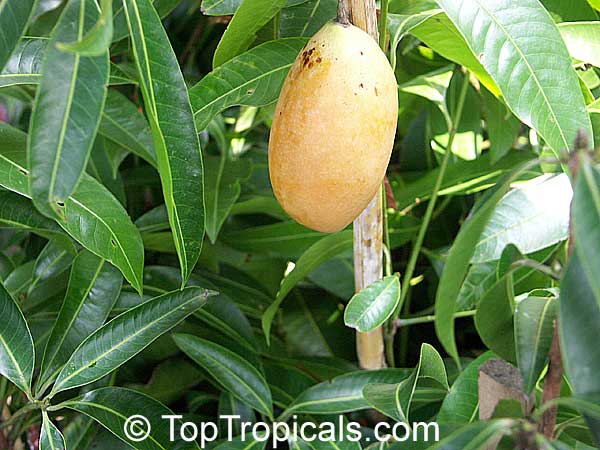
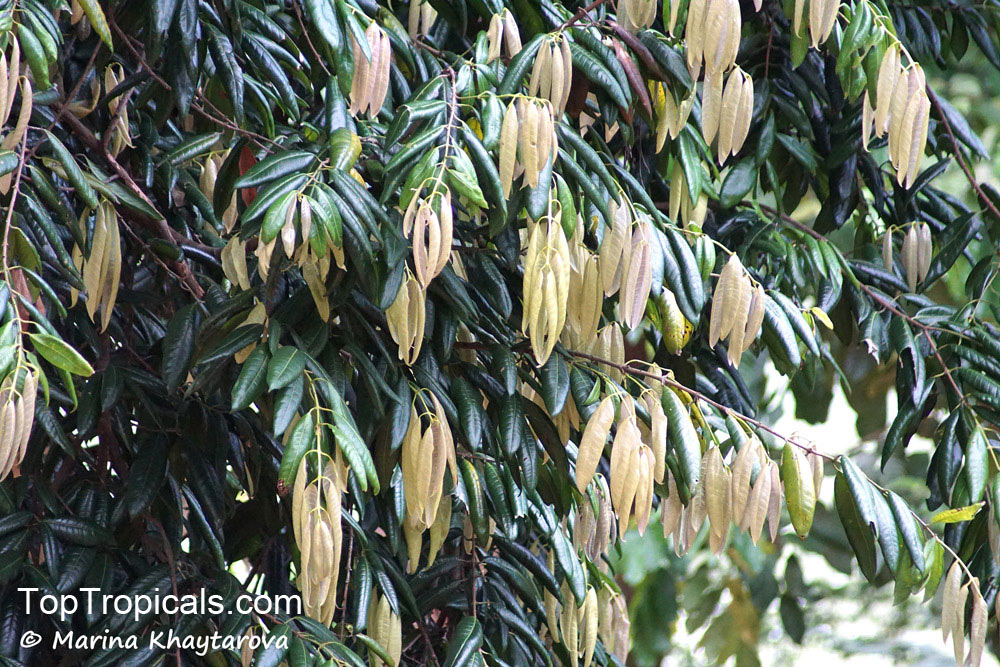
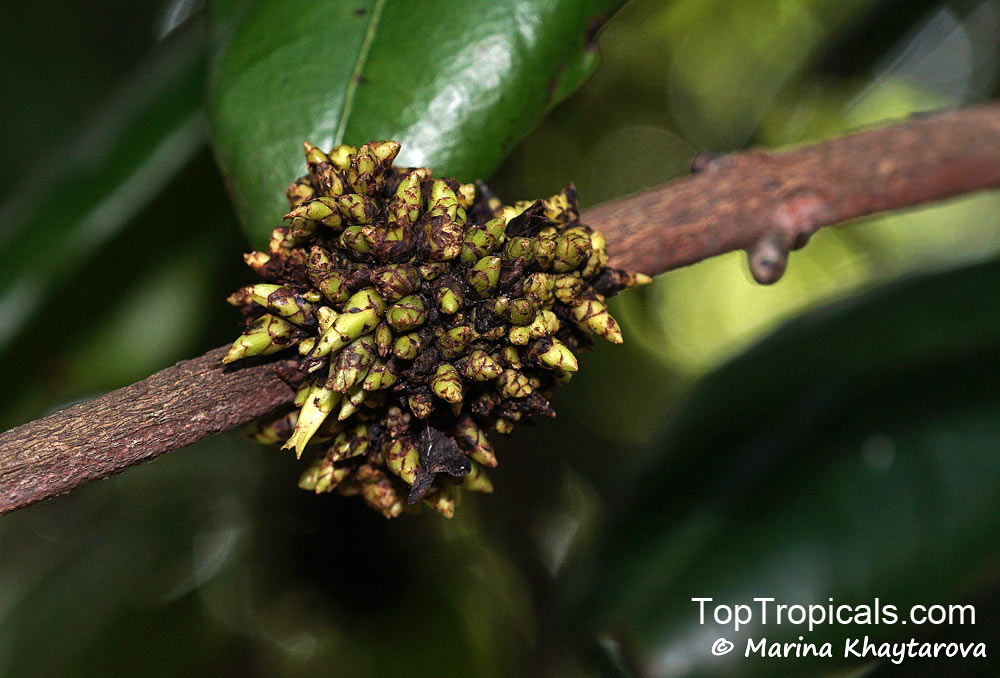
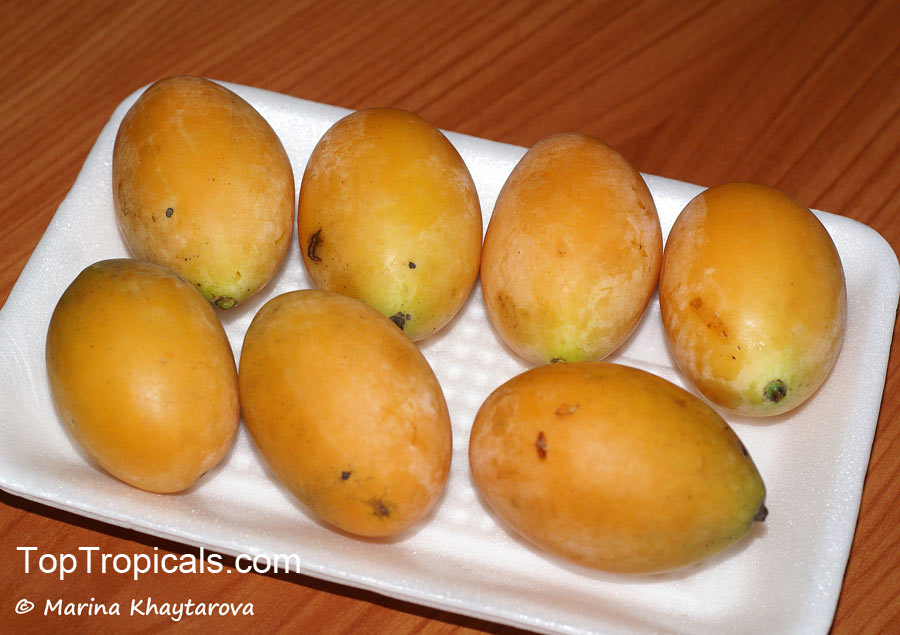
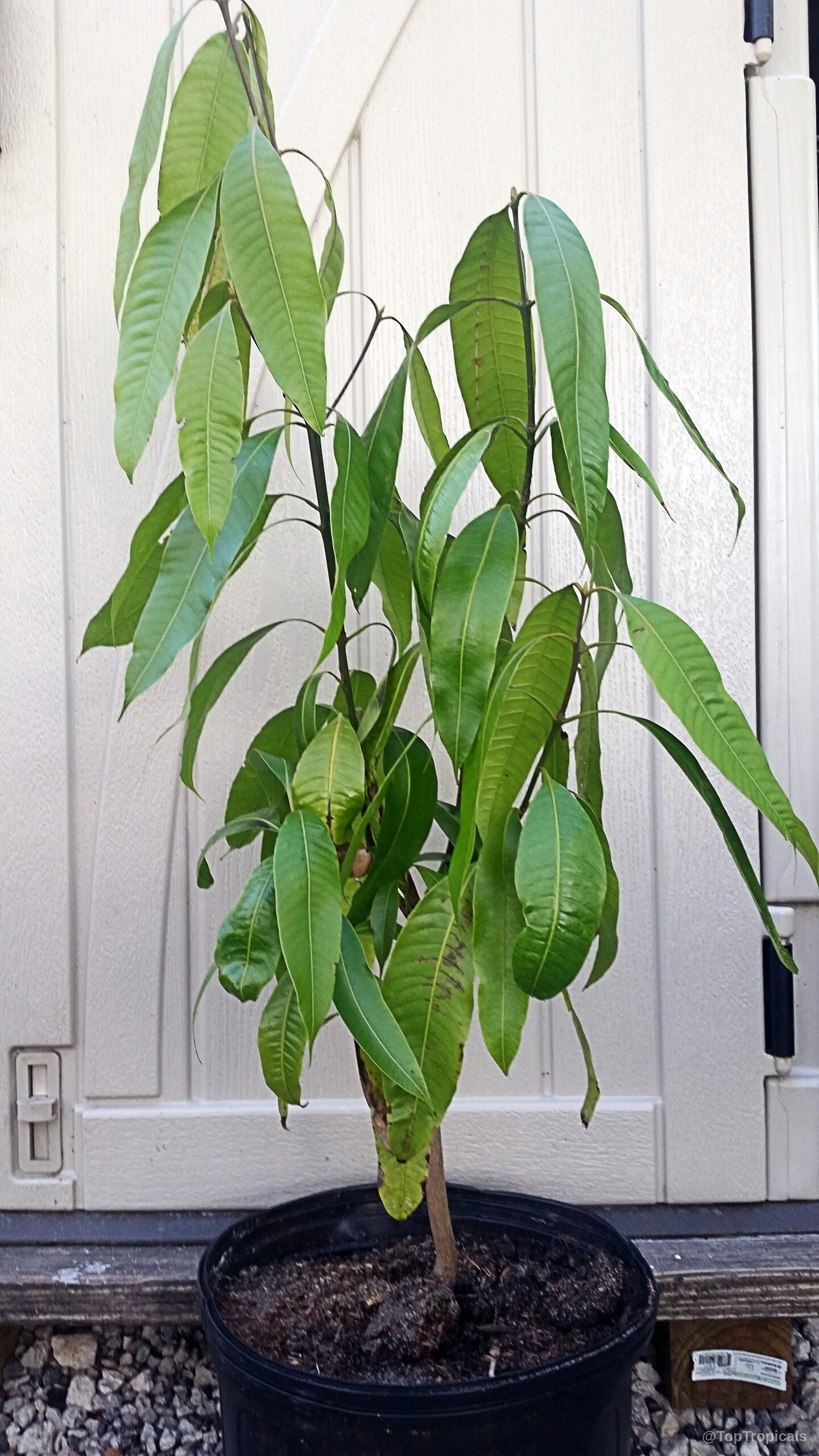
Botanical names: Bouea burmanica, Bouea macrophylla
Common names: Marian plum, Maprang, Ma-praang, Gandaria
Family: Anacardiaceae
Origin: North Sumatra, Malaysia and West Java


Bouea burmanica, also known as Marian Plum or Ma-praang, is a small tree native to North Sumatra, Malaysia, and West Java. It grows to a height of 10 to 20 feet and has smooth, dark green leaves. This plant requires full sun or semi-shade and regular watering to thrive. It is hardy in USDA Zone 10 to 11 and prefers temperatures no lower than 55 degrees Fahrenheit.
The Marian Plum is a fruitful tree, producing an abundance of edible orange fruits. It has a unique flavor that is reminiscent of mango or apricot, making it an excellent choice for a fresh snack or cooked in syrup. The immature fruits can be chopped into salads or pickled, and the young leaves can be eaten with sambal to add a layer of vibrant flavor. Beyond its delicious taste, the Marian Plum also offers a variety of health benefits; its rich vitamins, minerals and antioxidants make it a power-packed addition to any diet.
The Marian Plum has become increasingly popular within Thailand as a home garden tree, and its cultivation is steadily increasing. It is even being exported to other countries by Thai firms who advertise it as a specialty fruit.
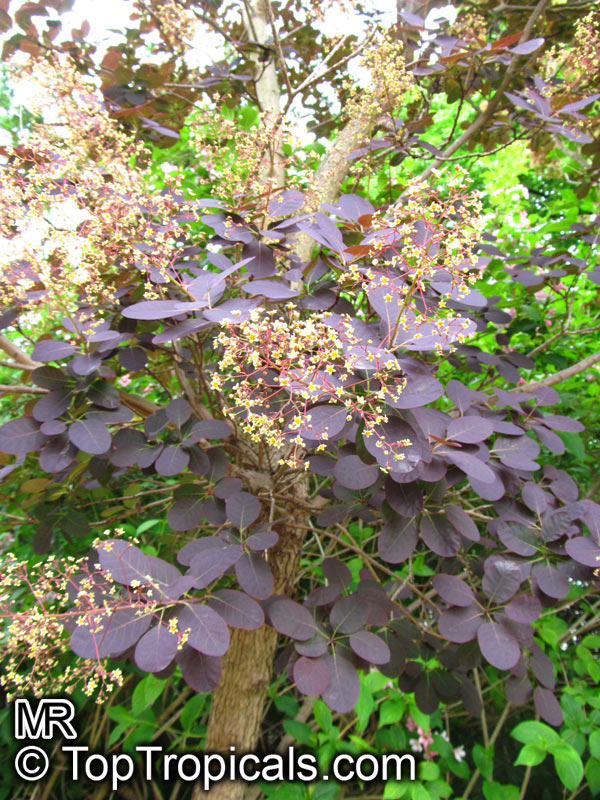
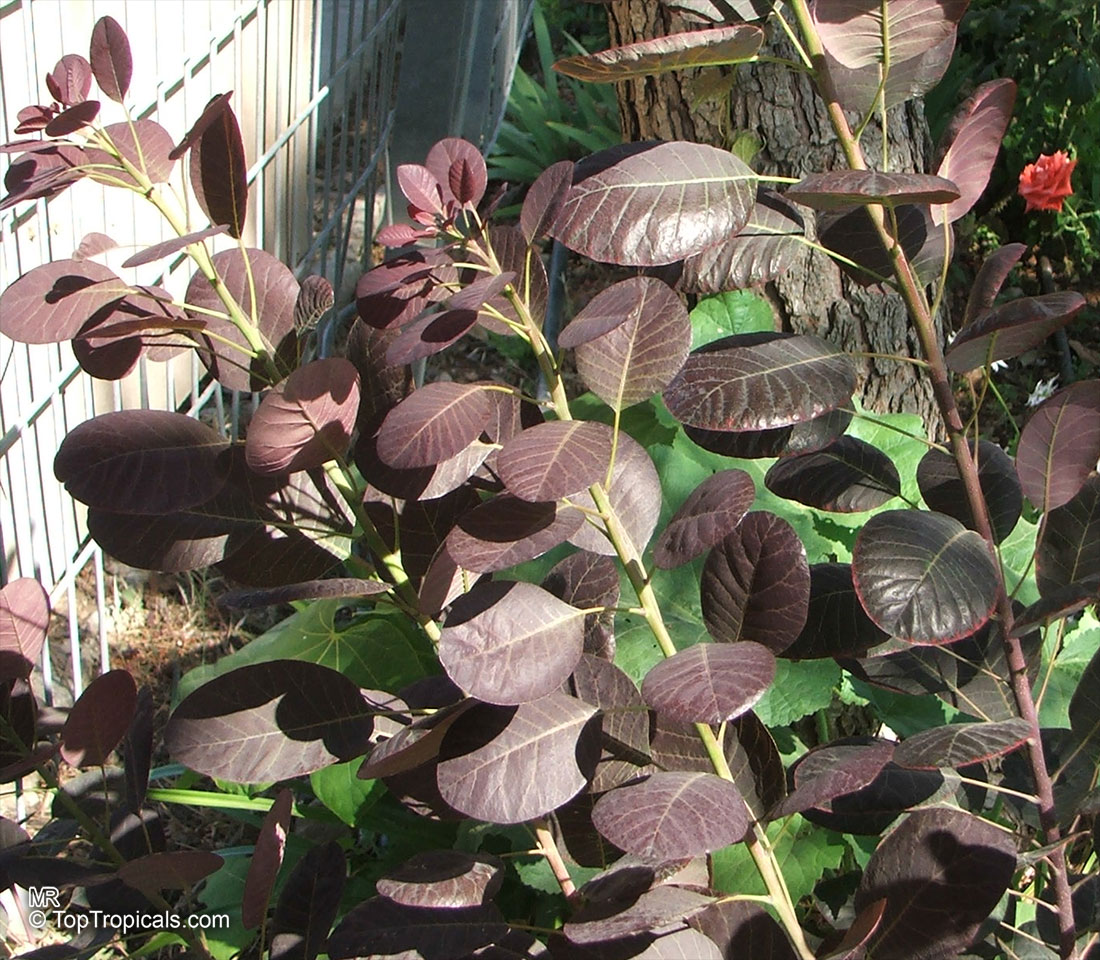
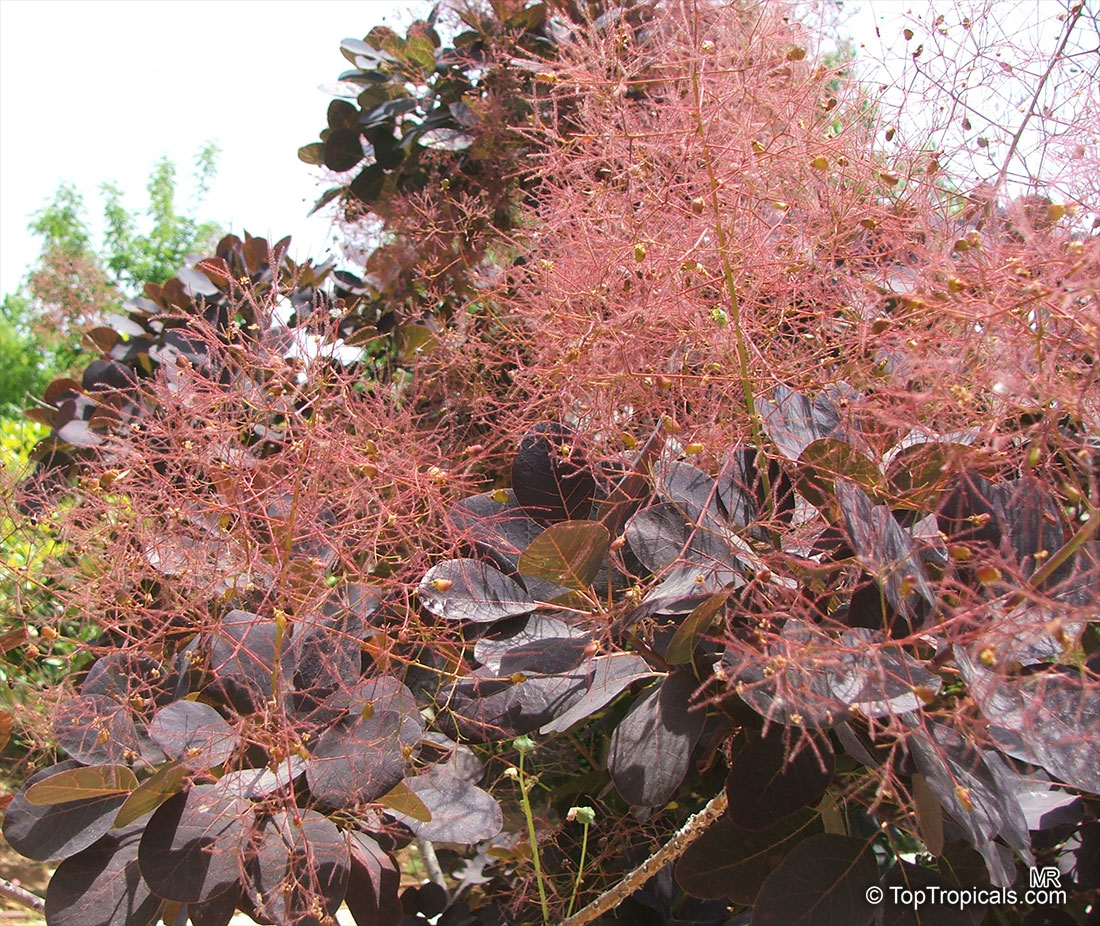
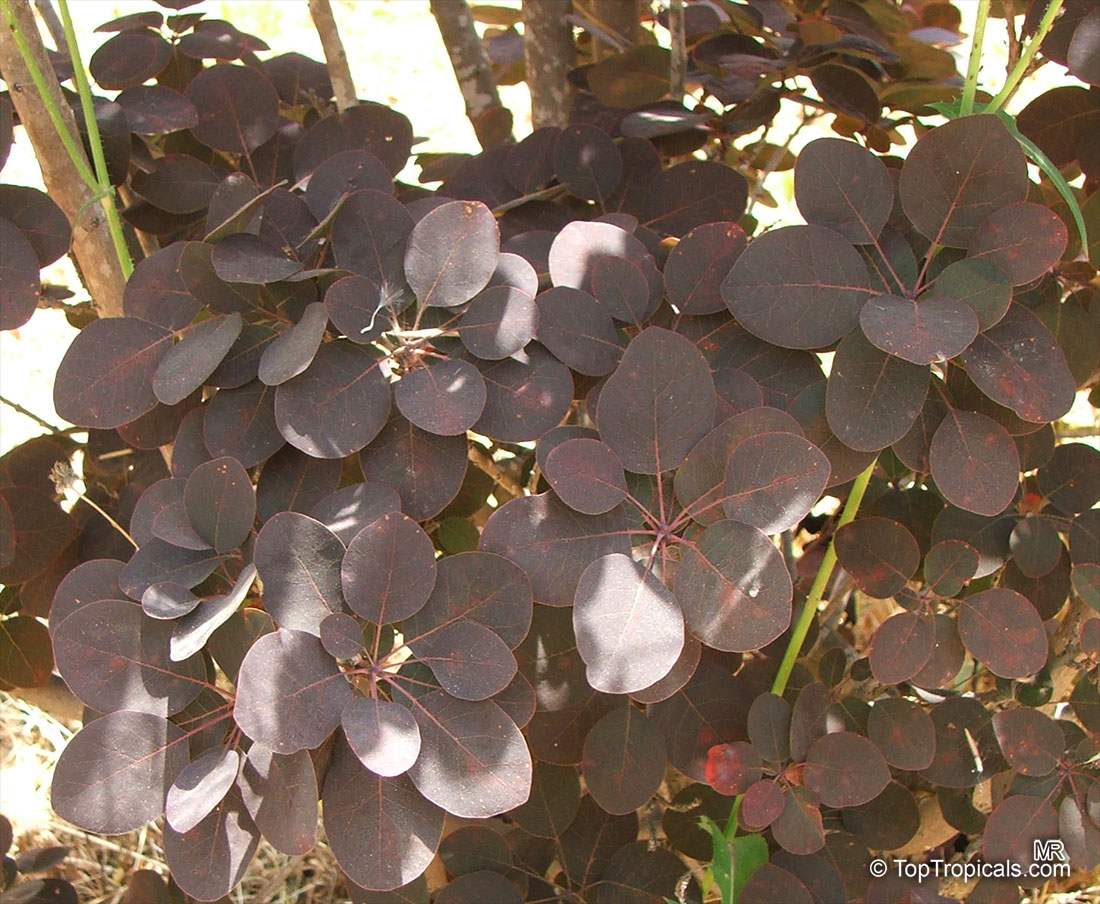
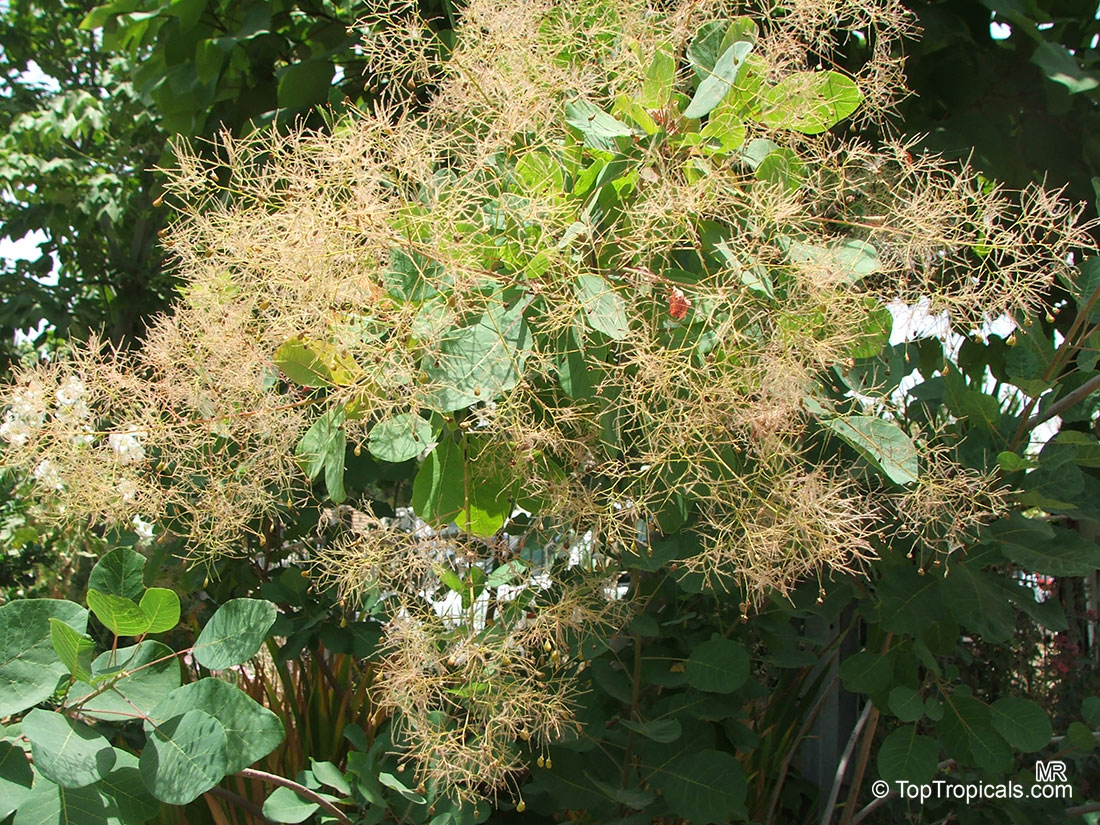
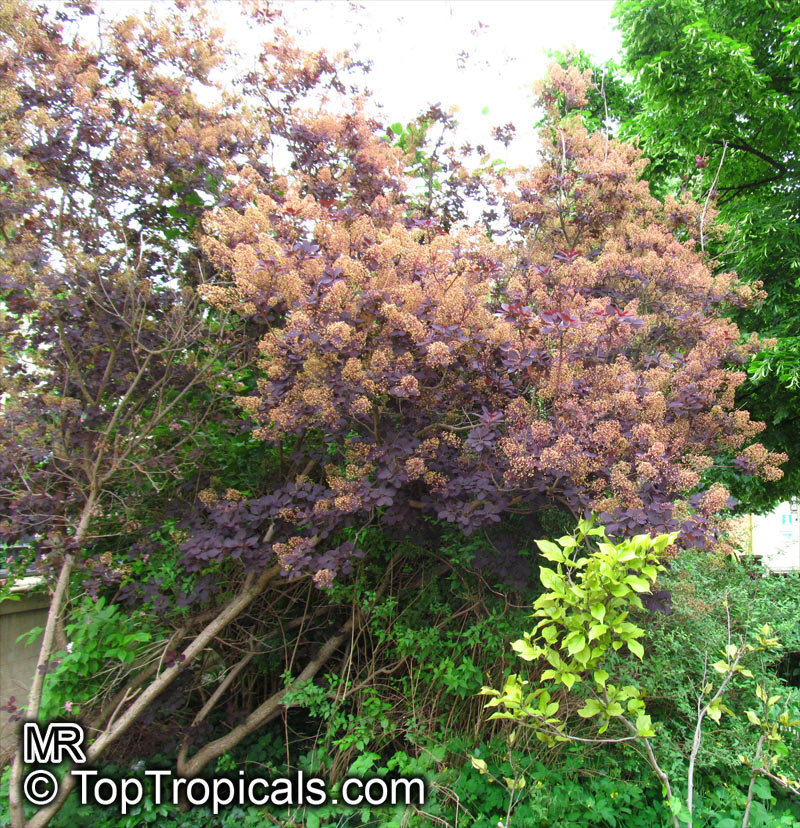
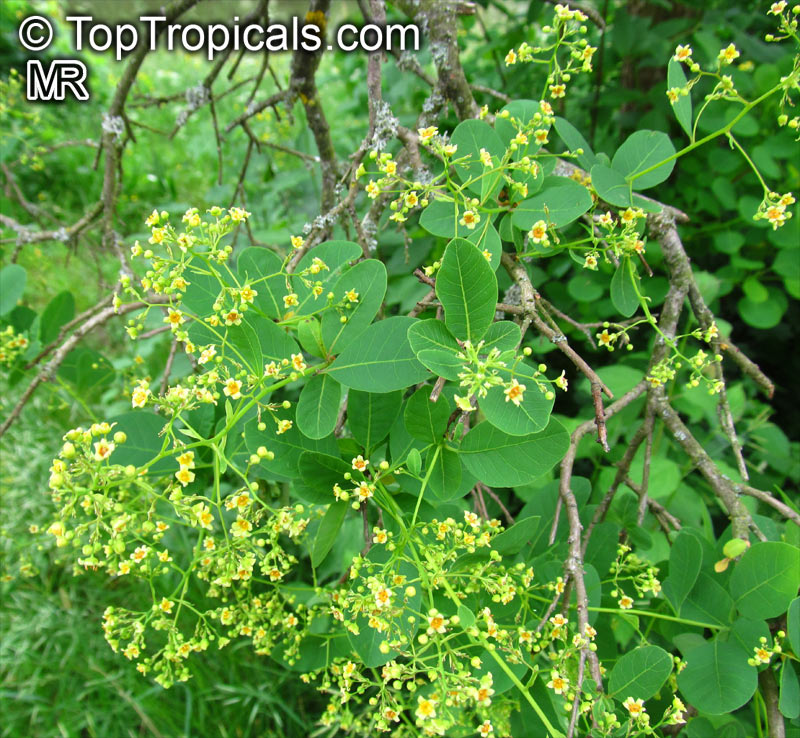
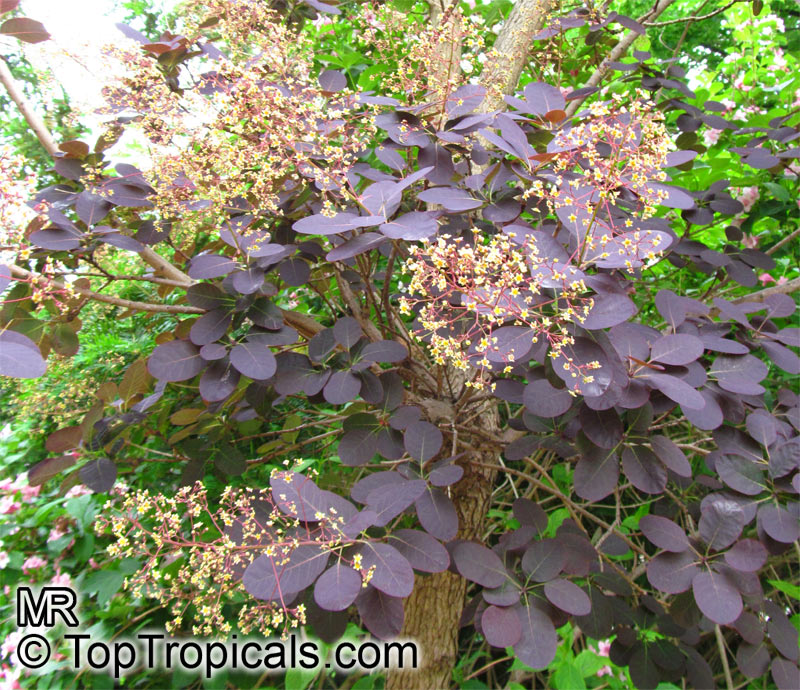
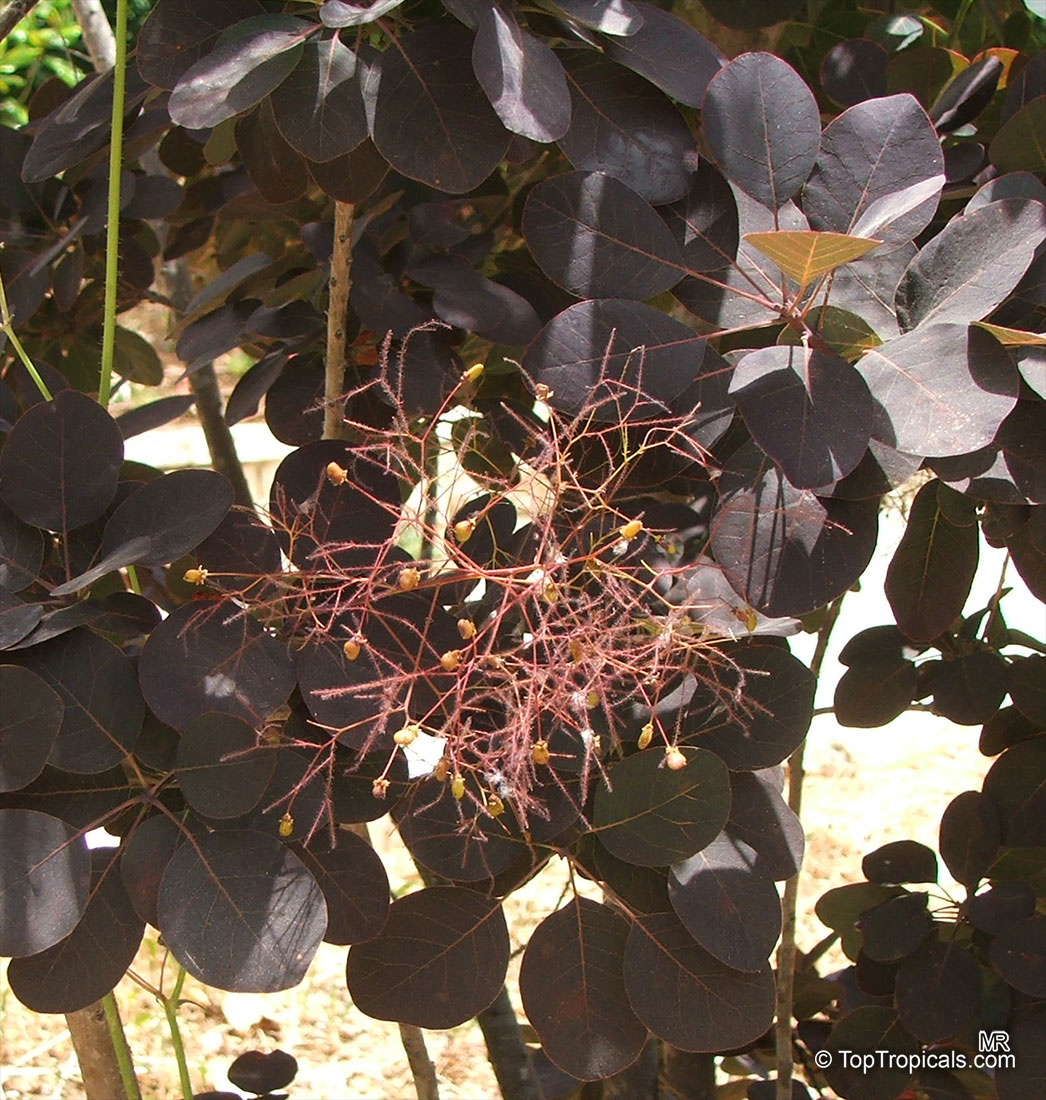
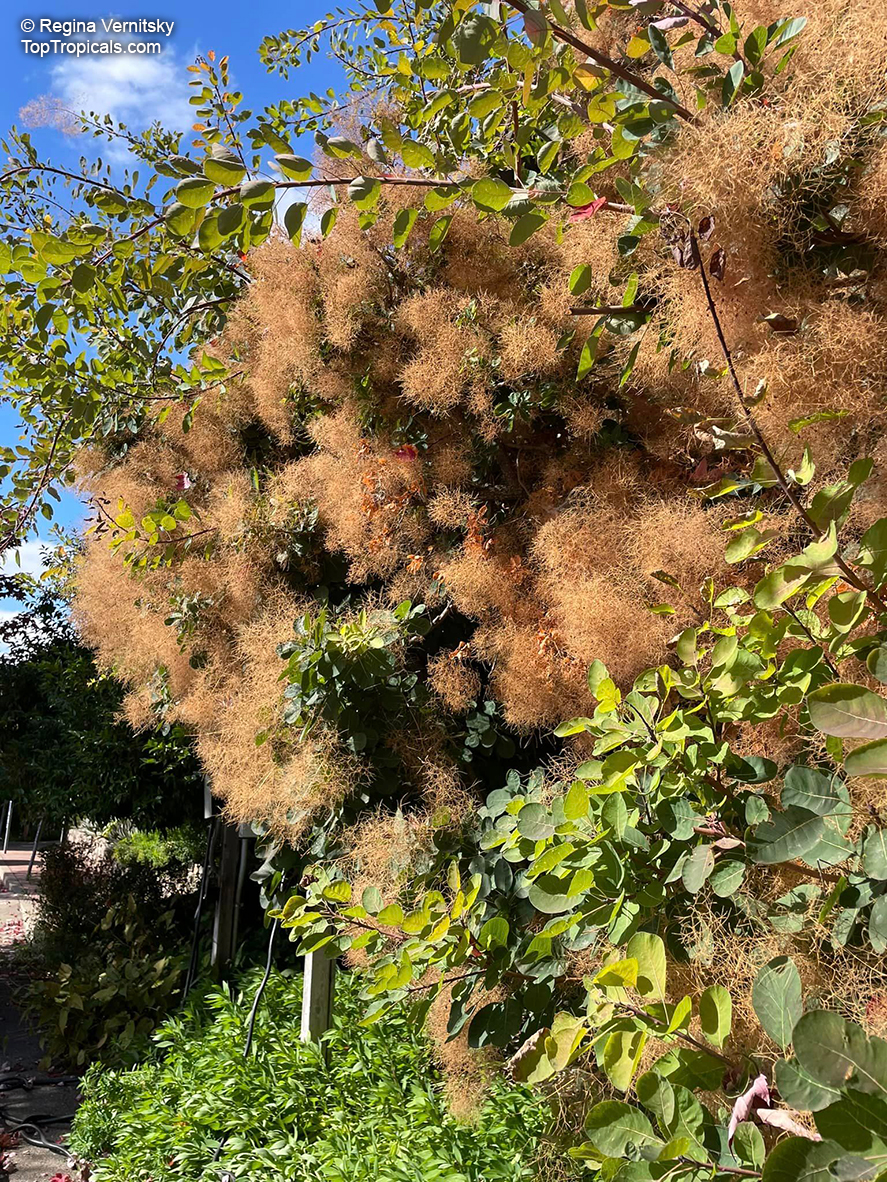
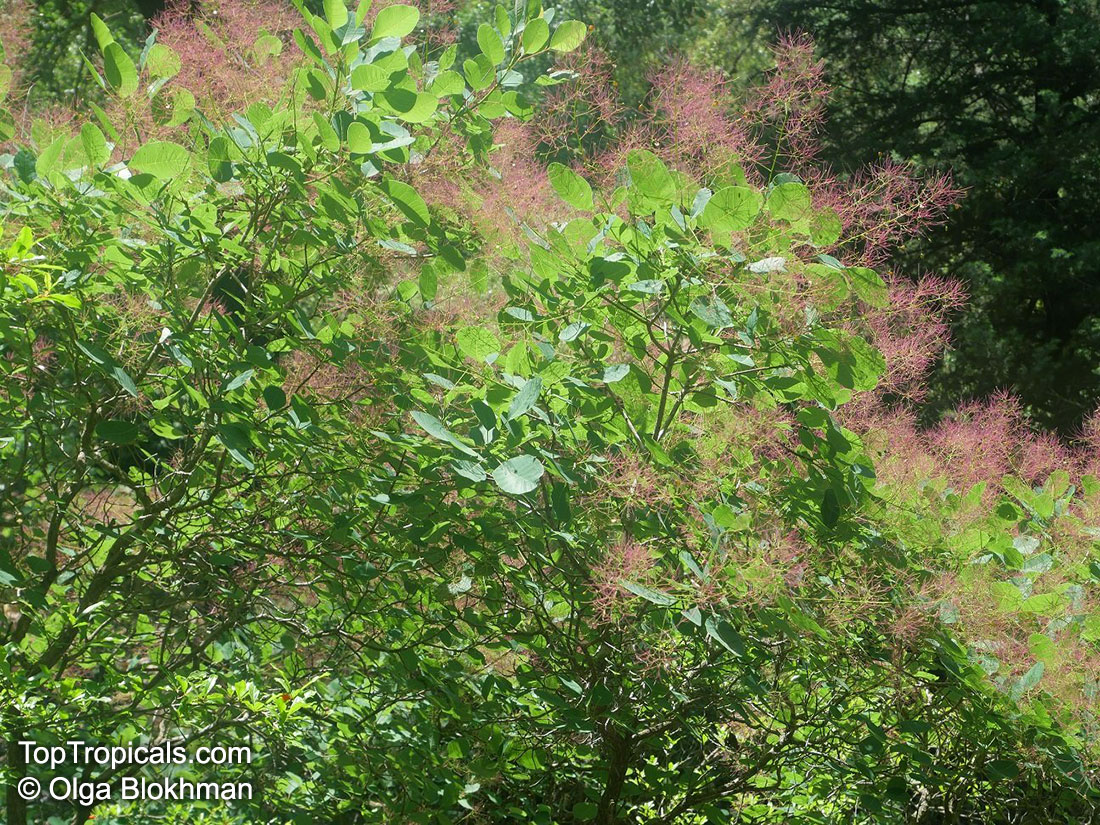
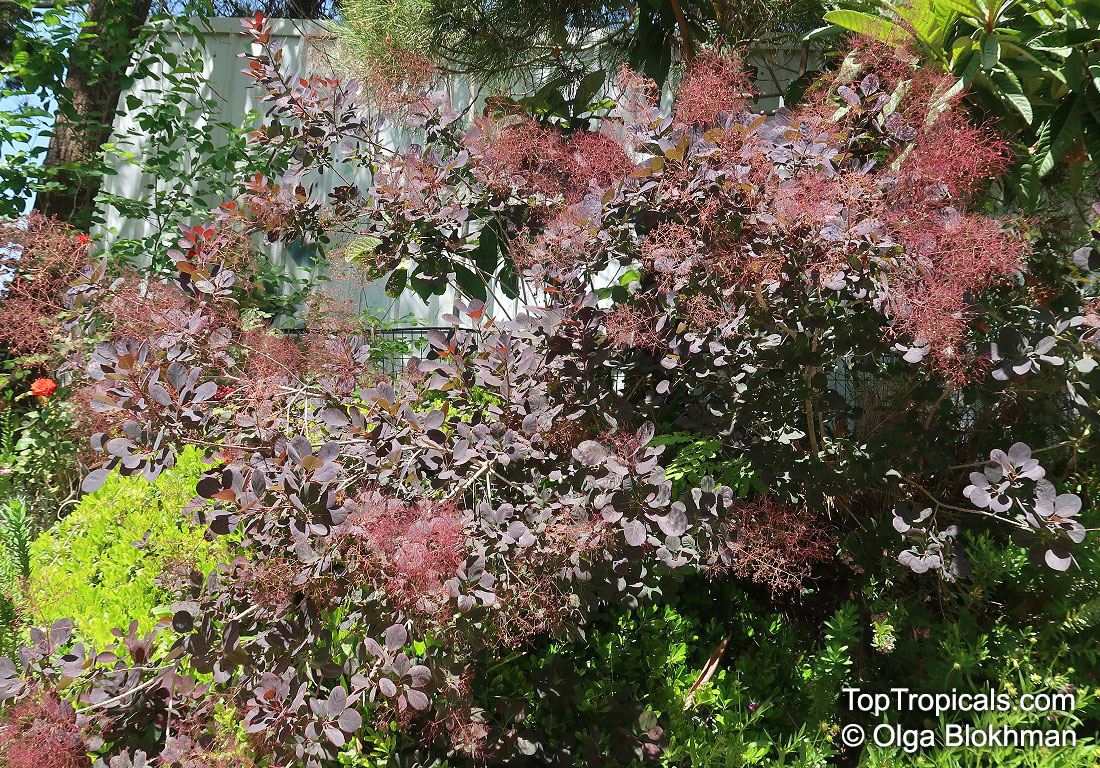
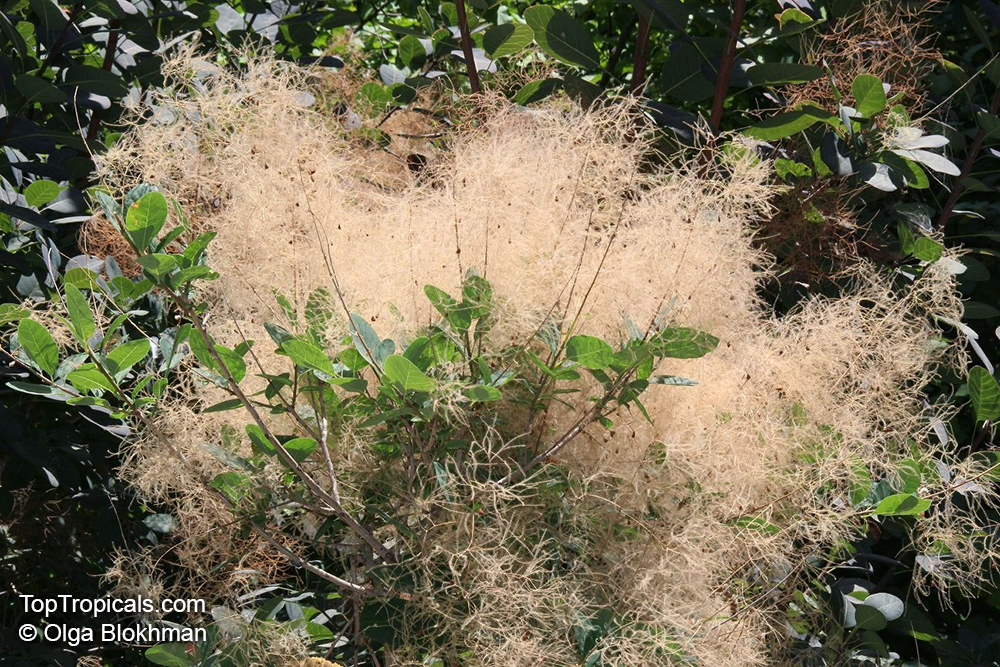
Botanical names: Cotinus coggygria, Rhus cotinus
Common name: Smoketree
Family: Anacardiaceae
Origin: Southern Europe to China


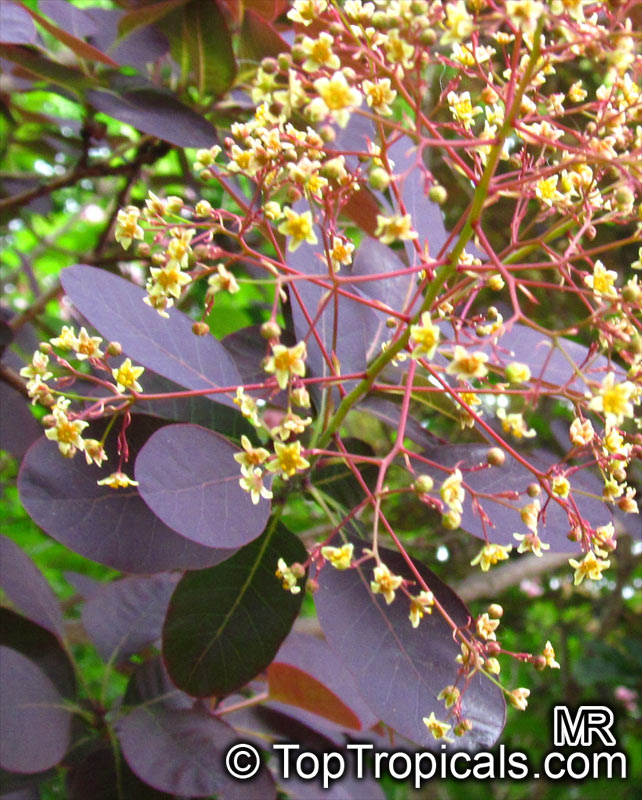
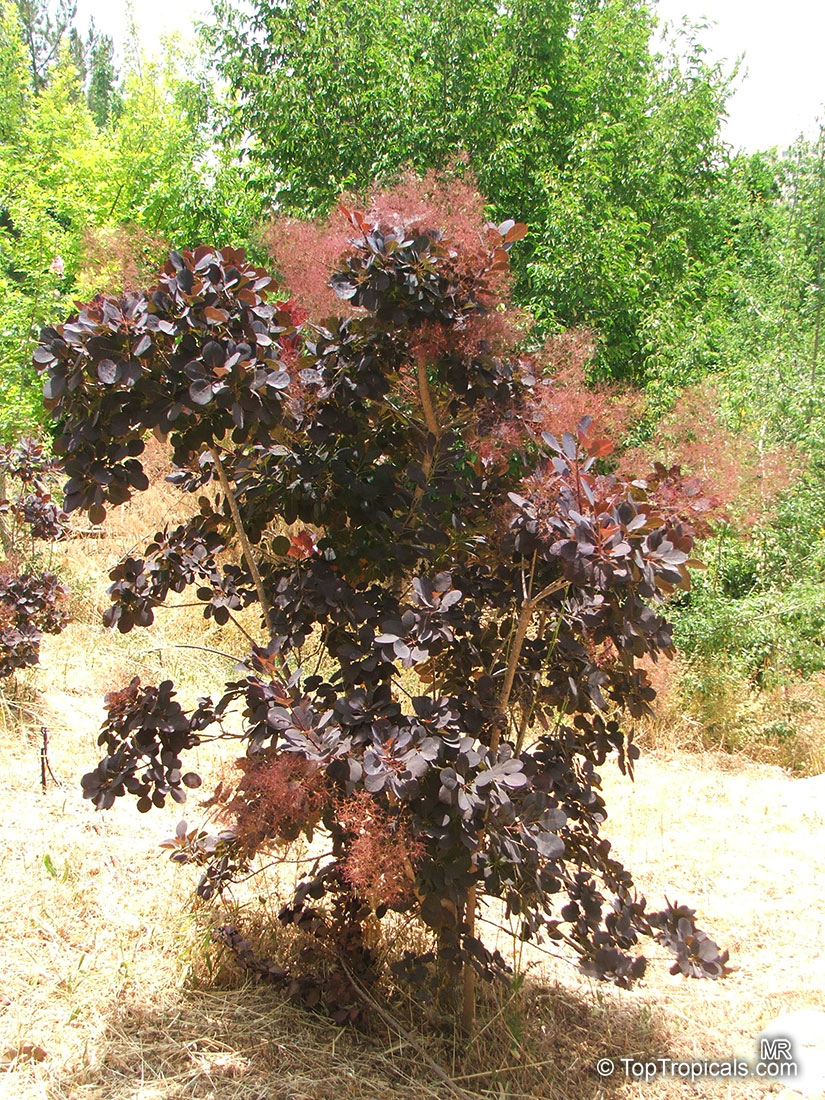
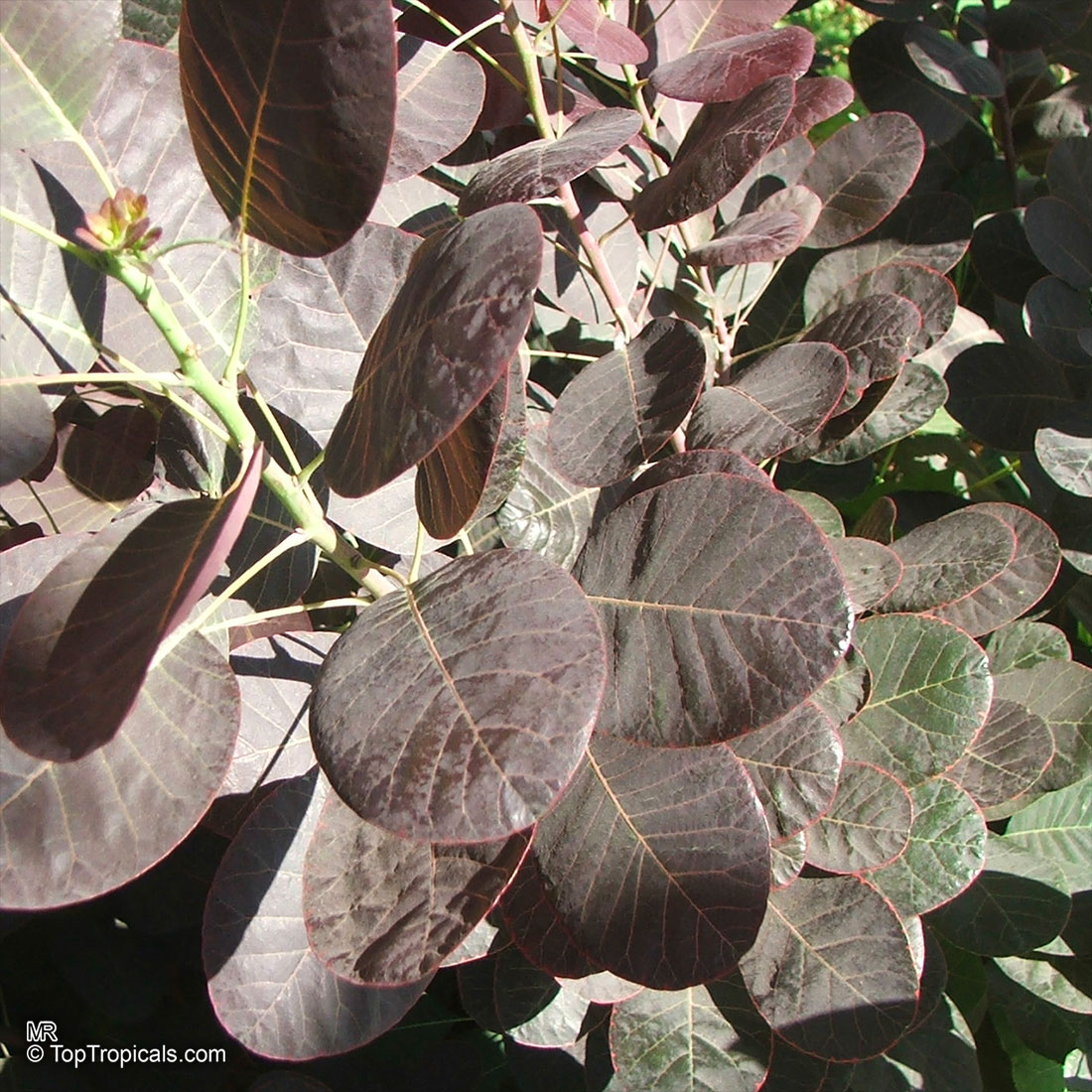
Smoketree grows best in a sunny location and a well-drained loam. It will grow asymmetrically and lean toward the light in a partially sunny area, so it is best to locate it in full day sun where the crown will develop symmetrically. Produces cloud of airy smoky pink flowers on current season growth.
Established plants are drought tolerant.
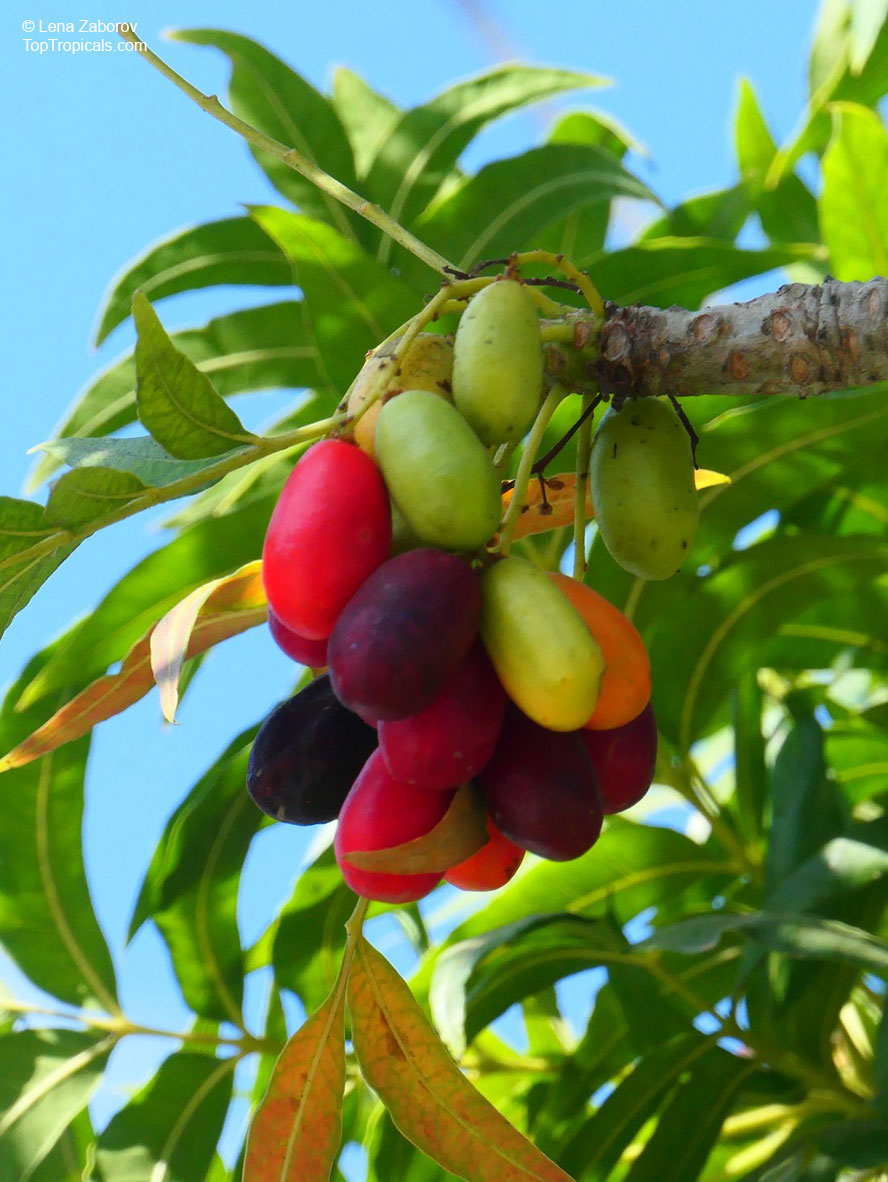
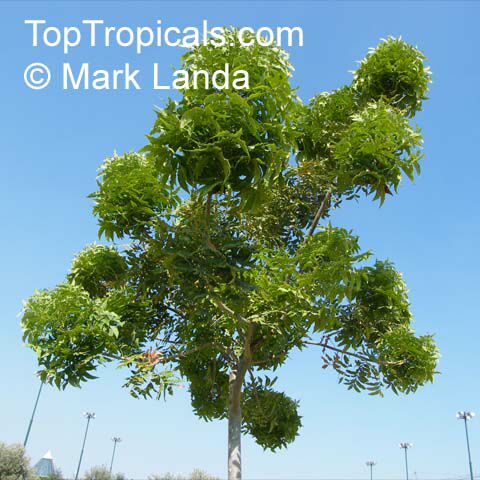
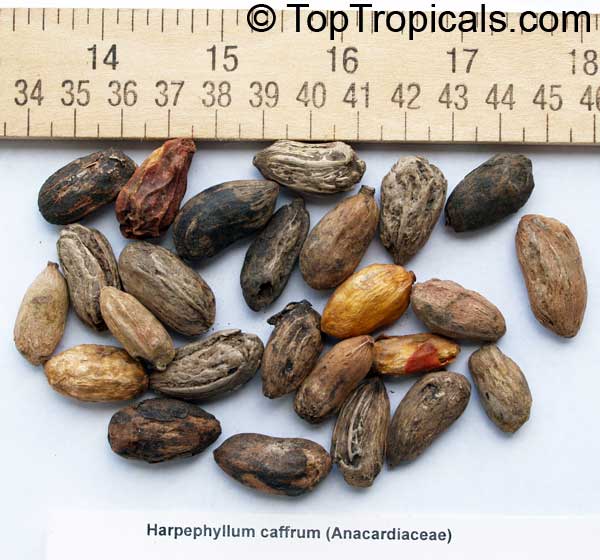
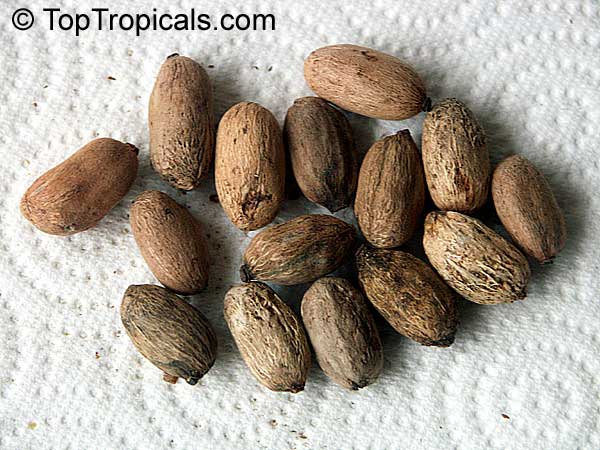
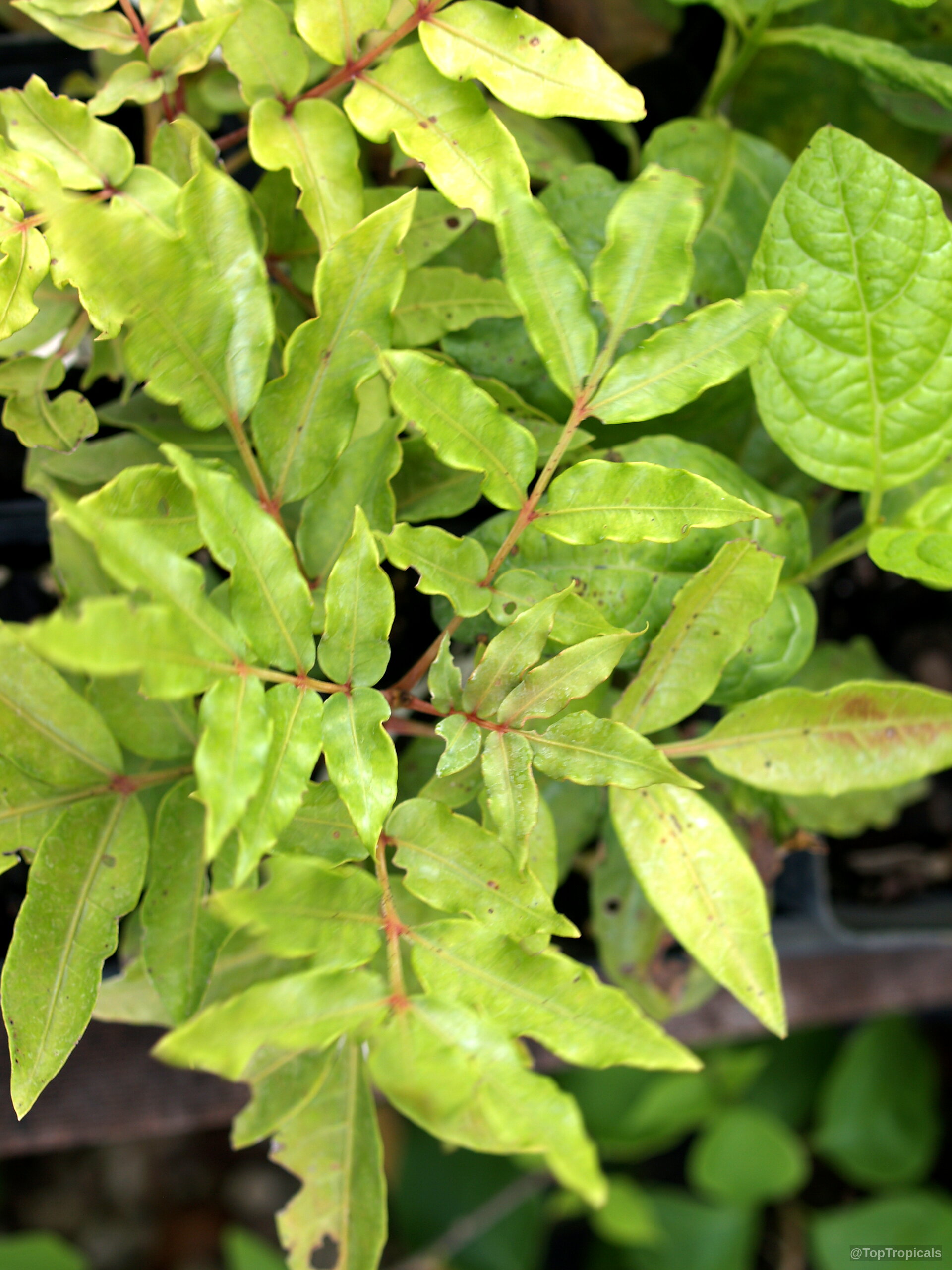
Botanical name: Harpephyllum caffrum
Common name: Wild Plum
Family: Anacardiaceae
Origin: South Africa

Harpephyllum caffrum or Wild plum is a small tree, growing to a height of 10-20 feet and does best when planted in full sun in well drained soil and is hardy in USDA zones 9-11. It has moderate water requirements, and should be watered regularly during the hottest part of the growing season, but not over-watered. The tree benefits from an occasional pruning to keep it in shape and keep it from becoming too dense in the lower parts. If grown in a pot in cold regions, it needs to be brought indoors during the winter, avoiding drafty locations and bright sunlight.
The Wild plum has edible fruits which are packed with nutrients and offer many healthy benefits, such as high levels of dietary fiber, vitamins, minerals and antioxidants. A single wild plum tree is capable of producing up to 50 lbs of fruits in a single season, with each fruit having a diameter of 1 inch. These fruits are used for making jams and jellies. With their sour taste, they are also good to make rose wine. The bark is a popular traditional medicine treating acne and eczema. The health benefits of the wild plum fruits include improved digestion and helping to reduce cholesterol levels.
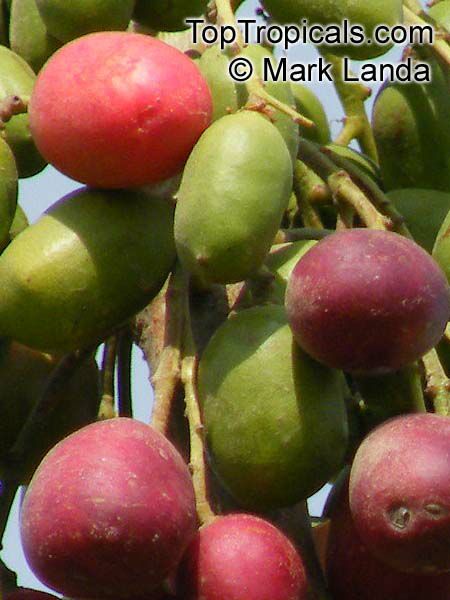
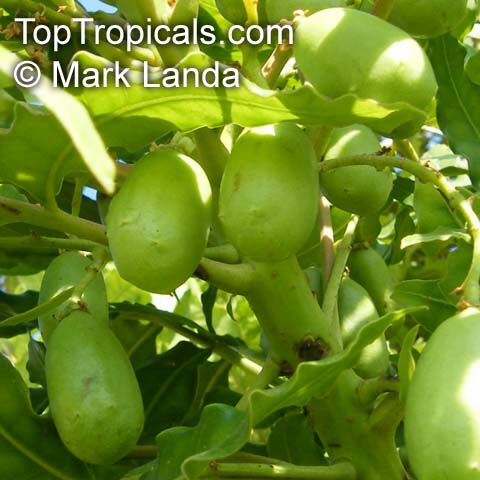
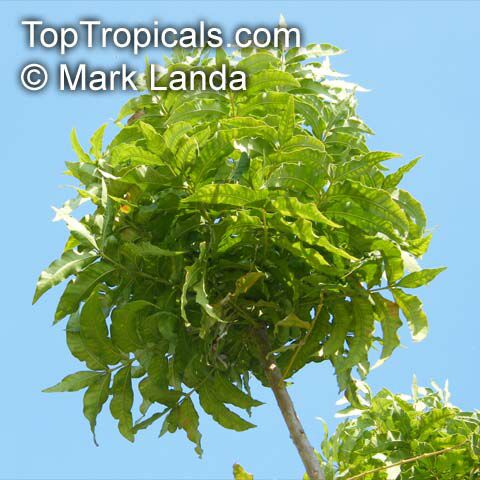
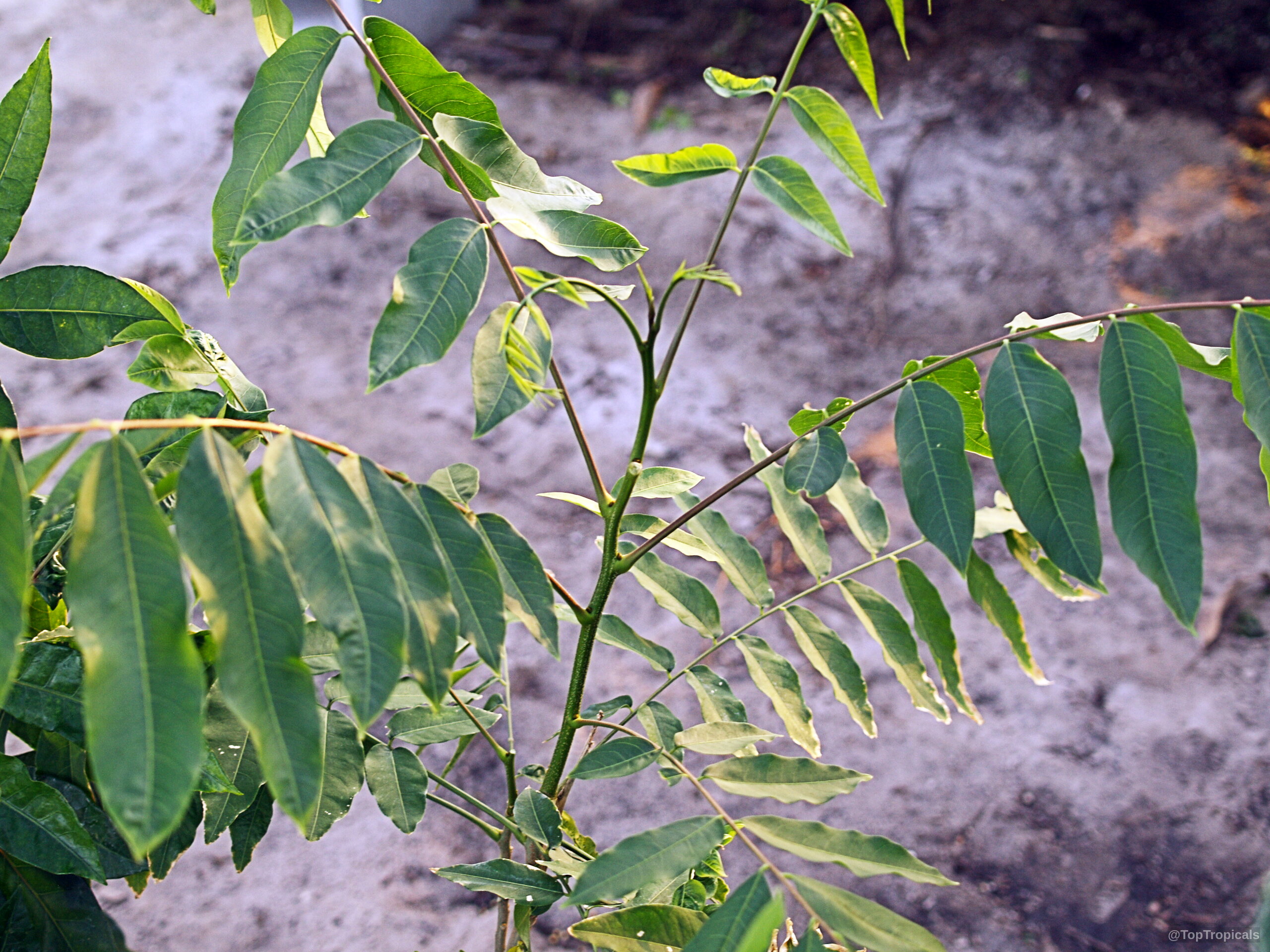
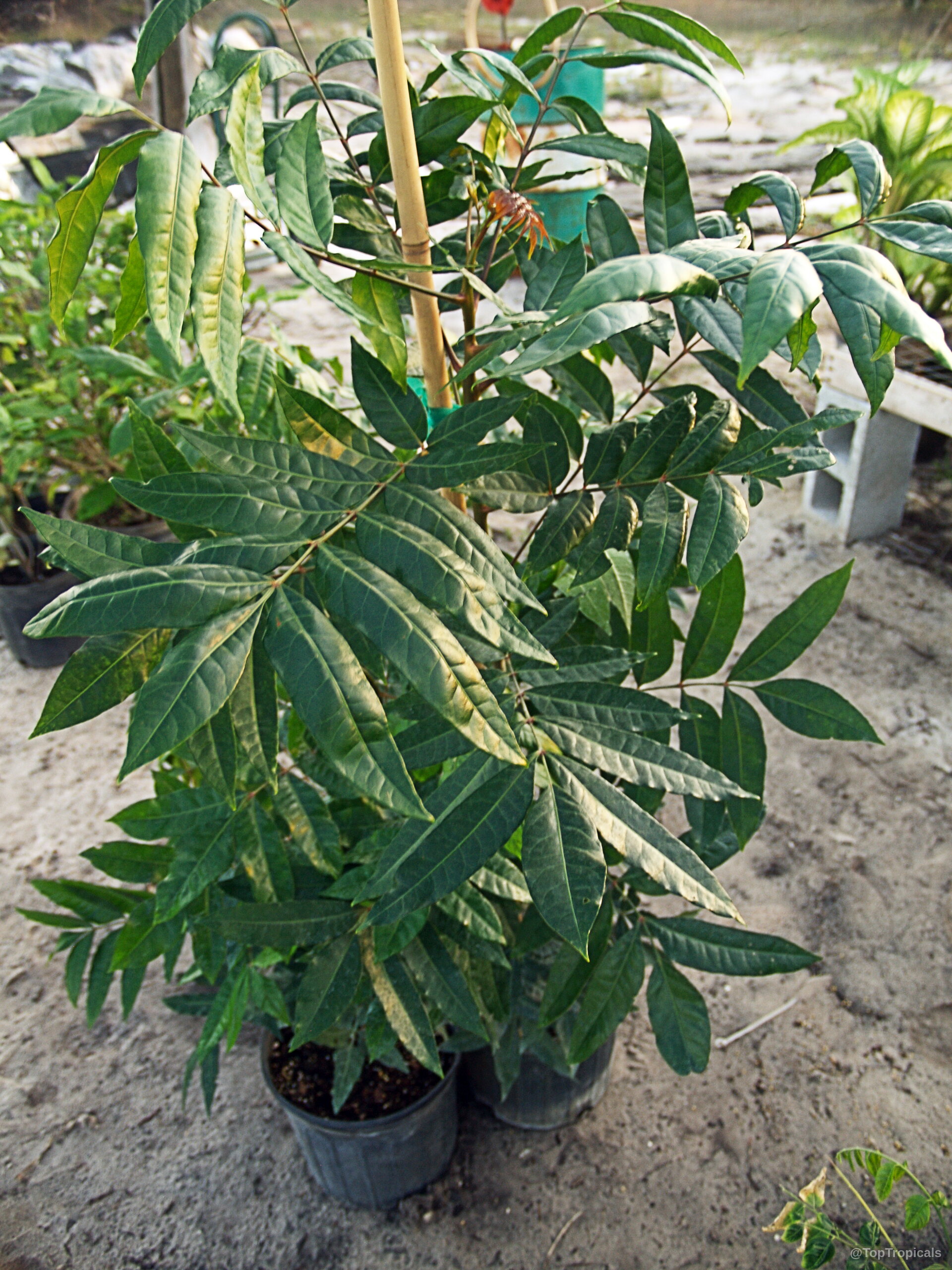
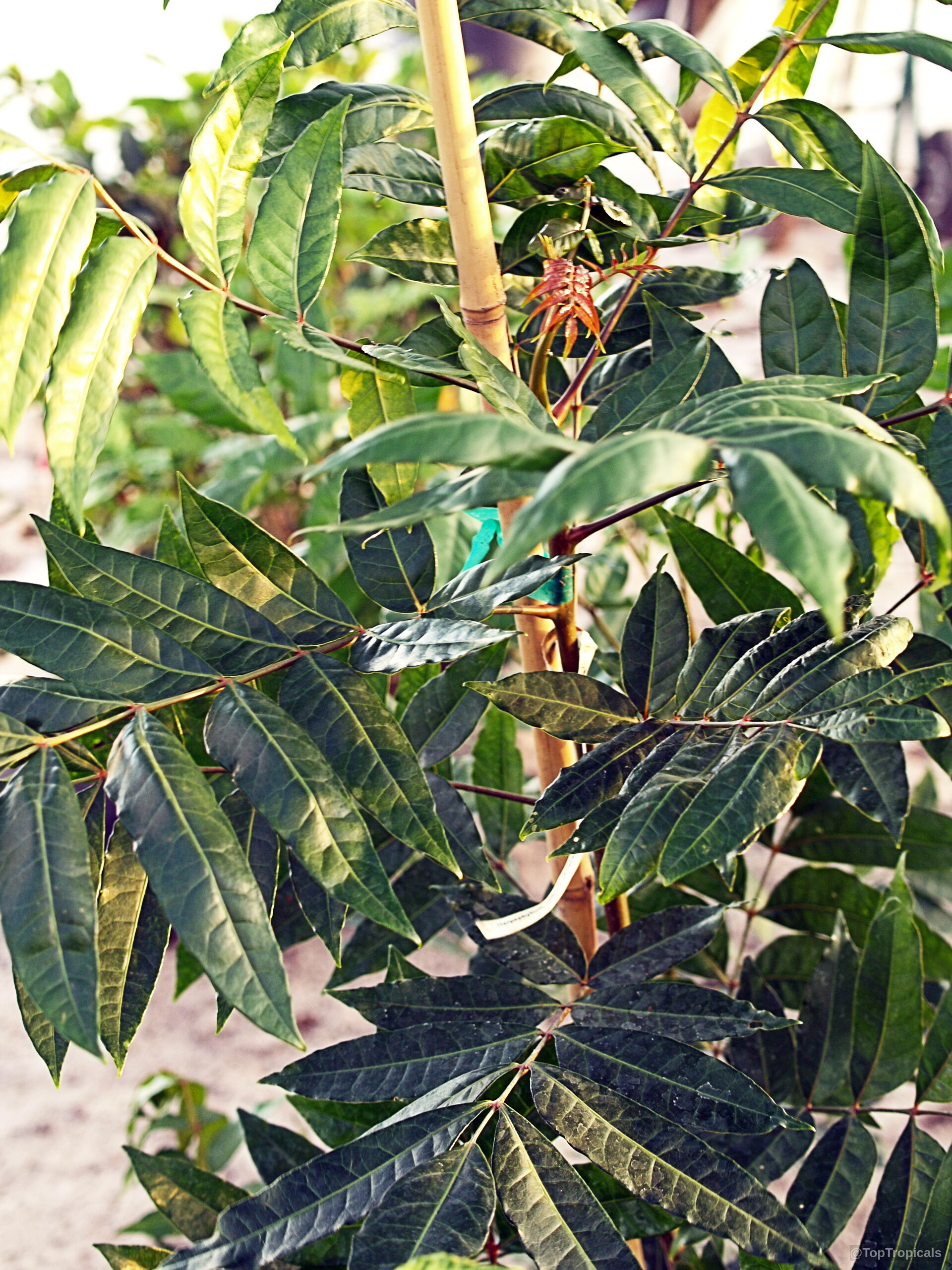

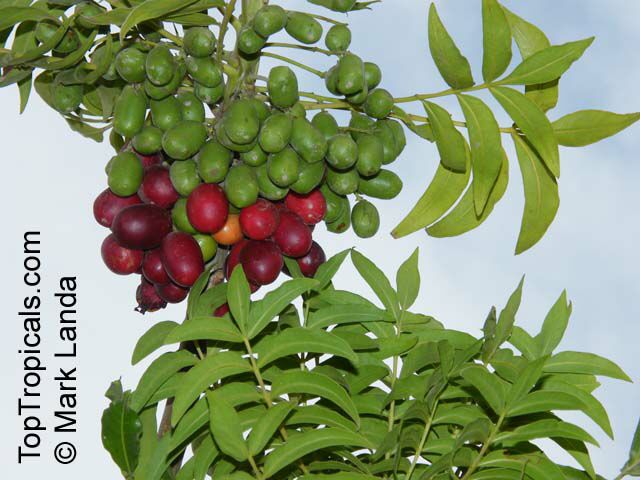
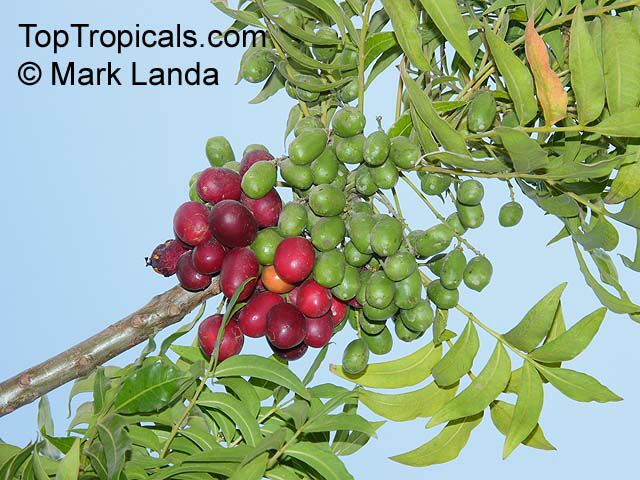
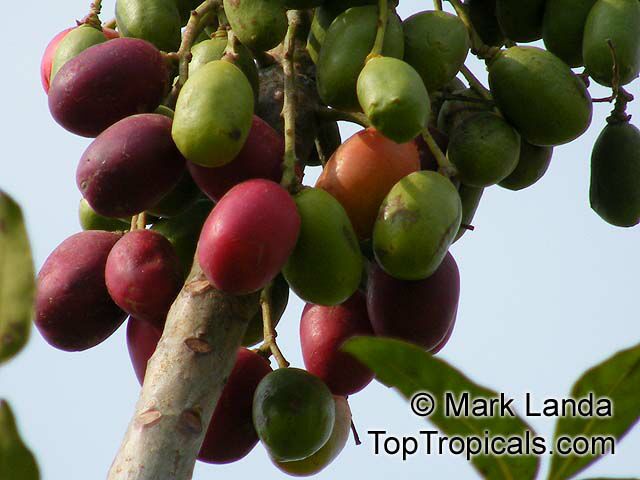
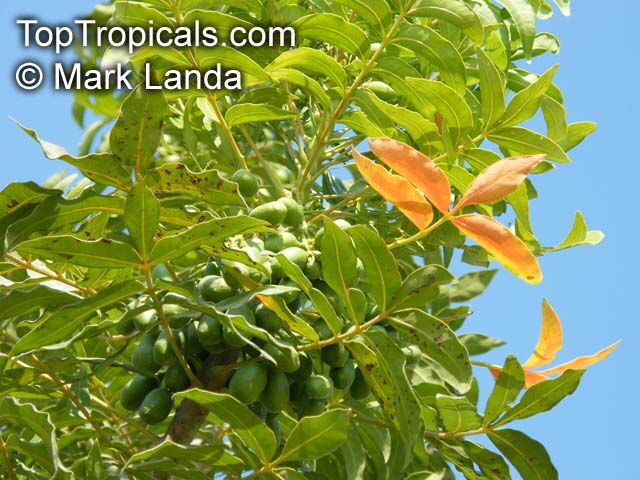
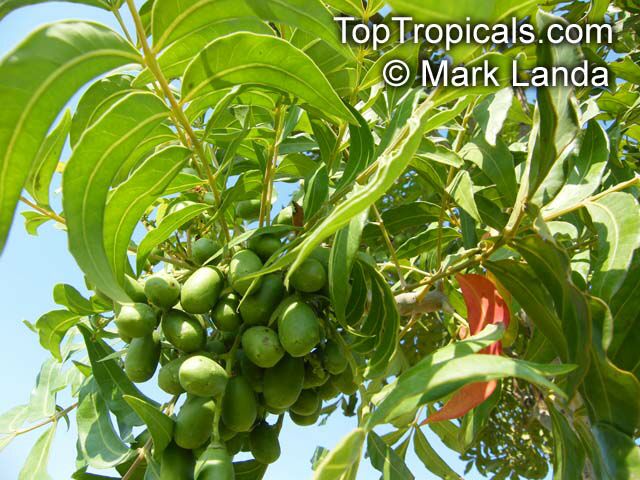
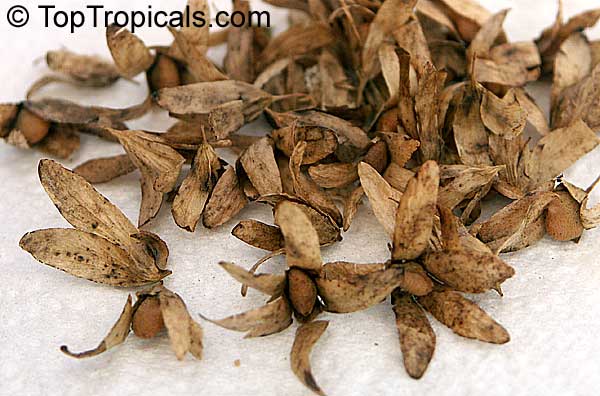
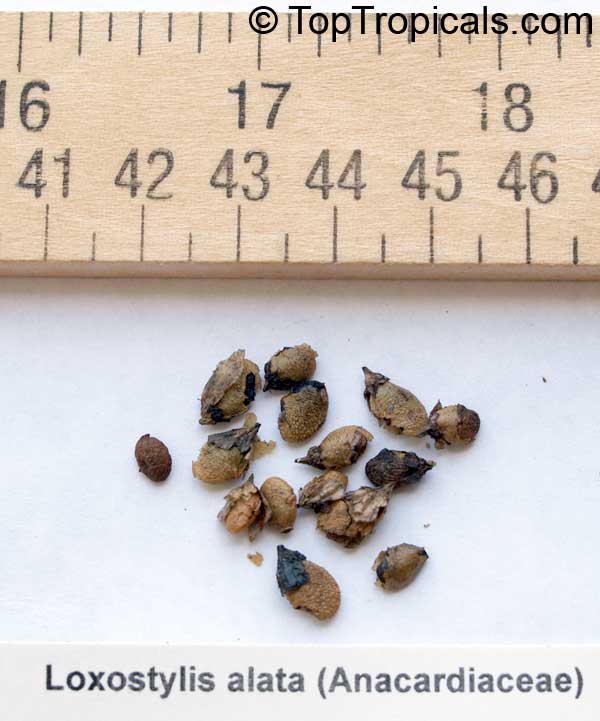
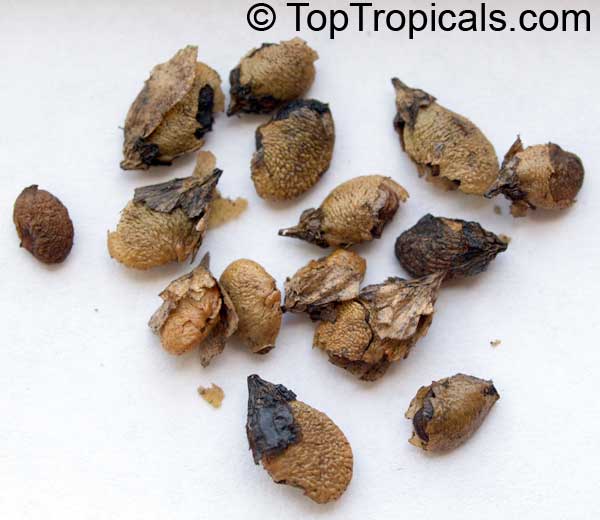
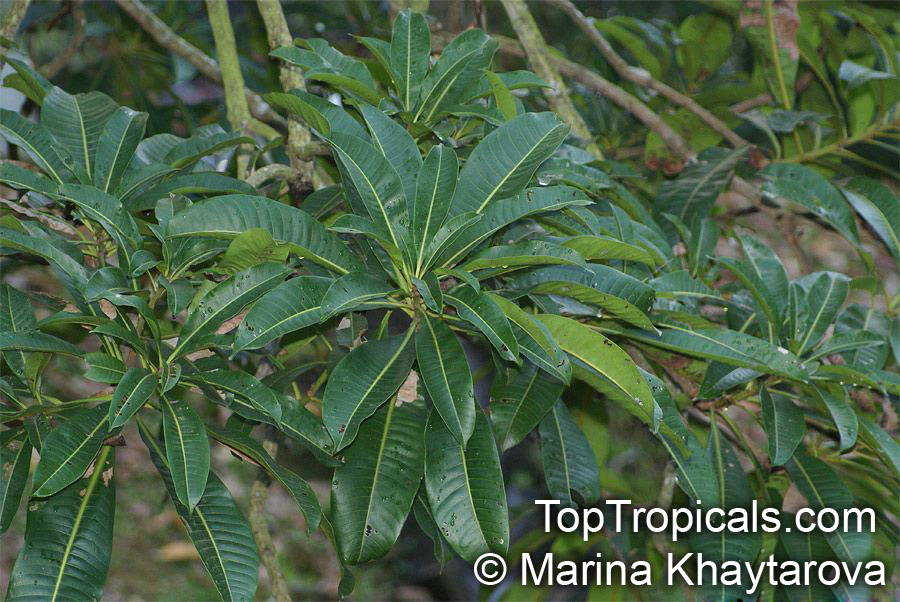
Botanical name: Loxostylis alata
Common names: Tarwood, Wild pepper tree, Teerhout
Family: Anacardiaceae
Origin: South Africa

Botanical name: Mangifera caesia
Common names: Binjai, Malaysian Mango, Wani
Family: Anacardiaceae
Origin: Kalimantan, Borneo

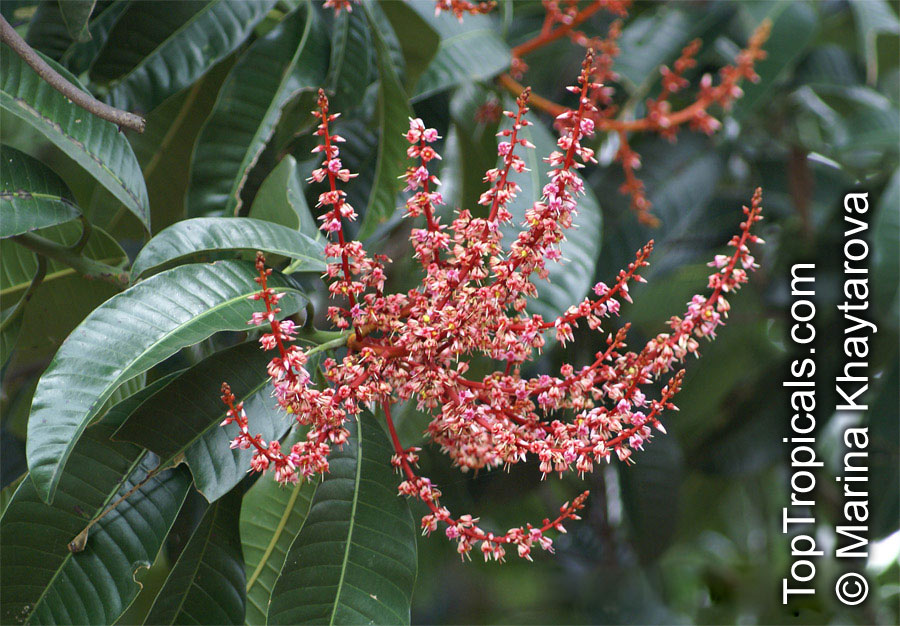
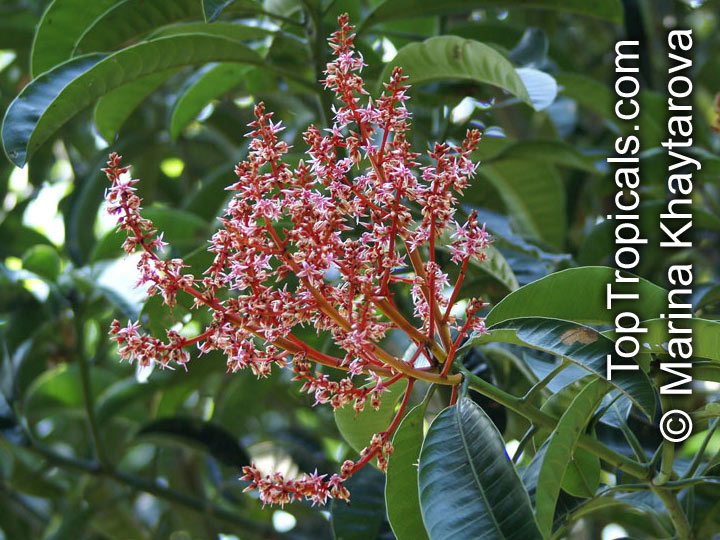
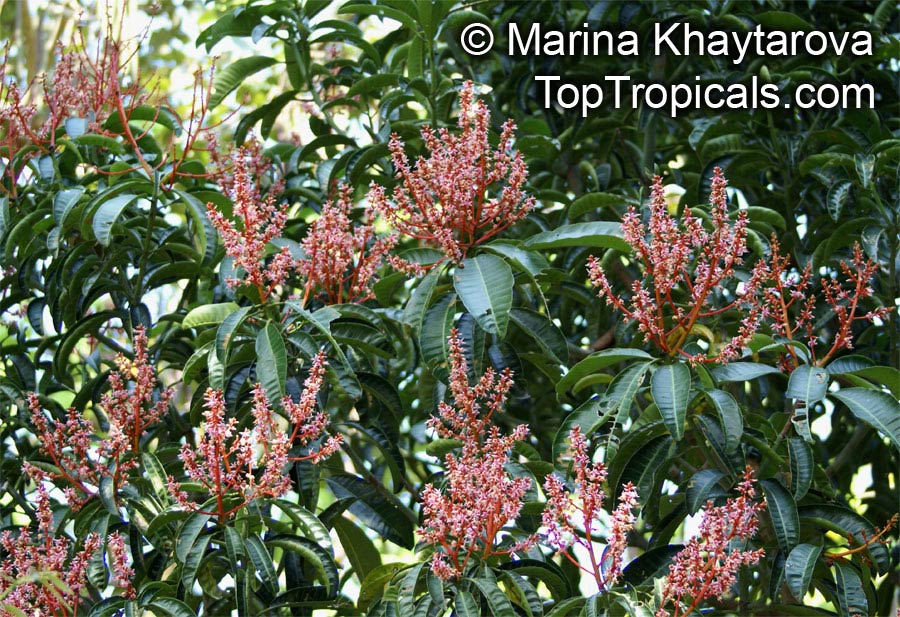
Mangifera caesia (Binjai) is a big tree which can get taller than 20 feet and is native to Kalimantan, Borneo. Small varieties of this tree may not reach more than 10-20 feet and both full sun and semi-shade is suitable for growing these trees. Binjai tree requires regular watering and blooms with pink flowers.
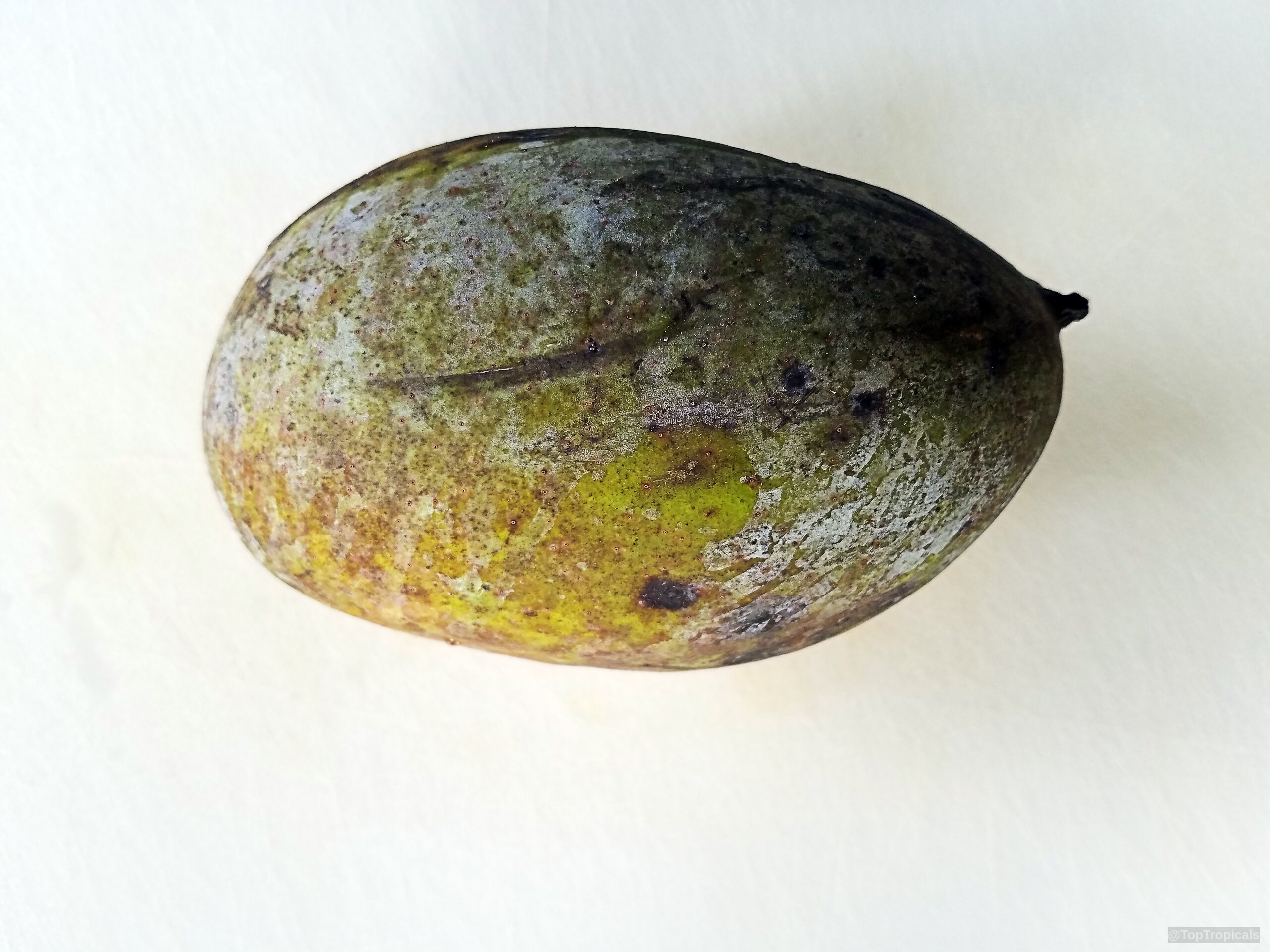
Binjai trees are known for the production of edible fruits. Depending on the size of the tree and the size of the fruits requested, the number of fruits produced can vary. The fruits of Binjai tree are sour in the wild form but if it is cultivated in Bali or Borneo, the fruits can become sweet and fibreless. The white juice of immature Binjai fruit is poisonous, so it is very irritant while touching the skin or when ingested directly.
Apart from being edible, these fruits have several health benefits and are used for medicinal purposes. It is rich in Vitamin C and helps treat abdominal problems, cholesterol, skin inflammation, and urinary tract infections. The fruits can also be eaten raw, juiced, cooked or made into different varieties of jams and jelly.
Growing Binjai trees in a pot is recommended if you live in a cold region. To get the best growth and fruit production, pay attention to drainage, water, and light requirements. This plant needs plenty of water and full sun to grow and mature. However, during the hot summer months, you should provide some shade to protect the plant from overheating.
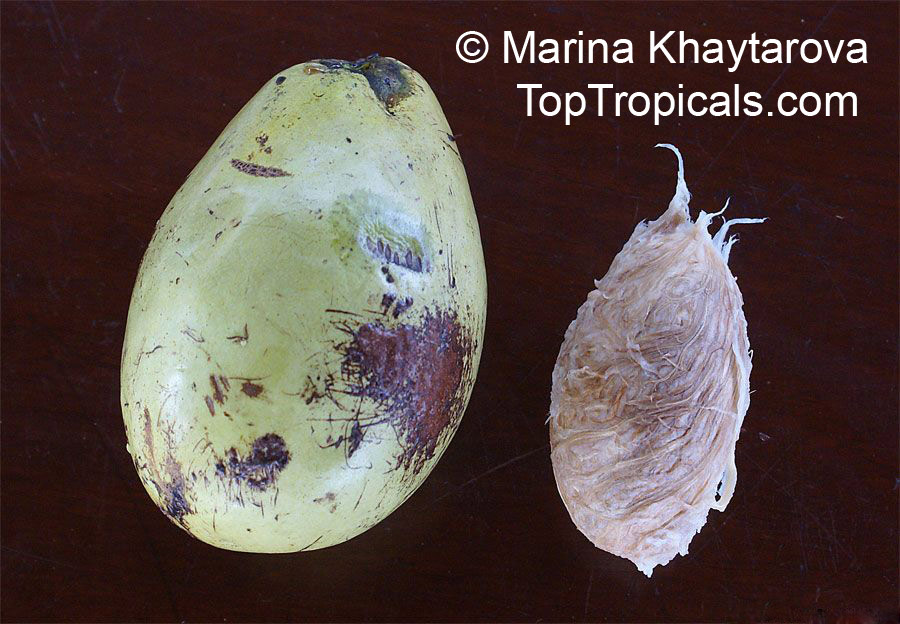
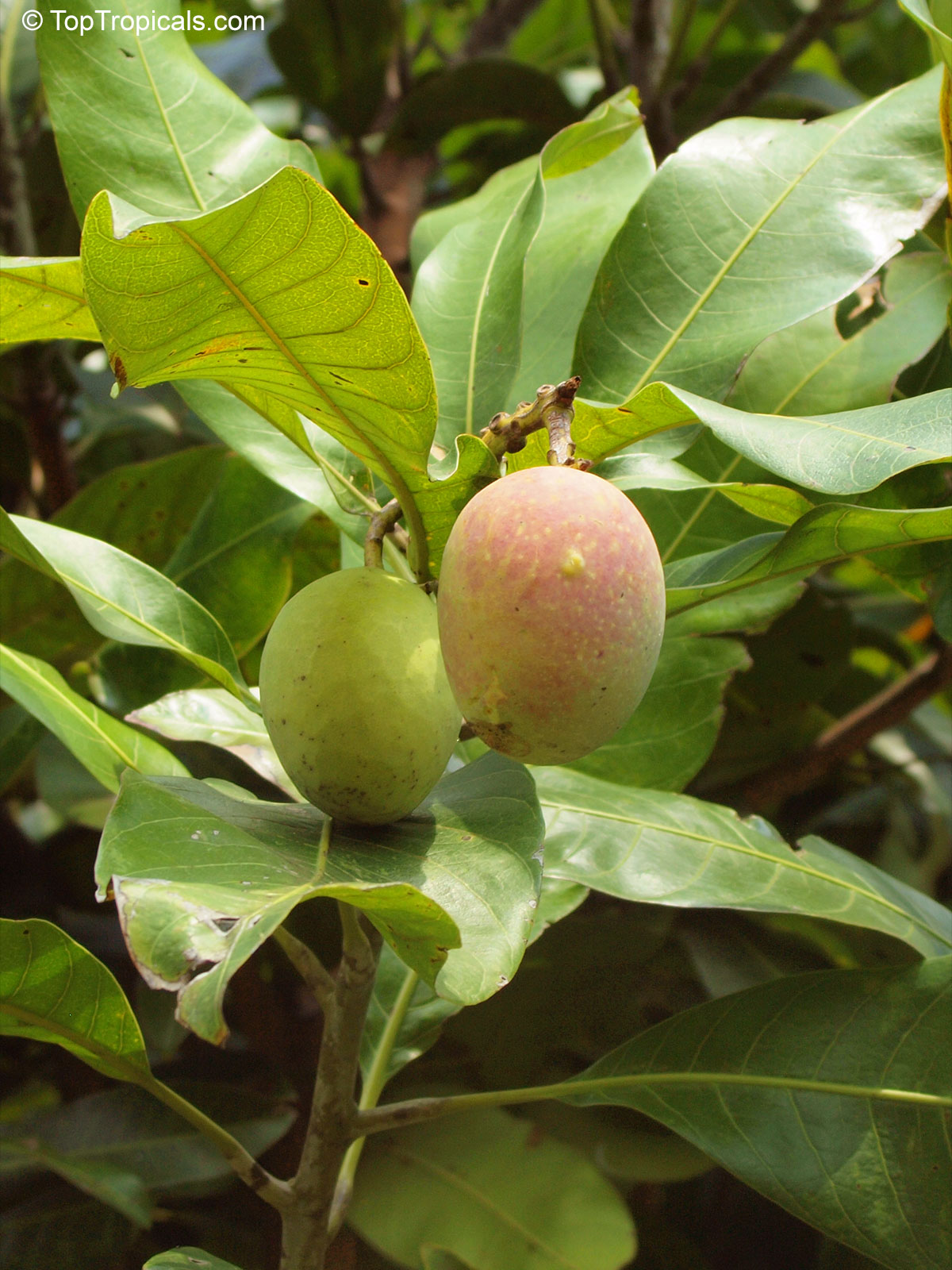
Botanical name: Mangifera casturi
Common names: Kalimantan Mango, Kasturi
Family: Anacardiaceae
Origin: Indonesia
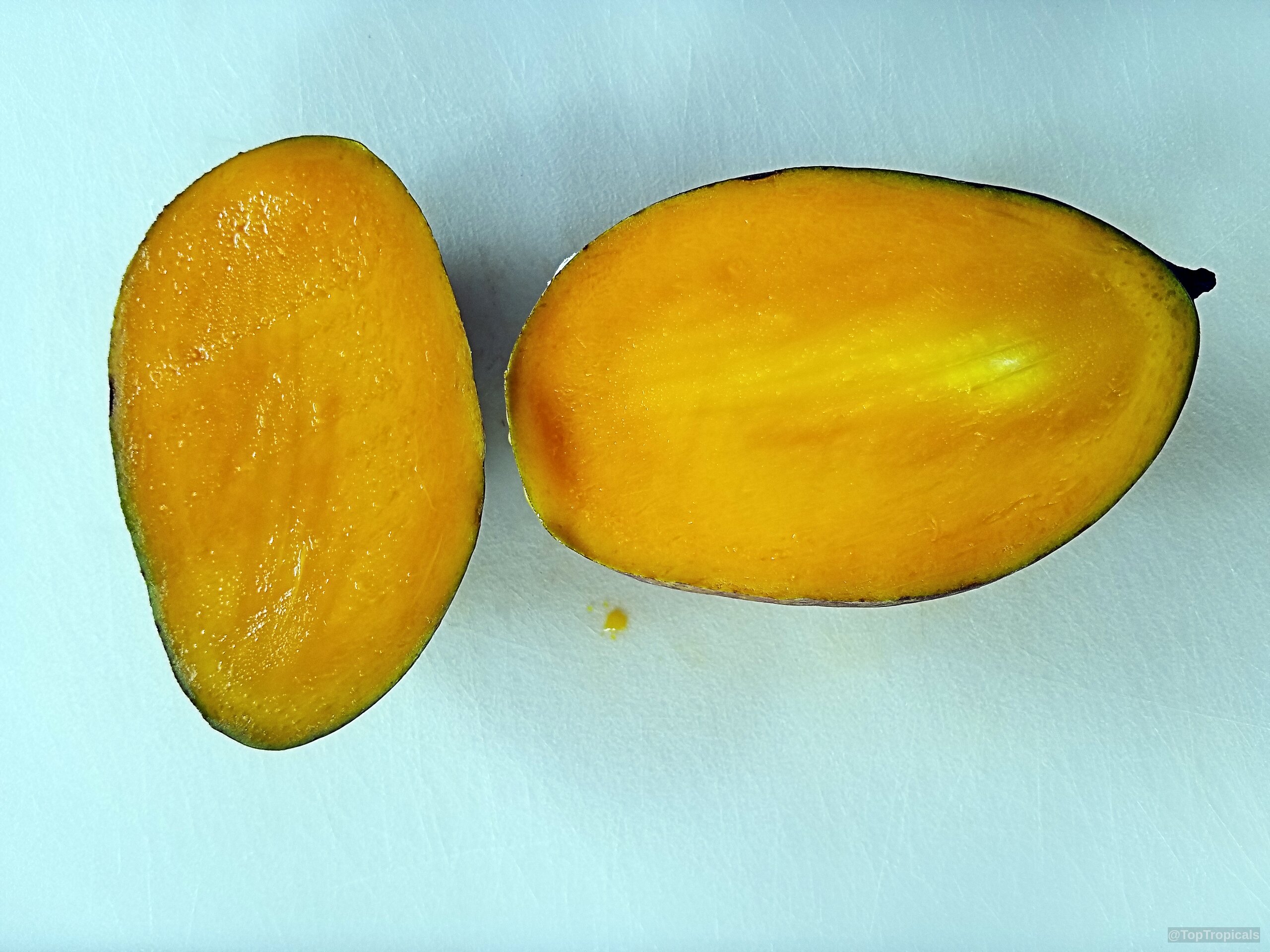
The flesh of this fruit is orange in color and the texture stringy with a unique sweet fragrance. If we compare the Kasturi with the Mango (Mangifera indica), the Kasturi tastes less sweet but has a stronger taste and has a softer aroma.
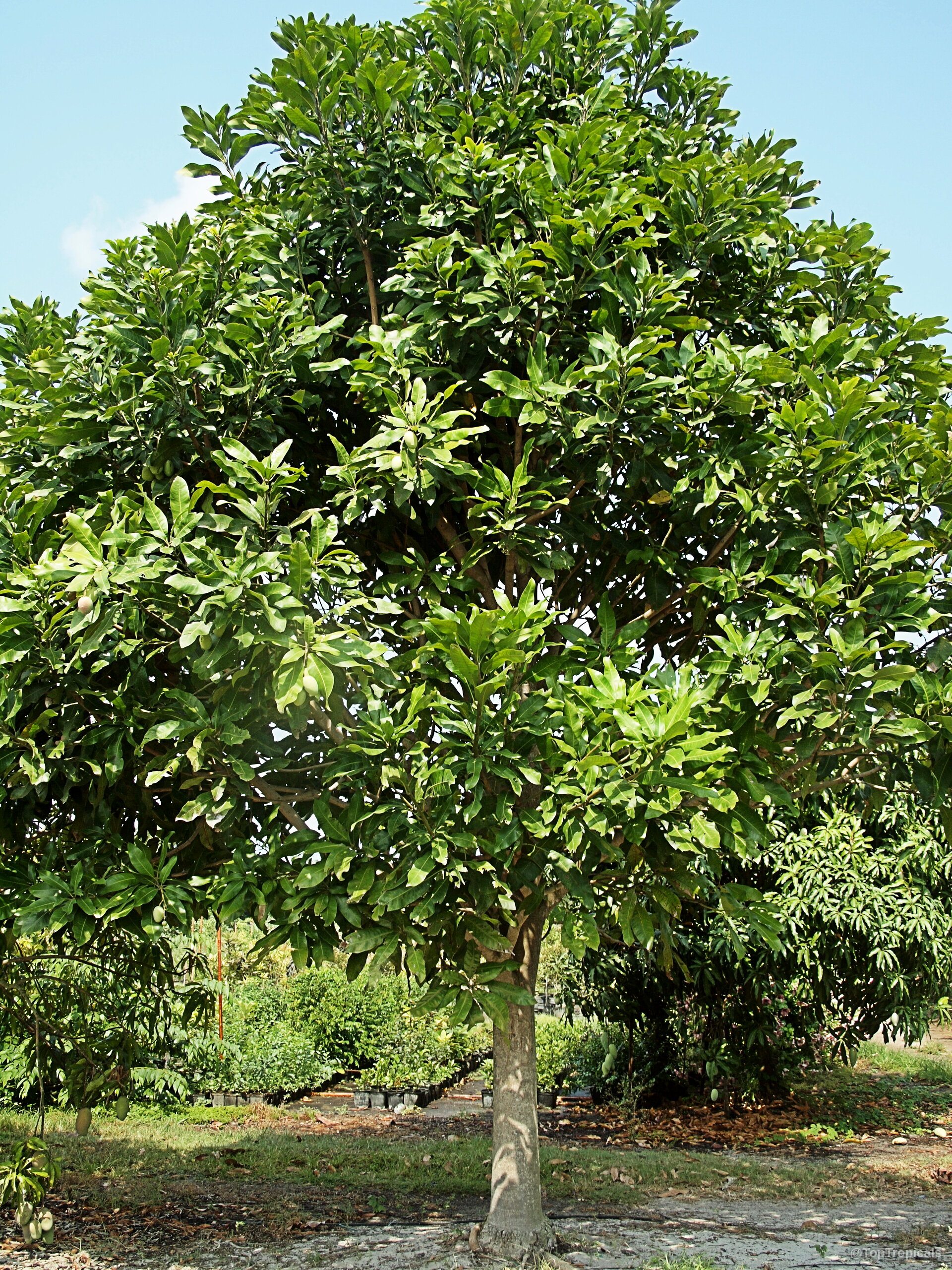
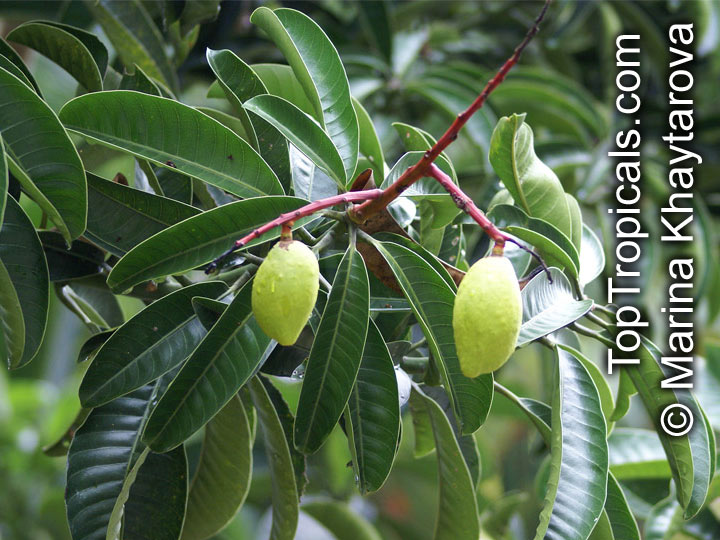
Botanical names: Mangifera foetida, Mangifera odorata, Mangifera oblongifolia
Common names: Kuwini, Horse Mango, Malmut, Limus, Machang, Bachang, Kuini
Family: Anacardiaceae
Origin: Indonesia

A Medium-sized tree. This tree has a very unique feature. It emits a charaecteristic fragrant smell. Even the flowers of this tree are strongly scented with the same fragrance. That is why this species has been named M. odorata. This fruit has never been found in the wild. Botanists are of the opinion that Kuwini (M. odorata) has originated as a hybrid between Mangifera indica and Mangifera foetida.
This fruit is commonly cultivated in Borneo, Sumatra and Java. It is also found in Thailand, Vietnam and Guam Islands. The Kuwini is a popular fruit, having local economic significance in areas where Mangifera indica cannot be grown satisfactorily because of excessive humidity. Kuwini can produce two crops a years in areas where two dry seasons prevail.
Fruit are much appreciated as table fruit. They must be peeled thick because of the presence of an acrid juice in the skin, which can also be reduced by steeping in diluted lime-water before eating.
The fruits are also used for making chutney and for pickles with salt. In Java a kind of flour is made of the seed kernels and used in the preparation of delicacies such as dodol (based on glutinous rice) and jenang pelok (a thick pappy preparation from Curcuma rhizomes).
Propagated by seed, only rarely by grafting.
The sap is an irritant which may inflame the lips and mouth.
Mangifera foetida fruit is very similar in appearance to the Mango. Ripe Horse Mango fruit is usually eaten fresh. Young fruits contain irritant juice and must be soaked.
| Next | |
Use link to repeat this search:
https://toptropicals.com/cgi-bin/garden_catalog/cat.cgi?search_op=and&keyword_op=and&language=e&family=Anacardiaceae
&number=10&no_change_lang=1&user=tt&sale=1&first=0