Amphitecna latifolia (Black Calabash)
Botanical names: Amphitecna latifolia, Enallagma latifolia, Dendrosicus latifolius, Crescentia latifolia
Common names: Black Calabash, Jicarillo, Savanna Calabash
Family: Bignoniaceae
Origin: Costa Rica


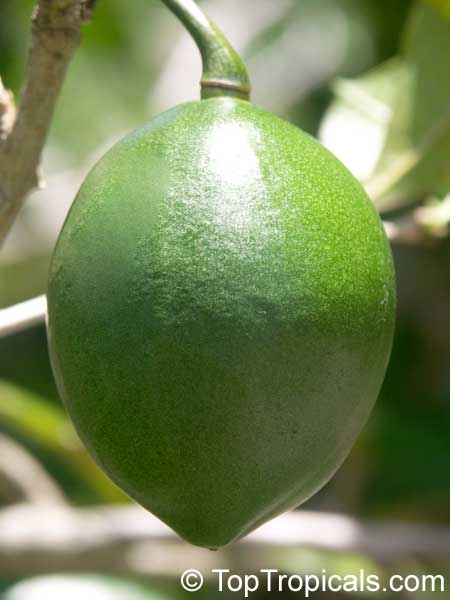
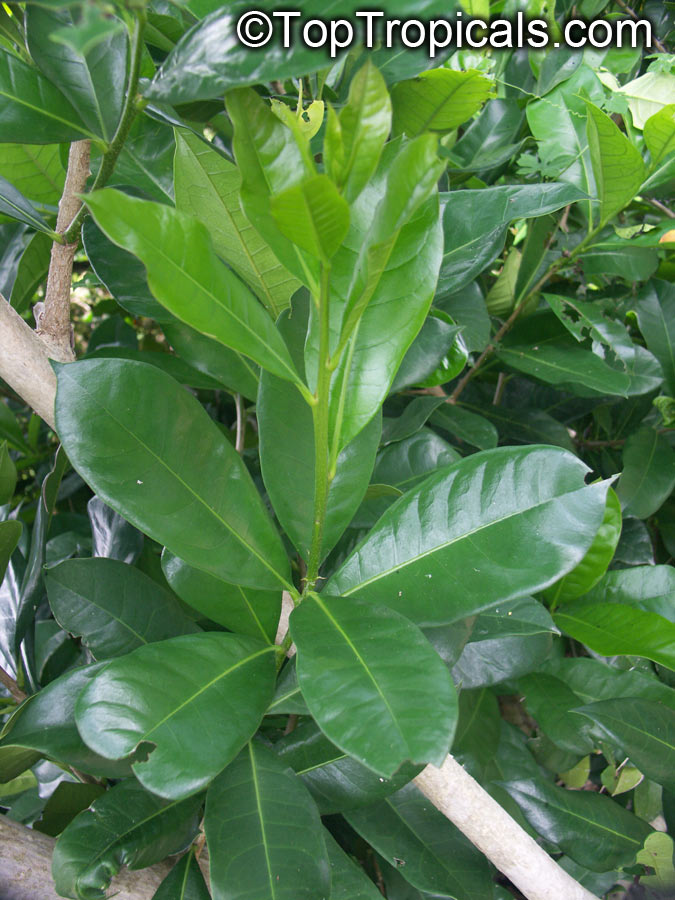
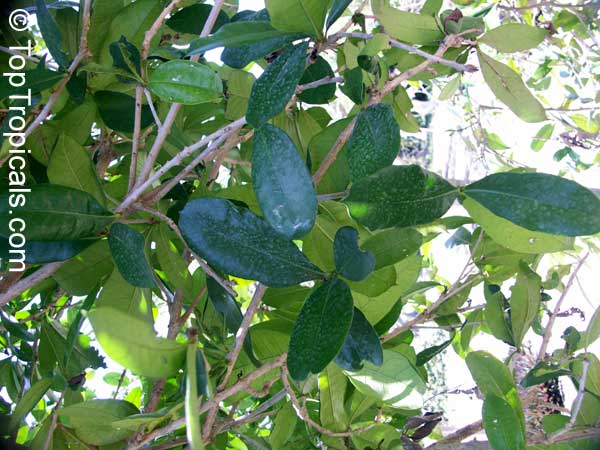
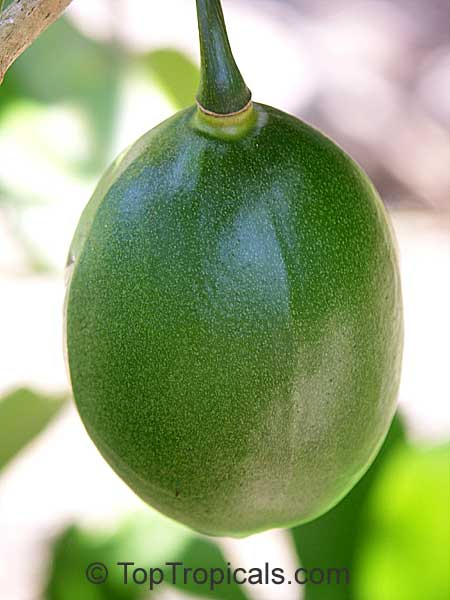
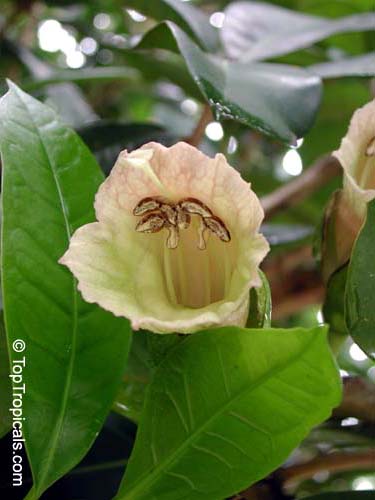
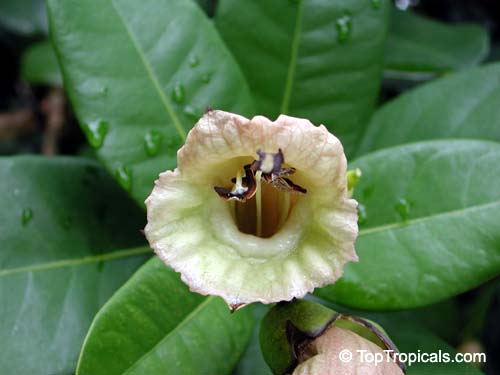
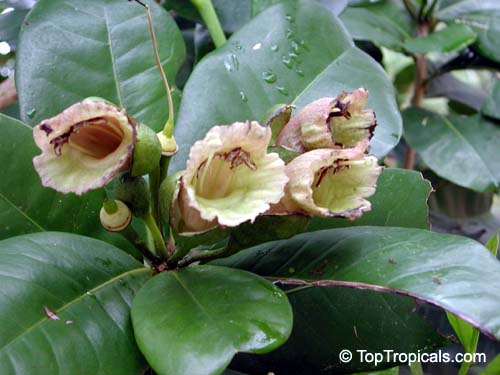
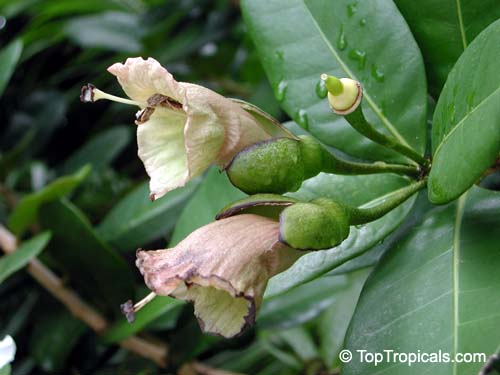
Irregularly shaped tree with a bent and twisting, angular trunk. Simple, alternate ovoid leaves, thick and stiff. Waxy, glossy, and dark green, they contrast markedly with the lighter bark of the branches and twigs. Solitary flowers may be found growing amid the foliage or directly from the sides of the bare sections of the larger limbs and even the trunk. They are large, white, and composed of four thick petals fused into a bent and angular corolla tube that flares distally into a trumpet. The green calyx that covers and protects the developing flower during its early development is also fused into one piece, and it splits irregularly when the blossom finally emerges. Five long, black-anthered stamens and a central pistil are found within the perianth. Flowers are nearly present throughout the entire year. Fruits are large (4"in diameter), ovoid, indehiscent green pods with a smooth, glossy texture and an appearance similar to the fruits of the Jicaro (Crescentia alata ) tree. Inside the thin, woody skin of the pod is a white fleshy pulp that surrounds several black seeds. The white pulp and seeds of the fruit are edible. Jicarillo wood is reportedly hard and rot resistant.
Pollination: "Members of this genus are not bee pollinated - the flowers have peak nectar production at night, and you'll notice that they produce quite a lot of nectar. Bees are generally after the pollen, they would probably drown in all the nectar this species produces. The flowers are also pretty big - these are bat pollinated. The bees will certainly visit, but they are not effective transferrers of the pollen to the stigma". (By Susan Grose)
Similar plants: Amphitecna latifolia (Black Calabash)